Can Tourists Go To The Red Light District?
Yes, tourists can walk through Amsterdam's red light district freely, but city rules now shape how you visit: group sizes, tour hours, photo norms and closing times all apply.
Can Tourists Go To The Red Light District?
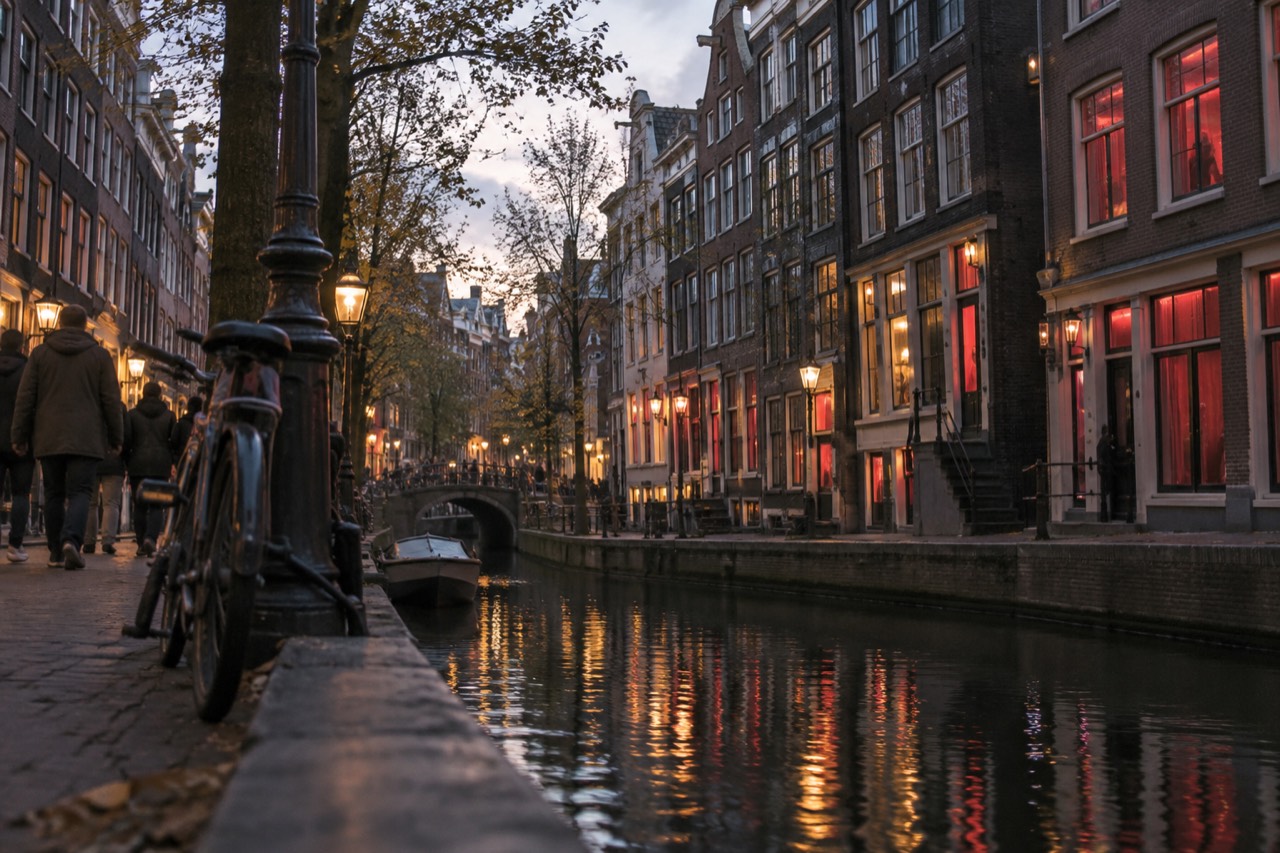
Yes, tourists can go to the red light district. De Wallen is a public neighbourhood in Amsterdam's old centre with no gate, no ticket and no entry check, and it is one of the city's most visited areas. The catch is that the city regulates how you behave once inside: guided groups are capped at 15 people, tours may only run between 08:00 and 22:00, and no tour route may pass the windows.
That last sentence surprises people who last read about Amsterdam a decade ago. The neighbourhood has not been closed off, quite the opposite, it remains one of the most walked-through districts in a city that recorded 23.7 million tourist overnight stays in 2025. What changed is the framework around the visit. Since 2020 the municipal government has tightened rules on tour operators, drinking and street behaviour, and since April 2023 the core Wallen area has had earlier weekend closing times for terraces and bars.
For an independent traveller on foot, none of this forms an obstacle. You can wander in at noon or midnight, look at the Oude Kerk, buy a coffee, and leave. The rules bite organised groups and specific behaviours, and that is what this article unpacks section by section: what the rules are, whether tours still operate, what happens with cameras, where coffeeshops and street drinking fit in, and when the area is actually open.
If you want structure rather than a solo wander, a guided walk is still entirely legal and, in a small group, genuinely popular. These three are the formats visitors compare most often:
What Are the Rules Once You Are Inside?
De Wallen's rules target behaviour, not entry. The city permits guided tours only between 08:00 and 22:00, caps groups at 15 participants, requires an exemption for groups larger than four, and forbids any tour route from passing the sex workers' windows. Street drinking is banned in the city centre, and the official city campaign asks visitors not to photograph the windows.
The guided-tour framework comes from the municipality's own rules for tour operators. A guide who breaks them risks a €190 fine, and a company guide €950, with an exemption revocable after three fines. Those numbers matter because they explain why legitimate operators are careful: the rules are not signage, they are enforced permit conditions. The no-windows rule applies to every group, even four friends with a paid guide, which is why modern red-light tours route through the wider streets and tell the story from a distance rather than parading past the windows themselves.
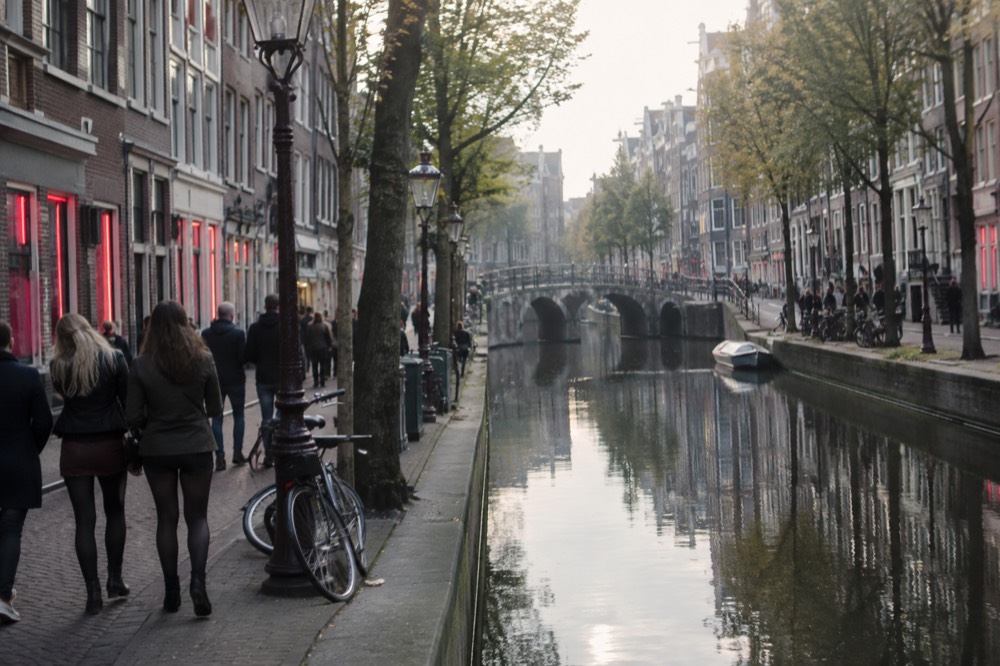
For independent visitors the practical rules are simpler. The city's official visitor guidance, published on the municipality's How to Amsterdam page, asks for basic respect: no photos of the windows, no shouting, no blocking of bridges, no street drinking in the centre and no public urination. None of this is exotic. It is the same standard the city holds its own residents to on a Saturday night.
What trips visitors up is usually volume and cameras rather than anything else. The neighbourhood is small, roughly a few blocks of alleys between Dam Square and the Oude Kerk, and it doubles as a residential and working district. People live above the bars. Sex workers are working at the windows. The "no pictures please" message is part of the official respect campaign rather than a statute with a published fine, but staff and residents will confront a raised camera quickly, and with justification.
The honest summary for a tourist planning a visit: go, walk, look at the architecture, but treat it as a neighbourhood with a code of conduct rather than a theme park. Our full guide to the red light district De Wallen covers the streets, the Oude Kerk and the history in detail, and the rules and etiquette guide expands on every point summarised above.
Are Guided Tours of the Red Light District Still Allowed?
Yes, guided tours operate legally in De Wallen, but only under the municipal permit framework: groups of 15 at most, running hours of 08:00 to 22:00, and routes that avoid the windows entirely. Small-group history tours have largely replaced the old loud walking parades, and the best-rated options now sell out days ahead.
The shift is visible in the products themselves. The small-group red light district tour runs 90 minutes, rates 4.9 across 9,142 reviews and starts from $26, and its format is a quiet, capped group with a guide who explains the history, the policy debates and the neighbourhood's future rather than steering visitors along the windows. That format is exactly what the city's rules were designed to force into existence.
It is worth being blunt about why the rules exist. Before 2020, large guided groups walked the narrow alleys in dense columns, stopping at the windows as if at an exhibit. Residents organised, the municipality responded, and the current framework is the result. A tour that respects it is not a watered-down experience; it is the only legal version of the experience, and the guides who operate within it tend to be the ones with the deepest knowledge of the area.
Choosing between formats is mostly a question of group size and depth. The table below compares the three walks this site's readers weigh most often, all of which fit the rules described above.
| Tour | Format | Rating | Reviews | From |
|---|---|---|---|---|
| Red Light District Small Group Tour | 90 minutes, small group, De Wallen history | 4.9 | 9,142 | $26 |
| 1 hour, Jewish Quarter, local guide | 4.8 | 15,104 | $22 | |
| 2 hours, Jewish Quarter and WWII history | 4.9 | 4,680 | $33 |
One honest note on the Anne Frank walks in that table: both are street walking tours of the Jewish Quarter and do not include entry to the Anne Frank House. Tickets for the house itself are sold only through the museum's own website, on a timed-release schedule, and no reseller or pass can legitimately sell them. Any product implying otherwise should be avoided.
Can You Take Photos in the Red Light District?
Photography of the sex workers' windows is the single fastest way to end a pleasant evening in De Wallen. The official city campaign says "no pictures please", staff and residents enforce it as a firm norm, and while it is framed as respect guidance rather than a fined statutory offence, a raised camera aimed at a window draws immediate confrontation. Everything else, streets, canals, the Oude Kerk, photographs freely.
The distinction matters. Amsterdam's municipal visitor guidance asks people not to photograph the windows, and that request is backed by social enforcement that is fast and unforgiving. Sex workers at the windows are working, the curtains are their workplace boundary, and a camera pointed at them is treated as harassment. Visitors have been confronted, ejected from venues and, in escalations, dealt with by security. None of that appears in the official rules as a euro-denominated fine, which is why honest writing says "firmly enforced norm" rather than "illegal".
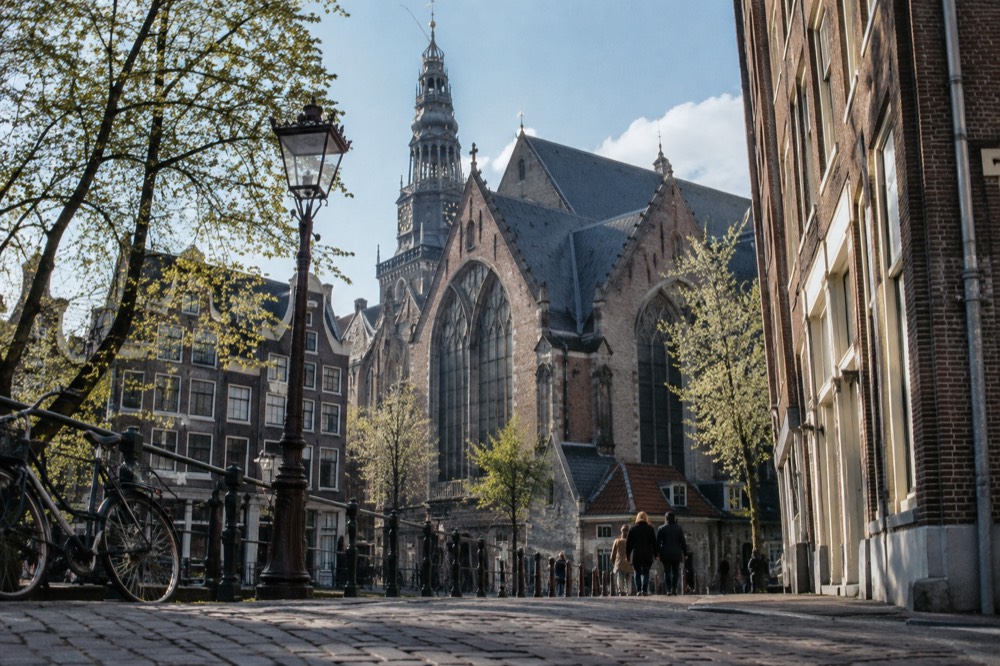
Everything around the windows is fair game. The Oude Kerk, the city's oldest building, sits in the middle of the district and is one of the most photographed churches in the Netherlands. The canal-side streets, the medieval alley plan and the Chinatown edge on the Zeedijk all photograph beautifully, especially in the blue hour when the district's lights come on. If you want shots of the atmosphere, point the lens at the architecture and the water, never at the people at the windows.
What About Coffeeshops and Street Drinking in De Wallen?
Coffeeshops in Amsterdam sell to tourists today, because the residents-only criterion that exists in national policy has never been applied in the city. Cannabis smoking outdoors is prohibited in the city centre, so consumption happens inside the coffeeshops, and street drinking is banned in the centre altogether. Neither "legal for tourists" nor "banned for tourists" is the accurate framing.
The nuance deserves precision. National tolerance policy allows coffeeshops to sell up to 5 grams of cannabis per person per day, and the national criteria technically include a residents-only rule. Amsterdam, however, has never enforced that criterion: the so-called wietpas was never applied in the city and no tourist ban has been implemented. Enforcement is a municipal decision, and Amsterdam's decision has been consistent for years. Tourists walk in, show ID, buy, and consume on the premises.
The location rule is the one that catches people. Smoking cannabis outdoors is prohibited in the city centre, including the Wallen area, so the purchase happens at the counter and the consumption happens inside. Combined with the street-drinking ban, this means De Wallen's public streets are technically substance-free zones in the evening, whatever the atmosphere suggests. The city's own rules for tours extend the same logic to guided walks: no alcohol or drugs on tour.
For a fuller treatment, including how the 5-gram rule works and what ID you need, read our coffeeshop rules guide for tourists. The short version for De Wallen specifically: buy inside, consume inside, and keep the street for walking.
When Is the Red Light District Open?
De Wallen's streets never close, they are public roads, but its economy runs on a schedule set in April 2023: in the core Wallen area on weekends, outdoor terraces close at 01:00 and hospitality venues inside close at 02:00. The windows operate in the evenings, guided tours run 08:00 to 22:00, and daytime is a quiet residential neighbourhood.
The 2023 closing-time rules are the detail most guides miss. The core area's weekend hours were pulled earlier deliberately, with the alcohol-serving window closing from 01:00, as part of the city's effort to reduce late-night disturbance in a district where people live. The practical effect for a visitor is that De Wallen now has a genuine wind-down: the party energy that used to run to sunrise has been compressed, and the streets empty noticeably after the terraces shut.
| What | When | Notes |
|---|---|---|
| Public streets | Always open | Public roads with no gate or entry check |
| Guided tours | 08:00 to 22:00 | Groups capped at 15, exemption needed above four |
| Outdoor terraces (core area, weekends) | Close at 01:00 | Alcohol service ends from 01:00 |
| Hospitality venues inside (core area, weekends) | Close at 02:00 | Rules in force since 1 April 2023 |
Timing your visit well is mostly about matching the district to your temperament. Early evening, from around 19:00 to 22:00, is when the lights are on, the tours are finishing and the atmosphere is at its liveliest without yet being rowdy. Late morning is the opposite: the same alleys are quiet, the Oude Kerk is open to visitors, and you can see the medieval street plan that predates everything the district is famous for. Anyone who wants the history rather than the nightlife should go before noon.
What Else Is Worth Walking To Nearby?
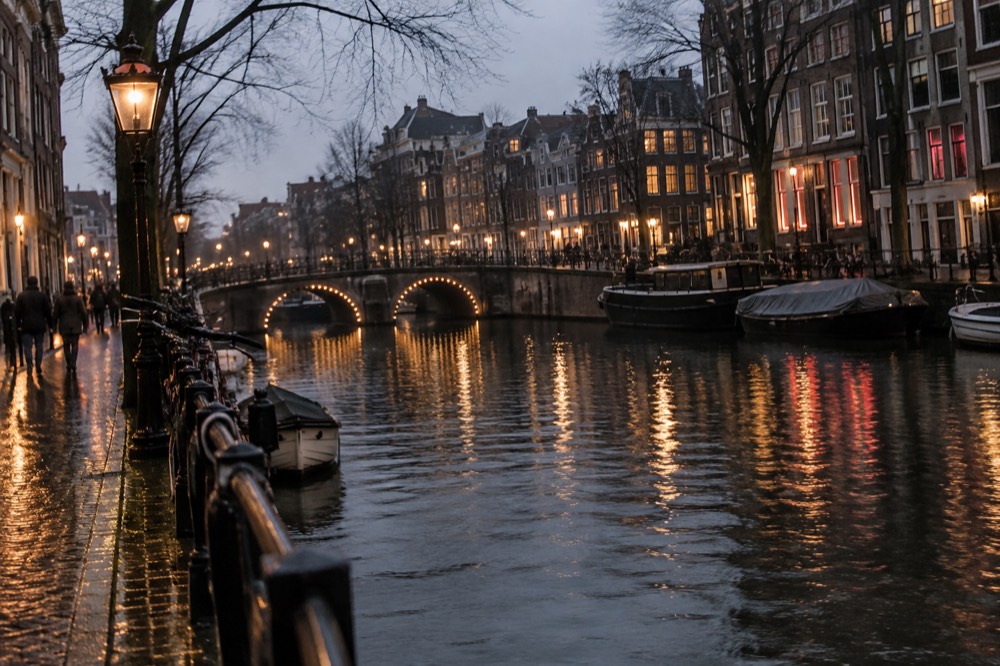
The streets immediately around De Wallen hold some of Amsterdam's oldest and quietest sights: the Oude Kerk in the middle of the district, the Begijnhof a few minutes west, the Jewish Quarter and its memorial sites a short walk east, and Dam Square at the district's western edge. A one-hour guided walk through the Jewish Quarter pairs naturally with a De Wallen visit and costs from $22.
The pairing is not arbitrary. De Wallen and the Jewish Quarter are the two historical cores of medieval Amsterdam, and the stories interlock: the same city that built the Oude Kerk also built the Portuguese Synagogue a ten-minute walk away. The Anne Frank small-group walking tour covers the Jewish Quarter, the wartime history and the story of Anne Frank in one hour with a local guide, rating 4.8 across 15,104 reviews. It is a walking tour in the streets, not entry to the house, and the house's own tickets are a separate, official-site-only purchase.
For a longer version of the same ground, the two-hour Anne Frank guided walk (4.9 across 4,680 reviews, from $33) adds depth and runs in several languages. Both fit the same half-day plan as a red-light history walk: one covers the district's present rules and debates, the other covers the city's darkest chapter, and together they give a first-time visitor a far more complete picture of central Amsterdam than either alone. If you are building a full plan around the visit, the itineraries on Things to Do in Amsterdam show how to sequence both walks without exhausting yourself.
If you are weighing the options, these three walks are the ones to compare first:
Common Questions About the Red Light District
Can Tourists Go To The Red Light District?
Yes. De Wallen is a public neighbourhood with no gate or ticket, and tourists walk through it freely at any hour. The rules that apply concern behaviour: guided groups are capped at 15, tours run only 08:00 to 22:00, no tour may pass the windows, and photographing the windows is a firmly enforced social norm backed by the city's official respect campaign.
Do you have to pay to enter De Wallen?
No. The streets are public roads in Amsterdam's centre. You pay only for what you choose to buy: a guided tour, a drink, a museum ticket for the Oude Kerk. There is no entrance fee, no checkpoint and no dress code, though the city's respect guidance about noise, cameras and street drinking applies to everyone.
Is the red light district safe for tourists?
The area is heavily policed and busy, and violent crime is rare, but pickpocketing in crowded alleys is a real risk like anywhere in central Amsterdam. The main hazards are behavioural: excessive drinking, cameras aimed at windows and blocking bridges draw confrontation. Keep valuables secure, respect the norms, and the district is straightforward to visit.
Can you take photos in the red light district?
Photograph the streets, canals and the Oude Kerk freely. Do not photograph the sex workers' windows. The city's official campaign says no pictures, staff and residents enforce it quickly, and it is treated as harassment of people at their workplace. Everything else in the district photographs beautifully, especially at dusk.
What time does the red light district close?
The streets never close. Since April 2023, weekend rules in the core Wallen area close outdoor terraces at 01:00 and indoor hospitality at 02:00. Guided tours run only between 08:00 and 22:00. The windows are busiest in the evening, and the district is quietest in the late morning.
Can tourists still buy cannabis in Amsterdam coffeeshops?
Yes. The residents-only criterion exists in national policy but has never been applied in Amsterdam, and no tourist ban has been implemented. Coffeeshops may sell up to 5 grams per person per day, and outdoor cannabis smoking is prohibited in the city centre, so consumption happens inside the coffeeshop rather than on the street.