What Does A Blue Light Mean In Amsterdam?
The blue lights in Amsterdam's red light district have a specific meaning that surprises many visitors. Here is what they signal, where to find them, and the rules that apply on those streets.
What Does A Blue Light Mean In Amsterdam?
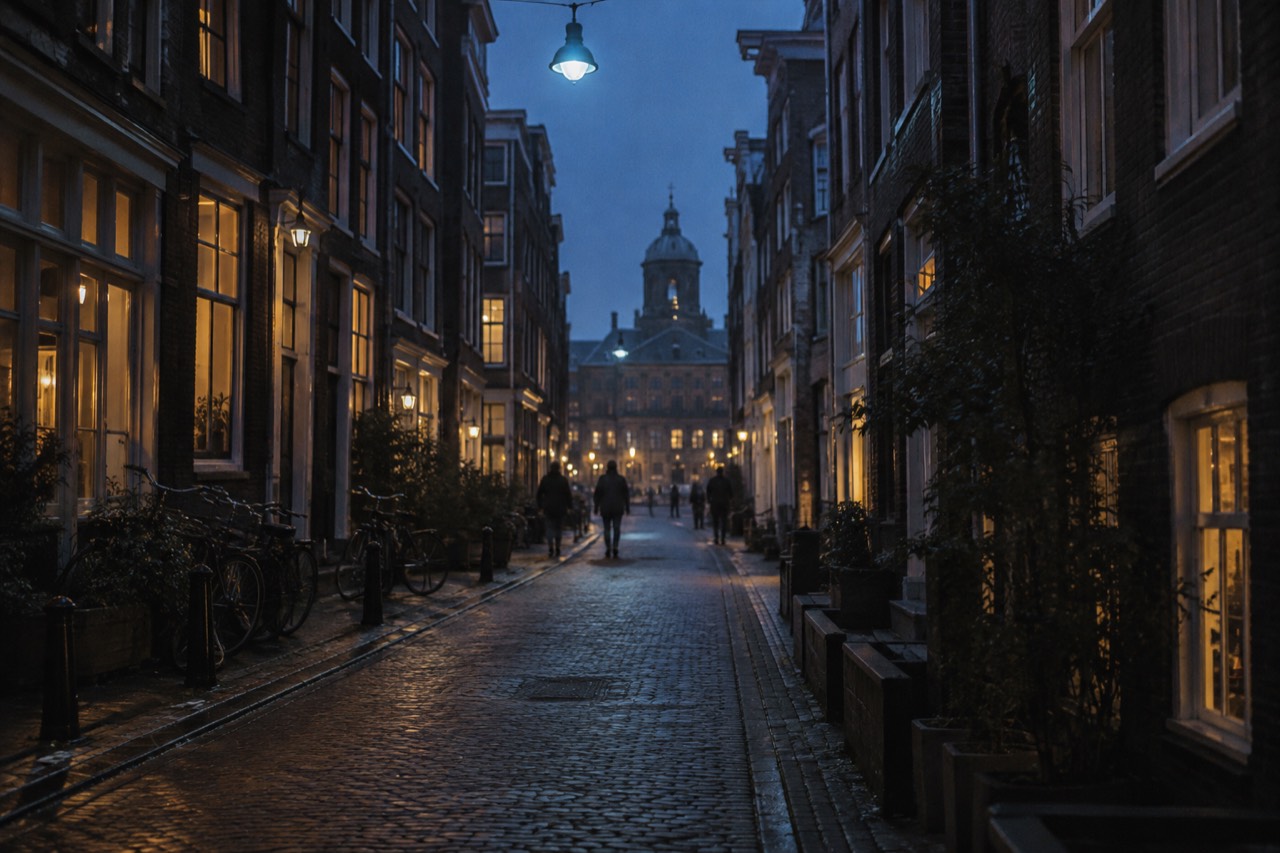
A blue light in Amsterdam almost always marks the workplace of a transgender sex worker in the red light district, in contrast to the red lights that mark the windows of cisgender women. The colour is a signal to clients, not a decoration, and it has been part of De Wallen for years. Outside the district, blue lighting on bridges and buildings is mostly architectural, and blue lamps on the water mark navigation points for boat traffic.
The question sounds odd until you have stood on a Oude Nieuwstraat pavement at 9pm and realised the glow around you is not red at all. Amsterdam's red light district is famous for its crimson-lit windows, but a few streets carry a different colour, and visitors who notice it usually want to know what changed. The short answer is the person behind the window, not the trade. Blue lights mark windows where transgender sex workers sit, a convention the district has used for a long time and one that guides, residents and the workers themselves treat as common knowledge.
The distinction matters more than it first appears. Clients looking for a specific experience use the colour as a directory, and the workers use it to avoid being approached by the wrong customers all night. It is a quiet, functional system inside a district that runs on unspoken signals, and once you know it, the whole neighbourhood reads differently. The blue-lit windows sit on a small number of streets in the Wallen area, and they are easy to walk past without a second look if you do not know the code.
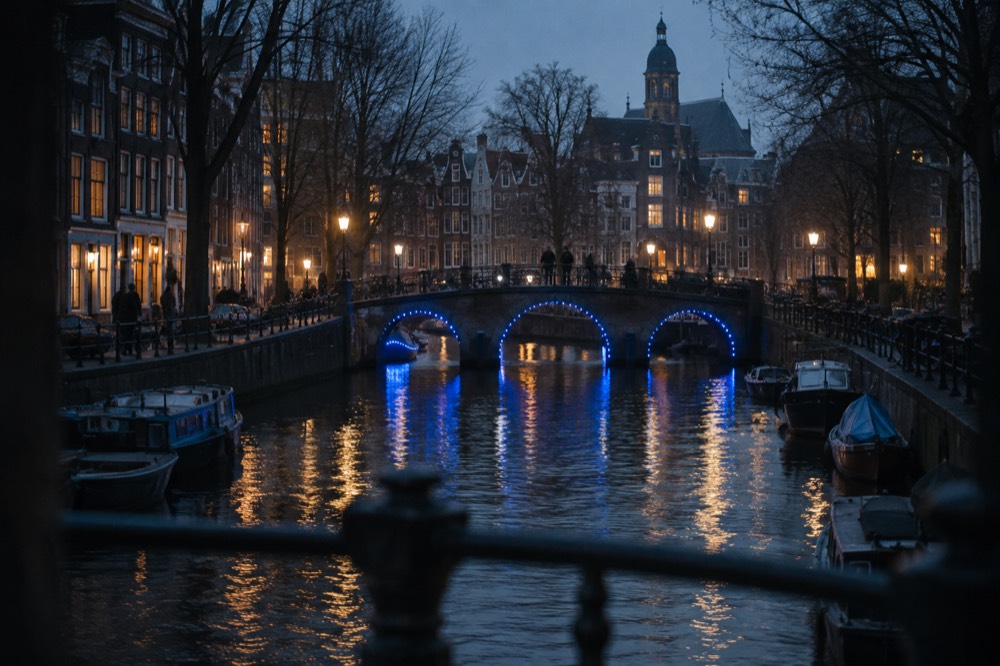
The rest of the city complicates the picture. Amsterdam lights many of its canal bridges and facades with blue-white lamps for atmosphere, and boats on the water carry blue navigation lights after dark. None of those mean anything about the sex industry. Context does all the work: a blue bulb above a ground-floor window with a glass door in De Wallen means one thing, and the same colour on a bridge over the Prinsengracht means nothing at all. This guide separates the two, then covers the rules that bind anyone walking through the blue-lit streets, because those rules are stricter than most visitors expect.
Before the practicalities, one thing worth saying plainly: the blue lights are a small, working part of a legal industry, and the streets around them are ordinary Amsterdam streets. If your evening plans include more than the district, the city's two biggest evening draws book up fast. The Van Gogh Museum, the Heineken Experience and a classic saloon boat cruise are the three most-booked paid experiences on our roster, and all three run evening or late-afternoon slots.
Where Are the Blue Lights in the Red Light District?
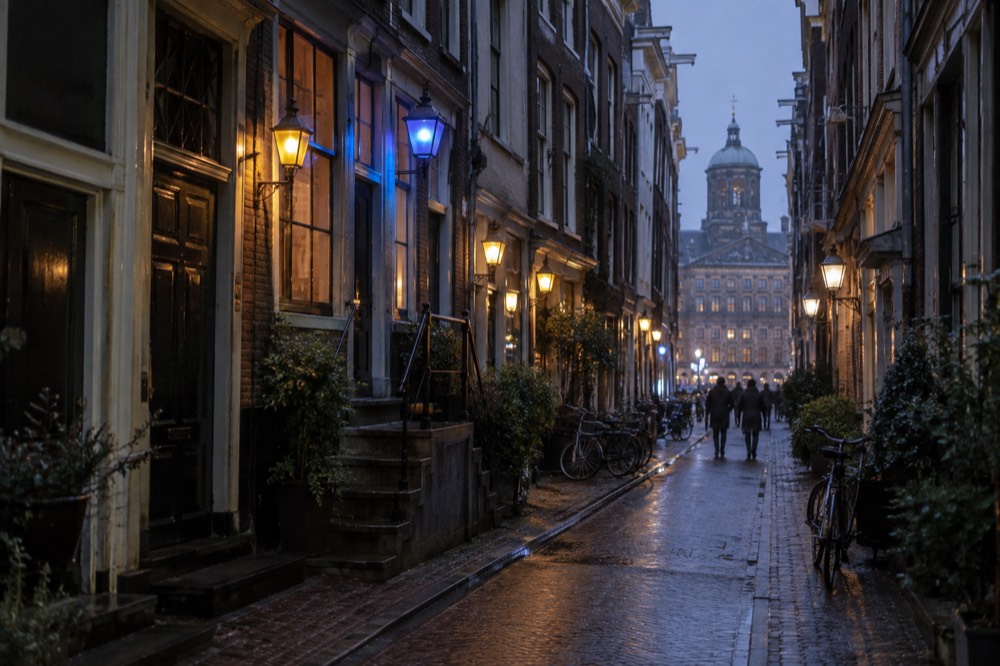
The blue-lit windows sit on a handful of streets in De Wallen, most notably the Oude Nieuwstraat and the streets immediately around it, a short walk east of Dam Square. The area is small enough to cross in ten minutes and is usually described as the "blue light district" by the guides who work there. Red windows dominate the rest of the Wallen, so the blue section is genuinely distinct rather than scattered.
De Wallen is the oldest and largest of Amsterdam's red light districts, a lattice of medieval lanes between Centraal Station and Nieuwmarkt. Within it, the blue lights cluster on a compact set of streets where transgender sex workers rent windows. Visitors describe the area as quieter and narrower than the main red-lit lanes, with fewer groups standing around and fewer hen parties. The windows themselves look identical to the red ones from the outside: a glass door, a stool, a bed behind a curtain. Only the lamp colour changes.
The geography is worth knowing because it shapes how you experience it. The famous red-lit stretches around the Oude Kerk draw the crowds and the noise, while the blue-lit streets sit a little apart and attract a steadier, purposeful footfall. If you are walking the district with a guide, the blue section usually comes with a short explanation of the colour system, which is where most visitors first hear it. If you are alone, you can pass through in a few minutes without noticing anything unusual at all.
One thing the city is unambiguous about: guided tours in De Wallen are regulated, and the rules bind every operator selling walks through the district. The municipal rules cap tour groups at 15 people, require an exemption for any group larger than four, and allow guided tours only between 08:00 and 22:00. No tour may pass the sex workers' windows, a rule the city has enforced since 2020 and restated in its current tour-permit rules on amsterdam.nl. Guides face fines of €190 and companies €950 for breaking them. Any walking tour you book in the district must be built around those limits, and the reputable ones are.
The same page of city rules bans alcohol and drugs on tours, megaphones and shouting, and stopping on busy bridges during restricted hours. The city's broader visitor campaign, How to Amsterdam, adds the etiquette layer: no photography of the windows, no shouting, no street drinking in the centre. The photography point is the one visitors break most often, and staff will intervene if they see a camera or phone raised toward a window. Treat it as a hard rule rather than a suggestion.
The practical takeaway is simple. You can walk the blue-lit streets freely, at any hour, as an individual. What is regulated is the commercial layer on top: tours, group sizes, hours and routes. A solo visitor following the etiquette encounters nothing but a quiet street with unusual lighting.
Wondering what else to book for the evening once you have seen the district? The classic saloon boat cruise is the city's most-reviewed way to see the canals after dark, and it pairs naturally with a Wallen walk because the departure docks sit minutes away.
Are Blue Lights Used Anywhere Else in Amsterdam?
Yes, but with entirely different meanings. Blue-white lamps light many canal bridges and building facades for atmosphere, boats carry blue navigation lights after dark, and emergency services use blue flashing lights exactly as everywhere else in Europe. None of these have any connection to the red light district, and visitors regularly mistake decorative bridge lighting for the blue light district.
The most common mix-up is architectural. Amsterdam's canal ring is deliberately lit at night with cool blue-white lamps, partly for beauty and partly because warm light washes out the brick and water. Stand on a bridge in the Jordaan or along the Amstel and the water below you will often glow a soft blue. First-time visitors who have read about the "blue light district" sometimes assume this is it. It is not. The blue-lit windows are ground-floor, door-level lamps in De Wallen and nowhere else; bridge lighting sits high, floods a whole surface, and follows the canal rather than a doorway. More of these guides are collected on Things to Do in Amsterdam.
The second blue you will see is on the water itself. Boats operating after dark show standard navigation lights, and the blue-white glow along a hull or a deck is a design choice by the cruise operators, who favour lighting that photographs well against dark water. A canal cruise at night is one of the city's best-value experiences: the classic saloon boat cruise runs one hour from $19.56, rated 4.8 across 33,435 reviews on the live listing, and the evening departures show the lit bridges at their best. If your question about blue lights is really a question about the glowing water in every Amsterdam night photo, the answer is a boat, a bridge and a long exposure.
The third blue is the universal one. Police, ambulance and fire vehicles in the Netherlands use blue flashing lights, as they do across Europe, and you will hear one long before you parse its colour. None of these three uses is connected, which is why locals rarely give the colour a second thought. It is only visitors, primed by the phrase "red light district", who read meaning into every blue bulb.
| Where you see it | What it is | Connected to the sex industry? |
|---|---|---|
| Ground-floor windows, De Wallen | Transgender sex workers' workplaces | Yes, this is the "blue light district" |
| Canal bridges and facades | Decorative blue-white city lighting | No |
| Boats after dark | Navigation and deck lighting | No |
| Vehicle flashing lights | Emergency services, as across Europe | No |
If the evening is shaping up around lights and water, the Heineken Experience is worth a look as well: the former brewery runs evening entry in peak periods, and the rooftop bar looks over the lit city. The ticket is $23.00 on the live listing, rated 4.6 across 39,581 reviews, and the 90-minute visit ends with the tasting room rather than the usual gift-shop shuffle.
Is the Blue Light District Safe to Walk Through?
Yes, for an individual visitor it is one of the most policed and most filmed stretches of the city, and the blue-lit streets are quieter than the main red-lit lanes. The risks are the ordinary ones of any busy nightlife area: pickpocketing, drunk crowds and overpriced bars. The real constraints are behavioural, not safety-related: no photography of the windows, no street drinking, and no cannabis smoking outdoors in the city centre.
De Wallen sits in the oldest part of Amsterdam, steps from Dam Square and Centraal Station, and it is busy every night of the week. The city's own guidance treats it as a normal neighbourhood with extra rules rather than a danger zone. The behaviour rules are the part visitors get wrong. Street drinking is prohibited in the city centre, public urination is prohibited, and, the detail that catches most people, smoking cannabis outdoors is banned in the centre including the Wallen area. Cannabis bought in a coffeeshop must be consumed there or in a private space, not on the street outside the blue windows. The exact fine amounts are not published on the city's pages, but the bans themselves are stated plainly on amsterdam.nl's How to Amsterdam guidance.
Pickpocketing is the one genuine risk worth planning for. Crowded, dark, distracted: the district is close to ideal for it. Keep valuables in a front pocket or a zipped bag, and be sceptical of anyone who initiates physical contact or asks you to hold something. The rest of the safety picture is unremarkable. Violent crime against visitors in the Wallen is rare, the streets are busy until late, and the window operators and residents have every incentive to keep the area calm.
Cannabis rules deserve a sentence of their own because they are widely misreported. The national tolerance policy exists, and Amsterdam has never applied the residents-only criterion that appears in national rules, so tourists can buy in coffeeshops. But "tolerated" is not "legal", the sale is capped at 5 grams per person per day, and the outdoor smoking ban in the centre is the rule that actually bites visitors. Our coffeeshop rules guide covers the full picture, and it is worth reading before a first visit rather than after a conversation with a police officer.
| Rule in the Wallen | What it means for you |
|---|---|
| No photography of the windows | A strong, staff-enforced norm; put the phone away entirely |
| No outdoor cannabis smoking in the city centre | Consume inside the coffeeshop or in private, not on the street |
| No street drinking in the centre | Finish your drink in the bar or on a licensed terrace |
| Guided tours capped at 15, hours 08:00 to 22:00 | Only affects booked tours; solo walking has no time limit |
| Tours may not pass the windows | Reputable guides route around the window lanes |
For context on the district as a whole, including where the red and blue sections sit relative to the Oude Kerk and Nieuwmarkt, our red light district guide maps the area street by street.
How Do You See the Blue Lights Respectfully?
Walk through as you would any street, keep your phone in your pocket, and do not stop and stare at the windows. The workers are professionals at work, the residents are locals going home, and the district functions best when visitors treat it as a street rather than a show. A paid walking tour is the respectful way to get the history, because licensed guides follow the city's routing rules and keep groups small.
The etiquette is short. Do not photograph, do not film, do not point. Do not knock on windows or initiate conversation unless you are a client. Do not drink on the street or smoke outdoors. Move steadily rather than clustering, and if you want to linger, do it on a square like Nieuwmarkt, not in front of a doorway. Locals can spot a respectful visitor at fifty paces, and the difference is entirely about whether you behave as though people live and work there, because they do.
If you want the history rather than just the atmosphere, book a tour rather than freelancing it. A licensed guide explains the colour system, the architecture and the centuries of the trade in ninety minutes, and the small-group format keeps you inside the city's rules. Our walking tours guide compares the free and paid options, including the pay-what-you-want model where the walk costs nothing to book and you tip the guide what it was worth.
One pairing works especially well for a first evening. Book a canal cruise for the hour after sunset, walk the Wallen and the blue-lit lanes beforehand or afterwards, and finish somewhere quiet in the Jordaan. The cruise gives you the lit bridges, the walk gives you the district, and the two together are the Amsterdam most visitors are picturing when they book the trip in the first place.
The Van Gogh Museum is the one to reserve furthest ahead if museums are on the list at all. Every visitor needs a pre-booked timed ticket, the official adult price is €25, under-18s go free, and the ticket on our roster starts at $31.00, rated 4.7 across 57,096 reviews. Evening slots exist on Fridays, when the museum runs late, and they sell out first.
To finish the evening plan in one place, these are the three experiences that pair best with a night walk through the Wallen.
Common Questions About Blue Lights in Amsterdam
What Does A Blue Light Mean In Amsterdam?
A blue light above a ground-floor window in De Wallen marks the workplace of a transgender sex worker, in contrast to the red lights that mark the windows of cisgender women. Elsewhere in the city, blue lighting on bridges and boats is decorative or navigational and has no connection to the district.
Where is the blue light district in Amsterdam?
It is a small cluster of streets within De Wallen, centred on the Oude Nieuwstraat and the lanes around it, a short walk east of Dam Square. It is small enough to cross in ten minutes and sits apart from the main red-lit stretches around the Oude Kerk.
Can you take photos of the blue windows?
No. Photography of any window in the district is the strongest enforced norm in the area, part of the city's official How to Amsterdam campaign, and staff will intervene if they see a camera or phone raised. Keep your phone in your pocket on those streets entirely.
Is the blue light district safe at night?
For an individual visitor it is one of the busiest and most policed parts of the centre, and the blue-lit streets are quieter than the main red lanes. The real risks are pickpocketing and drunk crowds, the same as any nightlife area. The rules that catch visitors out are behavioural: no street drinking and no outdoor cannabis smoking in the city centre.
Are guided tours allowed in the blue light district?
Guided tours in De Wallen are capped at 15 people, need an exemption for groups larger than four, and may only run between 08:00 and 22:00. No tour may pass the sex workers' windows. Solo walking has none of those restrictions.
Do blue lights on Amsterdam bridges mean anything?
No. The blue-white lamps on canal bridges and facades are decorative city lighting, and boats show blue navigation lights after dark. Only the ground-floor blue lamps in De Wallen carry the window meaning.