What Time Of Year Is Best To Visit Amsterdam?
A season-by-season answer to when to visit Amsterdam, with verified tulip dates, event calendars, museum prices and crowd context.
What Time Of Year Is Best To Visit Amsterdam?
The best time to visit Amsterdam is late April to early May, when the tulip fields around the city hit peak bloom and Keukenhof is open in nearby Lisse. The trade-off is crowds: Amsterdam recorded 23.7 million tourist overnight stays in 2025, and spring weekends carry a heavy share of them. If you want quiet streets and lower hotel rates, choose late autumn or January to February instead, and accept shorter days and greyer skies.
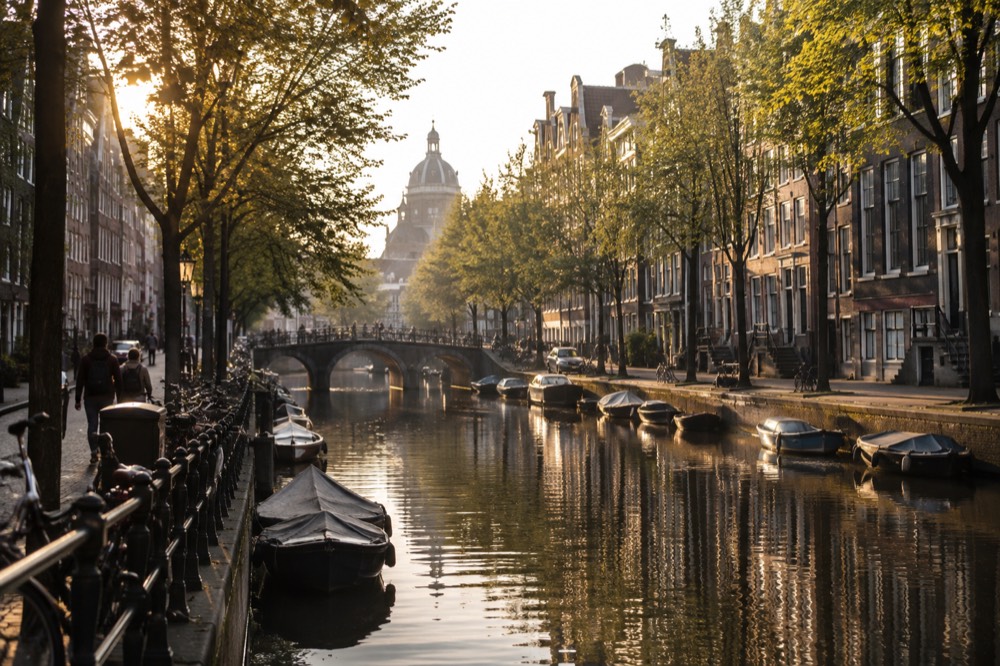
Every season in Amsterdam buys you something and charges you something else. Spring buys flowers and long light evenings, and charges you the biggest crowds of the year. Summer buys warmth and festival energy, and charges you hotel prices at their peak plus queues at every major museum. Autumn buys golden light over the canals and a calmer centre, and charges you rain and shorter days. Winter buys the cheapest beds and the prettiest canal-side lights, and charges you early darkness and a real chance of damp, windy weather.
The city's own numbers explain why timing matters so much here. Amsterdam's statistics office counted 23.7 million tourist overnight stays in 2025, alongside 21.9 million day visits, and forecasts between 23.7 and 25.1 million overnight stays for 2026. That volume lands on a centre that is small and walkable, which means a busy weekend genuinely feels busy, in a way the same visitor count spread across a larger city would not. Choosing your weeks well matters more in Amsterdam than in almost any comparable European capital.
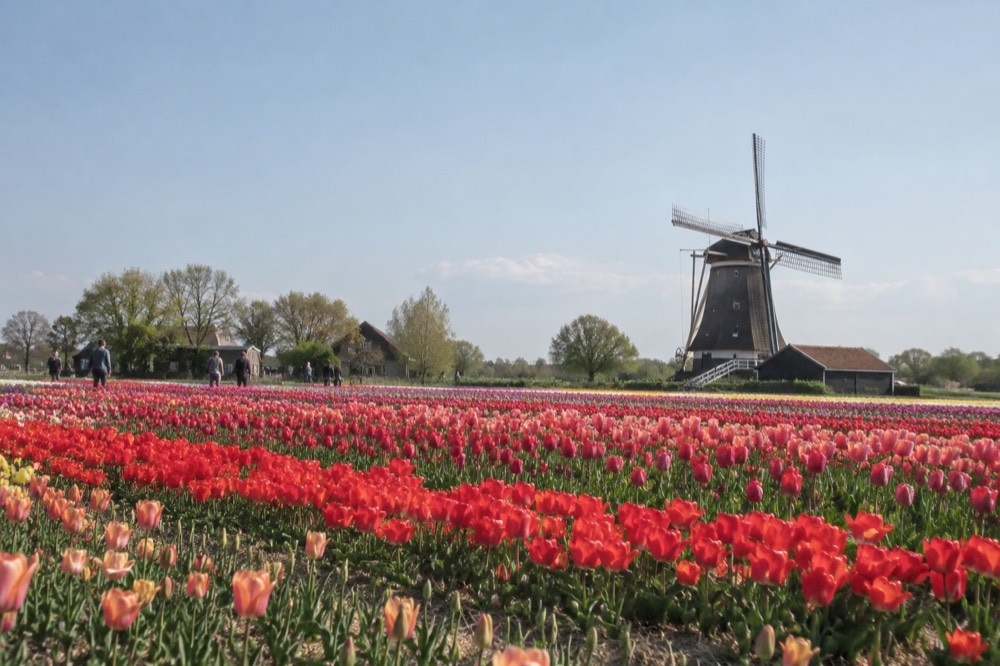
The single biggest calendar anchor is the tulip season. Keukenhof, the famous spring garden in Lisse roughly 30 to 40 minutes from Amsterdam, opens only for an eight-week window each year: for the 2027 season it runs from Thursday 18 March to Sunday 9 May, daily from 08:00 to 19:00, per the garden's own site. The field bloom outside the garden peaks roughly mid-April to early May, weather-dependent, so a visit in that band catches both the garden and the striped fields around it.
If tulips are the reason you are going, plan around those dates and book the two museums that need advance booking early. The Van Gogh Museum requires every visitor to pre-book a timed entry ticket, and the Rijksmuseum requires a booked start time for all visitors, including pass holders. Both charge adults €25. Those two facts, more than the weather, shape what a spring trip actually looks like on the ground.
Is Spring the Best Season for Amsterdam?
Spring is the best season for a first visit, and late April is the sweet spot inside it. Keukenhof's 2027 season runs 18 March to 9 May, tulip fields peak around mid-April to early May, and King's Day falls on Tuesday 27 April 2027. The cost is peak crowds at the major museums, so timed tickets must be booked well ahead, and hotel rates climb steeply around the holiday weekend.
Spring arrives slowly in the Netherlands, and the city changes character week by week. March can still feel wintry, with bare trees along the canals and a cutting wind off the water, but the first bulb fields south of the city begin colouring the polders by the middle of the month. By April the canal-ring lime trees are in leaf, the floating flower market on the Singel is at its busiest, and terrace seats reappear outside the brown cafés. The light in April and May is what photographers come for: long evenings, low sun across the water, and the gabled facades of the Grachtengordel lit from the side.
The calendar gives spring two anchors no other season can match. The first is Keukenhof, which is only ever open 19 March to 10 May in a normal year, and 18 March to 9 May for the 2027 season; the garden's own frequently-asked-questions page is the source for those dates, and any tour or article implying a longer season is simply wrong. The second is King's Day, the national holiday when Amsterdam turns into the largest street party of the year. For 2027 it falls on Tuesday 27 April, with King's Night, the heavier celebration, on the Monday evening before. Note one detail most guides miss: the royal family's official 2027 celebration is in Lelystad, not Amsterdam. Amsterdam's King's Day is the city's own street party, and it happens regardless of where the royals are.
The practical price of all this is booking pressure. The Van Gogh Museum states plainly that all visitors need a pre-booked timed entry ticket, and its adult price is €25. The Rijksmuseum likewise requires a booked start time for everyone, at €25 for adults, free for ages 18 and under. Neither is included in the I amsterdam City Card, so a spring itinerary built around those two museums means two separate advance bookings. The Anne Frank House is the hardest ticket of all: €16.50 for adults, sold only through the museum's own site for a specific date and time slot, with no door sales and no reseller, released six weeks ahead.
For the tulip fields themselves, the honest planning advice is to treat mid-April as the centre of the window rather than the edge of it. The fields around Lisse and the wider Bollenstreek peak somewhere in the mid-April to early May band, and the exact week shifts with the weather every year. A trip planned for the last week of April almost always catches bloom, and it also lands closest to King's Day, so decide whether the party is a feature or a bug for you before you fix your dates.
What Is Summer Like in Amsterdam?
Summer is the warmest, most sociable season, with long days stretching past 22:00 in June and the biggest events of the year, including Amsterdam Dance Event's autumn cousin the festival season, outdoor terraces and canal life at full volume. It is also the most expensive and most crowded time to visit, and the city's small centre means the pressure is concentrated. Choose summer for atmosphere, not for sightseeing efficiency.
Summer in Amsterdam is less about the sights and more about the water. Terraces spill onto every square, the canal boats run at full frequency, and the parks, above all the Vondelpark, fill from late afternoon until the light finally fades. Daylight is generous: in June the sky stays light well past ten in the evening, which is why the canal cruise is a different product in summer than in December. The classic one-hour cruise becomes a golden-evening affair, and the saloon boats that run the UNESCO-listed ring are at their best with the sun low over the water.
The trade-offs are real. Hotel rates peak in summer, and the 2025 average daily rate across the Amsterdam and Schiphol region was already under pressure from a VAT rise on Dutch accommodation to 21 percent in 2026, which pushes summer prices up further. Queues at the A'DAM Lookout, the Heineken Experience and the major museums stretch longest in July and August, and the walk from Dam Square to the Rijksmuseum can feel like a procession. Day-trip pressure compounds it: Zaanse Schans and Volendam, both easy half-day trips, are at their most congested on summer weekends.
A summer-specific tip that first-time visitors miss: the NEMO Science Museum's roof terrace is free to reach without a museum ticket, via the steps from the street or the lift in the entrance hall, per the museum's own press page. On a warm July afternoon it is one of the best open-air views over the old centre, and it costs nothing. Pair it with an early-evening cruise and you have the two best free-or-cheap summer experiences the city offers.
Is Autumn a Good Time to Visit Amsterdam?
Autumn, especially September and early October, is the connoisseur's choice: warm-ish days, golden light on the canals, thinner crowds once the school holidays end, and hotel rates that ease off their summer peak. The later it gets, the wetter and darker it becomes, but late autumn also brings the Amsterdam Light Festival, running 26 November 2026 to 17 January 2027, which turns the short days into an attraction.
September is arguably the single most underrated month in the city. The terraces are still out, the trees along the canals are starting to turn, and the visitor volume drops measurably once the August holiday season ends. The museums are busy but manageable: a timed slot at the Van Gogh Museum or the Rijksmuseum booked a few days ahead is usually available, unlike in April and May, where peak weeks sell out far earlier. Daylight is still generous through most of the month.
October brings two things. The first is the Amsterdam Dance Event, the electronic-music festival that fills the city's clubs and venues; the 2026 edition, its 30th, runs 21 to 25 October. The second is the turn in the weather, which is real but not disqualifying: Amsterdam is a city built for indoor weather, with more museums per square kilometre of centre than almost anywhere in Europe, and the brown cafés, the small wood-panelled traditional pubs, are at their best with rain on the windows.
November is the pivot month. The trees are bare, the rain is more frequent, and the light festival's installations switch the canal evenings into something genuinely worth seeing. The 2026/27 edition, the fifteenth, runs 26 November 2026 to 17 January 2027, and the canal cruise through the lit artworks is the standard way to see it. If you visit between Christmas and mid-January, the festival plus the cheaper hotel rates make winter suddenly competitive.
What About Winter in Amsterdam?
Winter is the cheapest and quietest time to visit Amsterdam, with the lowest hotel rates of the year in January and February and museum queues at their shortest. The days are short, with darkness by about 17:00, and the weather is damp rather than dramatically cold. The Amsterdam Light Festival, running to 17 January 2027, plus the winter terraces with heaters and blankets, make the season far more liveable than its reputation suggests.
Winter Amsterdam divides cleanly into two halves. December is a destination month: the light festival is running, the main squares hold Christmas markets, and the city has a genuine atmosphere of its own, even if the classic Dutch December is more about candles and gezelligheid, the untranslatable cosiness concept, than about snow. Snow does fall occasionally, and a canal ring dusted with snow is one of the great city sights of Europe, but plan for it as a bonus, never as an expectation.
January and February are the value months. Visitor numbers drop to their annual floor, hotel rates follow, and the museums become genuinely easy: the Rijksmuseum, open daily from 9am to 5pm including public holidays, can be visited at a walking pace, and the smaller gems, the Rembrandt House, the Museum of the Canals, the Houseboat Museum, feel like private visits. The trade-off is the light: darkness falls by about five in the afternoon, and the classic canal photographs are simply not available for most of the day.
Winter is also the season to do the indoor things properly. The Heineken Experience, in the original historic brewery, is an indoor attraction that loses nothing in January. The Van Gogh Museum's permanent collection is the same in any weather. And the canal cruise boats are heated and enclosed in winter, so the classic hour on the water remains comfortably available, which matters because the cruise is the single best orientation activity for a first-time visitor in any season.
Which Month Is Cheapest or Quietest in Amsterdam?
January and February are the cheapest and quietest months, with the year's lowest hotel rates and the shortest museum queues, followed by late November and early December. The most expensive and busiest periods are the tulip weeks from mid-April to early May, the King's Day holiday, and the July to August school-holiday stretch. Shoulder months, September, October and March, sit in between and often give the best overall balance.
The pricing logic of Amsterdam follows the Dutch school holidays and the tulip calendar more than the weather. The peak-demand spikes are Easter week when it falls in April, the King's Day holiday at the end of April, the tulip-field peak through the first week of May, and the summer school holidays from mid-July to late August. Outside those windows, rates fall fast. The city's tourist tax, 12.5 percent of the overnight price excluding VAT, applies year-round, so it shifts every hotel bill equally rather than changing the seasonal arithmetic.
For museum-goers, quiet and cheap are not always the same thing. Ticket prices at the major museums are flat year-round: the Rijksmuseum and the Van Gogh Museum both charge adults €25 in every season, and the Anne Frank House charges €16.50 whenever you go. What changes is availability. The Anne Frank House releases tickets only through its own official site, for a specific time slot, six weeks ahead, and they sell out fastest for spring and summer dates. A January slot is far easier to book than an April one.
The table below sets out the honest season-by-season trade-off, using the verified dates and prices from this article.
| Season | Best for | Main drawback |
|---|---|---|
| Spring (mid-March to mid-May) | Tulips, Keukenhof, long light evenings, King's Day | Peak crowds, hardest museum bookings, highest spring rates |
| Summer (June to August) | Warmth, terraces, festivals, canal life | Most expensive beds, longest queues, day-trip congestion |
| Autumn (September to November) | Golden light, thinner crowds, ADE, light festival from late November | Increasing rain, shortening days later in the season |
| Winter (December to February) | Lowest rates, quiet museums, light festival to mid-January | Dark by about 17:00, damp weather, reduced atmosphere outdoors |
A second table fixes the anchor dates worth building a trip around.
| Event or window | Dates | Booking pressure |
|---|---|---|
| Keukenhof 2027 season | 18 March to 9 May, daily 08:00 to 19:00 | High in peak bloom weeks, book tickets and transport ahead |
| Tulip field peak | Roughly mid-April to early May, weather-dependent | Highest, coincides with King's Day |
| King's Day 2027 | Tuesday 27 April, King's Night 26 April | Very high, book beds months ahead |
| Amsterdam Dance Event 2026 | 21 to 25 October | High for club and event tickets |
| Amsterdam Light Festival 2026/27 | 26 November 2026 to 17 January 2027 | Moderate, cruise slots fill on winter weekends |
The overall verdict, in one sentence: if this is a first and possibly only visit, go in late April and book everything early; if you have been before or value calm over flowers, go in September, or in January if budget leads.
Whatever month you choose, two bookings deserve to be made before you fly: the Van Gogh Museum, which requires a pre-booked timed ticket from every visitor and sells out first in the busy weeks, and the Anne Frank House, which is sold only on its own official site, six weeks ahead, and by nobody else. Both are covered in detail in our guide to Amsterdam museum tickets, and the seasonal side of the decision, including the tulip windows and the winter festivals, is set out in when to go: the best time to visit Amsterdam. For the flower season specifically, our Amsterdam in spring and tulip season guide carries the field-bloom detail, and the King's Day street party has its own page at King's Day in Amsterdam. More seasonal planning, from canal cruises to neighbourhood picks, sits on our Things to Do in Amsterdam homepage.
Whichever window you land on, the same three bookings cover most of the seasonal pressure points: a timed museum ticket, a brewery visit for the indoor hours, and a classic saloon-boat cruise for the hour on the water that every Amsterdam season rewards differently.
Common Questions About Visiting Amsterdam by Season
What Time Of Year Is Best To Visit Amsterdam?
Late April to early May is the best time for a first visit: tulip fields peak, Keukenhof is open through 9 May in the 2027 season, and the light is at its best. If crowds or budget matter more than flowers, September offers the best balance, and January to February the lowest prices.
What month do tulips bloom in Amsterdam?
The field tulips around Amsterdam peak roughly mid-April to early May, with the wider season running mid-March to mid-May depending on the weather. Keukenhof, the main garden, is only ever open for about eight weeks: 18 March to 9 May for the 2027 season.
Is Amsterdam too crowded in summer?
July and August are the busiest months, in a small centre that concentrates the pressure. The city counted 23.7 million tourist overnight stays in 2025, and summer carries a heavy share. Museums remain manageable with pre-booked timed tickets, but expect queues and peak hotel rates.
What is the cheapest month to visit Amsterdam?
January and February are the cheapest months, with the year's lowest hotel rates and the quietest museums. Late November and early December are the next best value, with the added draw of the Amsterdam Light Festival, which runs to 17 January in the 2026/27 season.
Does it snow in Amsterdam in winter?
Occasionally, and a snow-dusted canal ring is a genuine spectacle when it happens, but it should never be the reason for a winter trip. The normal Amsterdam winter is damp and around freezing, with darkness by about five in the afternoon and indoor attractions carrying the season.
Do I need to book Amsterdam museums in advance in every season?
The Van Gogh Museum and the Rijksmuseum both require timed entry in every season, at €25 for adults, and the Anne Frank House sells online-only slots six weeks ahead with no door sales. Booking pressure is highest from mid-April to August and lightest from November to February.