Amsterdam Museum: The City's Own Story in One Building
Most visitors walk straight past the Amsterdam Museum on their way to the Rijksmuseum or the Van Gogh Museum, and that is a reasonable mistake: the big names get the queues and the marketing. But this is the museum that tells the story of the city itself, from a fishing settlement on the Amstel to a global trading capital, and it does it a short walk from Dam Square.
Short answer
The Amsterdam Museum is the city's history museum on the Kalverstraat, a few minutes from Dam Square, covering Amsterdam from its medieval origins to today. Entry prices are on the museum's own site. It is smaller than the Rijksmuseum and needs roughly one to two hours, which makes it a strong pick for a rainy afternoon or a first-day orientation.
Most visitors walk straight past the Amsterdam Museum on their way to the Rijksmuseum or the Van Gogh Museum, and that is a reasonable mistake: the big names get the queues and the marketing. But this is the museum that tells the story of the city itself, from a fishing settlement on the Amstel to a global trading capital, and it does it a short walk from Dam Square. If you have ever wondered why the canals look the way they do, why the houses lean, or why a city of fewer than a million people has three world-class art museums, this is where the answers live.
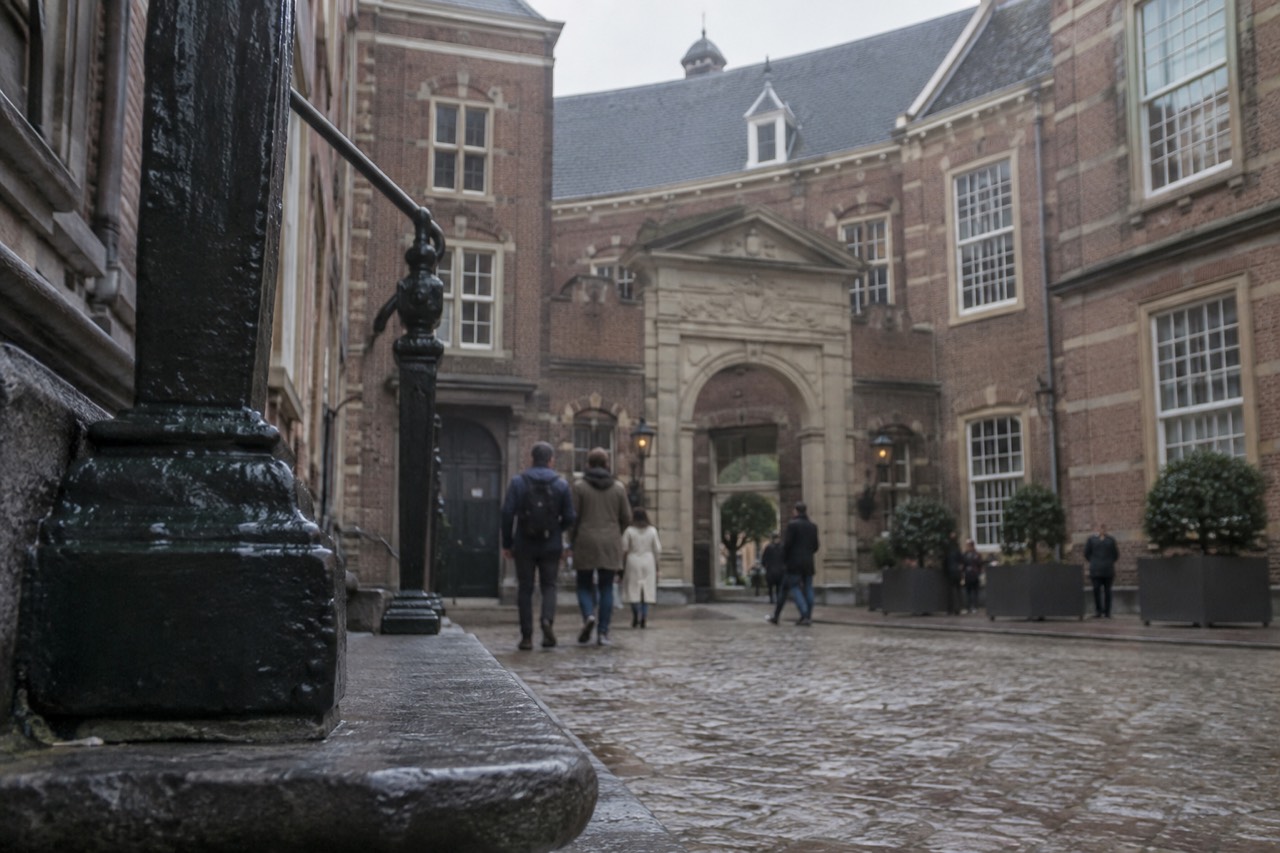
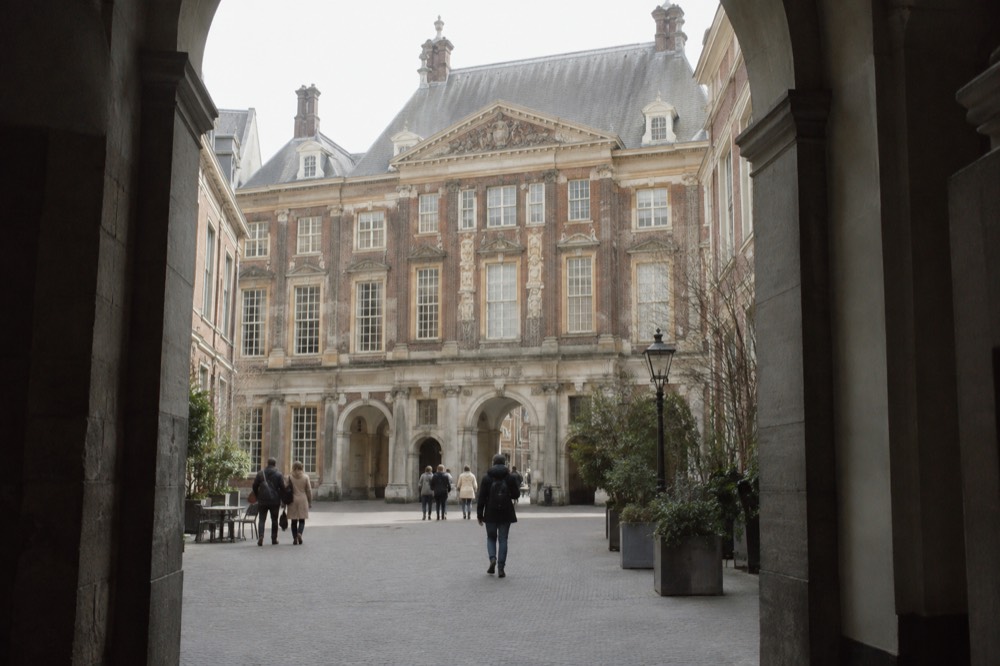
The museum sits in a former orphanage and monastery complex on the Kalverstraat, Amsterdam's main shopping street. That location is part of the point. You walk out of the shoe shops and the cheese sellers, through a gateway, and into a courtyard that has been in civic use since the Middle Ages. The building itself is one of the exhibits.
What Is the Amsterdam Museum?
The Amsterdam Museum is the city's history museum, housed in a former civic orphanage on the Kalverstraat, about five minutes' walk south of Dam Square. It covers centuries of Amsterdam's development, from a small settlement around a dam on the Amstel river to the modern city, using objects, paintings, models and interactive displays rather than one famous masterpiece.
The building's own history is a good part of the visit. The site began as a monastery, became the city's orphanage in the sixteenth century, and served in that role for centuries: thousands of Amsterdam children grew up here, and the museum does not hide that story. The civic orphanage closed in the twentieth century and the collection moved in shortly after, which is why the layout feels different from a purpose-built museum. You move through wings and courtyards rather than one grand gallery.
What distinguishes it from the Rijksmuseum, a ten-minute tram ride away, is the subject. The Rijksmuseum is a national art collection; the Amsterdam Museum is a city archive turned into an exhibition. Where the Rijksmuseum has The Night Watch, the Amsterdam Museum has the objects that explain the city that commissioned it: guild silver, city models, orphanage records, protest posters, and the paraphernalia of a port that spent three centuries shipping goods around the world.
The permanent presentation walks chronologically through the city's growth. The medieval settlement and the toll on the Amstel come first, then the Golden Age expansion that produced the canal ring you walk through today, then the decline, the twentieth century, and the city's modern identity as a place that argues with itself about tourism, tolerance and heritage. Temporary exhibitions usually take a slice of that story and go deeper; recent programmes have leaned on the city's relationship with its own myths, which is a very Amsterdam subject.
A visit needs one to two hours at a comfortable pace. That makes it a natural fit for the gap in a first-day itinerary between arriving, settling in and the evening, and a natural companion to a walk through the centre: the museum explains what you then go and look at.
What Can You See Inside?
Inside, the Amsterdam Museum holds the city's historical collection: medieval and Golden Age objects, city models, paintings of Amsterdam, orphanage history, and twentieth-century material covering the Provo movement, the squatters' era and modern debates about the city. The courtyard, the old orphanage chapel and the civic architecture of the building are part of the experience, and temporary exhibitions rotate through the year.
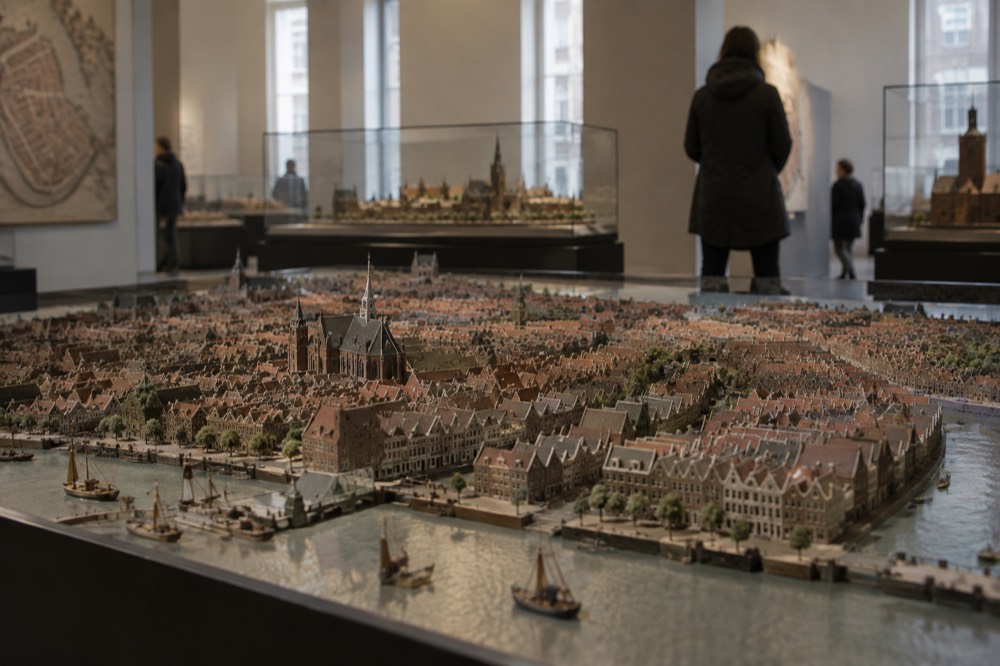
The Golden Age galleries are the heart of the permanent display for most visitors. This is where the city you are standing in was actually designed: the seventeenth-century expansion that turned a walled medieval town into the canal ring is explained with maps, models and the financing instruments that paid for it. Amsterdam's growth in that period was driven by trade and by an unusually pragmatic city government, and the museum presents both without the triumphalism you sometimes get elsewhere.
The twentieth-century material is the part that surprises people. Amsterdam's post-war story, the Provo movement, the squatter battles, and the long argument about coffeeshops and the red-light district are all treated as city history, because they are. A visitor who reads these galleries will understand the modern city's rules far better, and they pair well with our Amsterdam coffeeshop rules for tourists guide, which covers what those arguments produced in practice.
The orphanage story runs underneath everything. The Stadsweeshuis housed children for four centuries, and the museum keeps the registers, the uniforms and the rooms. It is a sobering thread through a building most visitors expect to be purely celebratory, and it is the reason the museum's voice is more reflective than most city museums.
If you are planning a museum-heavy trip, this is one of the few places that gives you the frame for everything else. The a museum day in Amsterdam itinerary shows how to chain the big institutions; the Amsterdam Museum works best either first, as orientation, or last, as the explanation of what you have seen.
How Do Tickets and Visiting Work?
Tickets for the Amsterdam Museum are sold through the museum's own website and at the door, and current prices are on the museum's site rather than repeated here, because the museum does not publish its adult rate through a stable public page this desk can verify. Allow one to two hours, check opening days before a short trip, and confirm pass coverage when you buy.
The honest position on prices: this desk does not publish a figure it cannot trace to a primary source, and the Amsterdam Museum's own admission price is not on a page we could read directly. The museum's website is the place to check. What we can verify is the landscape around it, and that landscape matters more than any single ticket price.
Two passes shape museum visiting in Amsterdam. The I amsterdam City Card includes free entry to more than 70 museums and locations, unlimited GVB transport and one canal cruise, but it excludes the two biggest draws: the Van Gogh Museum and the Anne Frank House are not included, confirmed from both the card's own FAQ and the Anne Frank House price table. The Museumkaart, at €75 for the year, covers more than 500 museums nationally, but it does not cover the Anne Frank House beyond the €1 booking fee, and it does not cover ARTIS Zoo (only the Groote Museum and Micropia on that site).
| Museum | Verified adult price | Timed entry | Under 18 |
|---|---|---|---|
| Rijksmuseum | €25 | Yes, book a start time | Free |
| Van Gogh Museum | €25 | Yes, pre-booked ticket required | Free |
| Anne Frank House | €16.50 including booking fee | Yes, online only, no door sales | €7 ages 10 to 17, €1 ages 0 to 9 |
| NEMO Science Museum | €21.50 ages 4 and over | Yes, tickets carry a start time | €21.50 ages 4 to 17, free 0 to 3 |
| Amsterdam Museum | On the museum's own site | Check when booking | Check when booking |
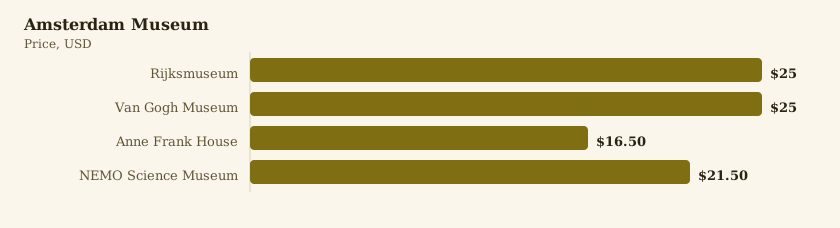
The Anne Frank House deserves its own warning, because it is the one Amsterdam ticket that trips people up. Tickets are sold only through the museum's own website for a specific date and time slot, with no door sales and no legitimate reseller. Nothing sold anywhere else, by any platform or pass, includes entry. If a listing implies otherwise, it is wrong.
Practical visiting notes for the Amsterdam Museum itself: the entrance is off the Kalverstraat, the main shopping street, so it is easy to reach on foot from Dam Square or by tram along the Rokin. The courtyard is worth five minutes even if you are rushing. Photography rules are posted inside. If you are combining the visit with shopping, the street you are standing on is the busiest in the centre, so go early or late.
How Does It Compare to Amsterdam's Other Museums?
The Amsterdam Museum is smaller and lighter on your time than the Rijksmuseum or the Van Gogh Museum, and it covers city history rather than art. Choose it for context and orientation; choose the Rijksmuseum for the Dutch Golden Age masters; choose the Van Gogh Museum for one painter in depth; and choose the Anne Frank House for the single most affecting hour in the city, which is also the hardest ticket to get.
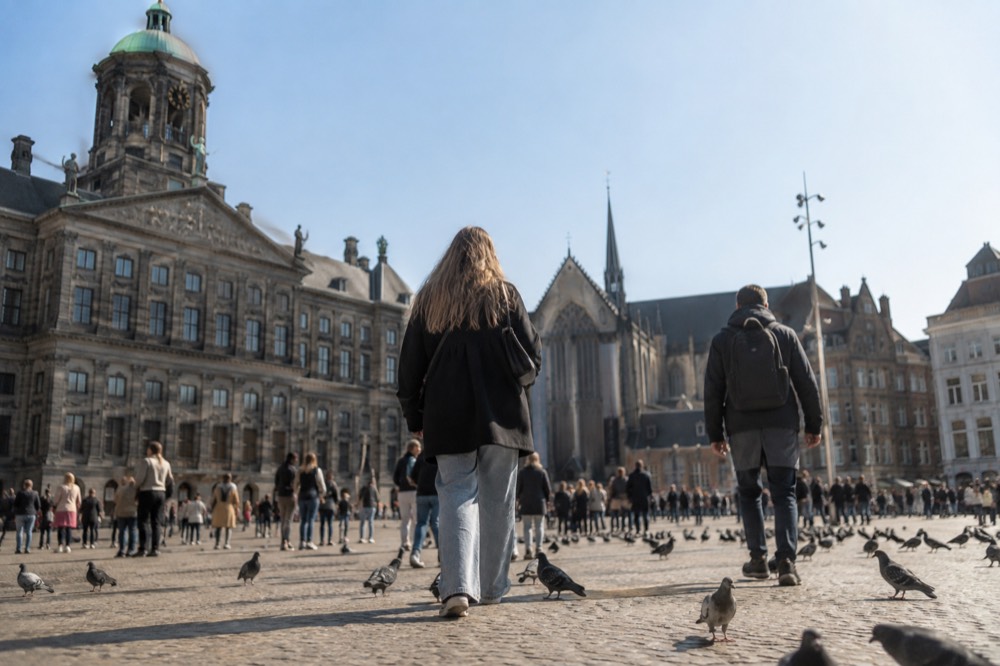
A useful way to think about the division of labour: the Amsterdam Museum tells you why the other museums exist. The money that filled the Rijksmuseum with Vermeer and Rembrandt was canal-trade money, and the canal ring that generated it is the museum's core subject. Visitors who do the history museum first consistently report that the art museums land harder afterwards, because the paintings stop being decoration and become evidence.
The comparison table below is the one this desk sends to people planning a first trip. Durations are realistic visit times, not the official minimums.
| Museum | Best for | Realistic visit | Booking pressure |
|---|---|---|---|
| Amsterdam Museum | City history and orientation | 1 to 2 hours | Low, walk-up usually fine |
| Rijksmuseum | Golden Age art | 2 to 4 hours | High, timed entry required |
| Van Gogh Museum | One painter in depth | 1.5 to 2 hours | Very high, tickets sell out |
| Anne Frank House | Wartime history | About 1 hour | Extreme, online only |
If you only have time for two museums, the strongest pairing for a first visit is the Amsterdam Museum plus one of the big two. The Van Gogh Museum ticket sold through the live listing is from $31 and carries a 4.7 rating across 57,096 reviews; the Rijksmuseum entry ticket is from $31 with a 4.7 across 33,205 reviews. Both are skip-the-queue products, which matters more than it sounds: the Van Gogh Museum in particular requires a pre-booked timed ticket for every visitor, so a ticket product is not a luxury there, it is the standard way in.
The Heineken Experience, from $23 with a 4.6 rating across 39,581 reviews, is the format contrast in that set: it is a brand experience in the original brewery rather than a museum, roughly 90 minutes, and it is the choice when the group contains people whose patience for paintings has run out. Our Heineken Experience guide covers what it actually is.
How Do You Fit It Into a Day?
The Amsterdam Museum sits between Dam Square and the canal ring, so the natural plan is Dam Square in the morning, the museum for one to two hours around midday, then the canal belt on foot in the afternoon, optionally ending with a one-hour canal cruise from about €15.50. Everything in that chain is walkable, and the museum's central position makes it the best wet-weather stop in the centre.
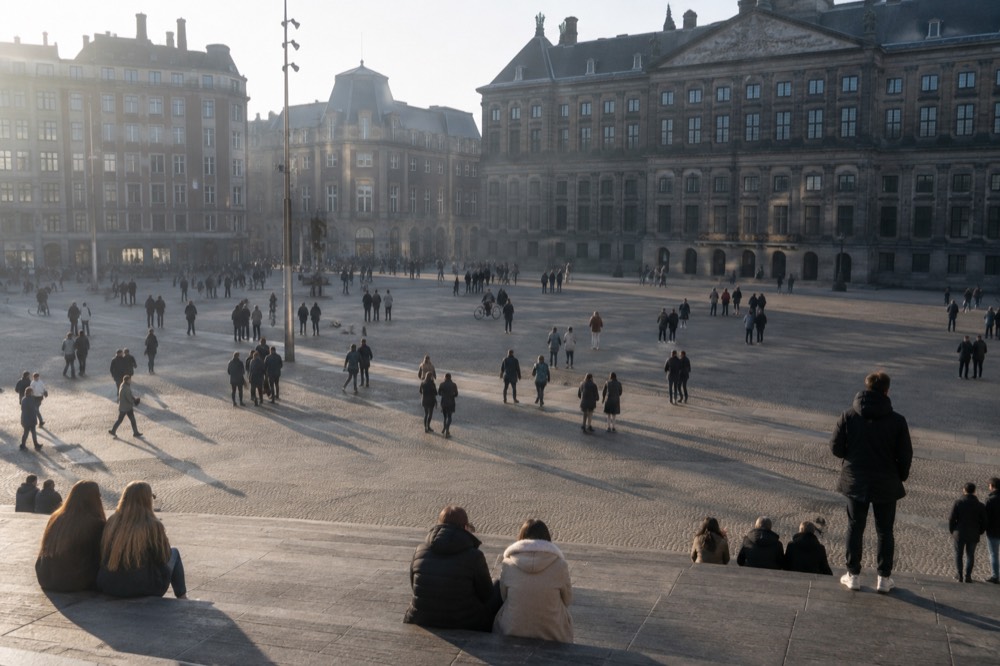
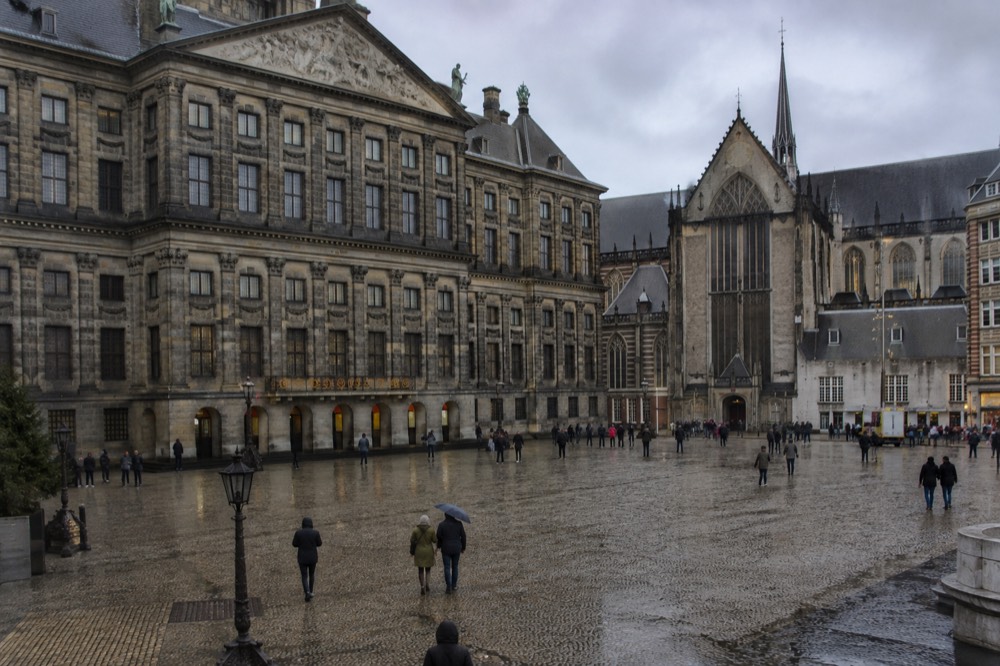
The geography is generous. Dam Square, the Royal Palace, the Begijnhof, the Amsterdam Museum and the entrance to the canal belt are all within ten minutes of each other. The Begijnhof in particular is a five-minute detour that most visitors miss entirely: a hidden courtyard from the Middle Ages, one block from the shopping crowd.
For a full day, the sequence that works is: morning at the Rijksmuseum or the Van Gogh Museum while energy is high and the timed slot is booked, lunch in the centre, the Amsterdam Museum early afternoon as the wind-down, then the Nine Streets or the Jordaan on foot. The one day in Amsterdam itinerary uses the museum in exactly this role, because a compact, central, history-first museum is the perfect bad-weather product: it is indoors, it is central, and it does not need a timed slot booked a fortnight ahead.
| Time | What to do | Why it works |
|---|---|---|
| Morning | Rijksmuseum or Van Gogh Museum | Timed slot booked, energy high, queues thinnest early |
| Midday | Lunch in the centre, then the Begijnhof | Five-minute detour, free, no ticket needed |
| Early afternoon | Amsterdam Museum, 1 to 2 hours | Walk-up visit, indoors, explains the city you just walked through |
| Late afternoon | Nine Streets or the Jordaan on foot | The canal ring the museum just explained |
| Evening | One-hour canal cruise | From about €15.50, the closing view of the same water |
The evening finish, if you want one, is a canal cruise. The classic saloon boat cruise is $19.56, with a 4.8 rating across 33,435 reviews, on restored wooden boats, some sailing since 1902, with an optional Dutch cheese and drinks upgrade. It is the right closing note after a history museum, because the cruise passes the very canal ring whose construction you have just read about. This is also where the wider Things to Do in Amsterdam picture comes in: the museum is one of the few stops that makes every other stop in the city make more sense.
If modern and contemporary art is more your group's speed than city history, the Moco Museum, from $20 with a 4.3 rating across 11,775 reviews, is on the Museumplein beside the big two and holds Banksy, Warhol and Haring. It is a different animal from the Amsterdam Museum, but it solves the same problem: what to do with the member of the party who has seen enough old masters.
Common Questions About the Amsterdam Museum
What is the Amsterdam Museum?
It is the city's history museum, in a former monastery and civic orphanage on the Kalverstraat, a few minutes from Dam Square. It covers Amsterdam from its medieval origins to the present, with Golden Age galleries, orphanage history and twentieth-century city material. Plan one to two hours.
How much does the Amsterdam Museum cost?
Current admission prices are on the museum's own website, which this desk does not republish without a verified primary source. For context, the Rijksmuseum and the Van Gogh Museum both charge adults €25, and the Anne Frank House charges €16.50 including its booking fee.
Is the Amsterdam Museum worth visiting?
Yes, if you want to understand the city rather than only see its art. It is the one museum that explains the canals, the houses and the modern rules, and it is small enough to fit into a half-day without derailing an itinerary. Art-first visitors with only one museum day should prioritise the Rijksmuseum or the Van Gogh Museum instead.
How long do you need at the Amsterdam Museum?
One to two hours covers the permanent display at a comfortable pace, longer if a temporary exhibition interests you. It is a walk-up visit in most cases, so it works as the flexible slot in a day otherwise pinned down by timed tickets.
Does the Museumkaart or I amsterdam City Card cover it?
Check the museum's own site for current pass coverage before you rely on it. The City Card includes more than 70 museums but excludes the Van Gogh Museum and the Anne Frank House, and the Museumkaart excludes the Anne Frank House beyond its €1 booking fee and does not cover ARTIS Zoo, so pass exclusions are common in Amsterdam and worth confirming per museum.
Where is the Amsterdam Museum located?
On the Kalverstraat, Amsterdam's main shopping street, about five minutes' walk south of Dam Square and close to the Begijnhof. Trams along the Rokin stop nearby, and the whole cluster of Dam Square, the museum and the canal belt entrance is comfortably walkable.