Eye Filmmuseum Amsterdam: What to See, How to Get There and Whether It's Worth It
The Eye Filmmuseum sits directly across the water from Centraal Station, a short ferry ride into Amsterdam Noord. It is the national museum of film in the Netherlands, and for most travellers it is either a rainy-afternoon rescue or a deliberate detour. Here is how to decide which it should be for you.
Short answer
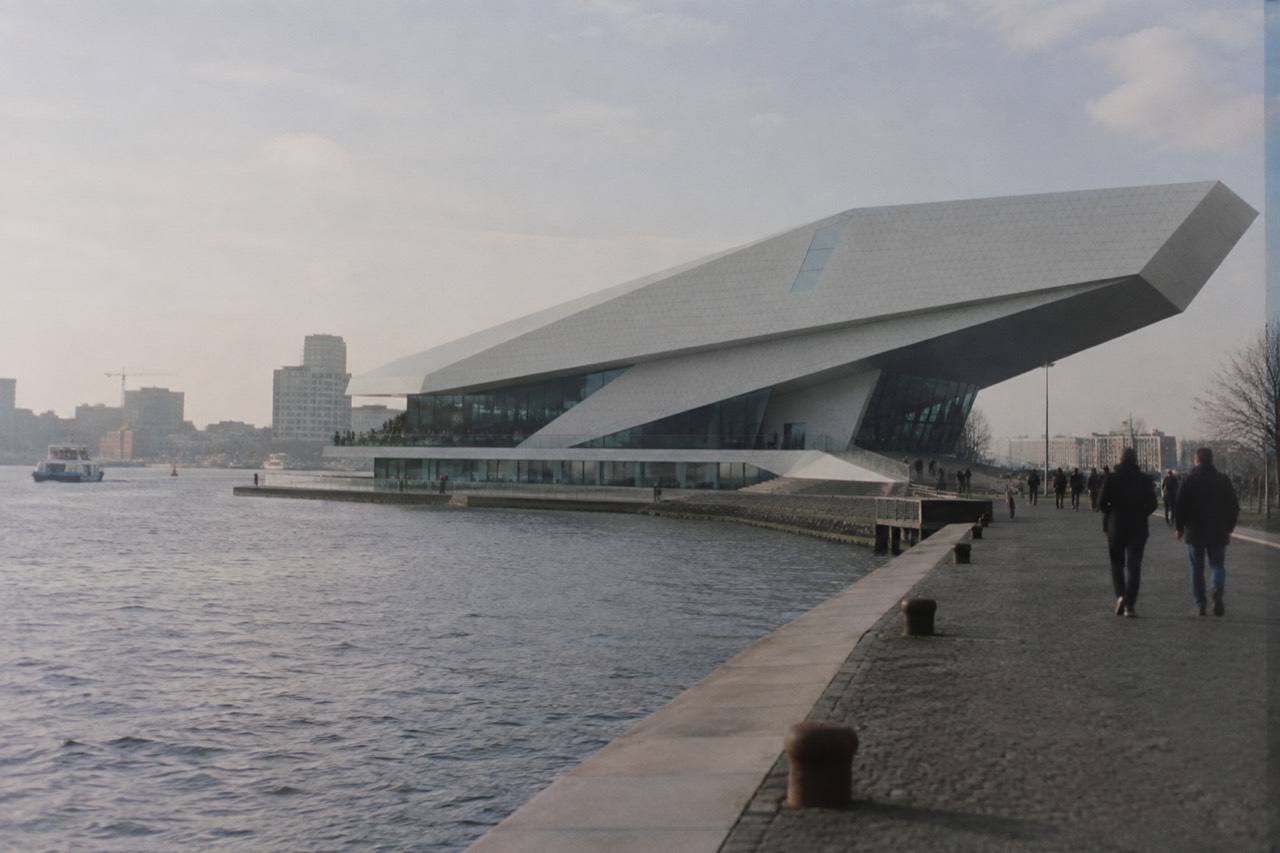
The Eye Filmmuseum is the Netherlands' national film museum, on the north bank of the IJ opposite Centraal Station, reached by a short GVB ferry crossing. Expect exhibition galleries, screening rooms and a striking waterfront building. Ticket prices and hours are listed on the museum's own site, and a visit typically fills two to three hours.
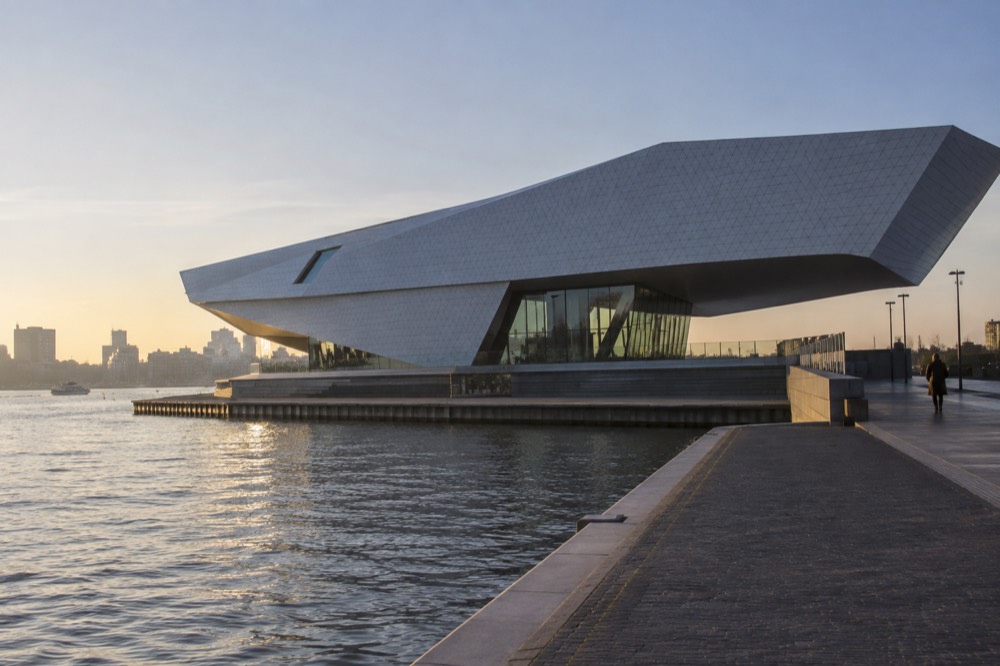
Amsterdam keeps its national film museum on the wrong side of the water, and that is half the point. The Eye Filmmuseum stands on the north bank of the IJ, staring back at Centraal Station across a working harbour, and the boat ride to reach it takes barely more time than reading this paragraph. Most visitors to Amsterdam never cross. The ones who do get a building that locals argue about, a collection of film heritage that spans the entire history of moving images, and a corner of the city that feels nothing like the canal ring.
This guide covers what the museum actually is, how the ferry connection works, what you will find inside, and the honest question of whether it deserves space in a short itinerary. It also maps the rest of the north bank, because once you are over there, you are within walking distance of two more attractions that pair well with a film afternoon.
What Is the Eye Filmmuseum?
The Eye Filmmuseum is the national museum of film in the Netherlands, housing the country's film collection in a purpose-built landmark on the IJ waterfront in Amsterdam Noord. Inside are permanent and temporary exhibitions on film history and art, four screening rooms showing classics and premieres, and a research collection spanning posters, photographs, scripts and film stock. It is a museum and a working cinema in one building.
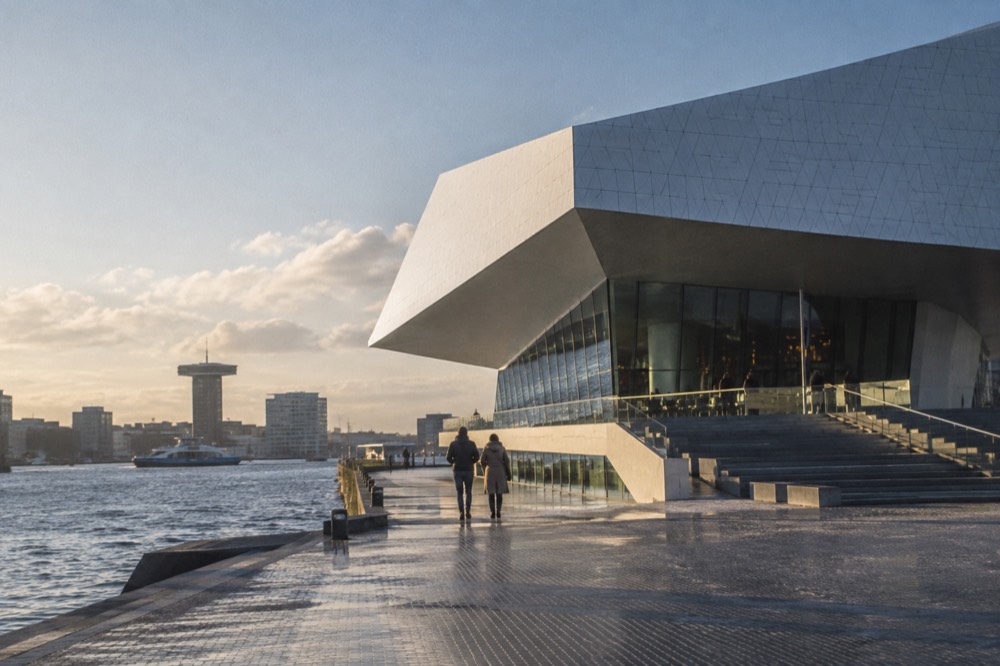
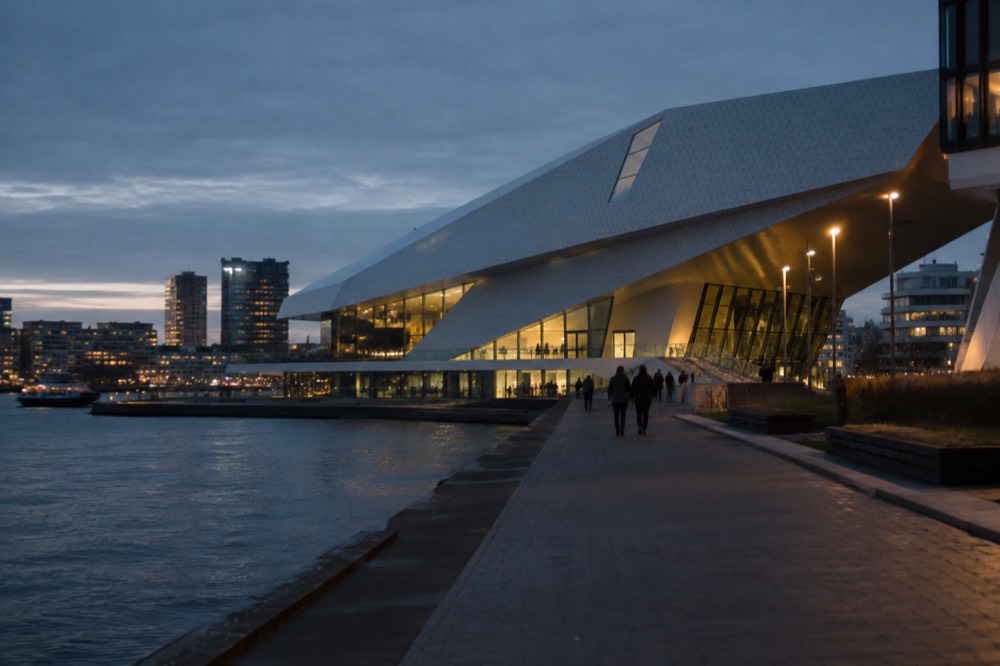
The institution is older than its building by many decades. The Dutch film archive spent most of the twentieth century in cramped quarters in the centre before moving to this site, and the collection it brought across the water is substantial: hundreds of thousands of photographs, tens of thousands of posters, and film prints reaching back to the earliest years of cinema. The building itself, with its angular white form leaning over the water, is regularly photographed from the south bank and has become one of the recognisable modern faces of Amsterdam, a deliberate counterpoint to the gabled seventeenth-century skyline behind it.
What surprises many first-time visitors is how much of the experience is cinematic rather than static. The screening rooms run a daily programme that mixes restored classics, documentaries, experimental work and new releases, often with introductions or live music. The exhibition spaces lean interactive: you can expect moving-image installations, playable film technology and rooms built around sound and light rather than glass cases. It is closer to a media playground than to a conventional museum walk, which is why it works well for teenagers and for travellers who have already done the Rijksmuseum and want something with a different tempo.
That difference in tempo is worth stating plainly. If your Amsterdam list is canals, Golden Age painting and a brewery, Eye is the odd one out, and that is exactly its value. The city's cultural weight sits heavily on the seventeenth century; this is the one major institution that tells you what the Netherlands did with the twentieth and twenty-first.
How Do You Get to the Eye Filmmuseum?
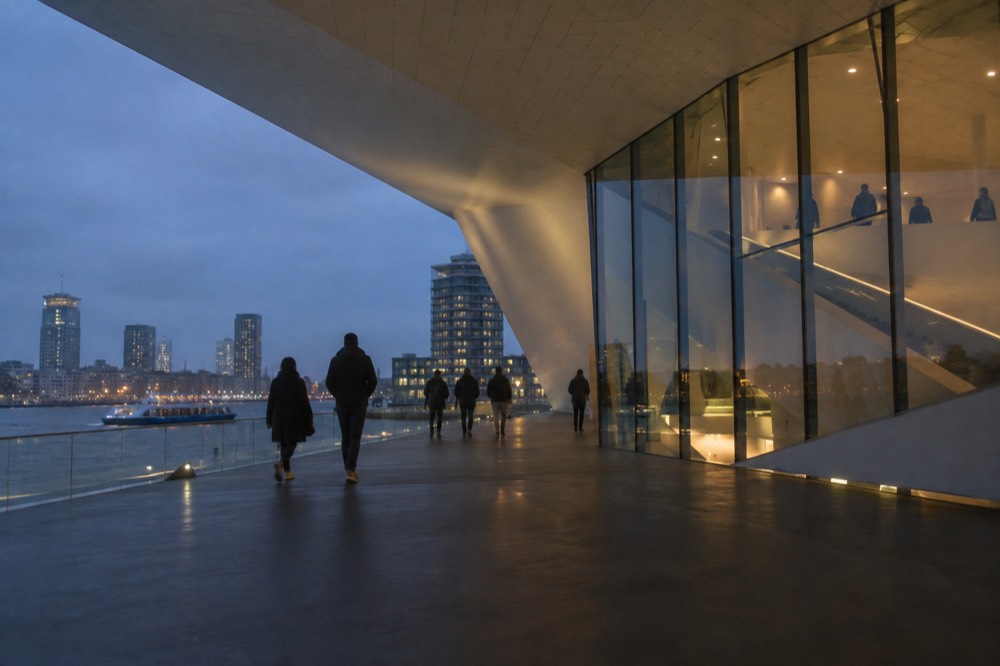
Take the GVB ferry from the jetty behind Centraal Station towards Buiksloterweg or the NDSM wharf, and step off directly at the north bank; the museum is a short walk from the Buiksloterweg stop. The crossing takes only a few minutes and runs day and night. Ferries are part of the GVB network, so the same tickets and passes that cover trams cover the boat.
The ferry is the story here. Amsterdam Noord was cut off from the centre by the IJ for centuries, bridged only by boats, and even now that road tunnels exist, the passenger ferries remain the way locals travel between the station and the north bank. You board at the set of piers on the west side of Centraal Station, behind the bus station, and the boats leave so frequently that checking a timetable is mostly unnecessary during the day. The Buiksloterweg route is the one you want for Eye; the museum's angular silhouette is visible from the moment you step ashore.
Fares work in your favour. A single GVB ticket covering one hour of travel costs €3,40, and a 24-hour day pass costs €10,00 for adults and €5,00 for children, per the operator's own fare page, and these cover tram, bus, metro and ferry alike. If you are already holding a multi-day GVB ticket or a pass that bundles transport, the ferry is simply included. The GVB price page lists the full ticket ladder, including the multi-day options that suit longer stays.
| Route | How | Cost | Notes |
|---|---|---|---|
| Centraal Station to Buiksloterweg | GVB ferry | Included in any valid GVB ticket | Shortest crossing, museum is a brief walk from the pier |
| Anywhere in the centre to Centraal | Tram, bus or metro | €3,40 single (1 hour) | €10,00 for a 24-hour adult day pass |
| Schiphol to Centraal Station | NS train | From €5.50 | About 17 minutes, per the operator's route page |
| Schiphol to the city centre | Amsterdam Airport Express bus 397 | From €6.50 single | Shares its ticket with the N97 night bus |
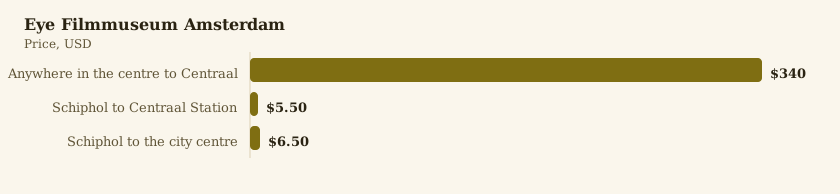
Coming from the airport, the train is the sensible spine of the journey: the NS route page quotes e-tickets from €5.50 and a journey of just over 17 minutes to Centraal, from where the ferry finishes the trip. Allow a comfortable half hour from stepping off your train to standing in front of Eye, including the walk through and behind the station. Cyclists and foot passengers board separate ferry lanes, so if you have rented a bike, follow the painted markings rather than the crowd.
One practical warning: the ferries are popular at rush hour with Noord commuters, and the decks can be packed with bicycles. It is a short crossing and perfectly safe, but if you are travelling with small children or luggage, position yourself near the rail rather than in the bike hold. At night the service thins out but does not stop, which matters if you have booked a late screening at Eye and are returning to the centre afterwards.
What Can You See and Do Inside the Eye Filmmuseum?
Inside Eye you will find a changing programme of exhibitions on film and moving-image art, four cinemas screening everything from restored silents to new releases, a basement gallery devoted to interactive film installations, a shop and a waterside cafe terrace with one of the best views of the city skyline. Current exhibitions, film listings and admission prices are published on the museum's own site.
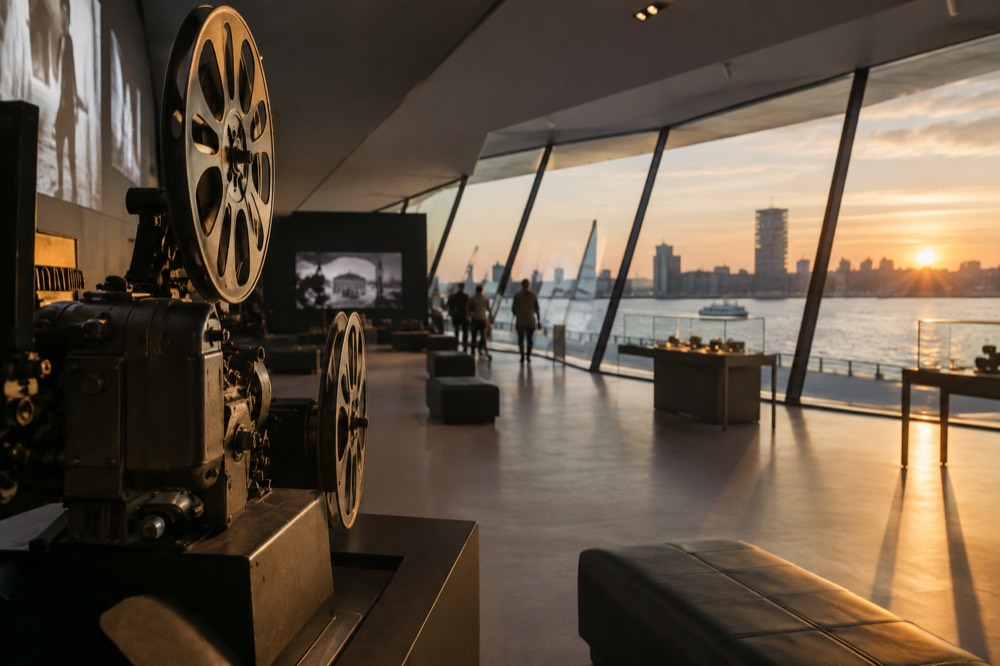
The exhibition programme is the reason to check the calendar before you commit. Eye does not have a single permanent show in the way the Rijksmuseum has The Night Watch; instead it rotates themed exhibitions built around directors, film movements, design or technology. A visit timed to a strong exhibition is a genuinely different experience from a visit in a between-shows week, so ten minutes on the museum's own website will tell you whether this is a two-hour stop or the centrepiece of your day. The same goes for the cinema programme: a restored classic on the big screen, sometimes with live accompaniment, can be the most memorable thing you do in Amsterdam that evening.
The basement is the part families remember. The interactive installation space lets visitors play with film mechanics, projection and sound, and it absorbs children and teenagers far longer than a conventional display would. Upstairs, the galleries carry the curated shows, and the shop stocks a serious selection of film books and posters that goes well beyond standard museum tat. The cafe terrace faces the water, and on a clear afternoon there are few better places in the city to sit with a coffee and watch the ferries criss-cross the IJ with the centre stacked behind them.
A common plan is to pair Eye with the Museum Quarter on the same day, using the ferry and the metro to stitch the two together. The Van Gogh Museum, the most-booked museum ticket in the city at 4.7 across 57,096 reviews on the live listing, sits at the opposite end of town, and its timed-entry system means you should book a slot before you commit to a north-bank morning. A sample rhythm: Eye and the north bank until mid-afternoon, tram or metro south, then an evening at the Van Gogh Museum when the Friday late openings run. Every visitor must pre-book a timed entry ticket for the Van Gogh Museum, and slots on peak days go early.
The booking question deserves its own beat, because it is the one thing that can undo an otherwise well-built day. Timed entry at the Van Gogh Museum is mandatory for every visitor, with no exceptions for pass holders, and the museum's own pages state plainly that tickets can sell out. If your ferry-and-film morning runs long, a pre-booked evening slot is what saves the plan; a walk-up hope is not a plan at all. Lock the slot first, then build the north bank around it.
If the evening is your focus rather than the afternoon, the north bank also has a brewer's answer to a film night. The Heineken Experience, in the former brewery in the centre, is the city's flagship beer attraction at 4.6 across 39,581 reviews, and travellers often book it as an early-evening stop before dinner. It is a different kind of Dutch storytelling, commercial rather than curatorial, but it rounds out a day that started with cinema heritage. Check the live listing for current times and the rooftop option.
Is the Eye Filmmuseum Worth Visiting?
Eye is worth visiting if you have at least three days in Amsterdam, an interest in film, or a rainy afternoon to fill; it is skippable on a first visit of two days or fewer, when the canal ring, the Rijksmuseum and the Van Gogh Museum rightly take priority. Film lovers should treat it as essential. Families with teenagers rate it highly because the interactive spaces hold attention.
The honest calculus depends on your itinerary's density. Amsterdam punishes over-planning: the centre is small, but every major museum eats half a day once you count queues, travel and recovery. If you are working through three days in Amsterdam, Eye slots naturally into the afternoon of a Noord-and-water day. If you are compressing the city into a weekend, the ferry detour costs you two hours you will want for the core sights, and the museum will still be there on your second visit.
For specific traveller types the answer flips. Photographers get a building worth crossing the water for, especially shot from the south bank at dusk. Anyone travelling with teenagers will find the interactive basement a relief after a week of Old Masters. Solo travellers and couples get a genuinely local-feeling venue where the audience skews Amsterdammers rather than tour groups. And in bad weather, which Amsterdam supplies generously, a museum-cinema hybrid that can absorb four hours is worth its weight in guilder-era gold.
The building divides opinion, and it is fine to say so. Some Amsterdammers consider it a triumph of contemporary architecture; others think it looks like a crashed spaceship. Both camps agree the terrace view is superb. That argument is itself part of the experience: Eye is the city's most visible statement that Amsterdam did not stop building interesting things when the Golden Age ended.
What's Near the Eye Filmmuseum on the North Bank?
Within walking distance of Eye are the A'DAM Lookout observation deck with its rooftop swing, the STRAAT street art museum in a converted warehouse, and the ferry routes onward to the NDSM wharf, Amsterdam's post-industrial creative quarter. The north bank rewards a half day rather than a quick stop, and the ferry connections make combining all three straightforward.
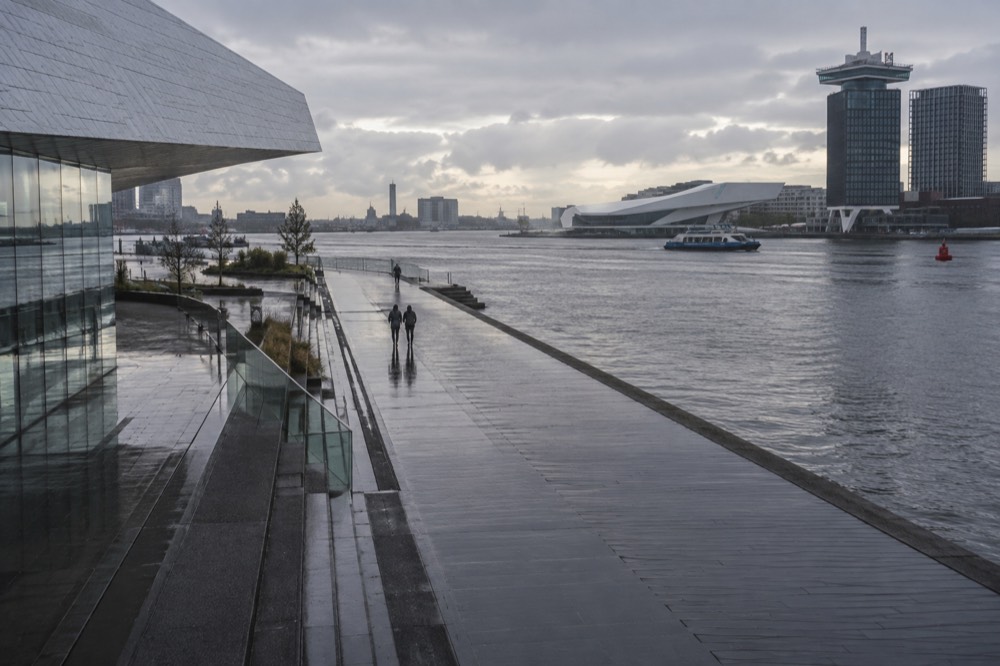
The A'DAM Lookout is the nearest headline attraction, a tower a short walk from the museum with an observation deck at 4.6 across 5,109 reviews on the live listing, where a ticket including one drink starts from $24. Its official pricing is transparent: €16.50 online, €18.50 at the counter, with the "Over the Edge" swing as an add-on at €7.50 online and a minimum height of 1.20 metres. Families should note the combination tickets before choosing at the door, since the online discount applies to those too.
STRAAT, the street art museum in a former shipbuilding warehouse, holds more than 180 works by over 170 artists, and its entry ticket starts from $24 on the live listing with a 4.8 rating. It is the same industrial-heritage register as Eye itself, and the two make a natural pairing: film and paint, both in bold modern shells. For the full sweep of the neighbourhood, including the NDSM wharf's cafes, studios and festival grounds, our Amsterdam Noord and NDSM wharf guide covers the walking routes and ferry timings in detail.
| North Bank Stop | What It Is | Entry Cost | Good For |
|---|---|---|---|
| Eye Filmmuseum | National film museum with exhibitions and cinemas | Check the museum's own site | Film fans, teenagers, rainy hours |
| A'DAM Lookout | Observation deck with rooftop swing | €16.50 online, €18.50 at the counter | Skyline views, thrill seekers |
| STRAAT Museum | Street art museum in a former warehouse | From $24 on the live listing | Contemporary art, photography |
| NDSM wharf | Creative quarter with cafes and studios | Free to wander | Slow afternoons, street photography |
A sensible half-day shape is Eye first, STRAAT second, the Lookout for the sunset view, and the ferry home in the dark with the centre lit across the water. Do it in that order and you never backtrack, because the three buildings sit along the same stretch of waterfront. On the way back, the ferry approach to Centraal Station at night, the station facade rising out of the black water, is quietly one of the best free views in the city.
Planning Tips for Your Visit
Plan two to three hours for Eye itself, longer if you book a screening; check the museum's own site for current admission prices, exhibition details and film times before you travel, since the programme changes constantly; arrive by ferry from Centraal Station rather than driving; and book any same-day Van Gogh Museum slot in advance, because timed entries sell out and the two museums pair well.
| Question | Short Answer |
|---|---|
| How long does a visit take? | Two to three hours for the exhibitions; add the length of any film screening you book |
| Where do I buy tickets? | The museum's own site lists current prices and timed options; check before travelling |
| Best time of day? | Mornings are quieter; late afternoons pair well with an evening screening |
| Is it good for children? | Yes, especially the interactive basement spaces; teenagers in particular |
| Can I eat there? | There is a cafe with a waterside terrace facing the city skyline |
| Is it accessible? | Check the museum's own accessibility page for lift access and screening room details |
A few things worth knowing that the listings do not shout about. The cinema programme is published separately from the exhibitions, and a ticket to a film is usually separate from museum admission, so decide whether you are doing one or both before you queue. The building is a short walk from the ferry, but the north bank wind comes straight off the IJ with nothing to slow it, so a layer you can close is worth carrying even in summer. And if you are photographing the building itself, the best light on the white facade comes late in the day from the south bank, which means riding the ferry back and forth a couple of times, a price most photographers happily pay.
For travellers building the day around water rather than land, a canal cruise is the natural bookend. A classic saloon boat cruise, a one-hour trip on a restored late-nineteenth-century electric boat with drinks and cheese options, runs from $19.56 and carries a 4.8 rating across 33,435 reviews on the live listing. Doing the cruise in the morning and Eye in the afternoon gives you the city from the water and the city's cinema from the shore, two halves of the same story about a place built around its harbour.
That combination, a boat in the morning and a film museum in the afternoon, is also the answer to the most common complaint about Amsterdam: that the centre can feel like a queue with scenery. The north bank does not queue. It has space, wind, water and a building that looks like it landed by accident, and for a few hours it gives you the city as the Amsterdammers who live there actually use it. For more on how the whole area fits together, including where to eat on the way back, see our Amsterdam Noord and NDSM wharf guide, and for the wider picture of what the city offers beyond the canal ring, start with Things to Do in Amsterdam.
Common Questions About the Eye Filmmuseum
How do I get to the Eye Filmmuseum from Centraal Station?
Walk to the ferry piers behind the station's west side and take the GVB ferry towards Buiksloterweg. The crossing takes a few minutes and the museum is a short walk from the pier. Any valid GVB ticket or pass covers the ferry, including the €3,40 single and the €10.00 24-hour day pass.
How long should I spend at the Eye Filmmuseum?
Plan on two to three hours for the exhibitions and the interactive basement spaces. If you book a film screening in one of the cinemas, add the length of the film plus time for the terrace and shop.
Is the Eye Filmmuseum good for families and teenagers?
Yes. The interactive installations in the basement are built for playing with film technology, and teenagers tend to stay engaged far longer than they would in a conventional museum. The cinema programme also gives the visit a natural endpoint.
What else is near the Eye Filmmuseum?
The A'DAM Lookout observation deck and the STRAAT street art museum are both within walking distance, and the ferry to the NDSM wharf leaves from the same shoreline. The three attractions can be combined comfortably in a half day.
Where can I find current Eye Filmmuseum ticket prices and hours?
On the museum's own website. The exhibition programme, film listings and admission prices change regularly, so check the official site before you travel rather than relying on third-party figures.
Can I combine the Eye Filmmuseum with museums in the centre on the same day?
Yes, and it is a popular pattern: north bank in the morning and early afternoon, then a tram or metro south to the Museum Quarter. If the Van Gogh Museum is on the list, book your timed entry in advance, since all visitors must pre-book and peak slots sell out.