H'ART Museum Amsterdam: The Former Hermitage on the Amstel
The H'ART Museum occupies the Amstelhof, a 17th-century almshouse on the Amstel, and shows rotating exhibitions built with partner museums from abroad. This guide covers what to expect, how to plan the visit, and how it fits with the rest of a museum day in Amsterdam.
Short answer
The H'ART Museum is Amsterdam's former Hermitage, a landmark building on the Amstel that now hosts changing exhibitions created with international partner museums rather than a permanent collection. Plan on roughly two hours, check the current exhibition and ticket prices on the museum's own site before you go, and pair it with the canal belt or Museumplein.
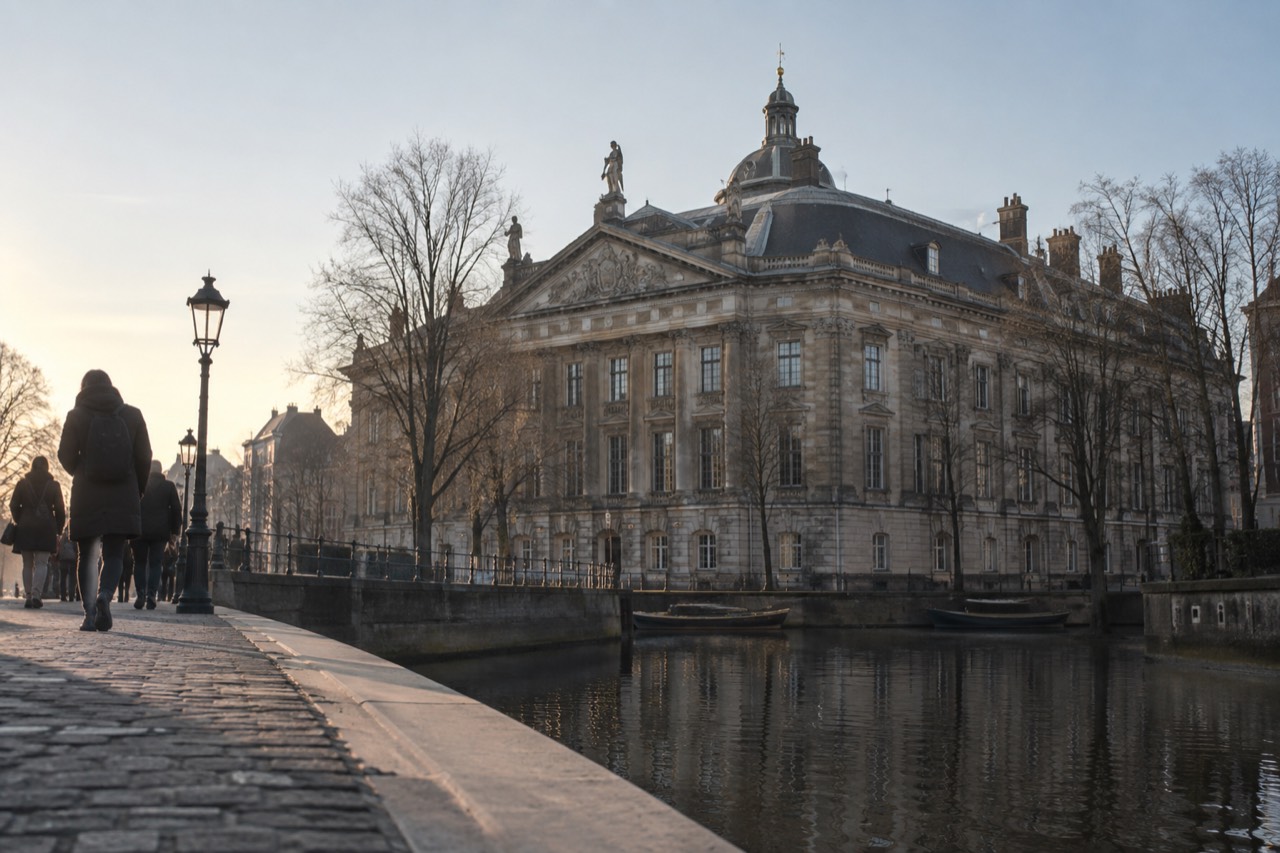
The Amstelhof is one of the largest historic buildings in Amsterdam's centre: a brick almshouse finished in the 1680s to house elderly women, stretched along the Amstel river for most of a city block. For years it operated as the Hermitage Amsterdam, a satellite of the Russian State Hermitage. Since 2023 the building has been the H'ART Museum, and its purpose has changed with its name. Instead of a permanent collection it now stages rotating exhibitions built with partner museums abroad, which makes it a different proposition from the Rijksmuseum or the Van Gogh Museum down the road.
That difference is the whole reason to plan this visit deliberately. The big museums sell a fixed experience; the H'ART Museum sells whatever is on during your dates. Some travellers arrive expecting a Russian collection that is no longer there, and leave disappointed. Others check the programme first, arrive for an exhibition they actually want to see, and rate the building itself, the Amstel setting and the generous galleries among the nicer museum afternoons in the city. This guide, from the editorial desk behind Things to Do in Amsterdam, sets out what the museum is, how to plan tickets and timing, and how it fits alongside the rest of a museum day.
What Is the H'ART Museum and Why Did the Hermitage Change?
The H'ART Museum is the renamed Hermitage Amsterdam, the landmark Amstelhof building on the Amstel river, which stopped showing the Russian State Hermitage's collection after the partnership ended and now stages rotating exhibitions created with partner museums abroad, including institutions in Paris and elsewhere, so the building and its programme are two separate things to evaluate.
The building's own story is worth the walk even before the art. The Amstelhof was designed as a charity institution, and its long classical facade, arranged around a courtyard garden, was purpose-built in the 1680s for the city's elderly poor women who met the residence criteria of the day. It functioned as an almshouse for over three centuries, one of the grandest charitable buildings of the Dutch Golden Age. When it reopened as a museum space in 2009 it was one of the largest exhibition venues in the country, and the renovation kept the courtyard and much of the historic structure intact.
The Russian partnership gave the museum its identity for more than a decade. Paintings, jewellery and decorative arts from Saint Petersburg rotated through the galleries, and the "Hermitage Amsterdam" name drew visitors who knew the brand. After the invasion of Ukraine in 2022, that partnership ended, the building closed for a period, and it reopened in 2023 under the H'ART name with a new model: temporary exhibitions assembled with partner institutions, plus a connection to the Amsterdam Museum's collection in part of the building.
What that means practically is simple: there is no permanent collection to see "before it changes". Whatever you visit, you visit a specific exhibition, and you should check the museum's own site for the current programme and its ticket prices, because the desk here does not publish a figure for this museum that the primary sources have not verified. The museum sits on the Amstel at Amstel 51, a five-minute walk from the Blauwbrug bridge and the edge of the canal belt, which makes it one of the easiest big museums in the city to combine with a walk through the UNESCO canal ring.
Which Exhibitions Are On at the H'ART Museum?
The exhibition programme rotates continuously, built with partner museums such as the Centre Pompidou in Paris and other international institutions, so what is on during your visit depends entirely on your dates: check the museum's own website for the current and upcoming shows before you plan, because unlike the Rijksmuseum or the Van Gogh Museum there is no permanent collection to fall back on.
The partnership model is the museum's identity now. Rather than owning a permanent hang, the H'ART Museum works with partner institutions to bring themed exhibitions to Amsterdam, typically large, generously hung shows in the building's wide galleries. The Centre Pompidou partnership has produced shows drawn from the Paris museum's modern and contemporary holdings, and the programme has also reached back into Dutch and Flemish art history for loan exhibitions. The scale of the building means a single major show can occupy the full visit.
That has consequences for how you should book. A show you are excited about justifies the trip; a show you are indifferent to does not, and the honest advice is to look at the current programme first and decide second. Reviews of the museum swing with the exhibition: a strong show draws long queues and full galleries, a transitional period between shows can leave parts of the building closed. The museum's own site lists what is open, what is coming, and the ticket options for each, and those figures belong to the museum, not to this desk.
The building shares its space, too. Part of the Amstelhof complex houses the Amsterdam Museum's repository and exhibition activity, and the courtyard garden is one of the quietest green spaces in the centre, open to visitors of the museum. Families should note that exhibitions vary in how child-friendly they are; a decorative-arts show and an immersive contemporary show are different days out, and the museum's site says which audience each exhibition targets.
If your dates are fixed and the current programme does not grab you, the honest alternative is to spend the afternoon at Museumplein instead, where the permanent collections are guaranteed. The desk's comparison of the Van Gogh Museum and the Rijksmuseum covers that trade-off in detail. But if the programme does grab you, the H'ART Museum is one of the more pleasant big-museum experiences in the city: fewer tour groups than the Museumplein flagships, a river setting, and a courtyard to recover in.
How Do You Get H'ART Museum Tickets and Plan the Rest of the Day?
Buy tickets through the museum's own website, where the current exhibition's price, time slots and concession rules are listed, and treat the rest of your museum day as a booking problem: the Van Gogh Museum requires a pre-booked timed entry ticket for every visitor, the Rijksmuseum requires a booked start time, and both can sell out on busy days, so decide your order before you commit to times.
The H'ART Museum's own ticket page is the only reliable source for its prices, because this museum is not part of the verified price base this site publishes from. What the desk can verify is the surrounding system, and that is where most planning mistakes happen. The Van Gogh Museum states plainly that all visitors must pre-book a timed entry ticket, adults pay €25 and visitors under 18 enter free, per the museum's own ticket pages. The Rijksmuseum states that adults pay €25, ages 18 and under are free, and every visitor including cardholders must book a start time. The Anne Frank House is the extreme case: ticketed only through its own site, in a fixed release schedule, with no legitimate reseller, and the I amsterdam City Card gives no discount there.
For the H'ART Museum itself, the practical checklist is short. Check the exhibition, check the ticket page for the price and the time-slot rules, and decide whether you want the courtyard and the Amsterdam Museum portion on the same ticket or a separate one. If you are pairing it with the Van Gogh Museum on the same day, book the Van Gogh slot first, because that is the one that sells out, then fit the H'ART visit around it. Trams along the Amstel and through the centre connect the two in a short ride.
| Museum | Booking rule | Verified adult price | Under 18 |
|---|---|---|---|
| Van Gogh Museum | Timed entry ticket required for all visitors | €25 on the museum's own page | Free |
| Rijksmuseum | Start time must be booked, including cardholders | €25 on the museum's own page | Free (18 and under) |
| Anne Frank House | Online only, fixed release schedule, no resellers | €16.50 including booking fee | €7 ages 10 to 17, €1 ages 0 to 9 |
| H'ART Museum | Check time-slot rules on the museum's site for the current show | On the museum's own ticket page | On the museum's own ticket page |
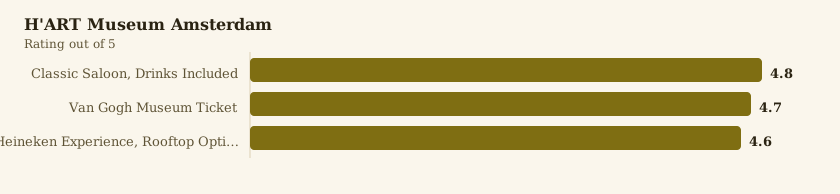
The Van Gogh Museum ticket sold through a booking page is the one most visitors pair with a riverside museum day, and it is the one that needs booking first: Check availability for your dates before you lock in anything else.
One more planning note that saves people real money: the I amsterdam City Card includes free entry to the Rijksmuseum and many other museums, but the Van Gogh Museum and the Anne Frank House are excluded, both museums' own pages confirm it. If you are weighing the card, the desk's city card breakdown runs the arithmetic. The H'ART Museum's card status should be checked on the card's official inclusion list before you count on it.
How Much Time Should You Spend at the H'ART Museum?
Plan on roughly two hours for a single major exhibition, plus half an hour if you want the courtyard garden and the Amsterdam Museum portion of the building, which makes it a half-day museum rather than a full-day one, and it pairs naturally with a walk along the Amstel, the Blauwbrug and the eastern canal belt, which add nothing to the ticket cost.
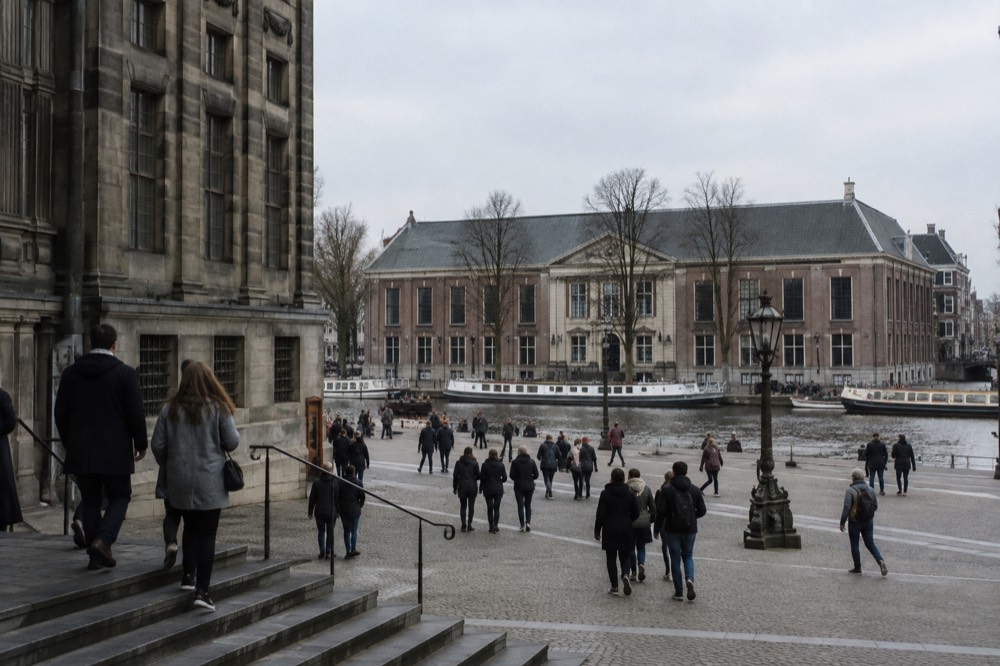
Two hours is the honest working figure for the building's scale. A single headline show fills the main galleries, and the pace of a loan exhibition, with audio guide stops and a shop, absorbs that comfortably. Visitors who arrive for a smaller or transitional programme have finished in an hour; visitors who read everything in a decorative-arts show can stretch to three. There is no permanent collection to extend the visit, so the exhibition you chose sets the clock.
The building rewards the slower end of that range. The courtyard garden is a genuinely quiet spot in a busy district, and the Amstel facade is one of the great river views in the centre, best from the Blauwbrug looking back. The surrounding Plantage district and the eastern edge of the canal belt are within an easy walk, and the walk costs nothing.
| Visit style | Time in the museum | What you add around it |
|---|---|---|
| Exhibition only | About 2 hours | Nothing extra needed |
| Exhibition plus courtyard | 2 to 2.5 hours | Courtyard garden and building history |
| Full building afternoon | Up to 3 hours | Amsterdam Museum portion and garden |
| Paired museum day | Half the day | Van Gogh Museum or Rijksmuseum slot booked in advance |
Families should adjust downward. Temporary exhibitions vary in how much they hold a child's attention, and the desk's advice is to check the museum's page for the current show's family materials before committing to a full-price family visit. The ARTIS Royal Zoo is a short walk east if the exhibition outlasts the children's patience.
What Else Is Near the H'ART Museum?
The museum sits where the canal belt, the Plantage and De Pijp meet, so within a short walk you have the Blauwbrug and the Amstel riverfront, the eastern canal belt, the Amsterdam Museum's main site and the Jewish Cultural Quarter in one direction, and the Heineken Experience and the Albert Cuyp Market in De Pijp in the other, which makes it one of the best-located museums in the city for building a day around.
Start with the river itself. The Amstel between the Blauwbrug and the Magere Brug, the Skinny Bridge, is one of the most photographed stretches of water in the city, and the desk's guide to the Magere Brug covers the classic viewpoints. Walking west from the museum puts you in the canal belt within minutes, and the Nine Streets shopping quarter is a pleasant twenty-minute stroll along the water.
South and east, the options change character. The Jewish Cultural Quarter and the Plantage sit a short walk east, with the Hortus Botanicus and ARTIS beyond them. De Pijp begins across the river to the south, where the Albert Cuyp Market and a dense strip of restaurants make the obvious lunch stop, and the Heineken Experience occupies the old brewery on the edge of the neighbourhood. The Heineken Experience ticket, from $23 on the booking page with a 4.6 rating across 39,581 reviews, is the most-booked paid attraction in that pocket, and a riverside museum morning followed by a brewery afternoon is a well-tested pairing.
For the classic Amsterdam finish, a canal cruise fits the geography perfectly: the Amstel is a main artery of the cruise routes, and boats pass the museum's own facade. A one-hour cruise on a classic saloon boat, from $19.56 with a 4.8 rating across 33,435 reviews, is the format the desk recommends for a first visit, and the canal ring guide explains why the UNESCO waterways read best from the water.
Is the H'ART Museum Worth It Compared With Amsterdam's Big Museums?
For most first-time visitors the answer is a qualified no for a first trip, because the Van Gogh Museum and the Rijksmuseum offer permanent, world-class collections that exist regardless of what is on, while the H'ART Museum is only as good as its current exhibition; for second visits, art-lovers whose dates match a strong show, and travellers who have already done Museumplein, it is a clear yes, with a better building-to-crowd ratio than either flagship.
The comparison is really about certainty. The Van Gogh Museum holds the world's largest Van Gogh collection and requires a timed ticket from everyone; the Rijksmuseum holds The Night Watch and a Golden Age hang that defines the Dutch national story. Both deliver the same core experience to every visitor. The H'ART Museum delivers a variable: a Pompidou-drawn modern show is a different product from a Flemish masters loan show, and your money buys whichever one is up.
That variability cuts both ways. On a strong programme, the H'ART Museum beats the flagships on comfort: the galleries are larger relative to the crowds, the queues are shorter, and the riverside setting is calmer than Museumplein on a summer Saturday. On a weak or transitional programme, first-time visitors feel the gap. The desk's rule: if this is your only Amsterdam museum day, book the Van Gogh Museum or the Rijksmuseum first; if it is your second or third visit, check the H'ART programme and let the show decide.
| Criterion | H'ART Museum | Van Gogh Museum | Rijksmuseum |
|---|---|---|---|
| Collection | Rotating loan exhibitions | Permanent Van Gogh collection | Permanent Dutch national collection |
| Booking pressure | Moderate, show-dependent | High, timed entry for all | High, start time for all |
| Setting | Amstel river and courtyard garden | Museumplein | Museumplein |
| Best for | Repeat visitors and exhibition-led trips | First visits | First visits and Dutch history |
When Is the Best Time to Visit the H'ART Museum?
Weekday mornings are the quietest hours at the H'ART Museum, as with nearly every Amsterdam museum, and the timing that matters most is not the hour but the season of the programme: opening weeks of a headline exhibition draw the biggest crowds, the run's middle weeks are calmest, and the final weeks fill again, so mid-run weekday mornings give you the emptiest galleries for the same ticket.
The general Amsterdam rhythm applies here with force. The city recorded 23.7 million tourist overnight stays in 2025, and the municipal forecast puts 2026 between 23.7 and 25.1 million, so the pressure on the centre keeps rising. Museums with timed entry absorb that pressure administratively; museums with looser entry, as the H'ART Museum's arrangements can be between shows, absorb it physically, in the galleries. Arriving at opening time on a Tuesday or Wednesday is the single most reliable way to have a loan exhibition almost to yourself.
Season matters differently here than at the flagships. The Van Gogh Museum is busy year-round because the collection is fixed; the H'ART Museum's busy weeks cluster around openings, school holidays and the final weeks of a popular show. If you have flexibility, aim for the middle of a major exhibition's run. If your dates are fixed, check whether an exhibition is in its first or last two weeks and book the earliest slot of the day.
Rain is a genuine planning factor in Amsterdam, and the desk's rainy day guide treats the H'ART Museum's neighbourhood as one of the better wet-weather pockets in the city: a big indoor exhibition, a courtyard you can dash across, and canal-side walking routes that stay atmospheric in drizzle. Winter visitors should also read the winter itinerary, which slots the riverside museums into the shortest days.
How Do You Get to the H'ART Museum?
The museum sits on the Amstel at Amstel 51, a short walk from Waterlooplein and the Blauwbrug, and trams along the Amstel and through the centre stop within a few minutes' walk; a single GVB ticket costs €3.40 for one hour of travel, a 24-hour day pass costs €10.00, and contactless OVpay works on every tram, bus, metro and ferry in the city with a base fare of €1.16 plus €0.217 per kilometre.
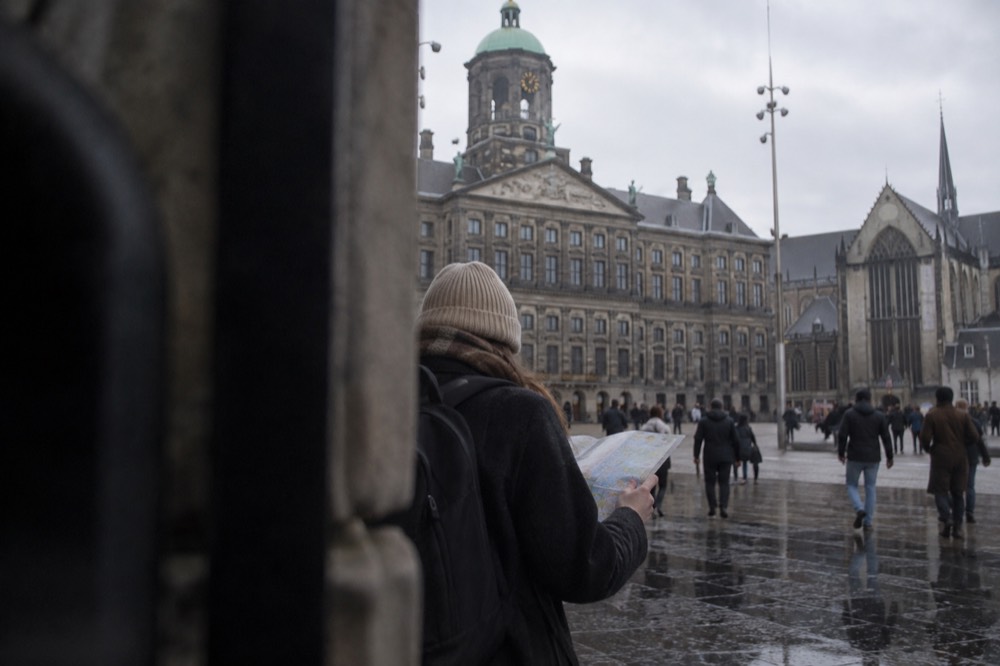
The verified GVB fares make the arithmetic easy. If you are making one return journey, the €3.40 one-hour ticket or a contactless tap covers it; if you are hopping between the H'ART Museum, Museumplein and a canal cruise in one day, the €10.00 24-hour pass pays for itself after about three rides. The desk's getting around guide covers the full fare table, including the multi-day passes and the airport connections.
| Ticket | Price | Best for |
|---|---|---|
| GVB one-hour single | €3.40 | One journey to the museum |
| GVB 24-hour day pass | €10.00 | A museum-hopping day |
| OVpay contactless | €1.16 base plus €0.217 per km | Occasional rides without buying a pass |
| Walking from the canal belt | Free | Most central stays are 15 to 25 minutes away |
Walking is the underrated option. From the heart of the canal belt the museum is a fifteen to twenty-five minute walk along the water, past the Amsterdam Museum and across the Blauwbrug, and the route is more interesting than the tram. From Centraal Station, a tram along the Damrak and Rokin and down to the Amstel takes a few minutes more than the walk from the canal belt, and Waterlooplein is the closest metro and tram hub.
Cyclists should note the parking: the museum's own site lists the current bicycle arrangements, and the riverside racks fill on busy days. The desk's cycling guide covers the rental question, and the I amsterdam City Card's included 24-hour bike rental, verified on the card's official inclusion list, is one way to combine a ride along the Amstel with the museum visit.
Common Questions About the H'ART Museum
What is the H'ART Museum in Amsterdam?
It is the former Hermitage Amsterdam, housed in the Amstelhof, a 17th-century almshouse building on the Amstel river. Since 2023 it has staged rotating exhibitions built with partner museums abroad instead of showing a permanent collection.
Is the H'ART Museum the same as the Hermitage Amsterdam?
The building is the same, the name and the content are not. The Russian State Hermitage partnership ended after the 2022 invasion of Ukraine, and the museum reopened in 2023 as the H'ART Museum with a rotating exhibition model.
How much do H'ART Museum tickets cost?
Prices vary by exhibition, and this desk does not publish a figure for this museum that has not been verified on its own primary source. Check the museum's own ticket page for the current show's price, concessions and time-slot rules.
How long should I spend at the H'ART Museum?
Plan on roughly two hours for a single major exhibition, plus half an hour for the courtyard garden and the Amsterdam Museum portion of the building if you want the full experience.
Is the H'ART Museum worth visiting for a first trip to Amsterdam?
Usually not ahead of the Van Gogh Museum or the Rijksmuseum, because those offer permanent collections while the H'ART Museum depends entirely on the current exhibition. For a second visit, or when the programme matches your interests, it is a clear yes.
Can you combine the H'ART Museum with the Van Gogh Museum in one day?
Yes, and it is a natural pairing. Book the Van Gogh Museum's timed entry ticket first, since it sells out, then fit the H'ART visit around it. The two are a short tram ride apart along the Amstel and through the centre.
The short version: the H'ART Museum is a building worth knowing and a programme worth checking. Look at what is on for your dates, book the Van Gogh slot before anything else if that museum is on your list, and give the Amstel riverfront the walk it deserves on the way out.