Rembrandt House Museum in Amsterdam: Tickets, Hours and What to See
Rembrandt van Rijn bought a grand house on the Jodenbreestraat at the height of his fame, filled it with art, curiosities and pupils, and worked there for nearly two decades. Today that house is a museum, rebuilt room by room, and it answers a question the big museums cannot: what did this man's daily world actually look like?
Short answer
The Rembrandt House Museum is the reconstructed 17th-century home and workshop where Rembrandt lived and painted for nearly twenty years. A skip-the-line entry ticket costs $23.00 on the live listing, the museum sits on the Jodenbreestraat a short walk from Waterlooplein, and most visits last between one and two hours.
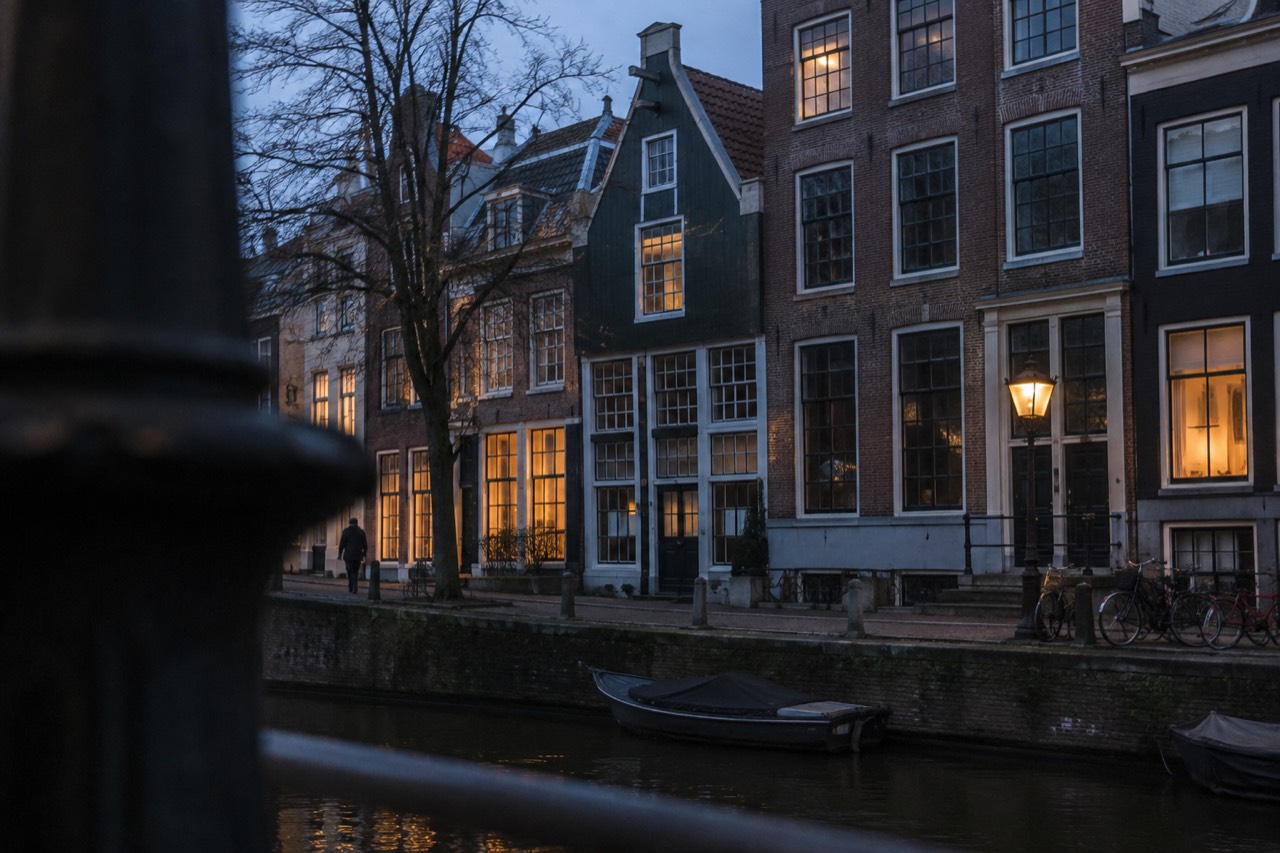
Amsterdam keeps Rembrandt in two places. The Rijksmuseum holds the paintings, including The Night Watch, behind glass and under gallery lights. The Rembrandt House Museum holds the rooms. This is the house on the Jodenbreestraat where the artist lived, taught, traded and painted for the richest years of his life, and after a meticulous reconstruction it now shows his studio, his sitting rooms and his collection the way a visitor in the 1650s might have found them. This guide from Things to Do in Amsterdam covers what is inside, how tickets and time slots work, what it costs, and how to fit the house into a day that also takes in the canal ring.
What Is the Rembrandt House Museum?
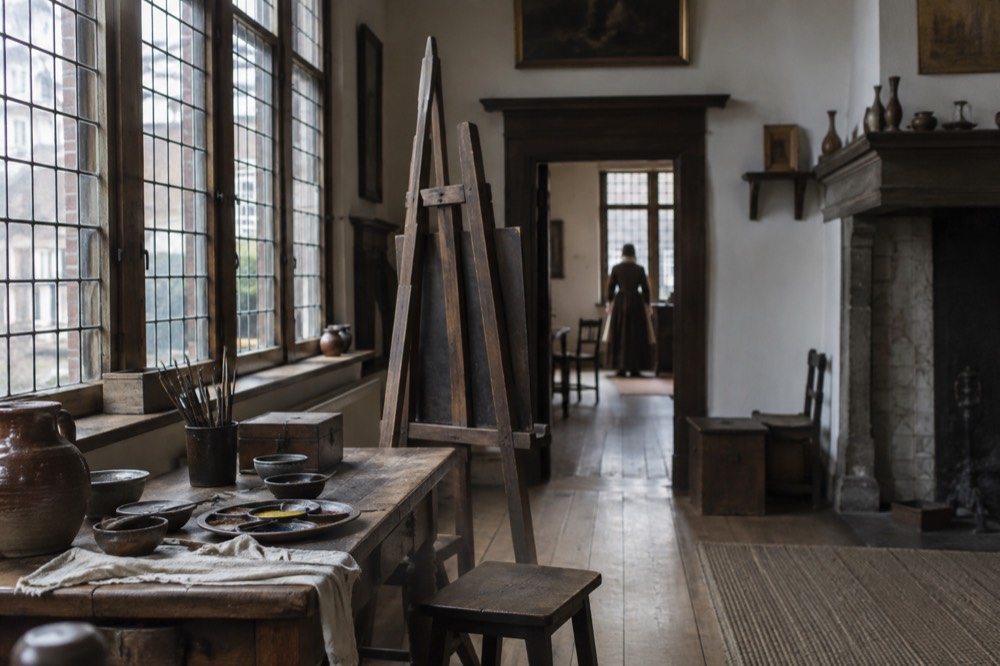
The Rembrandt House Museum is the reconstructed home and workshop of Rembrandt van Rijn on the Jodenbreestraat, restored to its 17th-century appearance and furnished with period pieces, painting demonstrations and a cabinet of curiosities. It is the only place in Amsterdam where you stand inside the rooms the artist actually worked in. The house does not try to compete with the Rijksmuseum's collection. Its subject is the man at work: the studio with its grinding stones and pigments, the easel where pupils learned under his direction, the bedsteads and chimney pieces of a prosperous merchant's household.
The museum's own approach is unusual and worth knowing before you go. Rather than displaying panels of biographical text, it recreates. The workshop runs live painting and etching demonstrations on most days, using tools and techniques documented from the period, so you can watch a layer of paint mixed and laid down the way Rembrandt would have done it. Upstairs, the salon holds a reconstruction of the cabinet of curiosities he kept: shells, corals, weapons, busts and natural history objects that served as props and as a statement of status. The listing for the Rembrandt House Museum entry ticket describes the living room, the art collection and the atelier, and it was here that he created his greatest masterpieces.
The building itself carries the story past the artist. It is a substantial 17th-century merchant's house of the kind that lined the new canal districts of Amsterdam's Golden Age, and after Rembrandt's fortunes turned the property passed through other hands and other uses before being bought and rebuilt as a monument. The modern museum wing next door, an understated contemporary addition, hosts temporary exhibitions of prints and drawings, often drawn from the museum's own graphics collection. Rembrandt was one of the great printmakers of any era, and the etchings on rotation are frequently the quiet highlight of a visit.
Where Is the Museum and How Do You Get There?
The Rembrandt House Museum stands on the Jodenbreestraat in the old Jewish Quarter, roughly a ten minute walk east of Dam Square and two minutes from the Waterlooplein tram and metro stops. Most visitors reach it on foot from the centre or by tram, metro or the hop-on sightseeing boats that stop nearby. The location is one of its strengths. It sits in a district that was the commercial heart of 17th-century Amsterdam, close to the old harbour front, and it links naturally to a walk through the eastern canal ring rather than requiring a dedicated trip.
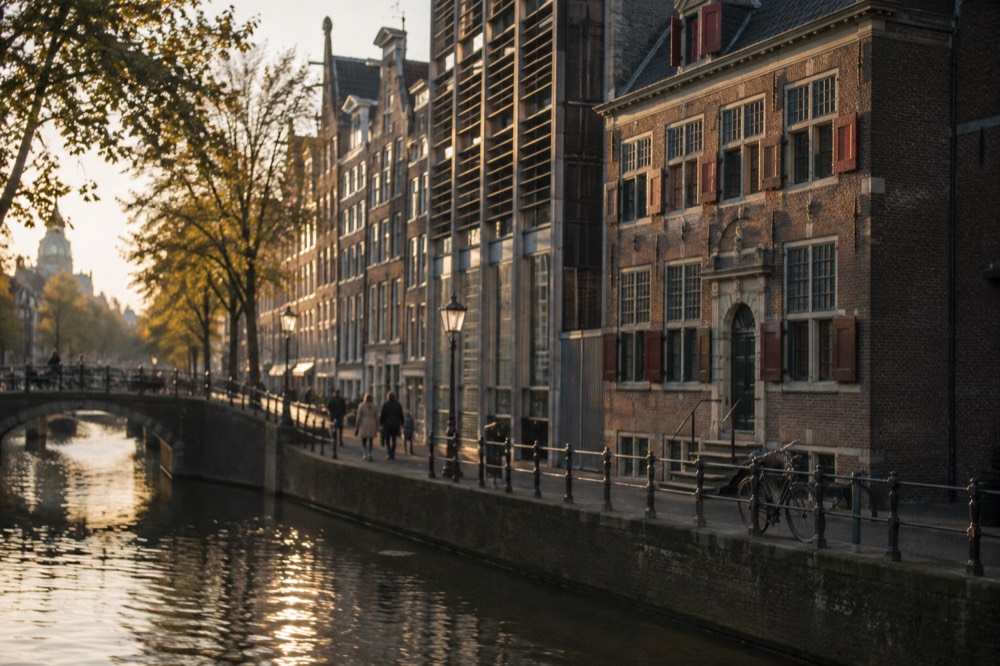
Public transport is straightforward. Waterlooplein is served by metro lines and several tram routes, and a single GVB ticket costs €3.40 for one hour of travel, while a 24-hour day ticket costs €10.00, per the operator's own fare page. Contactless payment with a bank card, the OVpay system, also works on trams, buses, metro and ferries, charging a base fare of €1.16 plus €0.217 per kilometre. If you are staying anywhere in the canal ring, walking is honestly the better option: the route from Dam Square along the Damstraat and across the Blauwbrug is a pleasant fifteen minutes that passes the Amstel river and the Magere Brug.
| Option | What It Involves | Cost |
|---|---|---|
| Walk from Dam Square | Around ten to fifteen minutes via Damstraat and the Blauwbrug | Free |
| Tram or metro to Waterlooplein | Two minutes from the stop to the museum door | €3.40 single, €10.00 for 24 hours |
| Canal cruise with a stop nearby | Several sightseeing routes serve the Amstel and City Hall area | See the cruise listing |
| Bike | Racks on the Jodenbreestraat; the street is busy, so lock carefully | Rental varies |
If you are building a Rembrandt-themed day, the geography works in your favour. The house, the Waterlooplein market, the Portuguese Synagogue and the old Jewish Cultural Quarter sit together east of the centre, while the Rijksmuseum lies twenty minutes away to the southwest. Our guide to the Amsterdam canal ring covers the walk west, and the guide to the Jewish Cultural Quarter and Portuguese Synagogue covers what is immediately around the museum's front door.
What Can You See Inside the House?
Inside, the museum shows Rembrandt's reconstructed studio with live painting and etching demonstrations, the period-furnished sitting rooms and kitchen, the salon of curiosities, and a modern wing with rotating exhibitions of the artist's prints and drawings. Plan on sixty to ninety minutes, longer if you catch a demonstration. The visit climbs through the house the way a 17th-century caller would have, and the sequence matters less than the density: nearly every room holds something being made, stored or shown.
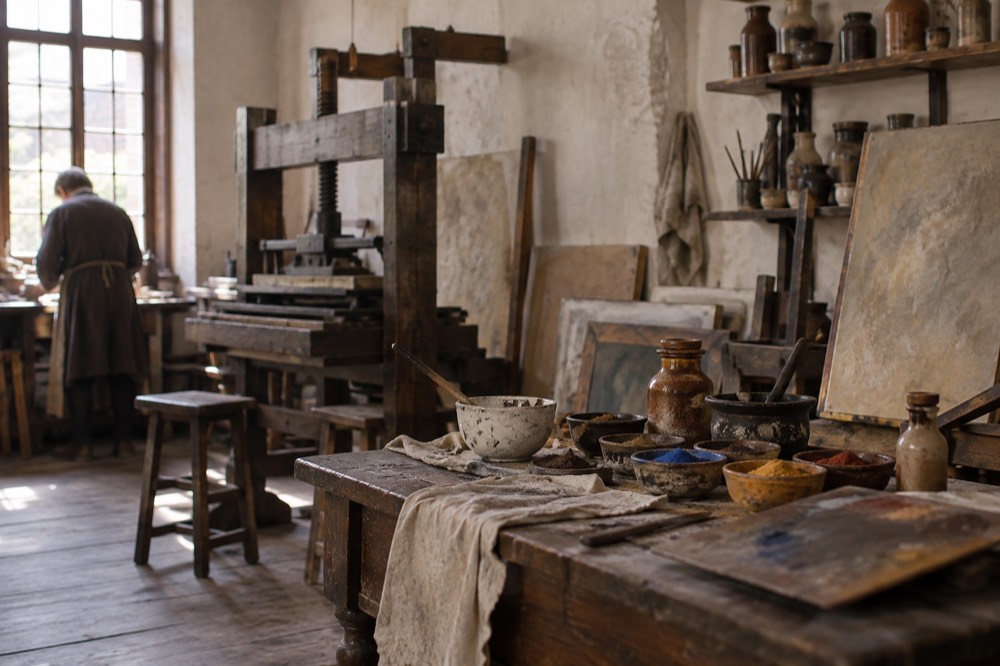
The workshop is the centrepiece. Demonstrators grind pigments, mix oils and work at the easel using methods reconstructed from treatises and from analysis of the paintings themselves, and they answer questions, which turns a static room into a working one. The etching demonstrations are equally good, and they explain why Rembrandt's prints were famous across Europe in his own lifetime: the process is intricate, and the results, on the wall beside the press, are startlingly detailed. If your visit falls on a day when demonstrations run, build extra time around them rather than racing through.
The upper floors reconstruct the private world. The great hall and the bedstead rooms show how a wealthy Amsterdam household presented itself, with furniture, kitchenware and decoration matched to the period. The cabinet of curiosities, reassembled from the inventory of Rembrandt's possessions drawn up when his finances collapsed, is the room that most surprises people: shelves of exotic shells, coral, animal specimens, weapons, plaster casts and busts, the raw material of a painter's imagination and the visible proof of a collector's ambition. The modern exhibition wing rounds out the visit with works on paper, and the museum's own graphics holdings mean the drawings on display are often original Rembrandts rather than copies.
If standing in a painter's rooms is what draws you to Amsterdam, the same instinct pairs well with the city's other single-artist sites, and a good next read is our guide to the Van Gogh Museum, which covers the other great Dutch collection built around one man's life and letters.
How Much Do Tickets Cost and How Do You Book?
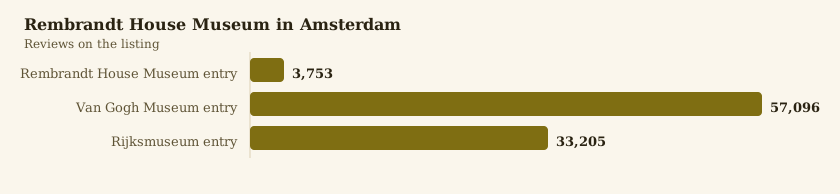
A skip-the-line entry ticket for the Rembrandt House Museum costs $23.00 on the live listing, rated 4.7 across 3,753 reviews, and the museum uses timed entry, so you choose a date and arrival window when you book. Children's pricing and family options appear on the listing, and booking ahead is the reliable way to guarantee a slot on busy days. The ticket is simple: it covers the house, the demonstrations and the temporary exhibitions in one entry, with no separate upsells inside.
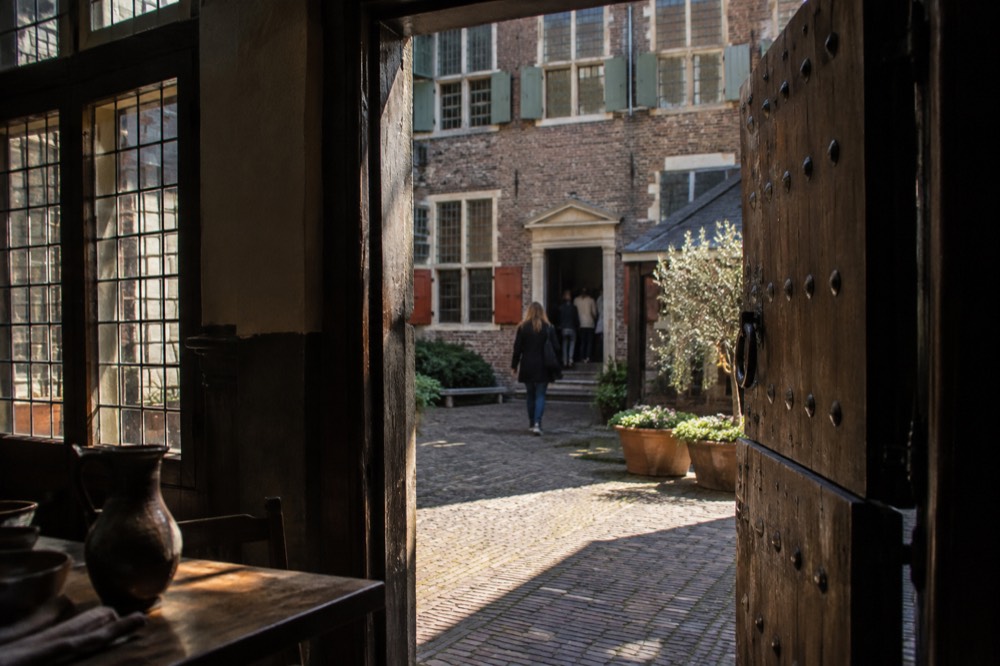
The comparison that matters is against the other Rembrandt in town. The Rijksmuseum charges €25 for adults, free for ages 18 and under, and requires a booked start time, per its own ticket page. The Van Gogh Museum, the other single-artist heavyweight, also charges €25 for adults with under-18s free and mandatory pre-booked timed entry. Against those, the Rembrandt House at $23.00 sits in the same bracket while offering something structurally different: not a collection in galleries, but a collection in rooms. If you only have budget or energy for one, decide whether you want his paintings or his world.
| Ticket | Price on the Listing | Rating | Reviews |
|---|---|---|---|
| Rembrandt House Museum entry | $23.00 | 4.7 | 3,753 |
| Van Gogh Museum entry | $31.00 | 4.7 | 57,096 |
| Rijksmuseum entry | $31.00 | 4.7 | 33,205 |
Booking is where a little planning pays off. The museum manages visitor flow with entry windows, and weekend afternoons in high season fill first. You can compare dates and slots on the live listing, or go straight to booking: Check availability. Read the cancellation terms on the listing before you commit, because time-slot tickets at Amsterdam museums are often non-refundable once the window approaches.
One more booking note that saves people real money: the I amsterdam City Card includes the Rijksmuseum and many other museums but does not include the Anne Frank House or the Van Gogh Museum, and the Anne Frank House sells tickets only through its own official site with no legitimate reseller, as its ticket page states plainly. If your day mixes the Rembrandt House with either of those, book them separately rather than assuming a pass covers everything.
What Are the Opening Hours and the Best Time to Visit?
The museum opens daily except on a small number of public holidays, typically from mid-morning to late afternoon, with the exact schedule published on the official site and the live listing. The quietest visits are weekday mornings right at opening; the busiest are weekend afternoons and any day when a major exhibition opens. Because entry is timed, the crowd problem is managed rather than eliminated: you will not queue for an hour, but the demonstration rooms do fill, and a packed studio is a different experience from a quiet one.
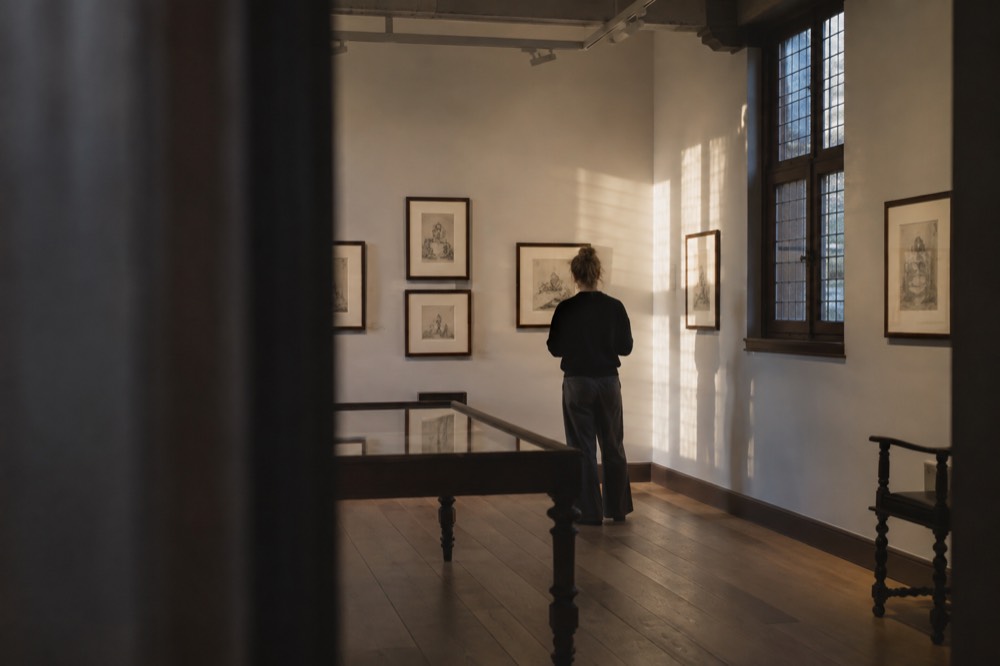
Season matters more here than at most Amsterdam museums. Summer brings the thickest crowds to the whole centre, and the Jewish Quarter's narrow streets fill with tour groups moving between the Waterlooplein and the old harbour. Late autumn and winter weekdays are the sweet spot: the house is warm, the studio demonstrations run with smaller audiences, and you can stand in front of an etching for as long as you like. If you are visiting over a Dutch school holiday, expect family crowds in the middle of the day and plan an early entry instead.
The practical takeaway from those figures: almost every major Amsterdam museum now runs on timed entry, and the ones that sell out, the Anne Frank House above all, punish travellers who leave booking to the last minute. The Rembrandt House is more forgiving than its neighbours, but a booked morning slot still buys you the calmest version of the visit.
Rembrandt House or Rijksmuseum: Which One for Rembrandt?
See both if you can, because they answer different questions: the Rijksmuseum holds the paintings, The Night Watch above all, while the Rembrandt House holds the rooms, the tools and the working life. If you must choose one, pick the Rijksmuseum for the art and the Rembrandt House for the understanding, and pair whichever you choose with a walk between them. The two sit about twenty minutes apart on foot, a route that crosses the canal ring and passes a good stretch of the historic centre.
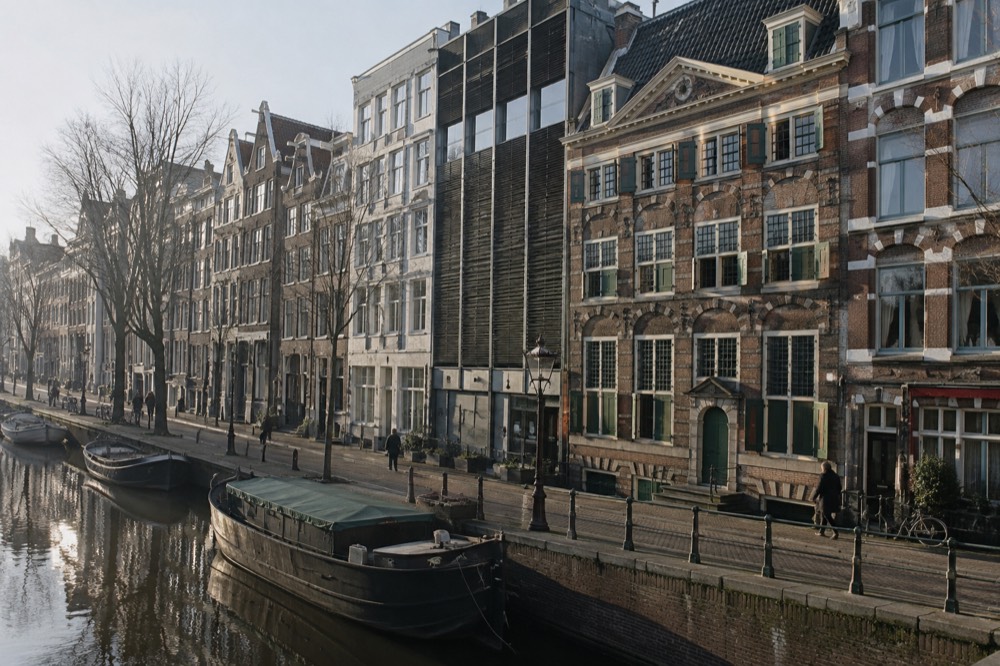
The Rijksmuseum is one of the world's great galleries of the Dutch Golden Age, and Rembrandt anchors it. Its own practical page lists adult admission at €25 with free entry for ages 18 and under, and a booked start time for every visitor. The Rembrandt House cannot match that scale, and does not try. What it offers instead is context you cannot get anywhere else: the low ceilings and north light of a working studio, the smell of linseed demonstrations, the sense that the greatest painter of the age was also a householder, a teacher and a collector who filled his rooms with the world's oddities. Visitors who do the house first often say the Rijksmuseum galleries afterward feel different, because they can picture where the work was made.
A sensible order, if you are doing both in one day: book the Rembrandt House for a morning slot, walk west through the canal ring past the Westerkerk, the church beside the Anne Frank House where Rembrandt lies buried in an unmarked grave, then finish at the Rijksmuseum in the afternoon when its galleries thin out. The walk itself is worth the pairing.
What Else Is Near the Rembrandt House?
Within a few minutes' walk of the museum you have the Waterlooplein flea market, the grand City Hall on the Dam, the Portuguese Synagogue and Jewish Cultural Quarter, the Blauwbrug bridge over the Amstel, and the eastern edge of the canal ring. The house anchors a half-day of the old Jewish Quarter better than almost any other single stop in the district. This is the part of Amsterdam where the 17th-century city did its business, and it rewards slow walking.
| Nearby Stop | Direction From the Museum | Approximate Walk |
|---|---|---|
| Waterlooplein flea market | South | Two to three minutes |
| Blauwbrug and the Amstel river | West | Five minutes |
| Portuguese Synagogue and Jewish Cultural Quarter | East | Five to ten minutes |
| Nieuwmarkt and the eastern canal ring | North | Ten minutes |
| Dam Square and the Royal Palace | West, across the river | Ten to fifteen minutes |
Waterlooplein, immediately south of the museum, hosts the city's best-known flea market, a long-standing fixture of the neighbourhood. East and north, the Jewish Cultural Quarter gathers the Portuguese Synagogue, the Jewish Museum and related sites into one walkable cluster, and it makes a natural second half of the same morning. West across the Amstel, the route into the centre passes the Stopera and the classic bridge views that photographers chase along the river. If you continue north from the museum, the Nieuwmarkt area and the eastern canal ring offer the brown cafés and Dutch kitchens that make a good lunch stop after a museum morning.
Food and drink around the Jodenbreestraat are solid rather than spectacular, but a couple of streets north the options improve quickly. If you want a drink with a Golden Age flavour afterwards, the Heineken Experience, in the brewery's original 19th-century building, is a fifteen minute walk west, and its ticket is rated 4.6 across 39,581 reviews at $23.00 on the live listing.
How Should You Fit the Museum Into Your Amsterdam Trip?
Give the Rembrandt House ninety minutes on a morning, pair it with the Jewish Cultural Quarter or the eastern canal ring in the same walk, and reserve a separate half-day for the Rijksmuseum if you want the paintings too. First-time visitors on a two-day trip should treat it as a strong second-morning choice after the headline sights. The house rewards curiosity more than checklist energy, and it is a better visit unhurried.
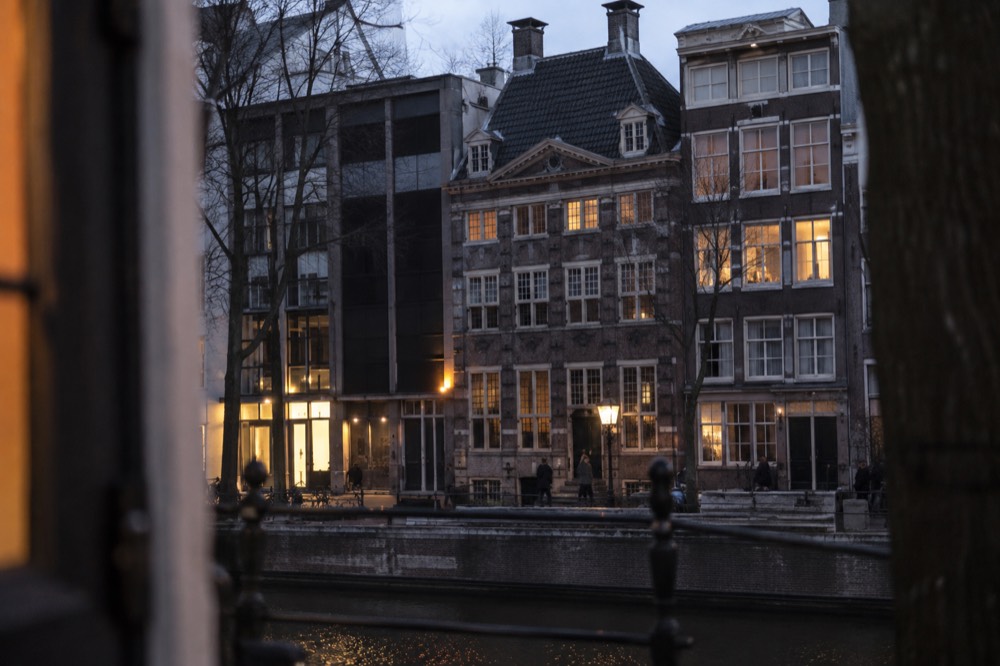
For a first trip, the standard pattern holds: day one for the centre, a canal cruise and one big museum, day two for a neighbourhood walk and a second museum. The Rembrandt House slots into day two perfectly, because it sits in a district most first-timers would otherwise skip, and it gives that district a spine. Travellers with three or more days can add a day trip; the classic windmill-and-villages circuit to Zaanse Schans, Volendam and Marken runs five and a half hours from $34.00 on the live listing, rated 4.5 across 20,839 reviews, and returns in time for an evening cruise.
If you are travelling with teenagers or with mixed interests, the demonstrations make this one of the easier museum sells in the city: it is short, physical and explainable in a sentence, "this is where Rembrandt actually painted." Couples on a slower trip often pair the morning here with an afternoon saloon boat on the canals, and the classic saloon cruise with drinks and cheese, rated 4.8 across 33,435 reviews at $19.56, is the version most in keeping with the house's own period feel.
Common Questions About the Rembrandt House Museum
How much does the Rembrandt House Museum cost?
A skip-the-line entry ticket costs $23.00 on the live listing, rated 4.7 across 3,753 reviews. Children's and concession pricing appears on the listing, and the official museum site publishes the current door price.
How long does a visit to the Rembrandt House take?
Most visitors spend between one and two hours. If you catch a painting or etching demonstration, which run on most days, budget toward the longer end, since the studio sessions invite questions and move at their own pace.
Is the Rembrandt House Museum worth it compared with the Rijksmuseum?
They do different jobs. The Rijksmuseum holds the paintings, including The Night Watch; the Rembrandt House holds the reconstructed rooms, studio and collection of the man himself. If you care about Rembrandt specifically, seeing the house first changes how the Rijksmuseum galleries read afterward.
Do I need to book the Rembrandt House in advance?
The museum uses timed entry, so you pick a slot when you book. Weekday mornings are usually easy, but weekend afternoons and high-season days fill first, and booking ahead removes the risk of a long wait or a missed visit.
Where is the Rembrandt House Museum located?
On the Jodenbreestraat in the old Jewish Quarter, about a ten minute walk east of Dam Square and two minutes from the Waterlooplein tram and metro stop. The walk from the centre crosses the Amstel by the Blauwbrug and takes in some of the best bridge views in the city.
Are there demonstrations inside the museum?
Yes. The reconstructed workshop runs live painting and etching demonstrations on most days, using period tools and techniques. Check the day's schedule when you arrive and plan your route through the house around the sessions you want to see.