What to Eat in Amsterdam: Dutch Food Guide
From sweet stroopwafels to savoury bitterballen, Amsterdam’s food scene blends hearty Dutch classics with global influences. This guide covers everything you need to eat, where to find it, and how to eat like a local.
Short answer
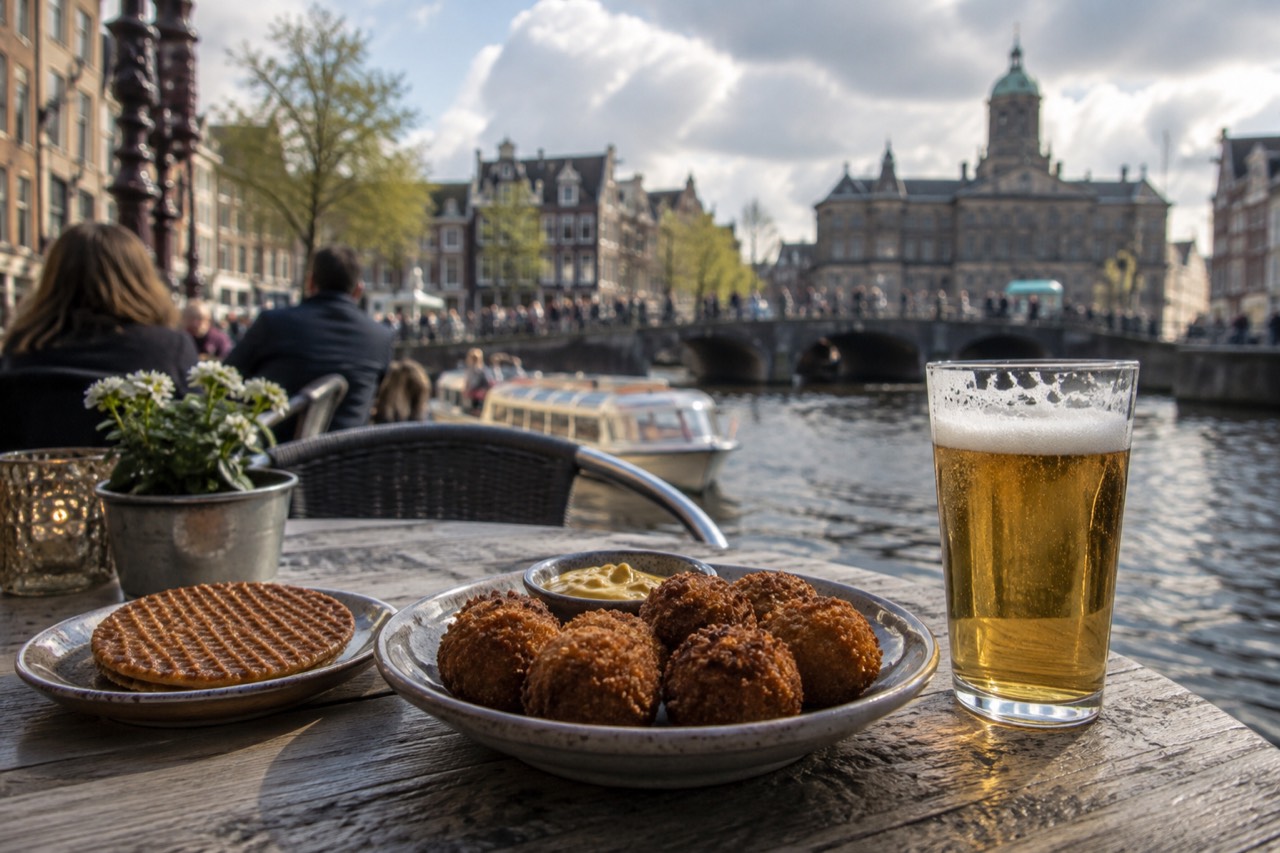
Start with street snacks like herring and stroopwafels, then sit down for a traditional stamppot or an Indonesian rijsttafel. Don't miss Dutch cheese, bitterballen with beer, and a canal-side pancake. Food halls like Foodhallen and markets like Albert Cuyp are the best spots to sample many dishes in one go.
Amsterdam’s kitchen is a lot more than cheese and pancakes. The city’s food draws on centuries of maritime trade, a no-nonsense farmhouse tradition, and the deep influence of its former colonies, especially Indonesia and Suriname. You can eat a raw herring from a street stall at 10 a.m., sit down to a twelve-dish rijsttafel by candlelight, and finish the night with a warm stroopwafel fresh off the iron, all within a few canal-ring blocks. This guide walks you through every essential Dutch bite, where to find it, and how to weave eating into a day of sightseeing with Things to Do in Amsterdam.
What Is Traditional Dutch Food?
Dutch cuisine is hearty, straightforward, and built around potatoes, meat, vegetables, and dairy. The classic dishes are stamppot (mashed potatoes mixed with kale or sauerkraut and served with rookworst), erwtensoep (thick pea soup), and hutspot (carrot and onion mash). Seafood, especially raw herring and smoked eel, is eaten as a snack, while cheeses like Gouda, Edam, and aged farmhouse varieties are a national obsession.
These dishes are not restaurant-only; you’ll find stamppot on many lunch menus from October to March, and erwtensoep is sold at outdoor winter stalls. The Dutch approach is less about elaborate sauces and more about good ingredients cooked simply. A plate of stamppot might arrive with a deep dimple of gravy in the mash and a thick, smoked sausage on the side. It’s filling, cheap, and deeply satisfying on a cold day.
For a quick overview of the classics, see the table below. Every item listed here is available in central Amsterdam, often for a modest price.
| Dish | What it is | Where to try it |
|---|---|---|
| Stamppot | Mashed potatoes with kale (boerenkool) or sauerkraut (zuurkool), served with rookworst | Moeders, The Pantry, Hap-Hmm |
| Erwtensoep | Thick split-pea soup with smoked sausage and rye bread | Winter stalls, De Blauwe Hollander |
| Hutspot | Mashed potatoes with carrots and onions, often with braised beef | Traditional Dutch cafes (bruin cafés) |
| Haring | Raw herring, eaten with chopped onion and pickles | Fish stalls at Albert Cuyp Market, Frens Haringhandel |
| Rookworst | Smoked sausage, a side to stamppot or eaten on its own | Butcher shops, market stalls |
| Poffertjes | Small, fluffy pancakes served with butter and powdered sugar | Poffertjes stalls at markets, Pancakes Amsterdam |
Where to Eat Dutch Food in Amsterdam
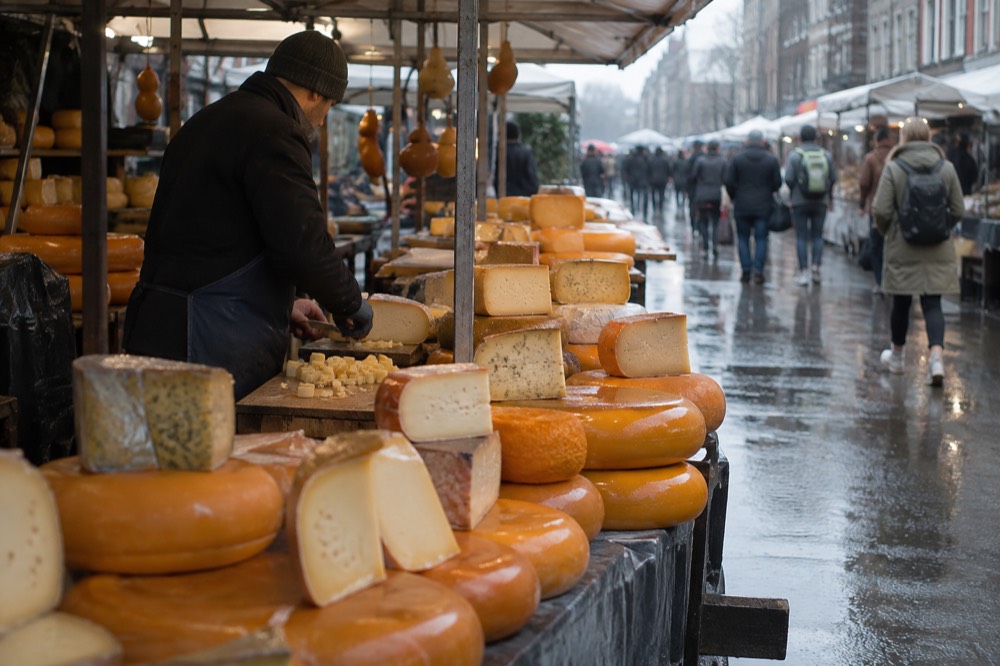
The best Dutch food is not in tourist-trap “steak and pancake” houses on Damrak but in neighbourhood bruin cafés (brown cafés), market stalls, and dedicated Dutch kitchens in the Jordaan, De Pijp, and around the Albert Cuyp Market. Food halls like Foodhallen offer a modern, sample-everything approach, while sit-down restaurants like Moeders and Restaurant Greetje serve elevated versions of home classics.
For a traditional, no-frills meal, head to a bruin café, a wood-panelled pub with a short menu of stamppot, bitterballen, and cheese boards. The Jordaan is dense with them. In De Pijp, the Albert Cuyp Market is the city’s largest outdoor market and a one-stop shop for herring, stroopwafels, poffertjes, and fresh cheese. Foodhallen, inside a former tram depot in Oud-West, gathers high-end street-food vendors under one roof, including several that specialise in Dutch bites like bitterballen and Dutch fries. For a deeper dive into the city’s market culture, our Amsterdam markets guide covers every major market and what to eat at each.
For a more curated experience, several food tours and walking tours let you sample while you learn. The table below picks out the key eating zones.
| Area | Style | Don't miss |
|---|---|---|
| Jordaan | Bruin cafés and small Dutch kitchens | Moeders, Café de Prins, De Reiger |
| De Pijp | Market stalls and international eats | Albert Cuyp Market, Bazar, Sir Hummus |
| Oud-West | Food halls and modern Dutch | Foodhallen, De Hallen, Meatless District |
| Centrum | Historic venues and tourist-friendly classics | Haesje Claes, The Pantry, Café Hoppe |
After you’ve tasted your way through the markets, a walking tour can help you walk it off while you learn about the city’s history. The small-group Anne Frank walking tour covers the Jewish Quarter in just an hour and is an easy add-on to a food-focused morning.
Must-try Street Foods and Snacks in Amsterdam
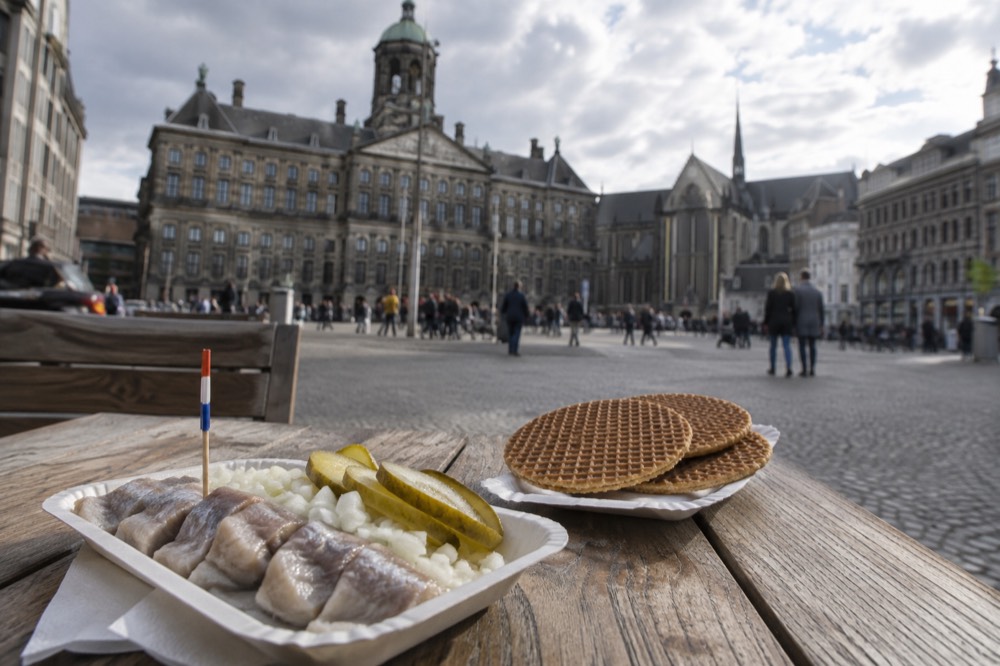
The Dutch street-food trinity is herring, stroopwafels, and bitterballen. Raw herring is eaten by the tail with onions and pickles; stroopwafels are best bought warm from a market stall; and bitterballen, deep-fried beef ragout balls, are the essential companion to a beer. Vlaamse frites (thick-cut fries with mayonnaise) and kroketten (croquettes) fill out the savoury side, while poffertjes and oliebollen satisfy the sweet tooth.
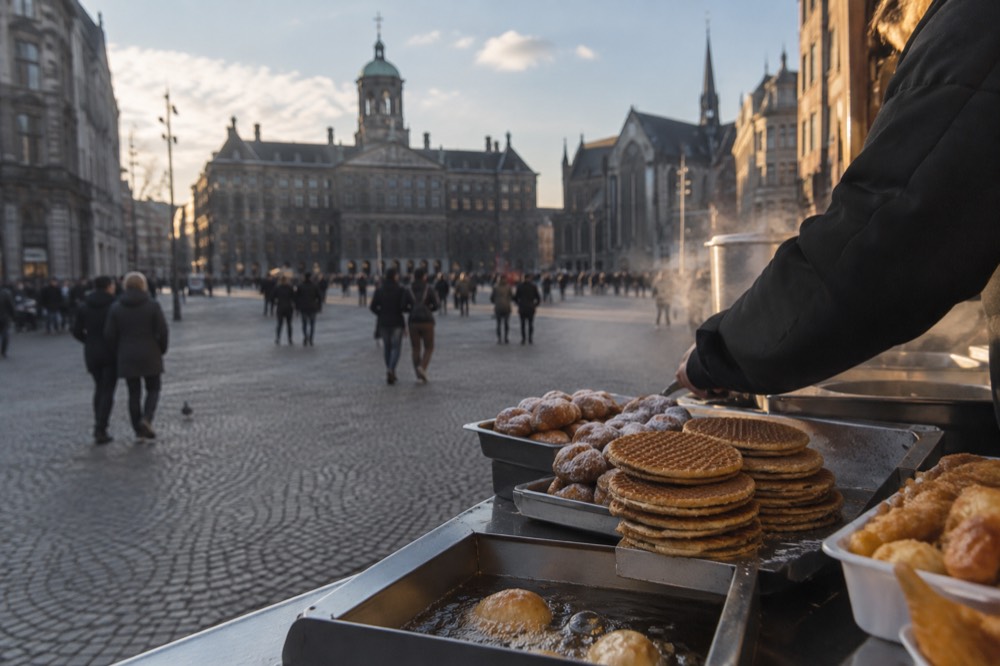
You can eat a complete, memorable meal entirely from street stalls and snack bars. Start with a herring at Frens Haringhandel near the Singel flower market, then grab a paper cone of frites with oorlog sauce (mayo, peanut satay, and raw onion) from a Vlaams Friteshuis. For dessert, the stroopwafel stand at Albert Cuyp Market presses two thin waffles around a caramel filling while you wait; the fresh version is incomparably better than any packaged one.
Bitterballen are everywhere, but the best are in bruin cafés where they’re made in-house. Order a portion (usually 6–8 pieces) with a dollop of mustard and a local beer. The table below gives a snapshot of what you’ll pay.
| Snack | Typical price | Best spot |
|---|---|---|
| Herring with onions | A few euros | Frens Haringhandel, market stalls |
| Fresh stroopwafel | A couple of euros | Albert Cuyp Market, Rudi's Original Stroopwafels |
| Bitterballen (6–8 pieces) | Around €7–€9 | Café de Prins, Café Hoppe |
| Vlaamse frites (medium) | Modest | Vleminckx, Manneken Pis |
| Poffertjes (portion) | Budget-friendly | Market stalls, Pancakes Amsterdam |
If you’d rather let a guide connect the dots, a food tour like the top-rated Food & Culture Walking Tour (10 tastings, 3 hours 30 minutes) is a great way to sample multiple stops with context. The same small-group format works for history walks too; the Anne Frank walking tour is a compact hour that fits neatly after a market lunch.
Dutch Food Tours and Experiences
The highest-rated dedicated food tour on the roster is the N°1 Food & Culture Walking Tour, with a perfect 5.0 rating across 1,157 reviews and a price of $92 per person. It runs for 3 hours 30 minutes and includes ten tastings of classic Dutch foods, led by a local guide who weaves in history and culture as you walk through the city centre.
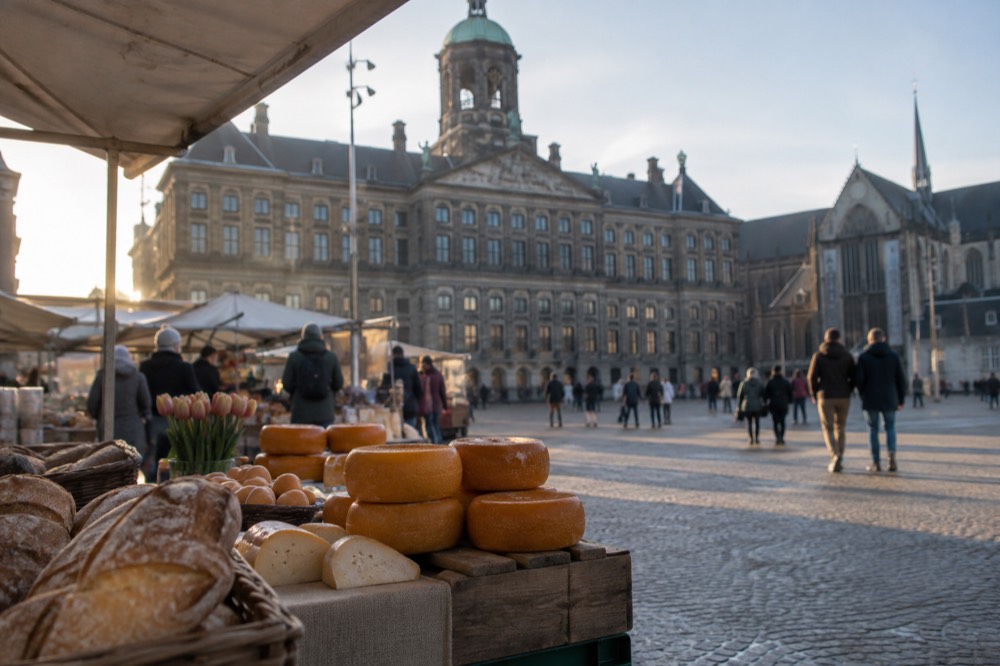
This tour earns its top marks by combining generous portions with genuine local insight. You’ll try herring, cheese, bitterballen, stroopwafels, and several other items, often at family-run spots you’d miss on your own. Because it’s a small group, you can ask questions and adjust the pace.
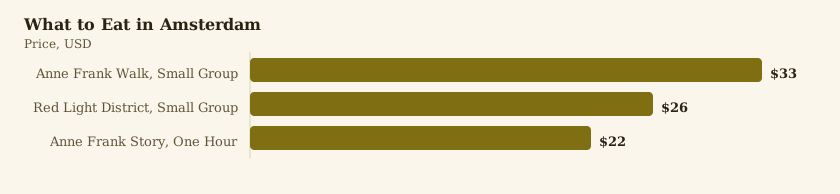
Other food experiences worth considering: the Heineken Experience (4.6 rating, 39,581 reviews, $23) is a self-guided tour through the original brewery with two beers included, and the Pizza Dinner Cruise (4.5 rating, 3,046 reviews, $40) pairs a New York-style pizza with unlimited drinks on a 1.5-hour evening canal cruise, less traditional but a fun twist. Many visitors combine a food tour earlier in the day with a walking tour later; the Anne Frank small-group walk (4.9 rating, 4,680 reviews) is a popular one-hour option that starts near the Jewish Quarter.
Drinking in Amsterdam: Beer, Jenever, and Coffee Shop Culture
Dutch beer is led by Heineken and Amstel, but craft breweries like Brouwerij ’t IJ (under a windmill) and Oedipus are thriving. Jenever, a juniper spirit and gin’s ancestor, is the traditional tipple, served chilled. Coffee shops sell cannabis, not coffee; Amsterdam does not enforce the national residents-only rule, so tourists can enter, but outdoor smoking is banned in the city centre.
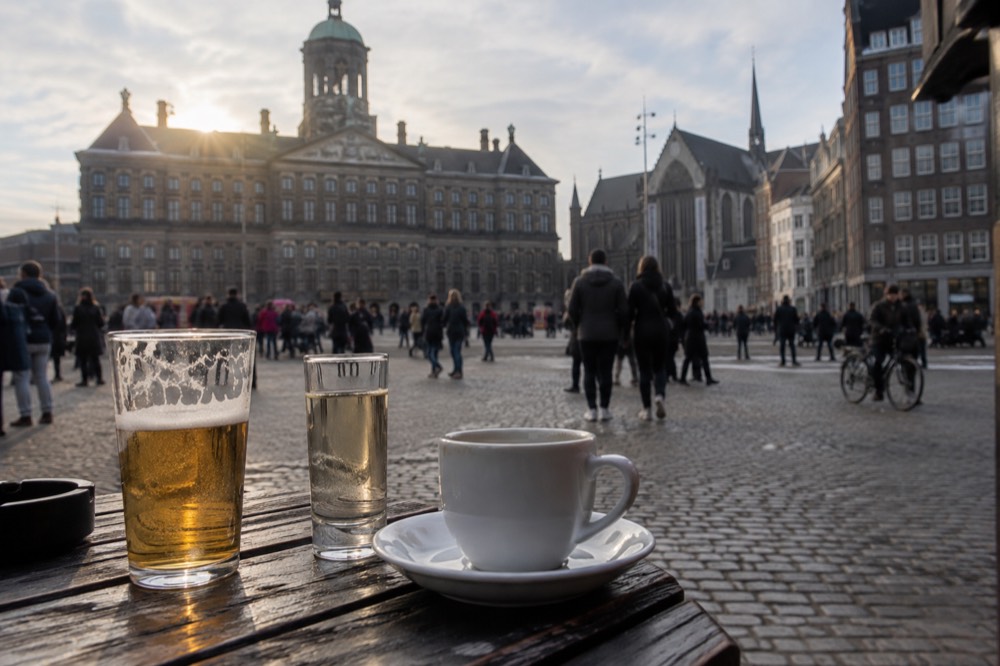
A visit to the Heineken Experience is a slick, interactive 1.5-hour tour through the old brewery, ending with two cold beers and a rooftop view (optional). For something more local, cycle to Brouwerij ’t IJ in Amsterdam Oost, where you can drink a zesty blonde ale on a terrace beneath the De Gooyer windmill. Proeflokaal A. van Wees is the last remaining jenever distillery in the city centre and offers tasting flights of oude (old) and jonge (young) jenever in a 17th-century setting.
Coffee shops are a fixture of Amsterdam’s culture, but they operate under a tolerance policy. You can buy up to 5 grams per person per day; edibles and pre-rolled joints are available, and staff can advise on strength. The key rule is to consume inside the coffee shop or in private, not on the street, especially in the Red Light District where an outdoor smoking ban is in force. For a deeper dive, a guided Red Light District tour can explain the area’s history and current rules while you walk.
What to Eat for Breakfast, Lunch, and Dinner
Breakfast in Amsterdam is often simple: bread with cheese or hagelslag (chocolate sprinkles), yogurt, and coffee. Lunch might be a broodje (sandwich) or a bowl of soup. Dinner is the main meal and can range from a modest stamppot in a bruin café to a multi-course Indonesian rijsttafel. Dutch pancakes (pannenkoeken) work at any hour.
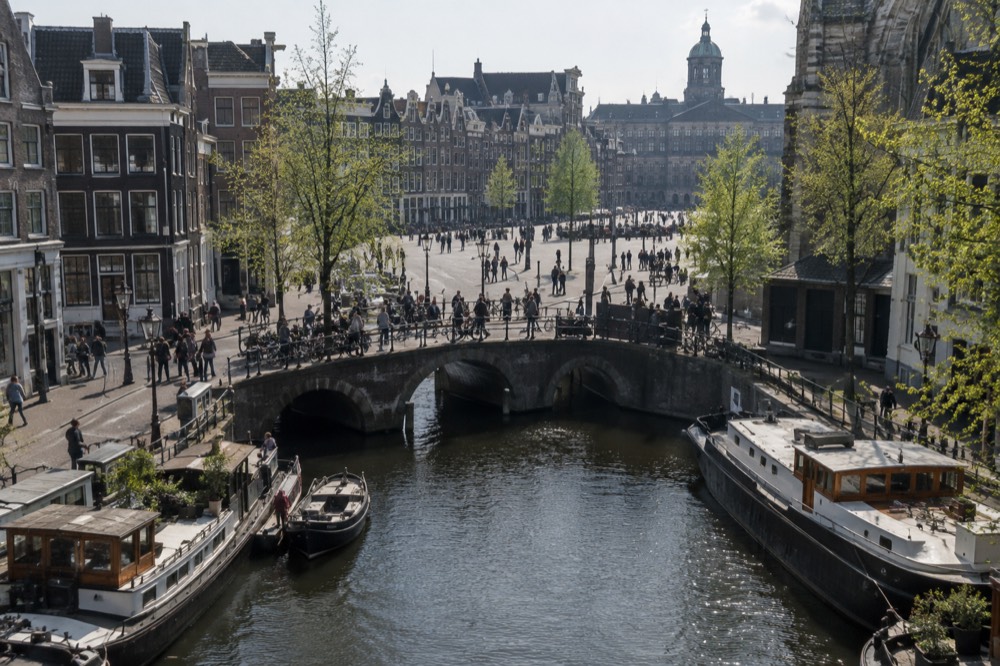
For a classic Dutch breakfast, visit a bakery like Bakkerij Wolf for a fresh croissant or a slice of ontbijtkoek (spice cake) with butter. Many hotels include a continental spread, but the real local move is to grab a coffee and a stroopwafel from a street stall.
Lunch options are abundant: a herring broodje from a fish stall, a cheese sandwich from a kaaswinkel, or a bowl of erwtensoep from a winter market. For a sit-down lunch, Café de Jaren near the Amstel offers salads, sandwiches, and a large waterside terrace.
Dinner is when Amsterdam’s multicultural side shines. Indonesian rijsttafel, a spread of 12–15 small dishes, is a must-try. Restaurants like Blauw and Sampurna serve excellent versions. Surinamese roti and Javanese bami are also widely available. The table below suggests a day’s eating plan.
| Meal | Option 1 | Option 2 |
|---|---|---|
| Breakfast | Yogurt with muesli and fruit at a café | Fresh stroopwafel and coffee from a market |
| Lunch | Herring broodje with pickles | Broodje kroket (croquette sandwich) from a snack bar |
| Afternoon snack | Poffertjes with butter and sugar | Cheese tasting at a kaaswinkel |
| Dinner | Stamppot with rookworst at a bruin café | Rijsttafel at an Indonesian restaurant |
| Late-night | Bitterballen and a beer | Vlaamse frites with oorlog sauce |
Budgeting for Food in Amsterdam
A daily food budget of roughly €30–€50 per person covers three meals and a snack if you mix market stalls and casual cafés. For a more restaurant-heavy day with drinks, budget closer to €60–€80. Groceries from Albert Heijn or street markets can cut costs significantly, and the I amsterdam City Card does not include food discounts, but it does offer free public transport that makes reaching food markets easier.
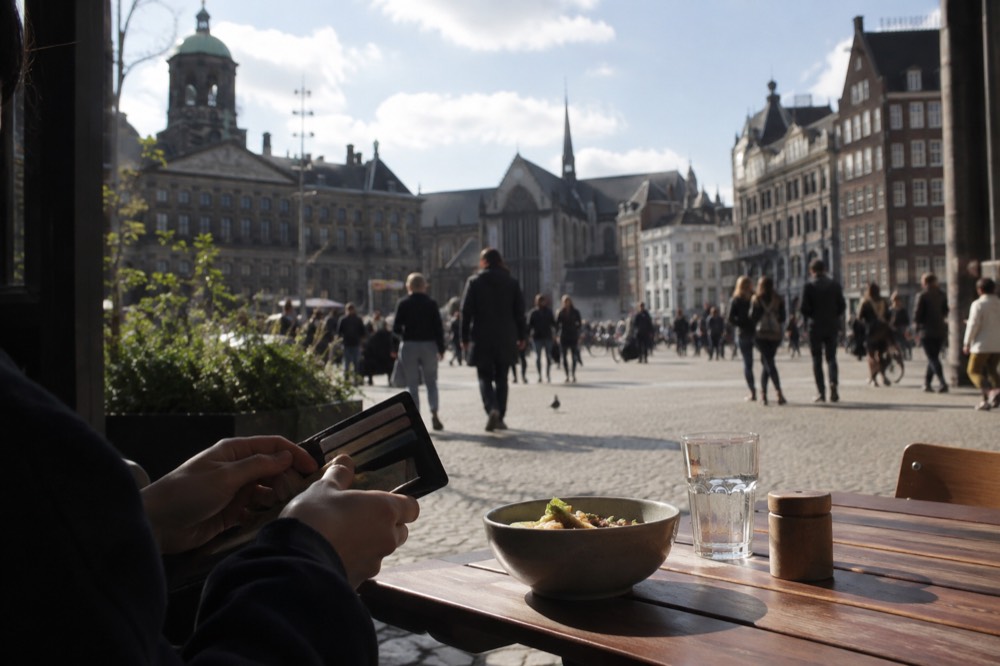
Street food is the cheapest way to eat well: a herring, a portion of frites, and a stroopwafel can total a modest sum. A stamppot dinner with a beer in a bruin café is also affordable. Rijsttafel is a splurge, but it’s a feast that replaces a full meal. Tipping is not obligatory, service is included in the menu price, but rounding up the bill or leaving 5–10% for excellent service is appreciated.
If you’re on a tight budget, visit a supermarket for bread, cheese, and fruit, and use the free tap water (Amsterdam’s water is excellent). Many museums have cafés with reasonable prices. The table below breaks down typical costs.
| Item | Budget (€) | Mid-range (€) |
|---|---|---|
| Breakfast (coffee + pastry) | 4–6 | 8–12 |
| Lunch (street snack or sandwich) | 5–10 | 12–18 |
| Dinner (main + drink) | 15–20 | 25–40 |
| Beer (café) | 3–5 | 5–7 (craft) |
| Coffee shop purchase | 5–15 | 15–25 |
Dutch Food Etiquette and Tips
Dutch dining is informal. It’s common to split the bill (“splitten”), and you don’t need to wait for everyone to be served before starting. Bread is eaten with a knife and fork at a sit-down meal but by hand at a snack bar. Tipping is not expected but is appreciated for good service; round up to the nearest €5 or leave 5–10%. Reservations are wise for popular restaurants, especially on weekends.
A few other pointers: “Eet smakelijk” (enjoy your meal) is the standard before-meal phrase. If you’re invited to a Dutch home, it’s polite to bring flowers or wine, and you may be offered a cup of coffee after the meal. In cafés, table service is the norm; you don’t order at the bar unless it’s a very casual spot. For street food, eat while standing at the stall or find a bench; walking and eating a herring is part of the experience.
If you’re combining eating with sightseeing, a short walking tour like the Anne Frank small-group walk can fit neatly between meals and give you a deeper sense of the city’s history. For more on the neighbourhoods mentioned here, see our Jordaan guide and our De Pijp guide.
The Anne Frank story is woven into the fabric of the city, and a guided walk through the Jewish Quarter adds a layer of understanding that no meal can provide on its own. After a morning of market grazing, this one-hour walk is an ideal way to let the food settle while you absorb some of Amsterdam’s most important history.
Common Questions About Eating in Amsterdam
What is a must-eat in Amsterdam?
Fresh herring from a street stall, warm stroopwafels from a market, and bitterballen with a local beer are the three essentials. For a sit-down meal, try a traditional stamppot or an Indonesian rijsttafel.
Is it rude not to tip in Amsterdam?
No, tipping is not obligatory. Service is included in the menu price. However, rounding up the bill or leaving 5–10% for excellent service is a nice gesture.
What is traditional food in Amsterdam?
Traditional Dutch food includes stamppot (mashed potatoes with vegetables and sausage), erwtensoep (pea soup), haring (raw herring), poffertjes (mini pancakes), and Dutch cheese. Indonesian and Surinamese cuisines are also deeply woven into the city’s food culture.
How much does a meal cost in Amsterdam?
A street snack costs a few euros, a casual café lunch around €10–€15, and a sit-down dinner with a drink roughly €20–€40. Budget €30–€50 per day for mixed eating, or €60–€80 for restaurant-focused days.
Can tourists go to coffee shops in Amsterdam?
Yes. Although Dutch national policy includes a residents-only criterion, Amsterdam does not enforce it, so tourists can enter coffee shops and buy cannabis. Outdoor smoking is banned in the city centre, so consume inside or in private.
Where do locals eat in Amsterdam?
Locals eat at bruin cafés in the Jordaan, market stalls at Albert Cuyp, Indonesian restaurants in De Pijp, and food halls like Foodhallen. They avoid the overpriced tourist strips on Damrak and around Central Station.