Is Amsterdam Worth Visiting In January?
A straight answer on Amsterdam in January: what closes, what stays open, what it costs, and what to do when the days are short.
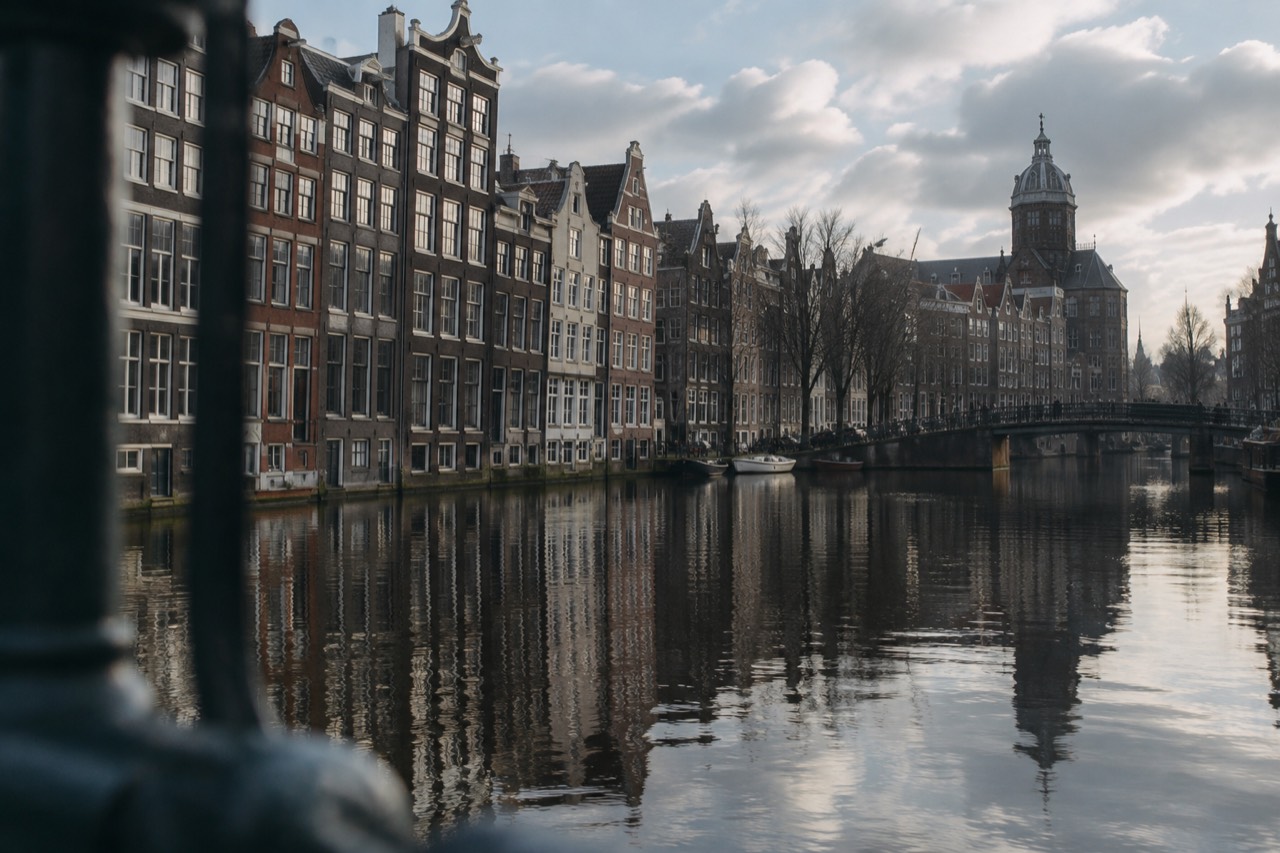
Amsterdam in January is a different city from the one in the spring photographs. The terraces are stacked away, the bike lanes are quieter and the canals hold a stillness you will never see in July. The trade is the weather: short days, grey skies and a cold wind that comes off the water. The reward is a city that belongs to its residents again, where you can walk into the Rijksmuseum's gallery of honour without a wall of shoulders in front of The Night Watch, and where the brown cafes do their proper winter job of warming people who have been outside.
This page answers the question honestly. Some things in Amsterdam are genuinely better in January, some are worse, and a few are impossible. Here is the breakdown.
Is Amsterdam Worth Visiting In January?
Yes, if you want museums, cafes and canals without crowds, and no if your holiday only works in warm weather. Amsterdam's major museums all keep full winter opening hours, the Van Gogh Museum and Rijksmuseum both run daily from 9am, and the trade-off is short daylight, cold wind and a handful of seasonal closures such as Keukenhof, which does not open until spring.
The case for January is capacity. Amsterdam recorded 23.7 million tourist overnight stays in 2025, and the city's own statistics office expects between 23.7 and 25.1 million in 2026, but almost none of that pressure lands in January. The peak months are the ones everyone can guess: tulip season, summer, the December markets. Deep winter is the one stretch where the city's tourism machinery runs below capacity, and you feel it in the queue lengths, the restaurant reservations and the price of a room.
The honest counterweight is daylight and temperature. Amsterdam sits at the latitude where January days are short, the sky is often flat grey, and the wind funnelling along the canals is the kind of cold that finds every gap in a coat. Nobody should book this trip expecting terrace weather. What you should expect is a city that is dramatically easier to see, priced softer than the peak, and full of indoor things that are among the best of their kind in Europe.
There is one hard seasonal fact to plan around: Keukenhof, the tulip garden that anchors most Amsterdam spring content, is closed entirely in January. It opens in spring only, running 18 March to 9 May in 2027, so if tulips are the reason for the trip, January is simply the wrong month and no tour listing can change that.
What Is Amsterdam Like In January: Weather and Daylight?
Cold, damp and dark early, and that is not a reason to cancel, it is a packing instruction. January in Amsterdam sits firmly in winter: expect temperatures around freezing to a few degrees above it, frequent rain or sleet rather than snow, and daylight that starts late and ends mid-afternoon. The city does not shut down for any of this.
Amsterdam's weather in January is North Sea weather, which means damp cold rather than the dry, sharp cold of continental cities further east. The moisture in the air makes zero feel colder than the number suggests, and the wind along the open water, especially around the IJ and on the ferry to Amsterdam Noord, can be brutal. Rain is more likely than snow, and when it rains here it tends to arrive sideways.
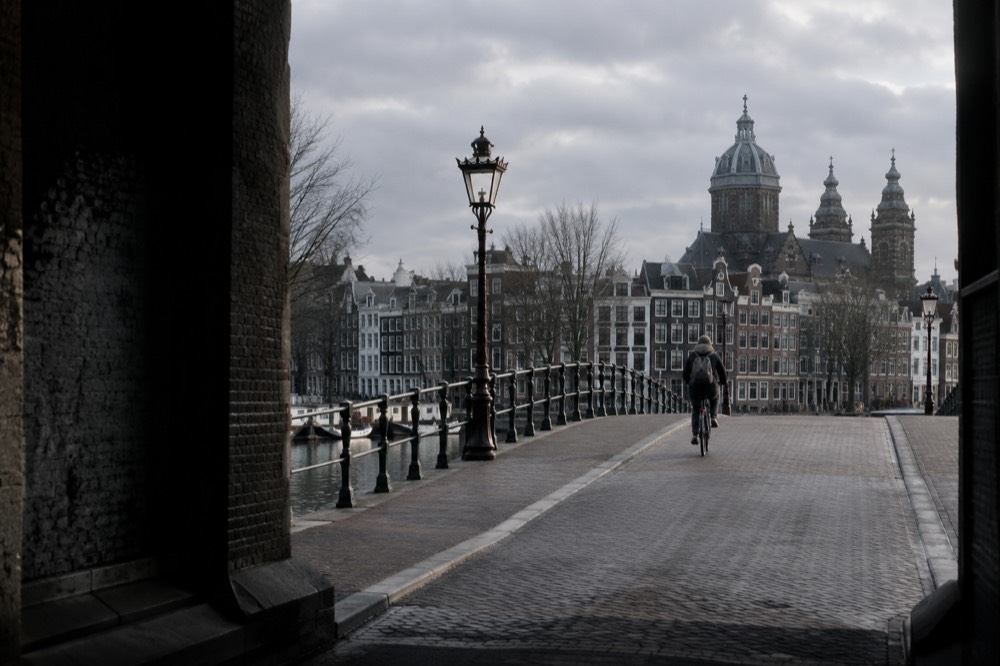
Daylight is the constraint most first-time January visitors underestimate. The sun comes up late and goes down in the middle of the afternoon, which compresses the outdoor part of your day into a window of roughly six or seven hours. Plan the canal cruise, the walking and the photography for that window, and give the museums, cafes and bars the dark hours. Amsterdam is unusually well built for this: it is a city of interiors, from the lamplit brown cafes to the museum halls, and the early darkness is when those interiors look their best.
The canals themselves change character. Still, cold air and quiet water mean the reflections sharpen, and on the coldest nights the historic boat captains start talking about ice the way farmers talk about harvest. Do not build a trip around seeing the canals frozen, that happens rarely and briefly, but do build one around seeing them empty.
A practical note on getting around: the trams, metro and buses run full winter schedules, and a GVB day ticket costs €10.00 for 24 hours of unlimited travel, with a child day ticket at €5.00. If you would rather tap, contactless payment works across the GVB network. The winter transport detail that matters is footwear and grip: canal-side cobbles and tram-rail crossings get slick in rain and frost, and this is the month to wear shoes with an actual sole.
Which Museums Are Best When It Is Cold Outside?
The Rijksmuseum and the Van Gogh Museum are the two anchors, both open daily from 9am, both at €25 for adults, and both free for visitors aged 18 and under. January is the one month when you can see both at a relaxed pace on the same day, because the timed-entry slots that vanish in summer are comparatively easy to book.
Every visitor to the Van Gogh Museum needs a pre-booked timed ticket, including card holders, and that rule does not relax in winter, but the slots themselves are less contested. The museum holds over 200 paintings, 500 drawings and more than 750 letters, and January is when you can stand in front of the late-period works without shuffling forward in a column of tour groups. The Rijksmuseum keeps the same rhythm: open every day of the year from 9am to 5pm, including public holidays, with a start time booked online in advance. Adult admission is €25, under-18s go free, and the gallery of honour, where The Night Watch hangs, is the single best indoor hour in the city.
The Van Gogh ticket sold through the live listing carries a 4.7 rating across 57,096 reviews and costs from $31, and it is the one January booking worth making before you fly, because weekend slots still sell out even in low season.
Beyond the two anchors, January is the month to work down the list the crowds normally price you out of. The Rembrandt House Museum, the modest but atmospheric reconstruction of the rooms where Rembrandt actually lived and worked, is a short walk from the Waterlooplein and takes about an hour. The Stedelijk, next door to the Van Gogh on the Museumplein, covers the modern and contemporary side. And the Anne Frank House, the city's most constrained ticket, becomes genuinely reachable in January, though the rules stay strict: it is online-only, with a timed slot, sold through the museum's own website and by no reseller, at €16.50 for adults including the booking fee, and tickets are released six weeks ahead. Nothing about the January trip should imply a tour or a pass can get you in, because none can.
For the full winter-museum playbook, including which tickets need pre-booking and which passes cover what, the site's guide to Amsterdam museum tickets and skipping the queue breaks down each option, and the deeper comparison of the two headline collections sits in Rijksmuseum or Van Gogh: which one.
What Should You Do In Amsterdam In January?
Indoor Amsterdam carries the month: the museums, the Heineken Experience, the brown cafes and the candlelit canal cruises. The one genuinely January-specific event is the Amsterdam Light Festival, which runs from late November into mid-January, turning the canal ring into an outdoor exhibition of light installations best seen from the water.
The Amsterdam Light Festival is the reason January has a season at all. The 2026/27 edition runs 26 November 2026 to 17 January 2027, and it changes the calculus of a winter visit: the installations sit on and along the water, the canal cruise becomes an art viewing rather than a sightseeing lap, and the early darkness that limits your outdoor day becomes the thing that makes the festival work. If your dates fall inside the festival window, book a cruise for the first hour after dark, because that is when the installations read best and the boats are least full. Everything else covered here is indexed on Things to Do in Amsterdam.
The Heineken Experience is the other reliable January anchor. It sits in the firm's original historic brewery and runs about an hour and a half of brewing history, tastings and interactive exhibits; the ticket carries a 4.6 rating across 39,581 reviews and starts from $23. It is indoors, it is warm, and it books out less in January than in any other month.
The brown cafes are January's real find. These are the centuries-old Dutch pubs, wood-panelled and lit by candles and low lamps, where Amsterdammers have always waited out the winter, and they are at their most authentic precisely when there is no terrace culture competing with them. Order a beer, take the table by the window, and watch the cold street do its thing while the room stays at pub temperature. The site's guide to Amsterdam brown cafes lists the ones worth crossing the city for.
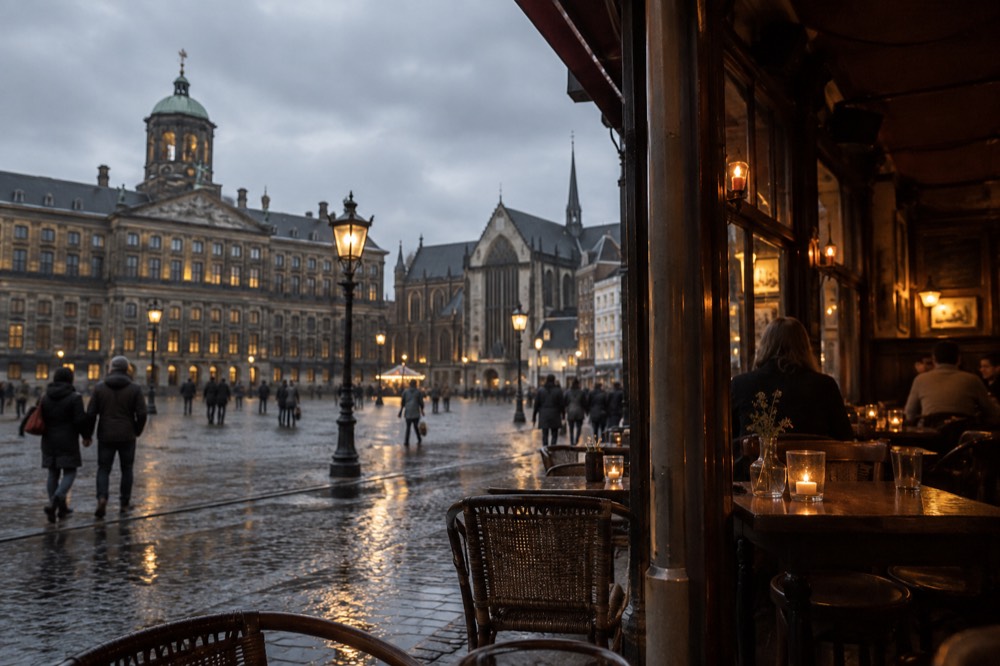
For the evenings, the canal cruise deserves a second look in winter specifically because of the light. A classic saloon boat cruise, the small electrically powered wooden boats that run the historic routes, carries a 4.8 rating across 33,435 reviews and starts from $19.56, and the covered, heated boats are the correct vehicle for a January night on the water. The Smoke and Lounge cruise and the evening City Lights cruise run the same logic: warm cabin, lit bridges, mulled pace.
| Activity | January status | Best time of day |
|---|---|---|
| Rijksmuseum | Open daily 9am to 5pm, timed entry | Mornings, before the dark falls |
| Van Gogh Museum | Open daily, timed ticket required | Any slot; weekends book out |
| Amsterdam Light Festival | Runs to mid-January | First hour after dark |
| Canal cruise | Year-round, heated boats | After dark during the festival |
| Keukenhof | Closed until spring | Not available in January |
| Brown cafes | Open, at their most atmospheric | Evenings |
Is Amsterdam Cheaper In January?
Yes, on accommodation, clearly and measurably: January is the softest month for Amsterdam hotel pricing, and flights follow the same curve. On attractions, no: museum tickets are fixed-price year-round, with the Rijksmuseum at €25 and the Van Gogh Museum at €25 regardless of season, so the savings come entirely from the room and the flight.
The hotel market is where January pays you back. Amsterdam runs close to full in the peak months, with the city's statistics office counting roughly 41,000 to 42,000 hotel rooms across 544 hotels, and the pricing behaves accordingly: when demand is at its annual floor, rates drop with it. The same logic applies to flights, where the post-New-Year weeks are among the cheapest of the year on most routes into Schiphol. If you are weighing the total budget, read the site's breakdown of how much a trip to Amsterdam costs and treat January as the discount scenario.
One cost does rise: the tourist tax. Amsterdam charges 12.5% of the overnight price, excluding VAT, on hotel stays and holiday rentals, a rate in force since 1 January 2026, so the tax is a percentage of a cheaper room rather than a flat fee, and it shrinks along with the rate. The trade does not disappear, but the percentage structure means the low season keeps more of its advantage than a flat tax would allow.
| Cost item | January behaviour | Notes |
|---|---|---|
| Hotel room | Annual low season | The biggest saving of the month |
| Flights | Post-New-Year dip | Book early in the month for the best fares |
| Museum tickets | Fixed year-round | Rijksmuseum and Van Gogh both €25, under-18s free |
| Canal cruises | Standard pricing | Availability is the January advantage, not price |
| Tourist tax | 12.5% of the room price | Percentage of a cheaper room, so it falls too |
The honest summary is that January does not discount Amsterdam itself, it discounts access to Amsterdam. The paintings cost what the paintings cost. The room, the flight and the queue are what change, and they change a lot.
What Should You Pack for Amsterdam In January?
Pack for damp cold and dark afternoons, not alpine cold: a proper waterproof outer layer, a warm mid-layer, a hat that survives wind, and shoes with real grip for wet cobbles and tram rails. Add a small bag layer for museum cloakrooms, because you will be moving between cold streets and warm galleries all day.
The mistake is packing for the thermometer rather than for the wind and the wet. Amsterdam cold is humid, and the canals act as wind channels, so the number on the app understates what the Waterlooplein crossing feels like at 5pm. A waterproof shell over an insulating layer beats a single heavy coat, because you will shed the shell the moment you walk into any museum, cafe or heated boat.
Footwear deserves its own sentence. Canal-side stone, painted bike lanes and tram-rail grooves all get treacherous in January rain and frost, and smooth-soled fashion shoes are the most common cause of a bad afternoon here. Something with tread, already broken in, is the single most useful item in the bag.
Plan the day around the light rather than fighting it. The dark hours from mid-afternoon onward belong indoors, and Amsterdam is unusually rich in indoors: the museums covered above, the brown cafes, the Foodhallen, the Heineken Experience, and the heated boats of the evening cruises. If you are staying longer and mixing in some outdoor walking, the site's winter itinerary at Amsterdam in winter: a three-day plan sequences exactly this kind of day.
For anyone still weighing the month against its neighbours, the honest comparison is with December: January keeps the cold and the lights of the festival's tail end but drops the Christmas-market crowds and the peak pricing, which is why, for the traveller whose priority is museums and the city itself rather than festive atmosphere, it is the better month. More on that trade-off in is Amsterdam worth visiting in December.
Common Questions About Visiting Amsterdam in January
Is Amsterdam Worth Visiting In January?
Yes, if museums, cafes and uncrowded canals appeal more than warm weather. The major museums run full winter hours, the Light Festival lights the canals into mid-January, and crowds and hotel prices are at their annual low. The trade-offs are short daylight, cold damp weather and the closure of seasonal attractions like Keukenhof.
Is the Amsterdam Light Festival on in January?
Partly. The 2026/27 edition runs 26 November 2026 to 17 January 2027, so early-to-mid January is inside the window and the final weeks of the festival are often the quietest. The installations are designed to be seen from the water, so an evening canal cruise is the standard way to view them.
Are the canals frozen in January?
Rarely, and you should not plan around it. Cold snaps occasionally ice over sections of the historic canal ring, but it is brief and unpredictable, and skating on the city canals happens only in exceptional winters. The reliable January canal experience is a heated boat cruise, not ice.
Do Amsterdam museums have shorter hours in January?
No. The Rijksmuseum opens every day of the year from 9am to 5pm, and the Van Gogh Museum runs its standard daily schedule with timed entry. What changes in January is availability: timed slots are far easier to book than in peak season, though weekend slots at the Van Gogh Museum still sell out.
Is Keukenhof open in January?
No. Keukenhof opens in spring only, and the 2027 season runs 18 March to 9 May. No tulip garden, field or greenhouse visit replaces it in January, so if tulips are the purpose of the trip, book spring dates instead.
What should I wear in Amsterdam in January?
Layers built around a waterproof shell, a wind-resistant hat, and shoes with real grip for wet cobbles and tram rails. Amsterdam's cold is damp and wind-driven rather than extreme, so the packing problem is moisture and footing, not deep-freeze insulation.