Amsterdam Brown Cafés: The Local Drinking Institutions Worth Finding
Brown cafés are the wood-panelled, candle-lit drinking rooms where Amsterdam actually spends its evenings, and they work nothing like the bars on the main tourist strips.
Short answer
A brown café is a traditional Amsterdam drinking spot named for its tobacco-stained brown walls, offering Dutch and Belgian beers, jenever, and simple bar snacks in a small, dim room. Expect cash-friendly counters, no music, locals at the bar, and opening hours that often start around noon and run late. The best clusters are in the Jordaan, De Pijp, and the canal belt side streets.
Amsterdam keeps two kinds of drinking establishment side by side, and the difference between them decides whether your evening feels like the city or like an airport lounge. The first kind lines Damrak and the Rembrandtplein strip: bright, loud, priced for people who will never come back. The second kind is the brown café, and finding one is the single easiest way to feel how Amsterdam drinks when Amsterdam is drinking for itself.
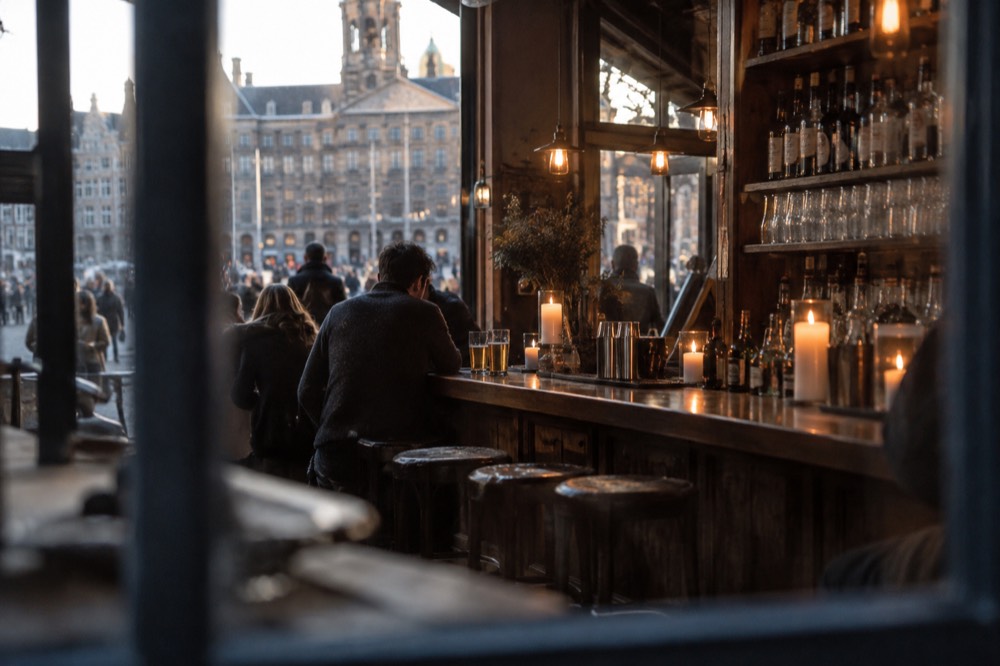
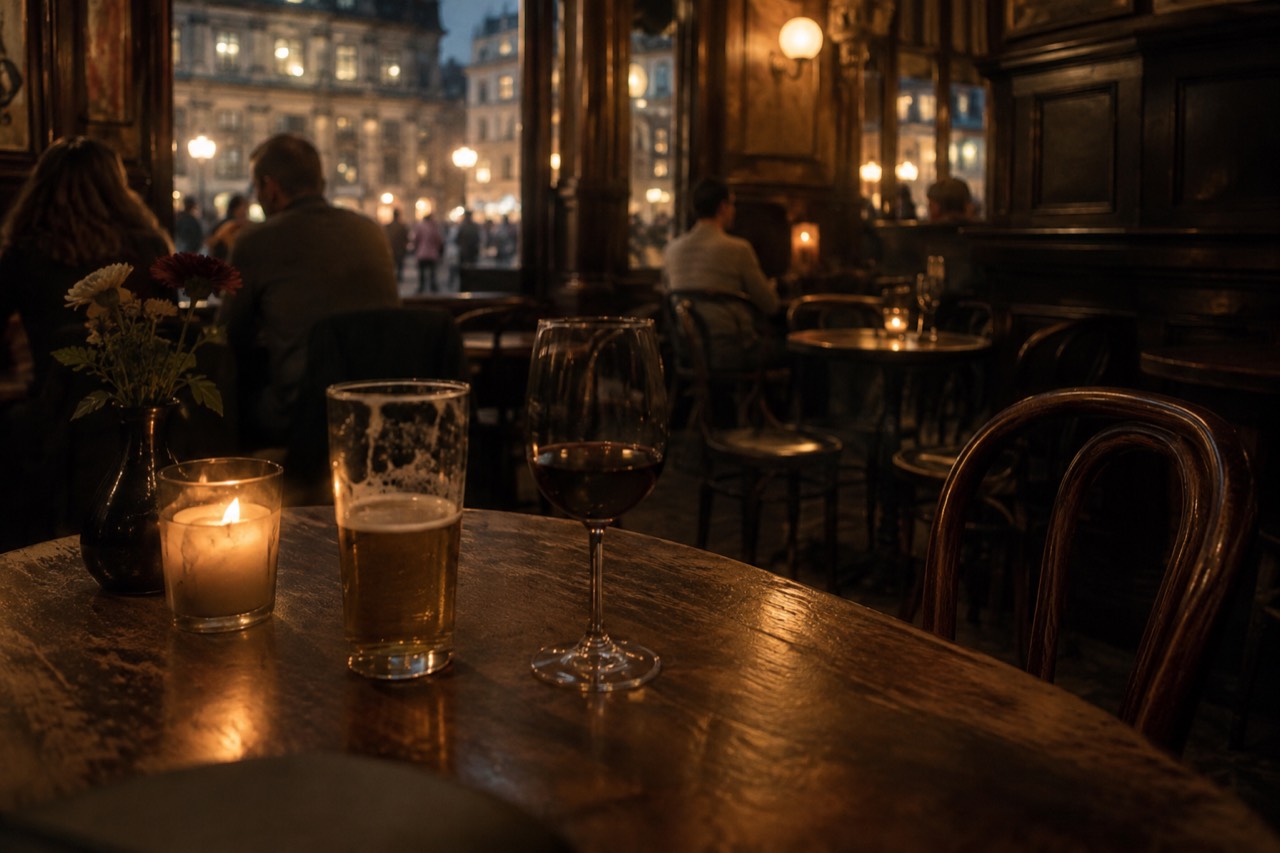
A brown café is not a themed pub. Nobody designed it. The look comes from decades of smoke, candle soot, and varnish darkening the wood panelling until the whole room settles into a colour somewhere between tea and treacle. Tables are small and often slightly wobbly. The lighting is low enough that you read the beer list by leaning towards the candle. Regulars sit at the bar, not at tables, and the person behind it often owns the place.
This guide covers what a brown café actually is, which ones and which neighbourhoods are worth building an evening around, what to order once you are inside, and the unwritten rules that keep these rooms pleasant. The city's own visitor guidance on respectful behaviour, published on the How to Amsterdam page of the municipal website, applies in these rooms as much as anywhere.
What Is a Brown Café?
A brown café is a traditional Amsterdam pub named for its dark, tobacco-stained interior, serving beer, jenever, and simple food in a small room that has often changed little in a century. It is the Dutch equivalent of a British local or a Viennese neighbourhood café, and it exists for conversation rather than for nightlife. Nothing about the format is a tourist reconstruction.
The brown comes from the walls. Decades of cigarette smoke, once permitted and now confined or banned, left a permanent amber varnish on the woodwork, ceilings, and stained glass, and owners deliberately preserve the patina because scrubbing it would erase the room's whole character. Furnishings run to dark oak tables, benches worn smooth, brass fittings, and a bar back stacked with jenever bottles. Some rooms have a sand-covered floor on certain days, a very old Dutch habit that survives in a handful of places.
The format matters more than any single address. A brown café typically seats a few dozen people at most, serves a short list of Dutch and Belgian beers on draught and in bottles, pours jenever from a bottle kept in the freezer, and offers a food menu that rarely runs past soup, cheese, bitterballen, and a broodje. Music, if it plays at all, sits below conversation level. Many close one afternoon a week, and many take a summer holiday, because these are family businesses rather than chains.
The distinction from the rest of the city's nightlife is worth holding onto. Amsterdam also has grand cafés, which are spacious, gilt-edged, and built for coffee and people-watching, and it has the canal-side terraces aimed squarely at visitors. A brown café is smaller, darker, cheaper, and quieter than both. For a fuller picture of how these rooms fit into the city's wider bar scene, our Amsterdam beer and brewery guide covers the craft side of the city, and our Amsterdam nightlife guide covers everything that happens after midnight.
Which Brown Cafés Are Worth Building an Evening Around?
The most rewarding brown cafés sit in the Jordaan, along the canal belt's side streets, and in De Pijp, and the reliable ones share a few markers: a small single room, a draught list built on Dutch and Belgian beers, a jenever bottle within reach of the bar, and a clientele that is mostly Dutch on a weeknight. Pick by neighbourhood first and by name second, because the walk between three good rooms is half the evening.
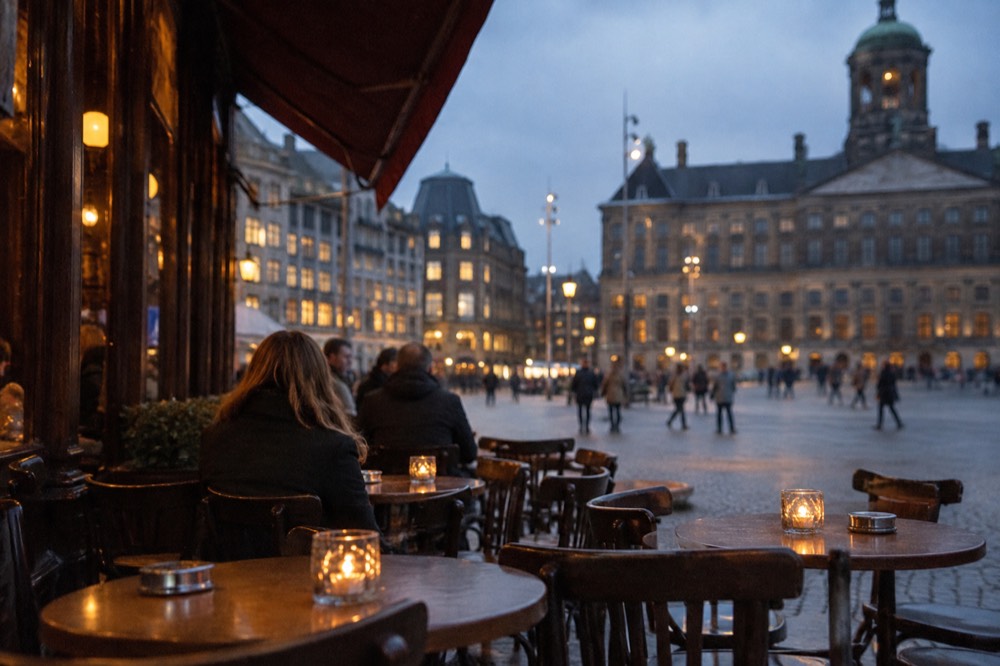
The classic move is a short crawl. In the Jordaan, the narrow streets west of the Prinsengracht hold one of the densest collections of brown cafés in the city, and the neighbourhood's scale means you are never more than a few minutes from the next one. Many of the best rooms here face onto the canals, so a table by the window comes with the view that the grander bars charge four times the price for. Our Jordaan neighbourhood guide maps the area in detail.
Around the Nine Streets and the western canal belt, brown cafés hide on the cross-streets between the boutiques, and these rooms get a mix of locals and visitors that keeps them lively without tipping into tourist territory. Further south, De Pijp's drinking rooms sit among the bars of the Sarphatistraat and the edges of the Albert Cuyp Market, and they run younger and later than the Jordaan's. Our De Pijp guide covers the neighbourhood's character.
A few practical notes separate the good evenings from the mediocre ones. Rooms with a cat, a chess set, or a wall of old photographs are usually the real thing. Rooms with a hostess on the door, a cocktail list, or a bouncer are not brown cafés whatever the woodwork looks like. Weeknights are quieter and more local; weekends fill earlier. And because these are small family businesses, opening hours shift, so treat any single room as a starting point rather than the whole plan.
If you want the evening anchored by something beyond the bar, the city's big-hitter attractions all sit within walking distance of good brown café territory. The Van Gogh Museum anchors Museumplein, the Heineken Experience sits on the edge of De Pijp, and the classic saloon boat cruises leave from docks throughout the canal belt, so a museum afternoon and a brown café evening pair naturally.
What Should You Order in a Brown Café?
Order a Dutch or Belgian beer on draught, a jenever if you want the traditional spirit, and bar snacks such as bitterballen or a cheese broodje, and expect to pay neighbourhood prices rather than tourist-strip prices. The beer list is short by design. Ask what is on draught rather than working through a menu, and ask the bartender what they drink themselves.
The draught beer is the backbone. Brown cafés pour Dutch pilsners by default, and the Belgian classics, Duvel, Westmalle, Orval, appear in most rooms, sometimes in the proper branded glassware that Belgian breweries insist on. A beer in a brown café is served with a proper head, and the head is not shortchanging you; it is how the beer is meant to be poured. Ordering a small glass is normal and not looked down on.
Jenever is the old drink of these rooms, a juniper spirit that predates gin and is served in a small tulip glass. The traditional serve is a kopstootje, a shot of jenever with a beer alongside, and the traditional way to drink a young jenever is to sip from a full-to-the-brim glass without picking it up, then bend down for the rest. Ask first whether the bar pours this way; most do, and it is a fair question rather than a tourist question.
The food is deliberately simple and that is the point. Bitterballen, the deep-fried ragout balls served with mustard, are the standard order and the standard answer to a second beer. A broodje, a small sandwich, usually with cheese or ham, appears on most counters. Some rooms do a plate of cheese with mustard and a bread basket that is honestly a meal. For the wider food picture, our Dutch food guide and our piece on bitterballen, stroopwafel, and haring go deeper than any café counter can.
| Order | What It Is | How to Order It |
|---|---|---|
| Dutch pilsner | The default draught lager, served in a small or large glass with a full head | "Een pils, alstublieft" or just point at the tap |
| Belgian beer | Stronger bottled or draught ales such as Duvel or Westmalle Tripel | Ask what is on the list; it is short |
| Jenever | Juniper spirit, served neat in a small tulip glass, young or aged | Ask for a kopstootje if you want the beer pairing |
| Bitterballen | Deep-fried beef ragout balls with mustard | Six or eight to a portion; order with the second round |
| Broodje | A small sandwich, usually cheese or ham | Often at the counter rather than a menu |
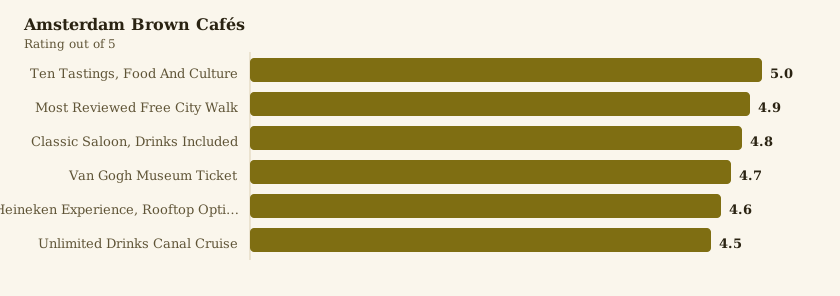
The Van Gogh Museum sits at the southern end of the evening's walking territory, and it is the one Amsterdam attraction where planning genuinely matters: the museum requires every visitor to pre-book a timed entry ticket, and the official ticket page states plainly that slots sell out. The live listing for the Van Gogh Museum entry ticket shows current availability, and the ticket is rated 4.7 across 57,096 reviews, from $31.
Once the museum closes, the walk north from Museumplein towards the canal belt passes through exactly the kind of side streets where brown cafés hide, so the pairing is not a stretch. Book a late-afternoon slot, leave when the galleries empty out, and let the first café you find with a dark doorway and a cat in the window be the plan for the rest of the evening.
What Are the Unwritten Rules of a Brown Café?
The rules are simple: take the seat you are shown, keep your voice at conversation level, do not photograph other customers, do not ask the bartender to turn the music up, and settle small rounds in cash or by card as the room prefers. These are rooms built around regulars, and a visitor who behaves like a guest is treated like one. A visitor who treats the room as a set gets the cold shoulder fast.
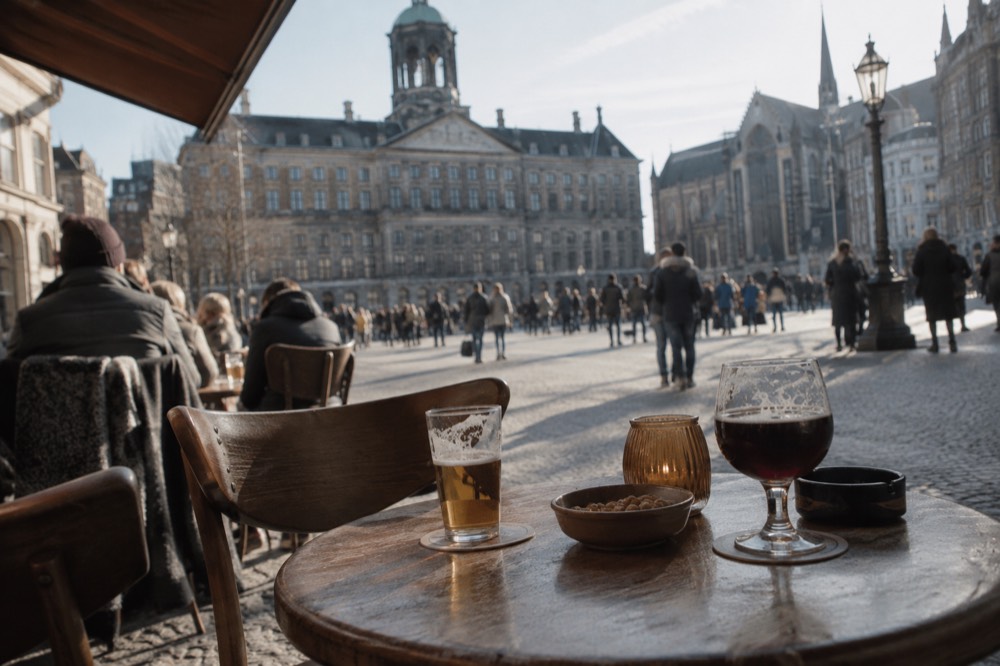
The most important rule concerns phones and cameras. The municipal guidance asks visitors to respect residents' privacy, and in a brown café that means no photographs of the room or the people in it without asking. A picture of your beer is harmless. A picture of the pensioner at the end of the bar is not. If you want a photograph of the interior, ask the bartender; most will say yes, and the asking is the whole point. The rest of the planning pages sit on Things to Do in Amsterdam.
Rounds work the old way. If you are with a group, one person buys the round and the next person buys the next, and the group settles up at the end or not at all. Sitting down at a table with table service means waiting to be served; standing or sitting at the bar means ordering at the bar and paying as you go. Do not wave money at the bartender before you have ordered; in the Netherlands the glass in your hand is the sign you have been served, and the bill follows.
Tipping is modest and optional, and rounding up is the norm rather than a percentage. Our separate piece on tipping and etiquette in Amsterdam covers the whole question in detail, including the places where service is already included in the price. The short version for a brown café: round the bill up, or leave the small change on the bar, and nobody will think anything of it either way.
Smoking deserves a careful sentence, because the rules are genuinely confusing to newcomers. Cannabis is sold only in coffeeshops, which are a completely separate category of establishment, and our Amsterdam coffeeshop rules guide explains exactly what the law allows. Tobacco smoking indoors is banned in the Netherlands, which is why the brown stain on the walls is now historical rather than ongoing. Vaping rules vary by room, so ask.
| Situation | What Locals Do | What to Avoid |
|---|---|---|
| Arriving | Greet the room with a general "goedendag" and take any open seat | Standing in the doorway surveying the room |
| Ordering | At the bar, by name, one round at a time | Waving cash before ordering, or ordering four rounds ahead |
| Photographs | Ask the bartender first | Photographing customers or staff |
| Volume | Conversation level, even on a lively night | Hen-party volume, especially in small rooms |
| Paying | Round up or leave small change | Calculating a percentage tip at the table |
Which Neighbourhood Should You Drink In?
The Jordaan offers the densest cluster of authentic rooms with canal views, the western canal belt gives you the prettiest walk between stops, and De Pijp runs younger and later, while the city centre's brown cafés are the easiest to find and the most mixed in clientele. Choose the Jordaan for a first evening, De Pijp for a second, and the centre only when convenience beats character.
The Jordaan is the classic answer and the right one. Once a working-class district of warehouses and labourers, it is now the neighbourhood most densely threaded with small drinking rooms, and its scale rewards wandering: the streets are narrow, the blocks are short, and a wrong turn reliably delivers you to another dark doorway. The cafés here close earlier than you might expect, because the neighbourhood is residential and the regulars have work in the morning.
The canal belt between the Jordaan and the centre holds the rooms with the best settings. A brown café on the Prinsengracht or a cross-canal street gives you candlelight inside and the UNESCO-listed canal ring outside the window, and the walk between stops is the single most beautiful short walk in the city. Our Amsterdam canal ring guide covers the architecture you will be looking at between beers.
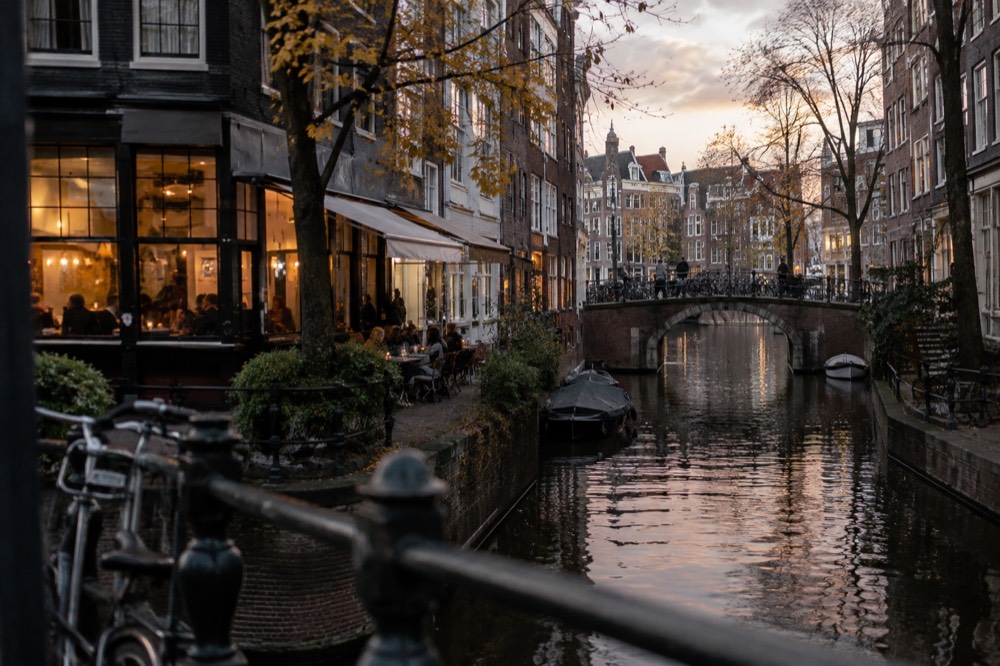
De Pijp, south of the centre, is the youngest of the three and the most international, and its brown cafés sit comfortably next to craft beer bars and cocktail rooms without any of them pretending to be the other. The neighbourhood's market, the Albert Cuyp, means the area is busy from late morning, and the drinking rooms fill steadily from early evening. Our Amsterdam neighbourhood guide helps if you are choosing where to stay as well as where to drink.
| Neighbourhood | Character | Best For | Timing |
|---|---|---|---|
| Jordaan | Dense, quiet, canal-facing rooms | A first brown café evening | Early evening; rooms close earlier |
| Western canal belt | Pretty walks, mixed clientele | A slow crawl between stops | Any evening |
| De Pijp | Younger, later, more international | A second night out | Later evening |
| City centre | Convenient, variable quality | When time is short | Any time; check the room first |
Getting between neighbourhoods is easy and cheap. A GVB 24-hour day ticket costs €10.00, with a child day ticket at €5.00, and a single one-hour ticket is €3.40, per the official GVB fares page. Trams link the Jordaan, the centre, and De Pijp in minutes, and the walk from the centre to the Jordaan takes less time than the tram wait.
How Do Brown Cafés Differ from Coffeeshops?
A brown café serves alcohol and no cannabis; a coffeeshop sells cannabis and no alcohol, and the two are legally separate categories of licensed premises that cannot sell each other's product. The similar word causes constant confusion among visitors. A brown café is a pub. A coffeeshop is a cannabis shop. Asking for the wrong thing in the wrong room gets a polite correction rather than anything else.
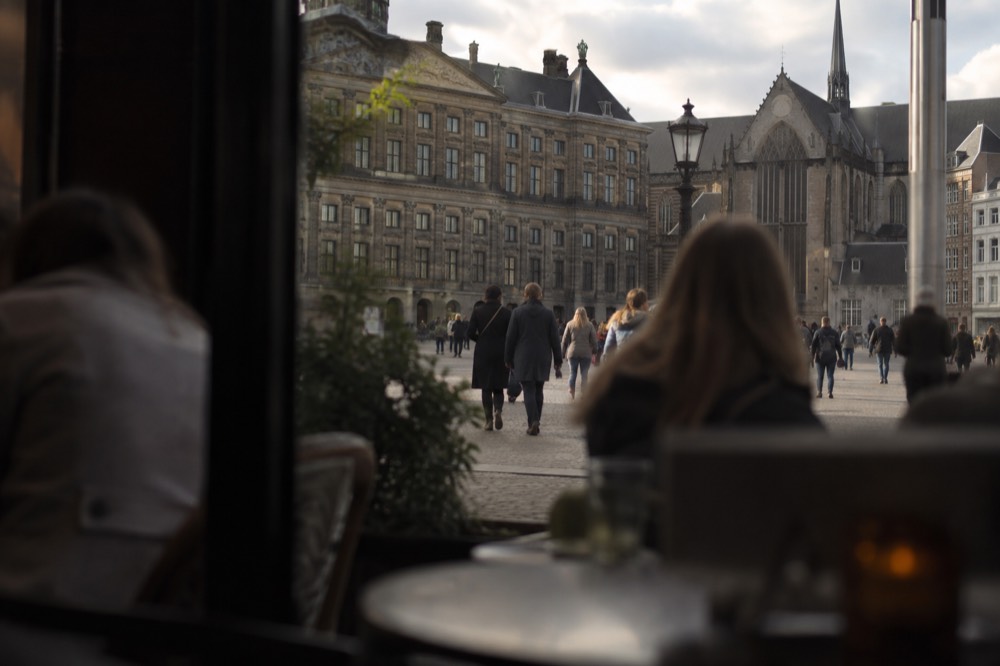
The legal background is worth one paragraph, because it explains why the two never mix. Cannabis sales are tolerated in the Netherlands under a national tolerance policy, but only through licensed coffeeshops, and those premises may not sell alcohol. Brown cafés hold an ordinary hospitality licence, the same as any bar, and alcohol and cannabis cannot be sold under the same roof. The national policy also sets a limit of 5 grams of cannabis per person per day at a coffeeshop, per the government's own tolerance policy page.
Amsterdam adds its own local rules. Outdoor cannabis smoking is prohibited in the city centre, including the area around De Wallen, according to the municipal How to Amsterdam guidance, which means consumption happens inside the coffeeshop rather than on the street. The residents-only criterion that exists in national policy has never been applied in Amsterdam, so tourists are not banned from coffeeshops, but neither is cannabis "legal" in the sense visitors often assume. Our coffeeshop rules guide covers all of it carefully.
In practice, the confusion resolves quickly once you are inside. A brown café smells of beer and old wood. A coffeeshop smells of its product and has a menu of that product on the counter. Neither will judge you for walking into the wrong one, but a brown café is where the evening drinking happens, and it is the room this guide is about.
How Do You Build a Brown Café Crawl Around the Canal Belt?
Pick three rooms in one neighbourhood, walk between them rather than tramming, spend an hour in each, and order one beer and one snack per stop so the crawl stays a crawl. Start in the Jordaan or the canal belt around eight in the evening, work in one jenever at the second stop, and finish somewhere with a terrace if the weather holds. Three rooms is the right number; four becomes a night out rather than a crawl.
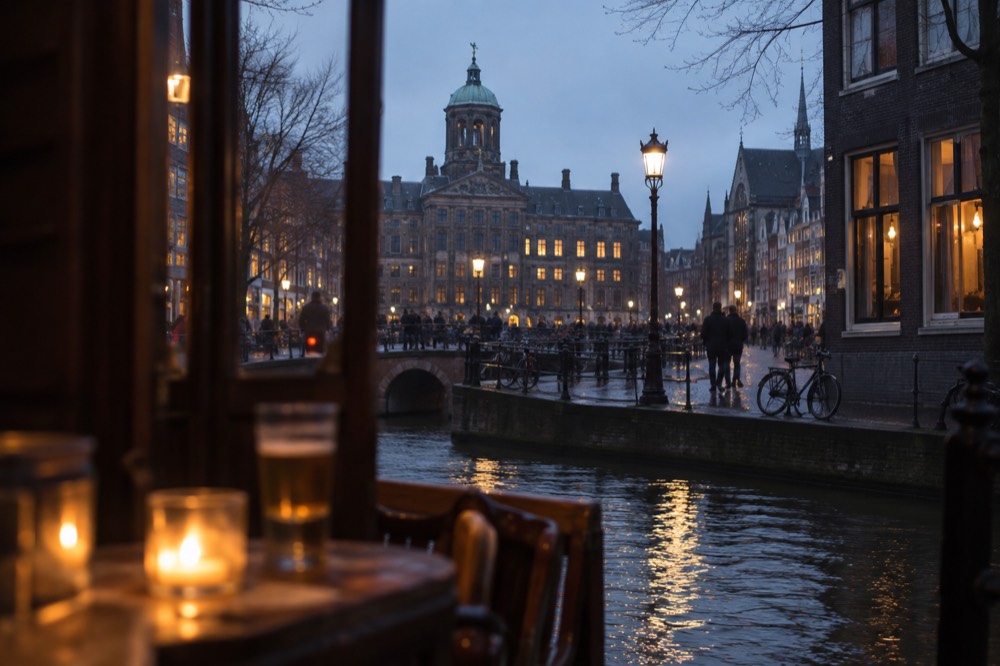
The geometry of the canal belt makes this easy. The main canals run parallel, the cross-streets connect them every few hundred metres, and any route you improvise between the Prinsengracht and the Herengracht passes more dark doorways than you can use. The trick is resisting the urge to plan too hard. Choose a starting room, then let the walk choose the next two.
Timing matters more than route. Dutch drinking rooms fill between eight and ten in the evening, and the kitchen, such as it is, usually stops earlier than you expect. If you want bitterballen at the second stop, order them when you order the beer, not after. Kitchens in small rooms close when the owner decides they close.
If you would rather have a guide pour the structure over the evening, the city's walking tours thread naturally into a café crawl, and the free, pay-what-you-want model means the walk costs nothing to book and you tip the guide what the walk turned out to be worth. The Absolutely Amsterdam introductory walk, rated 4.88 across 9,527 reviews, covers the centre's highlights in two and a half hours and ends within easy walking distance of the Jordaan's best rooms.
For travellers who want food and drink handled in one organised sweep, the city's food tours do exactly that. The number-one food and culture walking tour runs three and a half hours with ten tastings, is rated 5.0 across 1,157 reviews, and costs from $92, and it walks through the neighbourhoods where the brown cafés live, so it works well as the first half of a full evening.
And if the evening is going to end on the water instead, the unlimited drinks canal cruise gives you the city lit up from the canals, from $23, rated 4.5 across 26,504 reviews, and it departs from docks within a short walk of most brown café clusters, which makes it a natural final stop rather than a detour.
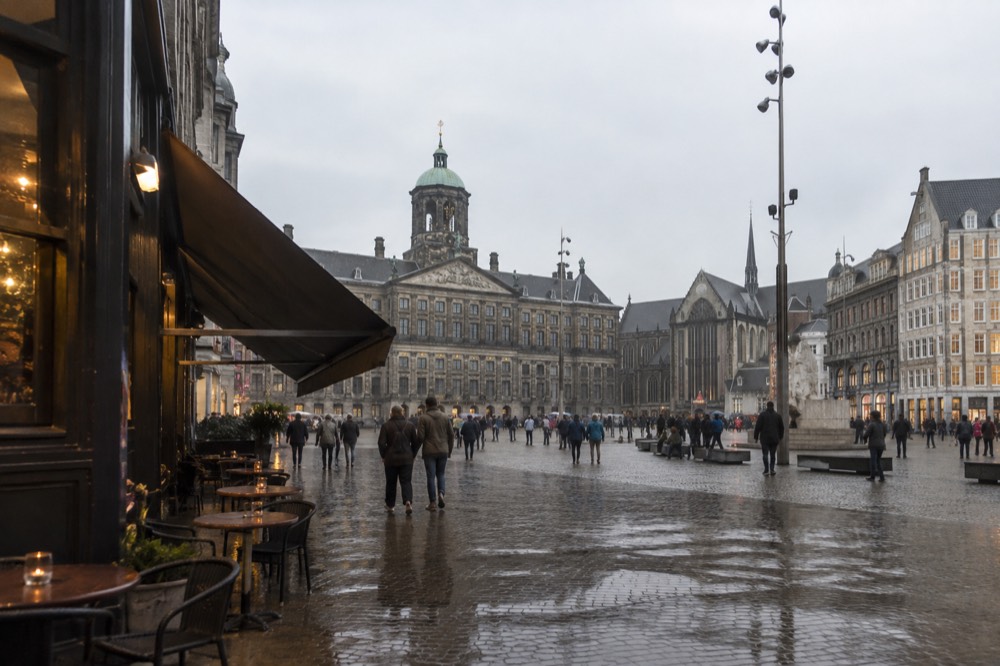
One last planning note: the seasons change the crawl. In winter, the rooms are at their best, because the whole point of a small dark warm space is felt properly at five in the afternoon with rain on the glass, and our Amsterdam in winter guide covers the season. In summer, terraces take over and the interiors empty, so pick rooms with canal-facing outdoor seats. Whatever the month, the crawl ends when the third room closes, and in the Jordaan that is earlier than you think.
Common Questions About Amsterdam Brown Cafés
What is a brown café in Amsterdam?
A brown café is a traditional Amsterdam drinking room named for the dark, tobacco-stained brown patina on its wood panelling and walls. It serves Dutch and Belgian beer, jenever, and simple snacks in a small, dim, conversation-focused space, and it is the local equivalent of a neighbourhood pub rather than a tourist bar.
Can tourists visit brown cafés in Amsterdam?
Yes, absolutely. Brown cafés are ordinary licensed bars open to anyone who walks in and behaves like a guest. The unwritten rules are simple: keep your voice down, do not photograph other customers, and order at the bar. Regulars and staff are generally welcoming to visitors who respect the room.
What should I order in a brown café?
Start with a Dutch pilsner or a Belgian beer on draught, add bitterballen with mustard, and try a jenever, the traditional juniper spirit, if you want the full experience. Ask the bartender what they drink themselves; the list is short by design and the recommendation is usually worth taking.
Are brown cafés the same as coffeeshops?
No. A brown café serves alcohol and no cannabis; a coffeeshop sells cannabis and no alcohol. They are legally separate licence categories and cannot sell each other's product. The similar names cause constant confusion, but the rooms look, smell, and function completely differently.
Where are the best brown cafés in Amsterdam?
The Jordaan has the densest cluster of authentic rooms, the western canal belt has the prettiest walks between stops, and De Pijp runs younger and later. The city centre has good rooms too, but quality varies more, so judge each room on its own merits rather than its postcode.
How late do brown cafés stay open?
It varies by room and by neighbourhood, and these are small family businesses that set their own hours. Jordaan rooms tend to close earlier because the neighbourhood is residential, while De Pijp and the centre run later. Do not count on a kitchen late in the evening; order snacks when you order the beer.