Is It Worth Going To The Red Light District In Amsterdam?
A straight answer on whether De Wallen is worth your time, what the rules are, which tours are allowed, and what the district is like by day and by night.
Is It Worth Going To The Red Light District In Amsterdam?
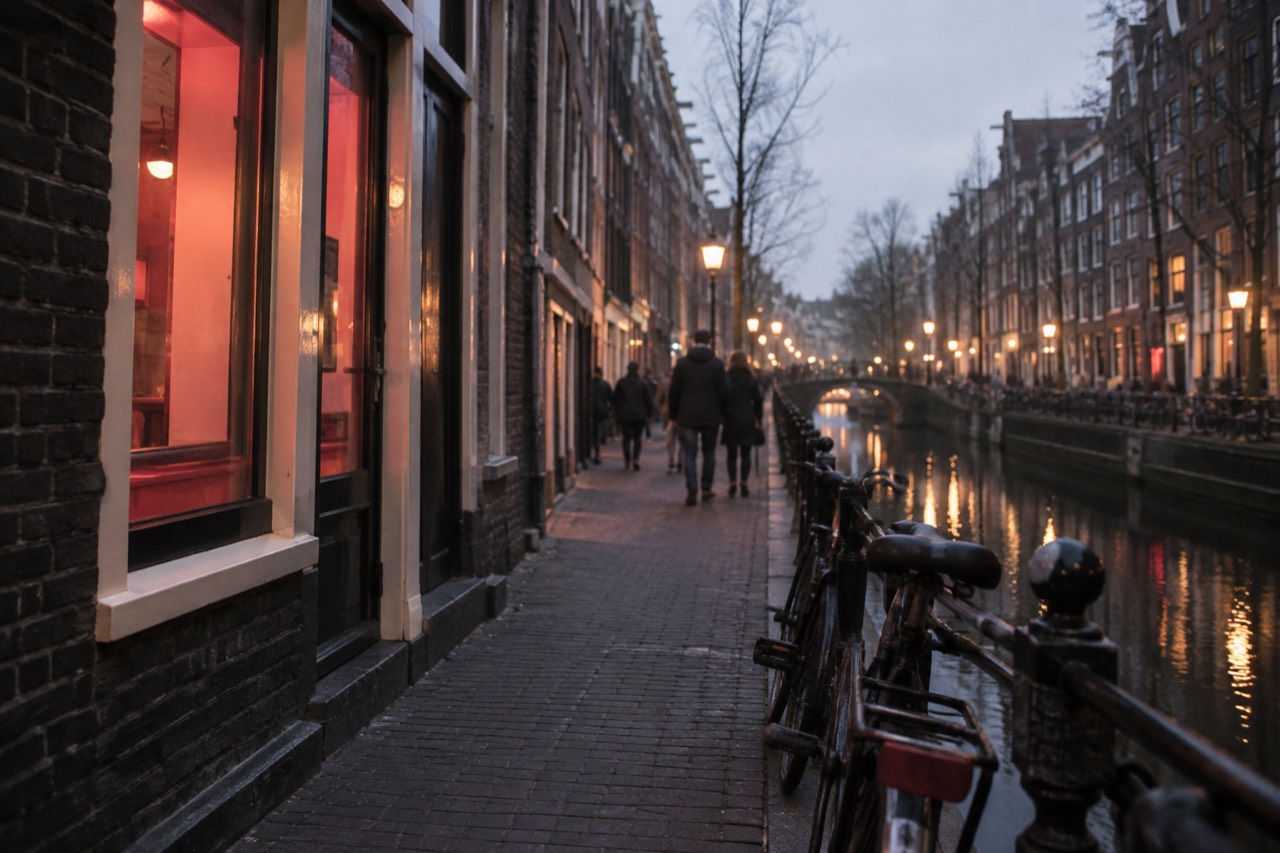
Yes, for most first-time visitors a short visit is worth it, but as a historic neighbourhood to walk through rather than a night out. De Wallen is the oldest part of Amsterdam, packed with centuries-old buildings, and it costs nothing to see. The honest caveat: it is at its least pleasant after dark on weekends, when the crowds and the drinking peak. Go early, walk quietly, and an hour is plenty.
That answer surprises people who expect either a carnival or a no-go zone. De Wallen is neither. It is a small residential and commercial quarter, roughly the area between Centraal Station and the Nieuwmarkt, where sex work has been organised in window premises since the late 20th century and where the buildings themselves are far older than the trade. The Oude Kerk, the city's oldest building, sits in the middle of it. The streets are narrow, the canals are among the prettiest in the centre, and during the day it functions as an ordinary, if busy, Amsterdam neighbourhood.
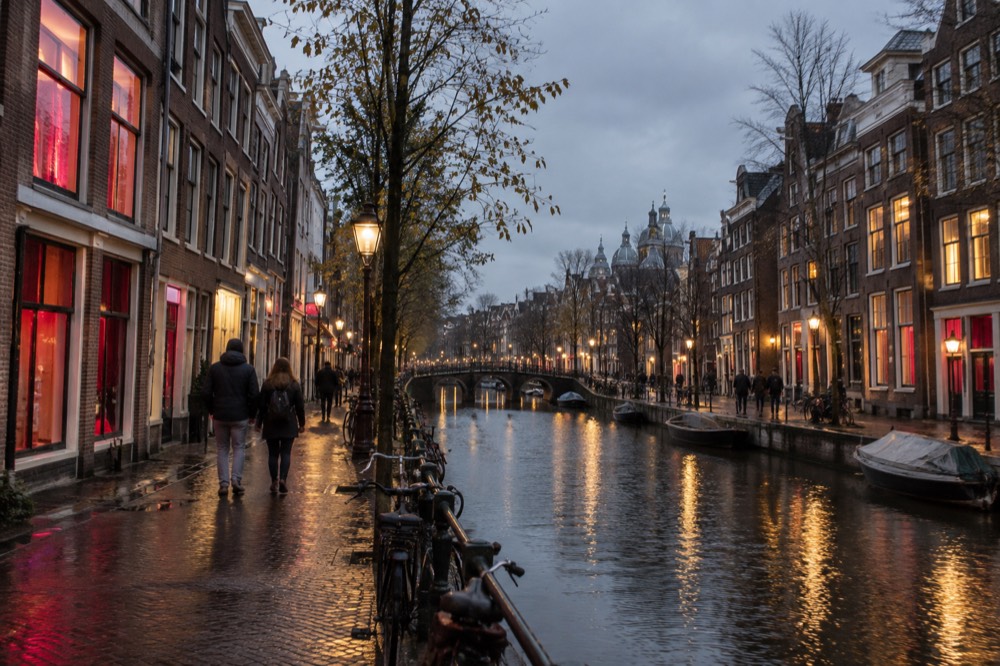
What complicates the "worth it" question is that the district is genuinely two places at two times. By day it is an architectural walk with coffee shops and tourists. By night, especially Thursday through Saturday, it is one of the most crowded and rowdiest strips in the Netherlands. The city has spent years pushing back against that night-time excess, and its rules now shape what a visit can look like, including which tours are even permitted to operate. For a fuller picture of the neighbourhood's layout and history, see our guide to the Red Light District, De Wallen.
If you want the district explained rather than just gawped at, a guided walk is the format that works. These three are the strongest fits for a first visit:
What Is Actually Worth Seeing in De Wallen?
The Oude Kerk, the canal-side architecture and the layered history are what justify the visit. The windows are a legal workplace, not an attraction, and the district's own etiquette campaign asks visitors to treat them that way. Roughly 60 to 90 minutes on foot covers the whole area comfortably, and everything worth seeing is free to walk past.
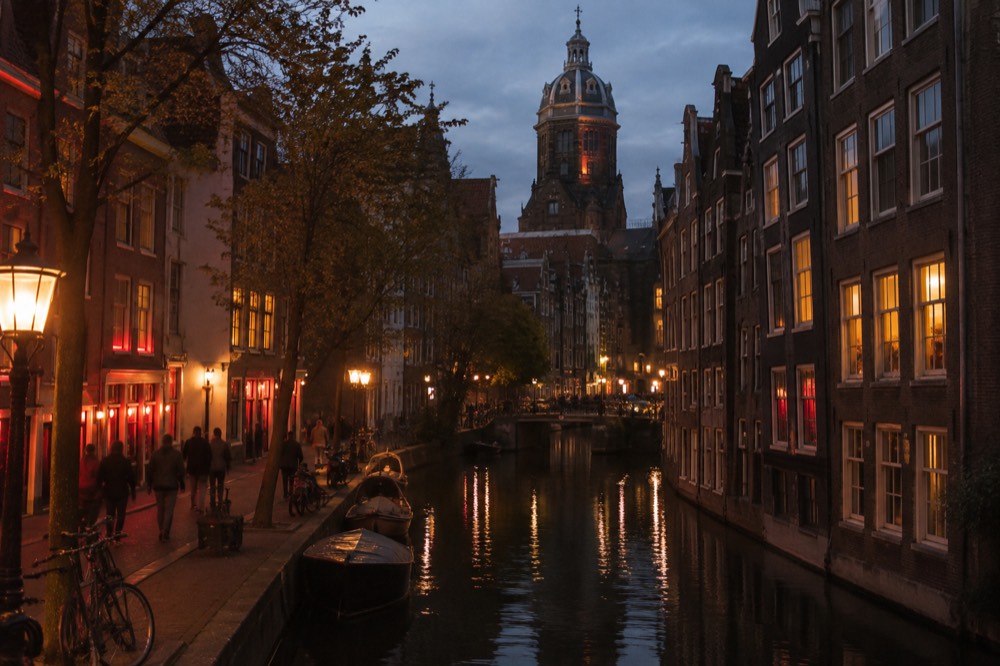
Start at the Oude Kerk, Amsterdam's oldest surviving building, still holding concerts in its cavernous interior. Around it spreads the network of alleys that gives De Wallen its character: Warmoesstraat, the Zeedijk, the Oudezijds Voorburgwal and Achterburgwal, and the tiny side streets between them. The Zeedijk is worth a slow walk for its leaning gabled houses and its survival story; it was a run-down street in the later 20th century and is now one of the more photogenic in the centre, with the city's oldest Buddhist temple sitting a few doors from a brown café.
The history is the part most visitors miss. This was the harbour quarter, and everything about it, from the street names to the church's tower, reflects a port city's economy. The window premises themselves date from a municipal policy of concentrating and regulating the trade, and the workers in them are licensed, taxed and unionised. That context is exactly what a good guide supplies and what a self-guided stumble at midnight does not. The Anne Frank walking tour in the trio above covers a different but connected thread, the Jewish Quarter and wartime occupation, and pairs well with a De Wallen walk for anyone who wants the city's heavier history handled properly.
For visitors who prefer to decide on the spot, the paid small-group option is the most-reviewed dedicated Red Light District walk on our roster: 1 hour 30 minutes, rated 4.9 across 9,142 reviews, from $26. It runs inside the city's permitted hours and group-size limits, which matters more than you might think, as the next section explains.
There is also a free, pay-what-you-want option: the Red Light District Uncovered walk on GuruWalk, rated 4.89 across 635 reviews, 1 hour 30 minutes. It is free to book and you tip the guide what the walk turned out to be worth, which is the standard arrangement for free tours. The city's tour rules bind free walks just as they bind paid ones.
What Are the Rules for Visiting the Red Light District?
Three rules matter most: never photograph the windows or the workers, join no tour larger than 15 people, and expect guided tours to operate only between 08:00 and 22:00. Tours may not pass the windows at all, for any group size. Breaking the tour rules costs a guide €190 and a company €950, so operators take them seriously.
The photography rule is the one that matters to individual visitors. The city's official visitor guidance, the "How to Amsterdam" campaign, asks plainly for no pictures of the windows, and venue staff will confront anyone who raises a phone. It is a strong social and actively enforced norm rather than a statutory offence with a published fine, but in practice that distinction changes nothing: you will be told off, possibly ejected, and deservedly so. The same guidance covers the other local norms, including the ban on street drinking in the centre and the prohibition on smoking cannabis outdoors in the city centre, which applies to the Wallen specifically.
The tour rules are formal municipal regulations. Guided tours in De Wallen are capped at 15 participants, groups larger than four people need an exemption, and tours are permitted only between 08:00 and 22:00. The 2020 rule forbidding routes past the sex workers' windows remains in force and applies even to groups of four or fewer. Guides face a €190 fine and companies €950 per breach, and an exemption can be revoked after three fines. The upshot for a visitor is simple: any legitimate tour you book will keep to the perimeter streets, will be small, and will not run late at night. If a listing promises a midnight window walk, it is not a listing to trust. Our Red Light District rules and etiquette guide covers the full set.
The official sources for these rules are the municipality's own pages: the How to Amsterdam visitor guidance and the municipal rules for permitted tours.
Is the Red Light District Safe at Night?
For the vast majority of visitors, yes: De Wallen is heavily policed, well-lit and crowded, and violent crime against tourists is rare. The realistic night-time risks are pickpocketing in dense crowds and being caught in crushes of intoxicated people on weekend nights. Women walking alone report more harassment here than elsewhere in the centre, which is worth weighing honestly.
The district is one of the most surveilled and patrolled patches of the city, precisely because it concentrates tourists, alcohol and cash. Amsterdam's overall safety picture is strong, and De Wallen's crime profile is dominated by opportunistic theft rather than anything directed at people. The practical advice is the standard set for any crowded nightlife strip: keep your phone and wallet in front pockets, do not walk with a phone in your hand on the busiest alleys, and leave nothing visible in jacket pockets. More of these guides are collected on Things to Do in Amsterdam.
The honest downside is the crowd itself. On Friday and Saturday nights the narrow alleys reach a density that many people find genuinely unpleasant, and the combination of stag parties, alcohol and confined space produces most of the negative experiences visitors report. This is why the timing advice in the next section matters more than any safety tip: the same streets that feel oppressive at 23:00 on a Saturday feel like a quiet historic quarter at 09:00 on a Tuesday.
One more nuance for anyone weighing the district's ethics. A recurring criticism is that window tourism treats workers as a spectacle, and the city's rules, the photography ban, the tour-route restrictions, are built on that same concern. Visitors who go with a guide who explains the regulatory history, or who simply walk through respectfully, get far more from the area than visitors who treat it as a novelty. If the ethical dimension leaves you uneasy, the daytime visit or a history-focused walk is the better fit.
When Is the Best Time To Visit De Wallen?
Mornings and early evenings are the best windows: before about 11:00 the streets are quiet, the light on the canals is at its best for photographs, and you can see the architecture undisturbed. Evenings after about 21:00 are the worst on weekends. The district is compact enough that timing matters more than duration.
The difference between a morning and a midnight visit is not subtle. In the morning you share the alleys with delivery vans, locals buying bread and a thin scatter of early tourists. The windows are largely shuttered, which some visitors find makes the district feel more like a film set than a workplace, but the buildings, the Oude Kerk and the canals are all there and all free to enjoy. By late morning the tour groups arrive in waves. Mid-afternoon is a reasonable middle ground. After dark the character flips entirely, and the weekend rules in force since April 2023, terraces closing at 01:00 and indoor venues at 02:00, have trimmed the latest hours of the old free-for-all without changing the peak.
| Time of day | What it is like | Best for |
|---|---|---|
| 08:00 to 11:00 | Quiet, few tours, windows mostly closed | Photography, architecture, a calm walk |
| 11:00 to 17:00 | Busiest with tour groups, everything open | Guided walks, coffee shops, the Oude Kerk |
| 17:00 to 21:00 | Thinning crowds, evening light, venues filling | A relaxed wander before dinner |
| 21:00 to late | Peak crowds on weekends, drinking at its heaviest | Only if nightlife is your aim |
If your instinct after reading this is that the daytime district sounds more interesting than the nightlife, you are in the majority among visitors who enjoyed the area. The strongest pairing for a first-timer with limited time is a morning walk through De Wallen followed by an afternoon history walk elsewhere in the centre. The one-hour Anne Frank walk is the natural companion piece: it covers the Jewish Quarter and the occupation years in a small group, costs from $22, and is rated 4.8 across 15,104 reviews. Note that it is a streets-only walk; entry to the Anne Frank House itself is sold only through the museum's own site, as the museum's ticket page makes clear, with no reseller involved.
What Does a Red Light District Visit Cost?
Walking through De Wallen itself is free. The costs come from the add-ons: a small-group guided tour runs from $26, a free tour costs only your tip, a coffee shop visit is priced per item, and the Oude Kerk charges admission on its own schedule. A budget of zero gets you the full street experience.
The comparison below shows what the guided options on our roster actually cost, with figures read from the live listings. Prices are per person and change with the seasons, so treat them as from-prices and confirm on the operator's listing before booking.
| Tour | Duration | Rating | From (per person) |
|---|---|---|---|
| Red Light District small-group tour | 1 hour 30 minutes | 4.9 (9,142 reviews) | $26 |
| Red Light District and coffee shop tour | 2 hours | 4.7 (4,541 reviews) | $27 |
| Red Light District Uncovered free walk (GuruWalk) | 1 hour 30 minutes | 4.89 (635 reviews) | Free, tip the guide |
| Anne Frank one-hour walking tour | 1 hour | 4.8 (15,104 reviews) | $22 |
Two of those deserve a note. The coffee shop tour variant adds the cannabis-culture angle, and here the legal nuance matters: the residents-only criterion exists in national coffeeshop policy, but Amsterdam has never applied it, so tourists can and do buy legally in the city's coffeeshops. What you cannot do is smoke outdoors in the centre, which is why a tour that pairs the district's history with a coffee shop stop is structured the way it is. And the free walk is genuinely free to book; the platform, GuruWalk, is named here precisely because the pay-what-you-want model is the honest way to describe it.
The wider budget picture for the city, if you are costing the whole trip, is covered in our Amsterdam on a budget guide.
What Do Locals and Repeat Visitors Say?
The consensus among people who know the area: go once, go in daylight, go with context, and do not plan your night around it. Repeat visitors who enjoyed De Wallen overwhelmingly describe a short, quiet, informed visit. The visitors who regret it are, almost without exception, the ones who went late on a weekend with no plan beyond wandering.
That pattern shows up consistently in reviews and in the city's own interventions. Amsterdam has restricted tours, capped group sizes, banned window routes, tightened closing times and run respect campaigns, all because the late-night mass-tourist version of the district is the one that damages it, for residents and for the workers whose workplace it is. The city is not trying to stop you from visiting. It is trying to stop you from visiting badly.
So the decision framework is straightforward. If you are interested in the history, the architecture and the regulatory story, De Wallen is absolutely worth an hour of any Amsterdam trip, and a good guide multiplies the value. If your interest is mainly the nightlife, know what you are walking into: dense crowds, loud groups and a heavy police presence, with the windows themselves off-limits to any tour you might join. And if you would rather skip it entirely, Amsterdam loses little; the same centuries of history are told better, and more quietly, in the Jewish Quarter, the Begijnhof and the canal museums, all of which feature across Things to Do in Amsterdam and our wider coverage.
If you have decided a guided walk is the right format, these three remain the picks we would make:
Common Questions About the Red Light District
Is It Worth Going To The Red Light District In Amsterdam?
For most first-time visitors, yes, as a short daytime or early-evening walk. The district is the oldest part of Amsterdam, the architecture and the Oude Kerk justify the visit on their own, and walking through costs nothing. It is least pleasant late on weekend nights, when crowds and drinking peak.
Can you take photos in the Red Light District?
Not of the windows or the workers. The city's official visitor guidance asks for no pictures of the windows, and staff will confront visitors who raise a phone. Street scenes, canals and buildings are fine to photograph away from the windows.
Are tours allowed in the Red Light District?
Yes, but under strict rules. Groups are capped at 15 people, an exemption is required for groups larger than four, tours run only between 08:00 and 22:00, and no tour route may pass the windows. Fines run to €190 for a guide and €950 for a company.
Is the Red Light District safe at night?
It is heavily policed and well lit, and violent crime against tourists is rare. The realistic risks are pickpocketing in dense crowds and the discomfort of weekend crushes. Women walking alone report more harassment here than elsewhere in the centre.
How much time do you need in De Wallen?
About an hour covers the whole district on foot. Add another 90 minutes if you take a guided walk, and more only if you are staying for the nightlife. Most visitors are satisfied with a single morning or early-evening visit.
Can tourists buy cannabis in Amsterdam coffeeshops?
Yes, in practice. The residents-only criterion exists in national policy, but Amsterdam has never applied it, so tourists may buy in licensed coffeeshops. Sales are limited to 5 grams per person per day, and smoking cannabis outdoors is prohibited in the city centre, including De Wallen.