Amsterdam on a Budget: A Realistic Cheap-Trip Guide
Amsterdam has a reputation for emptying wallets, but the numbers say otherwise: the city's own museum pages, transit fares and free tour listings make a cheap trip entirely plannable if you know which prices are real and which are folklore.
Short answer
Amsterdam is doable on roughly €60 to €90 a day excluding your bed. The Rijksmuseum costs €25, a 24-hour GVB transit ticket costs €10, a one-hour canal cruise starts at about €15.50, and the city's best-rated walking tours are free to book and pay-what-you-want.
Amsterdam recorded 23.7 million tourist overnight stays in 2025, and the city's response has been to raise prices where it can: hotel tax, cruise levies, museum admission. None of that stopped the budget traveller. The honest answer to "can Amsterdam be done cheaply?" is yes, but only if you plan around verified numbers instead of the inflated figures that get copied from blog to blog. This guide uses prices read directly from the museums' own ticket pages, the transit operator's fare table and the city's tax rules, so every euro below is one you will actually be charged.
How Expensive Is Amsterdam, Really?
Amsterdam is mid-priced for Western Europe, not extortionate, and its biggest costs are avoidable. Hotel rooms run roughly €155 a night on average in the wider region, but a bed in a well-located hostel costs a fraction of that, and the 12.5 percent tourist tax applies to whatever you pay, not to a fixed sum. Food, transit and museums can each be cut by half with two or three deliberate choices.
The city's own statistics office counted 23.7 million tourist overnight stays in 2025, up about 800,000 on the year before, and CBS recorded 9.5 million accommodation guests. Demand is the driver of price, and demand is concentrated in the canal ring and the Museum Quarter. Step fifteen minutes outside those two zones and the same city becomes markedly cheaper: the same tram network, the same museums at the same ticket price, but cheaper beds and cheaper food.
The tax picture matters more than most guides admit. Amsterdam charges tourist tax at 12.5 percent of the overnight price excluding VAT, per the city's own municipal tax page, and Dutch VAT on accommodation rose to 21 percent in 2026. You cannot avoid either, but you can shrink them: the tax is a percentage, so a €45 hostel bed pays €5.63 in tourist tax while a €200 hotel room pays €25. The cheapest bed is not just cheaper, it is taxed less.
What you cannot do is fake your way past the big three museum prices. The Rijksmuseum charges adults €25 and the Van Gogh Museum charges €25, both read from the museums' own pages, and both require a pre-booked time slot. Those are the fixed costs. Everything else in this guide is a lever.
What Does a Budget Day in Amsterdam Cost?
A realistic budget day costs about €60 to €90 before accommodation: €25 for one major museum, €10 for unlimited transit, €15 to €20 for food if you eat where locals eat, and €15.50 for a canal cruise if you pick the right operator. Walks, parks and half the city's churches cost nothing, and the free walking tours are genuinely free to book.
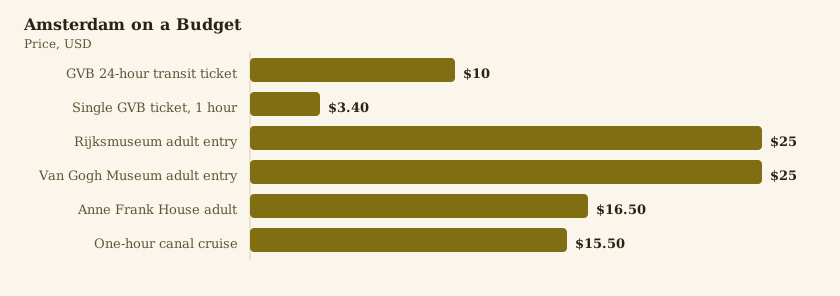
Here is the honest ledger, built only from prices verified on official pages:
| Item | Verified price | Source |
|---|---|---|
| GVB 24-hour transit ticket | €10.00 (child €5.00) | gvb.nl fare table |
| Single GVB ticket, 1 hour | €3.40 | gvb.nl fare table |
| Rijksmuseum adult entry | €25.00, free 18 and under | rijksmuseum.nl |
| Van Gogh Museum adult entry | €25.00, free under 18 | vangoghmuseum.nl |
| Anne Frank House adult | €16.50 including booking fee | annefrank.org |
| One-hour canal cruise | from about €15.50 | Rederij Kooij's own page |
| Free walking tour (tip-based) | €0 to book | operator listings |
Two things jump out of that table. First, transit is cheap relative to almost every other capital: €10 buys a full day of trams, buses, metro and the GVB ferries, and the ferries across the IJ to Amsterdam Noord are part of the network. Second, the museums are the single biggest line item, which is why the pass question later in this guide deserves its own section rather than a glib "buy the card".
The cheapest day of all needs no museum at all. Walk the canal ring, sit in the Vondelpark, cross to Amsterdam Noord on the ferry, browse the Albert Cuyp Market and join a free walking tour: that is a full and genuinely Amsterdam day for the price of lunch and a transit ticket. For a longer list of no-cost ideas, our free things to do in Amsterdam guide goes deeper than this page can.
The single cheapest structured activity in the city is the free walk. The three most established pay-what-you-want tours are bookable at no charge, and you pay the guide in cash at the end according to what the walk was worth:
All three are listed on GuruWalk, they are free to book, and tipping the guide at the end is the business model, so budget roughly €10 to €15 per person if the walk was good. That is still less than half the price of most paid tours and the guides work for that tip.
Where Do You Eat Cheaply in Amsterdam Without Eating Badly?
Budget eating in Amsterdam means broodjes (sandwiches) from bakeries for €4 to €6, hot snacks from wall automats for a couple of euros, and market stalls at the Albert Cuyp Market for €3 to €8, with sit-down dinner in a brown café from around €15 to €20. The city's own food culture is working-class, and the cheap end of it is the authentic end.
The Dutch street-snack tradition is built for small budgets. Vending-wall automats dispense kroketten and frikandellen for coins, and a herring stand sells the raw fish with onions and gherkins for a few euros. These are not tourist compromises; they are what Amsterdammers themselves eat standing up. A supermarket picnic, eaten in the Vondelpark or on a canal bench, costs less than any restaurant starter and puts you in the prettiest dining rooms in the city for free.
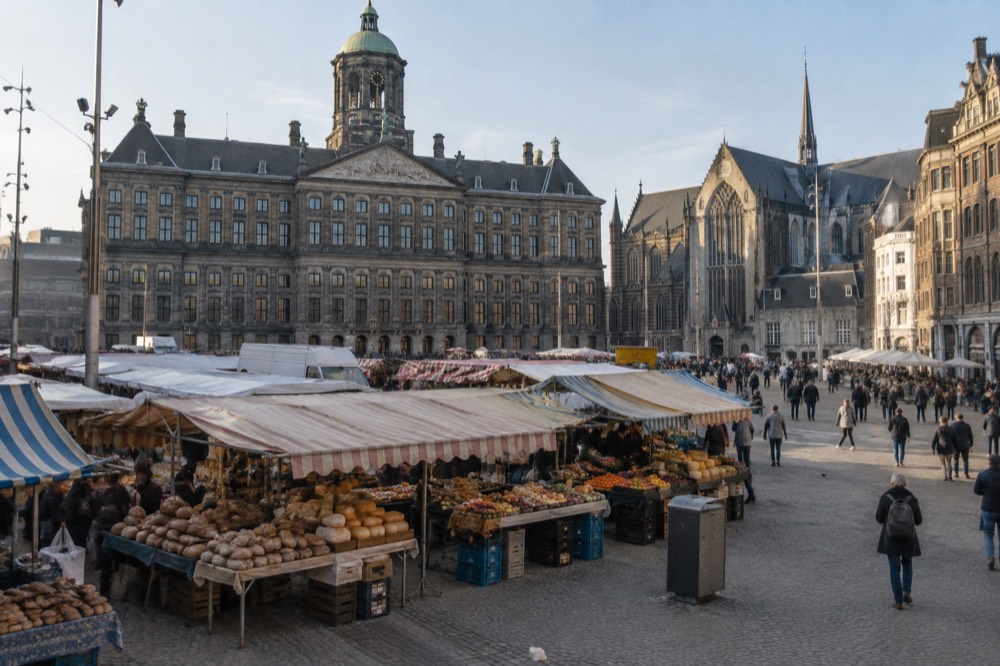
The markets are the budget traveller's secret weapon. The Albert Cuyp Market in De Pijp and the Dappermarkt in Amsterdam Oost both sell hot food, fresh fruit and cheese at prices restaurants cannot match, and browsing costs nothing. Our Amsterdam markets guide maps the lot, including which days they run. For restaurants rather than stalls, the best cheap eats in our restaurant guide includes a budget tier rather than assuming every reader wants tasting menus.
Two rules keep food costs down. Eat your main meal at lunch, when many restaurants run cheaper daytime menus, and drink tap water, which is safe and free everywhere in the Netherlands. Beer is the exception worth budgeting for: a small glass in a brown café is one of the city's genuine pleasures, and even that is cheaper two streets off Dam Square than on it.
What Can You Do in Amsterdam for Free?
A great deal of the city costs nothing: the Vondelpark, the Begijnhof courtyard, the canal-ring streetscape itself, the ferry ride to Amsterdam Noord, the NEMO roof terrace (free without a museum ticket), the Bloemenmarkt's outdoor displays and every pay-what-you-want walking tour. The UNESCO canal ring is an open-air museum with no gate and no ticket.

The free list is long enough to fill two full days. The canal ring, a UNESCO World Heritage site, is best experienced on foot with no plan at all: the Nine Streets, the Jordaan's back streets, the Magere Brug and the Amstel riverbank. None of it charges admission. The Begijnhof, a hidden medieval courtyard behind the Spui, is free to enter during daytime hours and is one of the quietest spots in the centre.
The NEMO roof terrace deserves its own line because most guides get it wrong. NEMO's own press page confirms the roof is free and reachable by the stairs from the street or the lift in the museum lobby, no ticket required. It is one of the best free viewpoints in the city, with the centre laid out behind you. For the full skyline list, including which decks need tickets, see our Amsterdam viewpoints and skyline spots guide.
The free walking tours are the budget traveller's best structured option, and the most-reviewed of them is worth naming plainly. The Absolutely Amsterdam free walk runs two and a half hours through the centre, is free to book, and you tip the guide what the walk turned out to be worth. It is listed on GuruWalk, it is free to reserve, and it consistently ranks among the most-reviewed tours in the city.
If that particular walk is full, the Essential Amsterdam walk covers the centre in a shorter ninety-minute format for adults only, and the Jewish Quarter and WWII walk tells the Anne Frank story in the streets where it happened. All three are tip-based, so a day of guided sightseeing can cost less than a museum ticket.
Which Money-Saving Passes Are Actually Worth It?
The I amsterdam City Card (24 hours €67, 48 hours €94) pays off only if you visit three or more paid attractions in a short window, and it excludes both the Van Gogh Museum and the Anne Frank House. The Museumkaart costs €75 for adults plus a €4.95 registration fee and pays off after roughly three museums, but a temporary card bought at a museum is capped at five visits in 31 days.

The card maths is simple and most guides skip it. The City Card's inclusions are confirmed from the official how-to-use page: entry to more than 70 museums and locations, unlimited GVB transport for the card's duration, one canal cruise and one 24-hour bike rental. Against that, the two exclusions are confirmed from both sides: the Van Gogh Museum and the Anne Frank House are not included, and Anne Frank House's own price table states "I amsterdam Card no discount". If those two are your priorities, the card is irrelevant to you.
| Pass | Price | Break-even | Watch out for |
|---|---|---|---|
| I amsterdam City Card, 24h | €67 | About 3 paid attractions plus transport in one day | Van Gogh and Anne Frank excluded |
| I amsterdam City Card, 48h | €94 | 4 to 5 attractions over two days | Timed slots still required at included museums |
| Museumkaart, adult | €75 + €4.95 fee | 3 to 4 museum visits | Temporary card: 5 visits in 31 days max |
| Museumkaart, 18 and under | €39 | 2 to 3 visits | Same temporary-card cap |
| GVB day ticket | €10 | 4 or more tram rides | City-wide GVB only, no airport train |
The Museumkaart is the better deal for a museum-heavy trip, with one trap: visitors without a Dutch address can only buy the temporary version, valid 31 days for a maximum of five museum visits, as confirmed on the card's own terms. Even the temporary card pays for itself at three or four museums, since the Rijksmuseum alone is €25. Two exclusions matter: the Anne Frank House gives Museumkaart holders nothing but the €1 booking fee, and ARTIS Zoo does not accept it for the zoo itself, only for the Groote Museum and Micropia.
The GVB day ticket is the easiest small win in the city. At €10 against a €3.40 single, any day with four or more tram rides pays for itself. For a full comparison, our dedicated is the I amsterdam City Card worth it analysis runs the numbers across trip lengths.
How Do You Get Around Amsterdam Cheaply?
Walk, then take the tram. Amsterdam's centre is compact enough that most visitors walk between sights, and when you do need transit, a €10 GVB 24-hour ticket beats buying €3.40 singles, while OVpay contactless capping suits scattered trips. The train from Schiphol starts at €5.50 and takes just over 17 minutes, so skip taxis entirely.
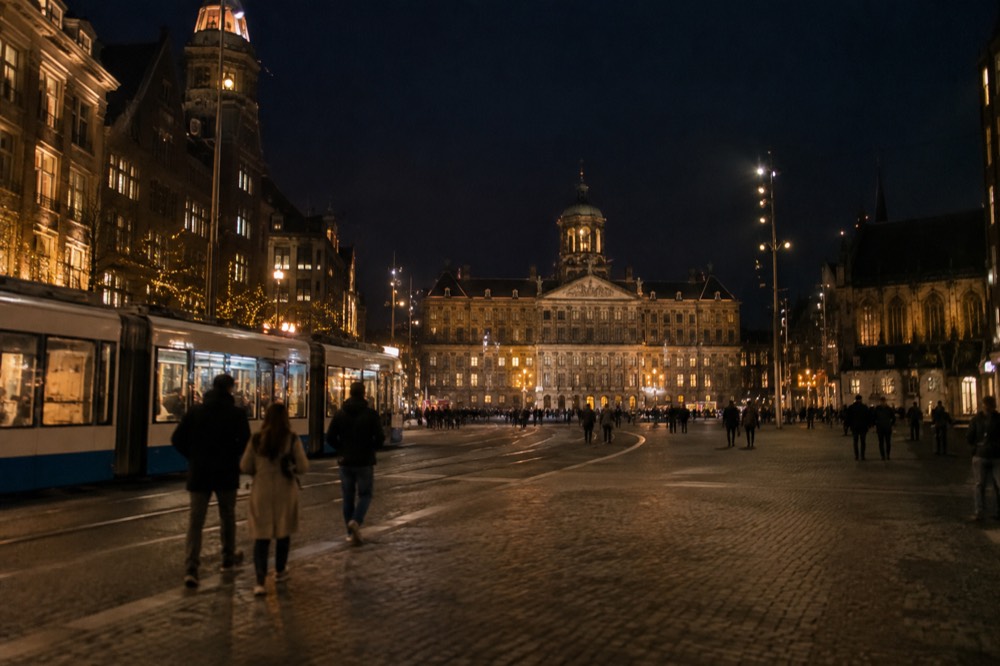
The centre is genuinely walkable. From Dam Square you can reach the Anne Frank House, the Rembrandt House, the flower market and the Begijnhof on foot in under twenty minutes each, and the walk itself is the sightseeing. Save the transit ticket for the days you venture to the Museum Quarter, De Pijp or Amsterdam Noord, and buy singles only if you will make fewer than three rides.
The GVB fare table, read on the operator's own site, prices the 24-hour ticket at €10.00 for adults and €5.00 for children, with multi-day tickets at €16.00 for 48 hours up to €43.00 for a full week. OVpay, tapping a contactless bank card, charges a base fare of €1.16 plus €0.217 per kilometre with a daily cap, which suits a day of scattered short hops. The GVB ferries across the IJ, including the one to Amsterdam Noord and the NDSM wharf, are part of the network and cost nothing extra on a valid ticket.
From Schiphol, the NS train is the budget answer: the operator's own route page quotes e-tickets from €5.50 with a journey of just over 17 minutes to Amsterdam Centraal. Schiphol publishes no fixed taxi fare, the meter decides, which is reason enough to avoid one. Our getting from Schiphol Airport to central Amsterdam guide compares every option including the Airport Express bus at from €6.50.
Are Canal Cruises and Day Trips Possible on a Budget?
Yes, and both are cheaper than their reputation suggests. A one-hour canal cruise starts at about €15.50 with Rederij Kooij, whose own page quotes €15.50 per adult with departures every 30 minutes, and the cheapest pre-bookable cruise on our roster is $15. The classic windmill-and-villages day trip starts at $34, cheaper than a single Amsterdam museum ticket.
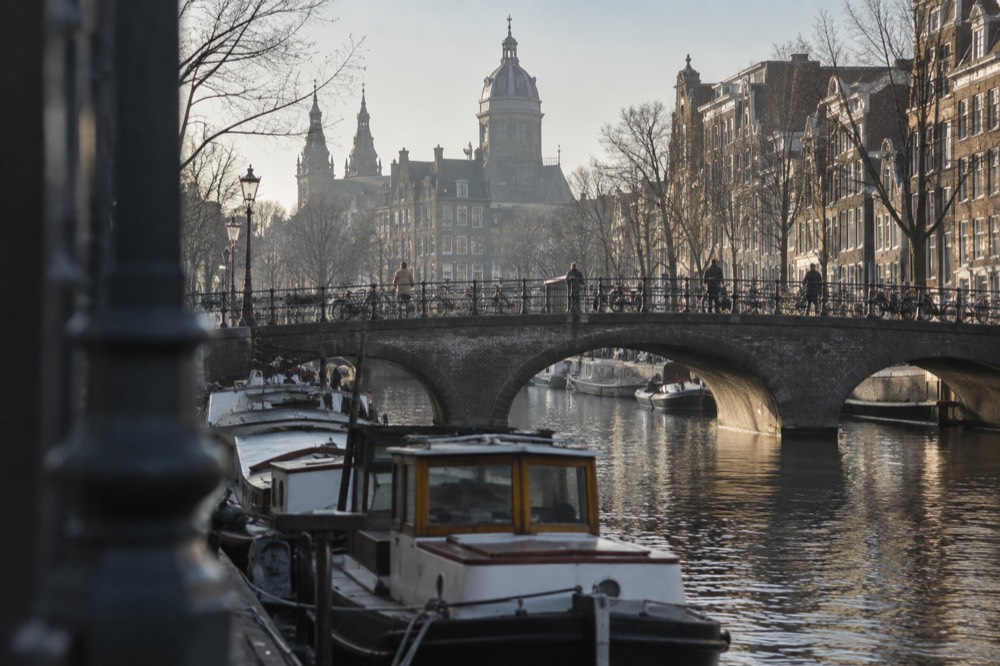
The cruise market spreads from about €15.50 to well over €70, and the difference is mostly boat style and drinks, not route. The canal ring is the same from every hull. The budget move is the basic one-hour cruise with an audio guide; the splurge move is the small open boat with a live guide. If you want the cheapest pre-booked option with a fixed departure point, the three-dock one-hour cruise is the floor of the market:
Day trips are where budget travellers get surprised in the good direction. Zaanse Schans, the windmill village, is reachable by public transport, but the guided bus tours are inexpensive enough that the maths favours them once you add up train and bus legs. The classic Zaanse Schans, Volendam and Marken tour runs five and a half hours from $34, which undercuts most single Amsterdam attractions:
One seasonal warning that saves real money: Keukenhof opens 19 March to 10 May only, and any tour implying otherwise is wrong. Outside that window, tulip fields are bare and the money is better spent elsewhere. Our best day trips from Amsterdam guide ranks the rest by cost.
Where Should You Sleep to Keep Costs Down?
Sleep outside the canal ring, in Amsterdam Oost, Noord, West or along the ring of hostels around the centre, where beds cost a fraction of Centrum prices and a €10 day ticket erases the distance. Hostel dorms are the budget floor, holiday apartments are capped by law at four guests, and the 12.5 percent tourist tax applies to whatever you actually pay.
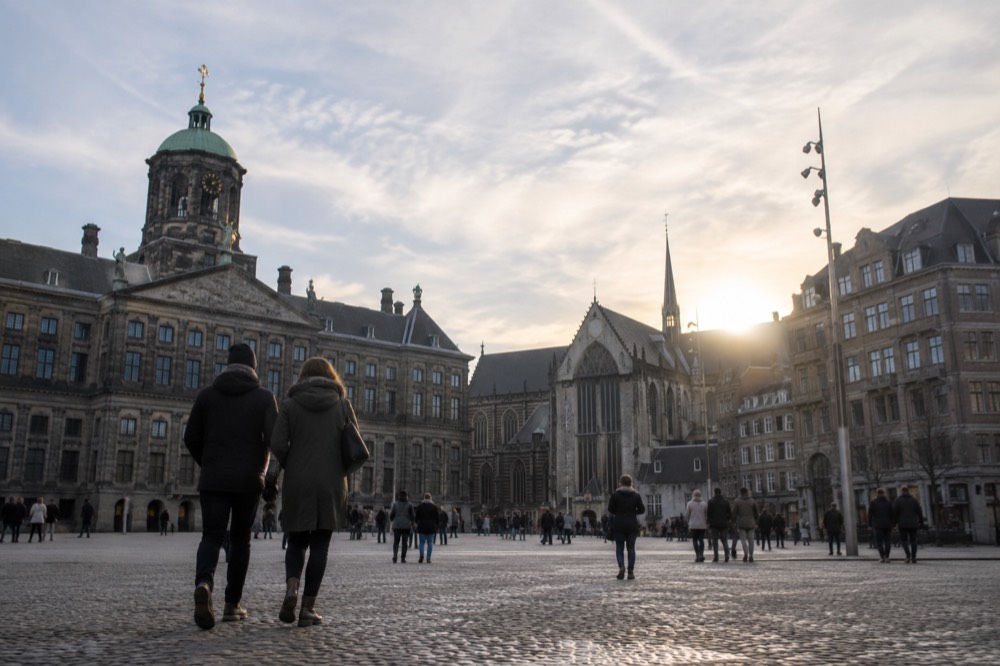
Neighbourhood choice is the biggest single budget decision. The canal ring and the Museum Quarter carry the premium; Amsterdam Oost around the Plantage, the NDSM side of Noord, and Oud West along the Kinkerbuurt offer the same transit access with meaningfully cheaper beds. The trade is a 10 to 15 minute tram ride, which the day ticket already covers. Our Amsterdam neighbourhood guide breaks down each district by budget and character.
| Option | Typical nightly cost | Budget verdict |
|---|---|---|
| Hostel dorm bed | Lowest tier in the city | The budget floor; book early for weekends |
| Hostel private room | Mid tier | Good value for pairs, often beats a hotel |
| Budget hotel, outside centre | Mid tier plus 12.5% tourist tax | Check the tax is in the quoted price |
| Holiday apartment | Varies widely | Legal cap of 4 guests; registration number required in listings |
| Houseboat stay | Premium | A splurge, not a saving, but memorable |
Two legal facts protect you here. Amsterdam caps holiday rentals at four guests at a time, and every legal listing must display a free registration number; an apartment ad without one is operating outside the rules and is a booking risk, not a bargain. And the tourist tax of 12.5 percent of the overnight price is charged on what you pay, so a cheap room is taxed cheaply. If someone offers you a Schiphol taxi at a "fixed price", remember Schiphol itself publishes no fixed fare, the meter decides.
For the full range of cheap and cheerful options, our where to stay in Amsterdam guide covers every district with price expectations.
Common Questions About Amsterdam on a Budget
How much does a budget day in Amsterdam cost?
Plan on €60 to €90 per person per day before accommodation: one major museum at €25, a €10 transit day ticket, €15 to €20 for food eaten at bakeries, markets and automats, and optional extras like a €15.50 canal cruise. Days built around free walking tours, parks and the canal ring itself can come in well under that.
Is the I amsterdam City Card worth it on a budget?
Only for packed itineraries. The 24-hour card costs €67 and the 48-hour card €94, so you need three or more paid attractions plus transport in that window to break even. It excludes the Van Gogh Museum and the Anne Frank House entirely, both confirmed on the museums' own pages, so check whether your must-sees are actually included before buying.
Are the free walking tours really free?
Yes, they are free to book on GuruWalk and you pay nothing upfront. The guides work for tips, so the honest budget is roughly €10 to €15 per person paid in cash at the end if the walk was good. It is still the cheapest guided sightseeing in the city by a wide margin.
What is the cheapest way to get from Schiphol to the city centre?
The NS train. The operator's own route page quotes e-tickets from €5.50 with a journey of just over 17 minutes to Amsterdam Centraal. The Airport Express bus 397 runs from €6.50 as an alternative. Taxis are metered with no fixed fare published by Schiphol, so they are the one option a budget traveller should ignore.
Can you visit Amsterdam museums cheaply?
Yes, through three levers: the under-18 free policy at the Rijksmuseum and Van Gogh Museum, the Museumkaart at €75 plus a €4.95 fee if you will visit three or more museums (temporary version capped at five visits in 31 days), and the free tier entirely, from the NEMO roof terrace to the Begijnhof and the canal ring itself.
Is Amsterdam too expensive to enjoy on a tight budget?
No. The expensive parts are concentrated in hotels, sit-down restaurants in the centre and drinks on terraces, and each has a cheap counterpart: hostels and outer neighbourhoods, market food and automats, and brown cafés two streets off the main drags. The city's core experiences, walking the canals, the parks, the ferries and the free tours, cost little or nothing.
If you take one thing from this page, take this: Amsterdam rewards planning and punishes improvisation. Book the Anne Frank House slot the moment tickets release, buy transit by the day not the ride, eat where the city's own residents eat, and start your trip on a free walk. The rest of Things to Do in Amsterdam covers every district, museum and day trip in the same verified-numbers style, so the savings do not stop at this page.