Getting Around Amsterdam: Trams, Metro and the OV-Chipkaart
Amsterdam's public transport is run by GVB, paid for with a bank card tap or a paper ticket, and it reaches almost everything a visitor wants to see. This guide sets out the fares, the passes and the mistakes that cost money.
Short answer
A single GVB journey costs €3.40 for one hour, or you can tap a contactless bank card with OVpay and pay €1.16 base plus €0.217 per km, capped around €10 per day. A 24-hour GVB day card is €10.00. Trams cover the centre; the metro serves the east and south; ferries behind Centraal are free.
Amsterdam runs on rails and water. The city's GVB network of trams, metro lines, buses and ferries moves more than a million people a day across a centre that was never designed for cars, and for visitors it is almost always the fastest way to travel. The system is simple once you know two things: how you pay, and which lines go where. Get those right and the rest, from the airport train to the free ferry behind Centraal, falls into place.
This guide covers the fare structure, the day passes, the OVpay bank-card tap that has replaced the old chipkaart for most visitors, and the connection from Schiphol. Fares come from GVB's own price pages and the operator sites, and every figure here is the current published rate.
How Do You Pay for Trams and Metro in Amsterdam?
You pay one of two ways: tap a contactless bank card or phone with OVpay, charged at €1.16 base plus €0.217 per kilometre with a daily cap around €10, or buy a paper ticket such as the €3.40 one-hour GVB ticket. Both are valid on every tram, bus, metro line and GVB ferry. You tap in when you board and tap out when you leave, every single time.
The tap-in, tap-out habit matters more than the payment method. OVpay works exactly like contactless in London: hold your card to the reader at the door, wait for the green light, and do the same when you get off. Forget the second tap and the system charges you an incomplete-journey fare, which is higher than any real trip you took. The same card must be used for both taps, so pick one card at the start of your trip and stick to it.
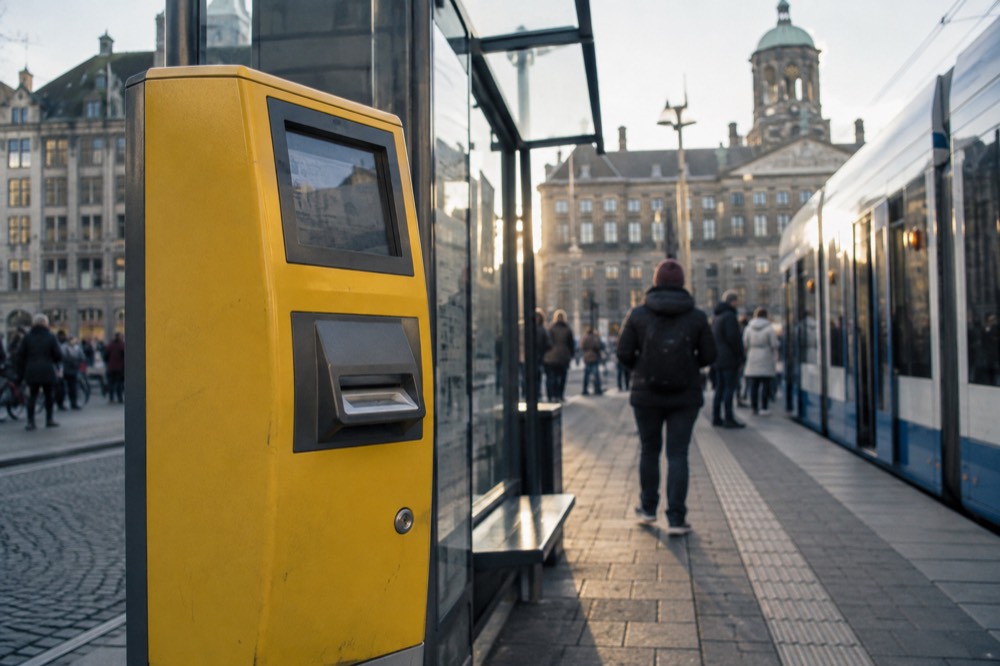
Paper tickets still exist and suit travellers who prefer a fixed price. The one-hour GVB ticket, €3.40, is bought from the yellow machines at larger stops or from the driver with a small surcharge, and it is validated by holding it against the reader on your first boarding. It covers unlimited transfers within its validity window, so a tram then a metro then another tram inside the hour is one fare, not three.
The old OV-chipkaart, the blue top-up card that older guidebooks describe at length, has largely been overtaken by OVpay for short visits. If you already own a chipkaart it still works, but there is no longer a compelling reason for a tourist to buy one, and the anonymous version's current availability is not confirmed by GVB. Do not build your trip around finding one.
A word on validation checks. GVB inspectors board regularly and scan every passenger, and an unvalidated ticket or an unpaid OVpay journey results in a fine on the spot. The checks are routine and unremarkable when you have tapped properly, so there is nothing to worry about, only something to remember.
What Do GVB Tickets and Day Passes Cost?
A 24-hour GVB day card costs €10.00 for adults and €5.00 for children, with longer cards stepping up to €16.00 for 48 hours, €21.50 for 72 hours, €27.50 for 96 hours, €34.00 for 120 hours, €39.00 for 144 hours and €43.00 for 168 hours. All cover unlimited tram, bus, metro and ferry travel inside the GVB area. The break-even against OVpay is roughly three or four single journeys in a day.
The arithmetic is worth doing before you buy. OVpay's daily cap sits around €10 on the GVB network, which is the same as the 24-hour card, so for one heavy sightseeing day the two cost nearly identical amounts. The day card wins once you spread travel across more than 24 hours or want the certainty of a fixed price, and it also removes the risk of a missed tap-out. Children pay €5.00 for the 24-hour card, a real saving for families.
| Ticket | Price | Valid for |
|---|---|---|
| GVB 1-hour single | €3.40 | One hour, unlimited transfers |
| GVB day card, adult | €10.00 | 24 hours |
| GVB day card, child | €5.00 | 24 hours |
| GVB 2-day card | €16.00 | 48 hours |
| GVB 3-day card | €21.50 | 72 hours |
| GVB 4-day card | €27.50 | 96 hours |
| GVB 5-day card | €34.00 | 120 hours |
| GVB 6-day card | €39.00 | 144 hours |
| GVB 7-day card | €43.00 | 168 hours |
Two regional products sit above these. The Amsterdam Travel Ticket adds the airport train to GVB travel: €20.00 for one day, €27.00 for two, €34.00 for three. The Amsterdam & Region Travel Ticket, €23.00 for one day, €34.00 for two and €44.00 for three, widens coverage to regional buses and trains around the city, useful if you are heading to Zaanse Schans or the bulb fields on your own. Current prices are published on GVB's official price page.
| Travel ticket | 1 day | 2 days | 3 days |
|---|---|---|---|
| Amsterdam Travel Ticket, GVB plus airport train | €20.00 | €27.00 | €34.00 |
| Amsterdam & Region Travel Ticket, GVB plus regional transport | €23.00 | €34.00 | €44.00 |
If you are still weighing up how many days to give the city and how much transport you will realistically use, our one-day Amsterdam plan shows how few rides a compact centre actually demands.
Is the I Amsterdam City Card's Transport a Good Deal?
The I amsterdam City Card includes unlimited GVB transport for the card's duration, a canal cruise and a 24-hour bike rental alongside free entry to more than 70 museums, but it excludes the Van Gogh Museum and the Anne Frank House entirely. The 24-hour card costs €67 and the 48-hour card €94, so it only pays off if you visit several expensive museums, not for the transport alone, which is worth about €10 per day.
The transport component is genuine: the card covers GVB metro, tram, bus and ferry for as long as the card runs, and the coverage explicitly excludes airport transfers and regional transport. That exclusion is the trap. A visitor who lands at Schiphol, buys a 48-hour card and assumes it covers the airport train will pay for that train separately, and the same applies to regional buses heading out to the windmills.
Whether the card stacks up depends almost entirely on the museum list. The Rijksmuseum, at €25 for an adult, is included, as are NEMO and a long list of others. The two headline exclusions, the Van Gogh Museum and the Anne Frank House, are the two things many visitors most want to see, and both require separately booked timed tickets. We break the full maths down, including the longer-duration tiers and their current prices, in is the I amsterdam City Card worth it.
For a museum-heavy first visit, a common pattern is a 48-hour card for the museums and cruise, then a plain €10 day card or OVpay taps for any extra days. That combination keeps the per-day transport cost low without forcing museum visits into a pass window that does not fit.
How Do You Get from Schiphol Airport to the City Centre?
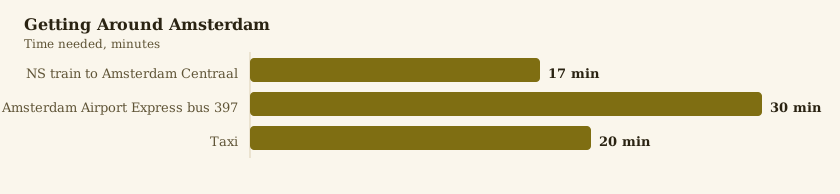
The NS train from Schiphol to Amsterdam Centraal takes just over 17 minutes and costs from €5.50 with an e-ticket bought online, with trains running several times an hour throughout the day. The Amsterdam Airport Express bus 397 costs from €6.50 single and reaches the city centre at Elandsgracht. Taxis are metered with no fixed fare published by the airport, so check the meter rate before accepting a ride.
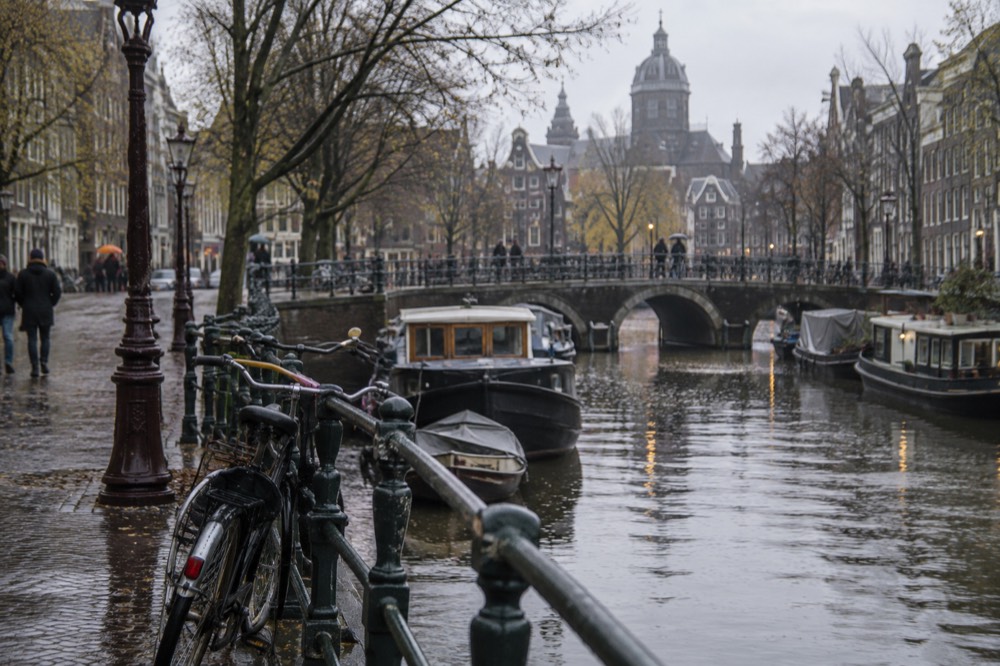
The train is the default for good reason. Schiphol's station sits directly under the plaza, the walk from arrivals is signposted and under ten minutes, and Centraal Station drops you at the northern edge of the centre with every tram line and the free ferries on its doorstep. Booking an e-ticket in advance from the NS site gives the from-€5.50 fare; buying at the machine on the day can cost more. Other pages covering the same trip are gathered on Things to Do in Amsterdam.
| Option | Price | Time to the centre | Notes |
|---|---|---|---|
| NS train to Amsterdam Centraal | from €5.50 | about 17 minutes | Station under the airport plaza |
| Amsterdam Airport Express bus 397 | from €6.50 single | about 30 minutes | Same ticket valid on the N97 night bus |
| Taxi | metered, no fixed fare | 20 to 45 minutes in traffic | Schiphol publishes no flat rate |
The bus suits anyone staying in the western edge of the centre, around Elandsgracht and the Jordaan side, since it stops along the route rather than terminating at Centraal. Its ticket is also valid on the N97 Niteliner, which matters if you land very late or very early. Fares and timings for both routes are on the NS Schiphol route page and the operator's Airport Express page.
For the fuller picture, including where to buy tickets, what the station looks like and what to do with luggage, see our dedicated Schiphol to central Amsterdam guide.
Which Tram and Metro Lines Serve the Main Sights?
Trams do most of the work in the centre: lines 2 and 12 run along the western canal belt, tram 1 reaches the Jordaan and Museumplein area, and trams 4, 14 and 24 connect Centraal, the Dam and the Museum Quarter. The metro matters mainly for Waterlooplein, the eastern neighbourhoods and the Johan Cruijff ArenA, and the north-south metro line links Centraal to Amsterdam Noord in four minutes.
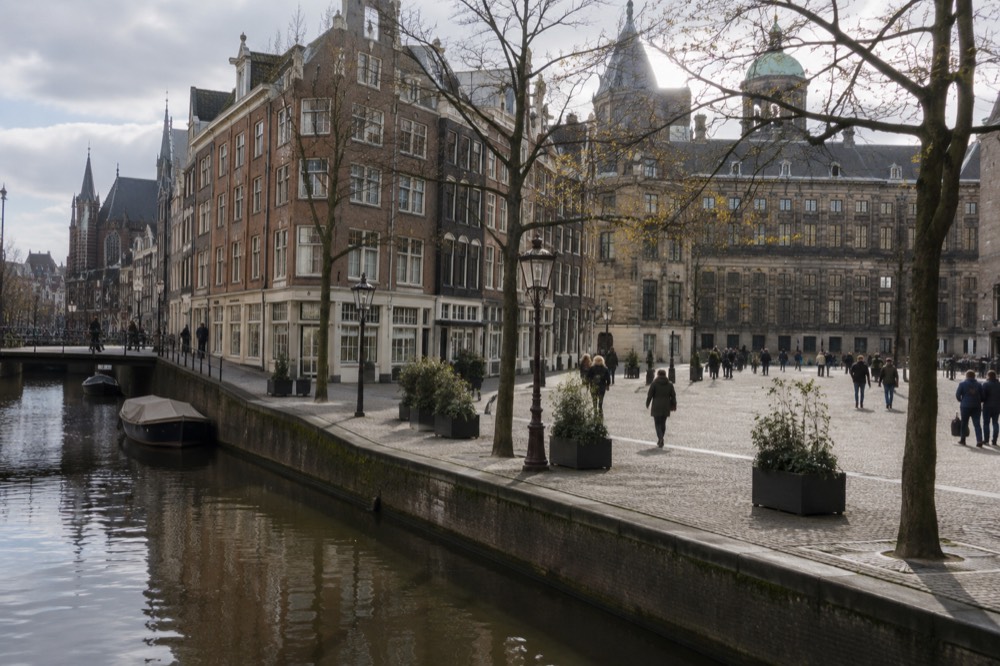
The classic mistake is treating the metro as the primary system because it is in other capitals. Amsterdam's metro is genuinely useful, but most sights a first-time visitor names are on tram routes. The Museumplein cluster, the Rijksmuseum, the Van Gogh Museum and the Stedelijk, sit on tram lines that stop a two-minute walk away, and the canal belt itself is a tram corridor along which you can watch the whole city scroll past the window.
| Sight or area | Stop | Lines |
|---|---|---|
| Dam Square and the Royal Palace | Dam | Trams 2, 12, 14, 24 |
| Museumplein museums | Rijksmuseum | Trams 2, 12 |
| Jordaan and the Nine Streets | Westermarkt | Trams 13, 17 |
| Albert Cuyp Market, De Pijp | Albert Cuypstraat | Trams 16, 24 |
| Jewish Quarter, Waterlooplein | Waterlooplein | Metro and tram 14 |
| Amsterdam Noord, NDSM ferry | Noord | North-south metro |
| Johan Cruijff ArenA | Amsterdam ArenA | Metro |
The north-south metro is the one genuinely fast underground line for visitors. It dives under the IJ from Centraal to Amsterdam Noord in four minutes, which transforms a trip to the NDSM wharf or the A'DAM Lookout compared with the ferry-plus-walk alternative. The east and southeast metro branches, serving Waterlooplein and the stadium corridor, make the metro the answer for anything off the tram grid.
For the museum day specifically, the tram is only half the plan. Timed entry is required at the Van Gogh Museum, the Rijksmuseum and NEMO alike, so the transport and the ticket need to line up. A pre-booked Van Gogh Museum ticket locks your slot, and you can Check availability before you plan the tram around it.
What About Ferries, Bikes and Walking?
The GVB ferries behind Centraal Station are free and need no ticket at all, running day and night to Amsterdam Noord, and the centre itself is so compact that many visitors walk between sights more often than they ride. Bikes are the local way to cover ground, but tram and metro remain the better choice for a first-time visitor learning the city's bike etiquette and tram rails.
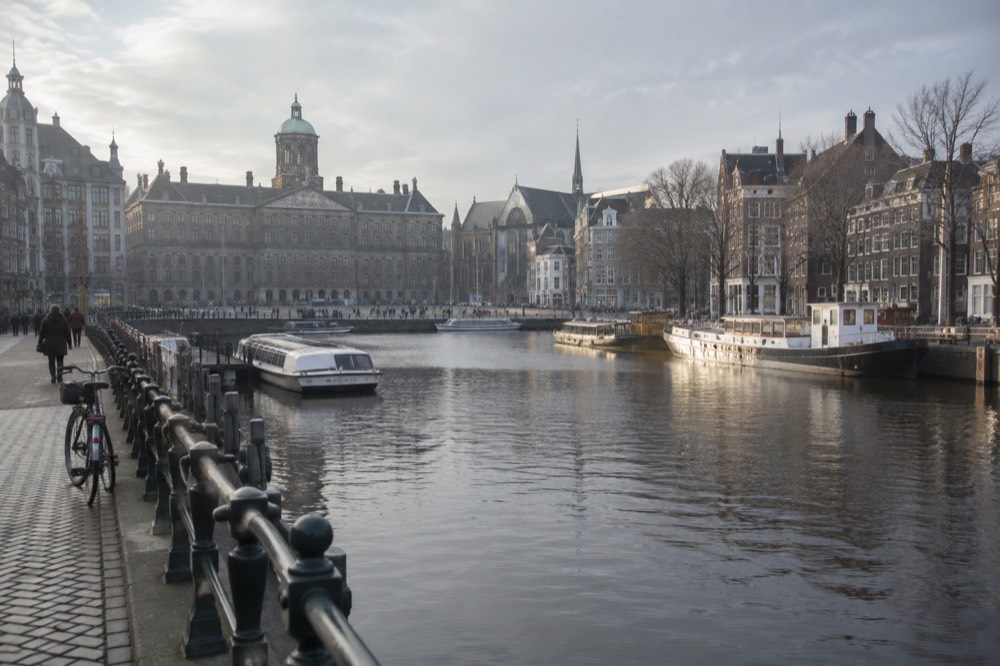
The ferries are the best free ride in the Netherlands. The short crossings to the north bank of the IJ, including the route serving the NDSM wharf, board behind Centraal and take a few minutes, with no card, ticket or tap required. Cyclists and pedestrians share the deck, and the view back across the water at sunset is worth the trip even when Noord is not your destination. The rest of the network's rules, from the free ferries to the tap-out habit, are summarised on the city's own How to Amsterdam page.
Walking is underestimated. The distance from Dam Square to the Museumplein is a comfortable half hour along the canal belt, and the stretch between them, through the Nine Streets and past the flower market, is the part of Amsterdam most visitors remember. Riding a tram along the same corridor saves ten minutes and costs you the scenery.
Cycling deserves its own conversation, because Amsterdam's bike lanes move fast and the unwritten rules are real: hand signals, no riding two abreast on busy corridors, and a healthy respect for tram rails when it rains. If you are set on it, our cycling and bike rental guide covers the practicalities, and the I amsterdam City Card's included 24-hour rental is one way to try it without a separate booking.
One more waterborne option belongs on the list. The canal cruise is Amsterdam's other transport mode, a sightseeing format with three central departure docks, and the hour it takes doubles as a rest between museum blocks. Our canal cruise worth-it guide compares the cruise operators against renting a boat yourself.
What Mistakes Cost Money on Amsterdam Transport?
The costly mistakes are all small: forgetting the tap-out and paying an incomplete-journey fare, buying a day card on a day you only ride twice, assuming the City Card covers the airport train when it does not, and standing on the left of an escalator while the station fills up behind you. None of these is a scam, and all of them are avoidable with a one-minute habit change.
Build the tap habit on your first ride and it holds for the whole trip. Tap in at the door you enter through, tap out at the door you leave through, and glance at the reader both times for the green confirmation. On the metro, the gates read your card automatically on the way in and out, so the same rule applies with less thought.
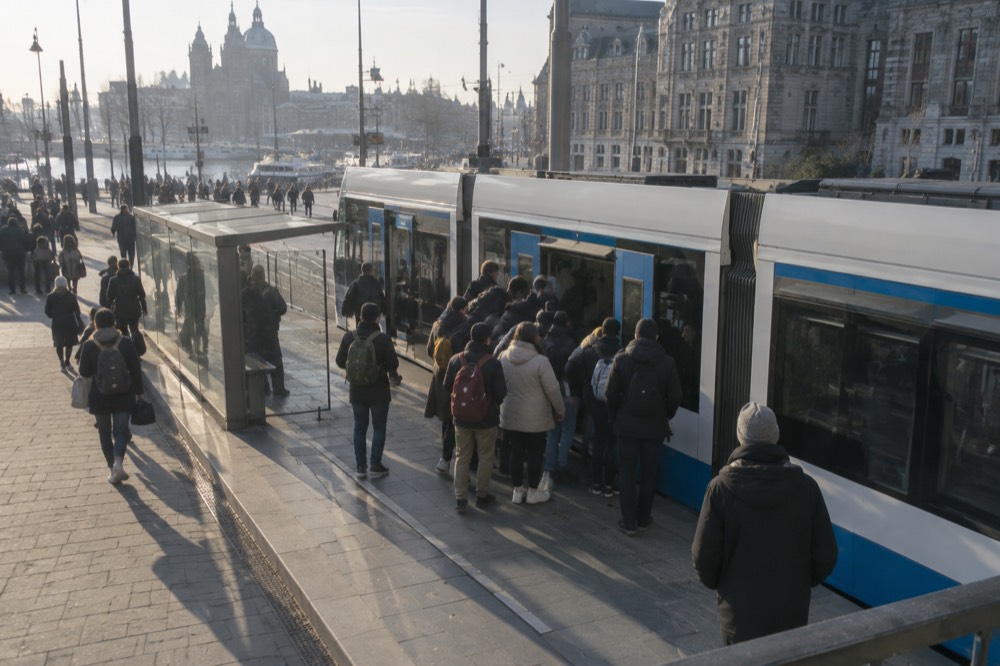
Buy the day card only when the day justifies it. Two single rides cost €6.80 against the €10.00 card, so a morning museum visit and an evening dinner trip, with walking in between, is cheaper on OVpay. Three rides or more, or a day with a hotel move or an airport return, tips the balance the other way. And if you are staying outside the centre to save on the room, factor the extra transport in, a trade-off we examine in where to stay in Amsterdam.
Finally, hold your card to one reader and one reader only. Stacked wallets with two contactless cards in them confuse the reader, and a declined read at a crowded tram door is the moment a fine risk appears. One card, one pocket, one tap.
Common Questions About Getting Around Amsterdam
How do tourists pay for trams in Amsterdam?
Tourists tap a contactless bank card or phone with OVpay, charged at €1.16 base plus €0.217 per kilometre with a daily cap around €10 on the GVB network, or buy a paper ticket such as the €3.40 one-hour GVB ticket from machines and drivers. Both work on every tram, bus, metro line and ferry.
Is the OV-chipkaart still needed for Amsterdam public transport?
No. OVpay, the contactless bank-card tap, works across GVB trams, buses, metro and ferries and on NS trains, and it has replaced the chipkaart for almost all short visits. If you already own a chipkaart it still works, but there is no reason for a tourist to buy one.
How much is a day pass for Amsterdam transport?
The 24-hour GVB day card is €10.00 for adults and €5.00 for children. Longer cards step up through €16.00 for 48 hours, €21.50 for 72 hours, €27.50 for 96 hours, €34.00 for 120 hours, €39.00 for 144 hours and €43.00 for 168 hours.
Does the I amsterdam City Card include public transport?
Yes. The card includes unlimited GVB metro, tram, bus and ferry travel for its duration, plus one canal cruise and a 24-hour bike rental. It does not include airport transfers or regional transport, and it excludes the Van Gogh Museum and the Anne Frank House.
Are the ferries to Amsterdam Noord free?
Yes. The GVB ferries behind Centraal Station to the north bank of the IJ, including the NDSM route, carry passengers and cyclists at no charge, with no ticket or tap needed, and they run through the day and night.
How much is the train from Schiphol to Amsterdam Centraal?
The NS train costs from €5.50 with an e-ticket booked online and takes just over 17 minutes, running several times per hour. The Amsterdam Airport Express bus 397 is an alternative from €6.50 single.