Bike Rental in Amsterdam: How to Cycle the City Like a Local
Amsterdam is a city built around the bicycle, and renting one changes how you see it. This guide covers what bike rental in Amsterdam really costs, which guided rides are worth the money, where to actually pedal, and the rules that keep a million cyclists a day from colliding.
Short answer
Bike rental in Amsterdam starts with guided rides from about $42.00 for the three-hour Big Bike Tour, or about $52.06 for a four-hour countryside ride with cheese tasting. A GVB day transport ticket costs €10.00, and the I amsterdam City Card includes one free 24-hour bike rental alongside museum entry and a canal cruise.
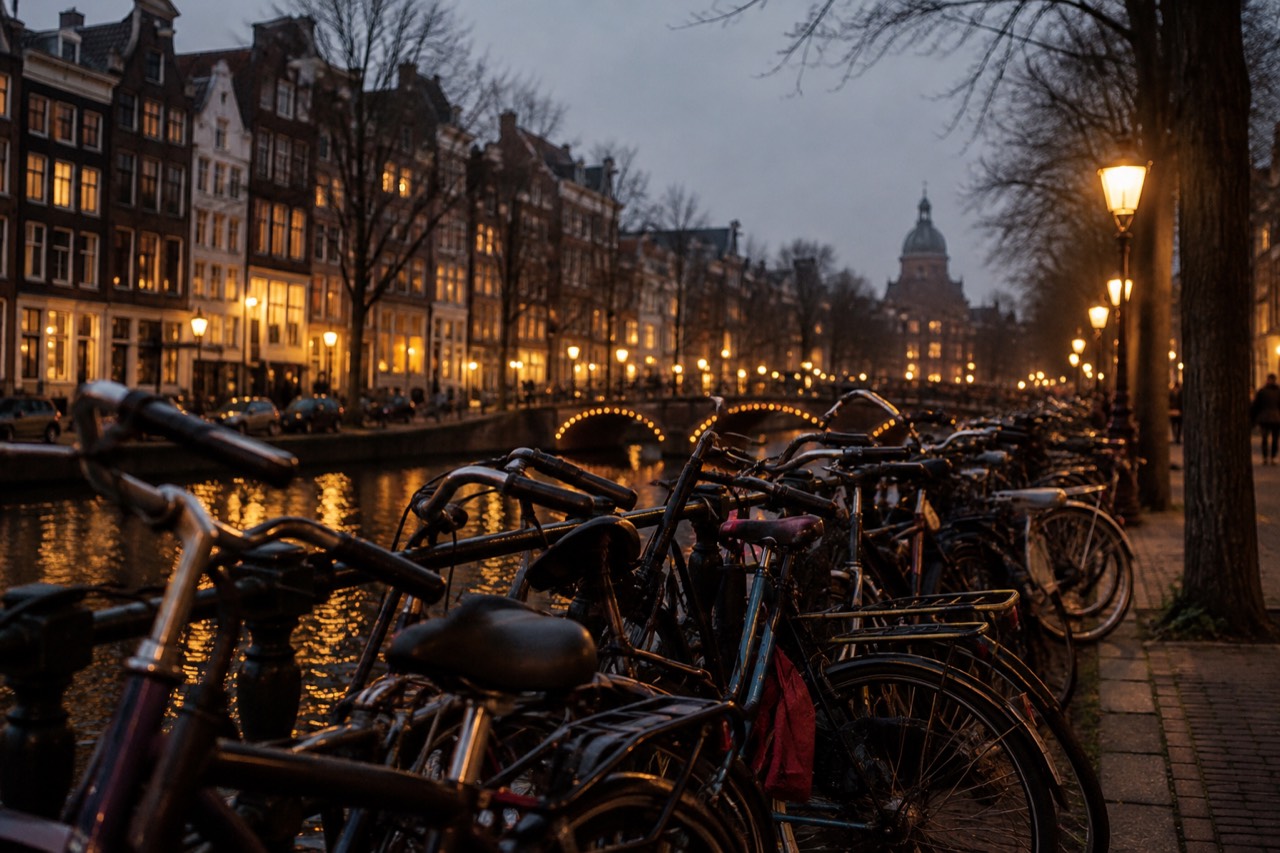
Amsterdam has more bicycles than residents, and the city's roads are designed around that fact. Trams get their own lanes, cars are calmed, and cyclists get the run of most of the network. A visitor who rides even once understands the city's geography in a way that a week of trams and canal cruises never quite delivers: where the centre ends, where the water goes, how the neighbourhoods stack together around the canal ring.
This guide walks through what bike rental in Amsterdam actually involves. It compares the guided bike tours you can book before you fly, sets out the road rules that matter, suggests routes worth pedalling, and offers honest alternatives for travellers who decide two wheels are not for them. Every price and rating here comes from live listings and official sources, and where a figure sits on a booking page rather than in a fixed price list, it says so.
Why Is Cycling the Best Way to See Amsterdam?
Amsterdam is engineered for the bicycle, and the numbers prove it: the city recorded 23.7 million tourist overnight stays in 2025 alongside a resident population that moves overwhelmingly by bike, which means the cycling infrastructure is not a tourist amenity, it is the city's working transport system. Riding puts you inside that system rather than watching it from a pavement or a boat, and it is the fastest cheap way to cover ground between the sights.
The practical argument is simple. Amsterdam's centre is compact but fragmented by water, and walking between the Rijksmuseum, the Jordaan and the Plantage district means long detours around canal after canal. A bicycle crosses the same distance in minutes along dedicated lanes, and parking is free at racks across the city. Trams are excellent, but they follow fixed corridors and a single GVB ticket costs €3.40 for one hour, while a day of riding costs nothing once you have the bike.
There is a cultural argument too. The Dutch do not cycle because it is charming; they cycle because it is the fastest way to get anywhere in a dense city, and that seriousness shows in the infrastructure. Separated bike lanes, priority at small junctions, and traffic lights with their own bicycle phase all exist. Riding a bike here, even badly, teaches you how the city actually thinks.
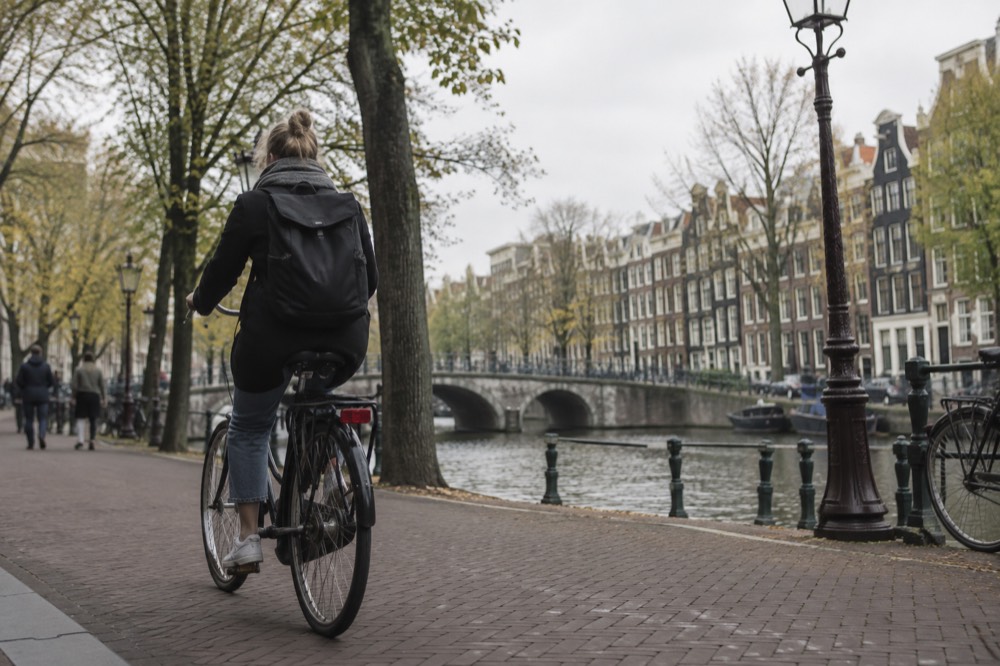
The catch, and it is a real one, is confidence. Amsterdam cyclists move fast, ride close together and expect everyone around them to know what they are doing. A hesitant rider who wobbles or stops without signalling causes genuine friction. That is the strongest argument for starting with a guided tour rather than a solo rental: a guide rides in front, sets the pace, and absorbs the traffic decisions for you. If you want a broader sense of how the city's transport fits together before you commit, our guide to Things to Do in Amsterdam and the companion page on getting around by tram and metro cover the non-cycling options.
How Much Does Bike Rental in Amsterdam Cost?
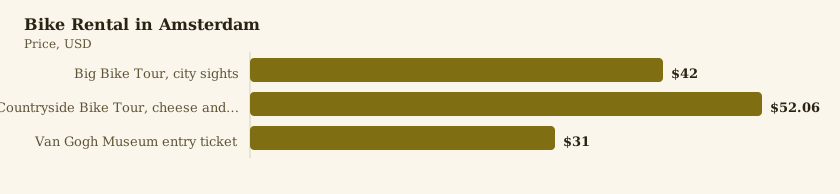
A guided city bike tour runs from about $42.00 for the three-hour Big Bike Tour, while a four-hour countryside ride with cheese tasting and a windmill stop costs from about $52.06. Solo rental day rates vary by shop and are not published centrally, so the honest comparison is between guided tours, which bundle a bike, a guide and a route, and the I amsterdam City Card, which includes one free 24-hour bike rental.
Standalone rental shops quote their own day rates and change them seasonally, so this guide does not print one. What can be compared reliably is the guided market, where live listings carry fixed prices and review histories. The table below sets out the two bike tours on this site's roster, plus the Van Gogh Museum ticket for scale, because a common planning question is whether a bike tour is worth roughly the price of a major museum.
| Product | Price from | Duration | Rating | Reviews |
|---|---|---|---|---|
| Big Bike Tour, city sights | $42.00 | 3 hours | 4.7 | 5,890 |
| Countryside Bike Tour, cheese and clogs | $52.06 | 4 hours | 4.8 | 1,674 |
| Van Gogh Museum entry ticket | $31.00 | Self-paced | 4.7 | 57,096 |
The pattern is clear: a half-day guided ride costs about the same as a museum ticket plus lunch. The Big Bike Tour, rated 4.7 across 5,890 reviews, spends three hours covering the centre's highlights with a guide riding alongside, and it starts near the harbour. The countryside tour, rated 4.8 across 1,674 reviews, leaves the city entirely for dikes, a windmill, a cheese farm and a clog-making demonstration, which makes it a day trip and a bike ride in one.
For travellers who plan to ride solo, the I amsterdam City Card deserves a look before you pay a rental shop directly. The card, which the official GVB fare page supplements for transport, includes one 24-hour bike rental alongside free entry to more than 70 museums and a canal cruise. The 24-hour card costs €67 and the 48-hour card €94. Whether the card pays off depends on your museum plans, and our full breakdown in is the I amsterdam City Card worth it runs the maths.
Which Bike Tour Is Worth Booking?
The Big Bike Tour is the strongest pick for first-time visitors: at $42.00 for three hours, rated 4.7 across 5,890 reviews, it covers the centre's major sights with a guide riding beside you the whole way. The countryside tour is the better choice for a second day or a longer stay, trading city streets for dikes, a windmill and a cheese tasting at $52.06 over four hours.
The distinction matters more than the price gap. A city tour teaches you how Amsterdam works: the harbour start, the canal ring, the hidden courtyards, the neighbourhoods a first-time visitor would never find alone. A countryside tour shows you the landscape the city sits inside, the polder land below sea level that makes the whole place possible. They are different products, not different versions of the same one.
The Big Bike Tour lists its route from the harbour through the centre's highlights with an expert guide riding alongside on the same red bikes the customers use. Reviews on the live listing repeatedly praise the guide's pacing and the small detours that a solo rider would miss. Because the tour is a booking product, dates and availability sit on the operator's live listing rather than in a fixed schedule.
The countryside tour is a different animal. It runs four hours, crosses out of the city into farmland, and includes a cheese tasting and a clog-making demonstration, which turns a bike ride into a genuine half-day excursion. With a 4.8 rating across 1,674 reviews it is one of the higher-rated day-trip products on the roster, and it suits confident riders better than nervous ones, since country paths are quieter but the ride is longer.
Between the two, the honest advice is this: if you are in Amsterdam for two or three days and will ride only once, take the city tour. It doubles as a cycling lesson, and by the final hour most riders are comfortable enough to rent solo the next day. If you already cycle at home or you are staying four days or more, the countryside tour is the more memorable ride, and it pairs well with a quieter museum day afterwards.
Where Should You Actually Ride?
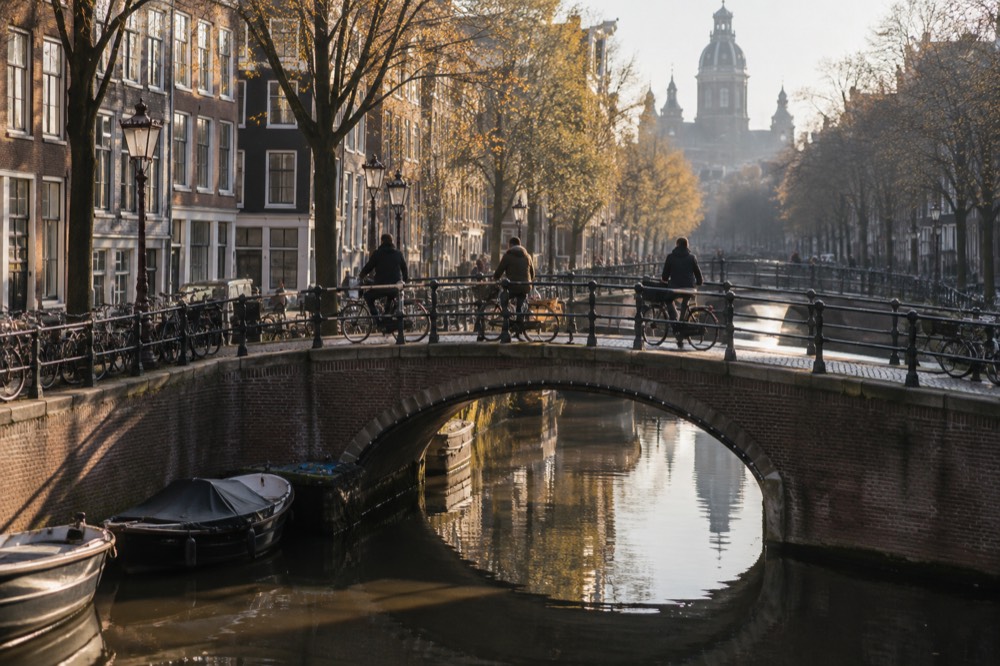
The classic first ride is the canal ring loop: out along the Prinsengracht, across at the Magere Brug, and back along the Amstel, which takes under an hour at a relaxed pace and passes the Jordaan, the Nine Streets and the Plantage without any route-finding stress. For a longer ride, the ferry behind Centraal Station crosses free to Amsterdam Noord, where the NDSM wharf and dike paths feel like a different country within twenty minutes.
The canal ring is where most visitors want to be, and it rewards slow riding. The Nine Streets shopping quarter, the Begijnhof courtyard and the Skinny Bridge all sit within a short pedal of each other. Traffic is the densest here, so ride in a straight line, hold your lane and let faster cyclists pass. Our Amsterdam canal ring guide maps the sights along the water if you want a sightseeing route rather than a loop.
Amsterdam Noord is the escape valve. The GVB ferries behind Centraal Station are free, run constantly, and take bikes. On the far bank the city thins out fast: the NDSM wharf's street art, the dike roads along the IJ, and quiet lanes through the villages that Amsterdam absorbed a century ago. The STRAAT street art museum sits in a former shipbuilding warehouse on the wharf, and the Amsterdam Noord and NDSM wharf guide covers the crossing and what to do once you are there.
The Vondelpark is the family option. It is car-free, flat, wide and full of other wobbly riders, which makes it the safest place in the city to spend your first twenty minutes on a Dutch bike. The park connects directly to the Museumplein, so a family can ride the park, lock the bikes and visit the Rijksmuseum, where adult entry is €25 and under-18s go free, timed slot required, in one easy circuit.
What Are the Rules of the Road?
The core Dutch cycling rules are: ride on the right, use hand signals before every turn, keep to bike lanes where they exist, and never ride on the pavement or against traffic on one-way streets. At night your bike needs a working front white light and rear red light, and phone use while riding is prohibited. Amsterdam's centre additionally bans cycling in some pedestrianised zones, signed at their edges.
The hand-signal rule is the one that marks tourists. Dutch cyclists point: right arm out for a right turn, left arm out for a left. Do it a second or two before you turn, and the riders behind you will adjust without a word. Skip it and you will hear about it, usually in Dutch, occasionally in fluent sighing.
Lights matter after dark. Rental bikes carry them, but check that they work before you leave the shop, because the fine for riding unlit at night is real and the police do stop cyclists in the centre. The same goes for locks: Amsterdam bike theft is a civic sport, and the standard advice is to lock the frame to a rack or pole, not just through a wheel. Rental shops issue chains; use them properly.
| Situation | What Dutch cyclists do |
|---|---|
| Turning right or left | Arm out horizontally, in the direction of the turn, before the turn |
| Bike lane present | Use it; keep right within it so faster riders can pass on the left |
| Tram rails | Cross them at a wide angle, never parallel, to avoid wheels slipping in |
| Riding at night | White front light and red rear light, both working, switched on |
| Parking | Use racks and designated bike parking; the centre has signed no-parking zones |
| Bell | Ring it early and politely when passing slower riders or pedestrians |
Two Amsterdam-specific rules finish the picture. Cycling is banned on some pedestrianised streets in the busy core, and the ban zones are signed at their boundaries, so watch for the round blue signs with a bicycle and a red slash. And the city's official How to Amsterdam guidance asks visitors to respect residents in the centre generally, which in practice means not riding three abreast, not shouting across intersections and not parking bikes against bridges and doorways where people need to pass.
Is Cycling in Amsterdam Safe for First-Timers?
Cycling in Amsterdam is safe for riders who are honest about their own skill level, and the injury risk concentrates in two places: tram rails and tourist overconfidence in the busiest core. The city's separated lanes carry the bulk of cycle traffic, speeds are low by design, and a guided first ride removes most of the decision-making. Riders who have not cycled in years should practise in the Vondelpark before joining centre traffic.
The tram-rail hazard deserves its own sentence. Amsterdam's rails sit in the road surface, and a bicycle wheel dropped into a rail at a shallow angle can slide out from under the rider in a heartbeat. Cross rails as close to perpendicular as you can, and if you are turning across a tram street, commit to the turn rather than hesitating mid-way.
Confidence, not aggression, is the local style. Dutch cyclists flow because everyone behaves predictably: they hold their line, signal, and keep right. A rider who dithers, brakes without warning or swerves around obstacles is more dangerous than one who goes slightly too fast. If you feel your attention fragmenting in the centre, pull over, let the wave pass, and rejoin when the road is calmer.
Families should know the practical pattern: children ride in child seats or on tag-along bikes until roughly age eight, then on their own bikes in parks and on quiet streets. The Vondelpark-to-Museumplein circuit above is the standard training ground, and our Amsterdam with kids guide builds a full family itinerary around it. Rental shops carry child seats, but book ahead in spring and summer because they sell out on warm weekends.
What If You Would Rather Not Ride at All?
Amsterdam is fully enjoyable without ever touching a bicycle, and the alternatives are genuinely good: the GVB network sells a 24-hour ticket for €10.00 covering trams, buses and metro, the canal cruise is the city's signature experience, and the centre is walkable end to end in about forty minutes. Choosing not to cycle is a normal local decision too, made by plenty of Amsterdammers every day.
The transport maths favour the visitor. A single GVB ticket is €3.40 for one hour of travel, while the 24-hour day ticket is €10.00, the 72-hour version €21.50 and the 120-hour version €34.00, per the official GVB price list. Contactless bank-card tap-in, the OVpay system, also works on every tram, bus and metro, with a base fare of €1.16 plus €0.217 per kilometre and a daily cap.
| GVB ticket | Price | Best for |
|---|---|---|
| 1-hour single | €3.40 | One or two short hops |
| 24-hour day ticket | €10.00 | A full sightseeing day by tram |
| 72-hour ticket | €21.50 | A three-day stay without a bike |
| 120-hour ticket | €34.00 | A five-day stay, or a week with walking days |
| OVpay contactless | €1.16 base plus €0.217 per km | Occasional rides, no ticket to buy |
The canal cruise deserves its place in this list because it does a share of the bicycle's job: it shows you the city's structure from the water, bridges and gables sliding past, with none of the traffic. A one-hour cruise is the classic version, and operators run them from docks across the centre. Our Amsterdam walking tours guide covers the on-foot equivalent, including the free tip-based walks that suit travellers who want a guide's knowledge without a bicycle's pace.
And if the reason you are hesitant is the bike itself rather than the traffic, note that the Van Gogh Museum, the single most-visited museum on the roster at 4.7 across 57,096 reviews, sits directly on the Museumplein with tram stops on three sides. A traveller can spend an entire Amsterdam trip in museums, markets and cruises, moving by tram and on foot, and miss nothing that matters. The bicycle is the best way to see this city, but it is not the only way, and the resident who walks to work past a hundred parked bikes would be the first to say so.
For the middle path, consider the countryside tour as your only ride. It removes the centre's traffic almost entirely, the guide sets an easy pace, and the cheese farm stop breaks the four hours into manageable pieces. Many hesitant riders book it precisely because it delivers the Dutch cycling experience, windmill included, without the Dam Square scrum.
How Do You Choose Between a Tour and a Solo Rental?
Choose a guided tour if it is your first time riding in Dutch traffic, if you want the route decided for you, or if you are short on time; choose a solo rental if you are a confident cyclist with a full free day. The price difference is modest, and the real currency being spent is attention: a tour spends yours on the sights, a solo rental spends it on the road.
The solo rental suits a particular traveller. You have cycled in a city before, you read traffic without thinking, and the pleasure you want is the aimless kind: a market here, a brown café there, a detour along a canal because the light looks right. Amsterdam rewards that traveller enormously, and the rental shops' standard bikes, upright, heavy, one gear or three, are built exactly for it.
The tour suits everyone else, and that is not a criticism. The centre's traffic is genuinely intense, the rules are unwritten in places, and a guide absorbs all of it. The Big Bike Tour's 4.7 rating across 5,890 reviews reflects a product that works for the nervous rider as well as the keen one, and the three-hour length is short enough to leave the afternoon free. The operator's live listing carries current dates, and Check availability shows the free-cancellation terms before you commit.
A hybrid plan is worth naming because it is what many travellers land on: book the city tour for day one, then rent solo for an afternoon later in the week if the first ride felt good. The tour functions as a lesson with scenery attached. By the last hour, most riders are holding their line and signalling without being told, which is exactly the skill a solo rental demands.
One planning note for spring visitors: if your trip falls between late March and early May, the tulip season adds a reason to ride outside the city, and Keukenhof in Lisse runs from 18 March to 9 May in 2027, roughly 30 to 40 minutes from Amsterdam. The countryside bike tour covers the windmill-and-farmland version of that landscape from the saddle, and our Amsterdam in spring and tulip season guide covers the flower fields themselves.
Whichever way you lean, the two guided rides above are the easiest way to test the water, and the trio below gathers the bike tours alongside the museum ticket that most visitors book anyway, so you can weigh the whole day's budget in one place.
Common Questions About Cycling in Amsterdam
Is Amsterdam easy to cycle in for beginners?
Amsterdam is flat, compact and fully equipped with bike lanes, which makes the riding itself easy. What is not easy for beginners is the density: cyclists move fast and expect predictability. A guided tour, the Vondelpark, or a Noord ferry crossing are the three best ways for a new rider to build confidence before tackling the centre.
Do I need to book a bike tour in Amsterdam in advance?
Yes, in spring and summer. The Big Bike Tour and the countryside tour both run on fixed daily departures, and weekend slots in the high season fill ahead. Booking ahead also locks in the free-cancellation terms shown on the operator's live listing, so there is little downside to reserving early.
Which side of the road do you cycle on in Amsterdam?
The right, always, and within bike lanes you keep to the right side of the lane itself so faster riders can pass on your left. Riding against traffic, on pavements, or through signed pedestrian zones is prohibited and, in the busy core, actively policed.
Can you rent a bike in Amsterdam without a licence?
Yes. No licence is required to ride a standard bicycle in the Netherlands, and rental shops issue a bike, a lock and a brief briefing without any paperwork beyond payment and a deposit. Helmets are not required by law and are not usually included, though some shops will provide one on request.
What happens if my rental bike gets stolen?
You report the theft to the rental shop immediately, and the outcome depends on the shop's deposit terms, which you should read before leaving. The universal prevention advice is simple: lock the frame to a fixed rack or pole with the issued chain, every single time, even for a two-minute stop. Bike theft is common enough that the lock discipline is the difference between a deposit returned and a deposit lost.
Is the countryside bike tour worth it compared with a city tour?
If you are in Amsterdam for three days or more, yes. The countryside tour costs from $52.06 over four hours and includes a cheese tasting, a clog demonstration and a windmill, effectively combining a bike ride with a half-day excursion. For a short first visit, the city tour at $42.00 for three hours is the better use of limited time.