Best Restaurants in Amsterdam: Where to Eat and What to Order
Amsterdam rewards eaters who leave the main drag. This guide covers the neighbourhoods worth crossing town for, the Dutch dishes actually worth ordering, what a meal costs, and how the booking culture works.
Short answer
Eat in De Pijp, the Jordaan, Oud-West and around the Negen Straatjes rather than Damrak. Order haring, bitterballen, stamppot and Dutch cheese, and book popular kitchens a few days ahead. A casual main runs roughly €15 to €25 in most neighbourhoods, with tasting menus well above that.
Amsterdam served 23.7 million tourist overnight stays in 2025, and a fair share of those visitors ate badly within 200 metres of Dam Square. The city's restaurant scene is genuinely strong once you step off the main tourist strips: Indonesian rijsttafel traditions that exist because of Dutch colonial history, Surinamese kitchens, brown cafés serving food that has barely changed in a century, and a newer wave of small chef-run restaurants in the Jordaan and De Pijp. This guide, part of Things to Do in Amsterdam, walks through where to eat, what to order, what it costs and how booking works, using figures the desk has verified against official sources wherever a number appears.
What Are the Best Restaurants in Amsterdam?
The best restaurants in Amsterdam cluster in a handful of neighbourhoods rather than one strip, and the strongest food streets are De Pijp's Ferdinand Bolstraat area, the Jordaan's side streets, the Negen Straatjes, and Oud-West around the Foodhallen. None of these sit on the main tourist drag between Centraal Station and Dam Square, where quality drops fastest. Expect Dutch, Indonesian, Surinamese and modern European kitchens, and expect to book the popular ones several days ahead.
The honest framing is that "best" splits by budget and appetite. If you want the classic Dutch experience, the brown cafés and traditional eetcafés of the Jordaan and the centre serve stamppot, bitterballen and thick pea soup in rooms that feel like someone's front parlour. If you want the food Amsterdam is quietly famous for among people who live there, the Indonesian and Surinamese kitchens are the answer: a rijsttafel, the elaborate multi-dish rice table, is the single most distinctive meal the city offers. And if you want the contemporary scene, small chef-driven restaurants across De Pijp, Oud-West and Amsterdam Oost turn over their menus constantly and take bookings online.
What separates a good eating trip from a mediocre one here is mostly geography. The restaurants within sight of the main sightseeing spine, along Damrak and around Dam Square, exist to catch foot traffic, and it shows in both price and care. Two streets over, in any direction, the same money buys a noticeably better plate. The De Pijp neighbourhood guide covers the Albert Cuyp Market side of the city in more depth, and it is the single best area to base yourself on if eating well is the point of the trip.
One structural fact worth knowing: Amsterdam's tourist economy is now so large that the city government has frozen new hotel construction and restricted holiday rentals to 15 nights per year in the most central neighbourhoods, precisely to keep the centre liveable. The practical effect for a visitor is that the centre gets a fresh flood of hungry tourists every lunchtime, and restaurants that depend on that flood do not need repeat business. Walk ten minutes further and you are eating where the kitchen needs you to come back.
Which Neighbourhoods Should You Eat In?
Eat in the Jordaan for traditional Dutch cooking and brown cafés, De Pijp for Indonesian, Surinamese and market-fresh kitchens, the Negen Straatjes for canal-side lunch spots, Oud-West for the Foodhallen and chef restaurants, and Amsterdam Oost for the newest wave of small menus. Each area has a distinct character and price band, and all are within 20 minutes of the centre by tram.
The Jordaan is the traditional-food heartland. Once a working-class district, it is now the place to find the classic eetcafé: a pub-like room serving Dutch comfort food, where a table for two on a Friday needs booking. The Jordaan guide maps the area, but the eating logic is simple, wander the side streets off the main canals and pick the room with locals and handwritten menus rather than the one with a picture menu and a host on the street.
De Pijp, south of the centre, is the most food-dense neighbourhood in the city. The Albert Cuyp Market runs through its spine, and around it sit Indonesian restaurants, Surinamese roti shops, modern bistros and a lot of very good mid-priced kitchens. This is also where the city's best-known food tour operates, a walking tour with ten tastings, rated 5.0 across 1,157 reviews, which covers both the market and the surrounding streets; it is the most efficient way to eat the neighbourhood if you only have one afternoon.
The Negen Straatjes, the nine little cross streets of the canal belt, are best for long lunches and canal-side terraces rather than destination dinners. The Nine Streets guide covers the shopping, but the eating is equally good: small plates, good coffee and the kind of rooms where an afternoon disappears. Oud-West and Amsterdam Oost are where the newest restaurants open, and the Foodhallen, a covered food hall in a converted tram depot, is the easiest way to taste a dozen kitchens in one sitting.
The table below compresses the choice into one view:
| Neighbourhood | Best for | Typical style | Book ahead? |
|---|---|---|---|
| Jordaan | Traditional Dutch, brown cafés | Stamppot, bitterballen, hearty mains | Yes, weekends |
| De Pijp | Indonesian, Surinamese, market food | Rijsttafel, roti, modern bistros | Yes, popular spots |
| Negen Straatjes | Long lunches, terraces | Small plates, cafés, coffee | Rarely |
| Oud-West | Foodhallen, chef restaurants | Food hall stalls, modern European | Only for restaurants |
| Amsterdam Oost | New openings, small menus | Contemporary, seasonal | Yes, evenings |
One planning note: distances are short but the cobbles and bridges slow you down, so pick one neighbourhood per meal rather than zig-zagging. A GVB day ticket for trams and buses costs €10.00 and covers the whole city, which makes a dinner in Oost and a hotel in the centre an easy combination.
What Should You Order? Dutch Dishes Worth Ordering
Order haring (raw herring with onion and gherkin), bitterballen (breaded meat ragout), stamppot (mashed potato with vegetables and sausage), poffertjes (mini pancakes), and a rijsttafel, the Indonesian rice table that is Amsterdam's most distinctive meal. Gouda and other Dutch cheeses, stroopwafels fresh off the griddle, and thick split-pea soup round out the list. Skip anything sold as a combination meal deal near Dam Square.
The Dutch dishes divide into street food and sit-down food, and the street versions are often the best. Haring is the test case: the fish is served from market stalls and specialist shops, held by the tail or chopped into a bun, and the season matters. Bitterballen, the deep-fried ragout balls served in brown cafés, are the default bar snack and go with the local beer the way fries go with mayonnaise here, which they also do, enthusiastically. Poffertjes, small puffed pancakes with butter and powdered sugar, come from market stalls in winter.
For a sit-down Dutch meal, stamppot is the honest centrepiece: mashed potato with kale, endive or sauerkraut, served with rookworst, a smoked sausage. Pea soup, snert, is the winter version of the same idea. These are not refined dishes and they are not meant to be, they are the food of a cold, wet, seafaring country and they taste exactly like it. The Dutch food guide goes dish by dish with more detail.
The rijsttafel is the meal that surprises people. It is not a single Indonesian dish but a Dutch-colonial invention: a spread of many small hot and cold dishes served with rice, designed to show off the range of Indonesian cooking. In Amsterdam it ranges from modest two-person versions to sprawling banquets, and it is the one meal that genuinely does not exist in the same form outside the Netherlands. Book it, order it for the whole table, and plan a slow evening around it.
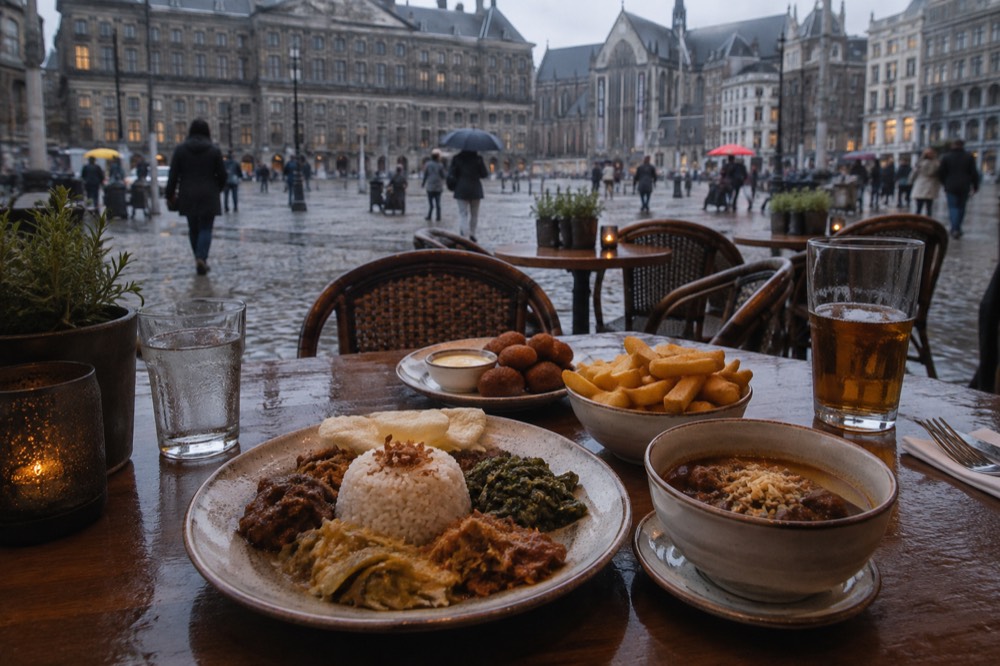
| Dish | What it is | Where to eat it |
|---|---|---|
| Haring | Raw herring with onion and gherkin | Market stalls, fish shops |
| Bitterballen | Deep-fried breaded meat ragout | Brown cafés, bars |
| Stamppot | Mashed potato, vegetables, smoked sausage | Traditional eetcafés |
| Rijsttafel | Indonesian rice table, many small dishes | Indonesian restaurants |
| Poffertjes | Small puffed pancakes with butter and sugar | Market stalls, pancake cafés |
| Stroopwafel | Thin waffle with caramel syrup | Markets, fresh off the griddle |
If beer is part of the meal for you, the Heineken Experience is the obvious pairing: it is a self-guided, interactive attraction inside the company's original brewery in the centre, rated 4.6 across 39,581 reviews, from $23, and it ends, as these things should, with a tasting. It is not a restaurant, but it sits in the middle of the eating district and makes a natural aperitif stop before dinner in the centre or the Jordaan.
For the rest of the drinking culture, the brown cafés guide covers the traditional Dutch pubs, many of which serve simple food and all of which are the right place to eat bitterballen at a wooden table under low light.
How Much Does a Meal Cost in Amsterdam?
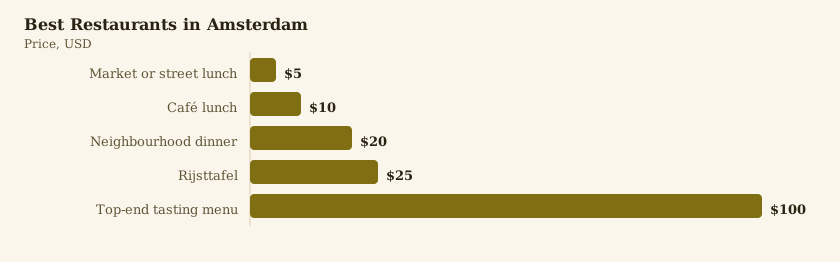
Roughly €15 to €25 buys a main course at a mid-range neighbourhood restaurant, €10 to €15 covers a casual lunch or market meal, and tasting menus at the top restaurants run well into three figures per person. Amsterdam is not a cheap eating city, but the gap between tourist-strip prices and neighbourhood prices is large, and drinks, not food, are usually what inflates the bill.
Those are planning ranges, not promises, and the honest way to use them is as a floor rather than a ceiling. The structural costs underneath restaurant prices here are real: the city charges 12.5 per cent tourist tax on accommodation, national VAT on hospitality has been rising, and rents in the canal belt are among the highest in the country. A restaurant in the centre pays all of that and passes it to whoever walks in, which is one more reason the same kitchen quality costs less in Oost or Noord.
The drinks line is where bills surprise people. Wine by the glass in the centre is priced for tourists, and a bottle mark-up of three times retail is normal in the Netherlands as almost everywhere. Two habits keep the bill sane: drinking beer rather than wine in traditional cafés, and checking whether the menu states that service and cover are included, which in the Netherlands they legally should be in the displayed price. Tipping is a rounding-up culture rather than a percentage culture, and the tipping and etiquette guide explains the local norms without inventing percentages.
| Meal type | Rough cost per person | What you get |
|---|---|---|
| Market or street lunch | €5 to €12 | Haring, stroopwafel, roti, sandwiches |
| Café lunch | €10 to €18 | Soup, sandwiches, small plates |
| Neighbourhood dinner | €20 to €30 | Main plus a drink, mid-range |
| Rijsttafel | €25 to €50 | Multi-dish rice table, per person |
| Top-end tasting menu | Well over €100 | Multi-course, wine pairing extra |
If you want someone else to handle the ordering and the walking, the food-and-culture tour mentioned earlier costs from $92 for 3 hours 30 minutes with ten tastings and a guide, and it doubles as a neighbourhood orientation. For a different angle on the same idea, the where locals eat guide lists the kinds of kitchens Amsterdammers actually queue for.
Do You Need to Book Restaurants Ahead in Amsterdam?
Yes for dinner at popular kitchens, especially Thursday to Saturday, when the best small restaurants fill their online slots days in advance. No for lunch, market food, brown cafés and food halls, which work on a walk-in basis. Amsterdam's best restaurants are often small, 20 to 40 seats, and the no-show culture is low enough that they do not overbook, so the slot you fail to book genuinely goes to someone else.
The booking rhythm is predictable. Restaurants release tables online through their own sites or the standard booking services, and weekend dinner slots at well-reviewed places disappear early in the week. Walk-ins are possible on Mondays and Tuesdays, when the city is quieter, and at the 18:00 sitting, the early slot the Dutch themselves often skip. If you have your heart set on one specific kitchen, book it before you leave home; if you are flexible, book nothing and eat where the room looks right, which in De Pijp or Oost is a perfectly good strategy.
Timing matters as much as booking. The Dutch eat dinner early by southern European standards, and kitchens in traditional restaurants can stop serving around 21:30 or 22:00, earlier than a visitor from Spain or Argentina expects. The city's own rules also shape the night: street drinking is prohibited in the centre, and in the core Wallen area outdoor terraces close at 01:00 and indoor hospitality at 02:00 on weekends, so a very late dinner is a Schiphol-airport experience, not a city-centre one. The official How to Amsterdam page from the city government sets out the visitor rules in plain terms.
One more planning fact that most guides miss: the crowds are not evenly spread. Amsterdam recorded 21.9 million day visits in 2025 on top of its overnight stays, and the city's own forecast expects between 23.7 and 25.1 million overnight stays in 2026, per the official Onderzoek en Statistiek projection. Practically, that means lunch near the main sights is the most contested meal of the day, and eating one neighbourhood further out at midday buys you a table, a seat, and a kitchen that is not slammed.
How Do You Turn Eating Into a Full Day Out?
Combine a neighbourhood meal with the attractions around it: lunch in De Pijp with the Albert Cuyp Market and the Rijksmuseum area, dinner in the Jordaan with a canal walk, or a food hall in Oud-West with the galleries of Westergas. The food tour with ten tastings covers the market-and-neighbourhood circuit in one guided block, and museum tickets are best pre-booked because the major ones use timed entry.
The geography makes this easy. Museumplein sits at the top of De Pijp, so the natural day is a timed-entry museum slot in the morning, the Van Gogh Museum is the most-booked of them, its entry ticket is sold from $31 and rated 4.7 across 57,096 reviews, followed by lunch in De Pijp and the market in the afternoon. The Rijksmuseum next door charges €25 for adults, is free for ages 18 and under, and requires a booked start time for every visitor, so the morning slot needs to be arranged before you plan the food around it.
The evening version of the same logic is a canal cruise followed by dinner. The classic one-hour cruise with audio guide departs from Rederij Kooij every 30 minutes and costs €15.50 per adult, which makes it one of the cheapest fixed-price activities in the city; do the 17:00 or 18:00 sailing and step off the boat directly into a booked table. The is a canal cruise worth it article weighs the options honestly, including the dinner-cruise versions, and the canal ring guide explains what you are actually looking at from the water.
For a full guided eating day, the ten-tastings food and culture walk is the strongest single product on the roster: 3 hours 30 minutes, a local guide, and a route that doubles as a history tour of the eating city. It is the rare tour that works as a first-day orientation, because it teaches you the neighbourhood layout, the market rhythm and the dish vocabulary you will use for the rest of the trip.
Whichever way you assemble the day, the same rule holds: anchor it with one booked thing, a museum slot, a cruise departure or a guided walk, and let the meal grow around it rather than hunting for a table with nothing else planned.
Common Questions About Restaurants in Amsterdam
What is the best area to eat in Amsterdam?
De Pijp for Indonesian, Surinamese and market food, the Jordaan for traditional Dutch cooking and brown cafés, Oud-West for the Foodhallen and modern restaurants, and Amsterdam Oost for the newest small kitchens. Avoid eating on the Damrak strip, where prices are highest and quality lowest.
Do Amsterdam restaurants take walk-ins?
Many do at lunch and early evening, but popular dinner spots, especially Thursday to Saturday, fill their online bookings days ahead. Small restaurants rarely overbook, so an unbooked table genuinely goes to someone else. Book the one kitchen you care about most before you travel.
What time do people eat dinner in Amsterdam?
Earlier than in southern Europe: many kitchens serve from about 17:30 and can stop taking orders by 21:30 or 22:00. The 18:00 sitting is the easiest walk-in slot. Very late dining is limited, and in the core Wallen area hospitality closes at 02:00 on weekends.
Is tipping expected in Amsterdam restaurants?
Service is included in the displayed price by law. Rounding up the bill, or leaving a few euros on a good dinner, is normal and appreciated, but there is no fixed percentage expectation. Do not add an American-style 20 per cent.
What is a rijsttafel and is it worth ordering?
A rijsttafel is the Indonesian rice table, a Dutch-colonial tradition of many small hot and cold dishes served with rice. It is the most distinctive meal in Amsterdam and does not exist in the same form elsewhere. Order it for the whole table and allow two hours.
How much does dinner cost in Amsterdam?
Roughly €20 to €30 per person for a main and a drink at a mid-range neighbourhood restaurant, €25 to €50 for a rijsttafel, and well over €100 for top-end tasting menus. Drinks, especially wine, are usually what pushes the bill up.