What Is Amsterdam's Signature Dish?
Amsterdam has no single official dish, but stamppot, haring and thick pea soup lead the field. Here is what to order, where, and how the city's food culture really works.
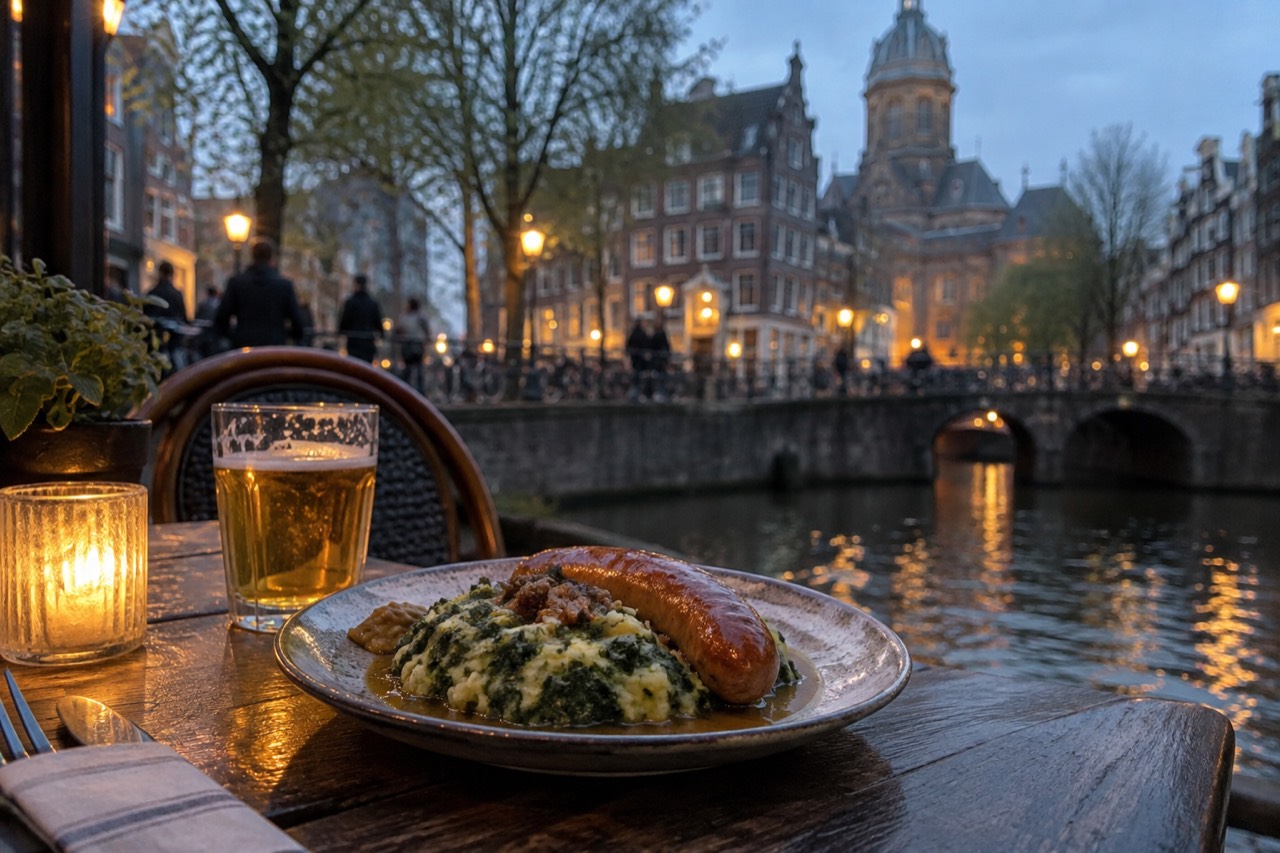
Amsterdam is a port city that grew rich on trade, and its food still shows it: herring from the North Sea, potatoes and cabbage from the polder farmland behind it, spices that arrived through the harbour centuries ago and never left. That history is why the honest answer to the signature-dish question is messier than the tidy answers you get in Vienna or Naples. The city has never crowned one plate. It has three strong candidates, and which one wins depends on who you ask and what month it is.
What Is Amsterdam's Signature Dish?
Amsterdam has no single official signature dish, but stamppot is the closest thing to it: a hot mash of potatoes with vegetables, served with a sausage or stewed meat and gravy, and eaten across the city all winter. Raw haring with onion and pickles is the street-food rival, and thick Dutch pea soup completes the podium. Any of the three is a defensible answer, and most locals will defend theirs.
The case for stamppot is one of frequency. It is the dish that appears on brown cafe menus, in canteens and on family tables from October to roughly March, and its many varieties, boerenkool with curly kale, zuurkool with sauerkraut, andijvie with endive, each have loyal followings. It is comfort food engineered for a damp climate, and it is the plate most Dutch people picture when they picture home cooking. The Rijksmuseum's own visitor pages will not tell you that, but every restaurant row near the museum will.
The case for haring is one of identity. The raw, salted and lightly cured herring served with chopped onion and gherkins is eaten standing at street stalls, held by the tail and lowered into the mouth in a motion every Dutch child learns. The herring season, when the new catch arrives and the first barrels are celebrated, is a genuine city event, and stalls with the flag flying mean fresh fish. For many visitors this is the one food memory they carry home.
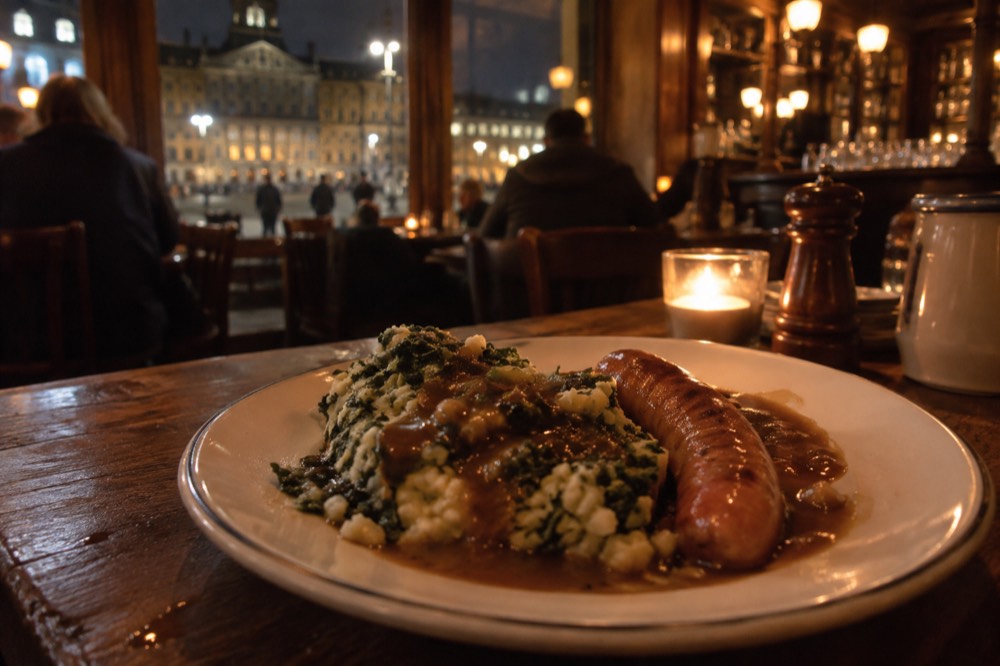
The pea soup argument, snert or erwtensoep, belongs to the purists. A proper Dutch pea soup is so thick the spoon stands up in it, loaded with pork and celery root, and served with rye bread and bacon. It is winter itself in a bowl. Between the three, stamppot wins on ubiquity, haring wins on distinctiveness, and pea soup wins on depth of flavour. The full field, honestly ranked, looks like this:
| Dish | What it is | Best time to eat it | Where it shines |
|---|---|---|---|
| Stamppot | Hot mashed potato with kale, endive or sauerkraut, plus sausage and gravy | October to March | Brown cafes and traditional eetkamers |
| Haring | Raw cured herring with chopped onion and pickles | Late May to early autumn, at flagged stalls | Street stalls and fish shops |
| Erwtensoep | Thick pea and pork soup served with rye bread | Cold months | Winter menus and skate-side kiosks |
| Bitterballen | Fried, breaded ragout balls with mustard | Any time, with beer | Brown cafes at borrel hour |
| Poffertjes | Small, puffy pancakes with butter and icing sugar | Weekends and fairs | Poffertjes wagons and markets |
If you want the single most Amsterdam moment rather than the single most Dutch dish, order haring at a stall, then stamppot in a brown cafe the same evening. That pairing is the city's food character in miniature: raw and maritime at noon, farming and hearth by night. For a fuller walk through the city's food culture, our Dutch food guide for Amsterdam covers the classics dish by dish.
Which Dutch Foods Should You Try Before Anything Else?
Start with bitterballen, stroopwafel and a broodje haring, in that order. Bitterballen arrive free-spirited with any beer order, a fresh stroopwafel is warm syrup between two thin waffles, and a broodje haring is the city's fish in its most approachable form, on a soft roll with onion. Add poffertjes for something sweet and you have the essential first day of eating in Amsterdam covered.
Bitterballen are the city's default social food. These are crisp, deep-fried spheres of a thick meat ragout, served with sharp mustard, and they exist to be eaten standing up with a beer in the other hand. The word borrel, the Dutch institution of drinks with small savoury bites, would collapse without them. Any brown cafe will have them, and they cost a few euros, which makes them the cheapest genuine food experience in the centre.
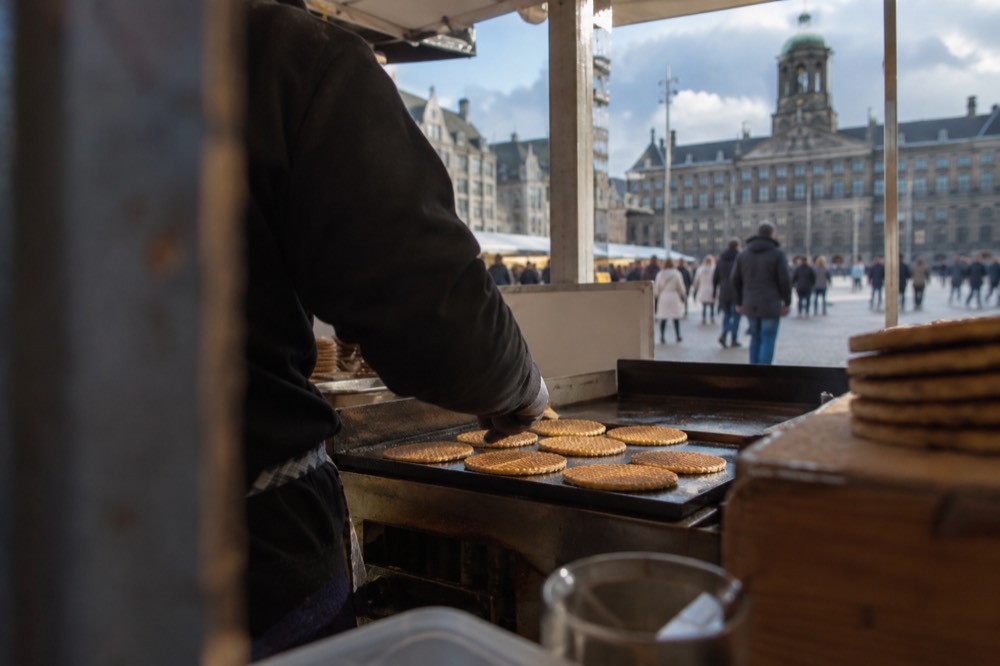
Stroopwafel is the sweet that travels. Two thin, pressed waffles glued with caramel syrup, best eaten when the syrup is still molten, which is why the ones from a market stall beat the packet versions hands down. The story goes that they were first made from bakery leftovers in Gouda, but Amsterdam's markets are where most visitors meet them now, and the smell alone pulls people across the street.
The broodje haring is the training-wheels version of raw herring: the same cured fish, but chopped and tucked into a soft bun with onion and pickles. It costs a little more than the plain haring by the tail, and it converts sceptics at a respectable rate. If you try one fish thing in Amsterdam, make it this.
A guided shortcut through all of this exists, and it is a strong one. The ten-tastings food and culture walk runs 3 hours 30 minutes, is rated 5.0 across 1,157 reviews, and starts at $92. It stitches the classic Dutch bites into a single guided route, which suits travellers who want the context with the calories. Book it for your first full day and let it calibrate your palate for everything after.
One planning note before you commit money to any food experience: check the cancellation terms on the live listing before booking, because the flexible options let you move the booking if the weather turns, and Amsterdam weather turns. Most walking tours and cruises on the roster run rain or shine, but a pay-later or free-cancellation rate costs nothing extra when it is available and buys you the freedom to follow your appetite instead of your itinerary. That matters more with food than with any other category, because a food tour booked for a day you end up wanting to spend in a museum is money spent twice.
Where Should You Eat Stamppot in Amsterdam?
Eat stamppot in a brown cafe, not a restaurant with a laminated multilingual menu. The centre's traditional spots around the Jordaan, the Nine Streets and the Nieuwmarkt serve it through the winter months, portions are generous, prices sit in the mid-teens in euros for a plate with sausage, and the atmosphere is half the meal. Order boerenkool stamppot with rookworst and ask for extra gravy.
The brown cafe is Amsterdam's native habitat for this food: small, candle-lit, wood-panelled bars where the menu is short and the cook has been making the same five things for decades. The Jordaan, once a working-class district and now the most walkable food neighbourhood in the centre, has the densest cluster. Our Jordaan neighbourhood guide lists the squares and streets worth building an evening around, and the stamppot follows naturally.
Timing matters more than location. Stamppot is a cold-weather dish, and kitchens treat it that way: it appears on specials boards from autumn, peaks through the winter, and fades when the terraces come out. A visitor in July asking for kale stamppot may get a shrug, and that is correct behaviour, not bad service. In season, though, it is everywhere, and the sausage that comes with it, rookworst, a smoked sausage with a snap to the casing, is as essential as the mash itself. The full index of guides sits on Things to Do in Amsterdam.
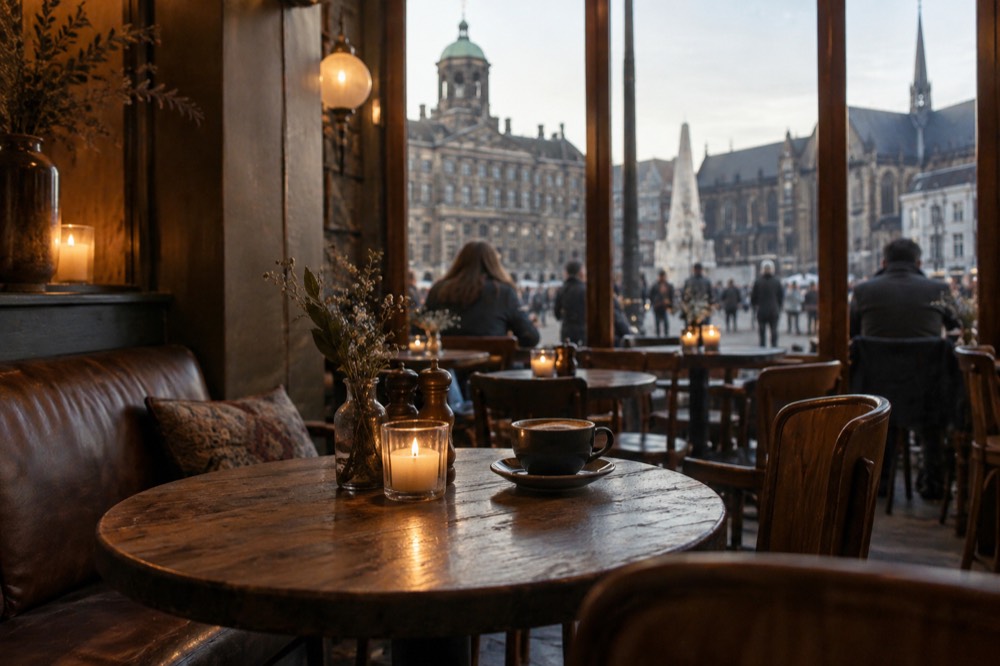
One honest warning: the tourist-strip restaurants on and around Damrak and the busiest canal corners sell a version of Dutch food that is aimed at volume, not tradition. The stamppot there is often fine and rarely better than fine. Walk ten minutes into the Jordaan, De Pijp or the Oud-West side streets and the same money buys the real thing. The city's own How to Amsterdam guidance asks visitors to respect the centre's residents while eating and drinking out, and spreading your spending into the neighbourhoods does that as a side effect.
Is Haring Really the Taste of the City?
Yes, if any single food is. Raw haring with onion and pickles is the dish most identified with the Netherlands and with Amsterdam specifically, it is sold from street stalls across the centre, the new-season catch is a public celebration each year, and locals eat it standing up, by the tail. It is the one bite that cannot be exported and cannot be faked.
The herring is cured lightly, not cooked, in brine, then frozen and thawed in a way that keeps it silky rather than fishy. Done right it tastes clean, salty and faintly sweet, and the onion and gherkin do real work cutting the richness. The classic method is to lift the fillet by the tail and bite upward, which looks undignified and is exactly the point. Stalls also sell it chopped in a bun, which is the same fish with less ceremony.
The season matters. The first new-catch herring of the year, Hollandse Nieuwe, traditionally arrives around late May or June once the fish has reached the right fat content, and its arrival is a small national event with quality flags and tasting panels. Flag-flying stalls in the summer months are your signal that the fish is fresh from the new season. Outside the season the herring is still good, being frozen and cured, but the celebration is in early summer.
For context on scale: Amsterdam recorded 23.7 million tourist overnight stays in 2025, per the city's own Onderzoek en Statistiek forecast publication, and CBS counted 9.5 million guests in the city's accommodation that year. A large share of those visitors will queue for a photo of the herring stall and then not order the herring. Order it. It is cheap, fast, and the most Amsterdam thing you can put in your mouth.
How Do You Build a Whole Day Around Amsterdam's Food?
Build it in three acts: a market breakfast, a museum-and-lunch middle, and a brown cafe evening. Morning at the Albert Cuyp Market or a brown cafe for poffertjes, midday stamppot or a broodje haring between sights, and a slow evening of bitterballen and beer. Pair the eating with one booked attraction in the afternoon so the day has a spine, and let the food fill the spaces between.
The market breakfast sets the tone. The Albert Cuyp Market is the city's biggest street market and the place where the stroopwafel stall draws its own crowd, and our Amsterdam markets guide maps the others worth the tram ride. Eat standing up, watch the regulars, and you will understand the city's food rhythm before lunch.
The middle of the day is where most travellers waste money, by eating badly next to the attraction they just left. The fix is to book the big sights and eat a ten-minute walk away from them. The Van Gogh Museum is the classic afternoon anchor: its timed tickets sell out, so pre-booking is not optional but standard practice, and the entry ticket starts at $31 with a 4.7 rating across 57,096 reviews. Once the slot is fixed, lunch can float around it rather than being grabbed in panic at the nearest fries counter.
The evening act belongs to the brown cafe. Bitterballen, a local beer, and a table by the window is the full programme, and it costs less than a main course on the main strip. If the day has been museum-heavy, the Heineken Experience, a 1 hour 30 minutes self-paced attraction in the original brewery rated 4.6 across 39,581 reviews from $23, makes a lively pre-dinner stop for the beer-inclined. For a calmer arc, a classic saloon boat cruise with drinks and cheese, rated 4.8 across 33,435 reviews from $19.56, turns the canal ring into the evening's entertainment while the food does its work beforehand.
A day built this way also spends sensibly, and the difference between a careless food day and a planned one is real money. The honest planning ranges below are what the city's own price structure supports, not promises from any single operator, and they assume you eat one proper sit-down meal and fill the rest with street food and snacks:
| Meal or snack | Typical planning range | Notes for the day |
|---|---|---|
| Haring at a stall | A few euros | Cash-friendly, eaten standing, cheapest real food in the centre |
| Broodje haring | Slightly more than plain haring | Same fish in a bun, best first-timer option |
| Bitterballen portion | A few euros | Comes with beer, sharable, order per table |
| Stamppot with sausage | Mid-teens in euros | Winter only on most menus, budget for the tip line |
| Market stroopwafel | A couple of euros | Buy from the griddle, not the packet, for the molten syrup |
None of these figures are operator promises, and every kitchen prices its own board, so treat the ranges as a budget frame rather than a quote. What they show is the shape of a cheap eating day: the street food carries the flavour, the one sit-down plate carries the warmth, and the total stays well below what the main-strip restaurants charge for worse versions of the same dishes.
Common Questions About Amsterdam's Signature Dish
What Is Amsterdam's Signature Dish?
Stamppot is the closest thing Amsterdam has to a signature dish: mashed potatoes with vegetables, sausage and gravy, eaten across the city all winter. Raw haring and thick pea soup are the two rivals, and each has serious local support. Eat all three and you have tasted the city honestly.
Is stamppot available in summer?
It is harder to find and some kitchens stop serving it entirely. Stamppot is a cold-month dish and most traditional kitchens treat the seasons seriously. In summer, look for haring, broodjes and poffertjes instead, and save stamppot for a return trip between October and March.
What is the difference between haring and a broodje haring?
Same fish, different format. Haring is the cured fillet eaten by the tail with onion and pickles; a broodje haring is the same fish chopped and served in a soft bun. The bun version costs slightly more and is the easier entry point for first-timers.
Are bitterballen a main dish?
No, they are a borrel snack: small, fried ragout balls eaten with mustard and beer, usually standing at a bar. They are not a meal on their own, but a portion with a beer is one of the best-value food experiences in the centre.
Where should a first-time visitor eat in Amsterdam?
Start at a market such as Albert Cuyp for breakfast, eat stamppot or a broodje haring away from the busiest canal corners at lunch, and finish in a brown cafe in the Jordaan or De Pijp with bitterballen and a local beer. Walking ten minutes off the main strip reliably improves both the food and the price.
Is Dutch food worth travelling for?
Not in the way French or Japanese cuisine is, and pretending otherwise would be dishonest. Dutch food is sturdy, seasonal and cheap, and its pleasures are social: the herring stall, the borrel hour, the winter mash. Treat it as part of the city's texture rather than a destination in itself and it delivers far more than its reputation suggests.