What Is The Biggest Dutch Holiday?
King's Day is the biggest Dutch holiday, and Amsterdam throws the country's largest street party for it. Here is what happens, when, and how to plan around it.
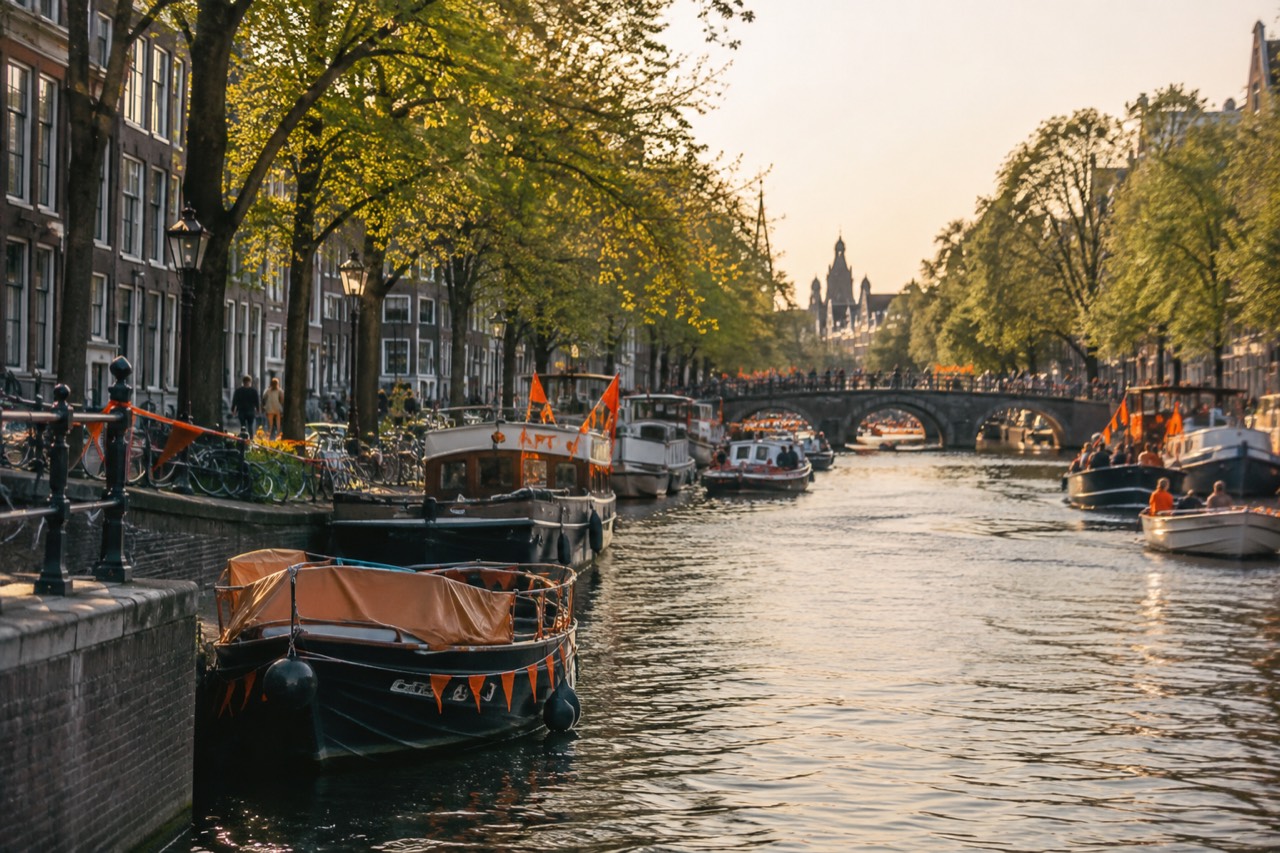
The Netherlands keeps its holidays mostly quiet. Christmas is a two-day family affair with a tree and a church, Easter is a chocolate-and-brunch weekend, and New Year's Eve is one explosive night rather than a season. Then there is one day each year when the entire country dresses in orange, takes to the streets and the water, and parties from the evening before until the small hours after. That day is King's Day, and it is not close.
What Is The Biggest Dutch Holiday?
The biggest Dutch holiday is King's Day, Koningsdag, held every 27 April, the birthday of King Willem-Alexander. It is the one national holiday where the whole country celebrates publicly rather than at home: Amsterdam alone fills its streets, canals and parks with hundreds of thousands of revellers in orange, and the party starts the night before on Koningsnacht.
No other Dutch date behaves like it. Christmas matters more to family life and Liberation Day carries more historical weight, but neither empties the nation's offices, floods a capital city with boats and turns its pavements into a flea market. King's Day does all three at once.
The date follows the monarch's birthday. Under Queen Beatrix it was Queen's Day, 30 April, and under Juliana it was 30 April too. When Willem-Alexander took the throne the celebration moved to 27 April, his actual birthday, and it has stayed there since. If 27 April falls on a Sunday, the holiday shifts to the Saturday, which tells you something about how seriously the Dutch take their party logistics.
For visitors the practical point is simple: Amsterdam on King's Day is a different city from Amsterdam on any other day of the year. Trams in the centre stop or reroute, bridges jam solid with people, and the canals become a slow-moving flotilla of boats with sound systems. Some travellers plan their whole trip around it. Others land in the middle of it by accident and spend the morning wondering where all the orange came from.
If you are building an itinerary around the holiday, the museum-and-canal core of a normal Amsterdam visit still works, but it needs booking discipline: timed-entry museums sell their slots faster, and the popular canal cruises fill their departures early. These three are the reliable anchors for a King's Day week:
Why Is King's Day Such a Big Deal in the Netherlands?
King's Day is the biggest Dutch holiday because it is the only one that is deliberately a nationwide public party rather than a private observance. It doubles as the royal birthday, a patriotic day and the one date when the whole country is invited outdoors, so attendance is not a choice made at a museum door but simply a fact of being in the Netherlands on 27 April.
The royal family also shows up. Each year they visit one town or city, and the 2027 national celebration will be held in Lelystad, as announced by the Royal House. That matters less for Amsterdam than you might think: the capital's Koningsdag is a street party, not a royal visit. The royal programme is a morning of local games, speeches and folk dances in the host town; Amsterdam's programme is boats, beer and a citywide flea market with no official schedule at all.
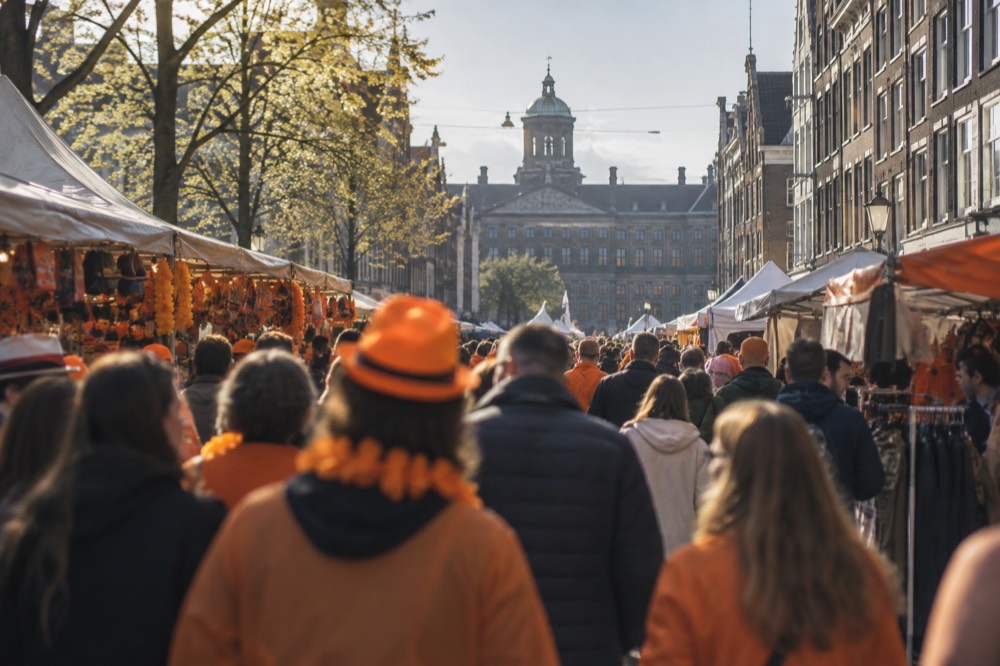
The flea market, the vrijmarkt, is the part that surprises visitors most. On King's Day the normal rules about street trading are suspended and anyone can sell anything on a patch of pavement. Old toys, vinyl records, children's clothes, questionable coffee, it all goes. Locals treat it as the annual house clear-out; the Jordaan and the Vondelpark fringes are the classic hunting grounds.
Then there is the colour. Orange, oranje, is the royal house's name, van Oranje, and wearing it on 27 April is near-mandatory social uniform. An Amsterdam King's Day street looks like a citrus harvest festival. Shops sell orange wigs, feather boas and inflatable crowns for weeks beforehand, and the visitors who blend in best are the ones who bought a two-euro hat at a market stall rather than the ones in rain jackets wondering what is going on.
What Happens on King's Day in Amsterdam?
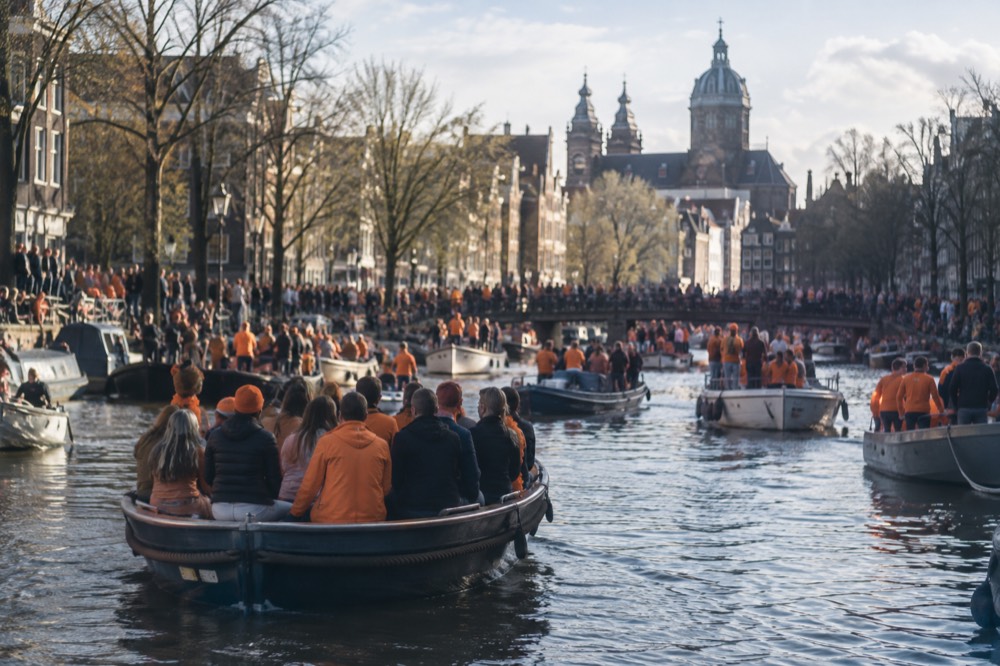
On King's Day, Amsterdam's centre closes to most traffic, its canals fill with boats, its streets become a citywide free flea market, and its parks host open-air concerts. Public transport runs a reduced and rerouted service, museums open with normal or shortened hours, and the busiest areas around the Jordaan, Vondelpark and the canal ring are pedestrian-only for the day.
The day has a rough shape. Early morning belongs to the vrijmarkt, and families with children dominate the stalls: the Vondelpark traditionally reserves its market for kids, who sell their old toys with the seriousness of shopkeepers. By early afternoon the market thins and the drinking crowd thickens, first in the parks and on the water, then in the streets around Rembrandtplein and the Jordaan. By evening the city is one long, slow-moving crowd.
The canals are the spectacle. Boats raft up along the Prinsengracht and the Amstel, tied together in chains, each with its own music. The water traffic is so dense that a crossing that takes ten minutes on a normal day can take an hour. Watching it from a bridge is free and genuinely one of the best views in the country on that date; joining it requires either a rented boat booked far ahead or a cruise ticket.
Museums are the counter-programming. The major ones generally open, and a timed-entry museum is one of the few places in the centre that stays calm and crowd-free all day. The Van Gogh Museum, with its 4.7 rating across 57,096 reviews and a from $31 ticket, sits a short walk from the Vondelpark chaos yet inside its own quiet bubble, and every visitor needs a pre-booked timed ticket anyway, so the holiday does not change the drill: book the slot, arrive in the slot. Check availability if a King's Day visit is on your list.
How Does Koningsnacht Work?
Koningsnacht, King's Night, is the eve of King's Day, and in Amsterdam it is a full festival night in its own right: outdoor stages, brown cafés packed to the door and streets busy until the early hours. For 2027 the holiday falls on Tuesday 27 April, so Koningsnacht runs on Monday 26 April, and the city's music venues build their biggest indoor programme of the spring around it.
The logic is old. When the holiday was Queen's Day, the night before was Queen's Night, and Amsterdam adopted it as its own while The Hague hosted the royal visit. The pattern survived the change of monarch intact: the eve belongs to the bars and stages, the day itself belongs to the streets and the water.
Practicalities shift on the eve. Trams run late but fill up, hotel rates in the centre peak, and the streets around Leidseplein and Rembrandtplein become slow rivers of people. Street drinking, normally prohibited in the centre, is tolerated on the holiday in the designated festivity areas, and the city publishes its rules each year on its own visitor-information pages.
Two things are worth deciding before the night starts. First, where you will sleep relative to where you will stand: a hotel twenty minutes' walk from the stages is a better deal than one in the middle of the noise at double the price. Second, what you will actually do, because the best Koningsnacht is usually one venue with a good line-up, not a bar-crawl through gridlock. Our King's Day in Amsterdam guide covers the night and the day in detail, and the Amsterdam events calendar places the holiday in the wider year.
What Other Dutch Holidays Come Close?
No other Dutch holiday matches King's Day for national participation, but three come close in specific ways: Liberation Day on 5 May for historical weight, Sinterklaas in early December for family significance, and New Year's Eve for raw intensity in a single night. Christmas and Easter are quieter in the Netherlands than in most neighbouring countries, with the first Christmas day spent at home.
Here is how the main contenders compare:
| Holiday | Date | Character | Amsterdam on the day |
|---|---|---|---|
| King's Day (Koningsdag) | 27 April | Nationwide street and canal party | Centre closed to traffic, citywide flea market, canal flotilla |
| Liberation Day (Bevrijdingsdag) | 5 May | Commemoration with festivals, lustrum year as a full day off | Concerts on the Amstel, museums open, quieter streets |
| Sinterklaas arrival | Early December | Children's festival, gifts on 5 December evening | Arrival parade, warm family crowds, low tourist impact |
| New Year's Eve (Oud en Nieuw) | 31 December | Fireworks night, national | Massive bonfires and fireworks, centre busy from afternoon |
Liberation Day marks the end of the German occupation in the Second World War and is the country's most solemn public date. Its big commemoration happens in Amsterdam on the Amstel with the king in attendance, and the following day's liberation festivals spread across the country. Every fifth year it is a full public holiday for everyone; in other years many workers simply take it off anyway.
Sinterklaas is the holiday Dutch children actually rank first. The steamboat arrival of St Nicholas, traditionally in mid-November, kicks off weeks of anticipation that end with gift-giving on 5 December. For visitors it is a parade and a warm atmosphere rather than a party, and the debate around the holiday's traditions is a live national conversation worth knowing about before you comment on it.
New Year's Eve is the only night that rivals Koningsnacht for chaos. Fireworks go on sale to the public in the days before, and the unofficial bonfires on the beaches and bridges draw crowds. It is intense, occasionally overwhelming, and over by lunchtime the next day, when the Dutch traditionally dive into the North Sea or the nearest canal for the New Year's swim.
When Is King's Day in 2027 and How Should You Plan?
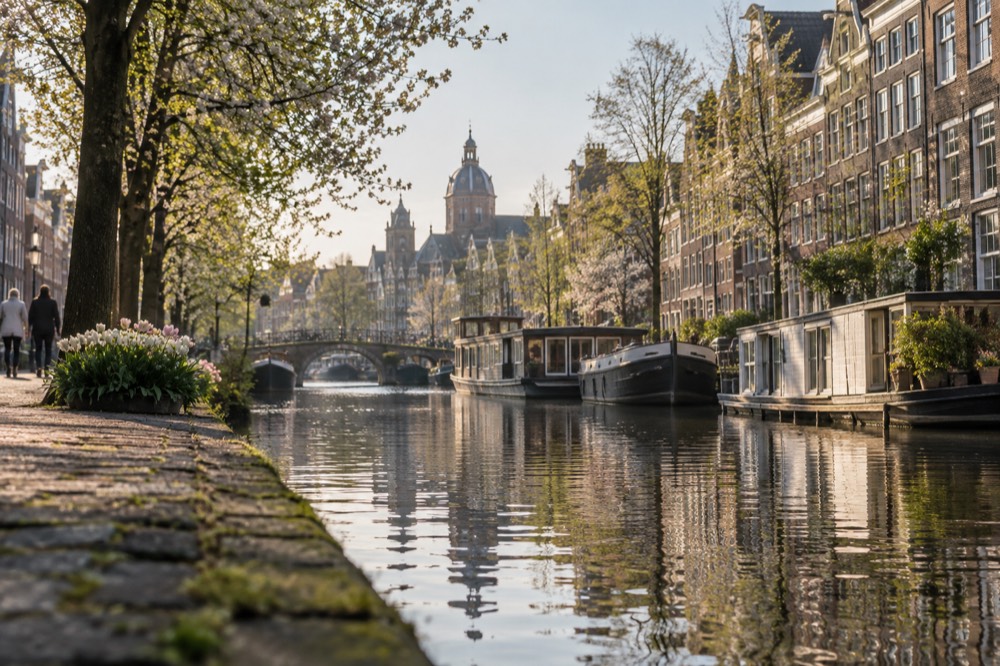
King's Day 2027 falls on Tuesday 27 April, with Koningsnacht on Monday 26 April, and the royal family will celebrate in Lelystad, not Amsterdam. For visitors, the planning window that matters is the last week of April: tulip season is still at its tail end, Keukenhof is open daily until 9 May, and the holiday week is the single busiest stretch of the Amsterdam spring.
The overlap with the tulip season is the reason late April is the most requested week in the Dutch tourism year. Keukenhof, the great spring garden in Lisse, runs its 2027 season from Thursday 18 March to Sunday 9 May, open daily 08:00 to 19:00, per the garden's own opening information. That means a King's Day trip can pair the country's biggest party with its most photographed flowers, but it also means booking everything early: garden tickets, timed museum slots and canal cruises all move faster that week than in any other spring week.
Getting around on the day itself needs a plan. The centre goes largely car-free, so the tram becomes both essential and crowded, and a day ticket saves queueing at machines. Current GVB fares, per the operator's own price page, run at €3.40 for a single one-hour ticket and €10.00 for a 24-hour day pass, with contactless bank-card tapping also accepted on board. Buy the day pass the evening before, when the machines still have short queues.
The transport maths is simple: three single one-hour tickets at €3.40 each already cost €10.20, more than the €10.00 day pass, so the pass pays for itself after just three rides. Since a typical King's Day involves moving between the vrijmarkt streets, the canalside crowds and wherever your evening ends up, three rides is a realistic minimum for the day. The contactless bank-card option is handy as a backup if a machine has a long queue, but per-ride taps add up at €3.40 each, so treat the day pass as the default and the card as the fallback.
On timing, Monday night matters as much as Tuesday. Koningsnacht on Monday 26 April is the warm-up, with music and street crowds building in the centre the evening before the holiday itself. Arriving on Monday rather than Tuesday morning gives you both nights, plus a head start on buying your day pass and orange outfit while market stalls and machines are still calm.
A rough budget for the holiday week looks like this:
| Item | Typical cost | King's Day week note |
|---|---|---|
| GVB 24-hour transport pass | €10.00 | Buy the night before; centre stops are crowded from mid-morning |
| Canal cruise ticket | from about €15.50 | The only operator price verified to its own site is Rederij Kooij's €15.50 one-hour cruise; book ahead on holiday dates |
| Keukenhof entry | 2027 prices not yet on sale | Season runs 18 March to 9 May; tickets go on sale via the garden's own site |
| Central hotel room, holiday night | Peak rates | Book months ahead or stay outside the centre and tram in |
| Orange outfit from a market stall | a few euros | Cheap, available everywhere all week, socially expected |
One more planning note: the holiday is a genuine local event, not a tourist product. The Things to Do in Amsterdam desk's advice is to treat it that way. Arrive with a booked bed, a booked museum slot and a booked cruise, then let the streets supply everything else. The vrijmarkt, the boats and the orange crowds are free, and they are the reason the date is the biggest holiday in the country.
For the evenings when you want a break from the street, the city's classic indoor options hold up well on holiday week. The Heineken Experience, a 4.6-rated 90-minute attraction in the original brewery with tickets from $23, is one of the few central sights whose pace does not change with the party outside, and the classic saloon-boat cruise, 4.8 across 33,435 reviews and from $19.56, puts you on the water for the flotilla with a licensed crew instead of a rented steering wheel.
If the holiday week is your window, it is also worth reading our take on the best time to visit Amsterdam before you fix dates, because late April offers the year's best combination of weather odds, flowers and atmosphere, at the cost of the year's thinnest availability.
Common Questions About the Biggest Dutch Holiday
What Is The Biggest Dutch Holiday?
King's Day, Koningsdag, on 27 April. It is the only Dutch holiday celebrated as a nationwide public party, with Amsterdam hosting the largest street market and canal gathering of the year, starting the evening before on Koningsnacht.
When is King's Day 2027?
Tuesday 27 April 2027, with Koningsnacht on Monday 26 April. The royal family will celebrate in Lelystad that year, while Amsterdam holds its usual citywide party.
Is King's Day a public holiday for workers?
Yes, 27 April is an official national holiday in the Netherlands, so offices, schools and most shops close. Museums and tourist attractions generally open, often with normal hours, but check each one's own site for holiday exceptions.
Why does everyone wear orange on King's Day?
Orange is the colour of the royal house, the House of Orange-Nassau. Wearing it on the monarch's birthday is a national tradition, and market stalls sell cheap orange hats, boas and wigs across the city in the week before.
Can you visit museums on King's Day in Amsterdam?
Generally yes. The major museums open, and because every visitor needs a pre-booked timed ticket at places like the Van Gogh Museum, the holiday does not change the routine, it only makes slots scarcer. Book ahead for the holiday week.
Is King's Day a good time to visit Amsterdam?
For atmosphere, nothing beats it, and the tulip season is still running. For peace, it is the worst possible day: the centre is pedestrian-crowded, trams reroute, and hotel rates peak. Book transport, tickets and beds well ahead either way.