What Is The Cheapest Month To Go To Amsterdam?
The cheapest month to visit Amsterdam is usually late January or early February, once the holiday season ends and before spring demand begins. Here is how the calendar moves prices and how to keep costs down.
What Is The Cheapest Month To Go To Amsterdam?
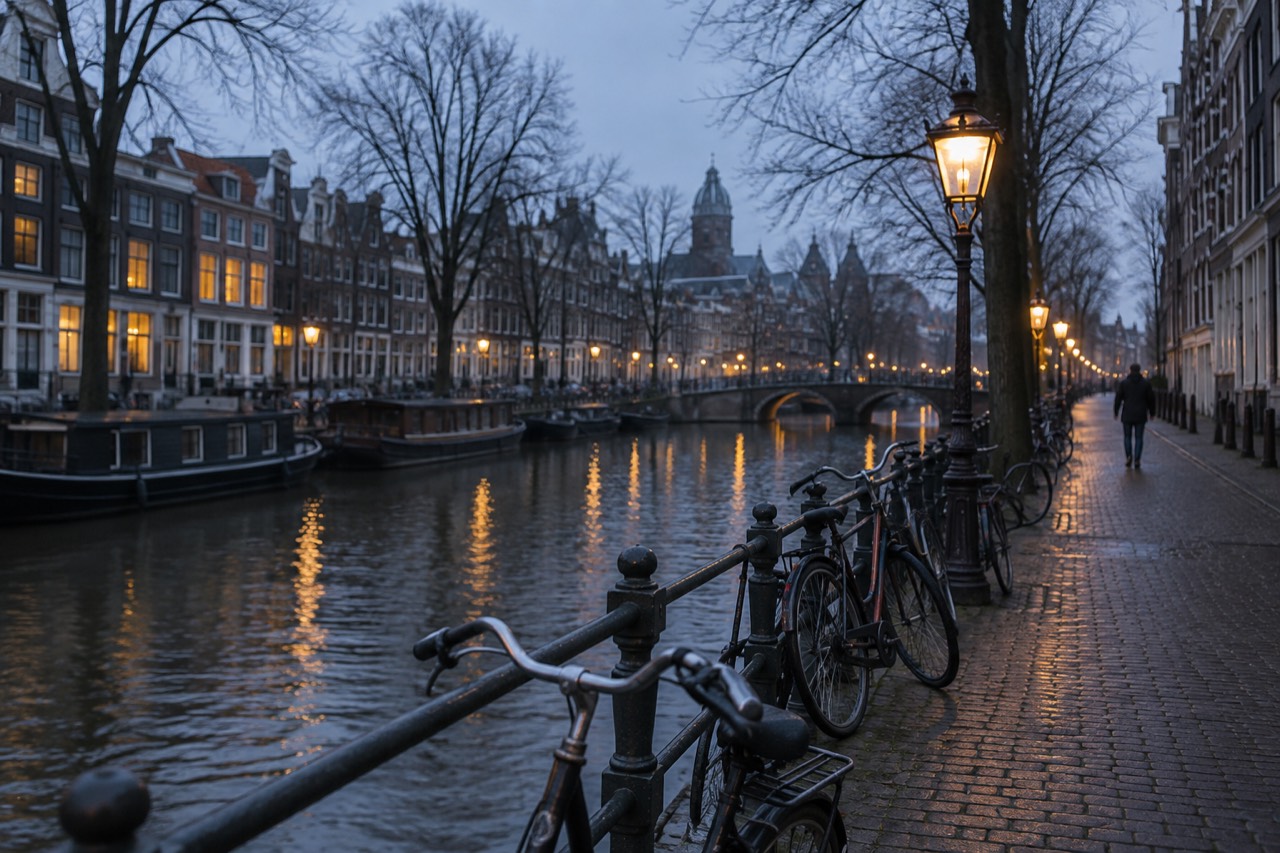
The cheapest month to go to Amsterdam is usually late January into early February, in the quiet weeks after the New Year break and before the tulip season begins. Hotel demand is at its lowest, the big winter festivals are over, and the spring crowds have not yet arrived. Prices for rooms climb steeply from mid-March, when Keukenhof opens, and stay high through summer, so the winter gap is where the savings are.
Amsterdam's pricing rhythm is unusual for a European city because so much of it is driven by a handful of fixed events rather than by school holidays alone. The tulip season pulls visitors from mid-March to mid-May. King's Day fills every bed in late April. Summer brings the peak river of tourists, and the Amsterdam Dance Event and Light Festival crowd the autumn and early winter. When you strip all of that away, the calendar has two genuine troughs: the weeks immediately after New Year, and to a lesser extent the gap in late autumn between the end of the main tourist season and the start of the Christmas market period.

The late January window wins for one simple reason: it is the only stretch that has neither an event pulling people in nor a school holiday pushing families abroad. The city recorded 23.7 million tourist overnight stays in 2025, and the municipal research office forecasts between 23.7 and 25.1 million for 2026, so demand is not thinning overall. It is only redistributing. The quiet weeks are quiet relative to the rest of the year, not relative to a sleepy town.
That last point matters more than most guides admit. A large share of an Amsterdam trip's cost does not change with the month at all. Museum tickets, tram fares, canal cruises and the tourist tax are flat across the year, so the seasonal saving comes almost entirely from the room rate and the flight. Pick the right month and you are optimising the two biggest line items on the bill.
If you want a fuller treatment of how the seasons differ beyond price, the best time to visit Amsterdam guide breaks the year down month by month, and the Amsterdam on a budget two day plan shows how to spend little once you have picked your dates.
Which Months Are The Most Expensive In Amsterdam?
The most expensive months are April through August, with late April the single priciest window because King's Day and the tulip peak land together. Mid-March to mid-May brings the Keukenhof crowds, July and August bring peak summer demand, and October and December carry their own spikes from the Amsterdam Dance Event and the Christmas period. Book around those and you avoid the worst rates.
The spring spike is the sharpest. Keukenhof, the great tulip garden at Lisse, opens on 18 March 2027 and closes on 9 May 2027, and the whole bulb region draws visitors across that window. The field peak bloom tends to fall between mid-April and early May, which is also when King's Day arrives. In 2027 King's Day falls on Tuesday 27 April, and the Koningsnacht street party the evening before is one of the biggest single nights in the Dutch calendar. Rooms in the centre that week are among the hardest and costliest to secure all year.
Summer holds prices high through sheer volume. Autumn is more complicated than people expect. The Amsterdam Dance Event, running 21 to 25 October 2026 for its 30th edition, fills the city's hotels with club-goers for five nights and pushes rates up sharply around it. Then the Amsterdam Light Festival, dated 26 November 2026 to 17 January 2027 for its 15th edition, pulls a winter crowd that keeps December from being the bargain it looks like on paper. The lights are genuinely lovely, but they are not free for the hotel market.
| Period | Demand driver | Effect on room prices |
|---|---|---|
| Mid-March to mid-May | Keukenhof and tulip season, 18 March to 9 May | High, peaking around the bloom |
| Late April | King's Day, 27 April 2027, and Koningsnacht | Highest of the year |
| July and August | Peak summer travel season | High and steady |
| Late October | Amsterdam Dance Event, 21 to 25 October 2026 | Sharp spike over five nights |
| December | Amsterdam Light Festival and Christmas markets | Moderate to high |
| Late January to early February | No major event, post-holiday lull | Lowest of the year |
None of the dates in that table are guesses. The tulip and King's Day dates come from the official announcements, and the festival windows are the published 2026 and 2027 editions. The pattern they create is stable from year to year even when the exact dates shift by a week.
Which Costs Stay The Same No Matter The Month?
Most of what you pay for inside Amsterdam is flat across the year, so the month you choose mainly moves your room and your flight. Museum tickets, tram fares, canal cruises and the 12.5 percent tourist tax are the same in January as in July. The saving from travelling in the cheapest month comes from the two big variable costs, not from the small fixed ones.
Start with transport, because it is the easiest to pin down. A GVB one-hour ticket costs €3.40, a 24-hour day ticket €10.00, and the multi-day tickets step up from there: €16.00 for 48 hours, €21.50 for 72 hours and €27.50 for 96 hours, per the official fare page at GVB prices. Contactless OVpay works on trams, buses and metros with a base fare of €1.16 plus €0.217 per kilometre. None of that has a season.
Museum entry is similarly flat. The Rijksmuseum charges adults €25 and the Van Gogh Museum also charges €25, both with timed entry and both free for visitors aged 18 and under. The Anne Frank House costs €16.50 for adults and is sold only through the museum's own site, per the official ticket page, with no reseller and no discount for any city card. Those are year-round prices. So is the tourist tax: hotels and holiday rentals add 12.5 percent of the overnight price, per the municipal tax page, in every month.
| Cost item | Typical price | Changes by month? |
|---|---|---|
| GVB 24-hour travel ticket | €10.00 adult, €5.00 child | No |
| Rijksmuseum adult entry | €25, timed slot required | No |
| Van Gogh Museum adult entry | €25, timed slot required | No |
| Anne Frank House adult entry | €16.50, official site only | No |
| Tourist tax on accommodation | 12.5 percent of the nightly price | Percentage fixed, total rises with the room rate |
| Hotel room rate | Set by demand | Yes, this is the lever |
The tourist tax line in that table is worth a second look. Because the tax is a percentage of the room price, a cheap month saves you twice: once on the rate and once on the tax attached to it. A month that halves your room also halves your tax bill, which quietly widens the gap between January and July beyond what the headline rates suggest.
One more flat cost deserves a mention. The I amsterdam City Card, at €67 for 24 hours and €94 for 48 hours, bundles free entry to more than 70 museums with unlimited GVB transport, one canal cruise and a 24-hour bike rental. It does not include the Van Gogh Museum or the Anne Frank House, which is the single most common mistake people make with it. If your plan leans on the big two museums, the card is not the right tool in any month.
What Can You Do In Amsterdam's Cheapest Month Without Spending Much?
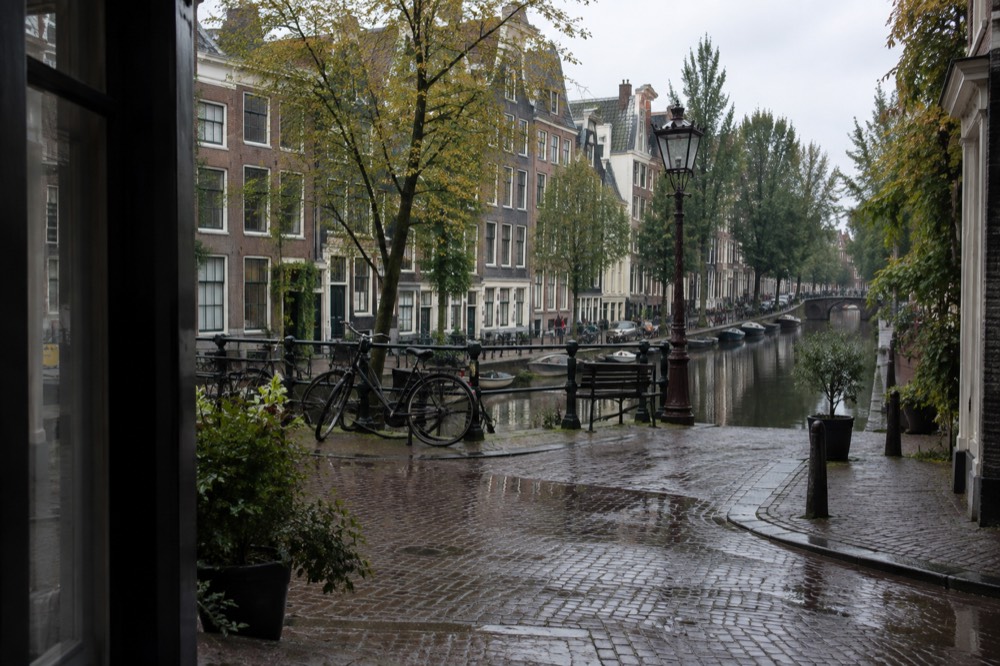
Amsterdam in late January and early February is cold and quiet, but the core city is fully open and largely free to walk. The canal ring, the Begijnhof, the Nine Streets, the Jordaan and the waterfront at the IJ all cost nothing. Free pay-what-you-want walking tours run year round, and the museums are at their least crowded, so the cheap month is also the calm month.
The free walking tour scene is the single best value in the city in any season, and in winter it doubles as a way to see the centre without paying for anything but the tip. The Absolutely Amsterdam free walking tour on GuruWalk is the most reviewed of the lot, rated 4.88 across 9,527 reviews, and runs about two and a half hours through the centre. It is free to book and you tip the guide what the walk turned out to be worth, which is the honest way these tours work and the reason the platform gets named here rather than hidden.
Winter light is a real thing in Amsterdam, and photographers know it. Low sun over the canal ring in the late afternoon turns the water copper, and the bare trees open views that summer foliage hides. If you want the full rundown of where to point a camera, the Amsterdam photography spots guide covers the classic angles, most of which cost nothing to stand at.
The cheap month also softens the queues. Timed entry still applies everywhere, and you should still book the Rijksmuseum and the Van Gogh Museum slots in advance because both require them, but the Anne Frank House is the one place where advance booking is non-negotiable in every season. Its tickets go on sale online only, for a specific date and time, and they do not last. Plan that purchase before you plan anything else about the trip. The rest of the planning pages sit on Things to Do in Amsterdam.
If you are weighing whether the winter version of the city is worth it at all, the piece on Amsterdam in January goes deeper on what the city is like in the depths of the cheap season, and it is more encouraging than you might expect.
Does The Weather Make The Cheap Month A Bad Deal?
The weather in late January and early February is the trade you make for the low prices: cold, occasionally wet, and with short days, but rarely the kind of cold that stops a city built for walking. Amsterdam's winters are mild by northern European standards, and the canals, brown cafes and museums are all built for exactly this weather. The cheap month costs you comfort at the margins, not the trip itself.
The honest framing is that you are not choosing between a bad-weather month and a good-weather month. You are choosing between a cheap quiet month and an expensive crowded one. Summer in Amsterdam brings its own frustrations: peak crowds, long queues and a city running at its absolute capacity. The winter version is emptier, easier to book and easier to walk through, at the price of a coat and an umbrella.
Practical adjustments matter more than the temperature does. Layers, a waterproof outer shell and shoes that can handle wet cobbles cover almost everything the season throws at you. The city's indoor life is exceptional, from the Rijksmuseum to the brown cafes, and the tram network means you are never more than a few minutes from a warm interior. Short days simply front-load the plan: do the outdoor walking early, save the museums and the cafes for the late afternoon dark.
There is also a financial silver lining to the weather. The canal cruise fleet runs year round, and the boats are covered and heated in winter, so the same cruise that costs the same in July is a quieter and more comfortable experience in February. Operators do not discount for the season on the headline price, but the experience you get per euro is better when the boat is half full.
How Do You Keep Costs Down Once You Have Picked Your Month?
Picking late January or early February is only the first saving. The rest comes from booking the Anne Frank House slots the moment they release, using OVpay or a day ticket instead of taxis, eating from markets and brown cafes rather than the centre's tourist restaurants, and using free walking tours as your orientation. Those habits cut the daily bill in any month, and in the cheap month they stack on top of the room savings.
Start with the fixed costs you can control. Transport is solved by a €10.00 day ticket or by tapping a contactless card with OVpay. Food is solved by the markets: the Albert Cuyp Market and the street-food stalls around it feed you for a fraction of the restaurant prices two streets north. The brown cafes, Amsterdam's traditional dark-wood pubs, sell beer at local prices and double as the city's best-value evening entertainment.
For orientation and history, the free walks again. The Jewish Quarter and WWII free walk, rated 4.91 across 1,364 reviews on GuruWalk, covers the Jewish Cultural Quarter and the Anne Frank story over about two hours, free to book with a tip at the end. It pairs well with the general city walk: one gives you the map of the centre, the other gives you the deepest history in it.
A word on the Anne Frank House, because it is the one cost no budget tactic can dodge. Entry is €16.50 for adults, sold only through the museum's own website for a timed slot, with no reseller and no pass discount. If seeing the inside of the house is a priority, that booking is the anchor of your whole itinerary, and the walking tours of the Jewish Quarter are the honest alternative when slots are gone, because they tell the street-level story without implying entry.
The last habit is the simplest: stay slightly outside the ring. Rooms in Amsterdam Noord, Oost or the eastern docklands run cheaper than the canal belt in every month, and the tram and metro links put you in the centre in fifteen to twenty minutes. In the cheapest month, that choice compounds with the seasonal dip to produce the lowest total bill the city can offer.
Common Questions About the Cheapest Month to Visit Amsterdam
What Is The Cheapest Month To Go To Amsterdam?
Late January into early February is usually the cheapest window, in the quiet gap between the New Year and the start of the tulip season in mid-March. No major event pulls visitors in, school holidays are over, and hotel rates sit at their lowest before climbing steeply toward spring.
Is Amsterdam cheap in winter?
Rooms are at their cheapest in the weeks after New Year, but the fixed costs are the same year round: museum tickets, tram fares and the 12.5 percent tourist tax do not dip with the season. Winter saves you on the room and the flight, not on the entry prices.
Which month is the most expensive to visit Amsterdam?
Late April is the priciest window, because King's Day and the tulip peak bloom land in the same week. Mid-March to mid-May, July and August, the Amsterdam Dance Event in late October and the December Light Festival period all carry high demand too.
Do Amsterdam hotel prices drop after New Year?
Yes, the drop after the New Year holiday is one of the clearest in the European city calendar, and it holds until the first Keukenhof visitors arrive in mid-March. The weeks from mid-January to mid-March are the widest low-season window.
Are the museums cheaper in the low season?
No. Entry prices are flat across the year, and timed-entry booking still applies. What the low season gives you instead is shorter queues and better availability, including a realistic chance at Anne Frank House slots if you book when they release.
Is the cheapest month still worth visiting?
For many travellers, yes. The centre is calm, the canal-side cafes and museums are at their emptiest, and the free walking tours run year round. You trade warm evenings for low prices and short queues, which is a fair deal if you pack for the cold.