What Is The Coldest Month In Amsterdam?
January is the coldest month in Amsterdam. Here is what that actually means for canals, daylight, crowds and what to do while the city is at its quietest.
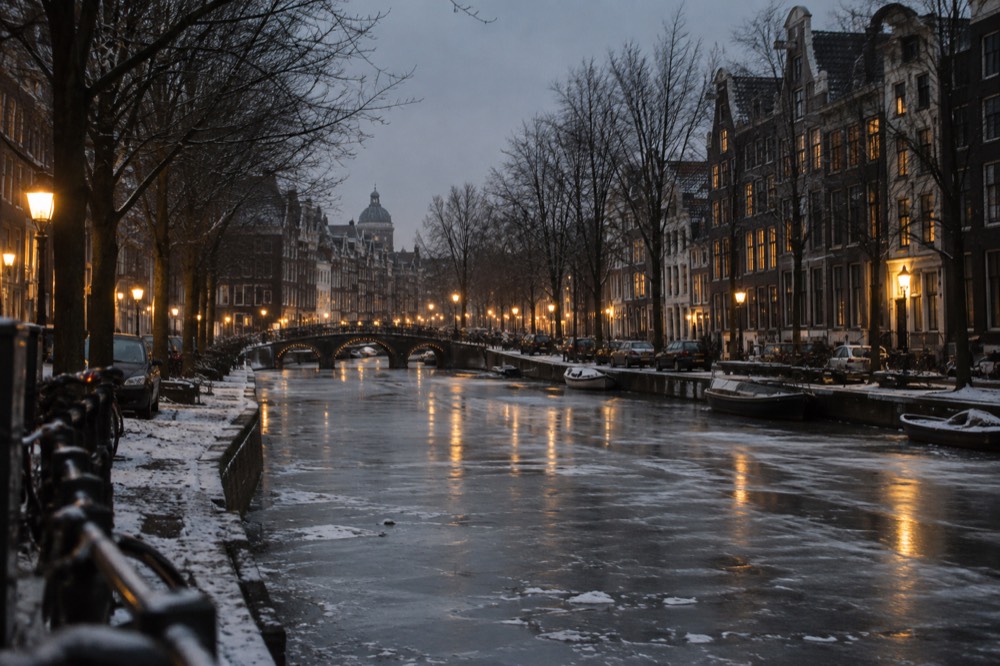
Amsterdam in January is a city with its coat buttoned up. The canals steely rather than sparkling, the terraces stacked away, the daylight short enough that a 4pm museum exit feels like an evening event. The question people actually type, though, is narrower than "what is winter like": it is which single month is the coldest, and what that means for a trip they have already booked or are about to.
What Is The Coldest Month In Amsterdam?
January is the coldest month in Amsterdam. It sits at the bottom of the city's temperature curve, after the shortest days of late December have drained whatever warmth the water was still holding, and before February's slowly lengthening daylight starts to lift the afternoons. Cold snaps that arrive in January tend to bite hardest because the canals, the wet soil and the brick of the canal ring all radiate stored cold back out overnight.
That is the short answer, and almost every Amsterdam planning question flows from it. The honest caveat is that this site does not publish month-by-month temperature tables, because the official Dutch meteorological data has not been read from its primary source for this page, and a weather blog copying another weather blog is not a source. What can be said with confidence is the shape of the year: December and February bracket January as the three coldest months, January is the floor of that trough, and the difference between the three is small enough that a visitor will not feel a distinct line between them. A mild January day can feel milder than a raw, damp day in March.
Cold in Amsterdam is also not the same animal as cold in a continental city. The North Sea and the IJ keep the city's winters maritime rather than brutal. That means temperatures that look mild on paper can feel sharp, because the damp gets into the wind that funnels down the canal corridors, and the wind is the part of Amsterdam weather that locals actually complain about. The Dutch word for it, when the combination of cold and wind and humidity is discussed, translates roughly to "cold that gets in".
How Cold Does Amsterdam Actually Get in Winter?
Amsterdam's winter cold is a damp, windy cold rather than a deep freeze. The city sits at sea level on the water, so its coldest days are usually raw and grey rather than bitter and blue, and the wind off the IJ and the North Sea does more damage to a visitor's comfort than the number on the thermometer. When a genuine cold snap does arrive, usually in January, the canals can skin over with ice and the city changes character for a few days.
The maritime position cuts both ways. It stops the temperature from plunging to the levels that inland continental cities see, and it also stops the city from warming up much during the day. The result is a flat, grey, persistent cold: mornings that feel like afternoons, afternoons that feel like evenings, and evenings that arrive early and stay damp. Daylight is the other half of the story. In late December and early January the sun comes up late and goes down mid-afternoon, and the canal ring spends much of the day in the long, low light that photographers love and pedestrians endure.
The canal-ice moment deserves its own paragraph, because it is the one genuinely dramatic thing a cold January can produce. When a hard freeze lasts long enough, the city's shallow canals can freeze at the surface, and Amsterdam briefly remembers its frost-festival past: people photograph the ice, some years see skaters, and the frozen-canal photos that circulate online are almost all taken in exactly this window. It is not guaranteed in any given winter. It depends on a sustained freeze, and many recent winters have produced only thin, patchy ice or none at all. Treat it as a bonus, never as a plan.
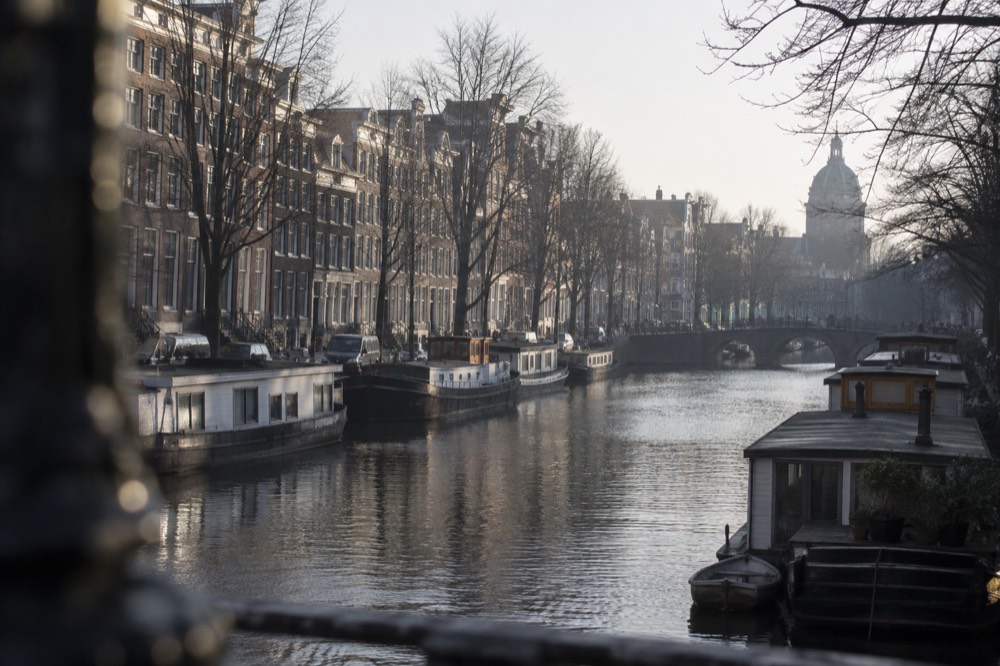
What the cold means in practice, hour to hour, is a city that moves indoors. The brown cafés fill earlier. The museums feel like the sensible option they always secretly were. And the infrastructure of warmth is good: trams are heated, museums are heated, and the walk between any two doors in the centre is rarely more than a few minutes of exposed cheek. If you want a fuller picture of the season overall, the Amsterdam in winter guide covers the whole cold half of the year, not just its coldest month.
Is Amsterdam Worth Visiting in January?
Yes, and for some travellers January is the best month to come. It is the quietest stretch of the city's year, hotel rates drop after the New Year period, and the major museums that feel like a scrum in summer become walkable. The trade is the weather and the short days, so the trip works best if you plan around indoor mornings and lit-up evenings rather than pretending it is May.
The crowd logic is the strongest argument. Amsterdam recorded 23.7 million tourist overnight stays in 2025, a record high that beat the city's own 20-million policy ceiling, and those visitors are not spread evenly across the year. The summer months and the tulip season absorb the bulk of them. January, sitting between the Christmas lights and the spring bloom, is the trough, and you feel it on the pavement: the Nine Streets are browsable, the Dam Square photo spots have gaps, and the museum queues that in July snake around the block are in January a matter of minutes.
The pricing logic follows the crowd logic, with a caveat. Hotel rates in the first week of January are inflated by the New Year period, then fall away sharply for the rest of the month, before climbing again toward spring. Museum prices do not move with the seasons, so the savings are on the bed and the flight, not the ticket. If you are weighing the whole question of shoulder-season value, the blog post is Amsterdam worth visiting in January? takes that decision apart on its own terms.
The honest counter-argument is the light. If your idea of Amsterdam is a long evening bike ride along the Amstel, or a slow afternoon in the Vondelpark, January will not give it to you. The park is bare, the terraces are gone, and the day is a sprint. What January gives instead is a different city: candlelit brown cafés, empty museum halls, the canal ring under early darkness with the bridges lit, and the sense of having the place more to yourself than at any other point in the year. For travellers who like cities in their off-key months, that is the whole appeal.
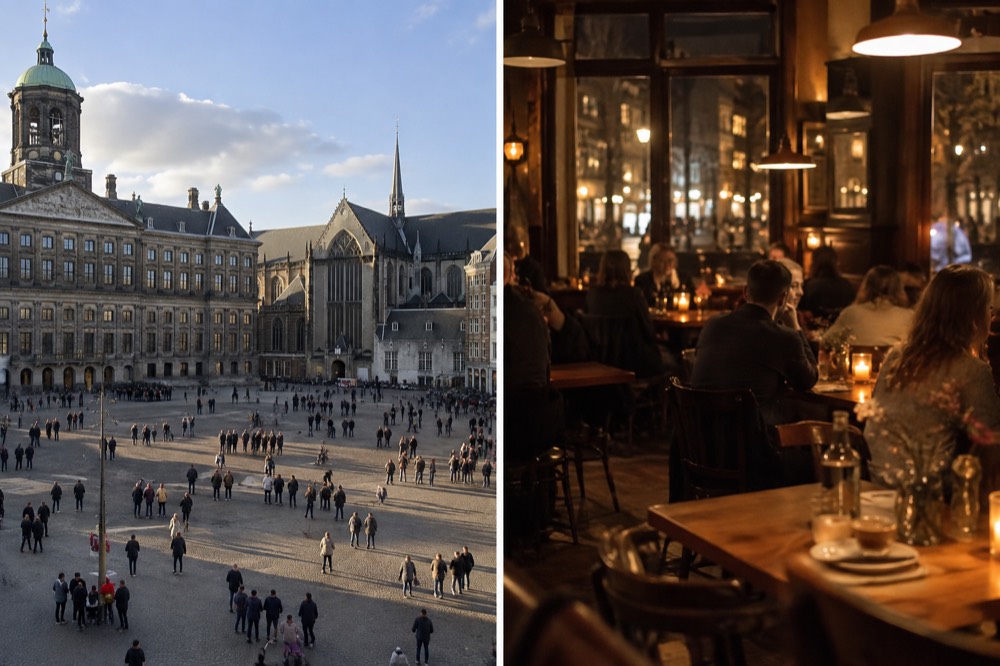
What Can You Do Indoors When It Is Freezing?
Amsterdam is one of Europe's best indoor cities per square kilometre, which is exactly what you want in its coldest month. The Rijksmuseum, the Van Gogh Museum, the Stedelijk, the Rembrandt House, NEMO and a long tail of smaller museums are all within a short tram or walk of each other, and the big three alone can absorb two full cold days without repetition.
Start with the anchors. The Rijksmuseum is open every day of the year from 9am to 5pm, including public holidays, per its own visitor page, and adult admission is €25 with free entry for ages 18 and under; a start time must be booked in advance for all visitors. The Van Gogh Museum charges adults €25, with visitors under 18 free, and it also requires a pre-booked timed entry ticket, with tickets known to sell out. The Stedelijk, next door on the Museumplein, covers the modern and contemporary side. Clustered like that, the Museumplein is effectively a weather-proof district: one tram stop, three world-class museums, and a covered route between café, shop and gallery.
The Van Gogh Museum is the one most first-time visitors care about most, and the practical detail that matters in winter is the timed entry. Pre-booked ticket products exist for it: the roster listing on this site carries a rating of 4.7 across 57,096 reviews, from $31, and the operator's live listing shows current availability and start times. Booking the first morning slot is the classic January move, because the light in the museum's upper floors in the late morning is at its best and the crowd at its thinnest.
Beyond the big three, the depth is what surprises people. The Rembrandt House Museum is the painter's actual home and studio, restored, and it is small enough to do in ninety minutes of warmth. NEMO Science Museum, the green ship-shape building by the water, charges a flat €21.50 for everyone aged four and over, and its roof terrace is free to reach without a museum ticket, which on a bright cold day is one of the city's better free views. The Moco Museum, the Fabrique des Lumières immersive art space in the Westergas park, the Maritime Museum and the STRAAT street-art museum at the NDSM wharf all trade on being indoors. And the Anne Frank House, which is a different order of experience, sells tickets only through its own official website for a specific date and time slot, with adult tickets at €16.50 including the booking fee, and no reseller is involved, so nothing on this page or any other page can shortcut that queue.
| Cold-day plan | Where | Why it works in January | Time needed |
|---|---|---|---|
| Museumplein triple | Museum Quarter | Three major museums around one square, all indoors, all close together | 1 to 2 full days |
| Old Centre cluster | Amsterdam Centrum | Rembrandt House, Nieuwe Kerk and the Begijnhof in a short walk with café stops between | Half a day |
| Canal-side café crawl | Jordaan and the Nine Streets | Brown cafés and coffee bars in dense streets, minimal time outside | 2 to 3 hours |
| Eastern docklands museums | Oostelijk Havengebied and Noord | Maritime Museum, NEMO and the ferry to NDSM, mostly covered or a short hop | 1 day |
Does It Snow in Amsterdam in the Coldest Month?
Snow does fall in Amsterdam in winter, but it is rarely the picture-postcard kind, and January offers no guarantee of it. The city's maritime climate produces more cold rain and sleet than proper snowfall, and when snow does stick, it usually lasts a day or two before the damp and the salt finish it off. A white Amsterdam is a bonus, not a baseline, and no itinerary should be built on it.
The reason is the water. Amsterdam sits on wet ground at sea level, ringed by water that rarely freezes through, and the North Sea's moderating hand keeps the air above the freezing point more often than a continental city at the same latitude. The classic Amsterdam winter day is therefore five degrees and drizzle with a biting wind, which is objectively less pleasant than minus five and blue sky. Locals will tell you the same thing about the rain: it is not dramatic, it is just persistent, and the umbrella you brought will fight the wind better if you accept that a hood does the job better. The wider set of guides lives on Things to Do in Amsterdam.
When snow does arrive, it transforms the canal ring for as long as it lasts. The gabled houses pick out their cornices in white, the humpback bridges go quiet, and the entire population of photographers in the city centre reappears at first light. If you are here for that, the practical advice is to check the forecast the evening before and be out early, because the window between "beautiful" and "slush" in a city this trafficked is short. The mornings after a freeze, with canal mist and low sun, are arguably better than the snow itself, and they are far more common.
What Should You Pack for the Coldest Month?
Pack for wind and damp rather than for extreme cold. The kit that works in Amsterdam in January is waterproof footwear with grip, layers you can shed indoors, a windproof outer layer, and something for your head, because the wind along the canals is what actually makes the day feel cold. Thermal underwear is optional, a proper rain shell is not, and an umbrella is the least useful item in the suitcase.
The footwear point is the one people get wrong. Amsterdam's centre is cobbles and brick, and in winter those surfaces are wet, greasy and occasionally iced over. Trainers with flat soles are miserable within an hour. Boots with tread, waterproofed, are the difference between a city you walk for five hours and one you retreat from by two. The layering point follows from the indoor-outdoor rhythm of the day: museums and cafés are heated to a comfortable level, so a heavy coat you cannot remove turns every gallery into a sauna. Thin layers under a windproof shell let you step from a heated Rijksmuseum into a biting canal-side wind without either extreme.
The rain shell earns its place because of the drizzle, and the umbrella loses its place because of the wind. The gusts that come off the IJ and funnel down the canal corridors turn umbrellas inside out with routine efficiency, and the locals' answer is a hood or a cap. Beyond clothing, the packing list for January is mostly about the short days: a portable battery for the phone you will be reading dark streets from, and a plan for the evening, because the hours between dusk and dinner are the ones that catch visitors out. For the broader question of what to wear across all four Dutch seasons, the what to wear in Amsterdam guide goes into it in full.
| Item | Priority | Why |
|---|---|---|
| Waterproof boots with grip | Essential | Wet cobbles, drizzle and occasional ice in the centre |
| Windproof outer layer | Essential | Canal-corridor wind is the real cold, not the air temperature |
| Thin mid-layers | High | Heated museums and cafés make heavy coats a liability indoors |
| Hood or warm cap | High | Does the umbrella's job without breaking in the wind |
| Portable battery | Useful | Short days mean phone navigation in the dark |
How Do You Get Around When the Weather Is Bad?
The trams and metro do the heavy lifting in a cold Amsterdam week, and they are cheap. A GVB day ticket costs €10.00 for 24 hours, with a child day ticket at €5.00, and a single one-hour ticket is €3.40, per the transit operator's own fare page. Contactless bank-card tap-in, the OVpay system, also works on trams, buses, metro and trains, so most visitors never need a separate travel card at all.
The winter-specific advice is about minimising the distance between door and vehicle. Amsterdam's centre is compact, and in good weather everything is a walk, but in a horizontal January drizzle the calculation changes: the tram that saves you fifteen minutes of exposed walking is worth more than the day ticket costs. The network covers the museum quarter, the centre, De Pijp, Noord via the free-to-ride ferry connection and the eastern districts well enough that a visitor staying anywhere inside the ring rarely needs a taxi. The ferries across the IJ to Amsterdam Noord and the NDSM wharf are part of the city's transit system, which matters in winter because walking routes across the water do not exist.
The bike question comes up every winter. Locals ride year-round, upright, in ordinary coats, and the city's cycle lanes are kept serviceable, but a first-time visitor's first Amsterdam cycling experience should not be a wet, dark January evening with tram tracks and cobblestones. If you want to ride in the cold, do it on a bright late morning, on the quieter routes, after you have watched how the flow works. The general case for and against cycling as a visitor, in any season, is laid out in the cycling in Amsterdam and renting a bike guide, and the winter-specific answer is simply: not your first day, and not after dark.
What Does the Rest of the Year Feel Like?
January is the floor, and from there the year climbs in a predictable arc: February stays cold but lengthens, March brings the first bulbs and the opening of Keukenhof, April delivers the tulip peak and King's Day, and by May the terraces are back out. Knowing where the coldest month sits in that curve is what lets you trade weather against crowds, because the months immediately on either side of January offer similar cold with meaningfully fewer visitors than anything from spring onward.
The arc matters for planning more than the exact temperatures do. Late February in Amsterdam is still a winter city, but the light has moved, and the first weeks of March bring the snowdrops and then the crocuses in the parks before the main tulip show. The bulb season is the hinge of the whole tourist year: Keukenhof at Lisse opens for a fixed spring window only, in 2027 running 18 March to 9 May, and the tulip field peak lands roughly mid-April to early May, weather-dependent, as the Amsterdam in spring and tulip season guide details. Anyone choosing between a January trip and an April one is choosing between the quietest, coldest city and the most beautiful, busiest one, and that is a genuine trade rather than a wrong answer.
For the traveller whose dates are fixed in the cold months, the practical summary is this. Come in January for the emptiest museums, the lowest post-New Year hotel rates and the candlelit café city. Come in February if you want the same cold with a little more daylight. Come in December if you want the lights and the Christmas markets and will accept the crowds that come with them. And whatever the month, book the two things that sell out, the Van Gogh Museum's timed slots and, if it is on your list, the Anne Frank House's official-site-only tickets, before you board the plane.
Common Questions About the Coldest Month in Amsterdam
What Is The Coldest Month In Amsterdam?
January is the coldest month in Amsterdam, sitting at the bottom of the city's temperature curve between the short days of late December and the slowly lengthening daylight of February. The difference between December, January and February is small, but January is the floor, and it is also the quietest month of the year for visitors.
Does it snow in Amsterdam in January?
Snow falls in Amsterdam some winters but is not guaranteed in any given January. The maritime climate produces more cold rain and sleet than lasting snow, and snow that does stick usually disappears within a day or two. A frozen or snow-dusted canal ring is a bonus, never a baseline for planning.
Is Amsterdam too cold to visit in winter?
No. Amsterdam's winter cold is damp and windy rather than extreme, and the city is well built for it: heated trams, dense indoor attractions and short walking distances in the centre. January and February trade weather for the smallest crowds and the lowest post-New Year hotel rates of the year.
What should I wear in Amsterdam in the coldest month?
Waterproof boots with grip, thin layers under a windproof shell, and a hood or cap instead of an umbrella. The wind funnelling along the canals is what makes the day feel cold, wet cobbles are underfoot everywhere in the centre, and heated museums mean a heavy coat becomes a liability indoors.
Are museums open in Amsterdam in January?
Yes, and January is one of the best months to visit them. The Rijksmuseum opens every day of the year from 9am to 5pm, and the major museums all run through winter, generally with far shorter queues than in summer. Timed entry still applies at the big museums, so book start times in advance.
Is January the cheapest month to visit Amsterdam?
January is among the cheapest months for hotels and flights once the New Year period is past, because it is the trough between the Christmas lights and the spring tulip season. Museum and attraction prices do not drop seasonally, so the savings are on the bed and the journey rather than the tickets.