What Is The Most Famous Market In Amsterdam?
The most famous market in Amsterdam is the Albert Cuyp Market in De Pijp. Here is what to eat there, which other markets matter, and how to plan the visit.
What Is The Most Famous Market In Amsterdam?
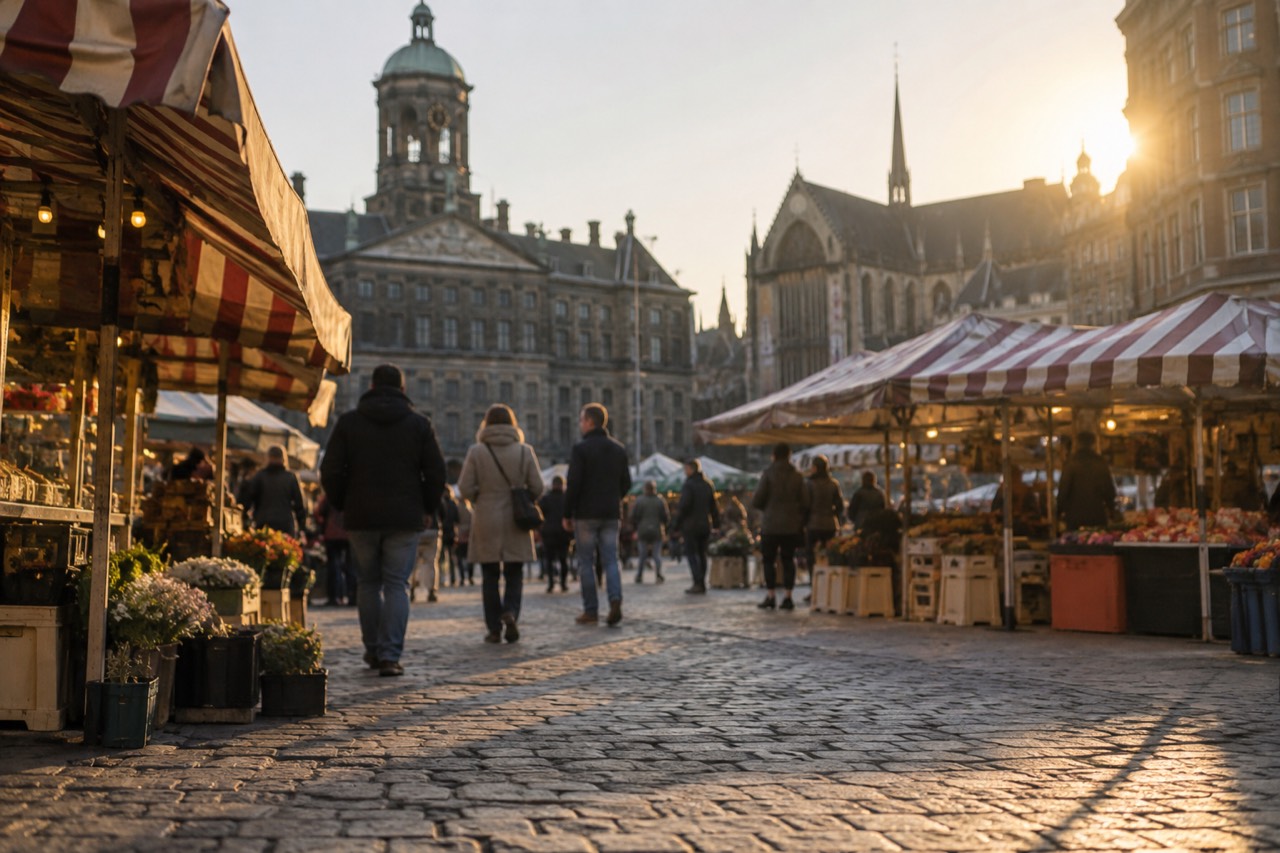
The most famous market in Amsterdam is the Albert Cuyp Market, the sprawling street market that runs through the heart of De Pijp. It is the largest everyday street market in the Netherlands, a title it has held for generations, and it is the one locals and guidebooks name first when the subject of markets comes up. Stalls line the full length of the street, selling everything from fresh herring and warm stroopwafels to clothes, cheese and flowers.
That fame is earned rather than inherited. The market has operated on the same spot since the early twentieth century, and it grew with the neighbourhood around it rather than being built for tourists. De Pijp was the working-class district where Amsterdammers moved when the canal ring filled up, and the market served them long before the first visitor arrived with a camera. That history still shows in the mix of stalls. You will find bins of discount socks standing two pitches away from a cheese farmer cutting wedges to order, and nobody involved sees any contradiction.
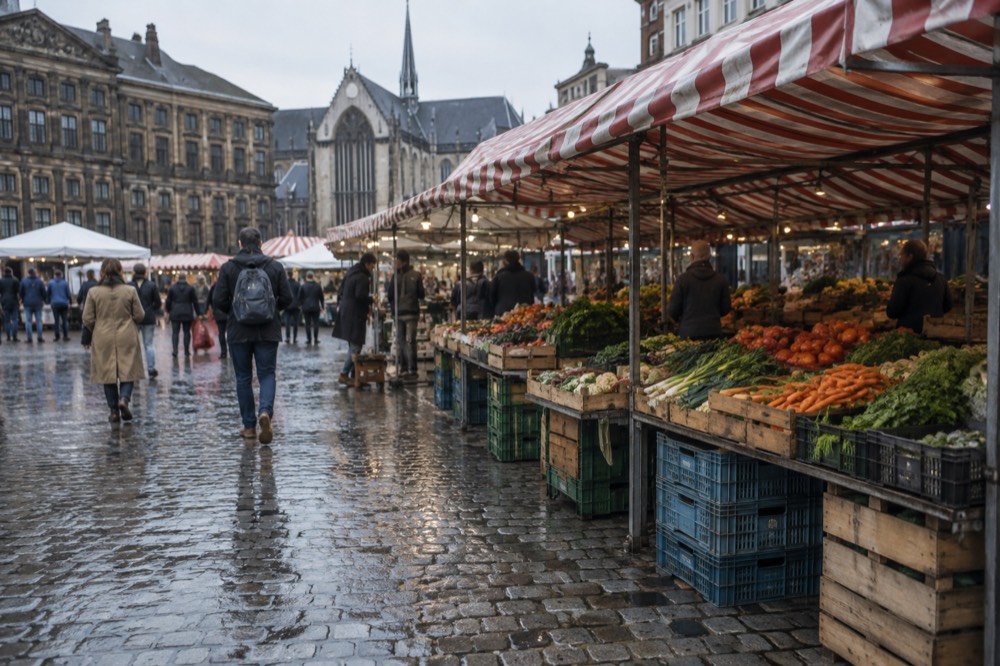
The scale is part of the appeal. Walking the market from end to end takes a good half hour at browsing pace, longer if you stop to eat, and the street stays busy from morning to early afternoon. Vendors shout their prices the way market vendors have always shouted them, cyclists thread between the stalls and the shoppers, and the smell of fresh syrup waffles drifts over the whole scene. It is loud, unpolished and completely itself, which is precisely why it has become the reference point for every other market conversation in the city.
The market also anchors the neighbourhood. De Pijp is now one of the most popular areas of Amsterdam for eating, drinking and staying, and many visitors first arrive through the market before wandering off toward the Sarphatipark or the Heineken Experience. If you are planning a wider trip, our De Pijp neighbourhood guide covers the streets around the stalls, and the site's Albert Cuyp Market page goes deeper on the market itself.
There is a second answer worth knowing, though, because Amsterdam has a second market with an equally strong claim on the word famous. The Bloemenmarkt, the floating flower market on the Singel, is the one that appears on more postcards and Instagram feeds than anything Albert Cuyp sells. Its stalls sit on houseboats moored along the canal, a leftover from the days when flowers arrived by water, and in spring it turns into a wall of tulips. The difference is simple: Albert Cuyp is the market Amsterdammers actually use, the Bloemenmarkt is the market visitors photograph. Both belong on a good itinerary, and the Bloemenmarkt guide explains the tulip bulb rules for taking flowers home.
If a market morning is going to share a day with the big museums, it helps to settle the ticket question early. The three most-booked ways to spend an afternoon after the stalls close:
Why Does Everyone Name Albert Cuyp First?
Albert Cuyp tops every list because it combines size, history and daily life in a way no other Amsterdam market manages. It trades six days a week, it sells food you actually want to eat rather than souvenirs you regret buying, and it sits in a neighbourhood that has become one of the city's favourite places to eat and stay. The fame is practical: it is the market that fits into a normal day.
Start with the food, because that is what most people remember. The market is the canonical place to try the street versions of Dutch classics: raw herring with onions and pickles, served from a refrigerated stall; hot stroopwafels pressed fresh while you watch, with molten caramel inside; poffertjes, the small puffed pancakes dusted with powdered sugar; and thick fries with mayonnaise from the stalls that have fried them for decades. The Dutch foods to try guide covers the full list, but the market is where most of those foods are cheapest and most fun to eat standing up.
Then there is the cheese. Several stalls sell Dutch cheese by weight, cut from the wheel, and most offer samples before you commit. Gouda and Edam dominate, aged to different depths, and the vendors will vacuum-seal a wedge for the flight home. The market is also a genuine shopping street for locals, which keeps prices honest on bread, fruit and fish in a way the tourist-oriented stalls elsewhere cannot match.
The neighbourhood multiplies the visit. Step off the market street and you are in one of the densest concentrations of cafés and restaurants in the city, from old brown cafés to a food hall that gathers two dozen vendors under one roof. The Foodhallen guide covers that one, though it sits in Oud-West rather than De Pijp, and the Amsterdam markets guide places Albert Cuyp among the others worth a morning.
A market morning in De Pijp also pairs naturally with the two big attractions within walking distance. The Heineken Experience, housed in the brewer's original brewery, is a few minutes from the stalls; its ticket is rated 4.6 across 39,581 reviews and starts at $23. And the Rijksmuseum sits at the top of the neighbourhood, where the museum's own ticket page lists adult entry at €25, free for ages 18 and under, with a timed start slot to book in advance.
The Van Gogh Museum is the pairing most visitors ask about, and it deserves a warning: tickets sell out and every visitor, without exception, must pre-book a timed entry. The ticket is rated 4.7 across 57,096 reviews and starts at $31.
What Should You Actually Eat at the Market?
Eat the street classics in the order your stomach allows: a warm stroopwafel first, because it is best eaten within a minute of pressing; raw herring if you want the full Dutch experience; poffertjes as the sit-down treat; and cheese samples as you walk. Everything is sold by weight or by the piece, so a market lunch can cost less than a café sandwich.
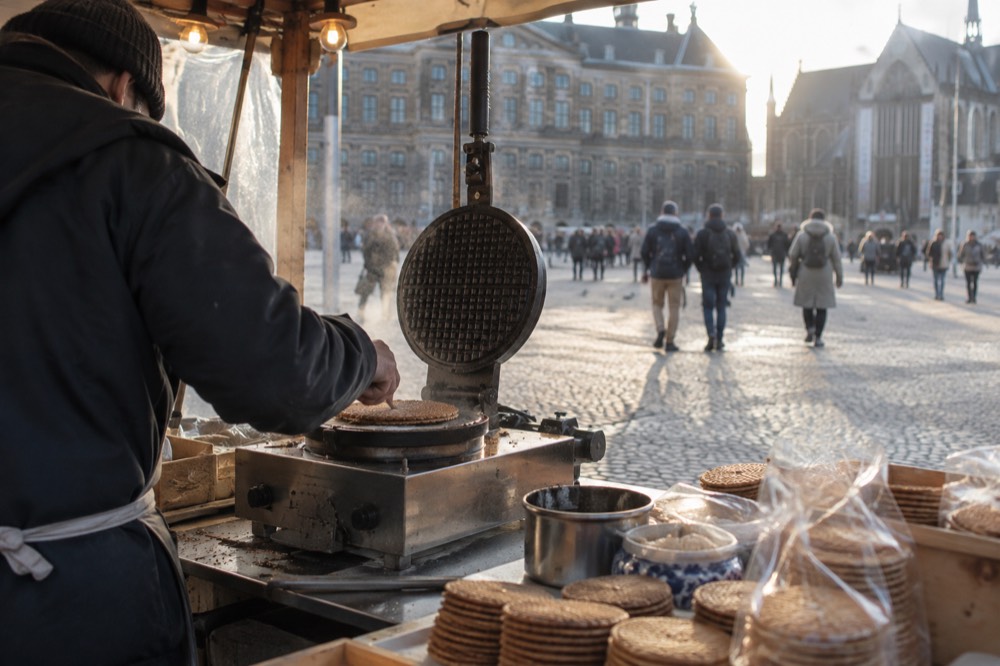
The stroopwafel is the one non-negotiable. The stall presses the thin waffle halves fresh, slices them open and fills them with caramel while you wait, and hands it over wrapped in paper, too hot to hold comfortably for the first thirty seconds. A packaged stroopwafel from a supermarket is a different product entirely, and the difference is the whole point of buying one at a market stall. Everything else covered here is indexed on Things to Do in Amsterdam.
Herring divides visitors but defines the market. The traditional way to eat it is by the tail, held overhead, with chopped onion, though most stalls will serve it chopped in a cardboard tray with a toothpick. The fish is cured rather than truly raw, salted and frozen to the standard the Netherlands has used for centuries, and the season's first catch is treated as a small national event every June.
Here is how the classic market foods compare:
| Food | What It Is | How to Eat It |
|---|---|---|
| Stroopwafel | Thin waffle halves with caramel syrup pressed between | Eat warm, within minutes of buying |
| Haring | Cured herring with onion and pickles | By the tail, or chopped in a tray |
| Poffertjes | Small puffed pancakes with butter and powdered sugar | Seated at a stall table, off the paper plate |
| Frites | Thick-cut fries with mayonnaise or satay sauce | Walking, from a paper cone |
| Boerenkaas | Farmhouse cheese sold by weight, samples offered | Taste first, buy a wedge to take home |
The coffee question answers itself: the market is surrounded by cafés, and the Dutch coffee culture means you are never more than a few doors from a good espresso. The Amsterdam brown cafés guide explains the difference between a brown café and a regular bar, and several of the oldest sit within a short walk of the stalls.
Which Other Markets Deserve Your Time?
Four other markets matter: the Bloemenmarkt for flowers and photographs, the Dappermarkt in Oost for a market with almost no tourists, the Noordermarkt in the Jordaan for organic food and the antiques around it on Mondays, and Waterlooplein for second-hand and vintage. Each serves a different day of the week and a different mood, and none of them competes with Albert Cuyp on scale.
The Bloemenmarkt is the most famous of the four, and the only one that regularly gets mistaken for the city's number one market. Its stalls sit on floating pontoons along the Singel, the last survivor of a city where nurserymen once sailed their flowers in from the fields. Tulips dominate in spring, and the stallholders know the export rules: bulbs sold to visitors carry a certification that allows them through customs, which the tulip bulbs guide covers in detail.
The Dappermarkt is the insiders' answer. It sits behind the zoo in Amsterdam Oost, an area covered in the Amsterdam Oost and the Plantage guide, and it sells to the people who live around it: Surinamese, Turkish and Dutch stalls side by side, with prices to match a local budget. You go there to eat lunch, not to shop for souvenirs.
The Noordermarkt wraps around a small square in the Jordaan, with an organic farmers' market on Saturdays and an antiques and books market on Mondays. The neighbourhood around it, covered in the Jordaan guide, is the prettiest walk of any market trip in the city.
Here is how the five big names stack up:
| Market | Neighbourhood | Best For |
|---|---|---|
| Albert Cuyp Market | De Pijp | Street food, cheese, the full market atmosphere |
| Bloemenmarkt | Centrum, on the Singel | Tulips, bulbs, photographs |
| Dappermarkt | Amsterdam Oost | Local prices, international food |
| Noordermarkt | Jordaan | Organic produce, antiques, a beautiful square |
| Waterlooplein | Centrum, near the Jewish Quarter | Second-hand clothes, vintage, browsing |
Waterlooplein deserves its line too. It began as a flea market driven by necessity and became the city's second-hand institution, and it sits close enough to the Portuguese Synagogue and the Jewish Cultural Quarter to combine the two in a morning.
How Do You Get There and When Should You Go?
Take tram 16, 24 or a parallel route through De Pijp and hop off at the Albert Cuypstraat stops, or walk from the Rijksmuseum in about fifteen minutes. Go in the morning, ideally on a weekday, because the market is at its loudest and fullest before noon and the food stalls start selling out by early afternoon. Check the market's own page for current trading days before you set out.
The transport is genuinely simple. Amsterdam's tram network funnels straight through De Pijp, and the market street sits a few blocks from the Weteringschans and the museum quarter. A single GVB ticket costs €3.40 and covers an hour of travel, while a 24-hour day card costs €10.00, per the operator's own fare page, which is worth reading if a market day is part of a bigger hopping-around plan: GVB ticket prices. Contactless payment works on every tram, bus and metro, so most visitors never need a ticket machine at all.
The morning rule matters more than the day rule. Stalls open early and the rhythm of the market is front-loaded: the bread, the fish and the hot food are all at their best before the crowds arrive, and by early afternoon vendors start packing down. Weekend mornings are the busiest and the most atmospheric, but they are also the most crowded, so the trade-off is between energy and elbow room.
If your market day runs into the evening, the canal side of the city takes over. A one-hour cruise on a classic saloon boat, with an optional Dutch cheese and drinks upgrade, is rated 4.8 across 33,435 reviews and starts at $19.56, and the evening departures show the centre at its best after the day crowds thin out.
Can You Combine a Market Morning With the Big Sights?
Yes, and De Pijp is one of the best places in the city to do it from. The Rijksmuseum, the Van Gogh Museum and the Heineken Experience all sit within a short walk of the Albert Cuyp Market, so a single morning can cover herring and herring-adjacent culture before lunch, with a museum or a brewery in the afternoon. The only planning that matters is booking museum times in advance.
The classic combination is market, then museum. Walk the stalls, eat your stroopwafel, and drift north toward the museum quarter; the Rijksmuseum's own site lists daily opening from 9am to 5pm, adult entry at €25, free entry for ages 18 and under, and a required timed start slot: Rijksmuseum opening hours and prices. The Van Gogh Museum, a few minutes further, is stricter still: every visitor needs a pre-booked timed ticket, and the museum's own pages say plainly that tickets can sell out.
The Heineken Experience makes the loosest third leg of the day because it runs on timed entry throughout the afternoon, and the visit is short enough to fit between a late lunch and dinner. The Heineken Experience guide explains what the ticket includes and what it does not.
One practical note on passes: the I amsterdam City Card includes free entry to more than 70 museums and attractions, unlimited GVB transport and one canal cruise, but the Van Gogh Museum and the Anne Frank House are both excluded, per the card's own FAQ: how to use the City Card. The City Card worth-it guide runs the maths for a market-and-museums itinerary.
If the Van Gogh Museum is the one thing you refuse to miss on a market day, it is worth locking the timed ticket before you leave home, because the museum's own pages state that all visitors must pre-book and that slots sell out.
However you build the day, the market is the right place to start it. Few cities hand you a scene this alive before ten in the morning, and no other Amsterdam market puts food, neighbourhood and big-name sights within the same fifteen-minute walk. That is the answer to the question, and it has been the answer for a hundred years: the most famous market in Amsterdam is Albert Cuyp, and it earns the title every trading day.
Common Questions About Amsterdam Markets
What Is The Most Famous Market In Amsterdam?
The Albert Cuyp Market in De Pijp. It is the largest everyday street market in the Netherlands, it trades most days of the week, and it is the market locals actually shop at. The Bloemenmarkt on the Singel is the most photographed market, but Albert Cuyp is the most famous.
Is the Bloemenmarkt the same as Albert Cuyp Market?
No. The Bloemenmarkt is the floating flower market on the Singel in the centre, famous for tulips and bulbs. Albert Cuyp is the street market in De Pijp, famous for food and scale. They are about twenty minutes apart on foot or a short tram ride.
What food should you try at Albert Cuyp Market?
A warm stroopwafel pressed fresh at the stall, raw herring with onion, poffertjes with powdered sugar, thick fries with mayonnaise, and cheese samples from the stalls selling by weight. Everything is sold by the piece or by weight, so it works as a walking lunch.
When is the best time of day to visit an Amsterdam market?
Before noon. The stalls are at their fullest, the hot food is freshest and the crowds are thinner on weekday mornings. By early afternoon vendors begin packing down, so a late visit means a half-empty street.
Can you buy tulip bulbs at the market and take them home?
Yes, at the Bloemenmarkt, provided you buy bulbs with the certification that allows export through customs, which the flower stalls sell specifically for visitors. Check your home country's import rules before you fly, since requirements differ by destination.
How do you get to Albert Cuyp Market by public transport?
Several tram routes run through De Pijp with stops along or near the market street, and the walk from the Rijksmuseum takes about fifteen minutes. A single GVB ticket costs €3.40 for an hour of travel, and contactless bank cards work directly on the trams.