Amsterdam Centraal Station: What to Know Before You Arrive
Amsterdam Centraal is the first thing most visitors see of the city and the last thing they see when they leave. This guide covers how the station works, what it costs to travel from it, and what is worth doing the moment you step outside.
Short answer
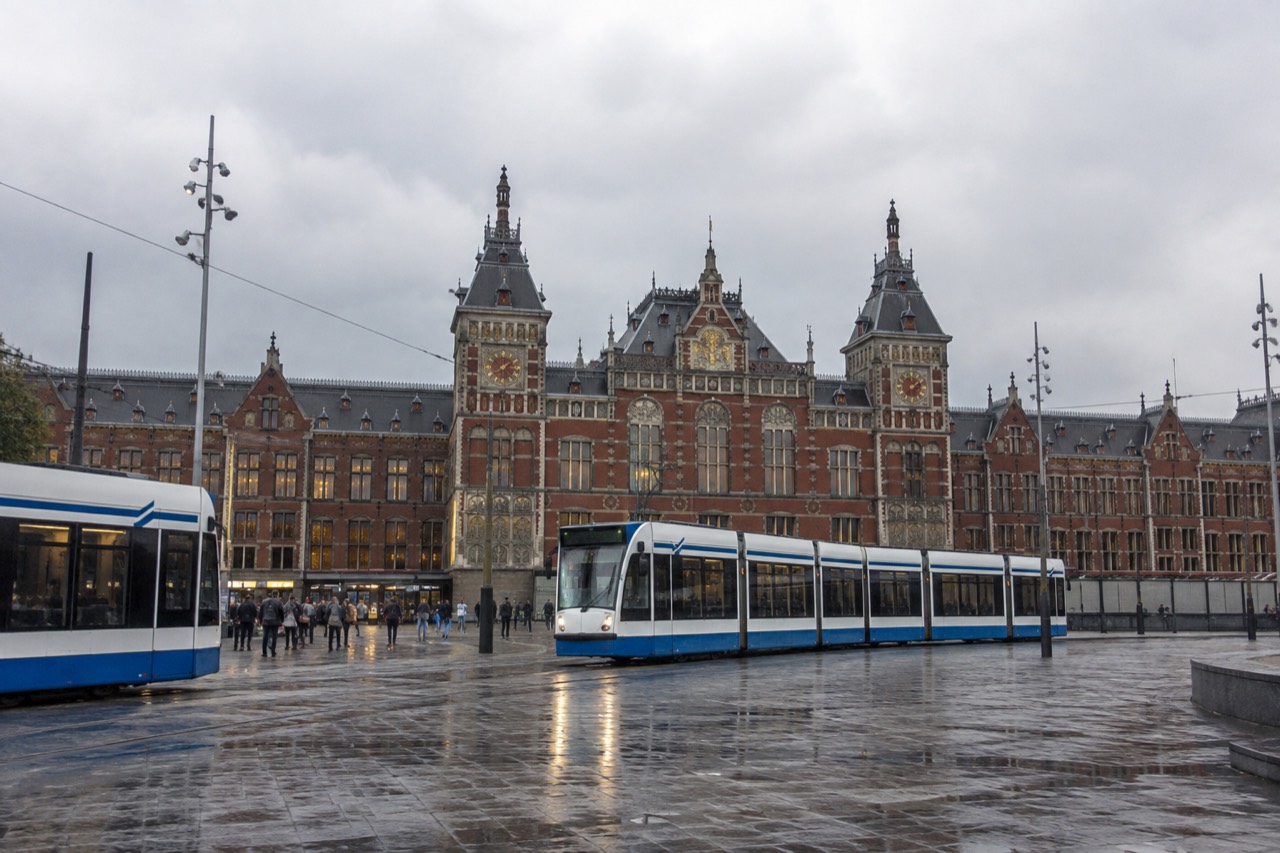
Amsterdam Centraal is the city's main rail and tram hub, sitting on the edge of the canal ring directly opposite Dam Square across the water. A NS train from Schiphol costs from €5.50 and takes just over 17 minutes. GVB day tickets for trams, buses and metro start at €10.00, and canal cruises depart from the waterfront outside.
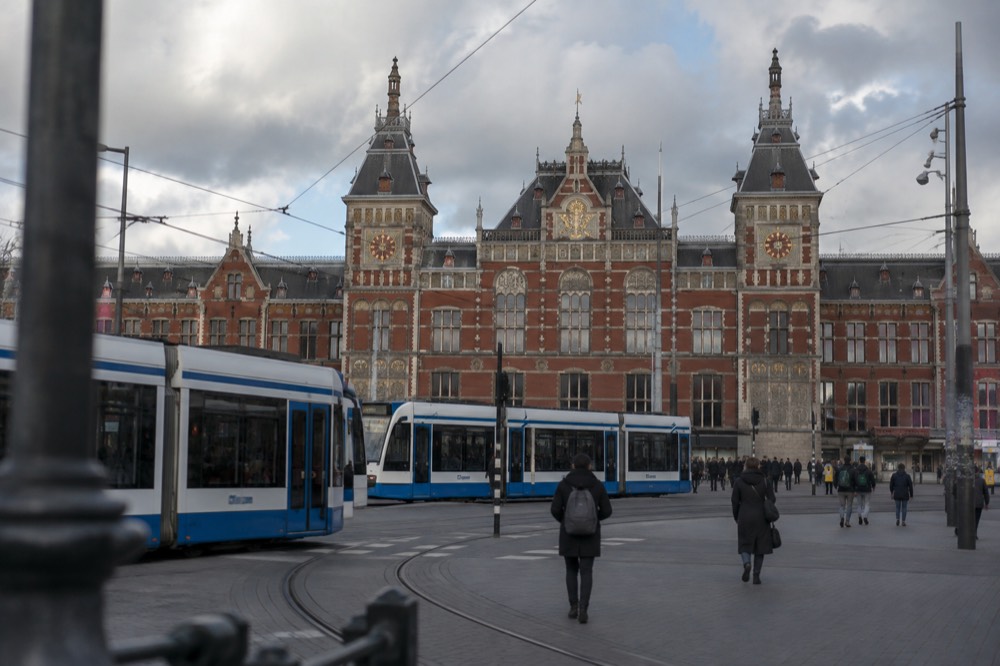
Amsterdam Centraal Station handles more daily traffic than almost anywhere else in the Netherlands, and for most visitors it is the front door to the city. The building itself is a landmark: a neo-Gothic brick palace by the water, with a station square in front that functions as the busiest tram interchange in Amsterdam. Behind it, the IJ waterfront faces north; in front of it, the whole canal ring unfolds within a few minutes on foot.
This guide walks through what the station is, how to use it, and what to do the moment you step outside, including the transport tickets worth buying and the cruises that depart from directly outside the main entrance. It is one of the essential stops on any itinerary built around Things to Do in Amsterdam, because nearly every one of those things begins or ends here.
What Is Amsterdam Centraal Station?
Amsterdam Centraal is the city's principal railway station and public transport interchange, opened in the late nineteenth century on an artificial island in the IJ. It connects national and international trains, the metro, trams, buses and the free ferry services to Amsterdam Noord. Almost every visitor passes through it at least once, and the streets leading south from its front steps reach the canal ring, Dam Square and the Jordaan within a short walk.
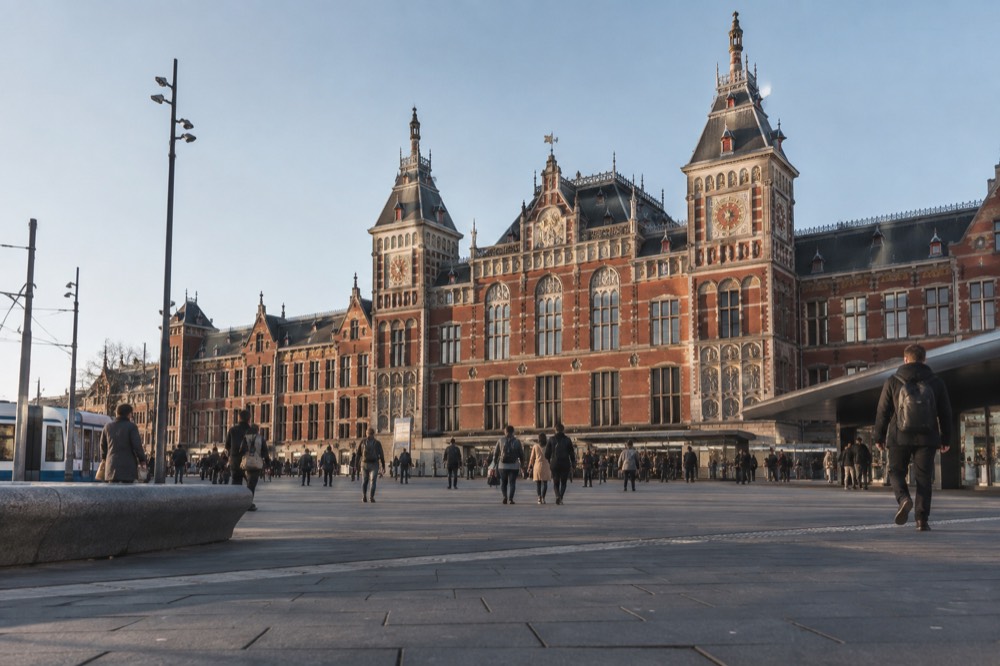
The station sits at the physical seam between old Amsterdam and new Amsterdam. South of the tracks is the historic centre, the canal belt and the dense web of trams. North of the tracks, across the IJ, lies Amsterdam Noord, the NDSM wharf and a string of neighbourhoods that feel like a different city altogether. The station is the hinge between the two.
Architecturally it is one of the most photographed buildings in the country. The red brick facade, twin towers and arched entrance face the station square, and the whole structure was deliberately built to face the city rather than the water, a choice that still shapes how visitors experience arriving in Amsterdam. The rear of the station, facing the IJ, has been rebuilt in recent years with a second entrance and a modern passenger tunnel that connects the north side of the city directly to the platforms without forcing everyone through the historic front hall.
For planning purposes, treat the station as two buildings with one shared spine. The front side, Stationsplein, is where the trams, the main taxi rank and most of the bus stops are. The back side, IJzijde, is where the ferries leave, where the cruise terminals are within reach, and where the metro entrance sits. The passenger tunnel underneath the platforms links the two sides, so you never need to cross the tracks at street level.
How to Get From Schiphol Airport to Centraal
The NS train from Schiphol to Amsterdam Centraal costs from €5.50 for a single second-class ticket and takes just over 17 minutes, making it far faster than any road option. Trains run several times an hour through the day and night. Buses and taxis exist, but the train wins on both time and price for the overwhelming majority of visitors.
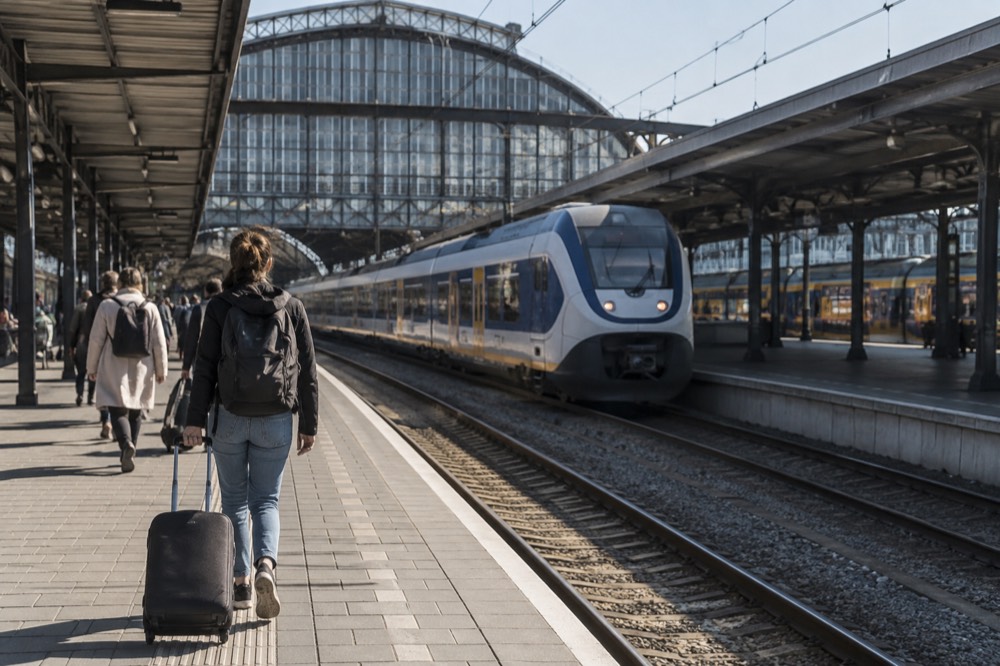
The train is the default and there is rarely a good reason to choose anything else. Schiphol has its own station directly under the airport, and the line into Centraal is one of the busiest in the country, which means frequent departures and a journey that costs less than any taxi could plausibly charge. You can buy an e-ticket online in advance or tap in with a contactless bank card, which works on NS trains through the national OVpay system.
If you are flying in and connecting onward to another Dutch city, Centraal is also the interchange for intercity services to Rotterdam, The Hague, Utrecht and beyond. The platforms are signposted in English throughout, and the walk from the airport platform to the main exit at Stationsplein takes a few minutes at a normal pace.
The bus alternative, the Amsterdam Airport Express, costs from €6.50 for a single and serves the city centre, but it takes substantially longer than the train and is only worth considering if your hotel sits directly on its route. Taxis from Schiphol run on the meter; the airport publishes no fixed fare to the centre, so there is no honest single number to quote, only the meter reading at the end of the trip.
Once you are through the barriers and out onto Stationsplein, the city is genuinely at your feet. The first decision most visitors face is how to move around, and the answer depends on how long you are staying and how much of Amsterdam you plan to cover on foot.
Trams, Metro and Ferries: Tickets From the Station
A GVB single ticket valid for one hour costs €3.40, while a 24-hour day ticket costs €10.00 for adults and €5.00 for children, and multi-day tickets scale up from there. Contactless payment by bank card, the OVpay system, also works on every GVB tram, bus, metro and ferry, with a base fare of €1.16 plus €0.217 per kilometre and a daily cap on the GVB network.
The GVB day ticket is the classic visitor choice, and it is worth doing the arithmetic before you buy. If you take three or more tram rides in a day, the day ticket already pays for itself against single fares. If you are staying two or more days and plan to move around a lot, the multi-day tickets in the table below are cheaper per day than buying a new 24-hour ticket each morning.
| Ticket | Price |
|---|---|
| GVB single, 1 hour | €3.40 |
| GVB 24-hour day ticket, adult | €10.00 |
| GVB 24-hour day ticket, child | €5.00 |
| GVB 48 hours | €16.00 |
| GVB 72 hours | €21.50 |
| GVB 96 hours | €27.50 |
| GVB 120 hours | €34.00 |
| Amsterdam Travel Ticket, 1 day, includes airport train | €20.00 |
Prices come from GVB's own fares page, which is the authoritative source for anything transport-related in the city: GVB ticket prices. The Amsterdam Travel Ticket bundles the airport train with GVB transport, which makes sense on arrival and departure days when you would otherwise buy both separately.
The ferries across the IJ to Amsterdam Noord are free, and no ticket of any kind is needed. They leave from the jetty directly behind the station, run every few minutes, and are the single best free ride in the city: the view back across the water toward the station facade and the old centre is worth the crossing on its own.
For a deeper dive into the whole system, the OVpay tap-in-tap-out mechanics and the mistakes first-timers make, read the site's guide to getting around Amsterdam by tram and metro, and for the airport leg specifically, the guide to getting from Schiphol to central Amsterdam covers every option in detail.
Canal Cruises Departing From Outside the Station
Several canal cruise operators run departures from the waterfront directly in front of Centraal, and the classic one-hour cruise is the most popular single activity in the city. Verified operator pricing starts at about €15.50 for a basic one-hour cruise with an audio guide, while the tours on this site's roster run from $15 upward depending on boat, duration and what is included.
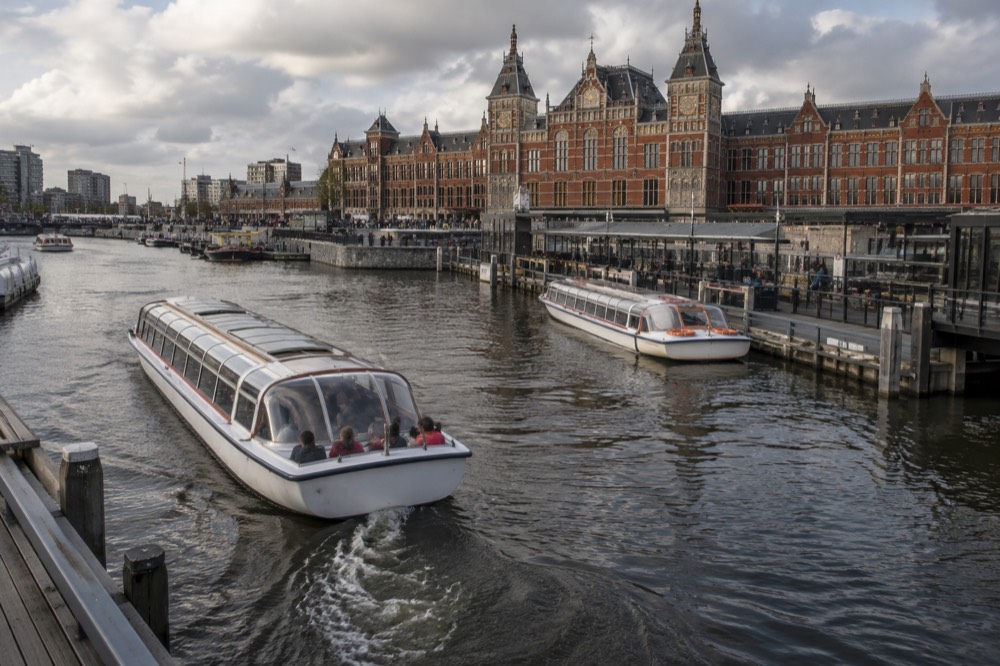
The station's position makes it the easiest cruise departure point in Amsterdam. You step out of the main entrance, cross the tram tracks, and you are at the water. Cruises from here enter the canal ring almost immediately, which means the scenic part of the ride starts within the first minute rather than after a stretch of open harbour.
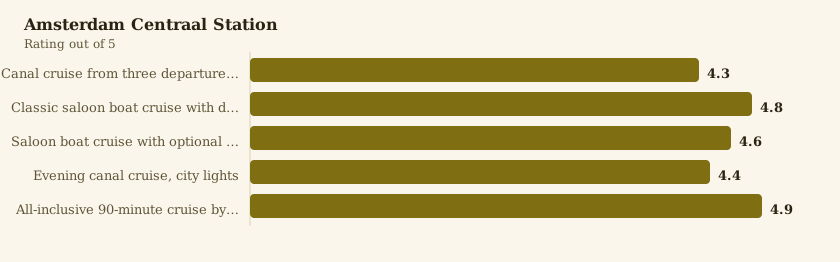
The roster options below give a sense of the spread: the basic one-hour cruise with an audio guide in nineteen languages is the budget anchor, while saloon boats, drinks-inclusive cruises and small-group sloops move up the price ladder. The classic saloon boat experience, on restored historic vessels, sits in the middle and is the one most worth upgrading to if the budget allows.
| Cruise | Duration | From | Rating |
|---|---|---|---|
| Canal cruise from three departure points | 1 hour | $15 | 4.3 |
| Classic saloon boat cruise with drinks and cheese | 1 hour | $19.56 | 4.8 |
| Saloon boat cruise with optional cheese and wine | 1 hour | $16 | 4.6 |
| Evening canal cruise, city lights | 1 hour 30 minutes | $21 | 4.4 |
| All-inclusive 90-minute cruise by Captain Jack | 1 hour 30 minutes | $29.65 | 4.9 |
One practical note: the classic cruise with departures near the Anne Frank House, the Rijksmuseum and Central Station is the most flexible option if you have not decided when in the day you want to sail, because it runs from three docks rather than one. The operator's live listing has the current departure times.
Evening departures deserve a special mention. The canal ring is a UNESCO World Heritage site, and the lighting on the bridges and gables after dark is a large part of why. If your day is full, a cruise from the station at sunset is the most efficient way to see the canal ring lit up without giving up an afternoon to it.
What to See Within a Short Walk of the Station
Dam Square, the Red Light District, the Jordaan, the Nine Streets and the Oude Kerk all sit within roughly ten to fifteen minutes on foot from the station's front steps, and the walk itself passes through the oldest streets in the city. Centraal is not a station you leave and travel from; it is a station you leave and immediately arrive somewhere interesting.
The most direct route south from Stationsplein runs down the Damrak, the broad straight street that was once a canal and is now the city's processional spine, lined with the gabled facades that appear on every Amsterdam postcard. It ends at Dam Square, the national ceremonial centre, with the Royal Palace on its western side. The site's guide to Dam Square and what surrounds it covers that end of the walk in detail.
West of the Damrak lies the Jordaan, once the workers' quarter and now the neighbourhood of hofjes, independent shops and brown cafes. East of it lies De Wallen, the red-light district, which is also the oldest part of Amsterdam, containing the Oude Kerk and a dense cluster of medieval streets. Both are covered in dedicated guides on this site, and both begin within a five-minute walk of the station's main exit.
| Place | Direction from Centraal | Character |
|---|---|---|
| Dam Square and the Royal Palace | South, straight down the Damrak | Ceremonial heart of the city |
| Jordaan | Southwest | Cafes, hofjes, galleries |
| De Wallen and the Oude Kerk | Southeast | Oldest quarter, red-light district |
| Nieuwendijk and Kalverstraat | South, parallel shopping streets | High-street shopping |
| Amsterdam Noord and NDSM | North, free ferry behind the station | Street art, cafes, waterfront views |
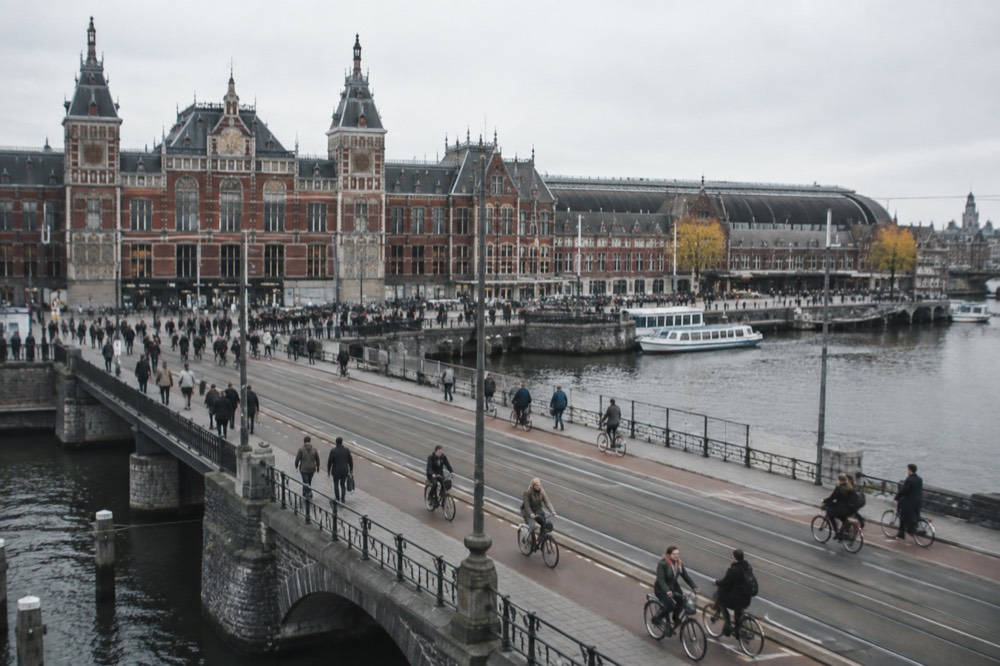
For the classic overview of the canal belt itself, the guide to the UNESCO canal ring, the Grachtengordel explains how the three great canals were dug and how to walk them. And if your first stop is the museum district instead, the Van Gogh Museum is a direct tram ride from the station; the tour below covers the ticket side of that visit.
The Heineken Experience, in the original brewery a short tram ride south, is the other heavyweight attraction that visitors consistently pair with a first day in the city. It sits inside the old brewery buildings and mixes brewing history with tastings; the tour below is the standard entry ticket with a rooftop option.
Where to Eat Near the Station
The streets immediately around Centraal mix tourist-oriented fast food with a handful of genuinely good options, and the quality rises sharply two or three blocks south of Stationsplein. The rule of thumb is simple: the price of a meal drops and the quality climbs the further you walk from the front steps, and the Jordaan and the Nine Streets repay the extra ten minutes.
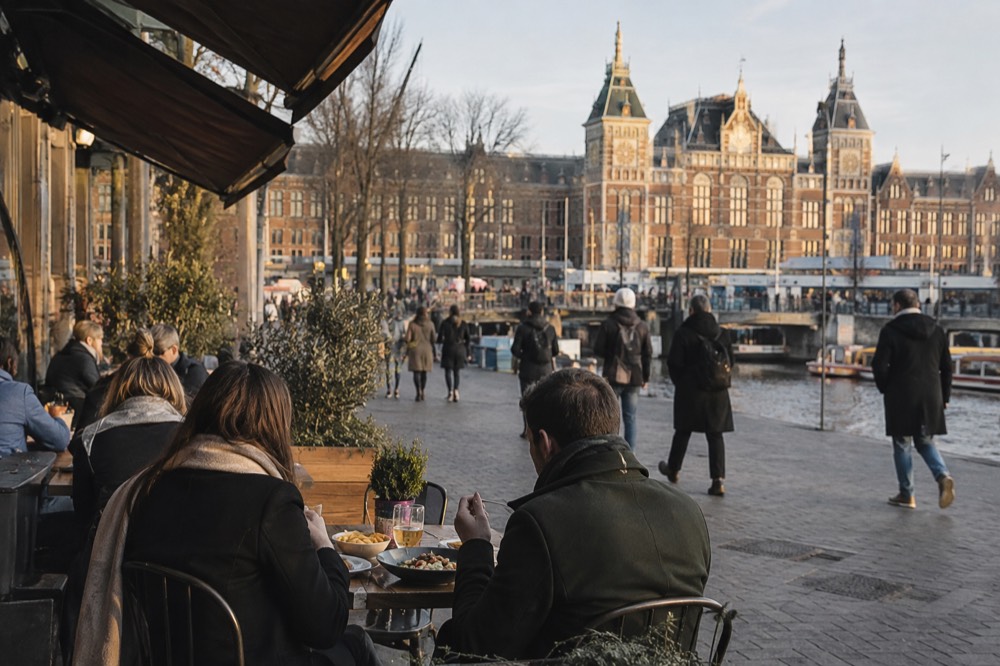
The Damrak itself is where the tourist traps concentrate, and the site has a dedicated guide to spotting them. One street over, on the Nieuwendijk and in the side streets off the Dam, the food gets more local and more honest. Stroopwafels from a proper bakery, herring from a stall, and the brown cafes of the Jordaan are all within a quarter hour of the platforms, and the site's guide to what to eat in Amsterdam maps the classics worth seeking out.
If you are arriving hungry with luggage, the station itself has a reasonable spread of coffee, sandwiches and grab-and-go options in both the front hall and the IJzijde passage, which is a better plan than the first pancake house you see on the way out. Eat light at the station, then walk.
Practical Tips for Arriving at Centraal
Arrive with a plan for three things before you reach the barriers: how you will pay for transport, whether your first museum needs a pre-booked timed ticket, and which side of the station you actually need. The front, Stationsplein, serves the trams and the old centre; the back, IJzijde, serves the ferries and Amsterdam Noord. Choosing the wrong exit costs you a long walk through the passenger tunnel with luggage.
Timed entry is the single biggest trap in Amsterdam planning. The Rijksmuseum, the Van Gogh Museum and NEMO all require a booked start time, and the Anne Frank House sells tickets only through its own official website, released in batches weeks ahead, with no door sales and no reseller of any kind. Nothing sold on this site or anywhere else includes Anne Frank House entry. If the house is on your list, book on the museum's own site the moment your dates are fixed.
The city's official visitor guidance, published by the gemeente at How to Amsterdam, covers the behavioural rules that matter in the centre: no street drinking in the city centre, no photographing people in the windows of De Wallen, and no outdoor cannabis smoking in the centre. Reading it takes five minutes and prevents the most common visitor mistakes.
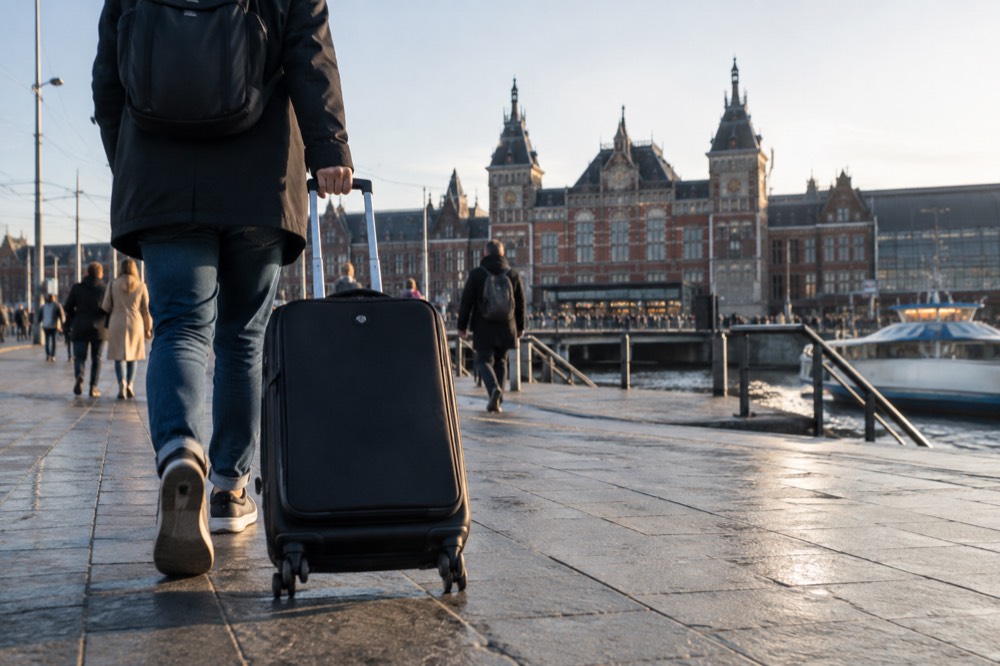
Luggage is the other practical question. The station has left-luggage facilities, and the site's guide to luggage storage and left luggage in Amsterdam covers where to stash bags if your hotel check-in is hours away. Doing this at the station rather than dragging a suitcase across canal-belt cobbles is one of the small decisions that improves an entire day.
Finally, the free ferries. Even with no plans in Amsterdam Noord, the five-minute crossing to the north bank and back is a sightseeing trip that costs nothing, runs constantly, and gives the best available view of the station's riverside facade. It is the answer to the question of what to do with a spare half hour at Centraal, and most visitors never take it.
Common Questions About Amsterdam Centraal Station
Is Amsterdam Centraal Station the same as Amsterdam Central Station?
Yes. The official name uses the Dutch spelling, Centraal, and the station is the city's main hub for national trains, the metro, trams, buses and the free ferries to Amsterdam Noord. English-language signage inside the station uses the Dutch spelling throughout.
How much does the train from Schiphol Airport to Amsterdam Centraal cost?
A single second-class NS ticket costs from €5.50 and the journey takes just over 17 minutes. You can buy an e-ticket in advance or tap a contactless bank card using the national OVpay system. The train is faster and cheaper than any road option.
Can you walk from Amsterdam Centraal to the city centre?
Yes, and it is one of the great arrival walks in Europe. Dam Square is straight down the Damrak from the front entrance, the Jordaan is west of the Damrak, and De Wallen is east of it. Everything in the historic centre is within roughly fifteen minutes on foot.
Are the ferries behind Amsterdam Centraal really free?
Yes. The GVB ferries across the IJ to Amsterdam Noord and the NDSM wharf cost nothing and require no ticket or check-in. They run every few minutes from the jetty behind the station, day and evening, and the crossing gives the best view of the station's waterfront facade.
Where do canal cruises leave from near the station?
Cruise departures run from the waterfront directly in front of the station, a one-minute walk from the main exit. A basic one-hour cruise with an audio guide starts at about €15.50 from the operator's own desk, and the tours on this site's roster run from $15 upward depending on boat and inclusions.
Which exit should I use at Amsterdam Centraal?
Use the front, Stationsplein, for the trams, taxis, the Damrak and the old centre. Use the back, IJzijde, for the free ferries, Amsterdam Noord and the cruise terminals. An underground passenger tunnel connects the two sides, so a wrong exit is fixable, but fixing it with luggage is no fun.