Begijnhof Amsterdam: The Quiet Courtyard Hiding in the Centre
The Begijnhof is Amsterdam's most famous hidden courtyard, a cluster of historic houses around a strip of green that most visitors walk past without ever noticing. This guide covers how the entrance works, what you will actually see inside, the house rules that keep it open, and how to fold it into a day in the centre.
Short answer
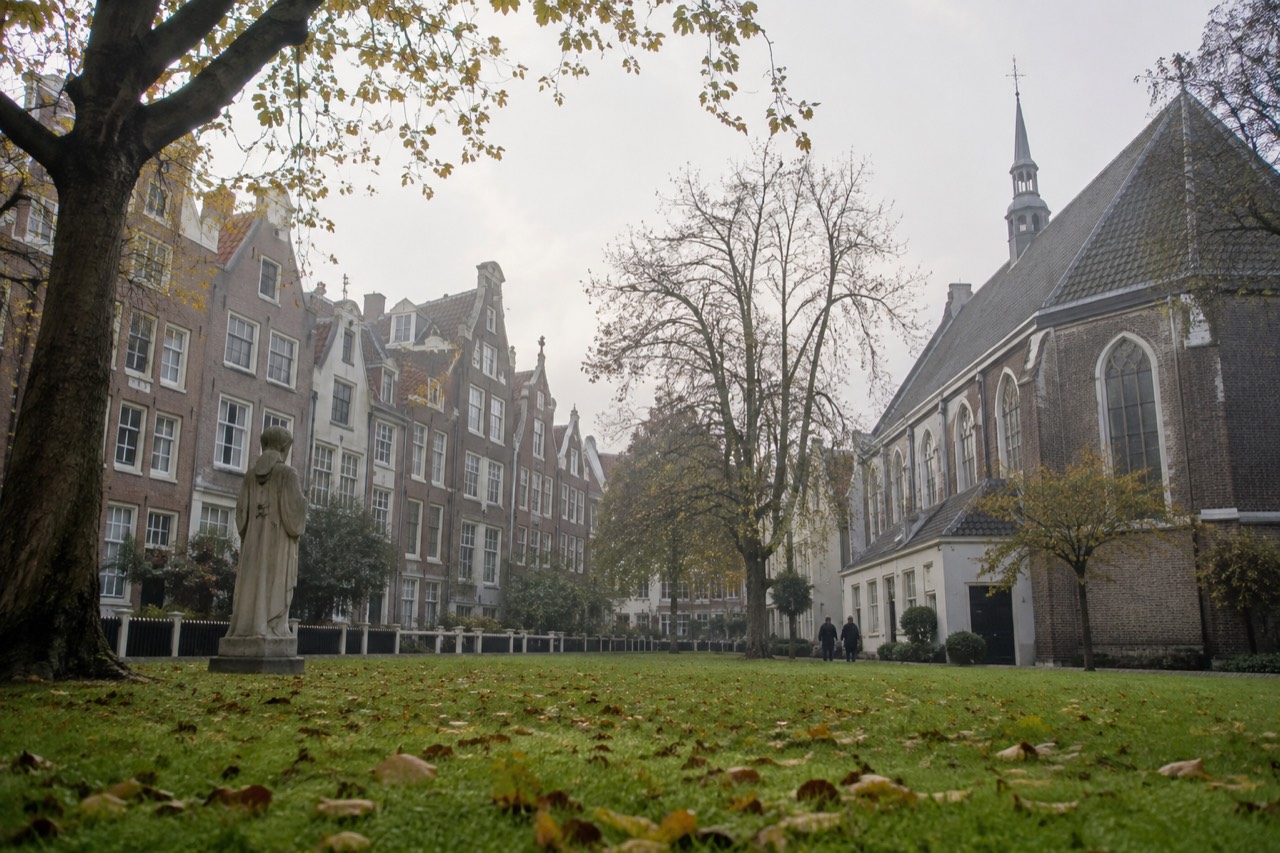
The Begijnhof is an enclosed courtyard of historic houses just off the Spui, reached through an unmarked passageway, and it is one of the calmest corners of the city centre. Expect a small green lawn, medieval houses, two churches, and silence. It costs nothing to walk in, it takes most people under half an hour, and the house rules matter more here than at almost any other sight in the city.
The Spui is one of the busiest squares in Amsterdam's centre. Bookshops, a tram line, a busy café terrace, students cutting through on bikes. And yet a narrow, deliberately discreet passage on one side of it leads to a courtyard where the noise simply stops. That is the Begijnhof, and the contrast between the two is the whole reason people go.
This guide walks through what the Begijnhof actually is, how to find an entrance that the city has chosen not to signpost, what you will see once you are inside, the rules that keep the place open to the public at all, and how to build the rest of a day around it. It also covers the practical questions visitors ask most: how long a visit takes, when the courtyard is at its quietest, and what to do next once you step back out into the noise.
What Is the Begijnhof and Why Does It Matter?
The Begijnhof is one of the oldest enclosed courtyards in the centre of Amsterdam, built as a home for a community of religious women called beguines who lived and prayed here without taking formal monastic vows. Unlike a convent, it was a lay community: the women could own property and could leave when they chose. The courtyard still has residents today, which is why the house rules are strict.
The beguine movement spread across the Low Countries in the medieval period, and Amsterdam's Begijnhof grew into a walled cluster of small houses around a green. The women who lived here were unmarried or widowed, they supported themselves through teaching, nursing and needlework, and their community was neither nuns nor ordinary townsfolk. That in-between status is what makes the site unusual: it was religious in character but legally secular, and it survived the Reformation, which is a rare thing in a city that changed official religion so completely.
The Reformation is the reason the courtyard holds two churches rather than one. When Amsterdam turned officially Protestant, the existing church inside the Begijnhof was handed to the Protestant congregation, and the remaining Catholic beguines built a second, hidden chapel for their own worship. Both buildings still stand facing each other across the lawn, which makes the courtyard a compact lesson in how the city's religious split played out on one small patch of ground.
The last beguine lived here into the twentieth century, and the houses are now occupied by ordinary residents, so the site is not a reconstruction or a theme park. It is a working residential courtyard that happens to be one of the most historically loaded corners of the centre. That dual identity, homes first and attraction second, shapes everything about how you should visit.
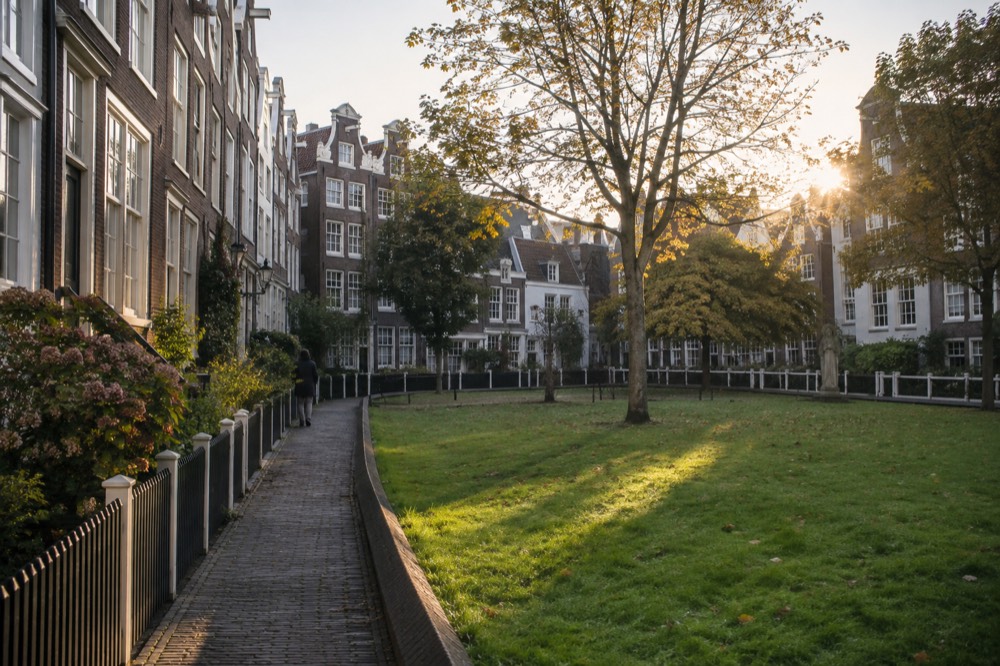
The most photographed house in the courtyard is a dark wooden one, and it is one of the oldest surviving wooden houses in the city. Amsterdam rebuilt in brick after repeated fires made timber construction illegal, so a wooden facade that survived is a genuine rarity, and this one draws photographers all morning. Treat it as a highlight rather than the whole visit: the courtyard's appeal is the enclosure itself, the sudden green and the silence, more than any single building.
| What you are looking at | What it is | Why it matters |
|---|---|---|
| The wooden house | A surviving timber-fronted home, one of the oldest wooden houses left in Amsterdam | Timber facades were banned after the city's great fires, so almost none survive |
| The medieval church | The courtyard's original church, later the Protestant place of worship | It shows how the Reformation reshaped even a closed religious community |
| The hidden chapel | A Catholic chapel built behind the houses after the original church changed hands | Catholic worship continued here in disguise when it was under pressure |
| The lawn and trees | A narrow green strip enclosed on all sides by houses | The calm and the green are the reason most visitors come |
| The houses themselves | Private homes, occupied year-round | Their residents are why the rules exist and why the site stays open |
How Do You Find the Begijnhof?
The main entrance is a plain, narrow arched passage on the Spui, the square in the book district just south of Dam Square, and it is deliberately easy to miss: there is no large sign and no ticket booth. Walk through the passage, past a short corridor, and the courtyard opens in front of you. The detour adds only a few minutes to a centre walk.
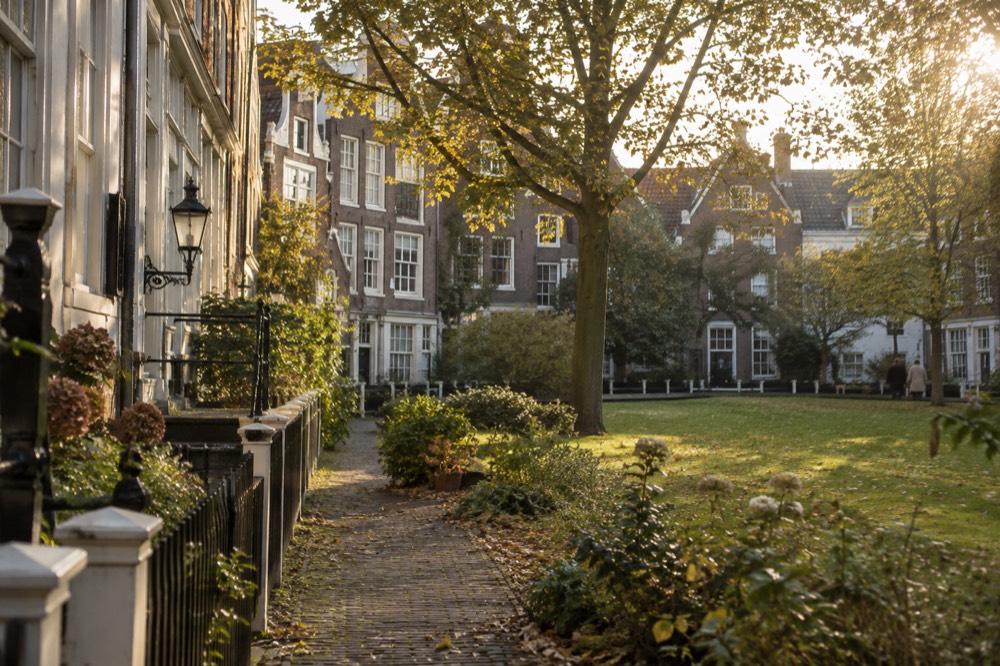
The Spui side is the entrance almost everyone uses, and the square itself is easy to reach. Trams stop within a short walk, the walk from Dam Square takes only a few minutes, and the square is a recognisable landmark in its own right thanks to its bookshops and its weekly book market. If you are finding your way by phone, aim for the Spui rather than searching for the courtyard by name, because the entrance is better known as a Spui address than as a destination with its own frontage.
The corridor matters more than visitors expect. You pass through an arch, along a covered passage, and the city noise drops away before you can see anything. That transition is the design working as intended: begijnhoven were built to be inward-facing communities, walled off from the streets around them, and the modern city has not changed that geometry. The absence of signage is partly respect for the residents and partly just history: the courtyard never had a shopfront to advertise.
Because the entrance is discreet, first-time visitors regularly walk past it. The reliable approach is to circle the Spui slowly and look for a narrow archway with a modest historical marker beside it, then commit to the corridor even when it looks like it might be a private driveway. It is not. It is the public way in, and once through, you are standing in the one part of the centre where the seventeenth century still has residents.
A good habit is to pair the courtyard with a wider walk of the centre. The Begijnhof sits inside the oldest ring of the city, and a route that takes in Dam Square, the Spui and then the courtyard flows naturally into the canal belt. If you are planning that kind of day, our Amsterdam Centrum city centre guide lays out the whole area, and the one day in Amsterdam itinerary slots the Begijnhof into a realistic first-visit schedule.
The courtyard also pairs well with a guided introduction to the city, especially on a first trip when the geography still feels confusing. A structured tour of the centre puts the hidden courtyard in context, and the selection below covers the formats most visitors compare.
What Will You See Inside the Courtyard?
Inside the Begijnhof you will find a narrow rectangle of lawn ringed by tall, narrow houses, a medieval church on one side, a hidden chapel tucked among the buildings, and the wooden house that is one of the last timber facades in Amsterdam. There are no ticket desks, no roped-off rooms and no audio guides: this is a place you walk through slowly, and a visit usually takes fifteen to thirty minutes.
Start with the geometry. The courtyard is small enough that you can see all of it from the entrance, but the details reward a slow circuit. Look up at the house gables, which differ from each other because the houses were built and rebuilt at different times by different families. Look at the height of the windows and the steepness of the stairs inside the doorways: these are genuine Amsterdam homes with the city's famously narrow, vertical floor plans. Nothing here was built to impress tourists, which is precisely why it impresses them.
The wooden house is usually the first thing people photograph, and it deserves the attention. Amsterdam's great fires pushed the city toward brick, and timber facades were eventually banned outright, so the survival of a wooden house in the centre is an accident of history that no amount of planning could reproduce today. The facade is dark, narrow and unmistakably older than everything around it.
The two churches tell the courtyard's most interesting story. The medieval church building became the Protestant church after the Reformation, and the Catholic community that stayed built its own chapel in a way that was hidden from the street. Standing between the two, you can see the entire religious history of the early modern Netherlands compressed into one lawn. Services are still held in the chapel, and it is open to visitors outside service times, though hours vary and it is worth checking before you build an itinerary around going inside.
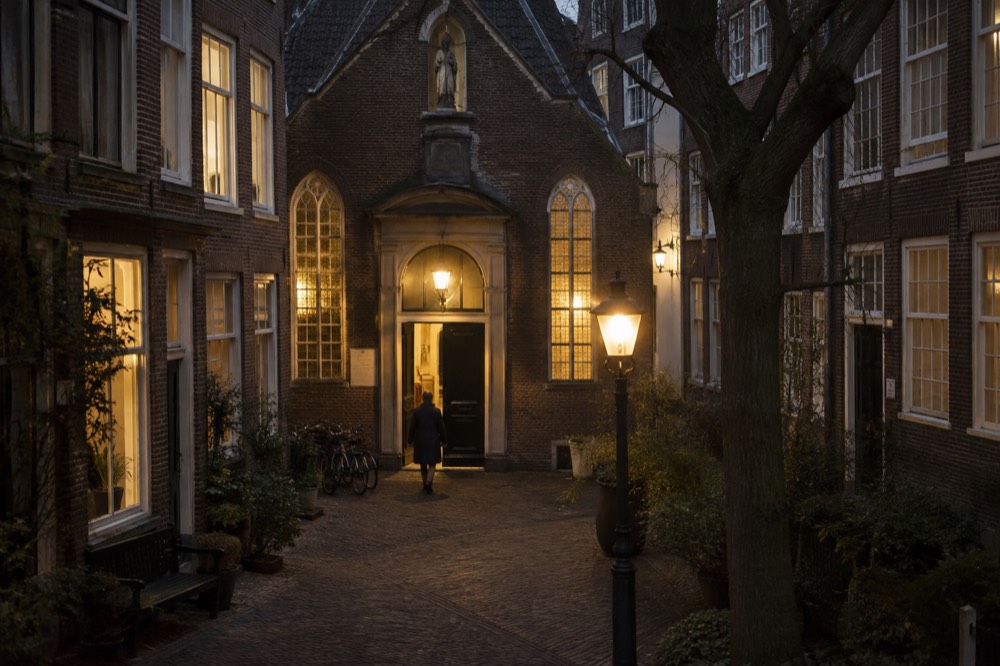
Do not expect interpretation. There are modest markers, not a museum's worth of panels, and the courtyard's residents have a strong interest in keeping the place feeling like a home rather than an exhibit. If you want depth, read up beforehand or visit as part of an organised walking tour of the centre, where a guide can unpack the beguine movement while you stand in it.
Many visitors fold the Begijnhof into a museum day, and that is where a bit of planning pays off. The courtyard is a short tram ride from Museumplein, where the big three sit together, and the Van Gogh Museum is the one that needs the most forward planning because, as the museum itself states, all visitors must pre-book a timed entry ticket, and slots can sell out. The Rijksmuseum is calmer about it but still asks every visitor, including pass holders, to book a start time online, per its own practical information page. Doing the courtyard in the morning and Museumplein in the afternoon is a comfortable shape for a single day.
What Are the Rules Inside the Begijnhof?
The Begijnhof is a private residential courtyard open to the public on the residents' terms, and the rules are short and strict: keep quiet, do not photograph people or their homes, do not sit on the lawn, and treat the space as a shared garden rather than a public square. The city's own visitor guidance asks for exactly this kind of respect in the centre generally. Break the norms and the community has every reason to close the entrance.
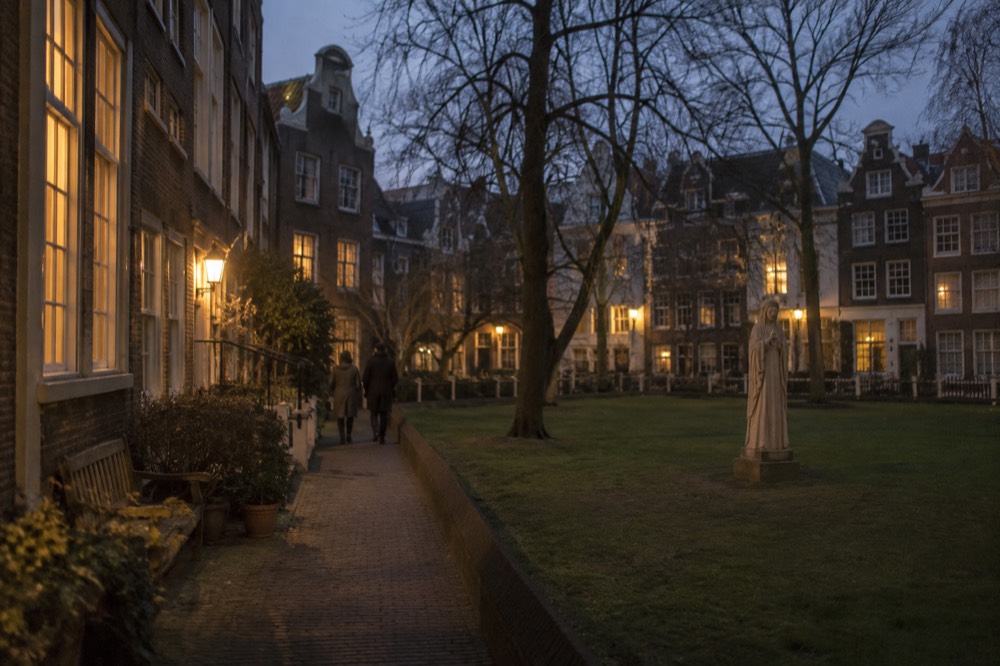
The single most important rule is silence, or something close to it. The houses are occupied, which means the people who live here hear every tour group, every phone call and every photoshoot. Speak at a low register, skip the commentary, and leave the group presentation for the walk back out. This is also why the courtyard is not a good place for a picnic or a rest break: sitting on the lawn is not welcome, and the benches, where they exist, are for the residents first.
Photography is the second flashpoint. Photographing buildings is fine; photographing residents, their windows or their doorways is not. The city's How to Amsterdam campaign asks visitors to be considerate across the centre, and in a residential courtyard that request carries real weight. If someone walks through your frame, wait. If a door is open, do not point a lens at it. The wooden house can be photographed from the path without intruding on anyone, which is part of why it is the courtyard's signature shot.
Third, treat the chapel and church as working religious buildings rather than attractions. If a service is running, you do not walk through it. If a door is closed, it is closed. And the general centre-wide rules apply here too: no street drinking, and the same common sense that governs the rest of the old centre. The city's official guidance for visitors covers the basics, and the courtyard simply asks for a quieter version of them.
If you are building a full day around the courtyard, it helps to know which parts of the centre reward advance booking and which do not. The table below sorts the obvious pairings by what they demand from you in advance.
| Pairing | Planning it needs | Best slot in the day |
|---|---|---|
| Begijnhof on its own | None, just find the Spui passage | Early morning or late afternoon |
| Walking tour of the centre | Book a start time, check the meeting point | Morning, then explore after |
| Museumplein museums | Timed tickets booked online in advance | Afternoon, when the courtyard quiets |
| Canal cruise | Choose a departure point near your route | Sunset or evening |
When Is the Best Time to Visit the Begijnhof?
The best time to visit the Begijnhof is early on a weekday morning, when the courtyard is quietest, the light is soft across the lawn, and you are most likely to have the wooden house view to yourself. Midday brings the most foot traffic, weekends bring the most noise, and late afternoon settles back down as the day-trippers disperse. There is no bad season: the green looks best from spring through autumn.
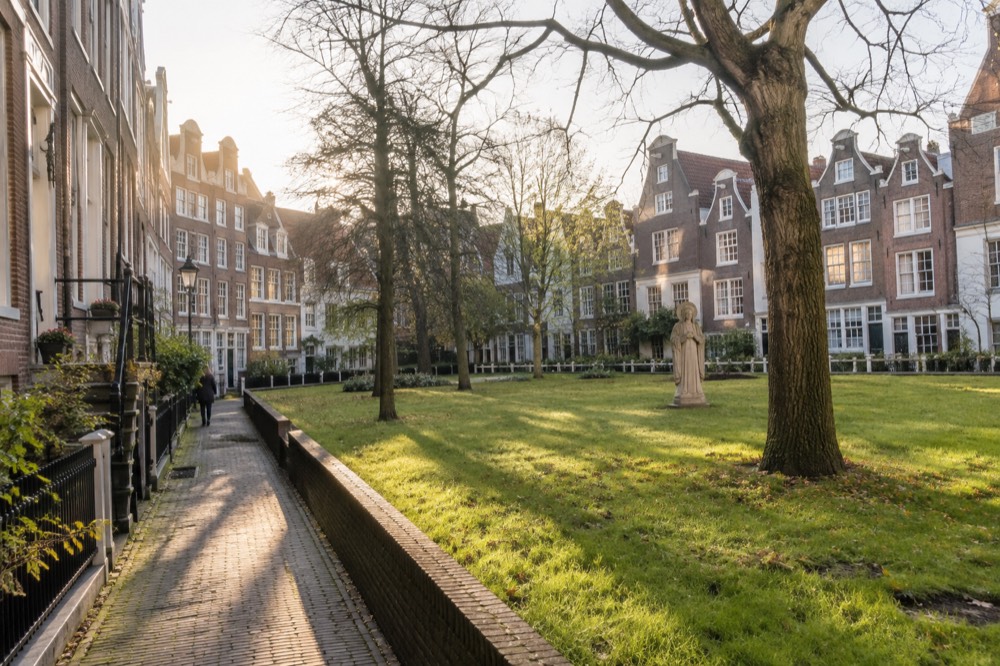
Morning is the answer for a reason that has nothing to do with light: the courtyard's popularity is concentrated into a predictable midday window, and arriving before it means you experience the place as it is meant to feel. The difference between standing on the lawn with two other people and standing behind a dozen is not cosmetic. The silence is the attraction, and silence is a shared resource that a single loud group can use up.
Season matters less than people assume. The lawn and trees are at their best in the warmer months, and the courtyard becomes a genuinely green pause in a mostly brick district. In winter the trees are bare, which sounds bleak but actually sharpens the view of the house gables, and the contrast with the cold streets outside makes the enclosure feel warmer. There is no closure for weather short of conditions that close half the city.
If your itinerary is tight, the honest advice is to treat the Begijnhof as a fifteen-minute experience and not to oversell it to yourself. It is not a museum with galleries; it is a moment. The visitors who enjoy it most are the ones who arrive early, walk one slow circuit, sit nowhere, and leave before the silence thins. The ones who are disappointed are usually the ones who expected an attraction with content, a queue and a payoff at the end.
Pair it with the quiet hours of the places around it. The book market on the Spui runs on set days, the canal belt is calmest before the cruise boats stack up, and the centre generally rewards early starts everywhere, not just here. Our Amsterdam hidden gems guide collects more of these low-volume corners if the Begijnhof's atmosphere is what you came for, and the best time to visit Amsterdam guide covers the city-wide picture.
What Else Should You See Near the Begijnhof?
Within a short walk of the Begijnhof you can reach Dam Square, the canal belt, the flower market and the Amsterdam Museum's home district, which makes the courtyard an ideal mid-morning stop on a walking day rather than a destination in itself. The Nine Streets shopping area and the Jordaan sit just across the canal ring to the west. Plan one or two of these around the courtyard, not all of them.
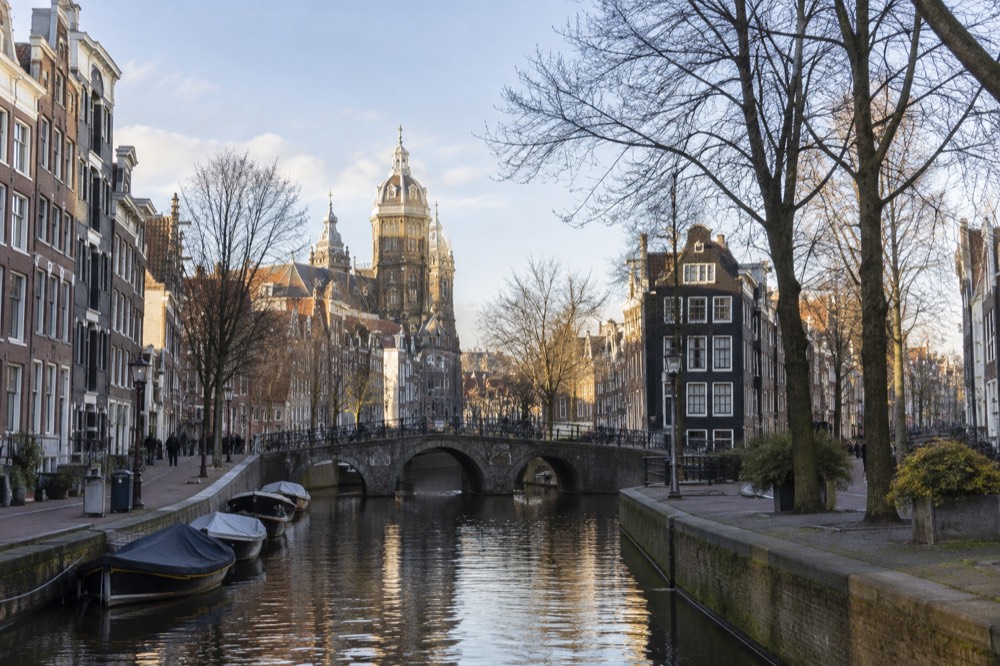
The obvious next step is the canal belt. The courtyard sits at the edge of the grachtengordel, the UNESCO-listed ring of seventeenth-century canals, and the walk from the Spui into the Nine Streets takes only minutes. This is the natural pairing: the courtyard shows you how the city's oldest communities lived inward, and the canals show you how the city grew outward around them.
If museums are your priority, Museumplein is a short tram ride south and holds the three heavyweights together. The Van Gogh Museum is the one that punishes improvisation: the museum requires every visitor to pre-book a timed entry ticket, and the popular morning slots go first. Booking ahead costs you nothing if the terms allow cancellation, and it converts a hopeful queue into a guaranteed hour.
For something lighter after the courtyard, the Moco Museum sits on the same square and runs a fast-moving modern collection that suits a shorter visit, and its central location makes it an easy add-on to a Museumplein afternoon rather than a trip in itself.
And if the courtyard has put you in the mood for the city from a different angle, a canal cruise from one of the central departure docks rounds the day off nicely. Departure points near Central Station, the Rijksmuseum and the Anne Frank area mean you can board wherever your walking route ends up, and an hour on the water is a gentle way to close a day that started in silence.
| Nearest highlight | Character | Why it pairs well |
|---|---|---|
| Nine Streets | Boutiques and cafés in narrow canal-side streets | Directly west of the courtyard, no transport needed |
| Flower market | A floating market of bulbs and cut flowers | Short walk south, easy to combine with the Spui |
| Dam Square | The city's main square and the Royal Palace | The natural start or end of a centre walking loop |
| Museumplein | The big three museums on one lawn | A short tram ride, best with pre-booked timed tickets |
Whichever way you build the day, keep the courtyard's own logic in mind: the best of central Amsterdam is quiet, early and slow, and the sites that survive being loved are the ones visited on their terms. For a fuller sense of how the pieces fit together, start from Things to Do in Amsterdam and work outward from there.
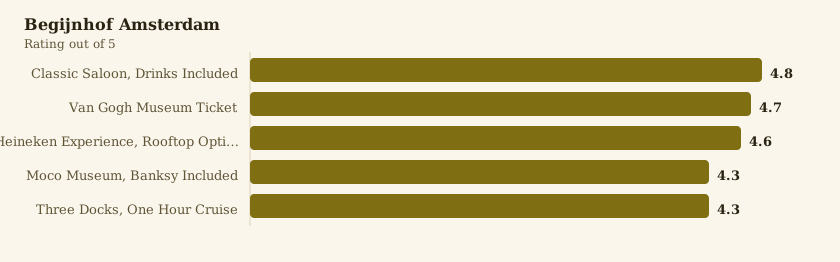
If you are still comparing options for the rest of your day, these are the three experiences most visitors weigh alongside a morning in the centre.
Common Questions About the Begijnhof
Is the Begijnhof free to visit?
Yes, walking into the courtyard costs nothing. It is a residential courtyard open to the public rather than a ticketed attraction, so there is no desk, no queue and no charge. The trade-off is that you are a guest in a shared space, and the house rules about noise and photography are the price of entry.
How do I find the Begijnhof entrance?
The main entrance is a narrow arched passage on the Spui, the square just south of Dam Square. It is deliberately discreet, with no large signage, so aim for the Spui itself and look for a modest archway with a historical marker. Walk the corridor and the courtyard opens up in front of you.
How long does a visit take?
Most people spend fifteen to thirty minutes. The courtyard is small and there is no exhibition content, so the visit is a slow circuit rather than a tour. If you plan to sit, reflect or wait for the light, allow more, but the seating is limited and the lawn is off-limits.
Can you take photos in the Begijnhof?
Photographing the buildings, including the famous wooden house, is fine. Photographing residents, open doorways and windows is not. The people who live here are private individuals, not performers, and the city's own visitor guidance asks for consideration across the centre. Photograph the architecture, never the people.
Is the Begijnhof worth visiting with kids?
It depends on the kids. The courtyard rewards quiet, patient visitors and offers nothing interactive, so very young children may find it dull. Older children who can hold the silence for twenty minutes often find the hidden chapel and the wooden house genuinely interesting, especially with the story of the beguines explained beforehand.
When is the Begijnhof open?
The courtyard is open to visitors during daytime hours, and the hidden chapel keeps its own separate schedule, which varies and should be checked before you plan around going inside. Because it is a residential space, hours can be adjusted when residents need them to be, so treat any published window as a guide rather than a guarantee.