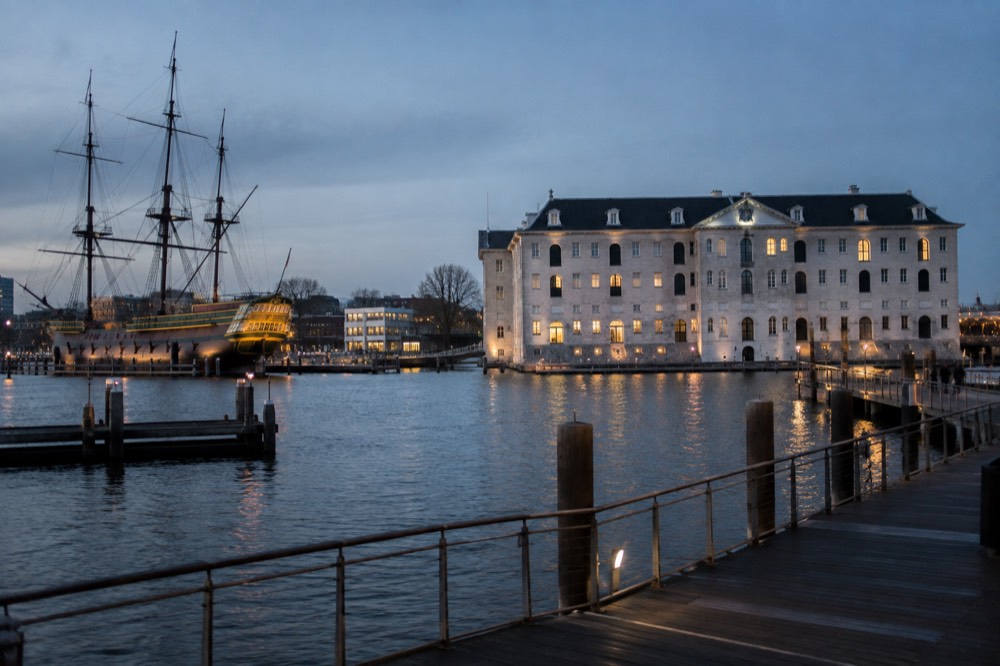
Het Scheepvaartmuseum: Amsterdam's National Maritime Museum Explained
Amsterdam built its wealth on the water, and Het Scheepvaartmuseum is the one place in the city where that whole story, from the Dutch East India Company to modern shipping, sits under a single roof.
Short answer
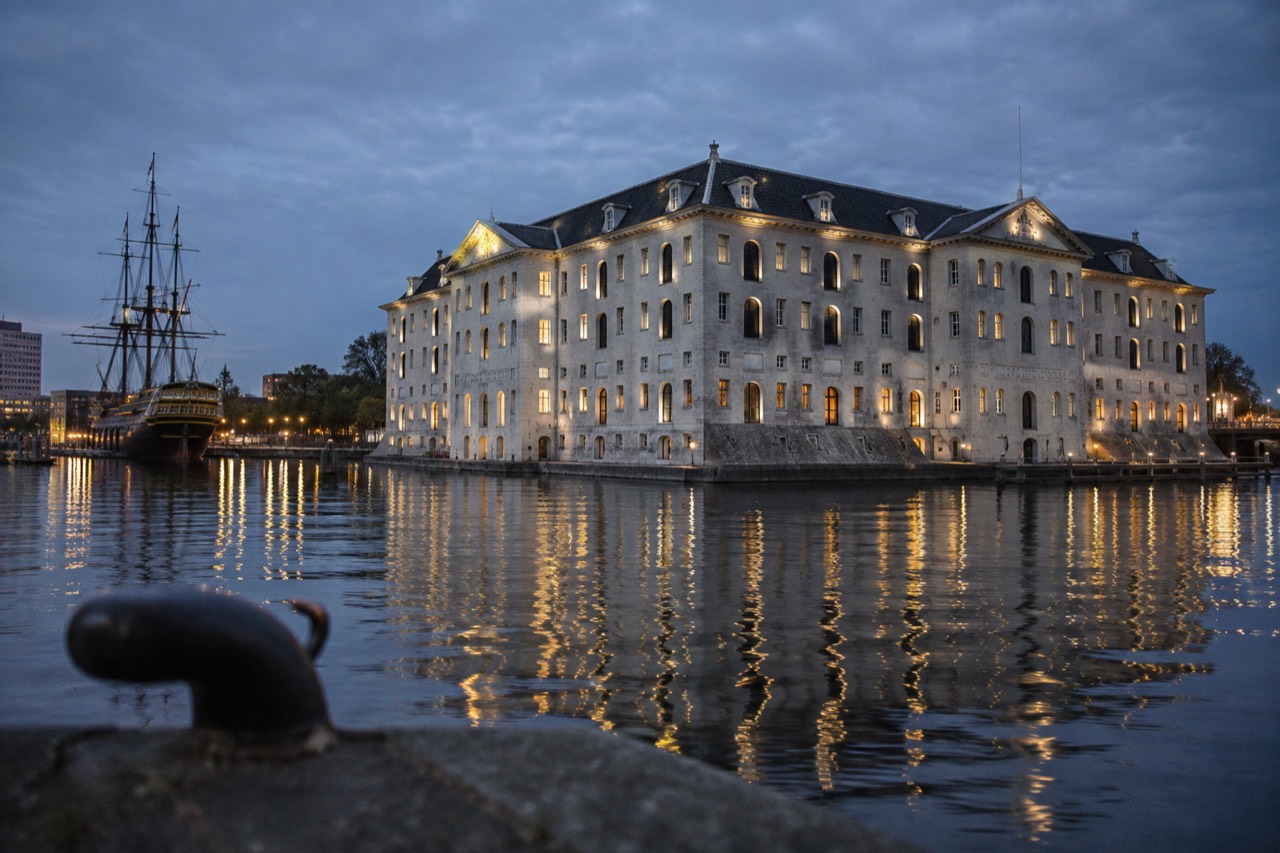
Het Scheepvaartmuseum is Amsterdam's National Maritime Museum, housed in a 17th-century former naval storehouse beside the Oosterdok. A GVB 24-hour transport ticket costs €10.00, a 1-hour canal cruise from a nearby dock runs from about €15.50, and the museum pairs naturally with NEMO Science Museum, whose roof terrace is free.
Amsterdam has 23.7 million tourist overnight stays a year, and most of those visitors crowd into the same handful of streets behind Dam Square. The museums clustered on Museumplein absorb another large share. Yet the city's entire reason for existing, the sea trade that financed the canal ring, is told in full at one building a short walk east of Centraal Station, and it is noticeably calmer than the streets most guidebooks send you to. This page covers Het Scheepvaartmuseum, the National Maritime Museum, in planning terms: how to reach it, what is inside, what a visit costs relative to the city's passes and transport tickets, and what to do with the rest of your day once you walk out.
What Is Het Scheepvaartmuseum and Why Does It Matter?
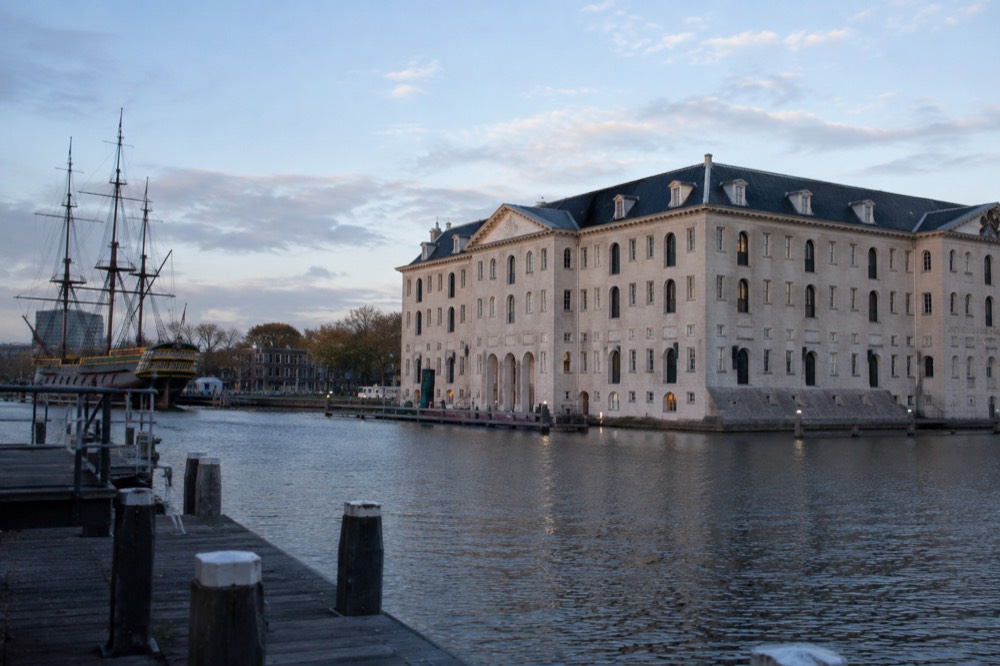
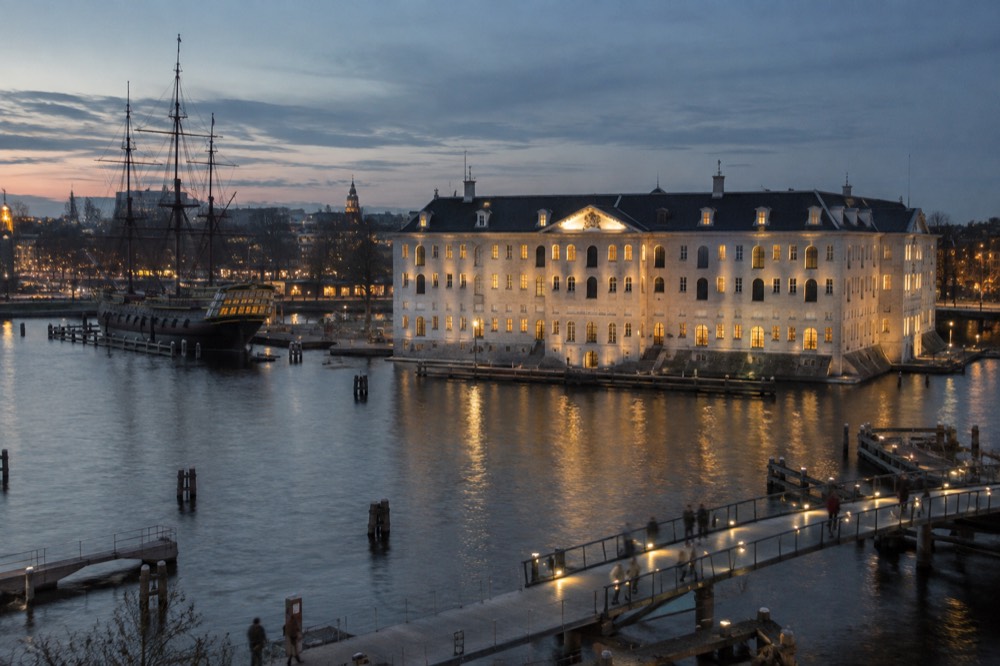
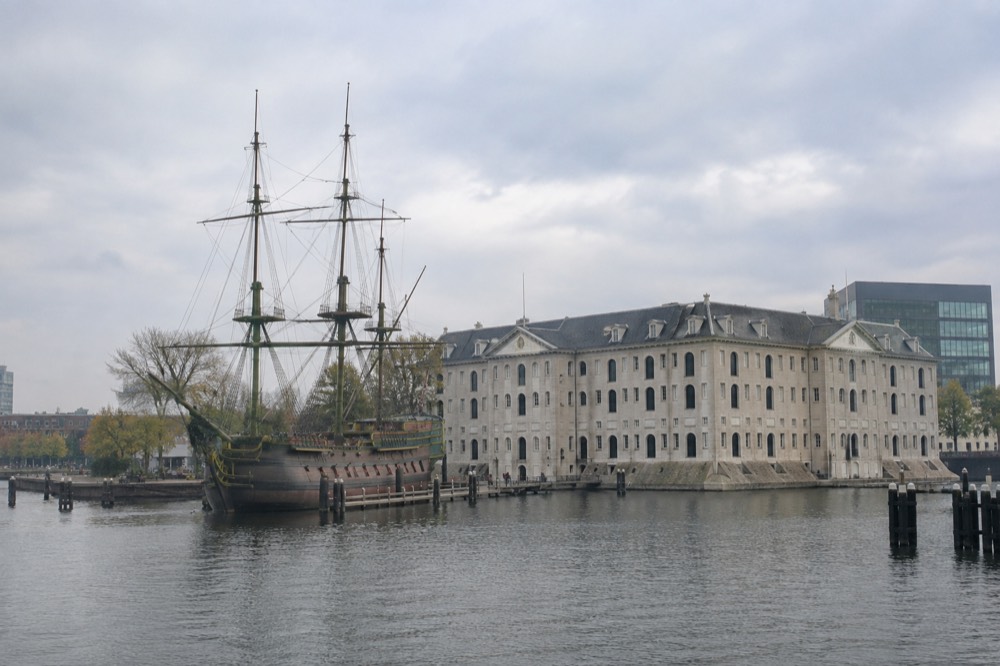
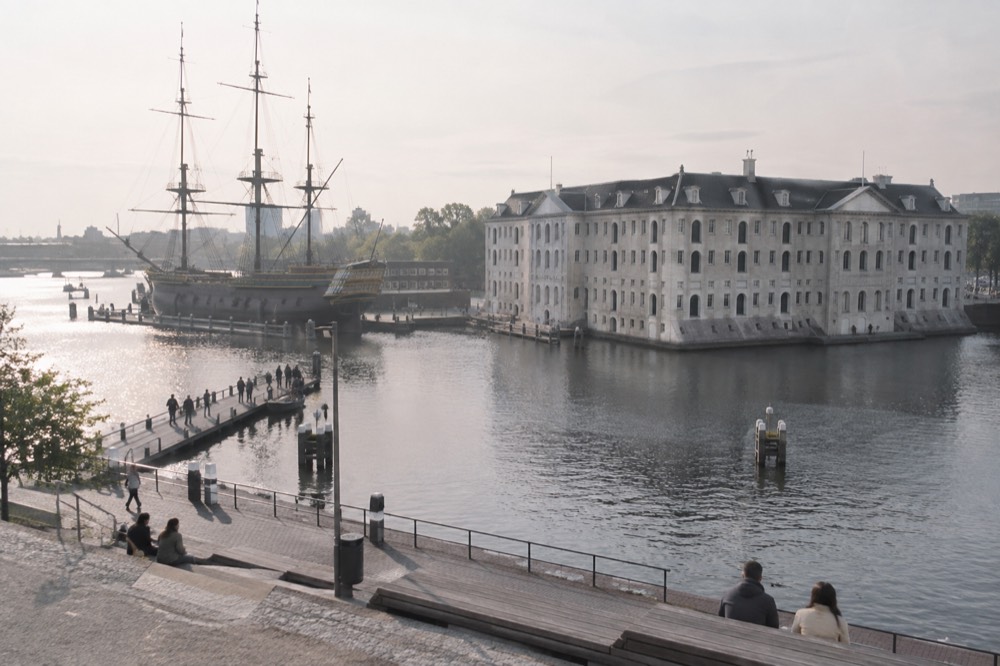
Het Scheepvaartmuseum is the Netherlands' national maritime museum, occupying a 17th-century former naval storehouse on the Oosterdok, a ten-minute walk from Amsterdam Centraal Station, and it holds the country's largest collection of paintings, models, maps, instruments and documents tied to seafaring. It is the museum that explains why Amsterdam looks the way it does. The canal houses, the trading wealth, the Golden Age portraiture in the Rijksmuseum, all of it traces back to ships, and this is where the ships themselves are the exhibits rather than the backdrop.
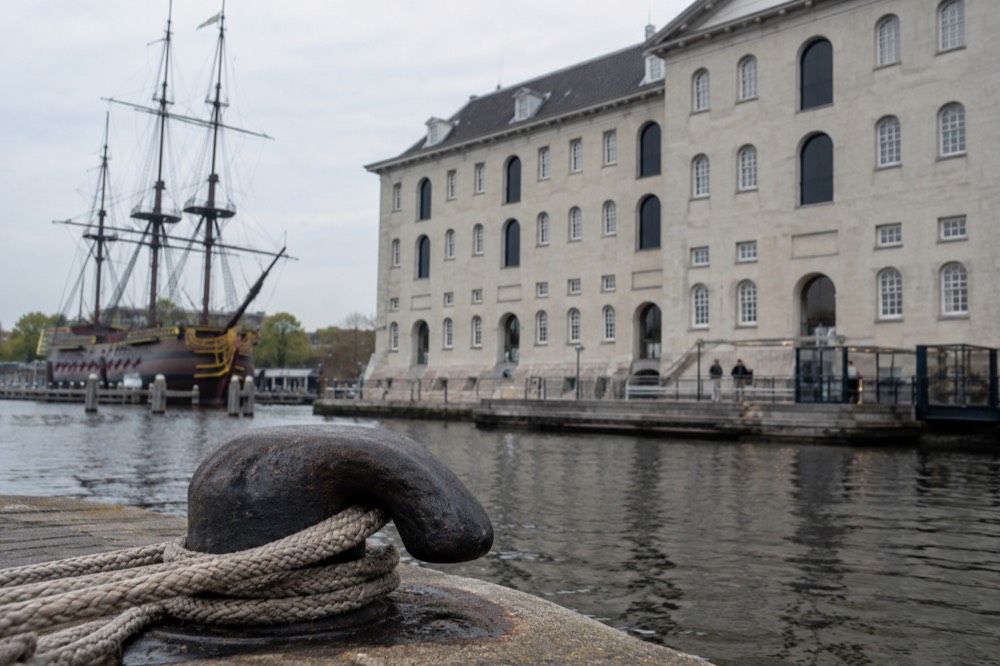
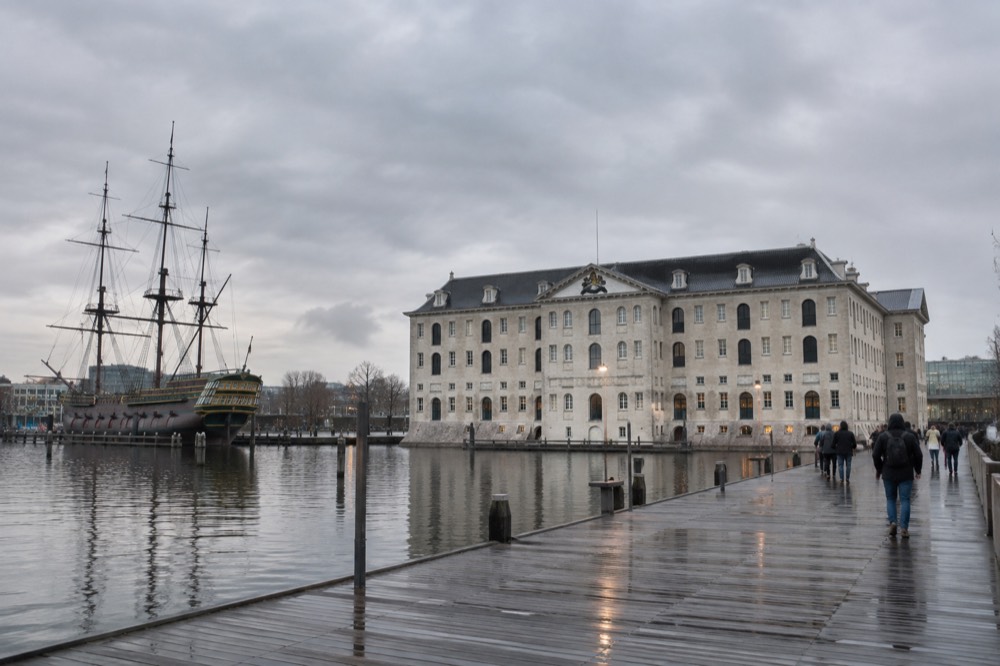
The building alone justifies the walk. The storehouse was raised in the 17th century for the Admiralty of Amsterdam, one of five regional boards that ran the Dutch navy, and its brick walls and courtyards were built to hold sails, rope, cannon and shipbuilding timber. After a long career as a warehouse the building reopened as the maritime museum, and a modern glass roof now spans the inner courtyard, which lets the museum use that space for large objects and events year round regardless of the weather outside.
What distinguishes it from Amsterdam's art museums is the scale of the objects. Where the Rijksmuseum shows you the results of the sea trade in paint and silver, the maritime museum shows the machinery: the actual vessels, the navigational instruments, the atlases and the shipyard tools. Families tend to spend longer here than they expect, because a large share of the collection is hands-on or walk-through rather than behind glass. If your trip includes children, this is one of the few major Amsterdam museums where the building's layout rewards wandering rather than queueing.
How Do You Get to the Maritime Museum?
From Amsterdam Centraal Station the museum is roughly a ten-minute walk east along the Oosterdok, or one short hop on any GVB tram or bus serving the Oosterdok area; a GVB 24-hour day ticket costs €10.00, a child day ticket €5.00, and a single one-hour GVB ticket €3.40. Contactless payment works too: OVpay charges a €1.16 base fare plus €0.217 per kilometre on GVB services, with a daily cap, so a visitor making several tram trips in a day will usually not exceed the €10.00 day ticket price. The fare table below shows the current GVB structure.
| GVB ticket | Price |
|---|---|
| 1-hour single | €3.40 |
| 24-hour day ticket, adult | €10.00 |
| 24-hour day ticket, child | €5.00 |
| 48-hour | €16.00 |
| 72-hour | €21.50 |
| 96-hour | €27.50 |
| 120-hour | €34.00 |
| OVpay contactless | €1.16 base + €0.217 per km |
These fares are published by GVB, the city's transport operator, on its own prices page, and they apply across trams, buses, metro and the GVB ferries. Two practical notes for this specific journey. First, the walk from Centraal is flat, signposted and more pleasant than the tram for anyone without mobility limits, since it runs along the water past the public library. Second, if you are staying outside the centre, the museum sits close to the eastern end of the station, so plan your route around the eastern exits rather than the main front hall.
Arriving by canal boat is a genuine option here rather than a gimmick. The Oosterdok is on the main cruise routes, and the standard 1-hour canal cruise fare in Amsterdam starts at about €15.50 for a basic audio-guide cruise, a figure verified on the Rederij Kooij operator's own canal cruise page. Some visitors book a cruise that passes the museum, disembark or simply enjoy the view, and continue on foot.
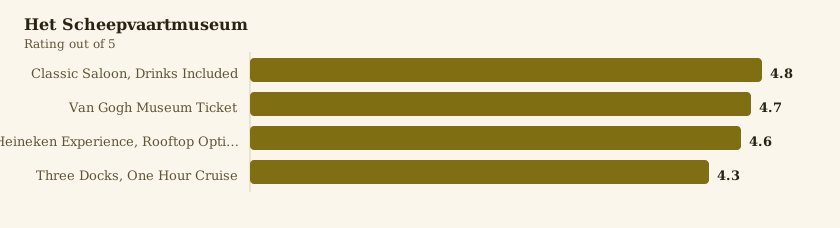
If you are in the middle of planning several days in the city, the transport question connects to a bigger one, and the trio of bookable experiences below is where most visitors to this museum end up spending their remaining time and budget: the most-booked museum in the city, its best-known brewery experience, and the classic canal cruise that ties the whole centre together.
What Will You Actually See Inside?
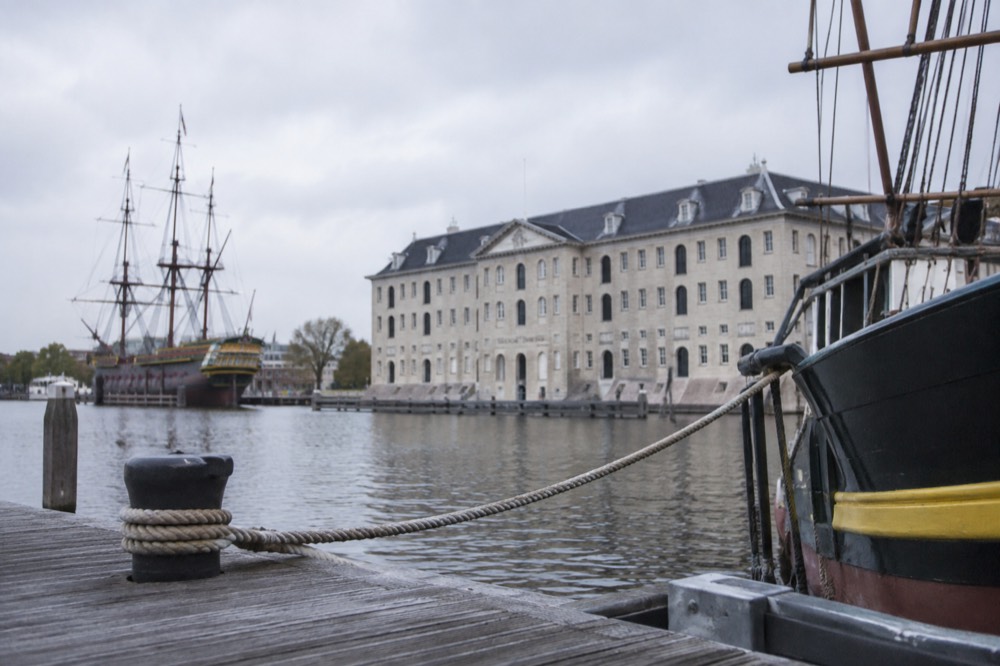
The core collection covers five centuries of Dutch seafaring: full-sized historic vessels you can walk aboard, including a replica of an 18th-century East Indiaman moored outside, plus golden-age atlases, ship models, navigational instruments, paintings and maritime archaeology, spread through the storehouse's galleries and the glass-roofed courtyard. The East Indiaman replica moored at the quay is the single most memorable object, and unlike most museum pieces you can climb its decks, go below and see how crew lived on months-long voyages.
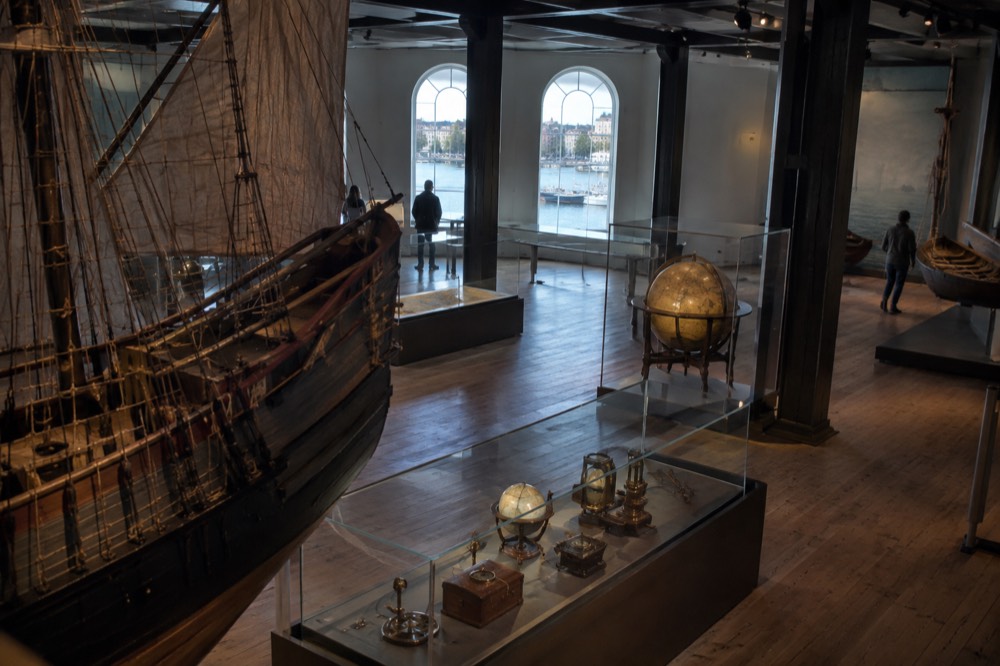
The galleries divide broadly by theme rather than by date, which makes the museum easy to visit in whatever depth you have. One wing covers the golden age of the Dutch East India Company, with the charts and ledgers that ran the first multinational trading operation. Another covers whaling, naval warfare and the transition to steam and steel. A further set of galleries handles modern shipping and the port of Amsterdam as it operates today. Temporary exhibitions rotate through the courtyard space, so check the museum's own site for what is on during your dates before you commit a full afternoon.
For most visitors the honest answer to "how long" is two to three hours, longer with children. The hands-on elements, the ship and the courtyard mean the museum does not have the one-directional queue flow of a gallery museum. A family can arrive, split up, reconvene and still feel they saw the place. Solo travellers on a tight schedule can hit the highlights in ninety minutes: the ship, the golden-age map room, the courtyard.
| What you'll see | Where | Realistic time |
|---|---|---|
| Historic East Indiaman replica | Moored at the quay outside | 20 to 30 minutes |
| Golden-age maps and atlases | Main floor galleries | 30 to 45 minutes |
| Ship models through the centuries | Upper galleries | 20 to 30 minutes |
| Temporary exhibitions | Glass-roofed courtyard | 30 to 60 minutes |
| Whaling, navy and steam galleries | Side wings | 30 to 45 minutes |
One planning point worth knowing before you buy anything: Amsterdam's two most time-locked attractions, the Van Gogh Museum and the Anne Frank House, both require pre-booked timed entry and neither is included in the I amsterdam City Card. The Van Gogh Museum's own planning pages state that all visitors must pre-book a timed ticket, and the Rijksmuseum's page confirms City Card holders enter free there but must still book a start time. So if your day pairs the maritime museum with a Museumplein visit, book the Van Gogh slot first and fit the maritime museum around it, not the other way round.
How Much Does a Visit Cost and Which Passes Cover It?
The museum sells its own tickets through its official site, and because that page's current price was not verified for this article, the honest advice is to read the price on the museum's own ticket page before budgeting; the surrounding costs are firm, however: GVB transport at €10.00 per day, a 1-hour canal cruise from about €15.50, and the I amsterdam City Card at €67 for 24 hours or €94 for 48 hours. Those City Card prices are read directly from NEMO Science Museum's own visitor page, which sells the card, and they are the only card tiers verified on an official source; longer durations exist but their prices were not confirmed, so treat anything you read elsewhere for 72 hours and up as unverified.
The pass question matters more here than at most Amsterdam attractions, because the maritime museum sits in the part of the city where a pass earns its keep. The I amsterdam City Card includes entry to more than 70 museums and locations, unlimited GVB transport for the card's duration, one canal cruise and a 24-hour bike rental, per the card's own usage page. The Rijksmuseum's price page confirms card holders enter free. What the card does not do, and this is the fact that decides most purchase decisions, is cover the Van Gogh Museum or the Anne Frank House. Both institutions state this on their own pages.
| Cost item | Firm figure | Source status |
|---|---|---|
| GVB 24-hour transport ticket | €10.00 | Operator fare table |
| 1-hour canal cruise | from about €15.50 | Operator's own site |
| I amsterdam City Card, 24 hours | €67 | Sold via NEMO's official page |
| I amsterdam City Card, 48 hours | €94 | Sold via NEMO's official page |
| Museumkaart, adult annual | €75 plus a €4.95 registration fee | Quoted by participating museums |
| Maritime museum admission | on the museum's own ticket page | Not verified, check before budgeting |
The Museumkaart deserves a sentence even for short-stay visitors. A temporary version, buyable at participating museums, is valid 31 days for a maximum of 5 visits, and it costs €75 for adults with a €4.95 one-off registration fee. For a two-museum trip it will not pay off; for a week of museum-heavy days it can. Note that it does not cover the Anne Frank House beyond a €1.00 booking fee, and ARTIS Zoo is also excluded while the zoo's two satellite museums are not.
When Is the Best Time to Visit?
Weekday mornings are the calmest time at the maritime museum, and the practical pressure points in Amsterdam are the weekends, the school holidays and the spring tulip season, when the city's 23.7 million annual overnight stays concentrate most heavily; the museum's indoor courtyard also makes it one of the better rainy-day picks in the city. Those overnight-stay and day-visit figures come from the city's own research office, and the forecast through 2028 points upward, so the general crowding trend is not in your favour. Timing your day well beats timing your week.
Inside the museum, the crowd pattern is simple and predictable. School groups arrive mid-morning on weekdays, so the first hour after opening and the mid-afternoon window are the quietest stretches. The East Indiaman on the quay develops a queue on wet days because everyone wants the covered deck, so do the ship first if rain is forecast. Weekends bring local families, which makes the atmosphere livelier but the hands-on galleries slower.
Seasonally, the museum is a strong shoulder-season choice. On a wet November afternoon or a grey February morning it is arguably the best-value indoor hours in the city, and the glass courtyard means you never feel boxed in. In summer, combine it with the water: the Oosterdok terrace, the walk to NEMO's free roof, and an evening canal cruise make a full day that barely touches the crowded centre. The city's accommodation prices are worth knowing here too, since a 12.5% tourist tax applies to hotel and holiday-rental nights, per the municipality's own tourist tax page, so every night you save by travelling off-peak compounds.
What Should You Do Near the Maritime Museum?
Within a fifteen-minute walk you have NEMO Science Museum, whose roof terrace is free to reach without a museum ticket, the Amsterdam Centraal Station architecture, the Oosterdok islands, and the Plantage district's zoo and botanical garden, which makes this corner of the city a complete day out without a tram ride. Most visitors never see it this way, because the guidebook loop keeps them west of Dam Square, but the eastern dock edge is where locals actually spend weekends.
Start with the obvious pairing. NEMO sits directly south of the maritime museum, a five-minute walk along the water, and its green copper roof is one of the best free viewpoints in the city. NEMO's own press pages confirm the roof terrace is free and reachable by the outdoor steps from street level or the museum lift, so even if you skip the science galleries you get the panorama. NEMO admission itself is a flat €21.50 for everyone aged four and over, with under-fours free, and tickets carry a start time.
From there the options fan out. The walk west returns you to Centraal Station, worth a look for its 19th-century facade and platforms, and our guide to Amsterdam Centraal Station covers what is worth seeing if you have a spare half hour before a train. South-east lies the Plantage, the green 19th-century district covered in our Amsterdam Oost and the Plantage guide, home to ARTIS Royal Zoo and the Hortus Botanicus. If the weather holds, the eastern docklands beyond the museum are covered in our eastern docklands walking guide, and the modern architecture there contrasts sharply with the 17th-century storehouse you have just left.
For visitors building a full museum day, the pairing logic is straightforward: the maritime museum in the morning, NEMO's roof at lunch, and a Museumplein heavyweight in the afternoon. Our one museum day in Amsterdam itinerary sequences the whole city's collections, and the Van Gogh Museum is the afternoon slot most travellers choose. Its timed-entry tickets are the constraint to solve first.
Is the Maritime Museum Good for Families?
Yes, and it is one of the better family museums in Amsterdam, because the walk-through ship, the hands-on navigation displays and the covered courtyard give children physical things to do rather than things to look at, and the museum's layout tolerates noise and movement far better than a gallery museum. The contrast with the golden-age art museums is real: a seven-year-old who lasts forty minutes among paintings can manage two hours here without complaint.
The age profile that gets the most out of the museum is roughly six to twelve. Younger children enjoy the ship and the courtyard but skip most interpretation; older children and teenagers connect with the navigation and exploration themes, especially if they have played any sailing or exploration games, since the real instruments behind those games are here. For teenagers with no interest in ships, pair the visit with NEMO next door and let them choose their favourite of the two.
Practical family notes. The museum building is largely step-free in its main circulation, with lifts serving the galleries, though historic ships by their nature involve ladders, low doorways and moving surfaces, so boarding the East Indiaman has physical limits. Baby-changing facilities and a café are in the building, and the courtyard means you can take a break without leaving. If you are planning a whole family trip rather than one day, our three days in Amsterdam with kids itinerary places the eastern museum pair in a realistic sequence alongside the zoo and the canal cruise.
What About Tickets, Queues and Booking Ahead?
Book the maritime museum's ticket on its own official site rather than at the door, because Amsterdam's major attractions increasingly run timed entry, and the two biggest queue generators in the city, the Van Gogh Museum and the Anne Frank House, sell out entirely on busy days; the maritime museum is calmer but still fills on wet weekends. The pattern across the city's museums is now uniform: a start time, an online booking, and a door that only admits people with a slot.
The Anne Frank House is the extreme case and worth understanding even if it is not on your list, because it shapes everyone else's booking behaviour. Its own ticket page states that every visitor must book a specific date and time online, that there are no door sales, and that adult tickets are €16.50 including the booking fee. No reseller or city pass sells that entry, so if it is on your list, book it the moment your dates are fixed and build the rest of the trip around it.
For the maritime museum itself the stakes are lower, but the same habit applies. Buy online, pick your start time, and you walk past any ticket line. If your day includes a canal cruise, the same logic holds: the cruise products with the strongest review records sell their prime evening slots first. The classic saloon boat cruise, 4.8 across 33,435 reviews at $19.56, is the one most often paired with an eastern-dock day because its operators run from central piers a short walk away.
Common Questions About the Maritime Museum
Common Questions About Het Scheepvaartmuseum
How long should I spend at Het Scheepvaartmuseum?
Plan on two to three hours for a full visit, longer with children. The walk-through ship, the courtyard and the rotating exhibitions reward a slower pace, while a highlight-only visit for a tight schedule runs about ninety minutes.
How do I get to the maritime museum from Centraal Station?
It is roughly a ten-minute flat walk east along the Oosterdok, or a short GVB tram or bus hop. A GVB 24-hour day ticket costs €10.00, and contactless OVpay works on the same services with a daily cap.
Is the maritime museum included in the I amsterdam City Card?
The card includes entry to more than 70 museums and locations plus GVB transport and a canal cruise, but confirm the maritime museum's current participation on the card's official usage page before buying, and note the card never covers the Van Gogh Museum or the Anne Frank House.
Is Het Scheepvaartmuseum good for kids?
Yes. The historic ship you can board, the hands-on navigation displays and the covered courtyard make it one of the most child-tolerant major museums in the city, and it pairs naturally with NEMO Science Museum next door.
What is near the maritime museum?
NEMO Science Museum with its free roof terrace is a five-minute walk away, the Plantage district with ARTIS Zoo and the Hortus Botanicus lies just south-east, and the eastern docklands stretch out beyond for an architecture walk.
Can you go inside the ship at the maritime museum?
Yes, the historic vessel moored at the quay is a walk-through exhibit, with decks and below-deck spaces open to visitors. Historic ships involve ladders and low doorways, so boarding has some physical limits.
The eastern dock edge of Amsterdam is the part of the city where its original story is told, and Things to Do in Amsterdam keeps the whole picture together: the museums, the day trips and the practical rules, checked against official sources rather than recycled guidebook numbers. Start your morning at the storehouse, take the free roof at NEMO, and finish on the water.