Delft Day Trip From Amsterdam: What to See, Do and Skip
Delft packs canals, Delft blue pottery, Golden Age history and Vermeer into a compact centre that you can walk end to end in half an hour, which is exactly why it works as a day trip from Amsterdam.
Short answer
Delft is a straightforward day trip from Amsterdam: a guided tour covering Delft, Rotterdam and The Hague costs from $63 and runs 9 hours, rated 4.2 across 2,642 reviews. Independent travellers can reach Delft by direct train and cover the old centre, the Royal Delft legacy and Vermeer sites on foot in one day.
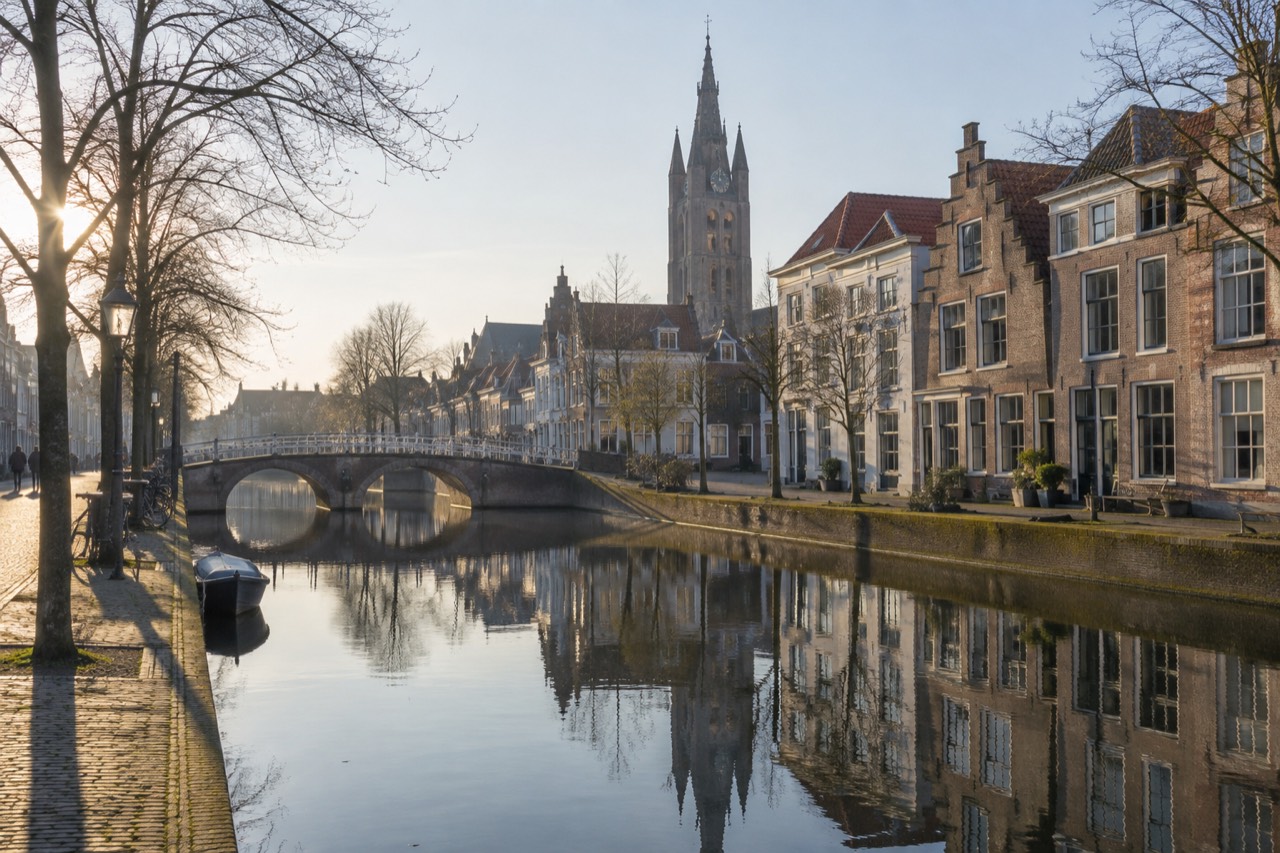
Amsterdam recorded 23.7 million tourist overnight stays in 2025, and a growing share of those visitors now spend at least one day outside the city. Delft is one of the places they head for, and for good reason: it is small, walkable, photogenic and saturated with Dutch history in a way that the capital, for all its canals, is not. The city is best known for two things, Delft blue pottery and the painter Johannes Vermeer, but the real draw is the intact seventeenth-century centre, a lattice of canals and gabled houses that survived the centuries largely undamaged.
This guide walks through the whole decision: how to get there, what a realistic one-day route looks like, what the pottery story actually is, and whether a guided tour beats going independently. The desk behind Things to Do in Amsterdam has read the live listings and the primary sources so that you do not have to guess at any of it.
Is Delft Worth a Day Trip From Amsterdam?
Yes, for most travellers Delft is one of the best day trips from Amsterdam, because it compresses the classic Dutch experience, canals, Golden Age architecture, craft heritage and a calm pace, into a centre small enough to see properly in a single day, and it pairs naturally with bigger neighbours if you have more time. The honest caveat: if you only care about nightlife or major museums, stay in Amsterdam instead.
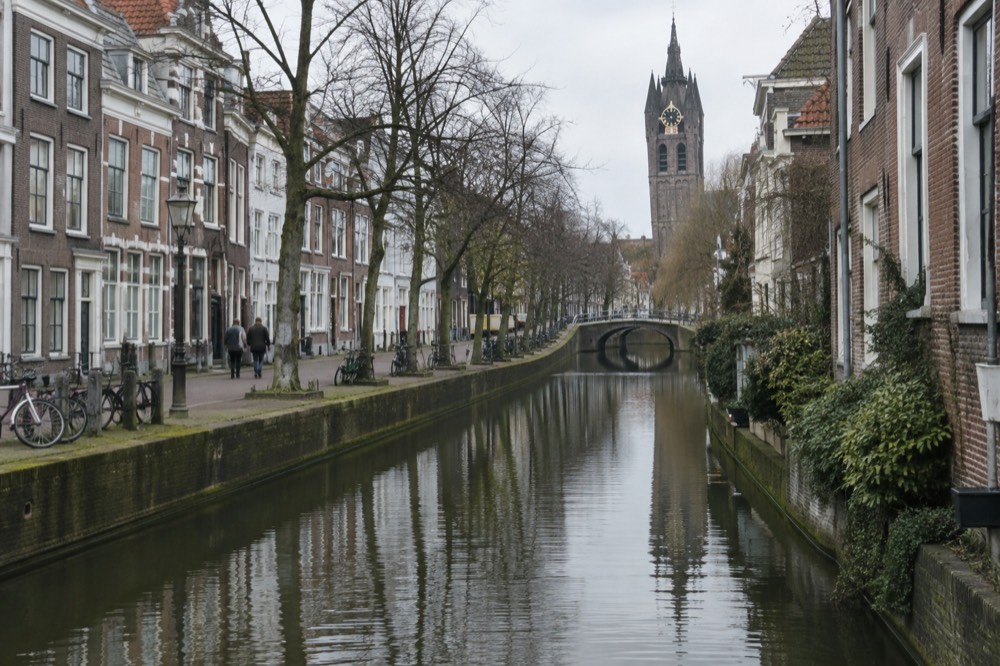
Delft's appeal is density. The old centre is compact enough that you never need a tram, a bus or a bike to see it; everything worth visiting sits within a fifteen minute walk of the market square. That matters on a day trip, because transit time eats into every hour you spend outside Amsterdam.
The city also offers something Amsterdam cannot: the sense of a working Dutch town rather than a tourism machine. The market square still hosts a real market, the university population keeps the cafés lively year round, and the pottery industry that made the city famous still operates here. For context on how Delft fits the wider picture, our best day trips from Amsterdam guide ranks it against Zaanse Schans, Haarlem and the coastal options.
The comparison worth making is with the heavyweight alternatives. Zaanse Schans delivers windmills in under six hours, Haarlem gives you a mini-Amsterdam without the crowds, and Rotterdam shows off modern architecture. Delft trades on history and craft, so choose it when you want the Netherlands of the 1600s rather than the Netherlands of today.
How Do You Get From Amsterdam to Delft?
Delft sits on the main intercity rail line south of Amsterdam, with trains running throughout the day, and the station sits a short walk from the old centre, which makes independent travel genuinely easy. The alternative is a guided coach tour: the Delft, Rotterdam and The Hague day tour costs from $63 per person, runs 9 hours, and carries a 4.2 rating across 2,642 reviews on the live listing.
For independent travellers, the Dutch rail network is the practical answer. You tap in and tap out with a contactless bank card under the OVpay system, which works on NS intercity trains exactly as it does on Amsterdam's trams and metro, so there is no special ticket to buy. Check the NS journey planner for the current schedule and any engineering works on your travel date.
The guided option suits travellers who want the logistics handled. The Rotterdam, Delft and The Hague guided day tour bundles three cities into one long day: Delft for the historic core, Rotterdam for the modern skyline, and The Hague for the political capital. It is an ambitious itinerary, and the trade-off is depth. Nine hours sounds generous until you subtract three intercity legs and lunch, at which point each city gets roughly two hours.

| Option | Best for | Cost | Time commitment |
|---|---|---|---|
| Train, independent | Flexible travellers who want to set their own pace | Contactless rail fare, tap in and out | Set your own hours |
| Rotterdam, Delft and The Hague guided day tour | First-time visitors covering three cities in one booking | From $63 per person | 9 hours, fixed schedule |
| Private car or transfer | Families and groups who value door-to-door convenience | Arranged separately | Flexible |
If you are weighing the tour against the train, the deciding question is simple: do you want to see Delft properly, or do you want to see Delft plus two other cities? The tour spreads the day thin but delivers an overview of the Randstad that would take three separate trips by train. Independent travel gives you Delft alone, at your own speed, with time to sit still in a café without watching the clock.
What Are the Best Delft Day Tour Options From Amsterdam?
The only dedicated Delft product on the current roster is the Rotterdam, Delft and The Hague guided day tour, from $63, rated 4.2 across 2,642 reviews, running 9 hours. Beyond that, Delft works as a self-guided train day, and travellers who prefer a structure can pair it with our Rotterdam and The Hague guides to build the same route themselves.
Start with the guided tour if you want commentary and no logistics. The listing covers the historic Delft centre, Rotterdam's rebuilt skyline and The Hague's government quarter in a single loop from Amsterdam. Reviews on the live listing praise the variety but repeatedly note the pace, which is fair: three cities in nine hours leaves little slack.
The self-guided route is the stronger choice for Delft specifically. Arrive mid-morning, walk the canals, spend the afternoon on pottery and Vermeer, and take an early evening train back. You will see more of Delft in six unhurried hours than a tour group sees in two.
A third option is to fold Delft into a longer stay. Travellers following a one-week Netherlands itinerary often overnight in Delft or nearby Rotterdam instead of day-tripping, which turns the rushed version into a relaxed one. The city is quiet at night in a way Amsterdam never is, and that evening calm is part of the appeal.
What Should You See in Delft in One Day?
A realistic one-day Delft route covers the market square and its two great churches, the Royal Delft pottery story, the Vermeer trail, and a slow loop of the canals, all on foot, all within the old centre. Trying to add the outlying sights squeezes the day; the centre alone fills it. Bookend the day with coffee on the square and a canal-side beer before your train back.
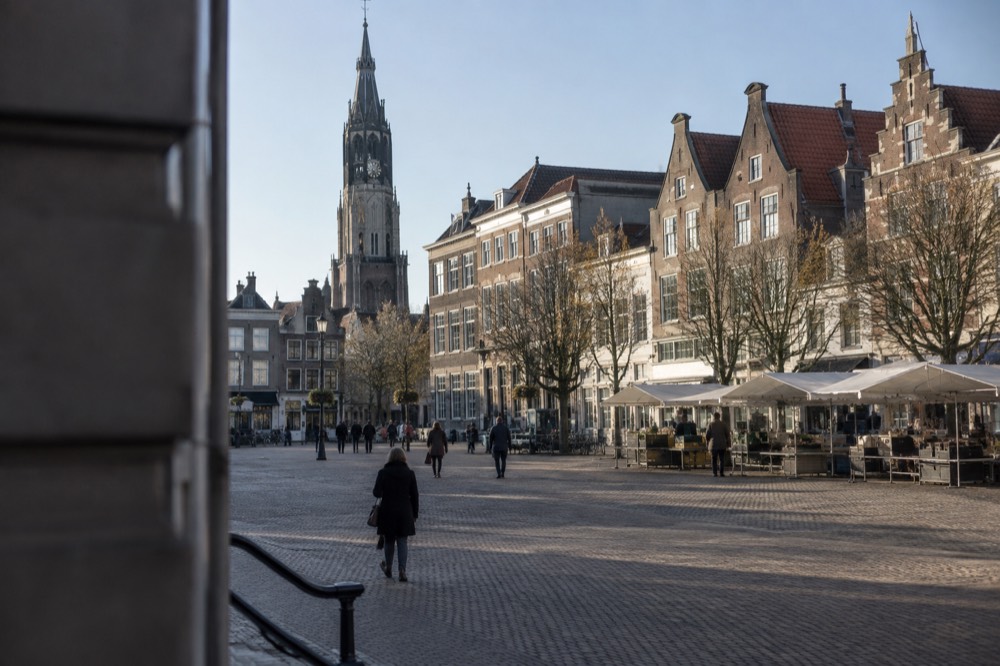
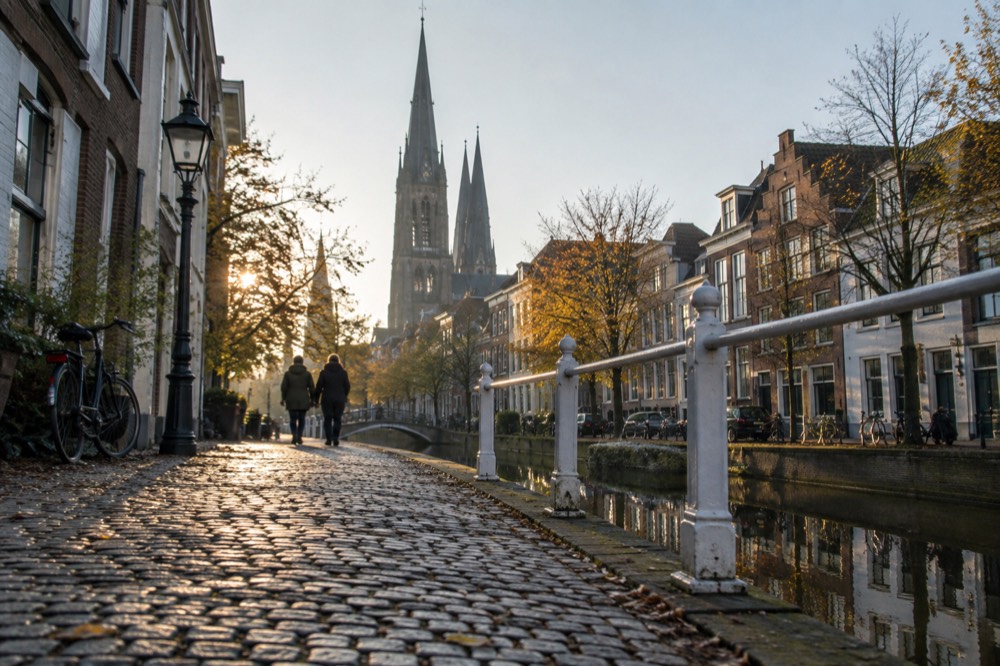
The market square is the anchor. The New Church and the Old Church lean over it from opposite ends, and the square itself still fills with market stalls on regular market days, which is the Delft you came for. Climb considerations matter here: church tower visits involve steep, narrow stairs, so check access on site if stairs are a problem, and note that Dutch stair-climbing generally demands more of visitors than most countries expect.
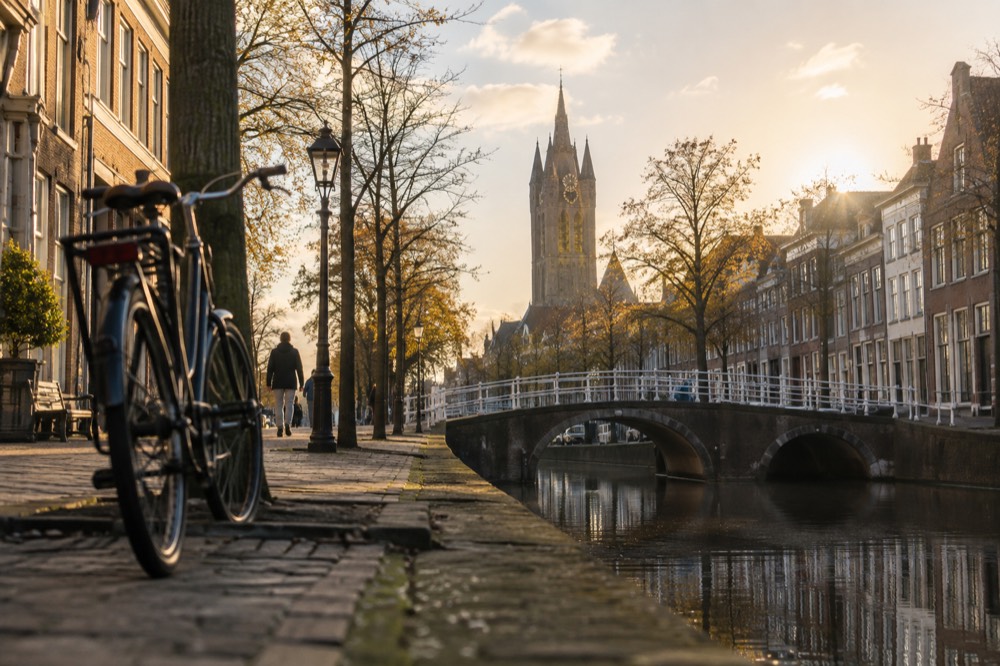
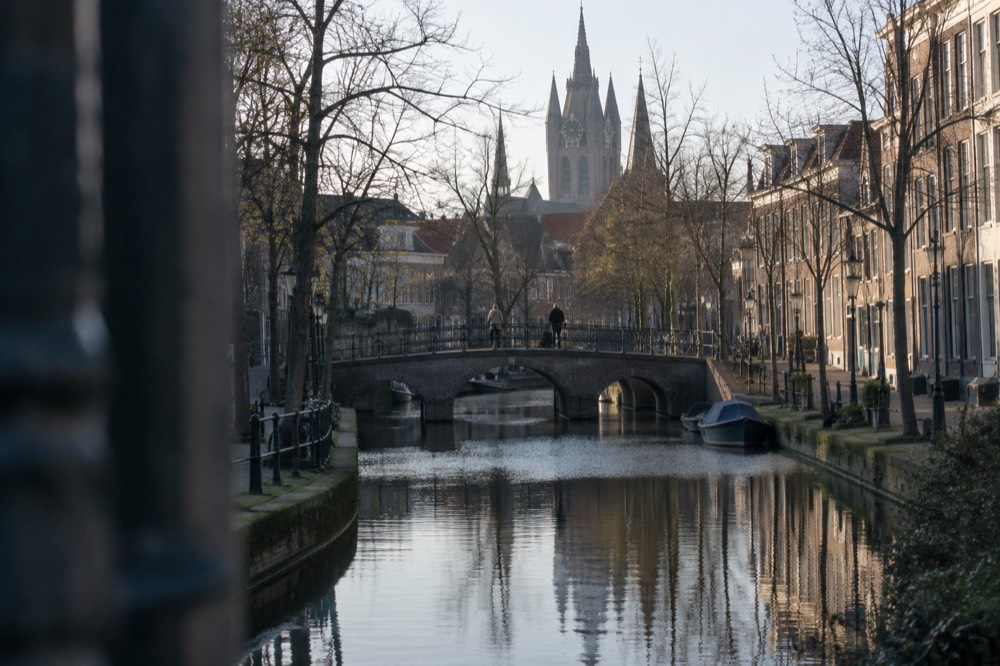
The Old Church is the more atmospheric of the pair, its tower visibly leaning, and it holds Vermeer's grave. The New Church, larger and lighter, is the resting place of the Dutch royal family, which is the fact most visitors remember: members of the House of Orange have been buried in Delft for centuries, and the royal connection is why the town punches above its size in Dutch history.
| Time of day | Where to be | Why |
|---|---|---|
| Morning | Market square, Old Church | Market stalls, soft light on the brick, shortest queues |
| Midday | Lunch on the square or a canal-side café | Everything is within a five minute walk |
| Early afternoon | Royal Delft legacy and pottery shops | The craft story, with demonstrations on site |
| Late afternoon | Vermeer trail and the eastern canals | Quietest stretch of the old centre |
| Early evening | Canal-side terrace, then the train | Golden hour on the water before heading back |
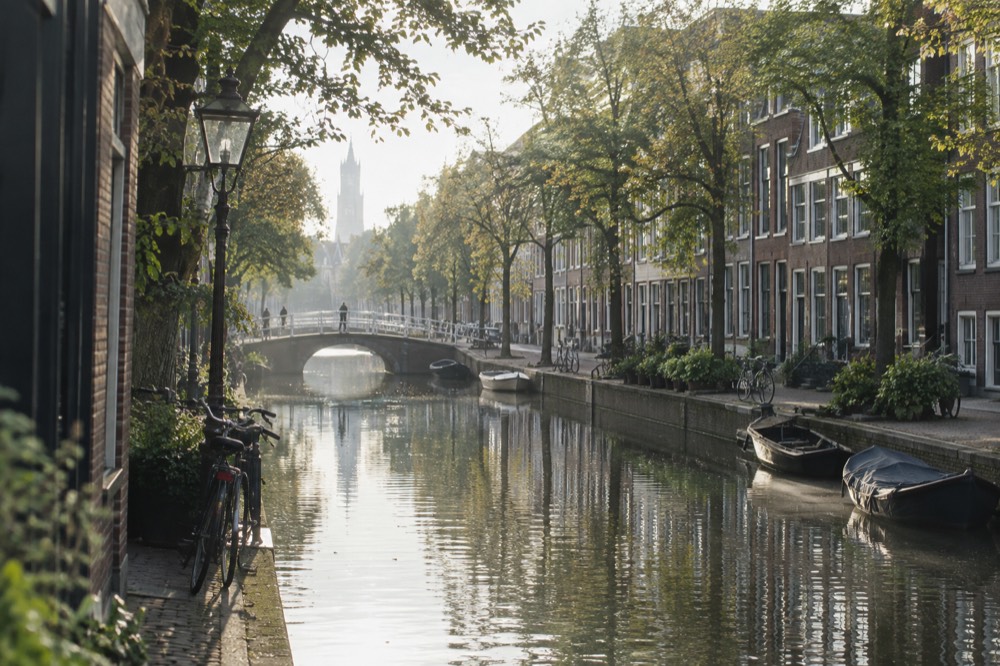
The Vermeer trail matters more for atmosphere than for sights, because almost nothing of Vermeer's Delft survives as a visitable interior. What you get instead are the views he painted: the light on the water, the scale of the streets, the sky over the ramparts. The city leans into its most famous son, and the walk between the marked spots is a good spine for the afternoon.
What Is the Story Behind Delft Blue Pottery?
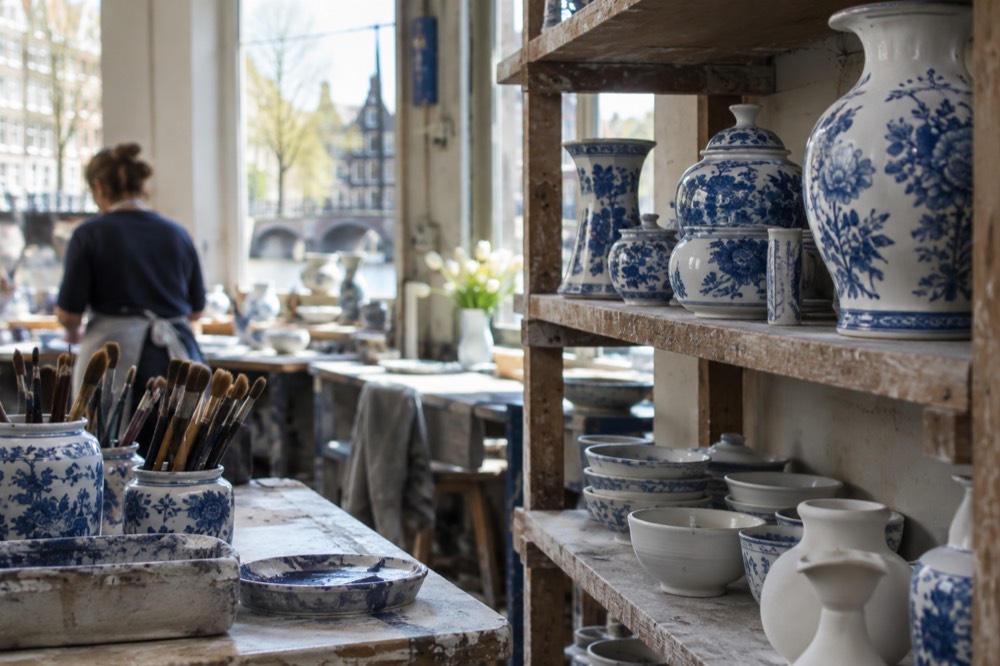
Delft blue is tin-glazed earthenware produced in Delft since the seventeenth century, inspired by Chinese porcelain imported by the Dutch East India Company, and it is still made in the city today. The historic factory, Royal Delft, demonstrates the painting process on site; current ticket prices are on the factory's own page, so check there before you visit rather than trusting third-party figures.
The history is genuinely good. When Chinese blue-and-white porcelain flooded into Europe through Dutch trade, Delft potters imitated it with local clay and tin glaze, and the imitation became its own art form. At its peak the city held dozens of potteries; today one historic manufacturer carries the tradition, and the distinction between genuine Delftware and the mass-produced souvenir version is the single most useful thing a buyer can know.
For buyers, the honest advice is simple. Pieces painted by hand in Delft cost real money and carry the maker's mark; pieces stamped out as souvenirs cost a few euros and are fine as exactly that. If you are spending serious money, buy at the factory or a reputable shop in the centre and ask about the mark. If you are spending pocket money, enjoy it for what it is. The same test applies to souvenirs generally: ask what you are actually paying for before you pay for it.
How Does Delft Compare With Other Day Trips From Amsterdam?
Delft competes with Zaanse Schans, Haarlem and Rotterdam, and it wins on intact historic atmosphere while losing on headline sights: Zaanse Schans delivers windmills faster and cheaper, from $34, while Delft offers the deeper, quieter, more lived-in version of the old Netherlands. Choose Delft for history and craft, Zaanse Schans for the postcard, Rotterdam for modernity.
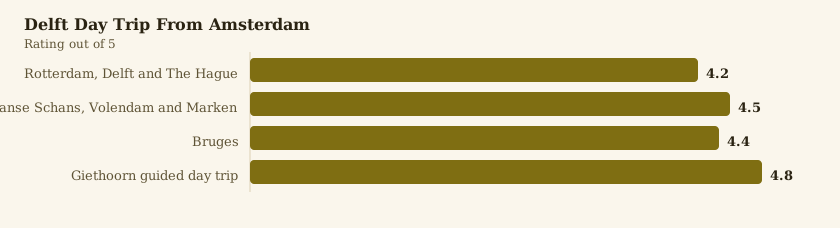
The numbers help frame it. The Zaanse Schans, Volendam and Marken tour runs 5 hours 30 minutes, costs from $34 and carries a 4.5 rating across 20,839 reviews, making it the highest-volume countryside option on the roster. The Bruges day trip runs a full 12 hours and costs from $47, rated 4.4 across 2,375 reviews, which is a big commitment for one day. Delft, at from $63 for the three-city tour, sits between them in price and depth.
| Day trip | Duration | From | Rating | Best for |
|---|---|---|---|---|
| Rotterdam, Delft and The Hague | 9 hours | $63 | 4.2, 2,642 reviews | Three cities, one booking |
| Zaanse Schans, Volendam and Marken | 5 hours 30 minutes | $34 | 4.5, 20,839 reviews | Windmills and fishing villages |
| Bruges | 12 hours | $47 | 4.4, 2,375 reviews | Medieval Belgium, long day |
| Giethoorn guided day trip | 7 to 8 hours | On the live listing | 4.8, 575 reviews | Village canals, boat ride |
If you want to extend the comparison, our Rotterdam and The Hague guides cover the two cities the Delft tour bundles in, and the pairing is natural: Delft for the seventeenth century, Rotterdam for the twenty-first, The Hague for the seat of government. Doing all three independently by train takes two comfortable days rather than one.
Where Should You Eat in Delft?
Eat on or near the market square for the classic experience, which is a terrace, a beer and a view of the churches, and treat the canal-side cafés in the eastern old centre as the quieter alternative. Delft's food identity is the same Dutch repertoire as Amsterdam's, brown café comfort food, cheese, bitterballen and apple pie, executed in calmer surroundings and shorter queues.
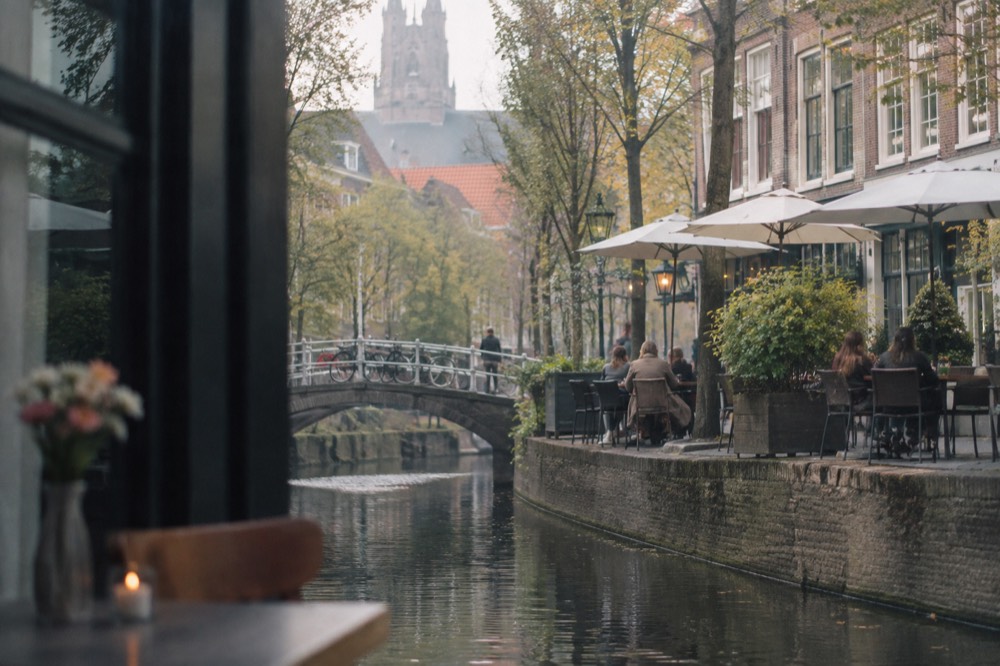
The brown café culture translates directly. A traditional Dutch brown café, wood-panelled, candle-lit and unhurried, is the right lunch stop in Delft for the same reasons it is in Amsterdam. Order bitterballen, ask what the local apple pie situation is, and stay longer than you planned.
For the deeper food background, the Dutch foods to try guide covers the repertoire you will meet on any Delft menu. The practical difference from Amsterdam is availability: in Delft you can walk into a good café at noon without a reservation, which is a small luxury the capital stopped offering years ago.
Should You Book a Tour or Go Independent?
Book the guided tour if you want three cities, commentary and zero logistics in one payment; go independent if Delft itself is the goal and you would rather spend your hours inside the old centre than on the road between cities. The tour costs from $63 and lasts 9 hours; the train version costs a contactless rail fare and lasts exactly as long as you want it to.
The deciding factors are pace and appetite. A traveller who has never seen the Netherlands and has one free day gets genuine value from the tour's sweep: it delivers Delft, Rotterdam and The Hague in a single organised loop, with a guide filling the drive time with context. A traveller who has read this far about pottery marks and Vermeer light will likely be happier loose in Delft with a phone full of notes and no departure time.
There is also a hybrid worth naming. Take the morning train to Delft, spend the day there, and return to Amsterdam in time for an evening on the water: the classic saloon boat cruise costs $19.56, runs 1 hour, and carries a 4.8 rating across 33,435 reviews, a calm way to end a day that started with a train ticket. Check availability if that closing hour appeals.
And if your Amsterdam evenings are already full, the same logic points the other way: the desk's day-trip overview plus the Van Gogh Museum ticket page for your in-city museum day cover the two halves of most itineraries. The Van Gogh Museum costs €25 per adult, under-18s enter free, and every visitor must pre-book a timed entry slot, so treat it as a reservation, not a walk-in.
When Is the Best Time of Year for a Delft Day Trip?
Spring and early autumn are the best windows: spring for the light and the tulip-season energy across the region, early autumn for thin crowds and stable weather, while midsummer brings the thickest day-trip traffic and winter shortens the usable daylight. Any day works, but a weekday outside school holidays buys you the quietest version of the old centre.
The regional calendar matters more than the city's own. Keukenhof, the tulip garden at Lisse, opens only from 18 March to 9 May, and travellers who time an Amsterdam trip for tulip season often find that a Delft day slots in naturally alongside it, since both reward the same mild-weather window. Our Amsterdam in spring and tulip season guide covers the bloom logic in detail.
Delft itself is a year-round town. The canals photograph well under grey skies, the brown cafés are at their best in cold weather, and the pottery factories are indoors. What changes across the year is crowd pressure: the market square on a summer Saturday is a different experience from the same square on a Tuesday in October, and the difference is bigger here than in Amsterdam because the centre is so small.
Common Questions About a Delft Day Trip from Amsterdam
Is Delft worth a day trip from Amsterdam?
Yes. Delft's compact historic centre, Delft blue pottery heritage and Vermeer connections fill a day comfortably, and it offers a calmer, more lived-in version of the old Netherlands than Amsterdam's centre can.
How do you get from Amsterdam to Delft?
Delft sits on the main intercity rail line south of Amsterdam, with trains throughout the day and contactless payment under OVpay, or you can take the Rotterdam, Delft and The Hague guided day tour, from $63 for 9 hours.
How many hours do you need in Delft?
Six hours in the old centre is a comfortable full day: the market square, both churches, the pottery story and a canal walk, with time for a long lunch. The guided tour gives Delft roughly two hours as one of three cities.
What is Delft famous for?
Delft blue tin-glazed pottery, the painter Johannes Vermeer, the royal family's burial church, and an intact seventeenth-century canal centre. The pottery is still made in the city today.
Is Delft or Zaanse Schans the better day trip?
They answer different questions. Zaanse Schans delivers windmills and a shorter, cheaper day, from $34 for 5 hours 30 minutes. Delft delivers history, craft and atmosphere over a longer visit. Many travellers with two free days do both.