Gouda Day Trip from Amsterdam: Cheese, Stroopwafels and a Medieval Centre
Gouda is one of the easiest day trips you can take from Amsterdam: a small, walkable historic centre, the cheese market that gave the city its name, and the town where the stroopwafel was invented, all less than an hour from Centraal Station by train.
Short answer
Gouda sits under an hour from Amsterdam by direct train, making it one of the simplest day trips in the Netherlands. The historic centre is compact and walkable, the cheese market runs on market days in summer, and the stroopwafel was invented here. A morning train, a full afternoon and an evening return is the standard shape of the day.
Gouda does the thing most day-trip towns fail at: it gives you a full day without demanding a second. The centre is small enough to cross on foot in twenty minutes, old enough that the town hall on the market square dates from the fifteenth century, and famous enough that its name is on cheese sold in supermarkets on three continents. Yet the crowds that fill Amsterdam's canal ring thin out noticeably the moment you step off the train here, and that contrast is the whole reason to go.
This guide lays out the practical shape of a Gouda day trip from Amsterdam: the train connection, what the cheese market actually is (and what it is not), the sights worth your limited hours, and how to fold the day back into an Amsterdam itinerary that still has museums and canal cruises on it. Where a figure matters, it comes from a verified source or the site's own tour roster, and where a price lives only on a live listing, the guide says so rather than inventing a number.
Why Does Gouda Work So Well as a Day Trip from Amsterdam?
Gouda works as a day trip because it combines a short, direct rail link with a historic centre that needs no transport once you arrive: the walk from the station to the market square takes roughly ten minutes, every major sight sits inside that radius, and the city's two claims to fame, cheese and stroopwafels, are both consumed on the same square. You lose no time to logistics. There is no bus transfer, no ticket maze, no decision about which district to base in. The train delivers you, the town does the rest.
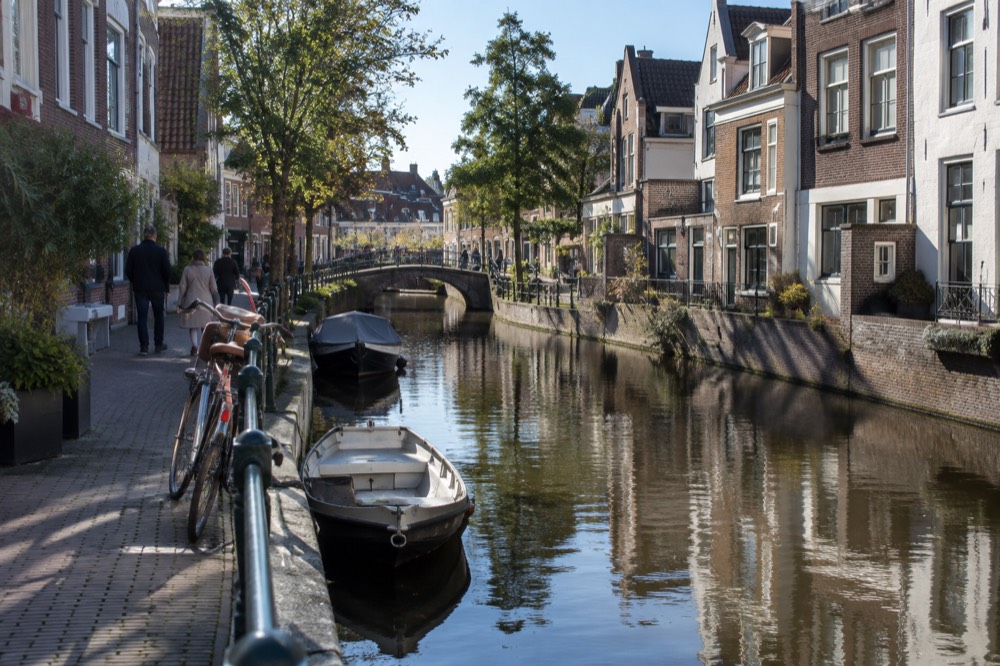
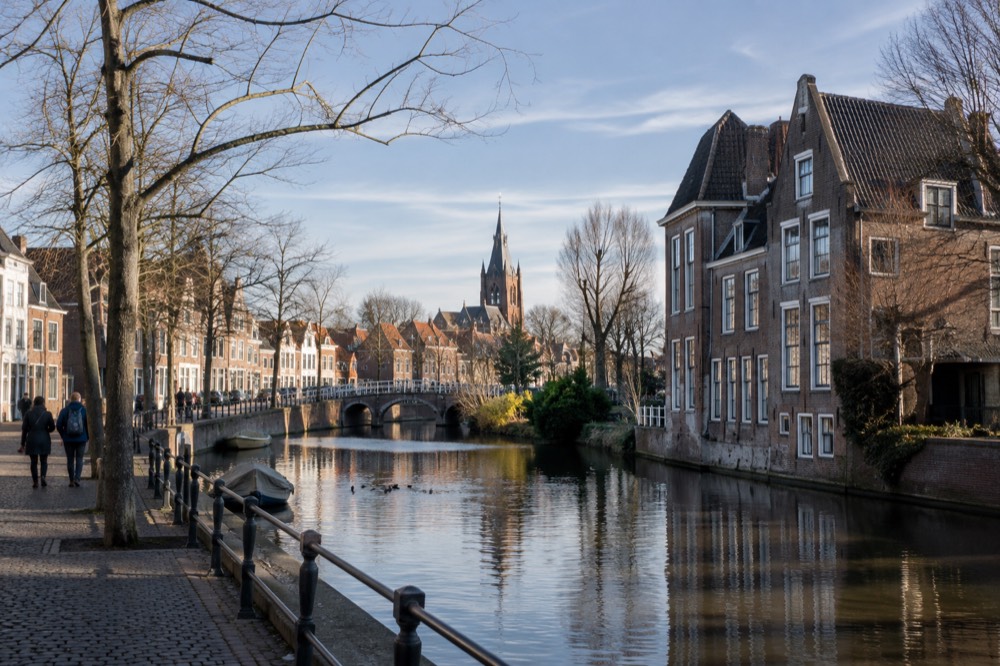
That simplicity is rarer than it sounds. Plenty of Dutch day-trip destinations reward the journey but punish the arrival: you step off the train into a modern district and spend half an hour walking or trams-ing toward anything photogenic. Gouda inverts this. The station sits at the edge of the old town, and the route into the centre crosses canals and passes gabled houses from the first minute, so the sightseeing starts before you have orientated yourself.
The city is also a genuinely working market town rather than a museum with shops. On non-market days it can feel quiet, almost provincial, and that is not a flaw: it is the point. Travellers who enjoy Amsterdam's quieter corners tend to like Gouda for the same reason, because it shows the Netherlands at a human scale, with schoolchildren on bicycles and cafés that are not aimed at anyone's holiday.
If you are building a wider trip, Gouda slots naturally into the same mental shelf as the other small-city excursions covered in the best day trips from Amsterdam roundup: less famous than Zaanse Schans, less crowded than Volendam, and considerably more of a real place than either. It is the choice for a traveller who has already seen windmills and wants a town instead. For the full picture of what the city itself offers around such a day out, the companion coverage at Things to Do in Amsterdam maps the in-city options you will return to each evening.
How Do You Get from Amsterdam to Gouda by Train?
The standard route is a direct NS train from Amsterdam Centraal to Gouda, a journey that takes under an hour and requires no transfer; trains run at regular intervals through the day, tickets are bought online or at the station, and the walk from Gouda station to the market square is about ten minutes on flat ground. There is no cheaper or faster way to do it, and no reason to book anything but a standard NS ticket.
 by Train" width="1000" height="667" loading="lazy" decoding="async">
A few practical notes make the day smoother. Dutch intercity trains take bicycles only outside peak hours, so if you were planning to bring a rental bike, check the NS rules for the day you travel rather than assuming. Contactless payment works on NS trains, the same way it works on Amsterdam's trams and metro, so you can tap in and out with a bank card and skip the ticket machine entirely. And the return leg is flexible: you are not bound to a specific departure, which means an evening in Gouda that runs long costs you nothing but a later train.
The timing decision matters more than the ticket decision. Arrive mid-morning on a cheese-market day and you get the spectacle at full volume; arrive on a Monday in winter and you get a quiet, atmospheric town with the market square to yourself. Both are legitimate versions of Gouda, but they are different products, and the next section explains how to choose between them.
One thing worth doing before you leave Amsterdam: lock in the timed-entry tickets for the museums you plan to hit the following day. The Van Gogh Museum in particular requires every visitor, without exception, to pre-book a timed slot, a rule stated on the museum's own visit page (van gogh museum visit information), and popular days sell out. Sorting that from your phone on the train to Gouda turns dead travel time into planning time.
The trio above is the site's shortlist for the Amsterdam hours around a day trip: a museum ticket that needs advance booking, a brewery experience that does not, and an evening canal cruise that works as the day's wind-down. All three can be held with free cancellation, so booking them before you leave for Gouda costs you nothing if plans shift.
What Should You Actually See in Gouda in One Day?
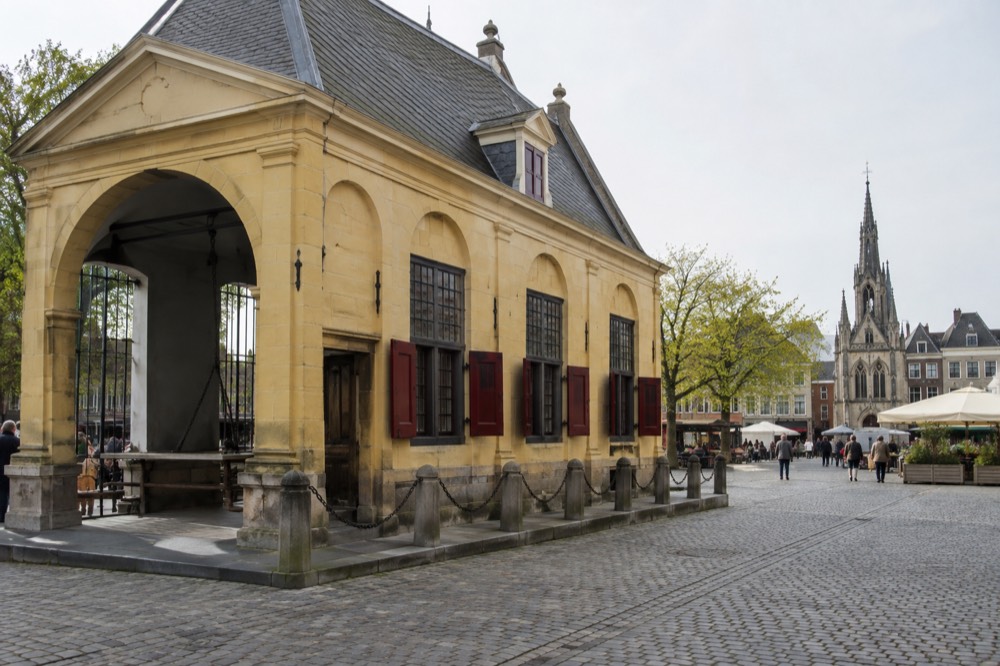
A one-day Gouda itinerary hangs on four things: the market square with its fifteenth-century town hall, the cheese weigh house, the Sint-Janskerk with its famous stained-glass windows, and a stroopwafel eaten warm from a bakery near the square, and all four sit within a five-minute walk of each other, so the day is a loop rather than a route. You can see everything on the list below and still have time for a long canal-side lunch.
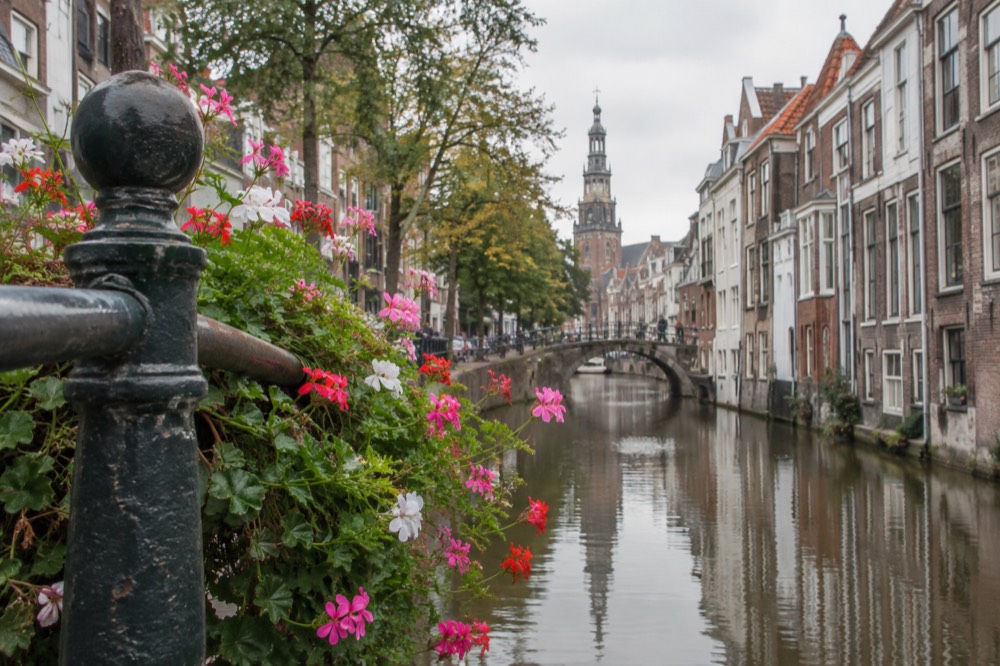
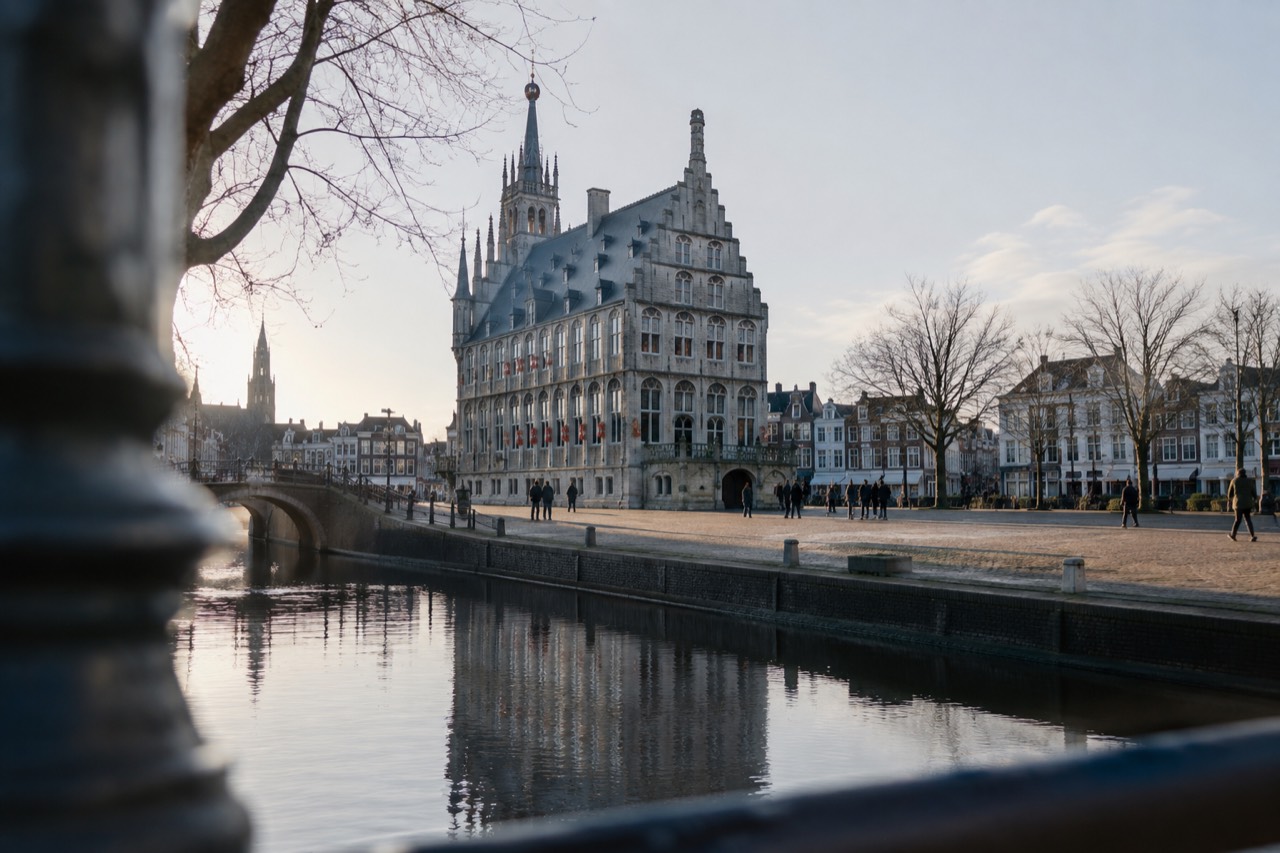
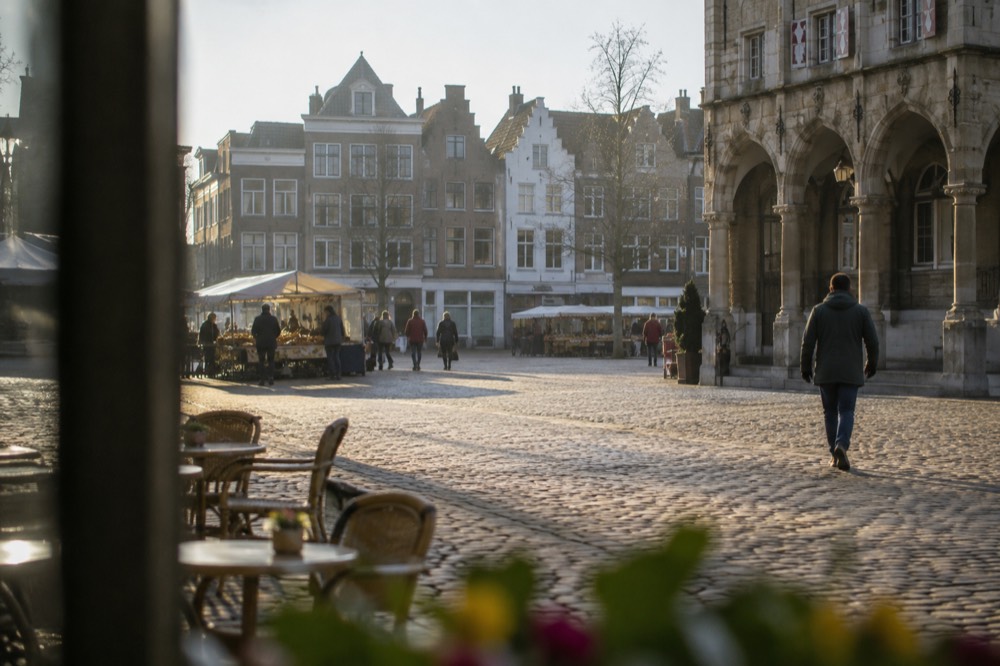
The town hall is the visual anchor. It stands alone in the middle of the market square, a Gothic structure with red-and-white shutters, and it is one of the oldest town halls in the Netherlands still in use for its original purpose. Photographers get the best of it early or late in the day when the low light warms the brickwork; the square itself is the kind of open, uncluttered space that Amsterdam's centre simply does not have anymore.
The Sint-Janskerk is the interior highlight. The church is known for its cycle of stained-glass windows, among the most celebrated in the country, and a visit inside is the one moment in the day that feels like a proper sight rather than a stroll. Check the opening arrangements on the church's own channels before you go, because religious buildings in small Dutch cities keep seasonal hours and close for services.
Then there is the eating, which in Gouda is not a sideshow. The stroopwafel, two thin waffles bonded with caramel syrup, was invented here, not in Amsterdam, and the version baked in front of you on the square is a different object from the packaged one sold at airport tills. The city's cafés and brown-style pubs are low-key and inexpensive by Amsterdam standards, and the canal-side terraces fill up on sunny afternoons in a way that feels local rather than touristic. For context on what else Dutch snacking culture offers, from bitterballen to raw haring, the national menu is wider than most visitors expect and worth reading up on before you order.
| Sight | What It Is | How Long It Needs | Best Time of Day |
|---|---|---|---|
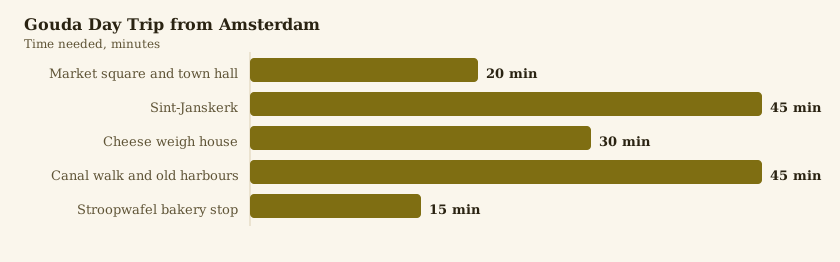
| Market square and town hall | Gothic town hall, centuries old, standing free in the square | 20-30 minutes, longer with photos | Early morning or golden hour |
| Sint-Janskerk | Large church known for its stained-glass windows | 45-60 minutes inside | Midday, after checking opening hours |
| Cheese weigh house | Historic building tied to the cheese trade, with the market outside on market days | 30 minutes | Market mornings in season |
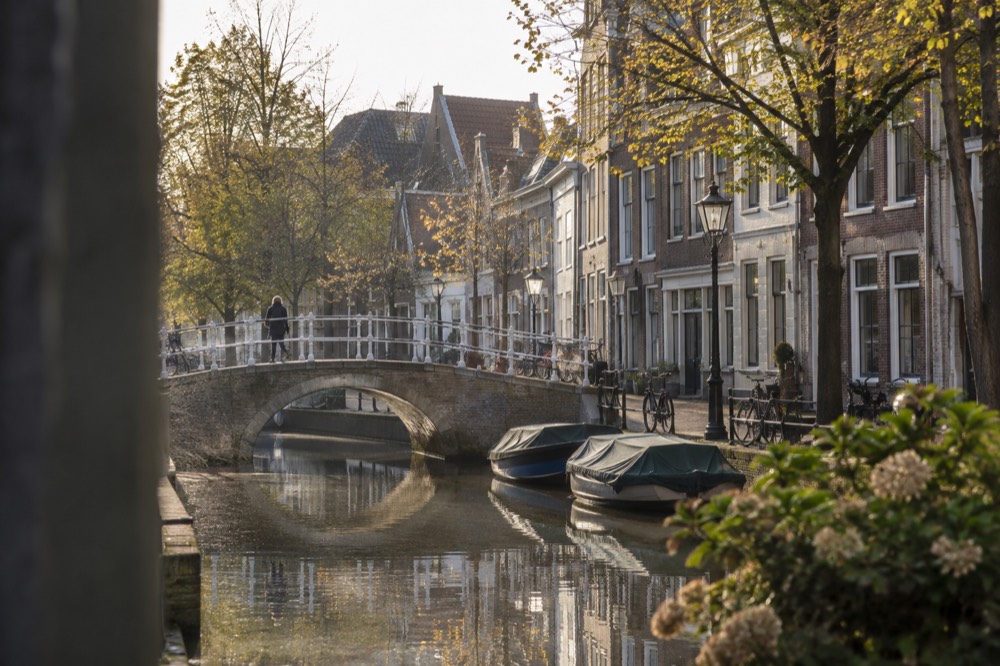
| Canal walk and old harbours | Quiet waterside loop around the centre | 45-60 minutes | Afternoon, when terraces are open |
| Stroopwafel bakery stop | Warm caramel waffle made where you buy it | 15 minutes | Any time, ideally fresh off the iron |
A realistic day plan looks like this: train out mid-morning, market square and town hall before lunch, a long lunch on a terrace, the church in the early afternoon, the canal loop after that, a final stroopwafel, and a train back in time for dinner in Amsterdam. Travellers who move faster can add the museums and smaller churches inside the ring; travellers who move slower should not, because the pleasure of Gouda is partly the absence of a checklist.
What Is the Gouda Cheese Market and When Does It Run?
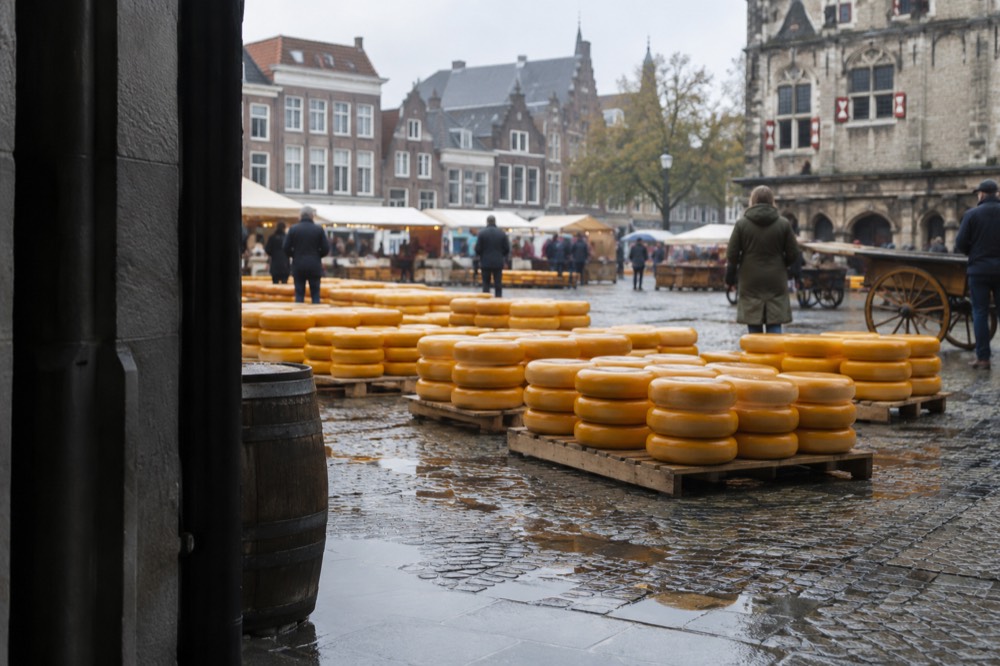
The Gouda cheese market is a historical re-enactment rather than a working wholesale trade: farmers and traders in period costume negotiate, carry and weigh wheels of cheese on the market square on summer market mornings, it is free to watch, and it finishes by early afternoon, so it rewards an early train far more than a leisurely one. It is theatre with a real product underneath, and it is the single most photogenic thing the town does.
The mechanics are worth understanding before you go, because they change what you should expect. The cheese arrives, is stacked in the square, handlers in white carry it on stretchers between the scales and the buyers, and deals are sealed with a handclap, a ritual gesture from the original trade. You can buy cheese to take home from the stalls around the spectacle, and the wheels sold at the market are the same style of aged Gouda sold across the country, so the buying is genuine even when the trading is a performance.
Timing is everything. The market runs on a fixed weekly schedule during the warmer months and does not run at all in winter, so the first planning step is checking the current dates on the city's own tourism information before you commit, because a wrong assumption here turns a market day into a quiet Tuesday. Arriving by mid-morning gives you the full performance; arriving after lunch gives you an empty square and a story about the square you missed.
If your dates do not line up with a market day, two alternatives fill the gap. The Alkmaar cheese market runs on its own summer schedule and offers a similar carrier-ritual spectacle in a different town, and Edam, which is also a straightforward day trip from Amsterdam, has its own smaller cheese tradition plus a harbour. Neither is a substitute for Gouda itself, but either can rescue a Netherlands cheese-market ambition from a bad calendar match.
For the avoidance of doubt: you do not need a tour, a guide or a ticket to see the Gouda market. It happens in a public square, it is visible from every side, and the town's paid sights, the church above all, are separate. The only money the market itself wants from you is for cheese, which is a transaction you will not regret.
Is a Gouda Day Trip Worth It Compared with the Other Options?
Gouda is worth the train fare for travellers who want a real Dutch town at low effort, and it is the wrong pick for travellers chasing windmills, waterland villages or a big-city skyline: Zaanse Schans answers the windmill question, Volendam and Marken answer the fishing-village question, and Rotterdam answers the modern-architecture question, while Gouda answers only the question of where the cheese comes from. Matching the town to the appetite is the whole decision.
The honest comparison is with the other half-day and full-day excursions around Amsterdam. Zaanse Schans is closer and more spectacular but is essentially an open-air attraction rather than a living town; Volendam and Marken are prettier per square metre but more overtly aimed at tour buses. Gouda has fewer postcard moments and more ordinary Dutch life, which is exactly what some travellers are starving for after three days in the canal ring. It is also flat, compact and quiet, which makes it one of the more accessible day trips for anyone weighing cobblestones and steep stairs into their planning.
| Day Trip | What It Delivers | Best For | Trade-Off |
|---|---|---|---|
| Gouda | Medieval centre, cheese market, stroopwafels, quiet canals | Town lovers, food-focused travellers | Fewer headline sights than the big names |
| Zaanse Schans | Working windmills in a historic setting | First-time visitors wanting the classic image | Feels like an attraction, not a town |
| Volendam and Marken | Harbour villages on the water | Photographers, half-day trippers | Most touristed of the set |
| Rotterdam | Modern architecture and a major-city energy | Design and city-break travellers | A full day, and a different mood entirely |
Cost is where Gouda quietly wins. The day's spend is a train ticket, lunch, a church visit and cheese, and none of those items carries an Amsterdam-style markup. Compare that with a day built around Amsterdam's paid attractions: the Rijksmuseum charges adults €25 with free entry for ages 18 and under, per the museum's own prices page (Rijksmuseum opening hours and prices), and the major timed-entry museums cluster in the same band. A Gouda day costs a fraction of a museum day, which is a good argument for doing both rather than choosing.
How Do You Fold Gouda Into a Longer Amsterdam Itinerary?
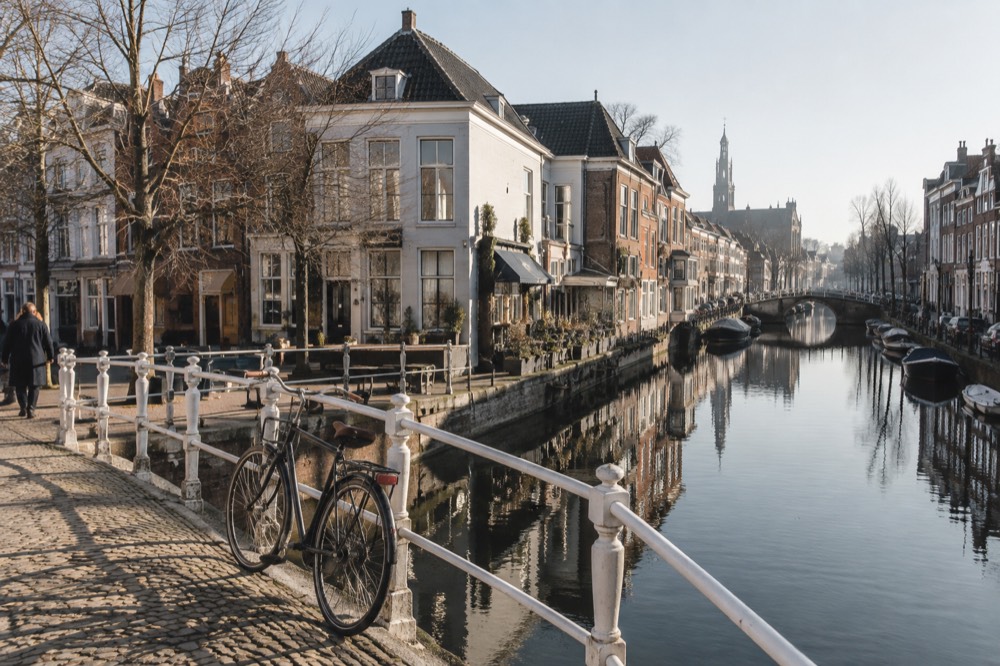
The cleanest pattern is to give Gouda a full day in the middle of a four-to-five-day Amsterdam stay: use the morning train as a rest from museum fatigue, return by early evening, and spend the late hours on the canals, which is when the city is at its best and when the cruise boats are at their quietest. Gouda is a recovery day that still counts as sightseeing.
The evening you return matters as much as the day itself. Amsterdam after dark is a genuinely different product from Amsterdam at noon, and a canal cruise is the lowest-effort way to see it. The classic saloon boat cruise, a one-hour trip on a restored wooden boat, rates 4.8 across 33,435 reviews on its live listing and starts at $19.56, with drinks and cheese available as an upgrade, which makes it the natural bookend to a day that began with cheese on land.
For the museum day that follows, the Van Gogh Museum is the anchor most itineraries build around. The entry ticket listed on this site's roster starts at $31 and carries a 4.7 rating across 57,096 reviews, and the museum itself charges adults €25 with free entry for visitors under 18, figures stated on its own ticketing pages. Because every visitor needs a pre-booked time slot, this is the ticket to buy before you leave for Gouda, not after you come back.
The Heineken Experience fills the gap between an afternoon cruise and dinner. It is an interactive attraction in the brewer's original building rather than a working brewery tour, it runs about an hour and a half, and the ticket starts at $23 with a 4.6 rating across 39,581 reviews. It suits the evening of a day-trip day precisely because it asks nothing of your legs, which after a day of walking in Gouda is the right amount.
If your trip is shorter than four days, the calculus changes. A two-day Amsterdam stay cannot really afford a full day out, and the two days in Amsterdam plan keeps you inside the city for good reason. Gouda earns its slot from day three onward, and it earns it most strongly on the day when you have seen one too many Rembrandts and want to watch a small town be ordinary for an afternoon.
What Does a Gouda Day Trip Cost?
Budget a Gouda day around three spends: the return train from Amsterdam, one restaurant lunch, and small change for the church, cheese and stroopwafels; the train is the only figure that scales with how you book, and the whole day typically lands well below the price of a single day built around Amsterdam's paid museums, where one adult Rijksmuseum ticket alone is €25. Gouda is a cheap day by Dutch-city standards.
The train fare depends on when and how you buy, so treat any single number you read online, including in forums, with suspicion and check NS's own journey planner for your date. What does not vary is the structure: one direct train, no reservation system, no peak pricing games beyond the standard ticket types, and contactless payment accepted on board. Lunch in Gouda runs cheaper than equivalent food in Amsterdam's centre, and the difference is large enough to notice across a table of four.
| Item | Typical Spend | Notes |
|---|---|---|
| Return train, Amsterdam to Gouda | Check the NS planner for your date | Direct train, under an hour, contactless accepted |
| Lunch on the market square | Below Amsterdam-centre equivalents | Terrace cafés, no tourist premium on market days |
| Sint-Janskerk visit | Small entry fee, seasonal hours | Confirm opening arrangements before you go |
| Cheese to take home | Per wheel or per wedge, priced at the stall | Same style of aged Gouda sold nationwide |
| Warm stroopwafel | Pocket change | Bought at the bakery, eaten immediately |
Two costs are easy to forget and worth planning for. The first is the Amsterdam evening you return to: if you book the saloon boat cruise or the Heineken Experience on the same day, add those ticket prices to the day's total, at $19.56 and $23 respectively from the roster, and decide in advance whether that is the shape of the evening you want. The second is the city's tourist tax, which applies to your accommodation rather than your day trip but shapes the overall budget: Amsterdam charges 12.5 percent of the overnight price, excluding VAT, per the municipality's own tourist-tax page (gemeente Amsterdam tourist tax), a figure worth knowing when you compare a Gouda day against an extra Amsterdam night.
The savings framing is the honest one. A Gouda day is not free, but it replaces a day of €25 museum tickets and €20 cruises with a day of train fare, lunch and small change, and the difference funds a genuinely good dinner back in Amsterdam. Travellers working to a tight number should read the Amsterdam on a budget plan alongside this guide, because the two together show where the money actually goes on a Netherlands trip.
What Mistakes Do People Make on a Gouda Day Trip?
The three recurring mistakes are arriving after the cheese market has finished, assuming the market runs every day of the year, and treating Gouda as a half-day add-on to something else, which forces a rushed loop of a town that rewards slow hours on the square; each mistake is avoidable with one check of the market calendar and one honest look at your energy levels. None of them is expensive, and all of them are common.
The calendar mistake is the biggest. Gouda's cheese market is a seasonal, fixed-weekday event, and travellers who arrive on the wrong weekday find a beautiful, quiet square with no cheese on it. The fix is a thirty-second check of the current season's dates before you book anything else. The same discipline applies in reverse in winter: the market is off, the days are short, and a Gouda trip in December works best when paired with the capital's Christmas markets and lights rather than expected to carry a whole day on its own.
The timing mistake inside the day is subtler. Because the market wraps up by early afternoon, a train that leaves Amsterdam at eleven has already spent the spectacle. Leave early, see the market, and let the afternoon belong to the church, the canals and a long lunch, in that order or any order at all. The travellers who enjoy Gouda most are the ones who stop trying to see it.
The last mistake is made back in Amsterdam: returning from a quiet day in a small town and immediately queuing for something. The evening you come back is the right moment for the low-effort, high-yield options, the canal cruise above all, and the wrong moment to start a four-museum sprint. Plan the return leg with the same care as the outbound one and the whole day lands.
Common Questions About a Gouda Day Trip from Amsterdam
How long is the train from Amsterdam to Gouda?
Under an hour on the direct NS train from Amsterdam Centraal, with no transfer needed. Trains run at regular intervals throughout the day, contactless payment is accepted on board, and the walk from Gouda station to the market square takes about ten minutes.
What is there to do in Gouda besides the cheese market?
The fifteenth-century town hall on the market square, the Sint-Janskerk with its famous stained-glass windows, a quiet canal walk around the old harbour, and the bakeries selling warm stroopwafels, the waffle the city invented. All of it sits within a five-minute walk of the square, so the town works without a plan.
Can you do Gouda as a half-day trip from Amsterdam?
You can, but you will compress the town into its least interesting hours. The cheese market finishes by early afternoon, so a half-day visit only works if you leave Amsterdam early and accept that the afternoon in Gouda is the part you skip. A full day is the better fit.
Is Gouda worth visiting if the cheese market is not on?
Yes, with adjusted expectations. On non-market days Gouda is a quiet, genuinely Dutch town rather than a spectacle: fewer photos, more ordinary life, cheaper terraces. Travellers who enjoy small cities at low intensity prefer it off-market; travellers chasing the classic cheese-carrier photos should match their dates to the market calendar.
Where does the stroopwafel come from?
Gouda. The stroopwafel, two thin waffles glued with caramel syrup, originated in this city, and the version baked fresh on or near the market square is a different experience from the packaged ones sold in supermarkets and airports. Eating one warm, straight off the iron, is the correct way.
Should I book Amsterdam tickets before taking a Gouda day trip?
Yes for anything timed, and the Van Gogh Museum above all: every visitor must pre-book a time slot, and popular days sell out. Booking from the train on the way to Gouda is the efficient move, and the tickets in this guide's shortlist can all be held with free cancellation if your plans shift.