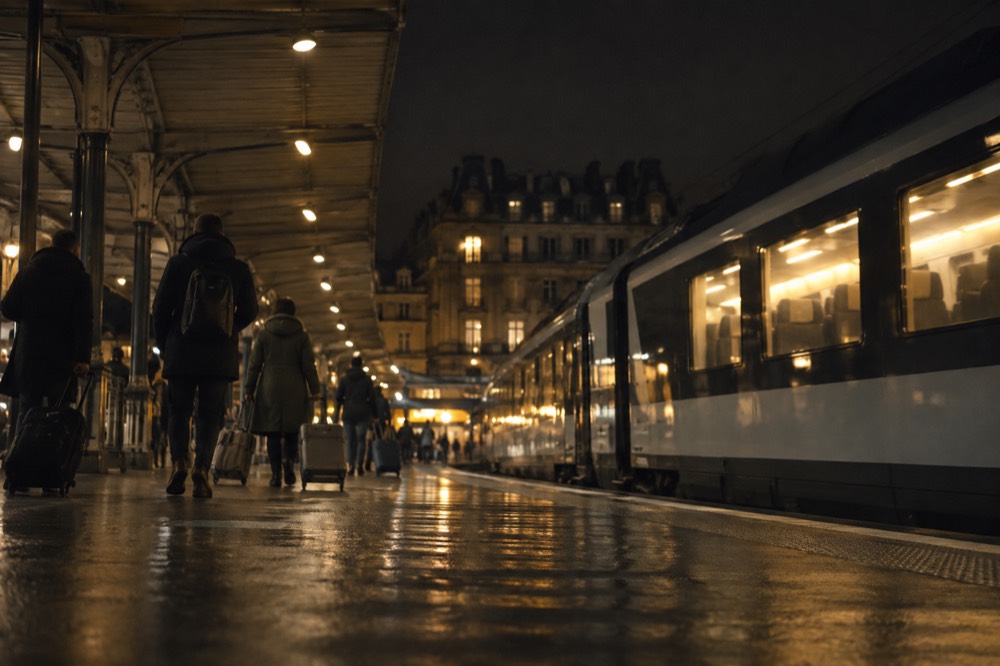
Paris by Train from Amsterdam
The rail link between Amsterdam and Paris turns the French capital into a plausible excursion, and this guide sets out how the journey works, what a realistic day looks like, and when flying or staying put is the smarter call.
Short answer
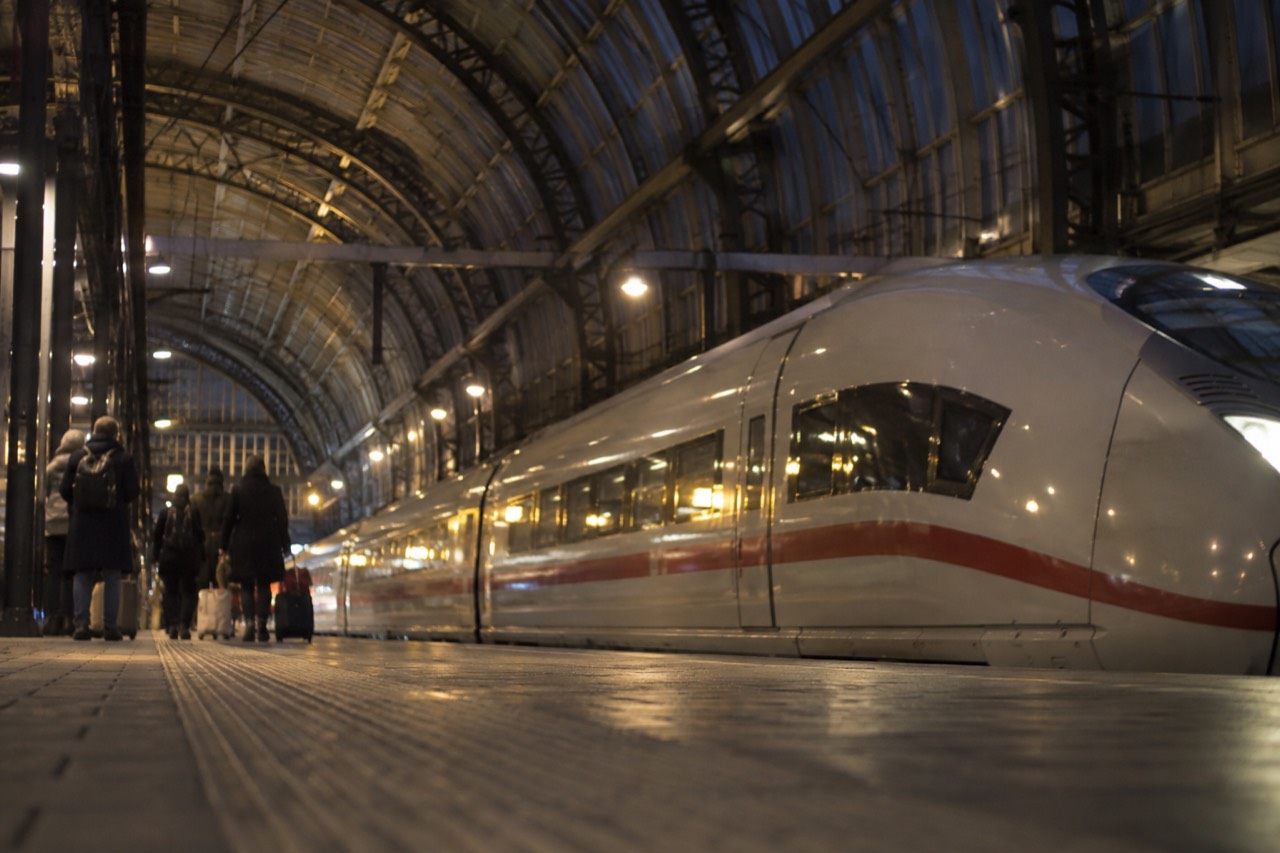
A direct high-speed train connects Amsterdam Centraal with Paris, making a very long day trip or a comfortable short break possible. There is no verified single fare in the site's fact base, so check live times and prices on the operator's own booking page before committing to a date.
A high-speed train pulls out of Amsterdam Centraal and arrives in the middle of Paris, and that single fact reshapes how many people plan a Netherlands trip. Visitors with a week in Amsterdam start wondering whether they can bolt on France for a day. Some can. Others discover that the maths does not work and that the day is better spent closer to base. This guide walks through the journey itself, the booking questions, the cost of the day beyond the ticket, and the honest alternatives, all written by an editorial desk that compares live listings and official sources rather than repeating round numbers found on a search page.
One point of honesty before anything else. The site's verified fact base contains no confirmed fare or timetable figure for the international rail link between Amsterdam and Paris, so nothing here prints one. Where a number matters, the answer is to read the operator's live listing or the official railway pages. Everything with a real figure in this guide, transport fares within the Netherlands, museum prices, city taxes, comes from a primary source the desk has checked.
Can You Do Paris as a Day Trip from Amsterdam by Train?
Yes, in the narrow sense that a direct train links the two capitals and the journey is short enough that a very long day trip is physically possible. But it consumes an entire day of an Amsterdam stay, the return leg lands late, and most travellers who try it report that a single day in Paris is a sprint rather than a visit. For a first-time visitor to either city, splitting the day is usually the wrong trade.
The honest framing matters here. Amsterdam and Paris are close by the standards of European capitals, and the rail connection is direct, which is why the question comes up so often. The journey each way occupies a substantial chunk of the day, so a day trip means an early start, a late finish, and a compressed window in Paris itself. People do it, and some love it. But the desk's advice is consistent: if Paris matters to you, give it an overnight. If it does not, the day is better spent in the Netherlands.
There is also a scheduling reality worth facing early. The number of direct departures per day is limited compared with domestic services, and seats on popular departures sell out in both directions. A day trip depends on two specific trains working for you, the outbound departure early enough to give Paris a real afternoon and a return late enough to be worth it but not so late that you arrive in Amsterdam after the last trams. Check both legs on the operator's live listing before you plan anything else around the day.
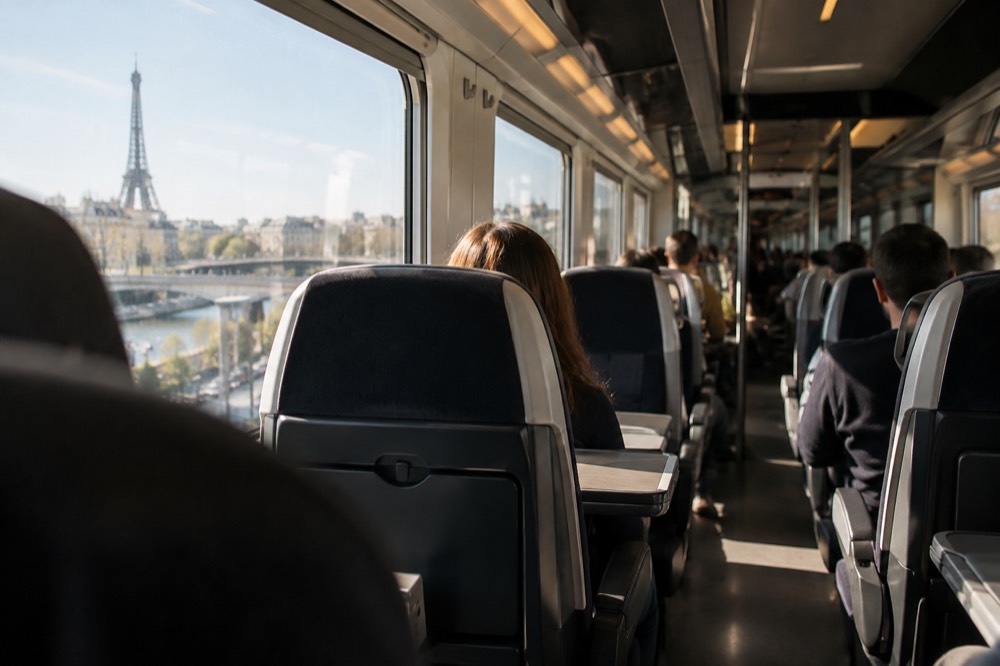
The comparison that settles most people is simple. A day trip to Paris costs you the whole of one Amsterdam day. The city has enough to fill four or five full days without repetition, as the desk's one day in Amsterdam and two days in Amsterdam itineraries make clear. If your trip is three days or fewer, the arithmetic is brutal and the answer is to stay put. If you have a week, the trade is genuinely open.
How the Amsterdam to Paris Train Journey Works?
The journey runs between Amsterdam Centraal and Paris Gare du Nord on a direct high-speed service, with a handful of departures spread across the day. You book a specific train, take an assigned seat, and pass through security and passport checks at the station before boarding, so arriving well before departure is part of the routine. No ferry, no airport, no transfer from a distant terminal.
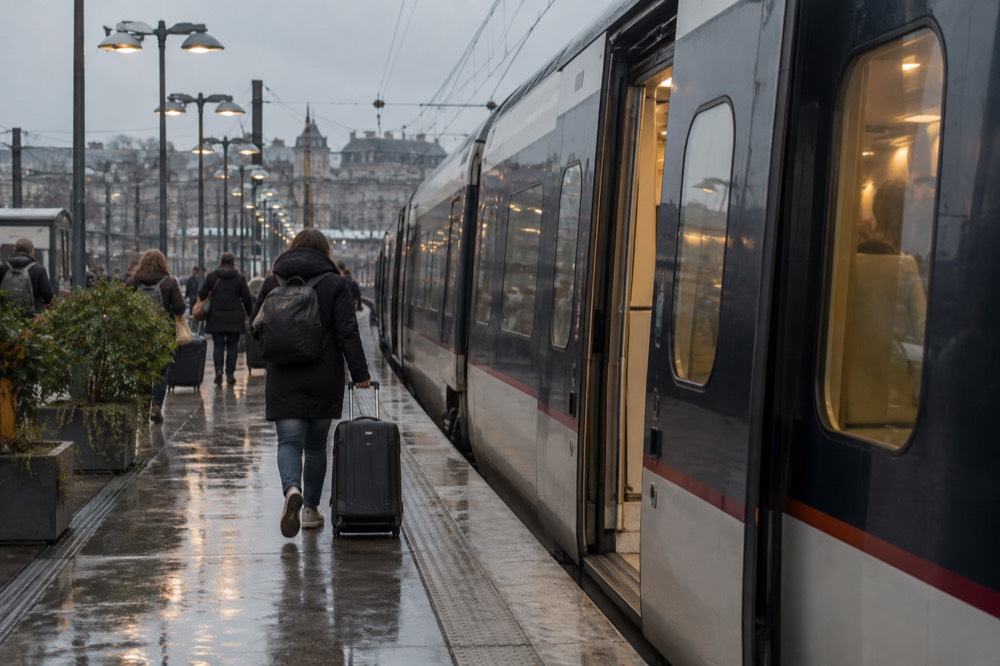
The practical rhythm is closer to a short flight than to a regional train, which surprises some travellers. There is a check-in cut-off, a security screening, and passport control, because the service crosses an international border. That means the door-to-door comparison with flying is much closer than the raw journey time suggests, and the train wins on the things that actually decide the day: both stations sit in the centre of their cities, so there is no airport transfer at either end.
Amsterdam Centraal itself is a destination-grade station, and it is worth arriving with time to look up at the roof rather than sprinting through it. If your accommodation is elsewhere in the city, the GVB network gets you there: a single one-hour ticket costs €3.40, and a 24-hour day pass costs €10.00, with a child day pass at €5.00, per the official GVB fare page. Contactless payment with a bank card works on trams, buses and the metro, with a base fare of €1.16 plus €0.217 per kilometre, so a short hop to the station costs very little.
Booking strategy is where most of the value is won or lost. International high-speed fares move with demand, and the same train can carry wildly different prices depending on how far ahead you book and how popular the date is. The desk's advice: decide your dates as early as you can, compare the operator's own booking page against whatever a reseller shows, and treat any price quoted in a blog, including a price you might have seen on a listicle, as unreliable until you see it on a live booking screen. There is no verified figure for this route in the fact base, and inventing one would be the easiest mistake on this page.
If the day trip survives the timetable check, the rest of the planning is pleasant. Reserve a seat on a specific departure, book the return in the same transaction so the two legs cannot drift out of sync, and plan Paris around one neighbourhood rather than a checklist. A first-timer sprinting between Montmartre, the Louvre and the Eiffel Tower will see mostly metro tunnels. Pick two things within walking distance of each other and let the day breathe.
What a Realistic Paris Day Looks Like from Amsterdam
A realistic day gives you roughly one full daylight window in Paris, bookended by two train legs, so the workable plan is one neighbourhood, one major sight, and one unhurried meal. Anything more ambitious collapses into transit time. Book the two museum or attraction tickets that matter before you leave Amsterdam, because Paris queues are as punishing as Amsterdam's.
The pattern that works is simple. Take the earliest sensible departure, arrive mid-morning, and spend the morning on the one sight that would break your heart to miss. Eat a proper lunch near it, not near a station. Give the afternoon to walking, because Paris rewards street-level wandering more than any second museum would. Then head back to Gare du Nord with a buffer, since a missed return train is the single most expensive mistake of the day.
What you should not do is plan the day around a hard timed entry in the late afternoon. A delayed outbound train in the morning shrinks your window, and a tight timed slot in Paris leaves no slack. Put anything that must be pre-booked in the middle of the day, and keep the edges of the day flexible. That is the same logic the desk applies to Amsterdam's own timed-entry museums, and it transfers directly.

Here is the comparison the desk runs when someone asks whether the day is worth it. For the price and time of the Paris run, you could take a Dutch day trip instead, and the Netherlands offers several that are easier logistically: Zaanse Schans and the windmill villages, Haarlem, Utrecht, or the tulip fields in season. The site's best day trips from Amsterdam guide covers the full spread. Paris is the only one of these that delivers a different country, a different language and a different cuisine, and that is precisely why it tempts. But it is also the only one that can fail on a single missed connection.
Is the Train Better Than Flying Between Amsterdam and Paris?
For a city-centre to city-centre journey, the train is almost always the better option, because both Amsterdam Centraal and Paris Gare du Nord sit in the middle of their cities and no airport transfer is needed at either end. Flying only wins when a rare fare is dramatically cheaper, and even then the door-to-door saving is smaller than it looks.

The arithmetic that decides it is not the time in the air or on the rails, but everything around it. A flight from Amsterdam means getting to Schiphol, clearing security, boarding, landing at a Paris airport, and then transferring from Charles de Gaulle or Orly into central Paris, which is a substantial additional journey on top of the flight itself. The train compresses all of that into a single leg that starts and ends where you actually want to be. The rest of the planning pages sit on Things to Do in Amsterdam.
Schiphol is admittedly one of Europe's more manageable hubs, and the desk's own figures show how cheap the rail link into Amsterdam is: the NS train from Schiphol to Amsterdam Centraal starts from €5.50 and takes just over 17 minutes, per the official NS route page. The Amsterdam Airport Express bus 397 runs from €6.50 single. So if you are flying into Amsterdam and then continuing to Paris by train, the connection is painless. But that convenience argues for the train to Paris too, because the same station that receives you from the airport is the one that dispatches you to France.
There is one more angle worth naming. The train is the lower-stress option in a way that does not show up in any price comparison. There is no baggage carousel, no gate change, no forty-minute taxi queue at the far end. You sit down, the countryside rolls past, and you arrive at street level in Paris with your legs already under you. For a day trip, where every wasted half-hour comes out of your Paris afternoon, that matters more than any fare difference.
When Should You Book the Train, and How?
Book as early as your dates allow, directly through the operator's own booking page, and treat flexible or refundable fares as worth paying for on a day trip, because a missed outbound train otherwise strands your Paris plan. Compare the same departure across sellers before paying, and never rely on a price quoted in an article.
The booking window question is the one the desk gets most often, and the answer is unglamorous: as early as possible. International high-speed fares on this corridor are demand-priced, and the cheap seats on popular departures, Friday afternoons, Sunday evenings, school holidays, disappear first. If your Paris day is fixed by the rest of your itinerary, lock the trains before you book anything else for that day, including Paris museum slots.
The channel matters as much as the timing. The operator's own booking page shows the live inventory and the full range of fare conditions, and it is the only place where the small print, the exchange rules, the check-in cut-off, the baggage policy, is stated by the people actually running the train. Third-party resellers can be cheaper on specific dates, but read what you are buying, because a "non-flexible" ticket and a "semi-flex" ticket are different products with different rescue options when something goes wrong at 7am in Amsterdam.
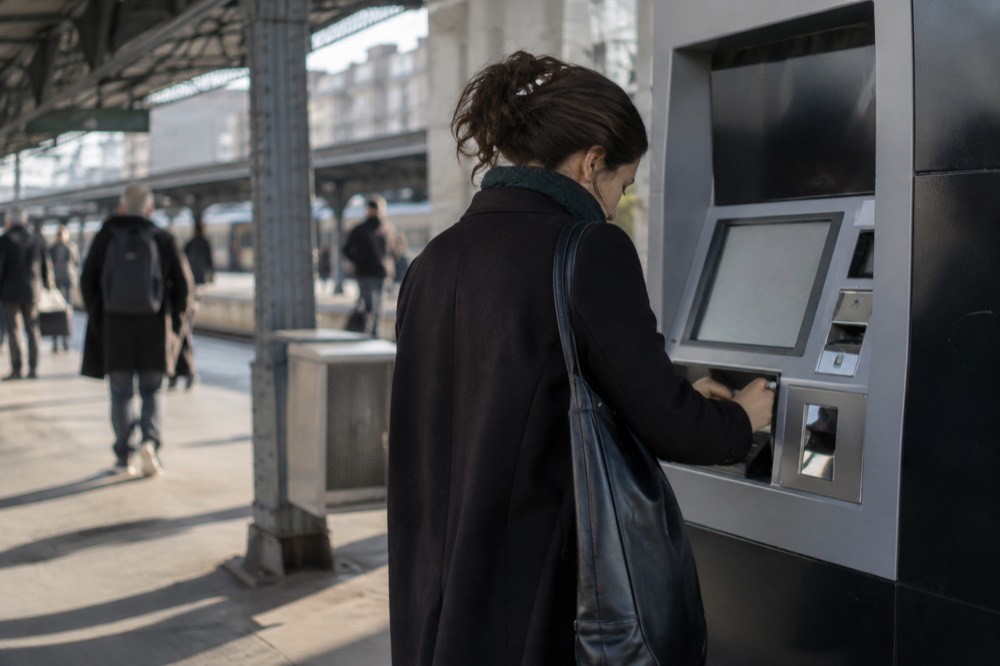 train ticket machine and departure board inside a large European railway station" width="1000" height="667" loading="lazy">
One Amsterdam-specific wrinkle: build your morning backwards from the check-in cut-off, not from the departure time. If you are staying outside the centre, check how your tram or metro ride lines up against an early departure, and remember that a single GVB ticket costs €3.40 for an hour of travel, so the ride to Centraal is trivial in cost but not in rush-hour time. The desk's getting around Amsterdam guide covers the network in full, including the contactless option that removes the ticket-machine step entirely.
Finally, if the Paris plan is part of a longer rail adventure, the desk's trains to Amsterdam from London, Paris and Brussels guide covers the wider corridor, including the London leg that shares the same cross-border routine. The check-in and passport process described there is the same one you will face at Centraal on a Paris morning.
To keep the booking decisions straight, here is the desk's checklist for the transaction itself:
| Decision | What to Choose and Why |
|---|---|
| Booking channel | The operator's own page, for live inventory and the full fare conditions |
| Fare type | Flexible or semi-flex on a day trip, because a missed outbound strands the plan |
| Outbound departure | The earliest sensible one, so Paris gets a real afternoon |
| Return departure | Booked in the same transaction, late enough to be worth it, early enough to make the last trams |
| Paris timed entries | Placed mid-day, never at the edges, so a delay cannot kill them |
What Does the Day Cost Beyond the Ticket?
Beyond the fare, budget for transport at both ends, food in Paris, which is noticeably dearer than Amsterdam, and any pre-booked Paris attraction tickets, plus the money value of the Amsterdam day you are giving up. The desk's verified Amsterdam figures below show what the Dutch side of the ledger looks like, so you can see the trade clearly.

The fare is only the headline. A day trip to Paris carries a tail of smaller costs, and the honest way to plan is to total them before you commit. On the Amsterdam side, the desk can put real numbers on nearly everything, because the city's official sources publish them. On the Paris side, prices move more and the fact base holds nothing verified, so the advice is to check each Paris venue's own site rather than trust a round number from a search result.
Here is what the verified Amsterdam side of the day looks like:
| Item | Verified figure | Source |
|---|---|---|
| GVB single ticket, 1 hour | €3.40 | Official GVB fares page |
| GVB 24-hour day pass | €10.00 (child €5.00) | Official GVB fares page |
| NS train, Schiphol to Amsterdam Centraal | From €5.50, just over 17 minutes | Official NS route page |
| Amsterdam Airport Express bus 397 | From €6.50 single | Operator page |
| City tourist tax, if you stay a night | 12.5% of the overnight price, excluding VAT | Municipal tax page |
The trade-off framing is the part most guides skip. Every euro and hour spent reaching Paris is a euro and hour not spent in Amsterdam, and Amsterdam's headline sights are not cheap: the Rijksmuseum charges €25 for adults with free entry for ages 18 and under, per the museum's own price page, and the Van Gogh Museum also charges €25, with free entry for under-18s and a mandatory pre-booked time slot for every visitor. Both of those facts come from the museums' own sites, and both museums are covered in the desk's dedicated guides.
For comparison, here is how the in-city Amsterdam alternatives stack up against a Paris day, using verified figures and the site's own tour roster:
| Option | Cost per adult | Time needed |
|---|---|---|
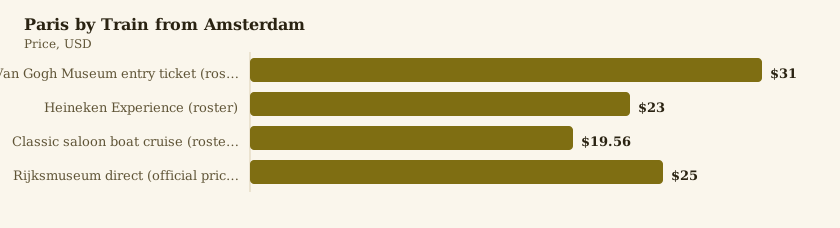
| Van Gogh Museum entry ticket (roster) | From $31 | Half a day with timed entry |
| Heineken Experience (roster) | From $23 | About 1 hour 30 minutes |
| Classic saloon boat cruise (roster) | From $19.56 | 1 hour on the canals |
| Rijksmuseum direct (official price page) | €25, under-18s free | Half a day |
| Paris day trip by train | No verified figure, check the live listing | The entire day |
Read that table honestly and the decision often makes itself. For the cost of the Paris fare alone, a traveller could do the Van Gogh Museum, a canal cruise and the Heineken Experience and still have change. That is not an argument against Paris, which is magnificent and worth proper time. It is an argument against doing Paris badly while Amsterdam sits half-seen.
What If the Timetable Defeats You: Alternatives to a Paris Day Trip
If the departure times, the fare or the calendar do not cooperate, the strong alternatives are an overnight in Paris, a shorter Dutch day trip, or a deliberate day in Amsterdam itself built around the sights you would otherwise miss. An overnight solves the timing problem entirely, and a Dutch day trip preserves your Amsterdam evening.
The overnight option deserves more attention than it gets. Adding one night in Paris converts a frantic sprint into a genuine visit, and it removes the single point of failure that ruins day trips, the return train. The cost is one hotel night in Paris, which is real money, but the value per hour in the city roughly doubles. If the morning departure is sold out or the evening return is too early, this is the answer, not a shrug.
The Dutch alternatives are strong and cheap to reach. Zaanse Schans and the windmill villages deliver the postcard Netherlands in a fraction of the time, Haarlem and Utrecht are short train hops with centres that reward wandering, and the tulip fields around Lisse are spectacular in the narrow spring window. The desk's Keukenhof guide covers the flower season, with the important caveat that the gardens open only from late March to early May and never year-round.
And then there is the option people overlook: spend the day in Amsterdam properly. The city's most-booked experiences, the Van Gogh Museum, the Rijksmuseum, a canal cruise, are exactly the things a Paris day would crowd out. The Van Gogh Museum ticket on the site's roster starts from $31 and carries a 4.7 rating across 57,096 reviews, and every visitor needs a pre-booked time slot, which the museum's own rules make mandatory. Book the slot, take the cruise, and let Paris wait for a trip of its own.
Common Questions About Taking the Train from Amsterdam to Paris
Can you do Paris as a day trip from Amsterdam by train?
Yes, a direct high-speed train links the two capitals, so a long day trip is possible. It consumes a full day of your Amsterdam stay, and the desk's advice is to overnight in Paris if the city matters to you, or stay in the Netherlands if your trip is three days or fewer.
How long is the train from Amsterdam to Paris?
The site's verified fact base holds no confirmed journey time for this route, so no figure is printed here. Check the live timetable on the operator's own booking page, and remember to add check-in, security and passport time at Amsterdam Centraal before departure.
Is the train better than flying between Amsterdam and Paris?
For most travellers, yes. Both stations sit in the centre of their cities, so no airport transfer is needed at either end, and there is no baggage carousel or gate roulette. Flying only wins on a rare, dramatically cheaper fare, and even then the door-to-door difference is small.
How much does the train from Amsterdam to Paris cost?
There is no verified fare in the fact base, and international high-speed fares move with demand, so any number quoted in an article is unreliable. Book early on the operator's own page, compare sellers for the same departure, and treat flexible fares as worth paying for on a day trip.
What should I do in Paris if I only have one day?
Pick one neighbourhood, one major sight and one unhurried meal. Put anything that needs a pre-booked timed slot in the middle of the day, keep the morning and late afternoon flexible, and head back to Gare du Nord with a buffer so a missed return train cannot strand you.
What are the alternatives if the Paris timetable does not work?
Take an overnight in Paris, which removes the return-train problem entirely, or spend the day on a Dutch excursion such as Zaanse Schans, Haarlem or the tulip fields in season. A deliberate day in Amsterdam around the Van Gogh Museum and a canal cruise is often the best trade of all.
The Paris train is a genuine option, and for travellers with time it is a fine one. The mistake is treating it as a free lunch. It costs a full Amsterdam day, the timetable decides more than you do, and the city you leave behind has a Van Gogh Museum, a canal ring and a brewery that all wanted that day too. Check the live listing, run the arithmetic honestly, and whichever capital wins, book the rest of the day before you leave the house.