Windmills Near Amsterdam: Which Trip Is Worth Your Day?
Zaanse Schans is the closest windmill village to Amsterdam and the easiest to reach, but it is not the only option. This guide compares every windmill day trip you can book or reach by train, with real prices and honest notes on crowds.
Short answer
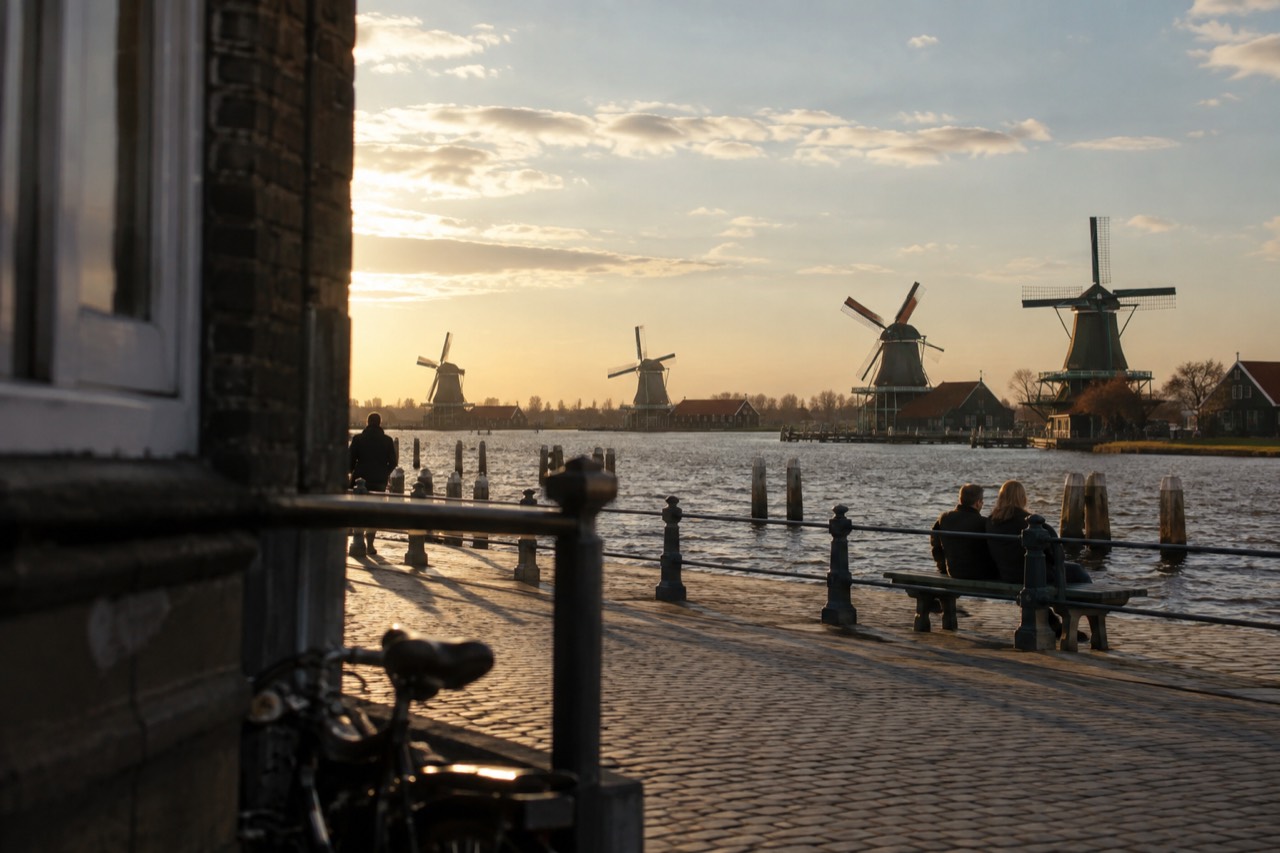
Zaanse Schans is the closest and cheapest windmill day trip from Amsterdam, roughly 20 minutes away, with tours from $34 per person for five and a half hours. Kinderdijk and Giethoorn are further and cost more, from $100.80 and $161 respectively, and suit travellers with a full day to spare.
Zaanse Schans sits barely half an hour from Amsterdam Centraal, and it has become the default answer to the windmill question. It is not the only answer. Kinderdijk holds the UNESCO listing, Giethoorn has the car-free canals, and a handful of working mills survive inside Amsterdam itself if you know where to look. The right choice depends on how much time you have, how you feel about crowds, and whether you want a working industrial site or a postcard.
This guide compares them all. Every price and rating below comes from the live tour listings and the official sources this desk checks, and the honest verdicts come from reading what those listings actually include rather than what their titles promise. For a wider view of everything the city offers beyond the mills, the Things to Do in Amsterdam homepage is the full index.
Where Are the Closest Windmills to Amsterdam?
The closest concentration of historic windmills to Amsterdam is at Zaanse Schans, around 20 minutes north of the city, reachable by a short train hop to Koog-Zaandijk, where a cluster of relocated 18th and 19th century mills lines the Zaan river. Inside Amsterdam itself only a few mills survive, the best known being De Gooyer in the Oost neighbourhood. Anything further, Kinderdijk, Giethoorn, Volendam, is a genuine half or full day trip.
Distance is the deciding factor more than most visitors expect. Zaanse Schans is close enough that a half-day tour there and back runs just five and a half hours on the most popular listing, which is why it dominates the market. The Zaanse Schans guide on this site covers the village itself in depth, so this page stays on the comparison.
Kinderdijk, by contrast, is south of Rotterdam, and Giethoorn is in Overijssel, over an hour's drive in the opposite direction. Both reward the journey, but neither is a quick add-on to a city morning. The Kinderdijk guide and the Giethoorn guide break down what you actually get once you arrive.
For context on how busy all of this has become: Amsterdam recorded 23.7 million tourist overnight stays in 2025, according to the city's own statistics office, and the forecast for 2026 runs between 23.7 and 25.1 million. The windmill villages absorb a large share of that day-trip traffic, which is why timing, covered later in this guide, matters as much as destination.
Is Zaanse Schans Worth Visiting?
Yes, for most travellers Zaanse Schans is worth it, and the reason is simple: it packs working windmills, a clog workshop, a cheese farm and a historic waterfront into one compact, walkable site that costs nothing to enter and can be reached from Amsterdam in under half an hour. The trade-off is crowds, and the cheapest tours there are also the largest, with the most-reviewed listing carrying 20,839 reviews at a 4.5 rating.
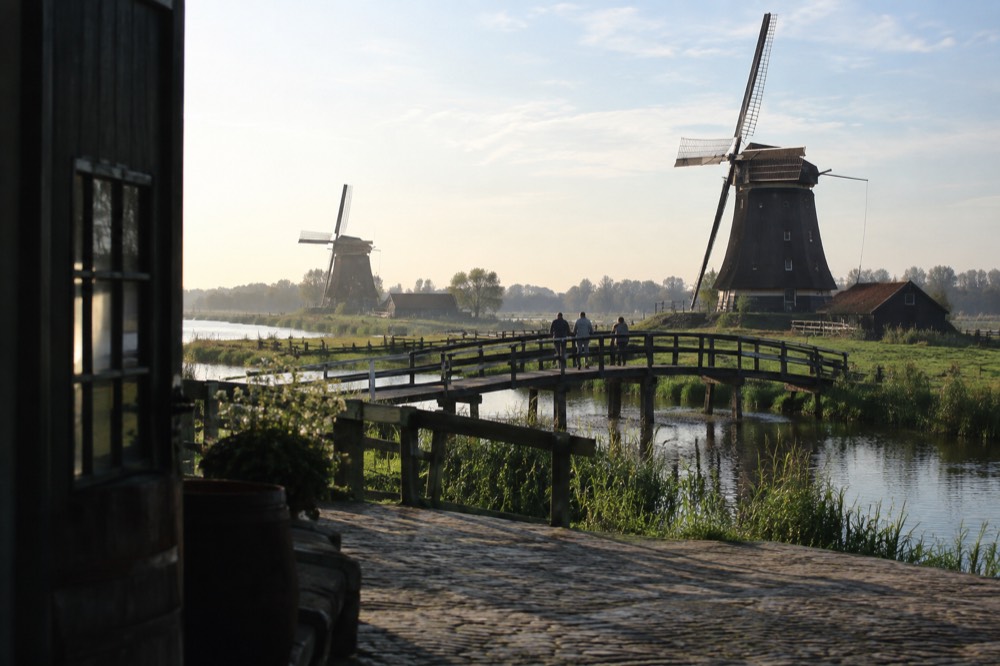
The village is an assembled rather than accidental landscape. The mills that line the Zaan today were moved there from across the region and restored as a living museum of the Zaanstreek's industrial past, when this river was one of the first industrialised areas in the world. Some mills still grind pigment, oil or grain, and several are open inside for a small fee paid on site.
The value question comes down to how you visit. Going independently by train costs a few euros each way and entry to the outdoor area is free. Going with a tour bundles transport, a guide and usually a cheese tasting, which is where the listings earn their keep for first-time visitors who do not want to work out the connections.
| Tour | Duration | Price from | Rating | Reviews |
|---|---|---|---|---|
| Zaanse Schans, Volendam and Marken | 5 hours 30 minutes | $34 | 4.5 | 20,839 |
| Zaanse Schans, Edam, Volendam and Marken | 6 hours 30 minutes | $45 | 4.8 | 5,559 |
| Zaanse Schans Windmills, Clogs and Cheese, small group | 3 hours 30 minutes | $50 | 4.7 | 2,868 |
| Four villages day trip | 7 hours | $41.38 | 4.7 | 127 |
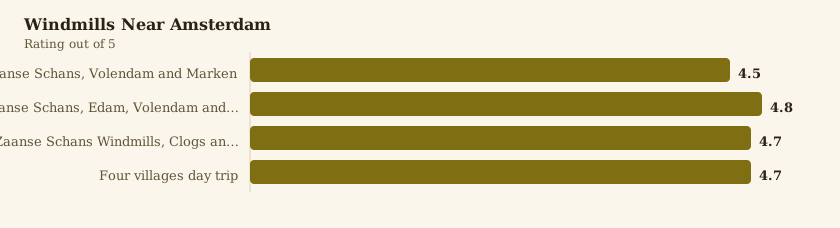
The five-and-a-half hour listing is the volume seller: it adds Volendam and Marken, two waterfront villages beyond the windmills, and it does the whole loop for $34. The small-group version at $50 skips the villages and spends three and a half hours focused on the mills, the clog demonstration and the cheese farm, which suits travellers who want depth over breadth. The 4.8-rated Edam version adds a cheese town stop and runs six and a half hours for $45, and it is the pick if you want the fuller day without the biggest coach.
If you would rather stay in the city after a windmill morning, the trio above covers the three experiences Amsterdam visitors book most: the Van Gogh Museum's timed-entry ticket, the Heineken Experience in the original brewery, and a classic saloon-boat canal cruise from $19.56. All three pair naturally with a Zaanse Schans half-day, since the most popular windmill tour returns to the centre by early afternoon.
Which Windmill Day Tour Should You Book?
Book the small-group Zaanse Schans tour if windmills are your priority, book the Zaanse Schans, Volendam and Marken tour if you want the classic Dutch day out for the lowest price, and book a Keukenhof combination only if you are visiting between 19 March and 10 May, when the gardens are open. Outside that spring window, any listing that promises tulips alongside windmills is selling you a seasonal product as if it ran year round.
The decision tree is genuinely simple. Windmill-first travellers get more from the $50 small-group tour: fewer people, more time at the mills, and the clog and cheese demonstrations built in. Value-first travellers get the $34 five-and-a-half-hour classic, which trades intimacy for three villages and 20,839 reviews of reassurance. Spring travellers get the Keukenhof and Zaanse Schans combination, a nine-hour guided day at $107 with a 4.6 rating across 1,337 reviews, but only while the gardens are open, as Keukenhof's own frequently asked questions page confirms with its fixed seasonal dates.
The small-group listing above is the one this desk would point a first-time visitor towards when the mills themselves are the point. The larger classic tour below suits families and anyone who wants the postcard villages in the same day.
One honest note on the spring combination: the 2027 Keukenhof season runs Thursday 18 March to Sunday 9 May, daily from 08:00 to 19:00, per the official Keukenhof site, and 2027 tickets had not gone on sale at the time of the research behind this page. Do not book a tulip-and-windmill day on the assumption that any spring weekend works, because for roughly ten months of the year the tulip half of that itinerary does not exist.
A practical pairing many travellers miss: the windmill tours return mid-afternoon, which leaves an evening slot open, and the Van Gogh Museum runs until late on Fridays. Booking a timed ticket in advance is mandatory there, as the museum states on its own planning pages, so a windmill morning plus a museum evening is one of the smoothest full days you can build from Amsterdam.
Can You See Windmills Inside Amsterdam Itself?
Yes, but only a handful remain, and none forms a real windmill district. The best known is De Gooyer, a working 19th century corn mill in the Oost neighbourhood that stands beside the Brouwerij 't IJ brewery, so you can see a genuine mill and drink a genuine beer within a short bike ride of the centre. Anything beyond De Gooyer means leaving the city.
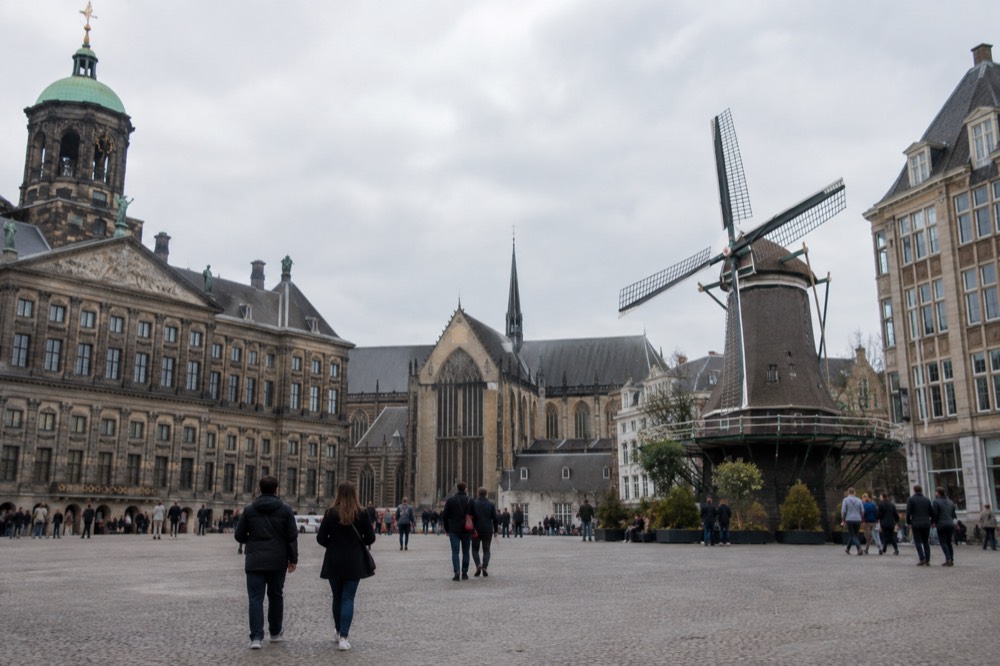
De Gooyer is the practical answer for travellers with only a spare hour. The mill is a landmark of the eastern neighbourhoods, and the brewery at its foot makes the visit feel less like sightseeing and more like a local afternoon. The De Gooyer windmill and Brouwerij 't IJ guide covers opening details and how the two fit together.
The honest framing matters here: Amsterdam's centre was never a windmill city in the Zaanse Schans sense. The mills that survive inside the city limits are scattered survivors, and visitors who expect a row of them along the canals will be disappointed. The canal ring is UNESCO-listed for its urban planning, not its mills, a distinction worth remembering before you plan a mill-hunting walk through the Grachtengordel.
For a two-wheeled version of the countryside mill experience without a coach, there is a countryside bike tour that leaves Amsterdam by ferry and cycles to a windmill, a cheese farm and a clog workshop over four hours. It is rated 4.8 across 1,674 reviews and costs from $52.06, and it suits confident cyclists who would rather earn their cheese tasting than ride a bus to it.
What About Kinderdijk and Giethoorn?
Kinderdijk is the UNESCO World Heritage site, with 19 surviving mills in one polder landscape south of Rotterdam, and it costs from $100.80 as a guided day trip from Amsterdam. Giethoorn is the car-free village where roads are canals, reached on a 10-hour tour from $161. Both are more expensive and much longer than Zaanse Schans, and both are worth it only with a full day to give them.
Kinderdijk is the purist's choice. Where Zaanse Schans assembled its mills as a museum, Kinderdijk's mills stand where they have drained the polder since the 18th century, and the UNESCO listing recognises the whole water-management system rather than a postcard row. The guided day trip runs seven to eight hours, includes an hour-long boat cruise through the site, and carries a 4.8 rating across 575 reviews.
Giethoorn answers a different question entirely. Its fame rests on the absence of roads: you arrive, board a boat, and drift past thatched cottages on private canals. The combined Giethoorn, Volendam and Zaanse Schans tour is the maximal option, 10 hours from $161 with a 4.8 rating, though it spends its day at three sites and gives none of them much depth.
| Site | Distance character | Best for | Watch out for |
|---|---|---|---|
| Zaanse Schans | Closest, under half an hour | First-timers, half-day trips, families | Heaviest crowds of the three |
| Kinderdijk | South of Rotterdam, full day | History and engineering minded visitors | Longest transit for the fewest frills |
| Giethoorn | Overijssel, full day | Photographers, slow travel, couples | Most time in transit per hour on site |
The verdict this desk would give: choose Kinderdijk if the mills themselves are the reason you are asking the question, and choose Zaanse Schans if you want the Dutch-countryside sampler with the shortest journey. Giethoorn is the most beautiful of the three and the least about windmills, so book it for the canals, not the mills.
When Should You Go to See the Windmills?
Go early in the morning or late in the afternoon, and go in spring if your dates allow. The windmill villages run on the same tide of day-trippers as Amsterdam itself, so an 09:00 arrival feels like a different place from a 13:00 one. Spring adds the tulip fields, but only between mid-March and early May, when Keukenhof's fixed season is open and the surrounding bulb fields are at their peak.
The timing advice is not cosmetic. The most popular Zaanse Schans listing departs on a fixed morning schedule precisely because the village is at its best before the coach wave lands, and independent travellers who arrive by 09:00 routinely report a calmer hour than those who come after lunch. The same logic applies in reverse at Kinderdijk, where the boat cruise queues build through the day.
Spring is the premium window, and the dates are hard facts rather than folklore. Keukenhof opens 19 March to 10 May, and the 2027 season is confirmed as 18 March to 9 May, daily from 08:00 to 19:00. The bulb fields around Lisse peak roughly mid-April to early May, weather-dependent, which is also the window in which the tulip-and-windmill combination tours make sense. Outside it, book a plain windmill tour and skip anything with the word tulip in the title.
Winter deserves a mention rather than a dismissal. The mills still turn, the crowds thin dramatically, and the Zaanse Schans tour listings run year round, but the combination with Keukenhof is impossible and the countryside photography loses the green that makes the postcard. A winter visit trades colour for calm, and for some travellers that is a fair trade.
How Do You Plan a Windmill Day Without a Tour?
Take the train to Koog-Zaandijk for Zaanse Schans, which is a short walk from the village; entry to the outdoor site is free and you pay only for the individual mills and workshops you enter. For Kinderdijk, take the train towards Rotterdam and continue towards the site from there. A GVB day ticket at €10.00 covers city transport but not these regional trains, so budget separately.
The independent route to Zaanse Schans is genuinely easy, which is the strongest argument against overpaying for a transport-only listing. The Dutch rail network runs frequent services towards Zaandam, and the official GVB price page is the source to check for current city-side fares: a 24-hour GVB day card costs €10.00, and the 1-hour single is €3.40. The regional train fare to Koog-Zaandijk sits outside those figures and is bought separately at the machine or with contactless payment.
What you lose by going alone is the guide, and at Zaanse Schans the guide is worth more than the ride. The industrial history of the Zaan is the part most visitors miss, and the cheese and clog stops are easy to find alone but harder to time around the coach crowds. The compromise this desk recommends: travel independently, then pay the small on-site fees at the two or three mills that interest you most.
| Planning item | Tour route | Independent route |
|---|---|---|
| Transport to Zaanse Schans | Included in listing price from $34 | Train to Koog-Zaandijk, fare paid per leg |
| Windmill interiors and workshops | Guide explains each stop | Small per-site fees paid on arrival |
| Timing around crowds | Fixed morning departure | Your choice, arrive by 09:00 |
| Typical half-day cost per adult | From $34 with three villages | Transport plus site fees, varies with entries |
For the deeper background on how the mills actually worked, and why the Zaanstreek industrialised centuries before the rest of Europe caught up, the city's own visitor information at iamsterdam.com carries current opening notes for the outdoor museum season, and the Anne Frank House ticket page is the model of how Dutch attractions handle timed entry if you are chaining a city museum into the same day.
One last pairing worth naming, because it is the single most common evening plan after a windmill half-day: a canal cruise. The classic saloon-boat cruise runs one hour from $19.56 with a 4.8 rating across 33,435 reviews, and it fits the gap between a 14:00 tour return and a 19:00 dinner reservation. You can check live availability on the operator's listing when you know your date.
The Van Gogh Museum ticket above is the related pick for this page for a reason: most windmill itineraries leave exactly one museum-shaped gap in the day, and this is the museum that fills it best, provided you book the timed slot before the day fills up.
Which Windmill Trip Fits a Short Stay?
For one or two days in Amsterdam total, do Zaanse Schans as a half-day and spend the rest in the city, because every hour spent in transit to Kinderdijk or Giethoorn is an hour not spent anywhere. With three days or more, upgrade to the Kinderdijk day trip for the UNESCO landscape. Only build a Giethoorn day into a stay of four days or longer, since its 10-hour round trip eats a full day.
The arithmetic is unforgiving and worth stating plainly. The $34 classic tour puts you back in Amsterdam by early afternoon with three villages seen. The $100.80 Kinderdijk trip takes seven to eight hours for one site. The $161 Giethoorn combination takes ten hours for three sites seen briefly. None of these is a bad product, but each one buys time in a different currency, and short-stay visitors pay the worst exchange rate.
Visitors on the shortest schedules should treat the windmill question as a deliberate choice rather than a default, because a half-day at the mills is a half-day not spent in the museums, the markets or the brown cafés that make the city itself worth the trip. The wider frame matters too: if you realise mid-planning that you would rather see a town than a mill, the best day trips from Amsterdam guide widens the frame to the non-windmill options, from Haarlem to Edam.
Whichever windmill route you choose, the three experiences above are the ones that most reliably complete an Amsterdam day: the city's most-booked museum ticket, its most famous brewery visit, and the classic hour on the water. Check availability on the live listings once your dates are fixed, since the popular time slots go first in high season.
Common Questions About Windmills Near Amsterdam
What is the closest windmill village to Amsterdam?
Zaanse Schans, roughly 20 minutes north of the city by a short train ride to Koog-Zaandijk followed by a walk. It is close enough that the most popular tour there and back runs just five and a half hours, and the outdoor site itself is free to enter.
Can you visit Zaanse Schans without a tour?
Yes. Take the train to Koog-Zaandijk from Amsterdam Centraal, and pay only for the individual mills and workshops you enter on site. A tour adds transport, a guide and usually a cheese tasting, which is why many first-time visitors still book one.
Is Kinderdijk or Zaanse Schans better?
Kinderdijk is the UNESCO World Heritage site with 19 mills in their original polder setting, and it suits visitors who care about the engineering history. Zaanse Schans is easier, cheaper from $34 as a tour, and combines the mills with clogs, cheese and waterfront villages. Most short-stay visitors should pick Zaanse Schans.
Are there windmills inside Amsterdam?
A few survive, the best known being De Gooyer, a working corn mill in the Oost neighbourhood that stands beside the Brouwerij 't IJ brewery. There is no windmill district inside the city, so anyone wanting the classic row of mills needs to head out to Zaanse Schans or beyond.
How much does a windmill day trip from Amsterdam cost?
Tours to Zaanse Schans start at $34 for the five-and-a-half-hour classic with Volendam and Marken. The small-group windmills, clogs and cheese tour costs from $50, the Kinderdijk guided day trip from $100.80, and the 10-hour Giethoorn combination from $161. Independent travel to Zaanse Schans costs only your train fare plus small per-mill entry fees.
When can you combine windmills with tulip fields?
Only during the Keukenhof season, which runs 19 March to 10 May, with the 2027 season confirmed as 18 March to 9 May. The bulb fields around Lisse peak roughly mid-April to early May, so any tulip-and-windmill combination tour is a spring-only product, never a year-round one.