Zaanse Schans Day Trip From Amsterdam: Windmills, Tours And What It Costs
Zaanse Schans is the windmill village that appears on half of Amsterdam's postcards, and it sits close enough to the city that a day trip takes almost no planning. This guide compares the guided tours worth booking, the honest costs, and what the visit is actually like.
Short answer
Allow half a day for Zaanse Schans. The village is free to walk around; mills and museums can charge separately. Go by train to Zaandijk Zaanse Schans and walk about 15 minutes, or choose a focused guided tour with transport and windmill admission. Longer trips add Volendam and Marken.
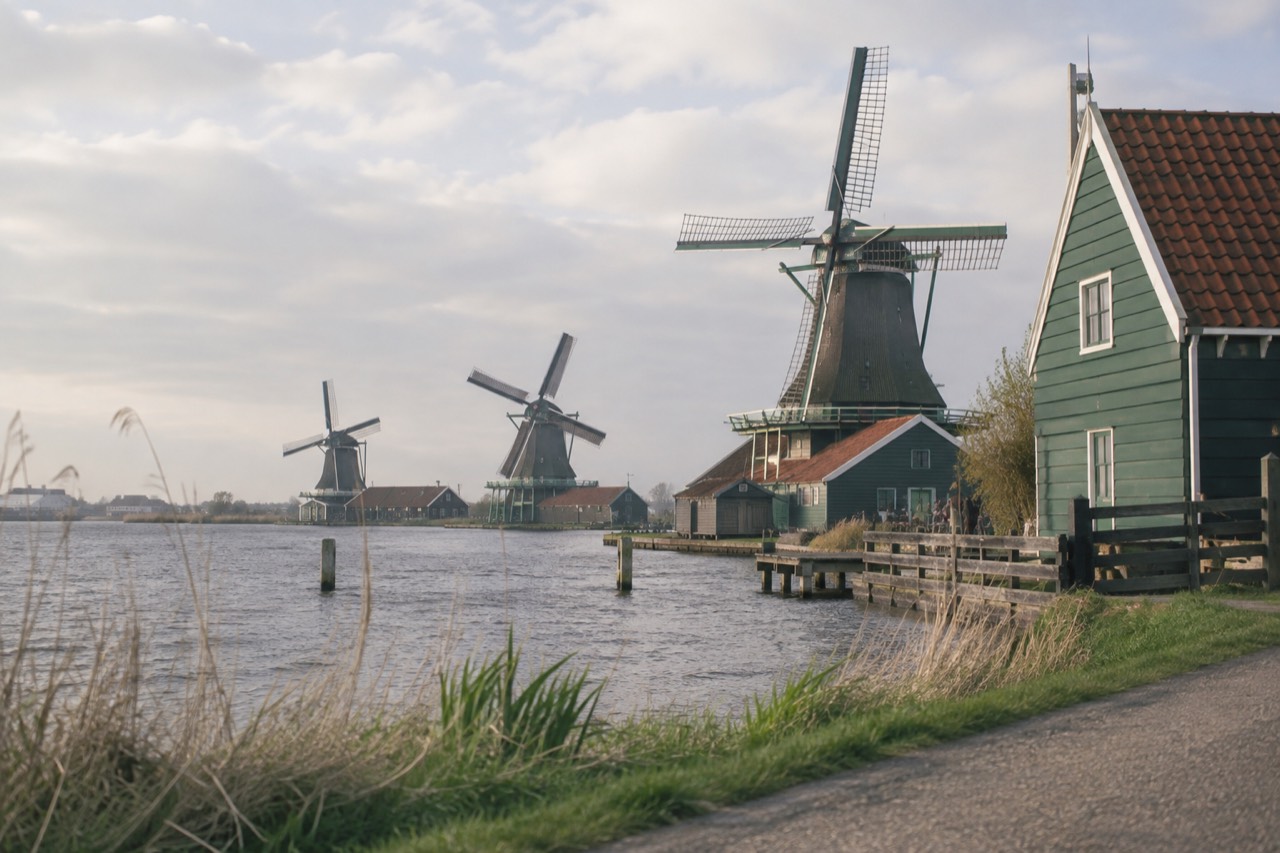
Zaanse Schans is the scene most people picture when they picture the Netherlands: a line of working windmills along a river, wooden houses painted dark green, clog workshops and cheese farms within walking distance of each other. It sits just north of Amsterdam in the Zaanstreek, within easy reach for a half-day visit.
That popularity is the honest starting point. This is not a hidden village, it is an organised, deliberately preserved slice of the Zaan region's industrial past, and it gets busy. The trade-off is that it delivers exactly what the photographs promise, and it does so in a compact area you can cover comfortably in half a day. This guide, from the desk behind Things to Do in Amsterdam, compares the tours actually worth booking, what the day really costs, and how to avoid the timing mistakes that spoil the visit.
Why Is Zaanse Schans The Classic Day Trip From Amsterdam?
Zaanse Schans earns its status because it concentrates the Dutch countryside into one walkable site: historic windmills, a clog workshop, cheese demonstrations and wooden houses, reachable from Amsterdam in well under an hour. Walking around the village is free; mill interiors and museums can require tickets.
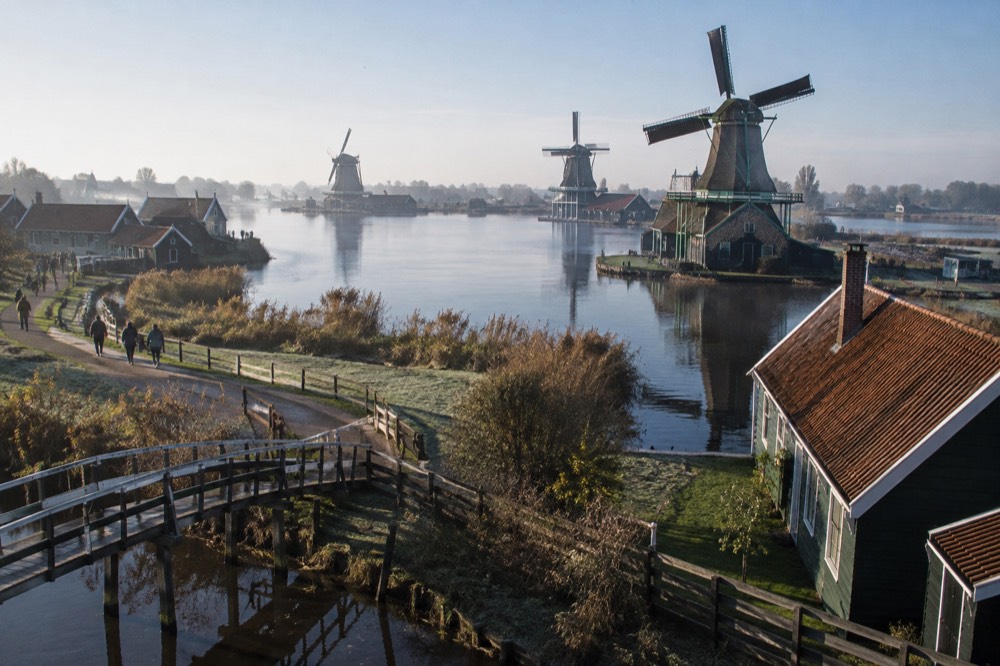
The village is a reconstruction in the best sense. The green wooden houses were moved here from across the Zaanstreek in the mid-twentieth century, when the region's surviving historic buildings were threatened with demolition. The result is a preserved streetscape rather than a theme park: people live in parts of it, the windmills still turn, and several of them still grind pigment, oil or grain the way their predecessors did when this stretch of the Zaan was one of the world's first industrialised areas.
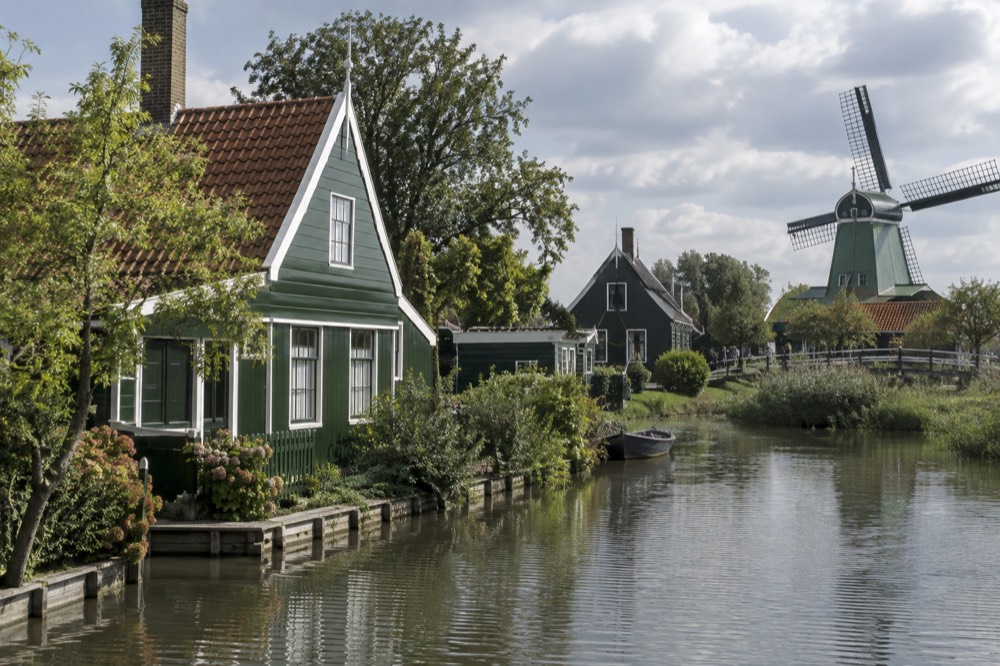
What surprises many visitors is how small the footprint is. You do not need a car, a full day or a plan with three spreadsheets. The windmills line one bank of the river Zaan, the workshops cluster near the entrance, and the whole loop is manageable on foot. That compactness is exactly why it pairs so well with other Zaanstreek and Markermeer stops: tours that add the fishing villages of Volendam and Marken still finish in about five and a half hours, while a focused visit leaves more time for the windmills themselves.
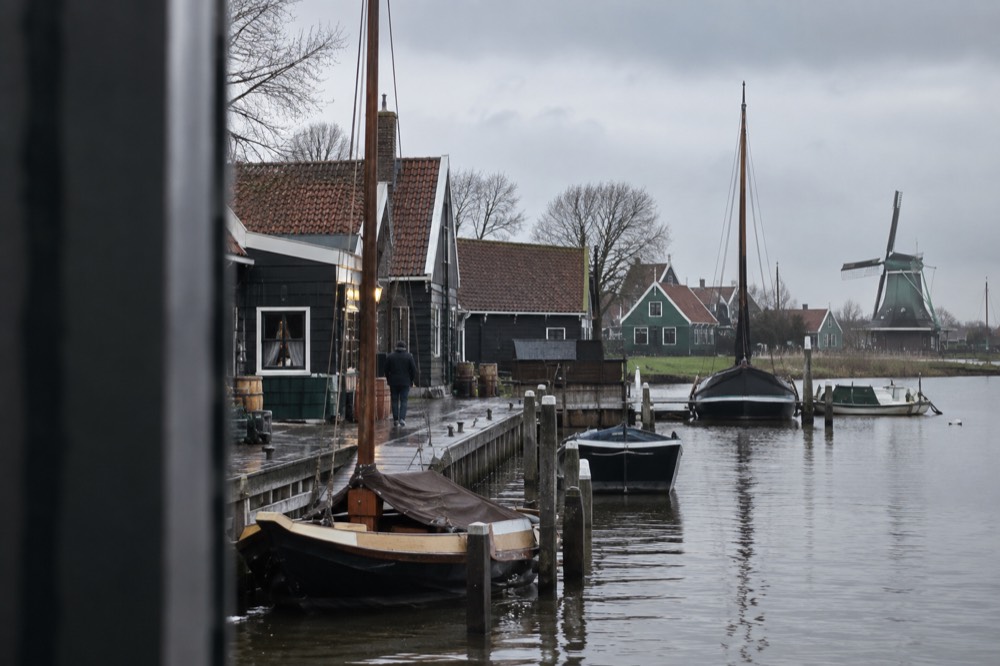
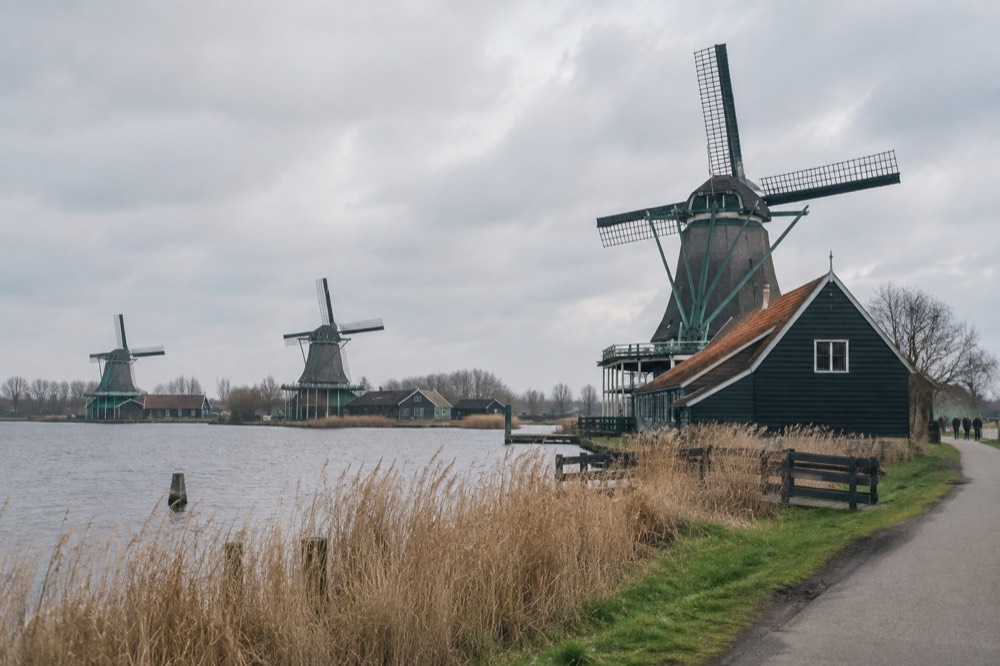
It also photographs well in almost any weather, which matters in the Netherlands. Overcast skies flatten many European destinations; they make green wood and dark water look exactly as the postcards promised. If your Amsterdam days are short and you want the countryside archetype in one compact visit, this is the trip most itineraries settle on, and our best day trips from Amsterdam guide places it at the top for first-time visitors for precisely that reason.
How Do You Get To Zaanse Schans From Amsterdam?
You can reach Zaanse Schans by guided transport or independently by train or bus. From Amsterdam Centraal, the train to Zaandijk Zaanse Schans takes about 17 minutes, followed by a roughly 15-minute walk. Check the journey planner for the actual departure, fare and any works.
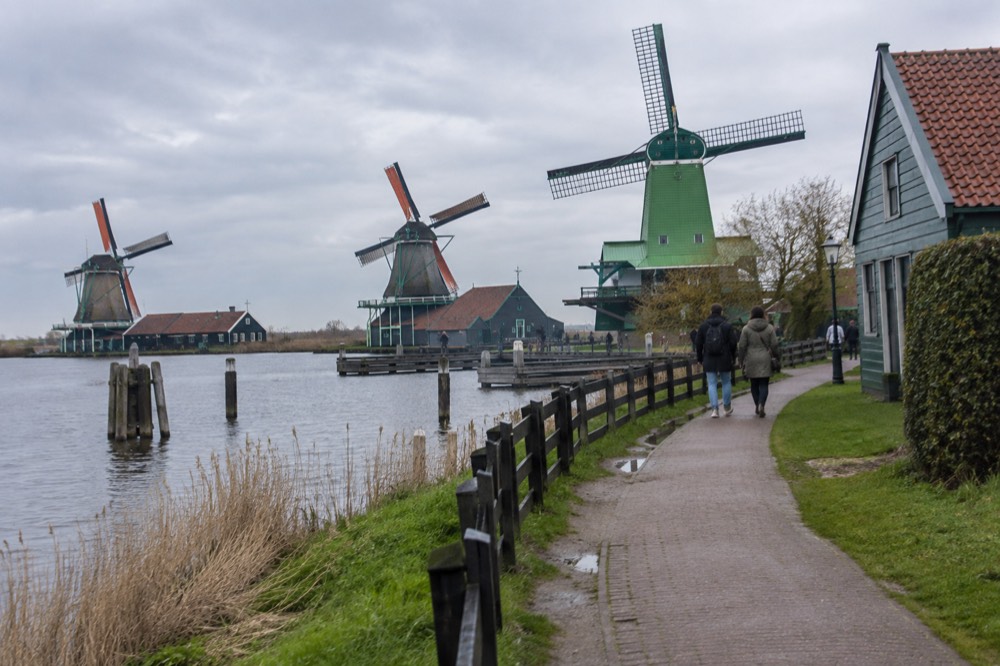
The independent route is straightforward. Use the village’s transport guide for the route from Zaandijk Zaanse Schans station. It also lists buses 800 and 801 from Amsterdam Centraal to the Zaans Museum stop; check the current timetable and return service before setting out. A day with just a village walk needs no guided-tour ticket.
One point worth knowing before you assume your city transport covers it: GVB tickets, including the 24-hour day card at €10.00, cover GVB metro, tram and bus services, not the regional leg to the Zaanstreek. The central IJ passenger ferries are free. If you are combining a morning at windmills near Amsterdam with an afternoon in the city, budget the two networks separately. The official fare table for the city side is published by GVB itself.
Guided transport can be useful when you want the history explained or several villages in one trip. Departure points differ: the focused Zaan Tours trip meets outside LOT61, part of the DoubleTree near Centraal; the Tours & Tickets three-village trip uses its Centraal meeting point. Follow the specific voucher rather than assuming hotel pickup.
If you would rather build the day yourself, choose an arrival that matches the opening hours of the mills or museums you want. Walk the windmill bank first, then visit the workshops on the way back. An earlier walk can avoid some groups, but it does not guarantee empty paths or open interiors. You will pass the souvenir strip twice, which is either a trap or a convenience depending on how you feel about clog-shaped keyrings.
Should You Take A Guided Tour Or Go Independently?
Take a guided tour for narration and arranged transport, or go independently for control of your pace and budget. A focused Zaanse Schans visit takes around 3.5 hours with transfers. The 5.5-hour Volendam–Marken circuit covers more places but gives you less freedom to linger at the mills.
The main choice is between one place and several. Zaan Tours’ small-group trip includes a clog demonstration, cheese tasting and paint-mill entry. The Tours & Tickets Zaanse Schans, Volendam and Marken trip includes cheese and clog demonstrations in Classic; only All-in adds the boat crossing, windmill admission and stroopwafel experience. A tour visiting a windmill village does not automatically include entry inside a mill.
| Format | Time budget | What to check |
|---|---|---|
| Independent Zaanse Schans | Half a day, or longer for museums | Return fare plus only the interiors you choose; village walking is free |
| Zaan Tours small group | About 3.5 hours | Return transport, English guide, clog demonstration, cheese tasting and windmill admission |
| Zaanse Schans, Volendam and Marken | About 5.5 hours | Classic versus All-in; boat and windmill entry are not in the base option |
| A route also adding Edam | Allow a longer circuit | Exact stops, departure and inclusions for your date |
| Spring Keukenhof combination | A full day | Season-specific dates and garden admission; do not use an old season’s listing |
| Giethoorn combination | A long full day | Travel time and whether a village cruise is included |
Read that table as a menu of time budgets rather than a ranking. The focused trip spends its time at Zaanse Schans. A Giethoorn combination adds substantial travel to the canal village in Overijssel; it is not a quick extension of the windmill loop. Compare the actual itinerary before choosing a longer day simply because it lists more stops.
Independent visitors can linger over the industrial history, choose just one mill, bring a picnic or skip paid interiors entirely. Narration is optional rather than essential to reaching the site. Consider a museum visit or an audio guide if you want more context, and allow time to use it.
What Does A Zaanse Schans Day Trip Cost?
For an independent day, add your return transport, chosen admissions and food. The village itself is free. The official Zaanse Schans Card currently costs €29.50 for adults and €20 for ages 4–17; under-4s enter free. A guided tour has its own dated price and inclusions, so compare the exact options in the same currency.
The official ticket page lists the card and individual-entry arrangements. The card includes a selection of museums, heritage houses and two open windmills, not every attraction without limits. The Cooperage and Noorderhuis are currently listed as temporarily closed. Exchange the e-ticket for the required A5 ticket at a participating collection point before entering the venues. Individual tickets can also be bought on site; a card is not necessarily cheaper for one interior.
| Budget line | Planning amount | Notes |
|---|---|---|
| Village walk | Free | No admission ticket required for the public village paths |
| Zaanse Schans Card | €29.50 adult; €20 ages 4–17 | Official rates checked September 2026; check current openings and included venues |
| Return regional transport | Your chosen journey’s fare | Separate from a GVB city ticket |
| Guided visit | Exact dated quote | Do not add transport or mill entry again if already included |
| Food and souvenirs | Your own allowance | A cheese tasting is not a full lunch |
Your Amsterdam accommodation is a separate trip cost. Check the final room total and whether municipal tourist tax has already been included before adding it again. The gemeente’s tourist-tax page explains the applicable charge; it is not an admission fee for this day trip.
Keukenhof combinations are seasonal. The announced 2027 garden season is 18 March to 9 May; a listing for an earlier spring does not establish that a 2027 tour is on sale. Check the exact date, garden ticket and transport inclusions when the relevant season is available.
What Will You Actually See At Zaanse Schans?
You will see a working line of historic windmills along the river Zaan, a cluster of craft workshops including a clog maker and a cheese farm, and a streetscape of relocated green wooden houses from across the Zaanstreek. Some mills demonstrate traditional production, subject to opening hours, wind and operating conditions.
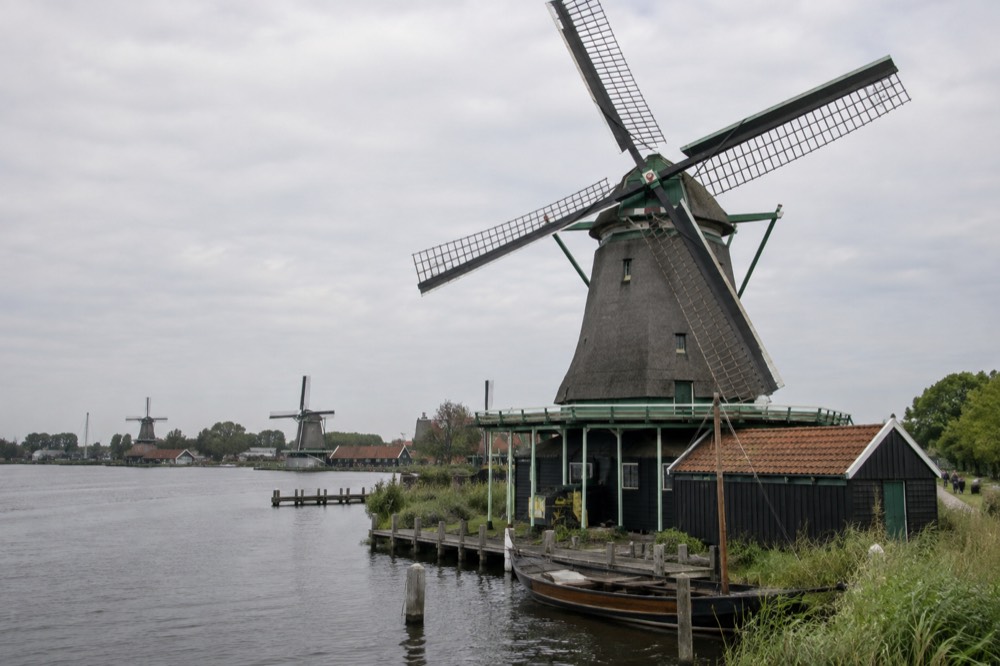
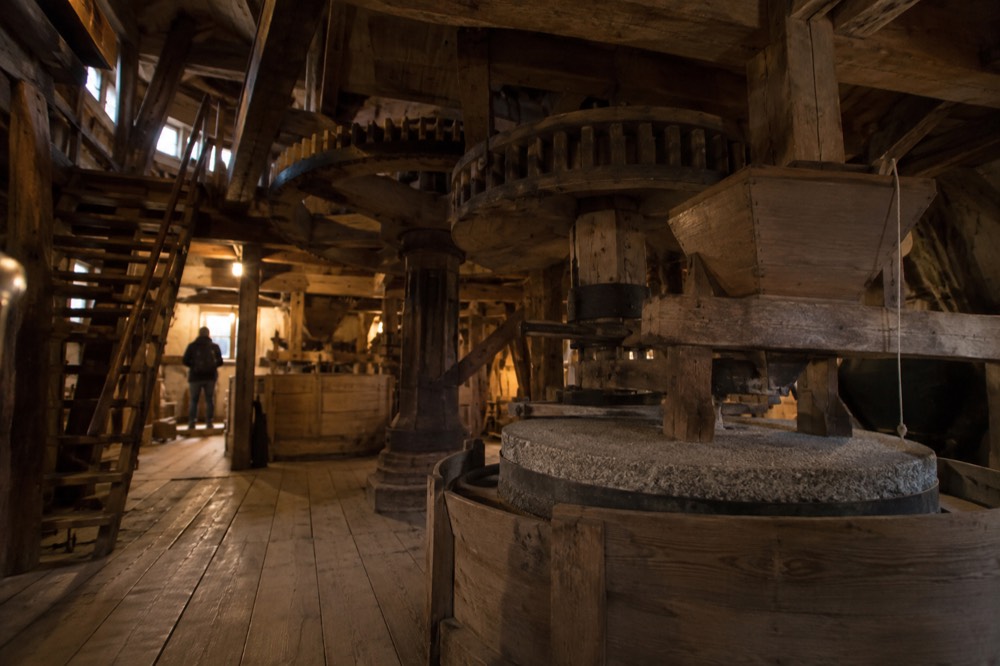
The windmill bank is the headline, and it deserves the attention. The mills illustrate traditional work such as grinding pigment, pressing oil and sawing wood; not every mill operates throughout every visit. You can walk among them along the dike, and the interiors of working mills are the part of the visit that most day-trippers underuse, because the coach schedules give limited time and the exterior photographs are already in the bag. If your tour allows free time, spend it inside a mill rather than in the gift shop.
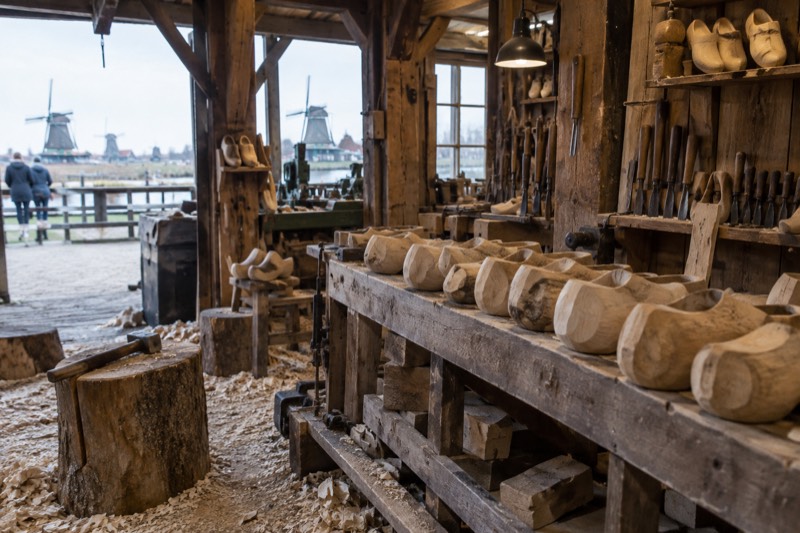
The workshops cluster near the entrance. The clog demonstration shows how a block of poplar becomes a wooden shoe in a few minutes of machinery, and the cheese farm walks you through the dairy side of the region with tastings at the end. Both are quick, both are family-friendly, and both are the reason the village reads as a complete countryside sampler rather than a single-attraction stop.
Choose the interior you most want to see before buying a multi-venue card. Museumkaart benefits cover participating museums and heritage locations, but not automatically the windmills. A guided itinerary may already include a specific mill, so check before paying for it a second time.
There is also a cycling alternative for confident riders. A countryside bike tour from Amsterdam may visit a different polder, mill or farm rather than Zaanse Schans. Check the actual route and distance if this village is the goal; a cheese-and-clogs description alone does not establish the destination.
How Long Should You Spend At Zaanse Schans?
Allow two to three hours for a village loop and selected stops, or longer for several museums. The focused guided trip takes about 3.5 hours including transport, while the Volendam–Marken circuit takes about 5.5 hours. Combinations with Giethoorn or Keukenhof need a full-day budget and their own itinerary check.
The format determines your freedom to stop. On a three-village circuit, Zaanse Schans shares the day with Volendam and Marken, and the order may change. It is a faster rotation than an independent visit. Check the selected option’s boat or coach legs, lunch opportunity and return time rather than planning around an assumed order.
The 3.5-hour windmills-only tour is the opposite shape: one site, done properly, with the two workshop stops built in and no second village. Travellers who have already seen the Markermeer coast, or who have an afternoon museum slot in Amsterdam they refuse to surrender, are the natural audience for it. A Giethoorn combination suits travelers willing to spend a longer day in transit between distinct regions.
Independent visitors control their own clock. Match your arrival to the interiors you want to visit, and check the last return service if staying late. Early or late walks can be calmer, but neither guarantees open workshops or an empty windmill bank.
When Is The Best Time To Visit Zaanse Schans?
A weekday morning can be a pleasant choice, provided the places you want to enter are open. Spring can add tulip gardens, summer has longer daylight, and winter may have reduced venue hours. Wind and rain matter on the exposed riverside paths, and working sails are never guaranteed.
Spring offers the possibility of pairing the windmills with Keukenhof at Lisse. The announced 2027 garden season runs 18 March to 9 May. Check the correct season’s transport and admission before committing to both in one day; the garden season is not a guarantee of peak bloom in every outdoor field.
| Season | What it gives you | Watch out for |
|---|---|---|
| Spring, mid-March to mid-May | Potential Keukenhof pairing | 2027 garden season: 18 March–9 May; check the actual tour dates |
| Summer, June to August | Longest daylight, warmest walking weather | The busiest coach waves of the year, mid-morning onwards |
| Autumn, September to November | Thinner crowds, moody skies that suit the scenery | Shorter days compress an independent loop |
| Winter, December to February | Potentially quieter paths | Some workshops run reduced hours; check before traveling |
Within any season, the weekday rule holds. Weekend mornings bring Dutch and Belgian families as well as international tourists, and the narrow dike paths are the first place the crowding becomes physical. A Tuesday in October will feel like a different destination from a Saturday in July, but the crowd level and dated tour price are not guaranteed.
Dress for an exposed riverside walk: waterproof layers and shoes with grip are useful. Workshops provide some shelter during opening hours. Strong wind can affect mill operation and make the dike uncomfortable; follow local instructions and shorten the outdoor part if conditions deteriorate.
What Do First-Time Visitors Get Wrong About Zaanse Schans?
Common mistakes are ignoring venue opening hours, expecting a remote hamlet, and assuming every tour includes mill entry. Decide which interiors matter before choosing your format; a simple village walk and a multi-museum day need different time budgets.
The timing mistake is choosing an arrival without checking what is open. Coming two hours before the workshops open may be good for a quiet walk but poor for a visit focused on interiors. Choose the date and opening times first, then fit transport around them.
The expectation error is the quieter one. Zaanse Schans is preserved, curated and popular, and travellers who arrive expecting a forgotten village sometimes leave disappointed that other people had the same idea. Go in knowing what it is: an open-air assembly of the Zaanstreek's heritage, built to be visited, and very good at its job. The comparison that matters is not with a fantasy hamlet but with the alternative windmill sites, and our Volendam and Marken guide covers the coastal villages that share the same coach routes.
The windmill-interior error is the one we would fix first. Standing outside a mill takes a photograph; standing inside one reveals the machinery and labour behind the landscape, even when the sails are not turning. Tour free time is limited, so decide in advance which mill you will enter and walk straight to it.
The focused small-group tour builds mill entry into the visit along with cheese tasting and a clog demonstration. That makes it useful if you want an explanation and one interior without arranging each element yourself. It does not include every museum in the village.
Is A Zaanse Schans Day Trip Worth It?
Yes, if you want a compact introduction to the Zaan region’s windmills and crafts. It works as a half-day trip by public transport or with a guide. Travelers who dislike busy, curated heritage sites or have already visited working mills elsewhere may prefer another outing.
The strongest reason to choose it is practical: several aspects of regional history fit into a compact area near Amsterdam. A tour adds guidance and transfers, while an independent visit keeps your timetable flexible. Choose based on that trade-off rather than on old review totals or an advertised starting price.
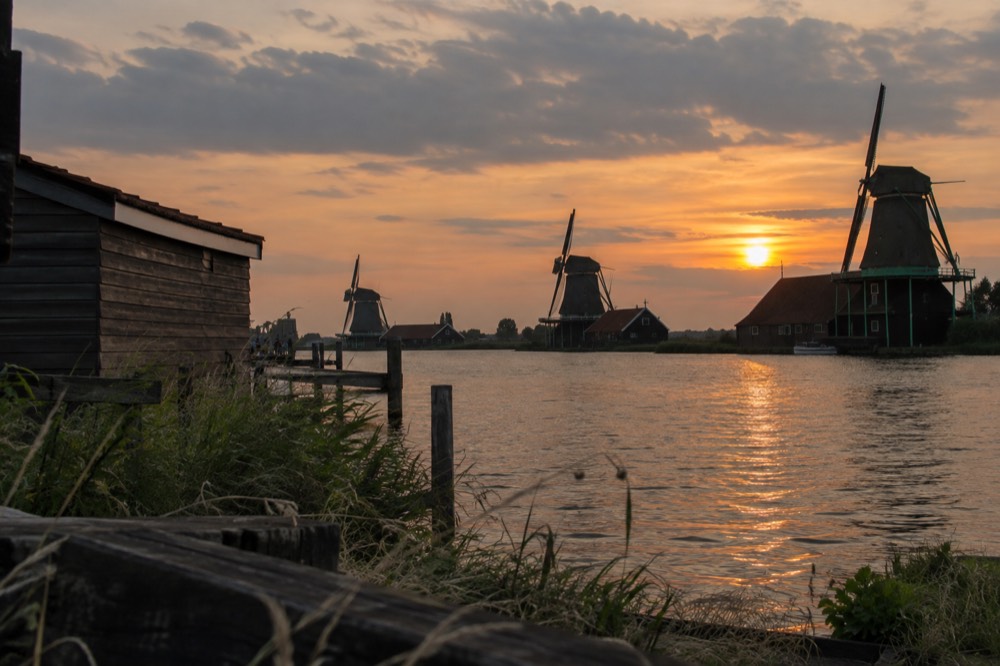
The honest counter-argument is the curated-ness. If your instinct is to leave the beaten path, Kinderdijk's windmill complex or a polder cycle ride may suit you better, and our guide to windmills near Amsterdam lays out the alternatives. But for a two- or three-day Amsterdam trip with one countryside slot to fill, Zaanse Schans wins on proximity, density and reliability, and those are useful advantages on a short stay.
One pairing worth planning is a windmill visit followed by a museum afternoon. A focused morning tour can leave space for the Van Gogh Museum, but check the actual return and allow for the trip from Centraal to Museumplein before choosing a timed entry. Van Gogh’s work belongs to the nineteenth century, not the Dutch Golden Age.
Windmills in the morning and paintings later can work well if the timings leave breathing room. The transport and museum tickets are separate purchases, and you still need to reach the museum. For a different afternoon, consider the Heineken Experience if everyone is 18 or older, a separate canal cruise, or an unbooked café and walk. Do not fill the return afternoon so tightly that a delay spoils it.
Common Questions About A Zaanse Schans Day Trip
How do you get to Zaanse Schans from Amsterdam?
Take the train from Amsterdam Centraal to Zaandijk Zaanse Schans, then walk about 15 minutes, or use the current regional bus service. Guided tours include their own transport from a specified meeting point. GVB city tickets do not cover the regional train or bus.
How long do you need at Zaanse Schans?
Two to three hours covers a village loop and selected stops; allow longer for several museums. The focused guided tour takes about 3.5 hours including transport, and the Volendam–Marken circuit about 5.5 hours. Check the actual itinerary and return time.
Should you take a tour or visit Zaanse Schans independently?
Take a tour for an English guide and arranged transfers; choose the focused visit if mill admission matters. Go independently for a flexible pace and a free village walk, adding only the interiors you want.
When is the best time of year to visit Zaanse Schans?
Weekday visits can be calmer, but check seasonal opening hours and the weather. Keukenhof’s announced 2027 season is 18 March to 9 May. Working sails and quiet paths are not guaranteed in any season.
Is Zaanse Schans worth it for a first-time visitor?
Yes, for a compact introduction to regional windmills and crafts near Amsterdam. It is a busy preserved site, so choose another outing if that format does not appeal to you.
Can you combine Zaanse Schans with other villages in one day?
Yes. The 5.5-hour circuit visits Zaanse Schans, Volendam and Marken. Its Classic option includes cheese and clog demonstrations; All-in adds the boat ride, windmill entry and stroopwafel experience. Routes adding Edam, Giethoorn or Keukenhof require their own date and itinerary checks.
Choose Your Zaanse Schans Day
Compare Your Guided and Independent Day
Enter euro totals for the same people and date. The independent total should include return regional transport, chosen admissions and food. Enter the exact tour quote separately, then only excluded extras such as lunch or travel to its meeting point. Do not add bundled transport or mill admission twice. These are your estimates, not live quotes.
Zaanse Schans Small-Group Windmill, Clogs and Cheese Tour
Check a focused Zaanse Schans small-group trip with return transport, an English guide, clog demonstration, cheese tasting and windmill admission. Every traveler needs a booking, including infants. Meet outside LOT61 by Centraal; meals and hotel pickup are excluded. Confirm walking and mill-stair access before buying.
Check Zaanse Schans Tour Dates