Amsterdam Light Festival: Dates, Routes and How to See It Well
Every winter from late November to mid-January, artists light up Amsterdam's canals with large-scale projections and floating sculptures, and the city's darkest weeks become its most photogenic. Here is how the 2026/27 edition works, which routes to take and what a good festival evening actually costs.
Short answer
The Amsterdam Light Festival runs 26 November 2026 to 17 January 2027, its 15th edition. About 20 light artworks appear along the canals and the Amstel each year, best seen from the water on a evening cruise, from about $15.50 per person with an operator, or free on foot along the routes.
Every winter, Amsterdam answers its darkest months with light. From late November to mid-January, the Amsterdam Light Festival installs large-scale artworks along the canals, on the Amstel river and on building facades across the centre, and the city that spends summer outdoors suddenly has a reason to be out after dark again. The 2026/27 edition, the festival's 15th, runs 26 November 2026 to 17 January 2027.
The concept is simple and it works: international artists build pieces that are only fully visible at night, the canal boats that carry tourists all summer switch to festival routes, and the walking route strings the works together through the centre. It is the one stretch of the Amsterdam year when a cold evening on the water is arguably better than a warm afternoon in a museum queue.
When Is the Amsterdam Light Festival and What Are the Dates?
The Amsterdam Light Festival 2026/27 runs from 26 November 2026 to 17 January 2027, and this is the festival's 15th edition. The artworks are switched on every evening through that window, with the route lit from dusk until late evening. Peak crowds fall between Christmas and New Year, so early December and mid-January are noticeably calmer.
The festival deliberately spans the darkest seven weeks of the northern European year. That timing is the whole point: the organisers want Amsterdammers and visitors out on the streets in the weeks when the sun sets before five in the afternoon, and the light works give the centre a reason to stay lively after the shops close.
A few practical consequences follow from the dates. First, the festival overlaps the Christmas market season and New Year, so accommodation in the centre is at its most expensive precisely when the lights are best. Second, the first and last weeks of the run are the quiet ones, and the artworks are identical throughout, so a visit on 1 December sees exactly what a visit on 3 January sees, minus the crowds. Third, the festival sits inside Keukenhof's closed season, so travellers hoping for tulips and light art on the same trip are choosing between seasons; the tulip fields open in spring, the light festival closes in January.
The dates are also weather-honest. Amsterdam in December averages short, grey, wet days, and the festival does not pretend otherwise: the art is built for darkness and drizzle, and the boat operators run heated, covered vessels for exactly this reason.
What Will You Actually See on the Festival Route?
Expect roughly 20 large-scale light artworks each edition, spread along the canals of the centre, the Amstel river and the Plantage neighbourhood, ranging from floating sculptures and projections on bridges to interactive pieces that respond to movement. The route changes every year because the artist selection changes every year, so no two editions look alike.
The festival is a curated art exhibition, not a decorative lights display. Each edition issues a theme, artists submit proposals, and a jury selects the works, which means the pieces are conceptually heavier than the average Christmas illumination: past editions have included a giant jellyfish hovering over the Amstel, a floating "water lab" of glowing cylinders, and a neon-lit statement about sea level rise, which lands differently in a city that sits below sea level.
The route itself splits into two ways of seeing it. The water route is the classic: canal boats follow a dedicated festival circuit past the floating works, and roughly half the art is designed to be viewed from the water because it sits in the canals. The walking route covers the works on land, bridges and facades, and it is free, self-guided and usually downloadable from the festival's own channels.
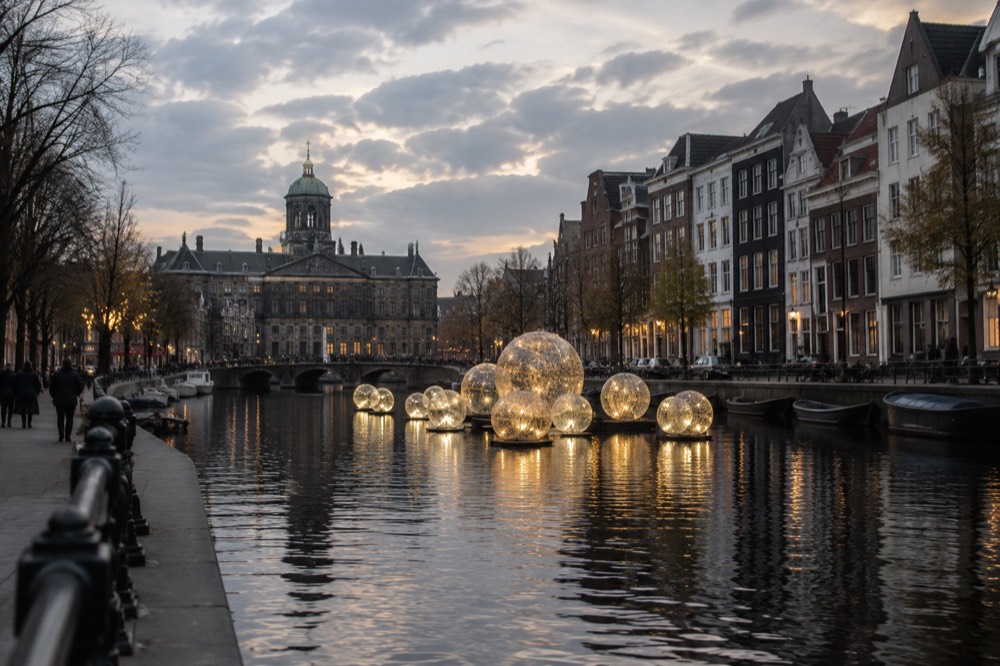
For a first visit, the honest advice is to do both: one evening on the water to see the floating pieces properly, and one evening on foot with a warm drink afterwards, because the walking route passes through neighbourhoods worth lingering in, like the Plantage and the eastern canal ring. Our Amsterdam in Winter: A Three Day Itinerary builds a full cold-weather plan around exactly this kind of evening.
If you want the festival paired with a classic Amsterdam experience the same night, the three options below are the ones that fit a winter evening best.
Is a Light Festival Canal Cruise Worth It?
Yes, for most visitors a festival cruise is the best way to see the art, because roughly half the installations sit in the water and are composed to be viewed from a boat. Cruises run nightly through the festival, cost from about $15.50 per person with an operator, and take around 75 to 90 minutes. Book the first departure after dusk for the best light.
The economics are straightforward. A standard one-hour canal cruise in Amsterdam runs from about €15.50 with the classic operators, and festival-route cruises price in the same band, sometimes with a small premium for the dedicated route and commentary about the artworks. Against that, the walking route is free, so the decision is really about whether the floating pieces matter to you, and they are consistently among the strongest works each year.
Timing matters more than price. The works read best in full darkness, which in December means from about 17:30 onward, and the boats closest to that hour get the sharpest contrast between the lit art and the black water. The last week of December is the busiest of the entire festival, and boats sell out for those evenings in a way they do not in early December.
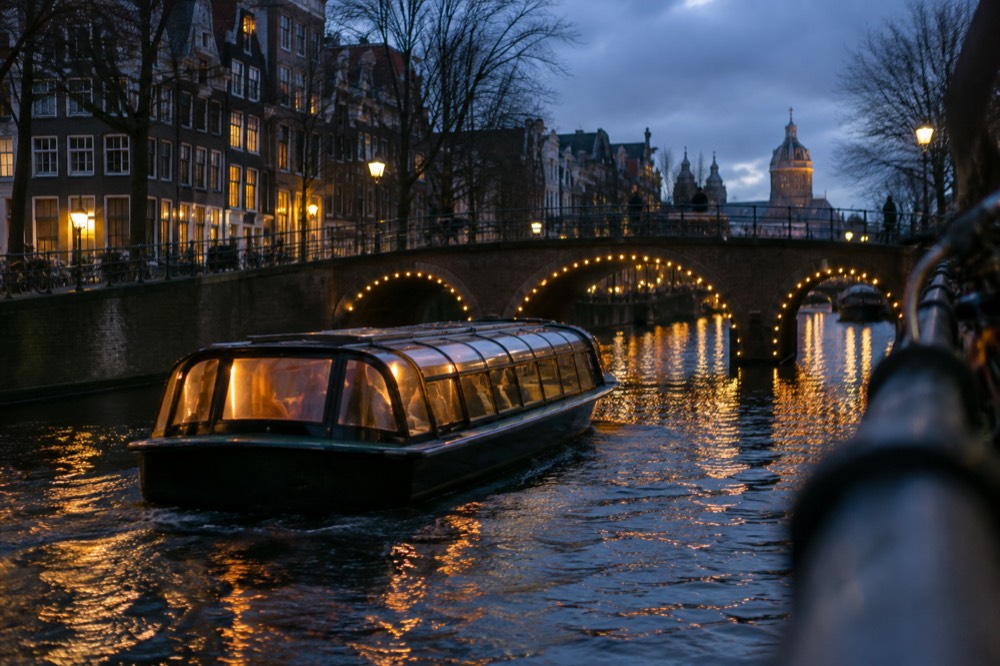
For the cruise itself, a few formats are worth comparing. The classic saloon boat option is a 1-hour cruise on a historic wooden vessel, rated 4.8 across 33,435 reviews, from $19.56, with drinks and cheese available as an upgrade, and the enclosed, heated saloon is exactly what a December evening on the water calls for. The evening city lights cruise is a 90-minute option rated 4.4 across 23,214 reviews, from $21, with wine and snacks available on board. And the sunset cruise, rated 4.8 across 4,737 reviews from $23, departs early enough to catch the sky going dark over the canal ring, which is the moment the festival art switches from invisible to vivid.
| Cruise format | Duration | Rating and reviews | Price from | Best for |
|---|---|---|---|---|
| Classic saloon boat cruise | 1 hour | 4.8, 33,435 reviews | $19.56 | Heated, enclosed historic boat |
| Evening city lights cruise | 1 hour 30 minutes | 4.4, 23,214 reviews | $21 | Longest festival route coverage |
| Sunset canal cruise | 1 hour | 4.8, 4,737 reviews | $23 | Catching dusk turning to dark |
| Walking route (self-guided) | 2 to 3 hours | Not applicable | Free | Budget and repeat visitors |
One pairing worth planning: the Van Gogh Museum stays open until 9pm on Fridays, and its permanent collection glows in a way that suits a light-art evening. A timed ticket from $31, rated 4.7 across 57,096 reviews, books you a set entry hour, and the museum's own site confirms all visitors need a pre-booked timed ticket. You can Check availability alongside the Van Gogh Museum guide.
How Do You See the Festival on Foot for Free?
The walking route is free and self-guided, typically covering the land-side artworks between the centre and the Plantage in two to three hours at a gentle pace. Start at dusk from Dam Square or the Amstel, follow the published route map, and plan a warm stop halfway, because December evenings in Amsterdam sit close to freezing.
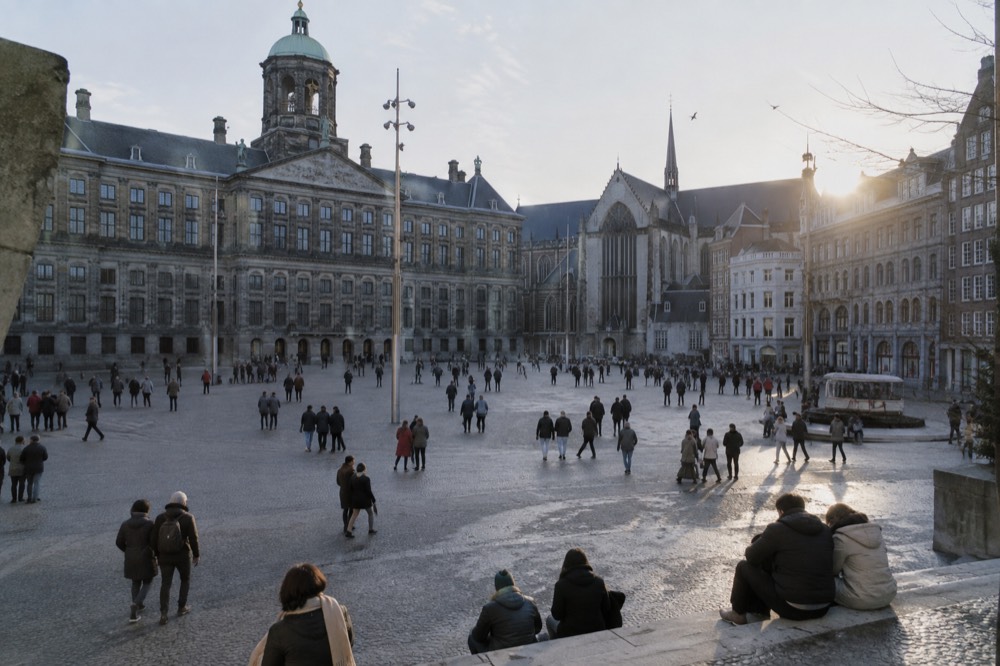
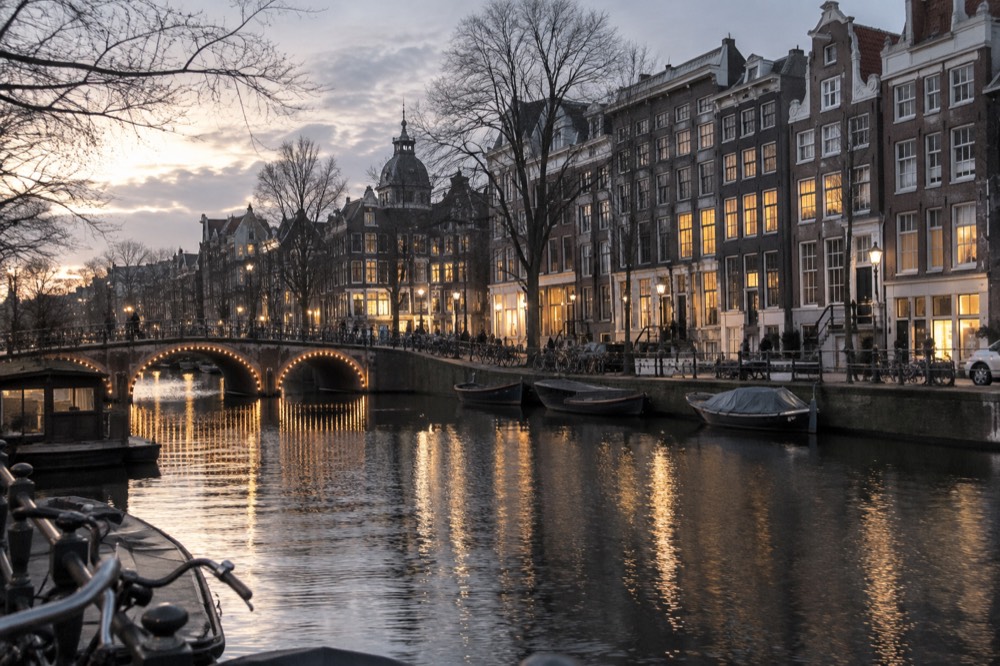
The foot route rewards a different kind of attention than the boat. On the water you are a moving audience; on foot you can stand with a piece for ten minutes, watch how it changes when a boat passes, and catch the smaller works the cruise skips. The route also threads through the Amsterdam Canal Ring UNESCO Grachtengordel, which means the backdrop is 17th-century gabled houses lit from below, a scene that needs no festival at all.
Practical winter rules apply. Amsterdam's centre is cobbled and the canals funnel a damp wind, so layered clothing and waterproof shoes matter more than they do in summer; our What to Wear in Amsterdam guide covers the December specifics. Brown cafes, the city's dark wooden pubs, cluster along the route and make natural warm-up stops, and a bowl of pea soup or a hot chocolate between artworks is how locals do this walk.
The one mistake to avoid is trying to see everything in one night. The route is long, the evenings are cold, and the art is better absorbed in two shorter walks than one marathon. Split it: the Amstel and the eastern works one evening, the canal ring and the Plantage another. The rest of the planning pages sit on Things to Do in Amsterdam.
What Else Is There to Do on a Dark Amsterdam Evening?
Winter evenings in Amsterdam are not only the light festival: the Rijksmuseum is open daily until 17:00, the Van Gogh Museum runs until 21:00 on Fridays, the Heineken Experience runs evening-adjacent slots, and the city's brown cafes and brown-cafe dinners fill the gap. Museums are the natural pre-cruise plan, because their closing hours hand you onto the water at exactly dusk.
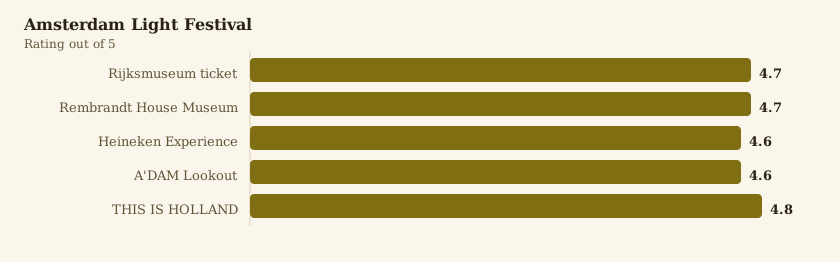
The museum quarter makes the easiest festival pairing. The Rijksmuseum, a 4.7-rated ticket across 33,205 reviews from $31, is open every day of the year from 9am to 5pm including public holidays, per the museum's own opening hours page, and its under-18s go free. The Rembrandt House Museum, from $23 and rated 4.7 across 3,753 reviews, is a short walk from the Waterlooplein end of the festival route and makes a compact pre-darkness stop.
For something more playful, the Heineken Experience, rated 4.6 across 39,581 reviews from $23, occupies the old brewery in the centre, and the A'DAM Lookout across the IJ stays open until 22:00 with last admission at 21:00, its observation deck giving a skyline view of the whole lit-up centre from across the water. THIS IS HOLLAND, the flight-simulation attraction rated 4.8 across 4,207 reviews from $26, is a one-hour indoor experience that suits a rainy festival evening when the walking route loses its appeal.
| Evening option | Duration | Rating and reviews | Price from | Winter fit |
|---|---|---|---|---|
| Rijksmuseum ticket | Half day | 4.7, 33,205 reviews | $31 | Closes 17:00, pre-dusk |
| Rembrandt House Museum | 1 to 2 hours | 4.7, 3,753 reviews | $23 | Near the festival route |
| Heineken Experience | 1 hour 30 minutes | 4.6, 39,581 reviews | $23 | Indoors, central |
| A'DAM Lookout | Flexible | 4.6, 5,109 reviews | $24 | Open until 22:00 |
| THIS IS HOLLAND | 1 hour | 4.8, 4,207 reviews | $26 | Rainy-evening backup |
Getting to any of this is simple even in winter. A GVB 24-hour day ticket costs €10.00 and a single one-hour ticket €3.40, per the operator's own fare page, and trams and the metro run late enough for festival evenings. If you are planning a broader winter stay, our Amsterdam in December: Christmas Markets and Lights guide covers the markets that run alongside the festival.
How Much Does a Light Festival Evening Cost in Total?
A festival evening costs roughly €15.50 to €25 per person for a cruise, nothing for the walking route, and €3.40 per tram ride or €10.00 for a 24-hour GVB day ticket, with museum add-ons from about $23 to $31 each. A realistic budget for one good evening, cruise plus transport plus a drink stop, lands around €40 to €60 per person.
The festival itself keeps the barrier low: the art is in public space and free to walk past, and the only mandatory spend is transport if you choose the boat. The variable costs are the add-ons, and they scale with how much of the evening you build around the lights.
| Item | Typical cost | Notes |
|---|---|---|
| Walking route | Free | Self-guided, map from the festival's channels |
| Festival canal cruise | From about €15.50 | Standard 1-hour operator pricing |
| GVB 24-hour ticket | €10.00 | Child day ticket €5.00 |
| GVB single (1 hour) | €3.40 | Tap contactless with OVpay as an alternative |
| Museum add-on | From about $23 to $31 | Heineken Experience to Rijksmuseum range |
| Brown cafe drink stop | Varies by venue | Budget a few euros per drink |
Two things quietly raise the winter total. Hotel prices in the centre peak between Christmas and New Year, when the festival is at its most crowded, and the city's tourist tax adds 12.5 percent of the overnight price to accommodation bills. Neither is avoidable, but both shrink if you shift the visit to early December or mid-January, when the lights are the same and the rooms are not.
If you are weighing the festival against a pass, note that the I amsterdam City Card includes a canal cruise and GVB transport, at €67 for 24 hours and €94 for 48 hours, though it excludes the Van Gogh Museum and the Anne Frank House, both of which require separately booked timed tickets. Our Is the I Amsterdam City Card Worth It? guide runs the full maths.
What Are the Best Tips for Photographing the Lights?
Shoot in full darkness an hour after dusk, use a boat's window seat on the heated cruises or a tripod-free high-ISO setting on foot, and let the reflections in the black canal water do the composition work. The bridges along the Amstel and the canal ring give the widest frames, and the quietest photographic hours are weeknights in early December or mid-January.
The festival is unusually generous to cameras because the art is built to be photographed: bright subjects, dark backgrounds, and water that doubles every light. Phone cameras do better here than in most night scenes, because the installations are bright enough to lock focus and the reflections fill the lower frame.
A few specifics help. From a boat, sit near a window that opens, and shoot on the side away from oncoming boat traffic to keep the water unbroken. On foot, the Magere Brug (Skinny Bridge) is a reliable frame, since it sits on the Amstel where several floating works cluster. And the classic mistake is arriving at 16:00 when the sky is still bright: the works are switched on but they read flat, and the same piece at 18:30 is a different photograph.
For the full picture of where else the city photographs well after dark, our Amsterdam Photography Spots guide covers the daytime and night-time locations that are not festival-dependent.
Common Questions About the Amsterdam Light Festival
When is the Amsterdam Light Festival?
The 2026/27 edition runs 26 November 2026 to 17 January 2027, the festival's 15th. The artworks are lit every evening of that window, from dusk until late.
How much does the Amsterdam Light Festival cost?
Seeing the art is free on the walking route. A festival canal cruise costs from about €15.50 per person with a standard operator, with premium heated-saloon and drinks-inclusive options above that.
Where does the Amsterdam Light Festival route go?
The route runs through the historic canal ring, along the Amstel river and around the Plantage neighbourhood. Roughly half the works float in the canals and are designed to be seen from a boat.
Is the Amsterdam Light Festival worth it?
For most winter visitors, yes. It gives Amsterdam's darkest, wettest weeks a reason to be outside after dark, the art is a genuine curated exhibition rather than decorative lighting, and the free walking route means the barrier to trying it is zero.
What should I pair with the Amsterdam Light Festival?
A museum before dusk and a brown cafe after. The Van Gogh Museum runs until 21:00 on Fridays, the Rijksmuseum closes at 17:00 daily, and the heated canal cruises slot in between the two.
When is the Amsterdam Light Festival least crowded?
Early December and the second week of January. The stretch between Christmas and New Year is the busiest period of the whole festival, and boats on those evenings can sell out in advance.
The festival is the best thing Amsterdam does with its worst weather, and the fact that the walking route costs nothing means there is no reason not to try it once. Pick a weeknight early in December, book one cruise for the floating works, walk the rest, and let the city's winter darkness do what the organisers built it to do.