What Is The Prettiest City In The Netherlands?
Amsterdam, Delft, Utrecht or Maastricht: an honest look at which Dutch city is the prettiest, what each one does best, and what it costs to see the highlights.
What Is The Prettiest City In The Netherlands?
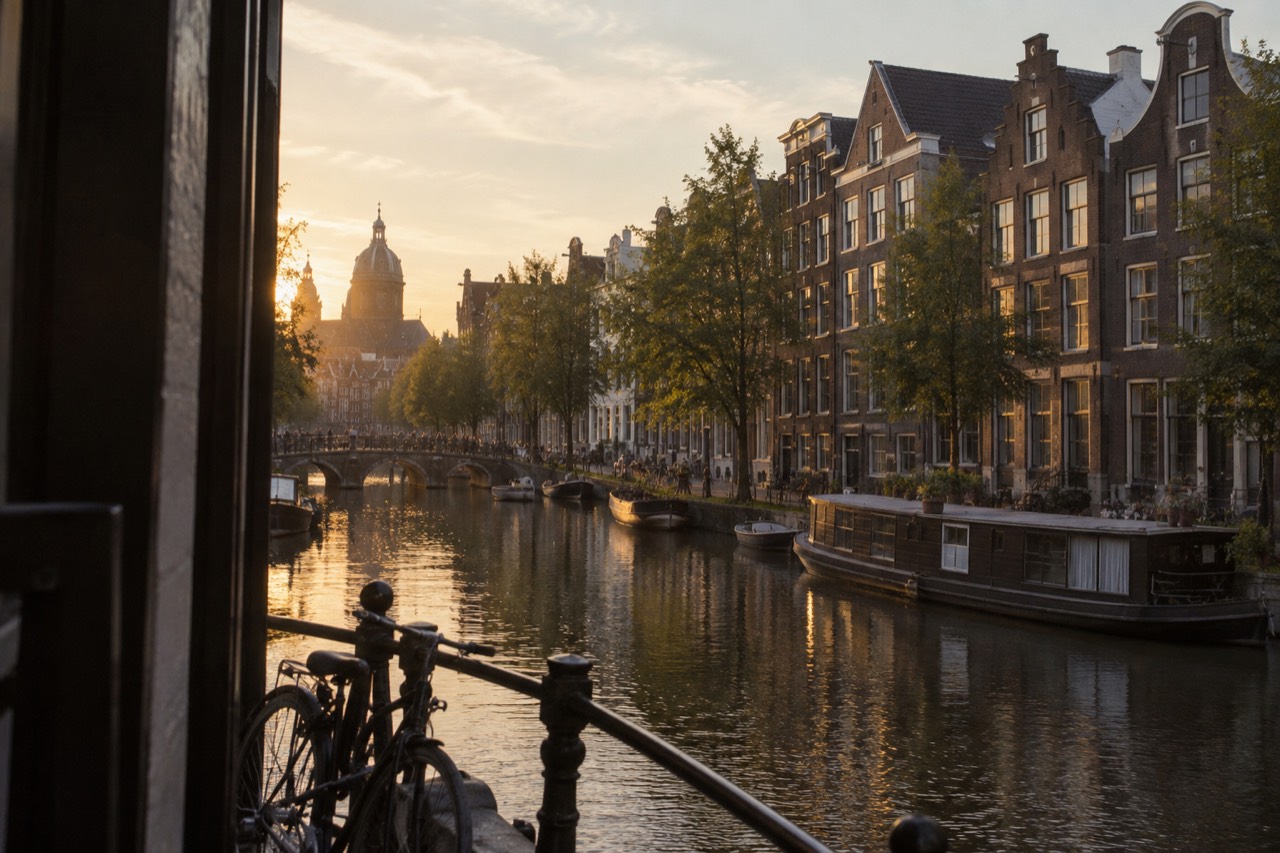
The prettiest city in the Netherlands is Amsterdam, and the case rests on its UNESCO-listed canal ring: roughly 400 years old, lined with gabled merchant houses, and best seen from the water at dusk. Delft and Utrecht run it close with smaller, quieter versions of the same beauty. If your trip allows only one city, Amsterdam wins on sheer density of photogenic streets, bridges and museums.
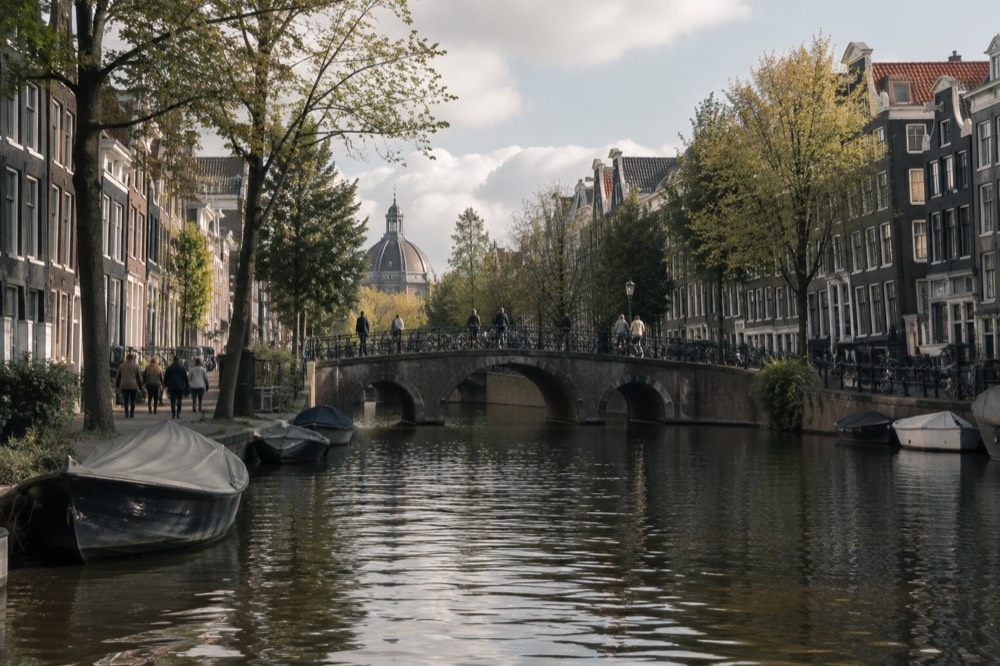
Beauty is subjective, but the canal ring is the one Dutch cityscape with global name recognition, and it earned its UNESCO listing for exactly the quality people mean when they say a city is pretty: an intact, human-scaled streetscape built around water. The ring was dug in the early 17th century, at the height of the Dutch Golden Age, and the merchants who financed it built narrow, tall houses with ornate gables along the water in a deliberate display of wealth. Four centuries later almost none of that fabric has been demolished. You can stand on a bridge over the Herengracht at golden hour and see much the same view a painter would have recognised, give or take some bicycles.
That is the honest argument for Amsterdam. It is not that the rest of the country is ugly, far from it, but no other Dutch city offers beauty at this scale and this intensity. The centre is compact enough to cross on foot in half an hour, yet every few streets the scenery resets: the grand merchant houses of the Golden Bend, the leaning facades of the Jordaan, the tree-lined curves where the Amstel meets the ring. Our own Amsterdam canal ring guide walks the whole circuit street by street for anyone who wants the full picture before committing a day to it.
The practical case matters too. Amsterdam is where the country's two most famous art collections live, the Rijksmuseum and the Van Gogh Museum, both on or beside the Museumplein and both charging €25 for an adult ticket on their own official pages. It is where the classic canal cruise industry is densest, with a verified one-hour cruise with audio guide available from about €15.50 direct from the operator. And it is the city most visitors fly into, which makes it the default answer by convenience as much as by looks.
If you are planning around the prettiest single experiences rather than the prettiest city, three of the most reliable are bookable before you leave: a timed entry at the Van Gogh Museum, the Heineken Experience in the old brewery, and a classic saloon-boat cruise through the canal ring at sunset. All three sell out on busy days, which is the one real planning risk in Amsterdam.
Which Cities Run Amsterdam Close for Beauty?
Delft is the strongest challenger: a small, canal-laced city of medieval gates, leaning houses and the blue-and-white pottery that carries its name, all walkable in a day. Utrecht is second, with a unique two-level canal wharf system you find nowhere else, and Haarlem and Leiden follow with their own grachten and quiet courtyards. Maastricht is the outlier, a distinctly southern, almost Belgian-looking city far from the rest.
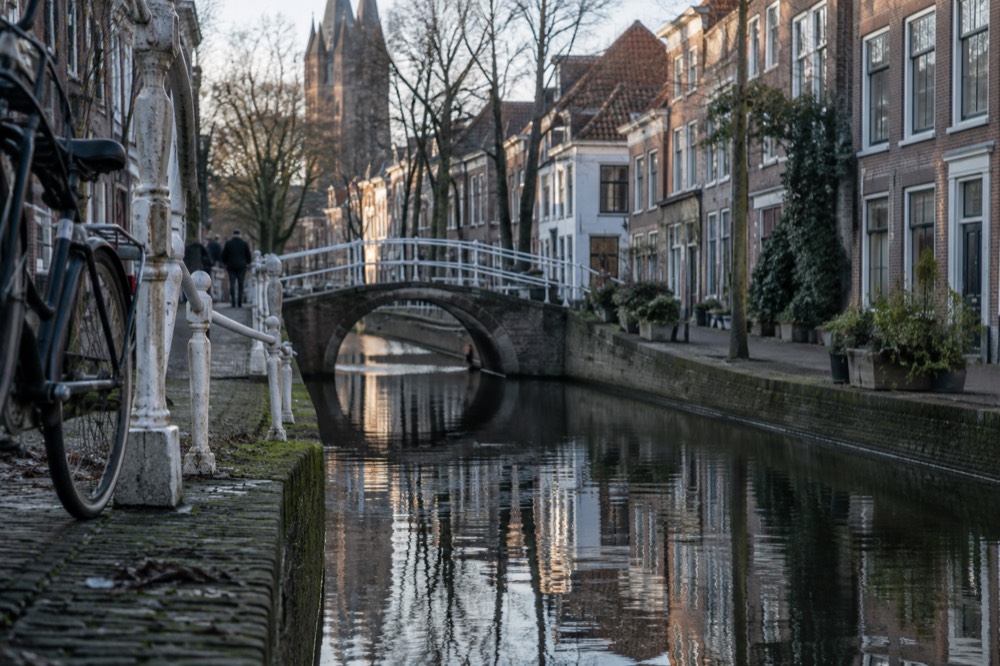
Delft's argument is intimacy. Where Amsterdam overwhelms, Delft charms: the Oude Delft canal, the Nieuwe Kerk's tower rising over rooftops, and the Prinsenhof courtyard where William of Orange was assassinated in the 16th century. The city centre survived the centuries with remarkably little damage, so the streetscape you photograph today is genuinely old rather than reconstructed. Day-trippers pair it with Rotterdam or The Hague, both under 15 minutes away by train, which makes Delft the easiest pretty detour in the country. Our Delft guide covers the full day trip from Amsterdam.
Utrecht's argument is uniqueness. Its canals are unique in the Netherlands for having a second, lower water level: the 13th-century wharf cellars that once served as warehouses now house cafes and bars at water level, a full storey below the street. The result is a canal-side scene that looks like nothing else, wrapped around the Dom Tower, the tallest church tower in the country. Utrecht is also less crowded than Amsterdam by a wide margin, which for many visitors tips the prettiness contest on a busy summer weekend.
Haarlem and Leiden are the honest third tier, and that is not an insult. Both are classic Dutch canal cities with 17th-century centres, hofjes (hidden almshouse courtyards), and windmills within walking distance of the station. Leiden adds the country's oldest university and the birthplace of Rembrandt. Maastricht, far to the south near the Belgian border, is a different proposition altogether: Roman history, a French-influenced food culture, and a squat, southern skyline that feels un-Dutch. It is beautiful, but it is a separate trip, not a day out from Amsterdam.
| City | What makes it pretty | Best for | Time needed |
|---|---|---|---|
| Amsterdam | UNESCO canal ring, 17th-century gabled houses, museum density | First-time visitors, art lovers, photographers | 2 to 4 days |
| Delft | Medieval gates, intimate canals, historic centre | A relaxed day trip, pottery fans | 1 day |
| Utrecht | Two-level wharf canals, Dom Tower, fewer crowds | A quieter alternative base | 1 to 2 days |
| Haarlem | Grachten, hofjes, windmill on the river | An easy half-day from Amsterdam | Half to 1 day |
| Maastricht | Southern architecture, Roman roots, food scene | A separate trip to the deep south | 1 to 2 days |
What Makes Amsterdam's Canal Ring So Photogenic?
Three things: the gables, the reflections and the light. Every canal house has a decorated gable top, the water doubles the architecture on calm days, and the low northern sun rakes across the facades in long golden hours morning and evening. Add 17th-century brick, humpback bridges and plane trees, and almost any frame along the ring works without effort.
The gables are the detail most visitors photograph without knowing why. Because plots along the canals were taxed on width, houses were built narrow and deep, and the gable at the top, bell, neck, stair, or step styles, was the one place a merchant could show off. Walking the ring you can date houses by gable type; the variety in a single street view is what keeps the architecture from feeling repetitive. The leaning is real too: many houses were built on wooden piles driven into marshy ground, and four centuries of settling left facades tilting visibly forward and sideways, which photographers either love or spend all afternoon correcting.
The reflections do half the aesthetic work. On a windless morning the canals act as mirrors, and the classic shot, houses and sky doubled in still water with a bicycle on the bridge above, is achievable on hundreds of bridges without any special access. Rain helps rather than hurts: wet cobbles and brick deepen in colour, and the Dutch weather that frustrates beachgoers is a gift to anyone with a camera. The light, finally, is a latitude effect. This far north the sun stays low for much of the day, so the golden hours are long and the midday glare that flattens southern cities rarely happens.
The cheapest and best way to see the ring is from the water. A classic one-hour cruise with audio guide departs every 30 minutes from the Damrak area and costs €15.50 direct from the operator's own site, with no time slot needed. For a step up in atmosphere, the classic saloon-boat cruise runs on restored late-19th-century wooden boats, some sailing the canals since 1902, with an optional Dutch cheese and drinks service on board; it rates 4.8 across 33,435 reviews on the live listing and starts at $19.56.
Once the cruise is booked, the other timed-entry decision is the Van Gogh Museum, and it deserves equal urgency: every visitor needs a pre-booked slot, tickets sell out on busy days, and under-18s go free. A pre-booked entry ticket through the operator's live listing starts at $31 and rates 4.7 across 57,096 reviews, the most-reviewed product on this site.
When Is the Netherlands at Its Most Beautiful?
Mid-April to early May, when the tulip fields hit peak bloom and Keukenhof is open, is the single most beautiful window in the country. Late November to mid-January comes second, when the Amsterdam Light Festival dresses the canals in installations. Otherwise spring and early autumn deliver the best light and the thinnest crowds.
The tulip season is the headline. Keukenhof, the great spring garden in Lisse about 30 to 40 minutes from Amsterdam, is open for one window only: in 2027 it runs Thursday 18 March to Sunday 9 May, daily 08:00 to 19:00, and it does not exist outside that window, a point worth stressing because a remarkable number of itineraries ignore it. The surrounding bulb fields peak roughly mid-April to early May, weather-dependent, and the whole Bollenstreek region turns into stripes of colour visible from the train. Any spring visit aimed at the prettiest possible photos should be built around those weeks. More of these guides are collected on Things to Do in Amsterdam.
Winter has its own argument. The Amsterdam Light Festival runs from late November to mid-January, with installations along and on the canals, and the dark afternoons at this latitude mean the lights come on early and stay on long. Add the possibility of frozen canals in a cold snap, when the city briefly turns into a skating rink, and December becomes a genuinely photogenic month rather than a compromise one. King's Day, on Tuesday 27 April 2027, is a different kind of beautiful: the world's largest street party, orange from end to end, and the one day a year the prettiest city is also its loudest.
| Season | What you get | Trade-off |
|---|---|---|
| Mid-March to mid-May | Tulips, Keukenhof, blossom on the canal trees | Peak crowds, higher hotel prices |
| June to August | Long days, terrace weather, festival calendar | The busiest months of the year |
| September to early November | Soft light, autumn colour, thinner crowds | Changeable weather |
| Late November to mid-January | Light Festival, dark-afternoon atmosphere, ice if lucky | Short days, cold and damp |
How Much Does It Cost to See the Highlights?
A day of the prettiest Amsterdam costs about €75 to €100 per person at full price: two major museums at €25 each, a canal cruise from €15.50, and a GVB day transport ticket at €10. The Anne Frank House is the cheapest headline sight at €16.50, but it sells on the museum's own site only, released six weeks ahead on Tuesdays at 10:00.
The big museums set the budget. The Rijksmuseum charges adults €25 on its own site, free for ages 18 and under, open 9am to 5pm daily, with a timed start slot required for every visitor. The Van Gogh Museum also charges €25, also free under 18, also timed-entry only, and its slots genuinely sell out, so pre-booking is not optional. A pre-booked Van Gogh entry ticket through the operator's live listing starts at $31 and rates 4.7 across 57,096 reviews, which is the most-reviewed product on this entire site.
| Highlight | Official adult price | Booking reality |
|---|---|---|
| Rijksmuseum | €25 | Timed slot required, free under 18 |
| Van Gogh Museum | €25 | Timed slot required, sells out |
| Anne Frank House | €16.50 | Official site only, released six weeks ahead |
| 1-hour canal cruise | from €15.50 | Departures every 30 minutes, no slot needed |
| GVB 24-hour transport ticket | €10 | Or tap a contactless bank card per ride |
Two passes can cut that budget. The I amsterdam City Card costs €67 for 24 hours or €94 for 48 hours and includes the Rijksmuseum, unlimited GVB transport, one canal cruise and a 24-hour bike rental, but it pointedly excludes the Van Gogh Museum and the Anne Frank House, both of which still need separate timed tickets. The Museumkaart costs €75 for a year and covers more than 500 museums nationwide, with a temporary version valid 31 days for a maximum of 5 museum visits available to visitors without a Dutch address; it gets you into neither the Anne Frank House (a €1 booking fee only) nor ARTIS Zoo. Neither pass is a clear win for a one-day beauty tour; both start making sense at three or more museum-heavy days.
Drinks and downtime are cheap in the prettiest parts of town. The Heineken Experience, in the original 19th-century brewery, is the classic mid-afternoon stop: an interactive, self-paced attraction rated 4.6 across 39,581 reviews, from $23 on the live listing. Brown cafes, the centuries-old Dutch pub tradition, pour beer at neighbourhood prices a few streets off the main canals, and the Amsterdam brown cafes guide lists the best of them.
How Many Days Does the Prettiest City Need?
Two full days covers the canal ring, one major museum and a cruise; three days adds the second museum, a neighbourhood like the Jordaan or De Pijp, and a half-day in Haarlem or Delft. Four to five days is the comfortable maximum before the city repeats itself. Anything less than two days turns the prettiest city in the Netherlands into a checklist.
The one-day version is possible but tight: a morning cruise, an afternoon in the Rijksmuseum, and an evening walk along the ring, skipping the Van Gogh entirely. Two days is the honest minimum, splitting the museums across mornings when queues are shortest and giving the afternoons to the Jordaan, the Nine Streets and the waterside. Three days is where Amsterdam stops feeling rushed, and it is also the point at which a day trip becomes natural: Haarlem in half a day, Delft in a full one, or the tulip fields in season.
For a trip built around beauty rather than box-ticking, the structure matters more than the count. Put the canal-side walks at the start and end of each day, when the light is low and the tour groups are thin, and put the museums in the middle, when the streets are at their busiest and the light is at its flattest. Book the timed-entry museums and the Anne Frank House slot before you fly, since the release schedule, Tuesdays at 10:00 for visits six weeks later, punishes last-minute planners. And leave one afternoon deliberately empty: the prettiest things in Amsterdam, a hidden hofje, a bakery queue, a bridge you did not expect, are found, not scheduled.
If the trip stretches to a week, the prettiest plan is not seven days in one city. Three or four in Amsterdam, then Delft and Utrecht, then the tulip fields in spring or Maastricht in any season, uses the country's beauty at its full range. The one week in Amsterdam and the Netherlands guide lays out exactly that route with the train times between stops.
Common Questions About the Prettiest City in the Netherlands
What Is The Prettiest City In The Netherlands?
Amsterdam, on the strength of its UNESCO-listed canal ring: an intact 17th-century streetscape of gabled houses, bridges and water that no other Dutch city matches for scale or density. Delft and Utrecht are the strongest challengers, each offering a smaller and quieter version of the same canal-city beauty.
Is Delft prettier than Amsterdam?
Delft is more intimate and far less crowded, with medieval gates and leaning houses packed into a centre you can cross on foot in 20 minutes. Amsterdam wins on scale, museums and the sheer number of photogenic corners. Many visitors do Delft as a day trip and get the best of both.
What is the most beautiful time of year in the Netherlands?
Mid-April to early May, when the tulip fields peak and Keukenhof is open (18 March to 9 May in 2027). Late November to mid-January is the second-most beautiful window, when the Amsterdam Light Festival installs works along the canals and the long dark afternoons suit the city's lights.
Is Utrecht worth visiting instead of Amsterdam?
Yes, especially for visitors who want the canal-city look with a fraction of the crowds. Utrecht's two-level wharf canals, with cafes at water level a storey below the street, exist nowhere else in the country, and the Dom Tower anchors a genuinely lovely old centre.
How expensive is it to see Amsterdam's highlights?
Plan on roughly €75 to €100 per person for a full day: €25 for the Rijksmuseum, €25 for the Van Gogh Museum, a canal cruise from about €15.50 and a €10 GVB day ticket for transport. The Anne Frank House costs €16.50 and is sold only through the museum's own official site.
Can you see the tulip fields from Amsterdam?
The fields themselves are in the Bollenstreek around Lisse, roughly 30 to 40 minutes away, and Keukenhof is the easiest way into them during its eight-week season. Any spring itinerary built around the flowers should be timed to mid-April or early May, when bloom is at its peak.