What Souvenirs To Bring Home From Amsterdam?
A straight answer on which Amsterdam souvenirs are worth packing, from cheese and stroopwafels to museum gifts and tulip bulbs, with what to skip.
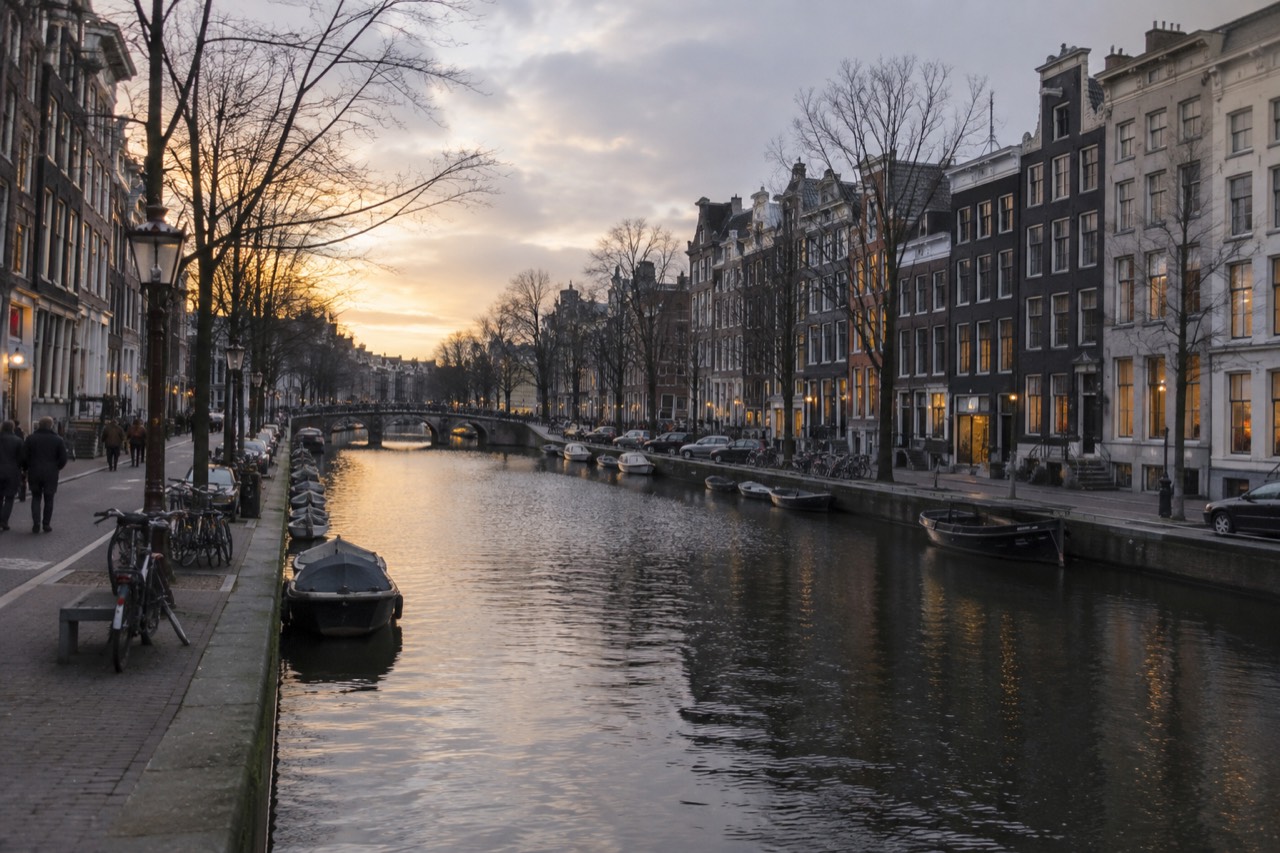
What Souvenirs To Bring Home From Amsterdam?
The souvenirs genuinely worth bringing home from Amsterdam are edible or experiential: aged Gouda and Leidse cheese from a cheesemonger, fresh stroopwafels, genever from a small distiller, Delft blueware from a real potter, and museum-shop prints from the Rijksmuseum or Van Gogh Museum. Skip the plastic tulips, generic "Amsterdam" hoodies and anything sold within fifty metres of Dam Square at triple the street price.
Amsterdam's souvenir economy is enormous and mostly redundant. The city recorded 23.7 million tourist overnight stays in 2025, according to the municipality's own statistics bureau, and a large share of those visitors leave with something in a plastic bag. Most of it is identical, made far from the Netherlands, and priced for the moment of impulse rather than for any lasting value. The shops themselves know this better than anyone, which is why the stock rotates so little and the window displays have not changed in a decade.
The distinction that matters is between things made here and things merely sold here. A wheel of cheese cut and vacuum-sealed at a market stall is a Dutch product with a Dutch supply chain behind it. A mug printed with a canal scene and "Amsterdam" in bubble letters could have been manufactured anywhere, and the price tag on the Kalverstraat will not tell you which is which. The same test applies to every shelf in every gift shop in the centre, and it takes about ten seconds to apply once you know to ask.
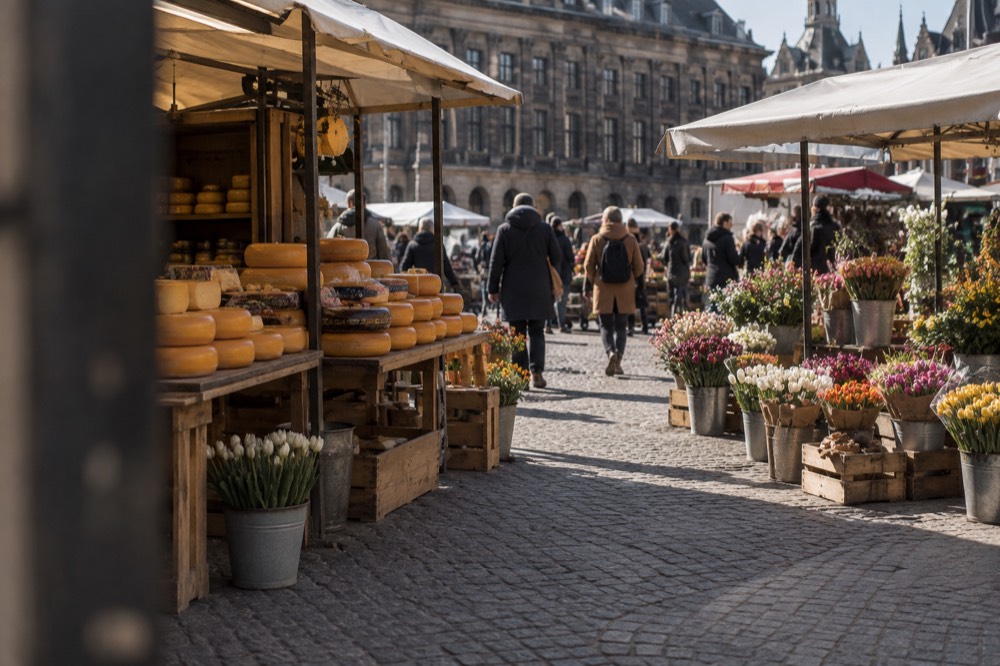
The best plan is to buy food souvenirs in the last day or two of a trip, and non-food souvenirs whenever you see the good version. Cheese keeps, but the sealed wheel does not need to ride around in your luggage for a week while you travel onward. Ceramics and prints, on the other hand, are worth snapping up the moment you find the right one, because the good versions are scattered across specific shops rather than repeated on every corner. Our fuller rundown of shops and products lives in the guide to what to buy in Amsterdam, which covers neighbourhoods and specific retailers in more depth than this page.
If the trip itself is the souvenir, the three experiences below are the ones most worth locking in early, because the best versions sell out. Museum tickets in particular are timed-entry only, and the popular morning slots go first.
Which Food Souvenirs Survive the Journey?
Cheese is the champion traveller: a vacuum-sealed wheel of Gouda or Leidse kaas keeps for weeks unrefrigerated and clears customs into most countries, including the United States, when it is hard cheese and commercially sealed. Stroopwafels travel well in their paper sleeve. Herring does not travel at all, and anything cream-based or fresh should be eaten before you fly.
Start at a cheesemonger rather than a souvenir shop. The stallholders at the Albert Cuyp Market and the specialist shops in the centre will cut a wheel to your size and vacuum-seal it on the spot, which is the difference between cheese that survives a long-haul flight and cheese that gets confiscated or spoils. Ask for a seal on the package and keep the receipt; some border officers ask to see proof of commercial packaging, and a hand-wrapped wedge in cling film does not qualify. The mongers are used to the question and will usually offer the export seal before you ask.
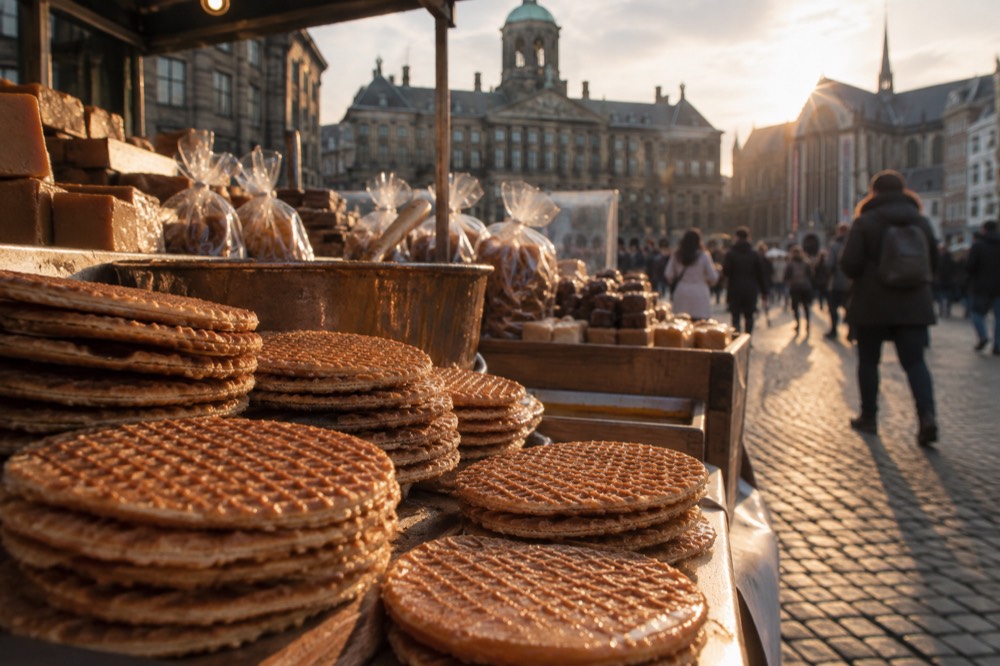
Stroopwafels are the second easy win. The supermarket versions in a paper sleeve are fine, thin and cheap, and the fresh ones pressed warm at a market stall are better eaten on the spot than carried home, because the caramel never sets the same way twice. A tin of the thick, caramel-filled kind makes a gift that lasts, and the tin itself protects them through a baggage handler's worst instincts. Other solid edible souvenirs include speculaas biscuits, chocolate letters if you are visiting near December, and drops, the salty black liquorice the Dutch genuinely eat and most visitors genuinely do not. Buy the liquorice for the person who specifically asked for it, not for the person you think should try it.
Jenever, the Dutch gin ancestor, is the one bottle worth buying here rather than at an airport duty-free, because the small Amsterdam distillers sell bottle-aged and flavoured versions you cannot find elsewhere. The difference between a jonge and oude jenever is real and the distillers will let you taste before committing. Check your airline's liquid rules and your home country's alcohol allowance before committing to a crate, and remember that a bottle bought in the city still has to fit your hand-luggage liquid limit if you are not checking a bag.
| Food souvenir | Travels well? | Where to buy the good version |
|---|---|---|
| Vacuum-sealed Gouda or Leidse cheese | Yes, weeks sealed | Cheesemonger or market stall that seals on site |
| Stroopwafels (packed tin) | Yes | Supermarket or bakery, not souvenir shops |
| Speculaas and chocolate letters | Yes | Any bakery or supermarket |
| Salty liquorice (drop) | Yes, but an acquired taste | Supermarket confectionery aisle |
| Fresh herring or cream cheeses | No | Eat before you fly |
One caution on "Amsterdam" food gifts sold in gift shops: the tulip-shaped biscuits and canal-scene tins are usually repackaged supermarket stock at a markup, sometimes triple the price of the identical tin one street over. The Dutch foods worth trying guide explains what the real versions taste like, which makes it easier to spot the imitations before you pay for them.
Are Tulip Bulbs Actually Allowed Through Customs?
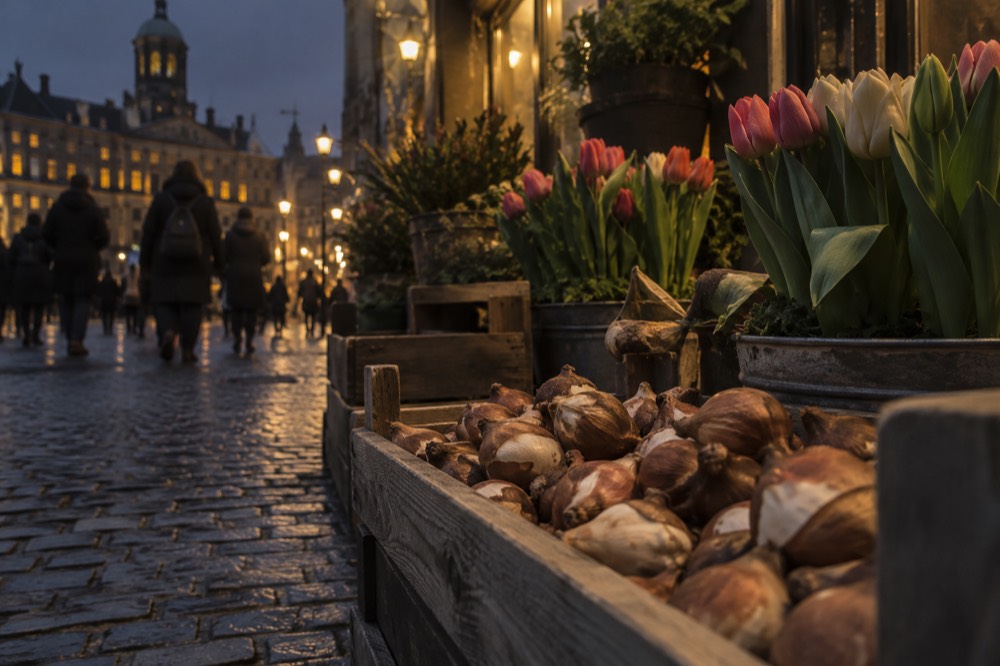
Yes, with conditions. Tulip bulbs sold for export carry a phytosanitary certificate and are legal to bring into the United States and most other countries; loose market bulbs without the certificate are not. Buy bulbs from a shop that exports routinely, keep the certificate and receipt in your hand luggage, and declare them at the border rather than hoping the sniffer dog is off duty.
The certificate is the whole game. Reputable bulb shops in Amsterdam sell export-grade bulbs with the paperwork attached, because they ship internationally every day of the season. The loose sacks at flower stalls are grown for planting locally, carry no certificate, and will be confiscated if found, which happens more often than visitors expect at a major hub like Schiphol. The fine for an undeclared agricultural item can also cost more than the entire trip's souvenir budget, which makes the declaration line the cheapest insurance in the city.
Rules differ by destination and change often enough that a summary written anywhere goes stale. For the United States specifically, our can you bring tulip bulbs back from Amsterdam page covers the current process in detail, including what to say at the border and what happens if you do not. Read it before you shop, not on the train to the airport.
For other countries, check your national plant-health authority before buying, not after. A certificate that satisfies Washington does not necessarily satisfy Canberra or London. And if you are visiting outside roughly October to May, bulbs are out of season anyway; the shops still sell them, dried and packaged, but the planting window at home may have passed by the time you land. The floating flower market guide explains how the Bloemenmarkt works and which stalls sell export stock rather than cut flowers.
Which Museum Gifts Are Worth the Money?
The Rijksmuseum and Van Gogh Museum shops are the two best gift shops in the city, and both sell things you cannot buy elsewhere: facsimile prints, exhibition catalogues and design objects drawn from their own collections. Entry to the Rijksmuseum is €25 with under-18s free, and the Van Gogh Museum is the same adult price, so budget the shop into the ticket.
The Rijksmuseum's own visitor page confirms the €25 adult price and free entry for ages 18 and under, along with daily opening from 9am to 5pm. Its shop is the place for high-quality reproductions of Golden Age paintings, and the flat-pack versions travel better than anything fragile. The Van Gogh Museum shop does the same for its collection, and the two shops together cover most of the art-related gifts worth carrying home. Both museums require a pre-booked timed entry slot, so the shop visit is easiest when the ticket is already sorted.
The Van Gogh Museum ticket itself is one of the most reliable products in the city, rated 4.7 across 57,096 reviews and starting at $31 on the live listing. Timed entry is mandatory for every visitor, so the practical souvenir-hunting plan is a pre-booked morning slot, the collection, then the shop before the lunch crowds thicken. The shop sits inside the ticketed area, which means you cannot browse it without a ticket, so decide before you go whether the gifts are part of the plan.
Smaller museums punch above their weight on gifts. The museum shop at the STRAAT street art museum sells prints from the artists whose work fills its warehouse, and the Amsterdam Museum shop carries city-history books that rarely appear in English elsewhere. Both are the kind of gift that says more about the trip than a T-shirt ever will. The same logic applies to the smaller house museums: their shops are small because their audiences are, and the stock is chosen by people who care about the subject.
| Official attraction | Adult entry | Gift worth buying |
|---|---|---|
| Rijksmuseum | €25, under-18s free | Facsimile prints, exhibition catalogues |
| Van Gogh Museum | €25, under-18s free | Prints, art books, design objects |
| Heineken Experience | From $23 on the listing | Brewery-exclusive glassware |
| A'DAM Lookout | €16.50 online, €18.50 at the counter | City panoramas, free digital souvenir with entry |
The Heineken Experience is the odd one out on that list, a brewery visit rather than a museum, but its shop sells glassware and gift packs that are genuinely exclusive to the site, and the visit itself is rated 4.6 across 39,581 reviews from $23. For a traveller who wants a consumable souvenir with a story attached, a bottle bought after the tour beats a bottle bought at the airport. The A'DAM Lookout, at €16.50 online against €18.50 at the counter, includes a free digital souvenir with every ticket, which is at least a souvenir that weighs nothing.
What Souvenirs Should You Skip?
Skip plastic tulips, anything with a cannabis leaf printed on it that is not from a coffeeshop, mass-produced clogs not meant for walking, "hand-painted" Delftware that is machine-printed, and I amsterdam merchandise from unofficial stalls. The city has banned new tourist-oriented shops from opening, which tells you how saturated the existing ones are.
The real Delft blue test is the mark on the base. Genuine Delftware carries a maker's mark and is hand-painted, which means visible brushwork and a price to match. The machine-printed versions sold in bulk are fine as cheap decoration, but do not pay hand-painted money for them, and do not believe a "hand-painted" sticker on a shelf of identical pieces. If every item on the shelf is identical down to the brushstroke, no brush touched it.
Clogs are the other classic trap. Real wooden klompen are still made in the Netherlands and make a sturdy, heavy souvenir if you have the luggage allowance, and the working versions are genuinely still worn in some rural areas. The miniature keychain versions are made by the million and weigh nothing, which is exactly their appeal and exactly their worth. If you want the full-size pair, buy them from a maker or a shop that names the maker, and expect to devote a chunk of your hold luggage to them.
The "I amsterdam" letter merchandise is a special case: the letters themselves were removed from Museumplein years ago, and much of the merchandise trading on them is unofficial. A better keepsake from the same part of town is a print or photo book of the canal ring, and the canal ring UNESCO guide explains why that landscape earned its listing, which is a better story to tell at home than where you bought a keychain. The story is the part of the souvenir that lasts; the object is just the prompt.
The most durable souvenir of Amsterdam is not an object at all. A canal cruise at dusk, a cheese tasting, an afternoon in a brown café: these are the things visitors actually describe when asked about the city years later. The classic saloon boat cruise, rated 4.8 across 33,435 reviews from $19.56, is the archetypal version, an hour on a restored wooden boat through the UNESCO-listed canals. Nobody ever recounts the evening they spent shopping on the Damrak.
If you want something physical from the water, photograph the cruise and print it at home, or buy one of the canal photography books sold in the better museum shops. Both outlast the plastic tulip. The full range of things to do in the city, souvenir runs included, is on our Things to Do in Amsterdam homepage, which is a better starting point than the gift-shop district will ever be.
Common Questions About Amsterdam Souvenirs
What Souvenirs To Bring Home From Amsterdam?
Cheese vacuum-sealed by a monger, packed stroopwafels, genever from a small distiller, certified tulip bulbs, museum-shop prints from the Rijksmuseum or Van Gogh Museum, and real Delftware with a maker's mark. Skip plastic tulips, unofficial I amsterdam merchandise and anything bought at Dam Square prices.
Can you bring cheese back from Amsterdam to the US?
Yes, if it is hard cheese and commercially sealed. A vacuum-packed wheel from a market stall or cheesemonger clears US customs; soft, fresh or cream cheeses do not. Keep the receipt and the seal intact in your hand luggage.
Are tulip bulbs from Amsterdam allowed into the US?
Only with a phytosanitary certificate. Bulbs sold for export by established shops carry one; loose market bulbs do not and will be confiscated. Declare them at the border. Our page on bringing tulip bulbs back from Amsterdam to the US covers the process step by step.
Is Delftware made in Amsterdam?
The real blue-and-white pottery comes from Delft, not Amsterdam, and genuine pieces carry a maker's mark on the base. Amsterdam shops sell both authentic Delftware and machine-printed imitations, so check for brushwork and a mark before paying hand-painted prices.
What is the best cheap Amsterdam souvenir?
A tin of thick caramel stroopwafels from any supermarket. It costs a fraction of the souvenir-shop price, travels flat, and is the one gift from Amsterdam that people reliably finish and ask for again.
Are cannabis souvenirs legal to take home?
Cannabis itself may not be exported, even from a tolerated coffeeshop, and the leaf-printed lighters and T-shirts sold in gift shops contain no cannabis but carry a stigma at the border. Neither is a souvenir worth explaining to a customs officer.