Who Is Henk Schiffmacher?
Henk Schiffmacher, the Amsterdam tattoo artist known as Hanky Panky, turned a marginal craft into a celebrated art form. Here is who he is, why the city claims him, and where his story touches a visit today.
Who Is Henk Schiffmacher?
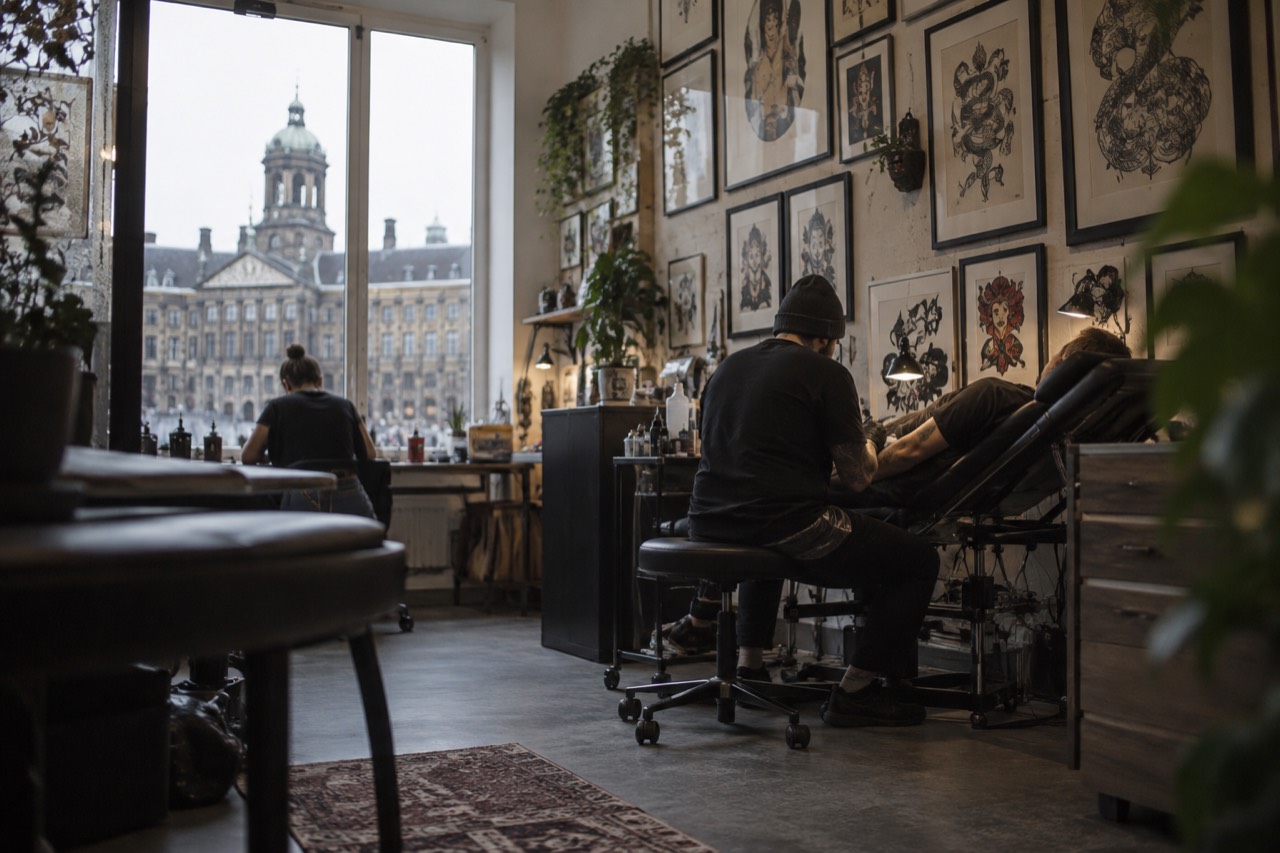
Henk Schiffmacher is a Dutch tattoo artist, author and collector based in Amsterdam, known worldwide by his professional name Hanky Panky, who is widely credited with lifting tattooing in the Netherlands from a backroom trade into a recognised art form. He opened one of Europe's best-known tattoo studios in the city and later founded a museum devoted to the craft's global history. For many visitors, he is the reason Amsterdam registers as a tattoo destination at all.
He was born in the Netherlands and trained as an artist before finding tattooing, a path that shaped how he treats the craft: as drawing first and needlework second. His Amsterdam studio became a pilgrimage point for a client list reported to include international rock stars and artists, though the man himself has always been more interested in the work than the celebrity of it. Ask around in Amsterdam and the name still opens doors.
The nickname tells you a lot. "Hanky Panky" is a joke, a wink at the disreputable reputation tattooing carried when he started, and he wore it like a badge on purpose. Where earlier generations of European tattooists worked quietly near ports and fairgrounds, Schiffmacher put the craft in shop windows, in books and eventually in galleries. He has spent much of his career as an ambassador for tattooing as art, lecturing, writing and collecting on a scale few private individuals ever match.
His collecting is the other half of the story. Decades of acquiring machines, flash sheets, photographs and ephemera from every tattoo tradition on earth produced an archive that became the backbone of the Amsterdam Tattoo Museum, the institution that carries his name and that the city still associates with him. The museum's ups and downs over the years are part of the story too, and we cover what a visitor can actually see today further down this page.
If your trip is shaping up around Dutch art and icons, the practical side of Amsterdam planning matters here: the big museums use timed entry and sell out, and a little booking strategy goes a long way. These three are the ones most travellers end up comparing.
Where Did the Hanky Panky Name Come From?
The name Hanky Panky was chosen as a deliberate provocation, a playful jab at the stuffy reputation tattooing had in the Netherlands when Schiffmacher started. Rather than hiding the trade's rough edges, he leaned into them, and the alias became one of the most recognisable brands in world tattooing. It appears on his studio, his books and his artwork to this day.
To understand why the joke mattered, you need the context. When Schiffmacher entered the trade, tattooing in the Netherlands lived at the margins: sailors, dockworkers and the occasional brave tourist, inked in small studios near the harbour or the amusement districts. There was no museum wing, no coffee-table book, no television appearance. A self-deprecating stage name signalled that he was not pretending to be a doctor or an academic; he was a tattooist, and he was proud of it.
The name also worked commercially. Amsterdam's red-light district and its surrounding streets have always run on spectacle and self-awareness, and a studio called Hanky Panky fitted the neighbourhood's register perfectly. His shop sat in the part of the centre where the city tolerates its most famous vices, and the sign became a landmark in its own right. Tourists photographed it the way they photographed the bridge lights, which is exactly the kind of free advertising a young artist needs.
There is a serious point underneath the humour, and it is the reason the name endures in design history. Schiffmacher treated the alias as a piece of branding decades before personal branding became a marketing term, and he did it with hand-drawn lettering, consistent imagery and a signature style that collectors can spot across a room. His own tattoo work drew on Japanese traditions, American old-school boldness and Dutch graphic sensibility, and the name became the umbrella over all of it.
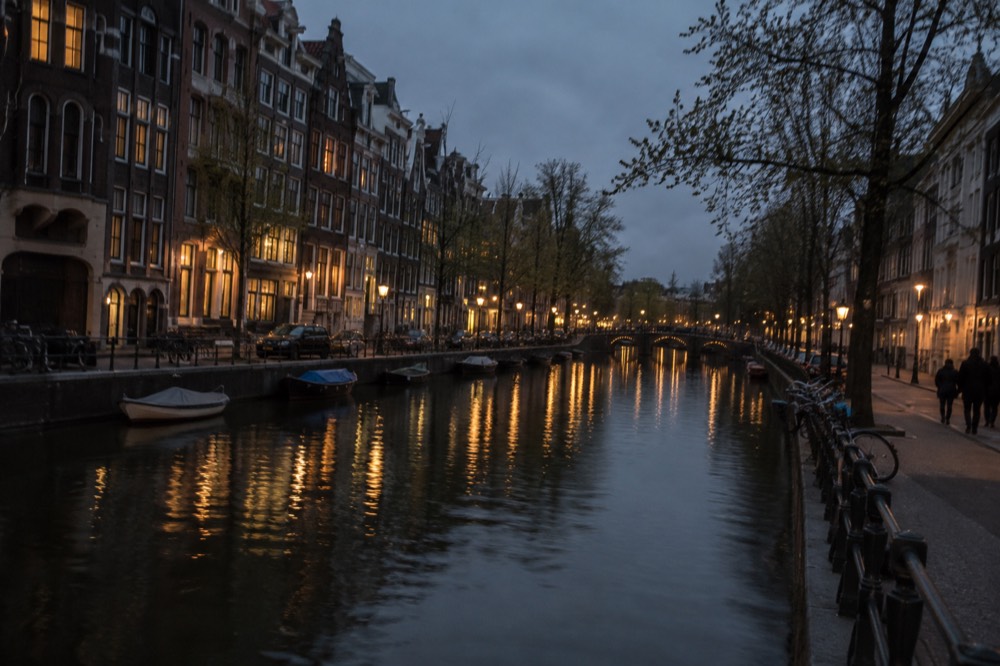
Amsterdam itself has a hand in the story. A city that turned its canal ring into a UNESCO-listed monument and its brown cafés into institutions has a long habit of taking marginal culture seriously once the quality is undeniable. Schiffmacher's career tracked that shift almost exactly. The same city that once pushed tattooing to the fringe now prints it on posters in museum shops.
Planning around the centre where his studio sat? The De Wallen area has firm rules for visitors, and the city publishes its guidance on respectful behaviour, including the photography norms around the windows, on its official How to Amsterdam page.
What Can You See of His Work in Amsterdam Today?
The most direct way to encounter Schiffmacher's world is the Amsterdam Tattoo Museum, which carries his name and displays pieces from his collection, alongside a small number of studios in the centre that continue the tradition he professionalised. Beyond that, his influence is diffuse: in the city's design culture, its museum shops and the sheer density of tattoo studios that followed his example. Here is what a visitor can realistically plan around.
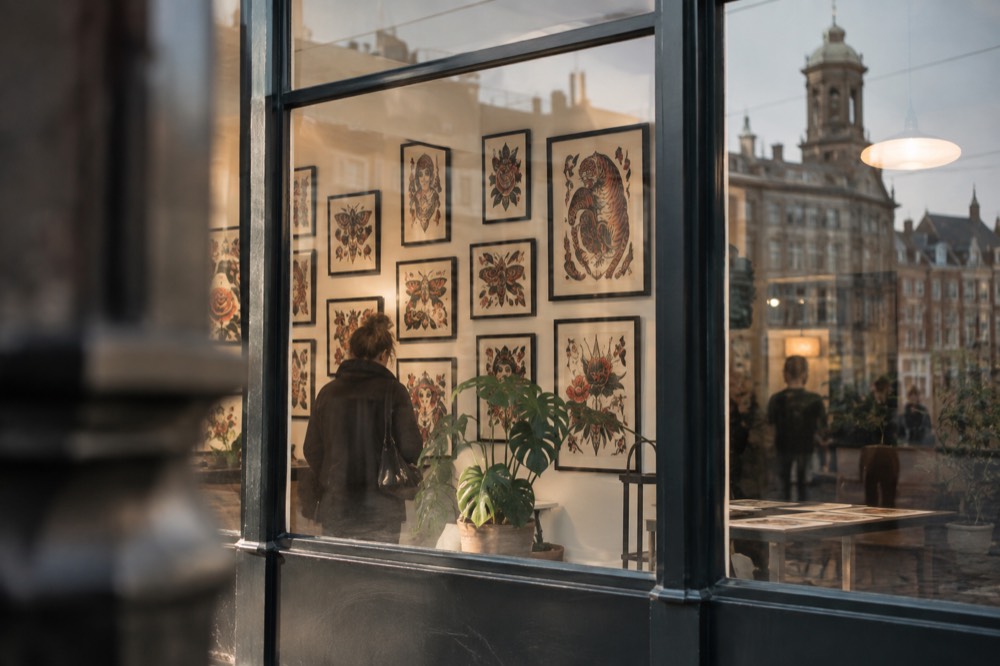
The museum is the headline item. It grew directly out of his private archive, one of the largest collections of tattoo-related material in the world, and its exhibits span Japanese irezumi, maritime tattooing, sideshow history and the Dutch scene he helped create. The institution has had a complicated history of openings, closures and relocations, so check its current status before you build an afternoon around it; our dedicated guide to the Amsterdam Tattoo Museum and Henk Schiffmacher tracks what is open and where.
The studio side is easier. Tattooing in Amsterdam is now fully mainstream, with studios across the centre, the Jordaan and De Pijp, many of them staffed by artists who trained in, or were inspired by, the tradition Schiffmacher built. Booking a small tattoo as a travel souvenir is a real Amsterdam experience, and the reputable shops operate like any other appointment-based business. If that appeals, book well ahead: good artists in this city have waiting lists, and walk-ins are the exception rather than the rule.
For visitors who want the story without the needle, the surrounding museums do the job. Dutch art history runs deep here, and the same city that celebrates a tattoo pioneer also runs some of the world's most-visited art institutions, all of which use timed entry and most of which sell out in high season. The Van Gogh Museum is the classic example: every visitor needs a pre-booked slot, adults pay €25 and under-18s enter free, per the museum's own visit information page. A skip-the-line ticket, from $31 on our roster with a 4.7 rating across 57,096 reviews, is the simplest way to lock a time.
The comparison below shows how the main Schiffmacher-adjacent and art stops stack up for planning purposes, with figures taken from the live listings we track.
| Stop | What It Is | Best For | Booking Reality |
|---|---|---|---|
| Amsterdam Tattoo Museum | Museum built from Schiffmacher's collection of tattoo art and artefacts | Tattoo history fans, design lovers | Check current status before visiting; the institution has moved over the years |
| Hanky Panky studio legacy sites | The centre locations where his studio operated | Photography, walking the old tattoo quarter | Free to see from the street; respect the neighbourhood rules |
| Working tattoo studios | Appointment-based studios across the centre and beyond | Getting inked as a souvenir | Book weeks ahead; walk-ins rare |
| Museum shops and galleries | Design and print culture, where tattoo aesthetics surface | Browsing on a rainy afternoon | Often free entry; combined with museum visits |
How Did Amsterdam Become a Tattoo Capital?
Amsterdam became a tattoo capital through a combination of port-city history and one man's refusal to let the craft stay underground: Schiffmacher's studio gave the city an international profile, his books and archive gave it scholarly weight, and the city's permissive, design-loving culture gave the whole scene room to grow. By the 1990s, artists were travelling to Amsterdam specifically to work and learn, a pattern that continues today.
The port roots came first. Amsterdam's harbour meant sailors, and sailors meant maritime tattooing, the anchors, swallows and names that European tattooists inked for centuries before anyone called it art. The Netherlands' own tradition was modest but real, and the city's tolerance culture meant the trade could operate openly here when it stayed semi-hidden elsewhere. That head start mattered when the next generation arrived.
Schiffmacher's contribution was to add legitimacy without sanding off the character. He travelled, studied Japanese masters, photographed aging designs before they disappeared and wrote about the craft with the seriousness of an art historian. His books became standard references internationally, which meant that people who had never visited Amsterdam still knew the city as a place where tattooing was taken seriously. Reputation compounds: artists moved here, apprentices trained here, and the studios multiplied.
The city's broader culture finished the job. Amsterdam has a long habit of elevating subcultures, from its brown cafés to its comic-strip heritage, and a population that judges work on quality rather than propriety. Tattooing slotted into that ecosystem naturally. Today the city supports a dense, professional studio scene, and the influence runs both ways: Dutch graphic design shows up in local tattoo styles, and tattoo aesthetics show up in museum exhibitions and shopfronts across the centre.
For travellers, the practical consequence is simple. Amsterdam is one of the easier cities in Europe to get quality ink from an English-speaking artist, and the studios cluster in neighbourhoods you would want to walk anyway. Combine a studio visit with a canal cruise and you have a genuinely Amsterdam afternoon: the historic canal belt neighbourhood is where most of the walking happens.
Is the Amsterdam Tattoo Museum Still Open?
The Amsterdam Tattoo Museum has had a stop-start history, with closures and relocations reported over the years, so the honest answer is to check its current status before planning a visit. What is not in doubt is the collection itself: Schiffmacher's archive remains one of the world's largest private tattoo collections, and it resurfaces in exhibitions and projects around the Netherlands. Treat the museum as a maybe, not a promise.
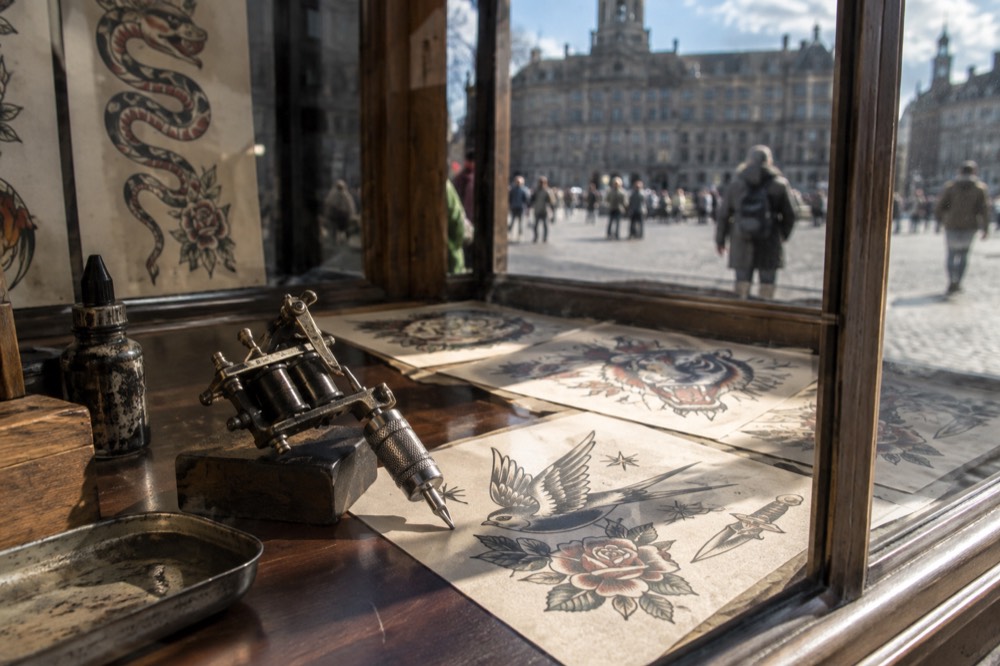
The museum originally opened to significant acclaim, housed part of his collection of machines, flash and photographs, and drew visitors who had no intention of ever getting tattooed themselves. Financial and property troubles interrupted it, and the institution has since existed in various forms and locations. That kind of turbulence is common for single-subject private museums, but it means any travel article that states a fixed address and opening hours tends to age badly. Ours does not: the dedicated guide is the place where we track the current situation.
If the museum is closed or relocated on the dates you travel, the collection's spirit is still findable. Temporary exhibitions of tattoo art appear in Dutch galleries, and the city's design institutions periodically borrow from private collections of the kind Schiffmacher assembled. Meanwhile, the living version of the craft is on display in every working studio window in the centre, which is arguably the better exhibition anyway.
The table below sets out what you can realistically plan around, with the booking realities stated plainly.
| Experience | Cost Level | Time Needed | How to Book |
|---|---|---|---|
| Tattoo museum visit, when open | Moderate | 1 to 2 hours | Check the museum's own channels first |
| Getting a small tattoo | Set by the artist | 1 to 3 hours plus consultation | Direct studio booking, weeks ahead |
| Studio-window walking route | Free | 1 hour | No booking; respect neighbourhood rules |
| Canal cruise through the old quarter | From $19.56 | 1 hour | Live listing, same-day often possible |
What Should First-Time Visitors Know?
First-time visitors should know three things: book the big museums before anything else because timed slots sell out, treat the red-light district streets with the respect the city formally asks for, and leave room in the itinerary for the unplanned stuff, because Amsterdam's best material, tattoo shops included, is found while walking. A little structure goes a long way here, and the structure is cheap to arrange.
Start with bookings. The Van Gogh Museum requires every visitor, including pass holders, to pre-book a timed slot, and the Rijksmuseum does the same; the Rijksmuseum's own opening hours and prices page states the daily 9am to 5pm schedule and the €25 adult ticket plainly. If tattoo history is the reason you came, book the museum-dependent parts of your plan last and the flexible parts first, so a closure or a sold-out slot does not sink the day.
Second, mind the neighbourhood rules. The streets around the old tattoo quarter overlap with De Wallen, where the city bans guided tours from passing the windows, caps tour groups at 15 and restricts tours to the hours between 08:00 and 22:00, and where photographing the windows is a hard social norm against, not a technicality. Solo walkers have more freedom than tour groups, but the respect guidance applies to everyone. The city publishes the full set of visitor rules on its official tour-rules page.
Third, pace the day the Amsterdam way. This is a walking city with a canal-shaped centre, and the things that make it memorable, a studio window, a brown café, an unexpected gallery, are found on foot between the booked items. A one-hour canal cruise is the classic way to rest the legs without losing sightseeing time; the classic saloon boat cruise on our roster runs from $19.56 with a 4.8 rating across 33,435 reviews, and the Heineken Experience, from $23 with a 4.6 rating across 39,581 reviews, is the standard mid-afternoon stop for groups who want the brewery story with their city history. The Heineken Experience sits in the old brewery buildings and pairs well with a walk along the canal belt.
One last practical note: the city's tourism pressure is real, with 23.7 million tourist overnight stays recorded in 2025 according to the municipal statistics office, so the quiet hours are early morning and late evening, and the booked slots are worth their planning effort. The Things to Do in Amsterdam homepage collects the current roster if you want to compare the full set of tours and tickets in one place.
If you are still shaping the trip, these three picks cover the art, the brewery and the canal angles that most first visits are built around.
Common Questions About Henk Schiffmacher
Who Is Henk Schiffmacher?
Henk Schiffmacher, professionally known as Hanky Panky, is a Dutch tattoo artist, author and collector based in Amsterdam, credited with turning tattooing in the Netherlands into a recognised art form and with founding the Amsterdam Tattoo Museum from his private collection.
Why is he called Hanky Panky?
The alias is a self-aware joke, chosen to needle the stuffy reputation tattooing carried when he started. He wore the name as a brand, printing it on his studio, his books and his artwork until it became one of the most recognisable names in world tattooing.
Can you visit the Amsterdam Tattoo Museum?
The museum has had a stop-start history of closures and relocations, so check its current status before planning a visit. The collection it was built from remains one of the largest private tattoo archives in the world, and our dedicated guide tracks where it can be seen.
Can tourists get a tattoo in Amsterdam?
Yes. Amsterdam has a dense, professional studio scene with English-speaking artists, and many studios welcome travelling clients. Book well ahead, because reputable artists have waiting lists and walk-in availability is limited.
Is Amsterdam a good city for tattoo history?
It is one of the best in Europe. The port-city tradition gave it early maritime tattooing, Schiffmacher's studio and archive gave it international standing, and the city's design culture keeps the scene visible in studios, exhibitions and shops across the centre.