Why Is Amsterdam So Expensive To Fly Into?
Schiphol fees, the 12.5% tourist tax, a capped hotel market and peak-season demand all push the cost of flying into Amsterdam up. Here is what drives the price and how to pay less.
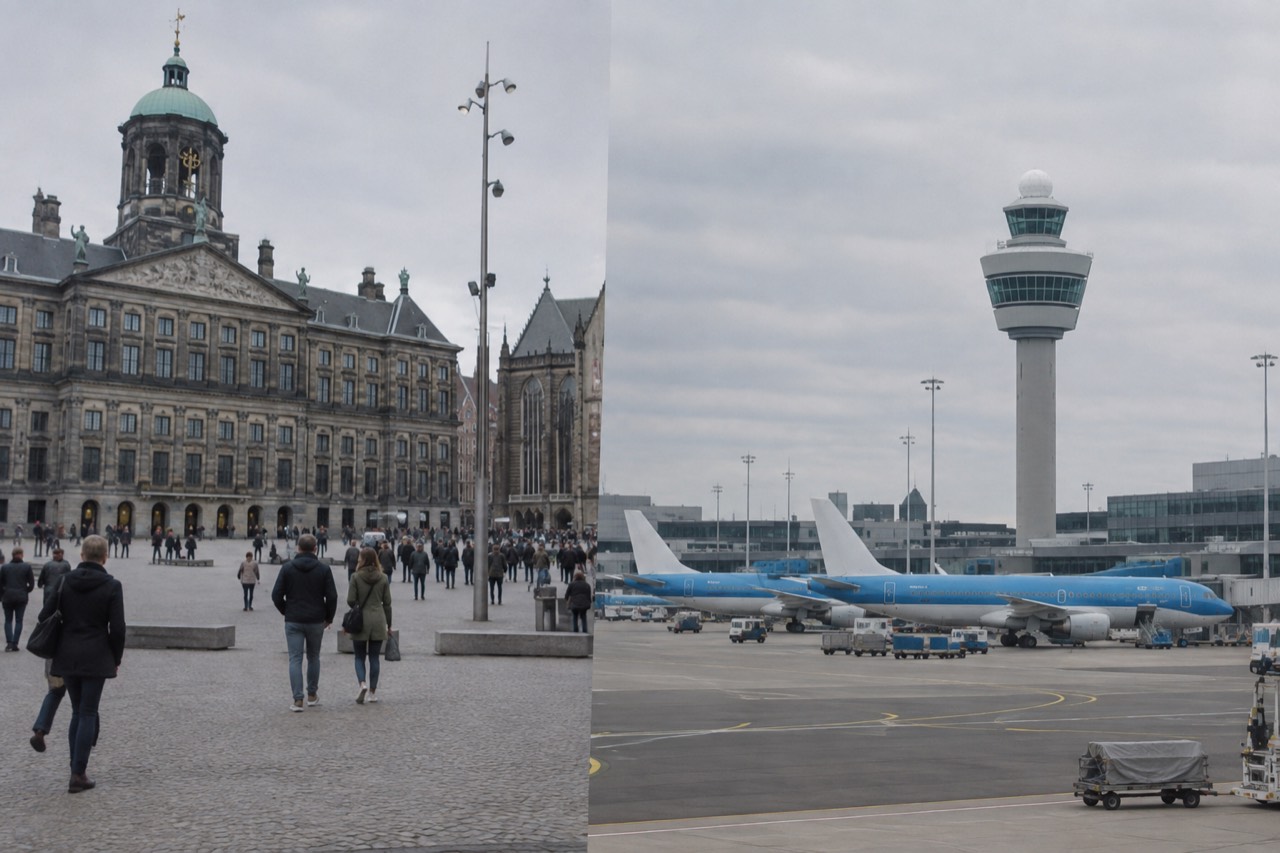
Flying into Amsterdam rarely feels cheap, and the reason is not one big charge but a stack of smaller ones. Schiphol is a major connecting hub where airlines pay busy-airport rates, the city adds a 12.5% tourist tax to every overnight stay, and a deliberate freeze on new hotel rooms keeps accommodation prices high. This guide separates the costs you cannot avoid from the ones you can, using verified figures from the airport, the city and the transport operators themselves.
Why Is Amsterdam So Expensive To Fly Into?
Amsterdam is expensive to fly into because Schiphol is a high-demand connecting hub with heavy airport charges, because the city taxes every visitor bed at 12.5% of the nightly rate, and because a deliberate cap on new hotels keeps rooms scarce and pricey. Add a strong euro, peak-season crowds of millions and a walkable centre everyone wants to stay in, and the total cost of arriving climbs quickly.
The airfare itself is the first lever. Schiphol sits in the top tier of European airports for aircraft movement, and airlines price busy-hub slots into their fares. Amsterdam recorded 23.7 million tourist overnight stays in 2025, according to the city's own statistics office, and much of that demand arrives through one airport. When a single hub absorbs demand on that scale, carriers have little reason to discount. The same logic applies to the airlines' own costs: an airport handling that volume of connections charges accordingly, and the charge lands in the fare before you ever see it.
The second lever is policy, and this is the part most travellers miss. Amsterdam is not trying to be cheap. The city has an explicit programme called Tourism in Balance, a legal ceiling of 20 million tourist overnight stays per year that has been exceeded annually since the recovery, and a set of measures designed to slow visitor growth: a hotel construction freeze, a ban on new tourist shops in the centre, and a decision to halve cruise calls. A city that is deliberately limiting supply while demand keeps rising will price accordingly. None of this is hidden. The measures are published on the city's own pages, and they are working exactly as intended, which means they are working against your wallet.
The third lever is the tax layer. Every hotel night and holiday rental in Amsterdam carries a tourist tax of 12.5% of the overnight price, excluding VAT, under the city's 2026 regulation. Cruise passengers pay a day-tripper tax of €15 per person. None of this appears in your airfare, but it appears in your bill, and it shapes what "expensive" means for the city as a whole. It also means that the more the room costs, the more the tax costs, so the tax scales with the very scarcity the city has created.
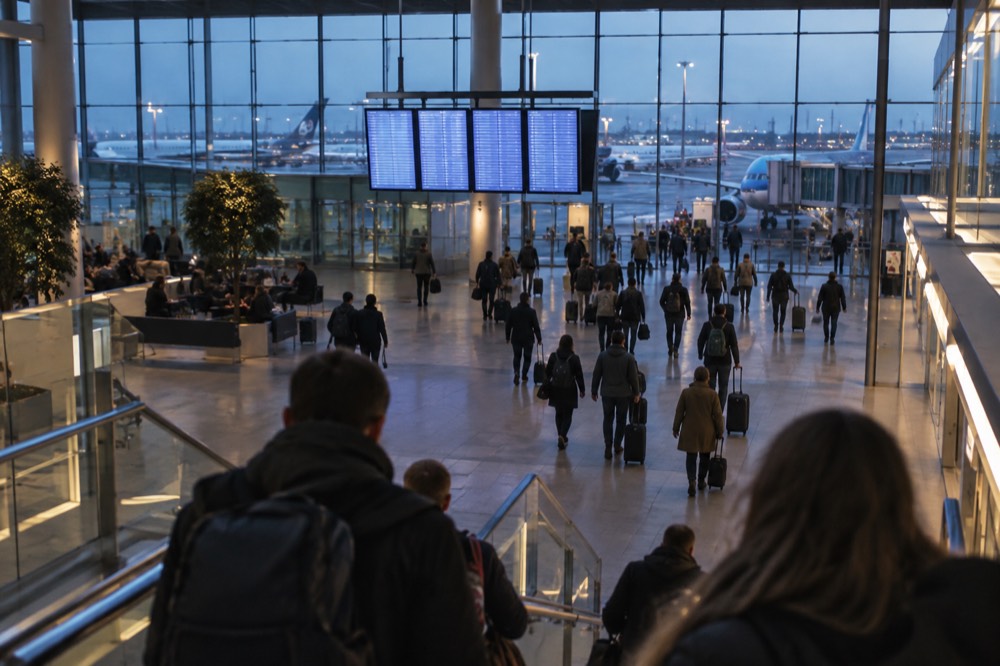
There is also a simple geography problem. Everyone wants to sleep inside the 17th-century canal ring, which is a small, protected UNESCO area where nothing new can be built. Demand concentrates on a few square kilometres, and prices concentrate with it. A visitor who widens the search by even two or three tram stops often finds a meaningfully lower rate for an identical room. Our Schiphol to central Amsterdam transfer guide covers how to close that last distance cheaply once you have landed.
How Much Does Getting from Schiphol to the Centre Add?
The transfer itself is the cheapest part of the trip: the NS train from Schiphol to Amsterdam Centraal costs from €5.50 and takes just over 17 minutes, while the Amsterdam Airport Express bus 397 costs from €6.50. A taxi is metered with no fixed fare, so it can quietly cost more than everything else in this paragraph combined. Budget roughly €6 to €11 per person for a sane transfer.
The train is the answer for almost everyone. The national rail operator sells e-tickets for the Schiphol to Amsterdam Centraal run from €5.50, and the journey takes just over 17 minutes, according to the operator's own route page. Trains run frequently through the day and night schedule permitting, and Centraal Station drops you at the northern edge of the canal ring, within walking distance of a large share of the city's accommodation. For a family of four, the train versus a metered taxi is not a close comparison: the rail fare is fixed, published and small, while the taxi is none of those things.
| Option | Price | Time to the centre | Best for |
|---|---|---|---|
| NS train to Amsterdam Centraal | from €5.50 | just over 17 minutes | Almost everyone; fastest and cheapest |
| Amsterdam Airport Express bus 397 | single from €6.50, return from €11.75 | around 30 minutes | Hotels in the south and west of the centre |
| Niteliner N97 (night bus) | shares the 397 fare | around 30 minutes | Late arrivals after the last train |
| Taxi or rideshare | metered, no fixed fare published | 20 to 40 minutes in traffic | Only worth it with luggage and a group |
The taxi row deserves a warning. Schiphol publishes no fixed fare into the city: the airport's own page tells arriving passengers plainly that you pay whatever the meter says. Any website quoting a specific euro figure for a Schiphol taxi is guessing. Treat the metered fare as an unknown and take the train instead. This is one of the few places in Amsterdam travel planning where the official advice and the budget advice are the same advice.
Once you are inside the city, transport is genuinely cheap. A GVB 24-hour day pass for trams, buses, metro and ferries costs €10.00, with a child pass at €5.00, and you can also tap a contactless bank card under the OVpay system. Multi-day passes step up from there: €16.00 for 48 hours, €21.50 for 72 hours and €27.50 for 96 hours, per the operator's fare table. Very few visitors need anything beyond a day pass and their feet. Amsterdam is compact, and the centre is flat, so walking between the major sights is often faster than waiting for a tram.
Why Are Amsterdam Hotels and Stays So Pricey?
Amsterdam hotel prices are high because supply is frozen and taxed at the same time: the city operates a hotel construction ban, roughly 544 hotels hold about 41,000 to 42,000 rooms, and every night sold carries the 12.5% tourist tax on top of the room rate. Short-stay rentals are capped too, at 30 nights per year city-wide and only 15 nights in the most central neighbourhoods.
The hotelstop is the single biggest structural fact. Amsterdam stopped approving new hotels as a matter of policy, part of the same Tourism in Balance programme behind the overnight-stay ceiling. A city of roughly 41,000 to 42,000 hotel rooms absorbing demand from millions of overnight stays has nowhere to expand, so rates rise until enough visitors are priced out. The city's statistics office counted 23.7 million tourist overnight stays in 2025, well above the 20 million ceiling, and forecasts between 23.7 and 25.1 million for 2026. The ceiling has not stopped the arrivals; it has only capped the beds they compete for. The full index of guides sits on Things to Do in Amsterdam.
The tax layer compounds it. The 12.5% tourist tax applies to hotels, holiday rentals, B&Bs and campsites alike, and it sits on the price after the room rate is set, so it scales upward precisely when rooms are most expensive. The city's official tourist tax page states the rate and the €15 per-passenger cruise day tax in plain terms. A traveller comparing Amsterdam hotel rates with a cheaper city's rates is often comparing a taxed price with an untaxed one, which is why the sticker shock is worse than the underlying room rate alone would suggest.
Holiday rentals, which travellers often assume will undercut hotels, are throttled by the same logic. A rental is limited to 30 nights per calendar year and a maximum of four guests at a time, requires a registration number on every listing and a €76 permit, and from 1 April 2026 the most central neighbourhoods, including the Jordaan, the canal ring districts and Oude Pijp, are cut to 15 nights per year. Fewer legal rental nights means fewer cheap beds, again by design. The rules are enforced through the listing platforms themselves, so a bargain that looks too good in the centre probably is.
The practical takeaway is not "do not go", it is "book early and stay where the supply is". Our where to stay in Amsterdam guide maps the neighbourhoods that trade a ten-minute tram ride for a meaningfully lower rate. And whatever you save on the room, it is worth spending a little of it on the sights you came for rather than arriving to find them sold out.
Which Amsterdam Costs Are Actually Avoidable?
The avoidable costs are queue time, single tickets bought at the counter and peak-week flights. The big museums all require pre-booked timed entry, the Rijksmuseum and Van Gogh Museum both charge €25 at the door, and the Anne Frank House sells online only at €16.50, so nothing about advance planning is optional. What you can control is when you fly, how you transfer and whether you pay counter prices or online ones.
Start with the museums, because they are where lazy planning costs real money and real hours. The Rijksmuseum charges adults €25, free for ages 18 and under, open daily 9am to 5pm, and every visitor including passholders must book a start time. The Van Gogh Museum charges adults €25, under-18s free, requires a pre-booked timed ticket for all visitors, and its tickets can sell out. The Anne Frank House is the strictest of all: €16.50 for adults, sold only through the museum's own website for a specific date and time, with no door sales and no reseller, released on a rolling schedule weeks ahead. If a ticket seller anywhere implies it can get you into the Anne Frank House, it cannot.
A skip-the-line ticket for the Van Gogh Museum, rated 4.7 across 57,096 reviews and starting at $31, is the single most common advance purchase Amsterdam visitors make, and the reason is simply that the timed slots go first. Check availability for your dates before you lock in a flight, because museum scarcity, not airfare, is what actually breaks most itineraries.
Food and drink are more forgiving than the museums. Service is included in Dutch menu prices, so there is no obligatory tip on top, and the classic Dutch snacks, stroopwafels, bitterballen and herring from a market stall, cost a fraction of a restaurant main. Our Dutch food guide lists what is worth the money and what is a tourist-trap markup. Eating where the tram stops and the tour groups do not is the single cheapest quality upgrade available in the city.
The canal cruise is the one activity where the price spread is wide and the low end is genuinely good. A one-hour cruise with audio guide starts from about €15.50 with the operator Rederij Kooij, which publishes its own fare, and pre-booked cruises through resellers start at $19.56 for a classic saloon boat with drinks and cheese included, rated 4.8 across 33,435 reviews. A cruise at that price is one of the better value hours in the city, and it costs less than a single museum ticket.
Passes deserve a caution rather than a recommendation. The I amsterdam City Card is verified at €67 for 24 hours and €94 for 48 hours, and it includes a canal cruise, a 24-hour bike rental, GVB transport and entry to more than 70 museums, but the two biggest draws, the Van Gogh Museum and the Anne Frank House, are excluded. Do the arithmetic against your actual list before buying, and read our I amsterdam City Card worth-it breakdown for the full comparison. A pass is a bulk purchase, and bulk purchases only win when you use the bulk.
| Cost | Verified price | Can you avoid it? |
|---|---|---|
| Rijksmuseum adult entry | €25 | No, but under-18s go free |
| Van Gogh Museum adult entry | €25 | No; timed ticket required either way |
| Anne Frank House adult entry | €16.50, online only | No; book weeks ahead on the official site |
| GVB 24-hour transport pass | €10.00 | Partly; walk or tap contactless instead |
| One-hour canal cruise | from about €15.50 | Yes; the cruise is optional, not mandatory |
| Tourist tax per night | 12.5% of the room price | No; it is added to every legal stay |
When Is Flying Into Amsterdam Cheapest?
Flying into Amsterdam is cheapest in the low-demand shoulder months, late autumn through early spring excluding the Christmas and New Year window, and midweek rather than Friday or Sunday. The same fare logic that makes summer expensive works in reverse in January and February, and the city's hotels follow the curve, so the flight and the bed fall together.
The demand curve is predictable because the supply is fixed. With the hotel stock frozen and the 20 million overnight-stay ceiling exceeded every year, the only variable that moves prices is the calendar. Winter weekends around the Amsterdam Light Festival and the Christmas markets hold their rates; the grey weeks of January and early February do not. Our best time to visit Amsterdam guide weighs the savings against the weather, and the honest trade is that the cheapest months are also the shortest-day ones.
There is a second route to savings that has nothing to do with the calendar: arrive by train. For travellers already in Europe, the train versus plane question is covered in our London flight or train comparison, and the answer often favours the rail option once you count the transfer, the airport taxes and the centre-to-centre time. Schiphol's dominance of Dutch air travel is exactly what makes the airport expensive; the rail network is what makes it optional.
A few booking habits do the rest. Fly midweek, avoid school-holiday weeks in the surrounding countries, and price the trip as a whole rather than chasing the airfare alone: a slightly cheaper flight that lands you into the most expensive week of the hotel calendar is not a saving. Book the timed-entry museums the same week you book the flight, because those slots, not the seats, are the scarcest commodity in the city.
Common Questions About Flying Into Amsterdam
Why Is Amsterdam So Expensive To Fly Into?
Schiphol is a high-demand hub with heavy airport charges, the city taxes every bed at 12.5%, and a policy freeze on new hotels keeps rooms scarce. Demand of 23.7 million overnight stays against fixed supply means airlines and hotels alike can price high. The flight is only the visible part of a stack of structural costs.
Is Schiphol an expensive airport?
Yes, by European standards. It is one of the continent's busiest connecting hubs, and airlines price busy-hub slots and airport charges into their fares. The airport itself is efficient, but efficiency at scale is what you are paying for.
How much is the tourist tax in Amsterdam?
The tourist tax is 12.5% of the overnight price, excluding VAT, for hotels, holiday rentals, B&Bs and campsites. Cruise passengers pay a day-tripper tax of €15 per person. It is charged on the accommodation bill, not the airfare.
What is the cheapest way to get from Schiphol to central Amsterdam?
The NS train, from €5.50 for a single e-ticket, taking just over 17 minutes to Amsterdam Centraal. The Airport Express bus 397 is close behind at from €6.50. A taxi is metered with no published fixed fare and is rarely worth it for solo travellers or couples.
Do Amsterdam hotel prices ever drop?
Yes, in the low season. With the hotel stock frozen at roughly 41,000 to 42,000 rooms, rates follow the demand calendar sharply: January and early February, excluding event weekends, are the cheapest windows, while summer and the Christmas period hold their highs.
Does the I amsterdam City Card save money?
It can, but not always. The verified prices are €67 for 24 hours and €94 for 48 hours, including a canal cruise, a bike rental, GVB transport and entry to more than 70 museums, but the Van Gogh Museum and the Anne Frank House are excluded. Compare the card against your actual museum list before buying.