Westerpark and Het Westergas: Amsterdam's Park, Culture and Nightlife in the West
Westerpark is the green heart of Amsterdam's Oud-West, and Het Westergas, the former gasworks on its northern edge, is where the neighbourhood's cultural life now lives. Here is how to plan a visit.
Short answer
Westerpark is a large public park in Amsterdam's Oud-West district, and Het Westergas is the former gasworks turned cultural complex on its edge, home to venues, restaurants and the Fabrique des Lumières digital art centre, entry from $20.00. A GVB 24-hour transport ticket costs €10.00.
Amsterdam's west end does not get the postcard traffic that the canal ring does, and that is exactly the point of Westerpark. Locals treat it as their everyday backyard: joggers on the winding paths in the morning, families on the lawns at midday, and a restaurant terrace filling up by early evening. Attached to the park's northern edge is Het Westergas, a cluster of brick industrial buildings that once served as the city's gasworks and now hosts cultural venues, food events and one of the more unusual museum experiences in the city. This guide covers what the park offers, what sits inside the old gasworks, how to get there, and how to fold it into a wider Amsterdam itinerary.
What Is Westerpark and Het Westergas?
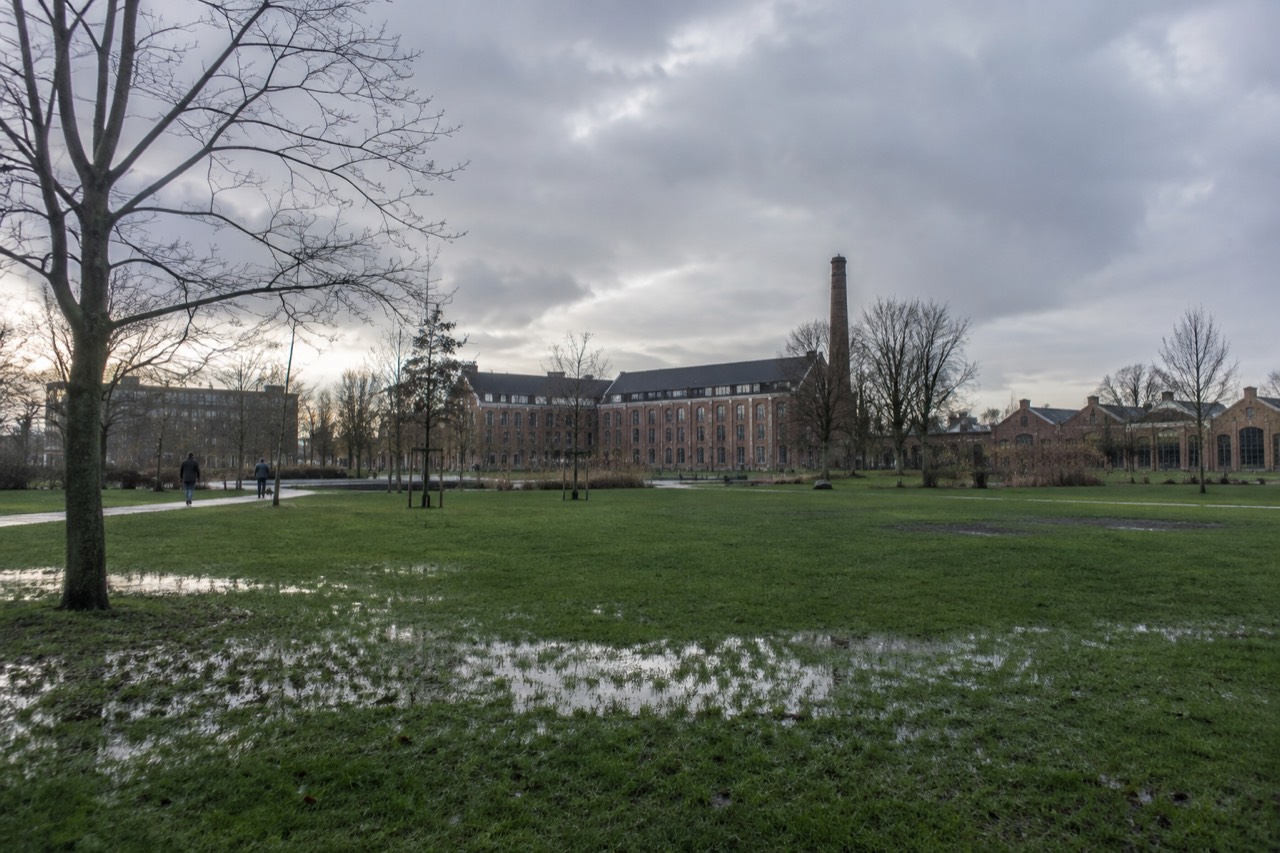
Westerpark is a large public park in Amsterdam's Oud-West district, laid out around a former gasworks site, and Het Westergas is the cultural complex that now occupies those converted industrial buildings on the park's edge. Together they form one neighbourhood destination: green space, culture, food and nightlife in a single walkable area west of the centre.
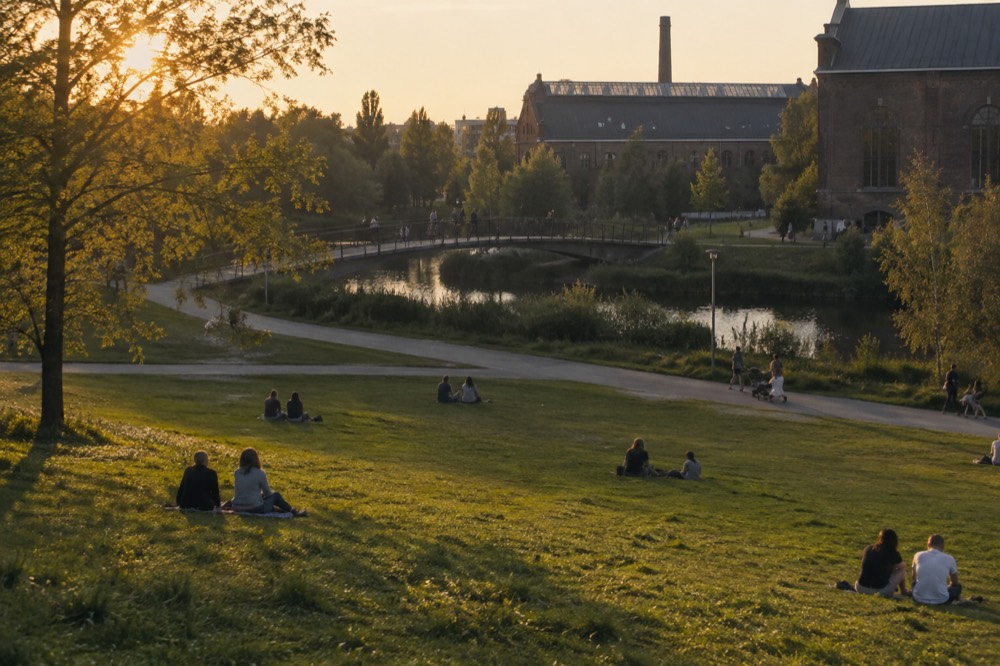
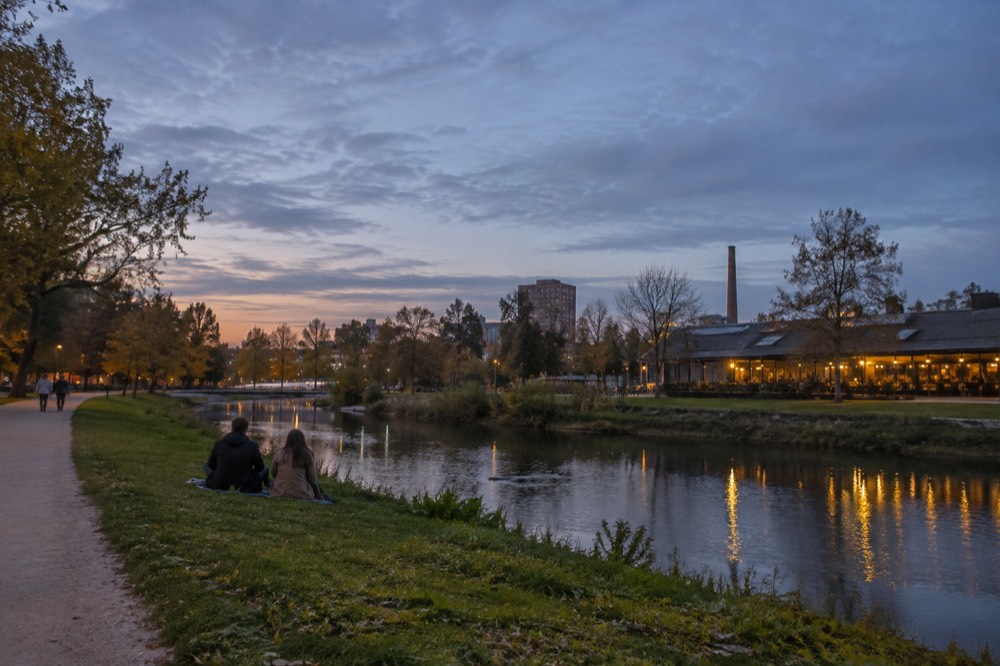
The park and the gasworks share a single history. The site produced gas for the city for decades, and when the works closed the buildings and surrounding land were redeveloped as public space rather than being sold off. The result is a park that feels deliberately unfinished in places: wide meadows, water channels, long footbridges and stands of young trees, all pressed against the monumental brick shells of the old factory halls. Those halls did not stay empty. They were converted into event venues, studios, broadcast spaces, cafés and restaurants, and the complex now runs a calendar that spans food festivals, club nights, markets and art installations.
The neighbourhood around it, Oud-West, is worth the walk on its own. The Kinkerstraat shopping street, the Ten Katemarkt and a dense strip of cafés sit between the park and the centre, so most visitors arrive with something already eaten, bought or photographed. If you are planning the wider area, our Oud-West and Kinkerbuurt guide covers the streets between the park and the city centre in detail.
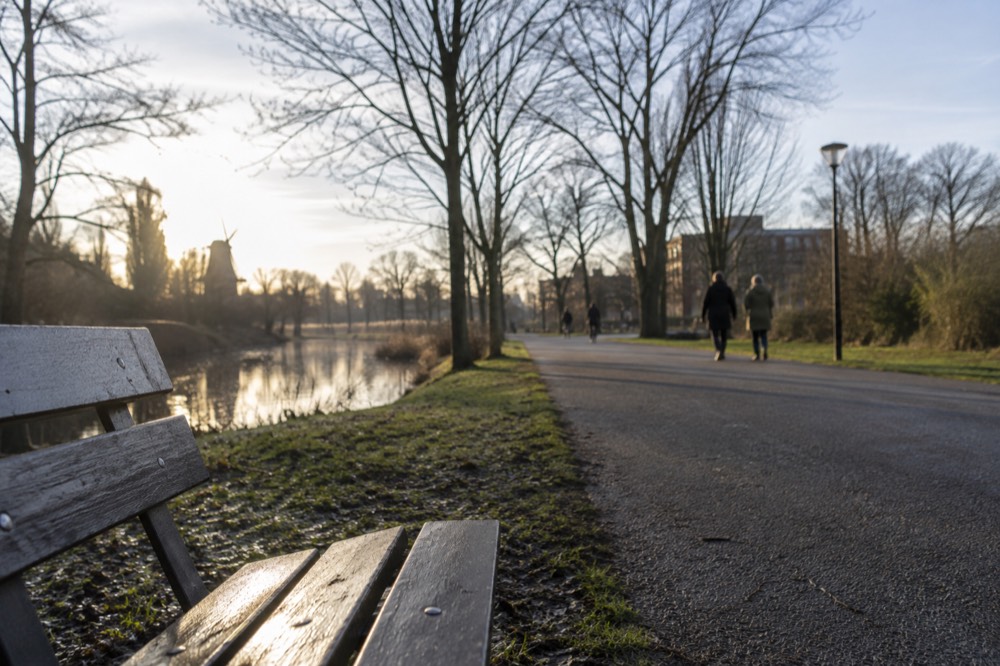
What surprises many first-time visitors is how quickly the atmosphere changes. Ten minutes on a bench by the water feels closer to the Dutch countryside than to a capital city, yet the park's eastern gate opens directly onto busy city streets. That contrast is the reason locals defend the area so fiercely, and the reason it rewards a half day rather than a quick photo stop.
What Can You Do in the Park Itself?
The park itself is free to enter and built for slow time: walking and cycling routes, open lawns, water channels with bridges, playgrounds for children, and plenty of space to sit. There is no ticket, no queue and no single must-see sight inside it, which is precisely why Amsterdammers use it the way they do.
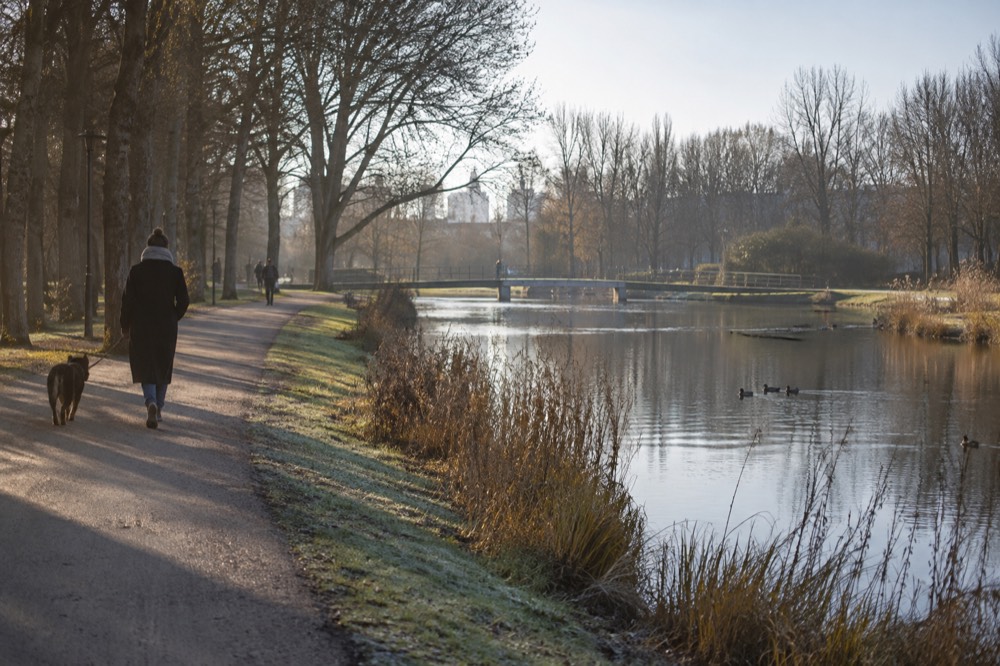
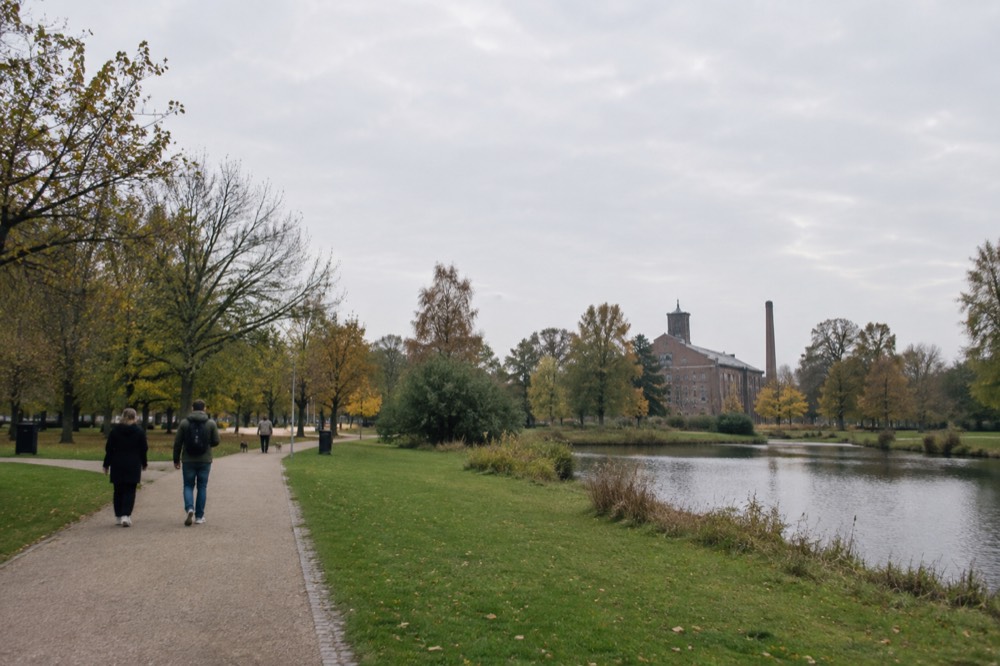
Start from the eastern entrance and walk north-west along the water. The park's design deliberately alternates open meadow with tighter planted sections, so the route feels longer than the map suggests. Cyclists have their own lanes throughout, and if you have rented a bike for the day, this is one of the more pleasant places in the city to actually use it rather than fight tram tracks and crowds. Our cycling in Amsterdam guide covers the practical side of renting and riding.
The water features are the park's signature. Narrow channels cut through the western meadows, crossed by long arched footbridges that photograph well in low light. In summer the lawns fill with picnics; in the quieter months the same paths are close to empty before mid-morning. Families will find playgrounds scattered through the park, and the scale of the site means children can run without you worrying about traffic, which is not something the canal ring can offer.
Practical note on timing: the park never closes in the ordinary sense, and there is no entry fee at any gate. The cultural buildings inside Het Westergas keep their own hours, and those vary by venue and by event, so if a specific exhibition or dinner reservation is the goal, check the venue's own site for the day you plan to come. For everything else, the park rewards arriving without a plan.
If the day is a full Amsterdam day rather than a neighbourhood stroll, it is worth deciding early what else you want in it. These are three reliable pairings with a Westerpark visit:
What Is Inside the Westergasfabriek?
Het Westergas houses its cultural venues inside the restored gasworks buildings: event halls used for festivals, club nights and conferences, plus restaurants, cafés and the Fabrique des Lumières, an immersive digital art centre in the old gas holder, with timed-entry tickets from $20.00 and a 4.7 rating across 9,566 reviews on its live listing.
The Fabrique des Lumières is the anchor attraction for most visitors. It is an immersive digital art centre that projects exhibitions across the walls of a vast industrial space, and its programme has included a dedicated Gustav Klimt show. The listing describes timed-entry tickets, so you pick a start time when you book rather than wandering in, and the experience is pitched at all ages rather than at art specialists. It is the kind of attraction that photographs badly and lands well in person: the scale of the projection, the sound and the raw brick interior do most of the work.
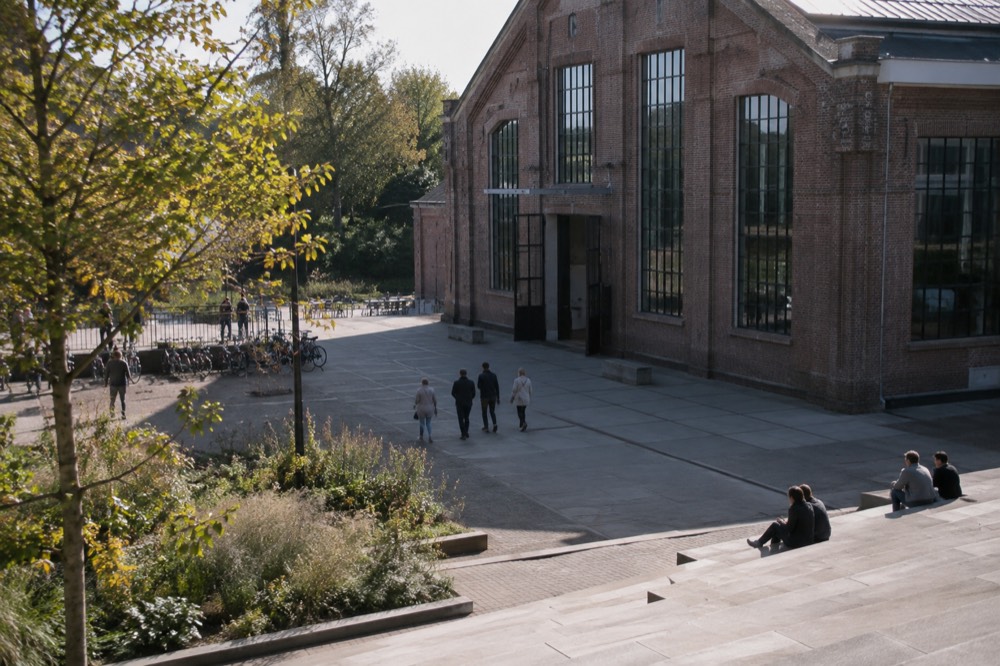
Around it, the rest of the complex works as a set of destinations rather than a single attraction. The halls host a rolling calendar of food festivals, craft markets, concerts and club nights, and the courtyard between the buildings fills with terraces whenever the weather allows. Several restaurants and bars operate inside and beside the old works, so an evening here can run from an early dinner to a late event without leaving the site. Check what is on before you commit to a date, because a festival Saturday and a quiet Tuesday are very different experiences.
For visitors building a museum-heavy trip, the Westergas slot pairs naturally with the city's bigger institutions, and it is worth thinking about ticket strategy in advance. Our Amsterdam museum tickets guide explains which museums use timed entry and how to avoid the longest queues.
What Can You Pair With a Westerpark Day?
The strongest pairings are the Museumplein museums to the south, a canal cruise through the seventeenth-century ring, and the NDSM wharf across the river IJ to the north. The Van Gogh Museum needs a pre-booked timed ticket, at $31.00 from its live listing, and the STRAAT street art museum at NDSM, from $24.00, makes a natural second stop for anyone who enjoyed the Fabrique.
The Van Gogh Museum is the most requested pairing, and for good reason. The listing describes over 200 paintings, 500 drawings and more than 750 letters from Van Gogh, and the museum draws over a million visitors each year, so the timed-entry rule is enforced rather than advisory. Booking a morning slot at Museumplein and spending the afternoon in Westerpark is an easy split, with a direct tram connection between the two. The museum holds a 4.7 rating across 57,096 reviews on its live listing, at $31.00 from.
North of the park, the STRAAT museum at the NDSM wharf makes a good contrast with the Fabrique. It is housed in a former shipyard warehouse and holds a collection the listing describes as more than 180 artworks by over 170 artists, making it a fair reflection of street art's range of styles and techniques. It carries a 4.8 rating across 2,441 reviews, from $24.00. Getting there means a free GVB ferry from behind Centraal Station, which is itself one of the better boat rides in the city. Our Amsterdam Noord and NDSM Wharf guide covers the crossing and the wharf in full.
If the day is running long, a canal cruise is the classic evening wind-down, and the classic saloon boat option is the one that fits the neighbourhood's mood: a one-hour cruise on a restored wooden saloon boat with live commentary, from $19.56, rated 4.8 across 33,435 reviews. You can check the classic saloon boat cruise on its dedicated page, or Check availability for your dates directly.
Where Do You Eat and Drink Around Westerpark?
The eating options cluster in three places: inside Het Westergas itself, on the park's eastern edge facing the water, and along the Kinkerstraat and Ten Katemarkt strip in Oud-West. The Westergas venues lean to terraces and event dining, while Oud-West offers cheaper, more everyday cafés, bakeries and a street market.
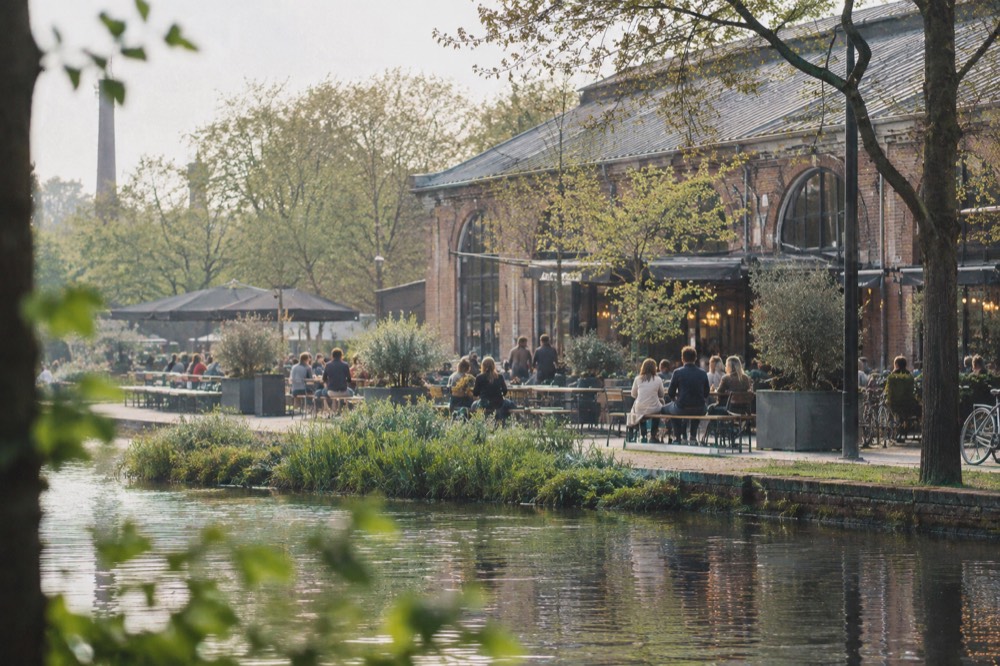
Inside the complex, the restaurants and bars occupy the old industrial spaces, and the courtyard seating is the best people-watching in the neighbourhood on a warm evening. Because several venues share the site, the range is wide: coffee and pastries in the morning, long lunches, and full dinners before an event in one of the halls. Reservations matter on festival and event nights, when the whole site fills at once. The full index of guides sits on Things to Do in Amsterdam.
East of the park, Oud-West does the everyday work. The Ten Katemarkt runs a street market with food stalls and cheap produce, and the surrounding blocks hold the neighbourhood's brown cafés, brunch spots and takeaway windows. Our Amsterdam brown cafés guide explains the traditional Dutch pub culture if you want the authentic version rather than the terrace version, and the Amsterdam markets guide covers the market scene across the city.
One planning note worth knowing: Amsterdam's tourist tax is 12.5% of the overnight price at hotels and holiday rentals, and it is added to your bill rather than folded into the quoted rate, so budget a little headroom on food and lodging arithmetic. The city recorded 23.7 million tourist overnight stays in 2025, and the busy evenings in Oud-West are part of that pressure, so the earlier you book a table on a weekend, the better.
How Do You Get to Westerpark?
Westerpark sits about 15 minutes from Centraal Station by tram or bike, in Amsterdam's Oud-West district west of the canal ring. GVB trams and buses serve stops on the park's eastern edge, a 24-hour ticket costs €10.00, and contactless OVpay works on every tram, bus, metro and ferry with a base fare of €1.16 plus €0.217 per kilometre.
The transport arithmetic is simple. If you are making three or more GVB journeys in a day, the €10.00 24-hour ticket beats the €3.40 single fare; if you are making one trip out and one back, tapping a contactless bank card with OVpay costs less. Current GVB day ticket prices are listed on the official GVB prices page. Cyclists can reach the park from the centre in about ten minutes, and bike parking at the eastern edge is plentiful compared with the canal ring.
From Centraal Station, trams run west along the main arteries and stop within a short walk of the park gates; check the GVB journey planner for the exact line serving your stop, because Amsterdam periodically reworks its tram routes. From Museumplein, allow roughly 20 minutes by tram. The airport connection is also manageable: the NS train from Schiphol to Centraal takes just over 17 minutes, with e-tickets from €5.50, and from there it is one tram ride west.
| Ticket | Price | Best for |
|---|---|---|
| GVB single, 1 hour | €3.40 | One journey to the park and nothing else |
| GVB 24-hour day ticket | €10.00 | A day combining Westerpark with the centre |
| GVB 48-hour ticket | €16.00 | Two full days of tram and bus use |
| GVB 72-hour ticket | €21.50 | Three-day visits with daily transport |
| OVpay contactless | €1.16 base + €0.217 per km | Occasional trips, capped daily |
What Events Happen at Westergas?
The Westergas halls host a rolling calendar of food festivals, craft markets, concerts, club nights and art installations, and the programme changes weekly, so the site's own events calendar is the only reliable schedule. Weekend afternoons skew to markets and family events, while Friday and Saturday nights belong to the club and live-music programme.
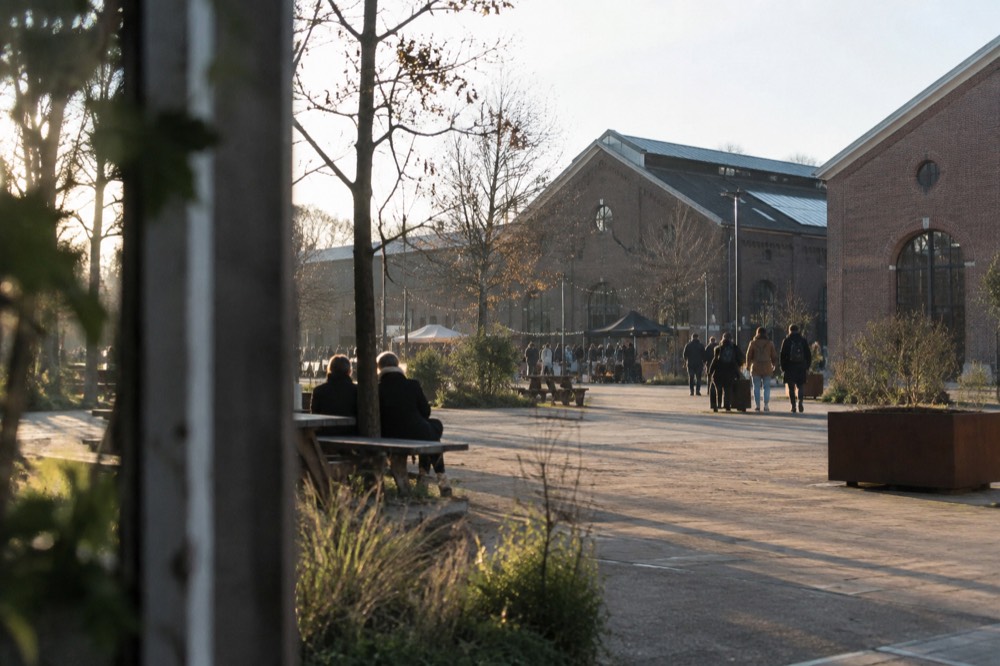
This is the part of Westerpark that least resembles a park. The gasworks halls were rebuilt as event venues, and the operators use them hard: weekend food festivals with dozens of independent kitchens, seasonal markets, vinyl fairs, theatre, stand-up and late club nights that run well past midnight. The courtyard between the buildings becomes the shared foyer for all of it, which is why the site works in bad weather as well as good; you move between heated halls rather than being stuck outdoors.
Plan around the calendar rather than around the weather. A festival Saturday at Westergas is one of the busiest afternoons in west Amsterdam, with queues at the food stands and terraces full by midday, while the same site on a weekday morning can feel half asleep. If a specific event is the reason for your visit, book it before you lock in the rest of your day, because the big halls sell out and the door price, where one exists, is usually higher than the advance price.
For visitors who enjoy the cultural-programme side of the city, the city's official visitor rules page is worth a read before a big night out: street drinking is prohibited in the city centre, and the same respect norms that govern the centre apply in Oud-West's busier pockets. The neighbourhood around the park is residential, and the late-night noise rules are enforced with genuine local enthusiasm.
How Does Westerpark Fit Into a Longer Trip?
Westerpark works as a half-day neighbourhood stop inside a two- or three-day Amsterdam itinerary, usually paired with Oud-West on the way in and Museumplein or the canal ring afterwards. Visitors with a week can add the NDSM wharf, Haarlem or the Zaan region, and the park makes a low-effort recovery morning after a late night at Westergas.
The honest scheduling advice is this: Westerpark is not a headline attraction, and trying to make it one misses the point. It earns its place as the calm counterweight to the ticketed, timed, queued parts of Amsterdam. A typical pattern is a museum morning, a tram west for a long lunch and park wander in the afternoon, then back into the centre for an evening cruise. Our two days in Amsterdam and three days in Amsterdam itineraries both leave room for exactly that kind of neighbourhood block.
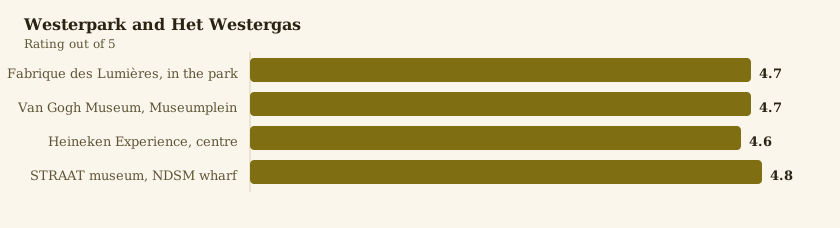
| Pairing | Entry from | Rating on the live listing | Time needed |
|---|---|---|---|
| Fabrique des Lumières, in the park | $20.00 | 4.7, 9,566 reviews | About 1 hour |
| Van Gogh Museum, Museumplein | $31.00 | 4.7, 57,096 reviews | 2 to 3 hours |
| Heineken Experience, centre | $23.00 | 4.6, 39,581 reviews | About 1 hour 30 minutes |
| STRAAT museum, NDSM wharf | $24.00 | 4.8, 2,441 reviews | 1 to 2 hours |
Longer trips open up the region. Haarlem and the Zaan region are both short train rides away, and the best day trips from Amsterdam guide ranks them properly. For now, the pairing that most Westerpark visitors settle on is the one that needs the least explanation: park in the afternoon, canal cruise in the evening. The three options below cover the museum and cruise side of that plan:
Common Questions About Westerpark and Het Westergas
Is Westerpark free to enter?
Yes. The park is public space with no gates, tickets or opening hours in the ordinary sense. The venues inside Het Westergas, including the Fabrique des Lumières, charge separately and keep their own hours.
How far is Westerpark from Amsterdam city centre?
The park sits in Oud-West, roughly 15 minutes from Centraal Station by tram and about 10 minutes by bike from the western canal ring. Tram and bus stops sit on the park's eastern edge.
What is Het Westergas?
It is the former municipal gasworks on the park's northern edge, converted into a cultural complex of event halls, restaurants, cafés and the Fabrique des Lumières immersive art centre. The halls host festivals, markets, concerts and club nights.
Is Westerpark worth visiting with kids?
Yes. The park has playgrounds, wide car-free lawns and water channels with bridges, and the scale means children can run safely. The Fabrique des Lumières is pitched at all ages, though its evening event programme is adults-first.
Can you combine Westerpark with the Van Gogh Museum in one day?
Yes, easily. Museumplein and Westerpark are about 20 minutes apart by tram. Book a morning timed entry at the Van Gogh Museum, then spend the afternoon and early evening in the park and the Westergas terraces.
When is the best time to visit Westerpark?
Weekday mornings are quietest, and summer evenings are when the lawns and terraces feel most alive. If an event at Westergas is your goal, book for that date specifically, because festival days change the whole character of the site.