Oud-West and Kinkerbuurt: Amsterdam Oud West Explained
Oud-West is where Amsterdam stops performing for visitors and starts just living: markets, brown cafés, Foodhallen, the Vondelpark edge and a Kinkerstraat that has quietly become one of the city's better eating streets.
Short answer
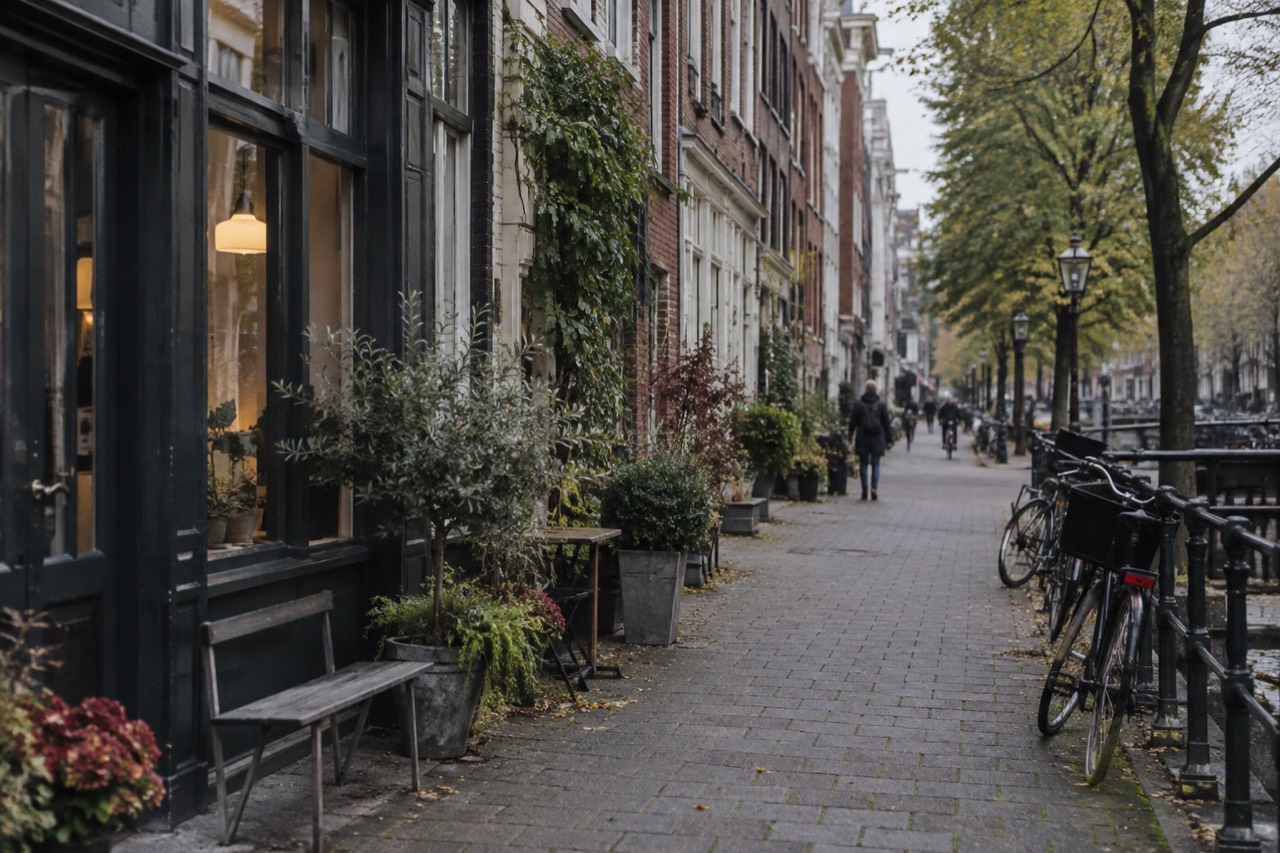
Oud-West is the neighbourhood directly west of the canal ring, anchored by Kinkerstraat, the Hallen complex and Vondelpark's western gate. It sits about 15 minutes by tram from Centraal Station, holds no single blockbuster sight, and rewards travellers with markets, food halls and the museums of Museumplein within walking distance.
Oud-West is the part of Amsterdam that many visitors walk through without ever naming. It begins the moment you cross the Singelgracht west of the Jordaan and it runs all the way to the edge of Vondelpark, with the Kinkerstraat as its commercial spine. The city recorded 23.7 million tourist overnight stays in 2025, and the overwhelming majority of those visitors never left the canal ring and Museumplein. That is precisely the gap this neighbourhood fills: real Amsterdam, ten minutes from the Rijksmuseum.
This guide covers what Oud-West actually is, what to do there, where the Kinkerbuurt's eating and drinking is worth your time, how the transport works, and where to sleep if you decide the centre is too much. Every price below comes from either an operator's own listing or an official source, and where a figure lives only on a live listing, it says so rather than guessing.
What Is Oud-West and the Kinkerbuurt?
Oud-West is the district immediately west of Amsterdam's canal ring, bounded roughly by the Singelgracht to the east, Vondelpark to the south, and the Westerpark edge to the north, with Kinkerstraat running through its heart. The Kinkerbuurt is the informal name for the streets clustered around that road. It is a residential quarter first and a sightseeing destination second, built up in the late nineteenth century when the city finally pushed past its old boundaries.
The neighbourhood grew fast between roughly 1870 and 1900, which explains its look: straighter, wider streets than the seventeenth-century centre, tall brick school buildings, churches turned into apartments, and a mix of workers' housing and grander blocks near the park. For most of the twentieth century it was a plain working-class district, and the Kinkerstraat was a routine shopping street for the surrounding blocks. That changed as Amsterdam's housing pressure pushed creative businesses and young households out of the centre, and the arrival of the Hallen, a converted tram depot, cemented the shift.
The Kinkerbuurt today is where locals actually run errands. The street has a cheese shop, a chocolate maker, a branch of the city's best-known falafel chain, vintage clothing, and a concentration of small restaurants that punch above the neighbourhood's price level. Ten minutes south you hit Vondelpark, the city's largest and most used park, and ten minutes east you are already at the Nine Streets shopping quarter. That in-between position is the whole point of the area.
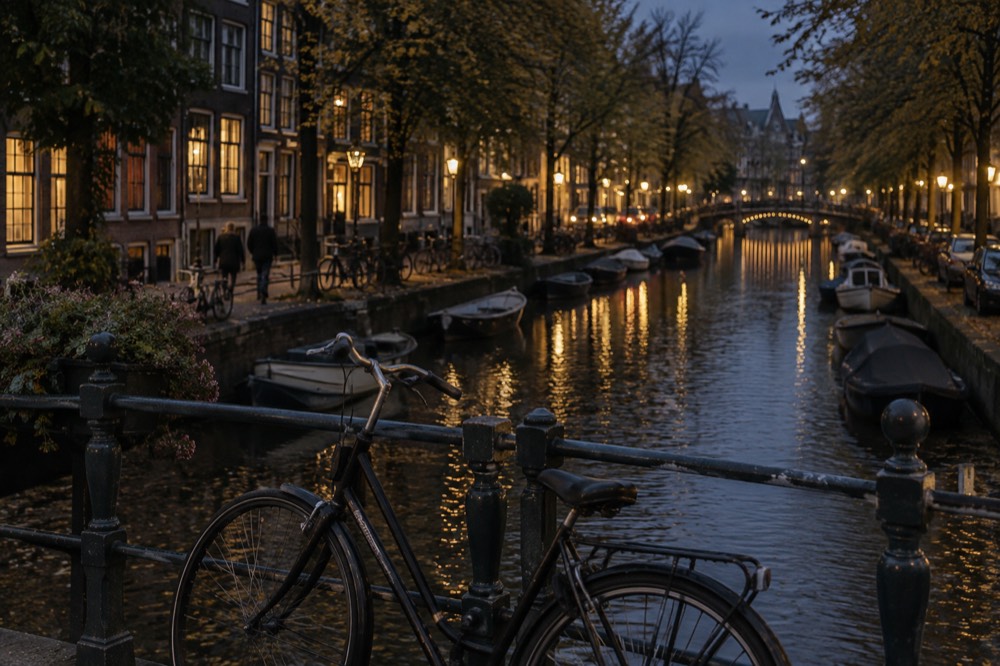
For orientation, it helps to split the district into its working parts:
| Sub-area | Character | What draws people |
|---|---|---|
| Kinkerstraat and side streets | Local shopping street, busy, unpolished | Food, vintage shops, everyday Amsterdam |
| The Hallen and Bellamybuurt | Converted industrial complex, film, food hall | Foodhallen, cinema, cafés |
| Vondelpark edge | Leafy, calmer, pricier housing | Park access, terraces, quiet streets |
| Overtoom corridor | Tram artery with bars and restaurants | Link between centre and park |
What Are the Best Things to Do in Oud-West?
The best things to do in Oud-West are Foodhallen, the indie cinema and design shops inside the Hallen, a slow walk or cycle through Vondelpark, the Ten Katemarkt street market, and an evening canal cruise departing a short tram ride east. None of these needs more than half a day, and most cost under €25. The neighbourhood's real activity is simply its street life, which costs nothing.
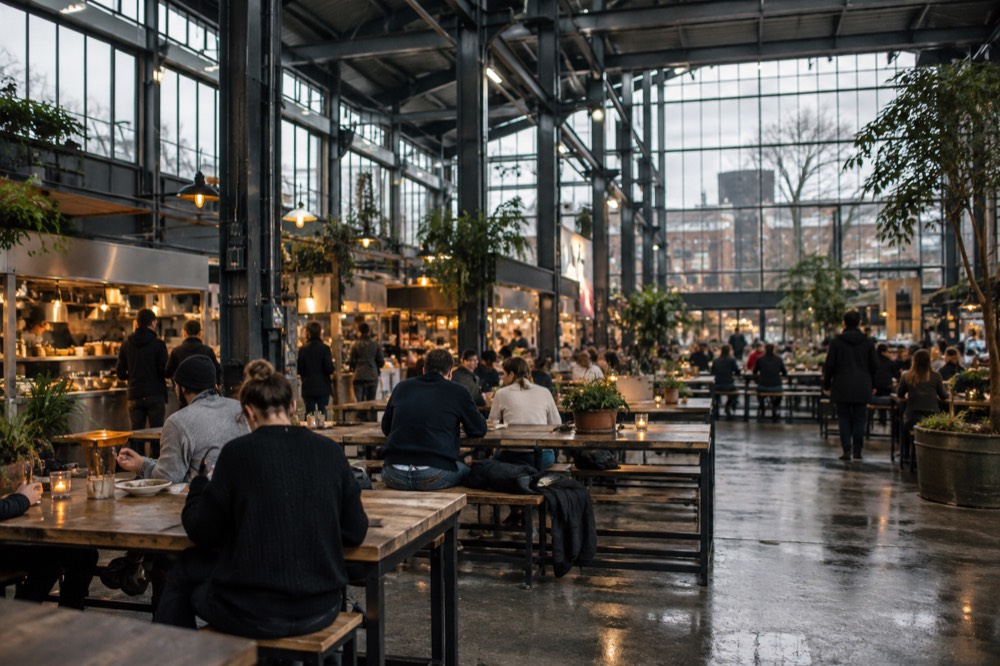
Start at the Hallen, the former tram depot on Hannie Dankbaarpassage that now holds Foodhallen, a food hall with two dozen stands, a hotel, a cinema and a media library under one industrial roof. It opens into a passage that keeps the original steel structure visible, and it is the single biggest reason day visitors come into the neighbourhood at all. Come at lunch or early evening; the hall thins out in mid-afternoon.
Ten minutes east, the Ten Katemarkt runs along Ten Katestraat most days of the week, selling fruit, flowers, cheese and clothing at prices aimed at residents rather than visitors. It is a working market in the same family as the famous one at Albert Cuyp Market in De Pijp, but with a fraction of the tourists. Combine it with a coffee on the Kinkerstraat and you have the neighbourhood's daily rhythm in an hour.
Vondelpark forms the entire southern edge of the district, and the park's western entrances are the ones locals from Oud-West actually use. The park is free, open around the clock, and in summer its meadows fill with picnics by early evening. Cycling through it is the classic Amsterdam experience; the rules of the road, bike rental and the hand signals that matter are covered in the site's cycling and bike rental guide.
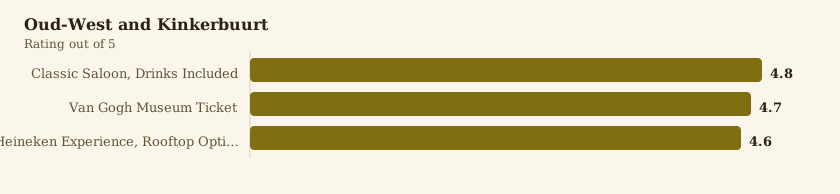
For an evening, the canal ring begins a short tram ride east, and a classic saloon boat cruise is an easy fit with an Oud-West base. The classic saloon boat cruise runs one hour with drinks and cheese included, rated 4.8 across 33,435 reviews on its live listing, from $19.56. Several departure points sit within fifteen minutes of the neighbourhood by tram.
The trio above is a reasonable one-day plan from an Oud-West base: a museum morning, a brewery afternoon and a cruise to close. If you would rather stay west of the Singelgracht entirely, the neighbourhood still fills a day on its own. The Hallen complex alone can absorb two hours, and the market, the park and the Kinkerstraat's shops fill the rest without a ticket in sight.
Which Museums and Sights Are Within Walking Distance?
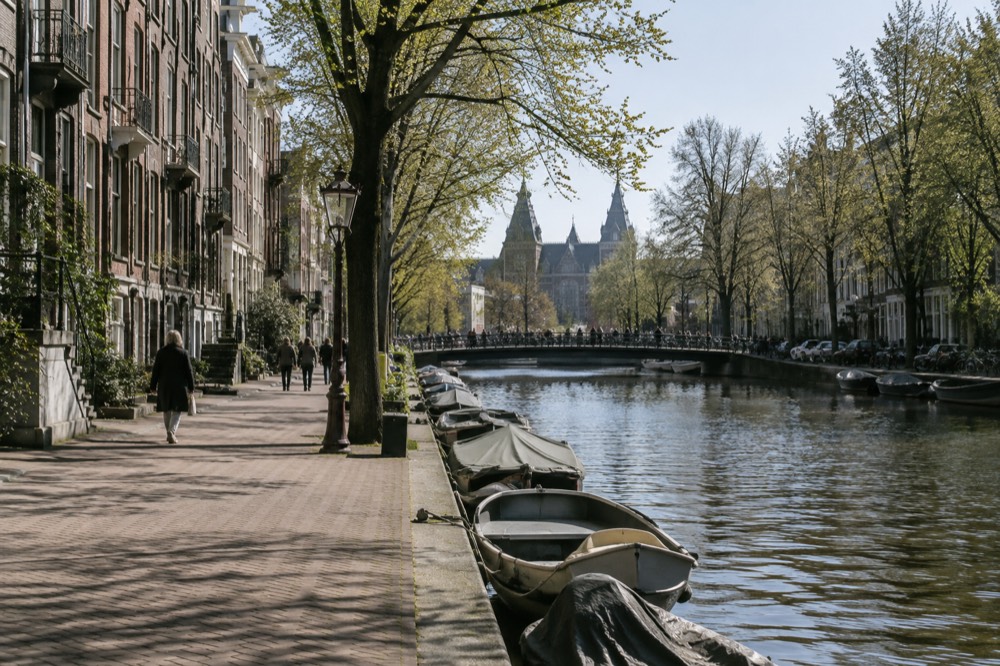
Museumplein is a 15 to 20 minute walk from the eastern edge of Oud-West, which puts the Van Gogh Museum, the Rijksmuseum and the Stedelijk within easy reach. The Van Gogh Museum costs €25 for adults and under-18s enter free, but every visitor must pre-book a timed entry ticket, and slots sell out on busy days. The Rijksmuseum is €25, open daily 9am to 5pm, also with timed entry.
The Van Gogh Museum is the closest of the big three and the one that needs the most planning. Its own ticket page states the adult price plainly, €25, and is explicit that all visitors, including cardholders, require a pre-booked time slot. Booking the entry ticket in advance through the operator's listing is the simplest route from an Ood-West base, since you can pick a morning slot and be back in the neighbourhood for lunch.
| Sight | Walk from Oud-West | Entry | Booking rule |
|---|---|---|---|
| Van Gogh Museum | 15 to 20 minutes | €25 adults, free under 18 | Timed slot required for everyone |
| Rijksmuseum | 20 to 25 minutes | €25 adults, free 18 and under | Start time must be booked |
| Stedelijk Museum | 15 to 20 minutes | From $26 on the live listing | Check the listing for slot rules |
| Moco Museum | 15 to 20 minutes | From $20 on the live listing | Timed entry on the listing |
| Vondelpark | On the doorstep | Free | No booking |
The Rijksmuseum publishes its own hours and prices on its official practical info page, which confirms the daily 9am to 5pm schedule including public holidays. The Stedelijk and Moco sit on the same square, so a museum day needs no transport at all from this side of town. The full planning picture, including queue-skipping options, is in the site's museum tickets guide.
North of the neighbourhood, the Westergas grounds in Westerpark hold another converted industrial cluster with restaurants and event spaces, reachable on foot in about fifteen minutes from the Kinkerstraat. It is the same adaptive-reuse idea as the Hallen on a bigger, greener site, and it makes a good evening walk when the park is lit up.
Where Should You Eat and Drink in Kinkerbuurt?
The Kinkerbuurt's eating runs from quick falafel and market snacks on Kinkerstraat to a dense strip of small independent restaurants around the Hallen, plus brown cafés on the side streets. Expect main courses in the €14 to €25 range at sit-down places and under €10 for street food. The neighbourhood is also a strong craft beer base, with several breweries and bars a short walk apart.
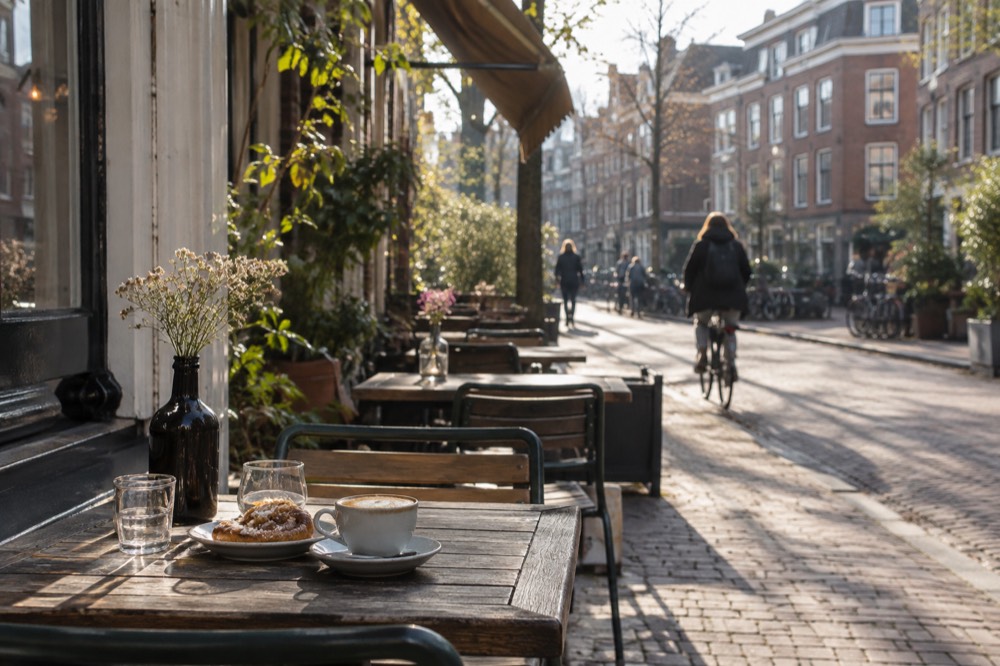
The Kinkerstraat itself is the everyday option: a cheese specialist, a well-known Dutch apple pie bakery, a chocolate producer and a long-standing falafel shop that locals treat as a fixture. Prices here are neighbourhood prices, not centre prices, and the food is built for the people who live around it. The Ten Katemarkt adds its own snack row on market days, with stroopwafels and herring stalls in season. Other pages covering the same trip are gathered on Things to Do in Amsterdam.
Around the Hallen the offer steps up. Foodhallen's stands cover Vietnamese, Dutch bitterballen, pizza, tacos and more under one roof, and the surrounding Bellamybuurt blocks hold small restaurants that change often enough that any specific list ages badly. The reliable move is to walk Kinkerstraat south to north, eat wherever has locals inside, and finish with a beer at one of the district's brown cafés, the traditional Dutch pubs described in the site's brown cafés guide.
For beer specifically, the neighbourhood is within striking distance of a cluster of breweries, and the Heineken Experience, in the original Heineken brewery building east of Vondelpark, is the big-name version of the story. The listing rates it 4.6 across 39,581 reviews, from $23, and it runs about an hour and a half. It is a 25 minute walk from the Kinkerstraat or a short tram ride.
A guided food walk is another way to eat the district with context. The ten-tastings food and culture walk covers the city centre rather than Oud-West, but it pairs well with an Oud-West stay as an introduction to Dutch food before you explore the neighbourhood's own tables. You can [check availability](Check availability) on the listing, or read the site's Dutch foods guide and self-organise the same tastings from the market stalls.
How Do You Get to Oud-West and Get Around?
Trams 1, 7 and 17 connect Oud-West to Centraal Station and the centre in about 15 minutes, and trams 3 and 12 run the north-south links. A single GVB ticket costs €3.40 for one hour, a 24-hour pass is €10.00, and contactless bank card tapping works on every tram, bus and metro through OVpay. From Schiphol, the train to Centraal runs from €5.50 and takes about 17 minutes.
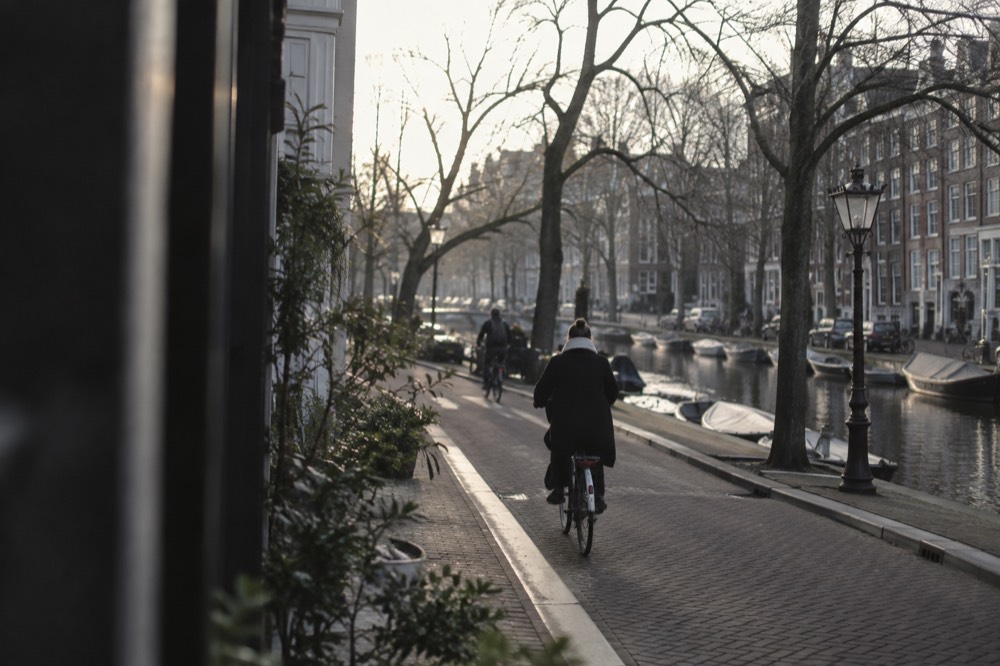
The GVB network is the whole transport story here. The neighbourhood's stops on Kinkerstraat and Overtoom sit on some of the oldest tram corridors in the city, and frequency is high enough that you rarely need a timetable. The official fare table is published on GVB's prices page, and the passes below are the ones visitors actually weigh up.
| Ticket | Price | Best for |
|---|---|---|
| GVB 1-hour single | €3.40 | One or two trips |
| GVB 24-hour pass | €10.00 | A day of hopping on and off |
| GVB 48-hour pass | €16.00 | A weekend base in Oud-West |
| OVpay contactless | €1.16 base plus €0.217 per km | Occasional trips without buying a pass |
Cycling beats the tram for most local trips. The ride from the Kinkerstraat to Museumplein takes under ten minutes, to the Jordaan about the same, and through Vondelpark it is traffic-free. Rental shops cluster around the centre; the practicalities, including where the rental shops are and what the traffic rules actually require, are in the cycling guide. Walking covers most of the neighbourhood itself, since the district is only about a kilometre from its eastern edge to the park.
From Schiphol, the NS train to Amsterdam Centraal is the standard route; the operator's own page quotes e-tickets from €5.50 with a journey of just over 17 minutes, and from Centraal the trams above complete the trip. The full airport-to-city comparison, including the bus alternative, is in the Schiphol transfer guide.
Where Should You Stay in Oud-West?
Oud-West offers apartment hotels, boutique hotels around the Hallen and Vondelpark edge, and holiday rentals, at rates generally below the canal ring for equivalent space. Rentals here fall under Amsterdam's 30-night annual cap, and the city requires every listing to carry a registration number and a permit. Check any rental ad for that number before booking, because its absence means the listing is not legal.
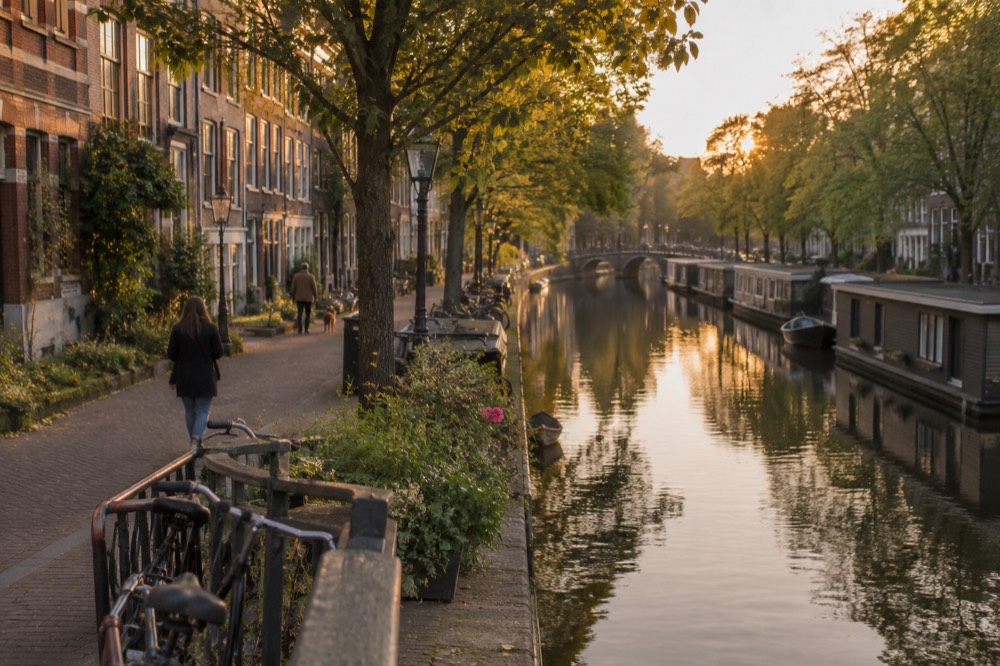
The hotel stock is a mix of converted buildings and purpose-built apartment hotels, concentrated along the Overtoom and around the Hallen. The character is low-key: fewer lobby chandeliers than the centre, more breakfast rooms with locals in them. The trade is simple, a slightly longer walk to the centre in exchange for quieter nights and more space per euro.
| Stay type | Where in Oud-West | Suits |
|---|---|---|
| Apartment hotel | Overtoom corridor | Longer stays, self-catering |
| Boutique hotel | Around the Hallen | Short visits, design-minded travellers |
| Holiday rental | Side streets, Kinkerbuurt | Groups, families, kitchens |
| Park-edge hotel | Vondelpark west | Couples, quiet-seeking visitors |
The rental rules deserve a sentence of care. Amsterdam caps holiday rentals at 30 nights per calendar year per property, with a maximum of four guests at a time, and each listing must display a registration number and hold a permit. The city tightened the cap to 15 nights in a set of designated central neighbourhoods from 1 April 2026, though the streets named in that decision are in the canal ring and De Pijp rather than Oud-West. The comparison between hotels and rentals, including the tourist tax that applies to both, is worked through in the where to stay guide.
Is Oud-West Worth It Compared With the Centre?
Oud-West is worth choosing over the centre if you want local food, park access and lower room rates, and you accept a 15-minute tram ride to the main sights. It is not worth it if your trip is one night and museum-heavy, since the canal ring keeps you walking distance from everything. For two nights or more, the neighbourhood gives a better daily Amsterdam than the centre's hotel strips.
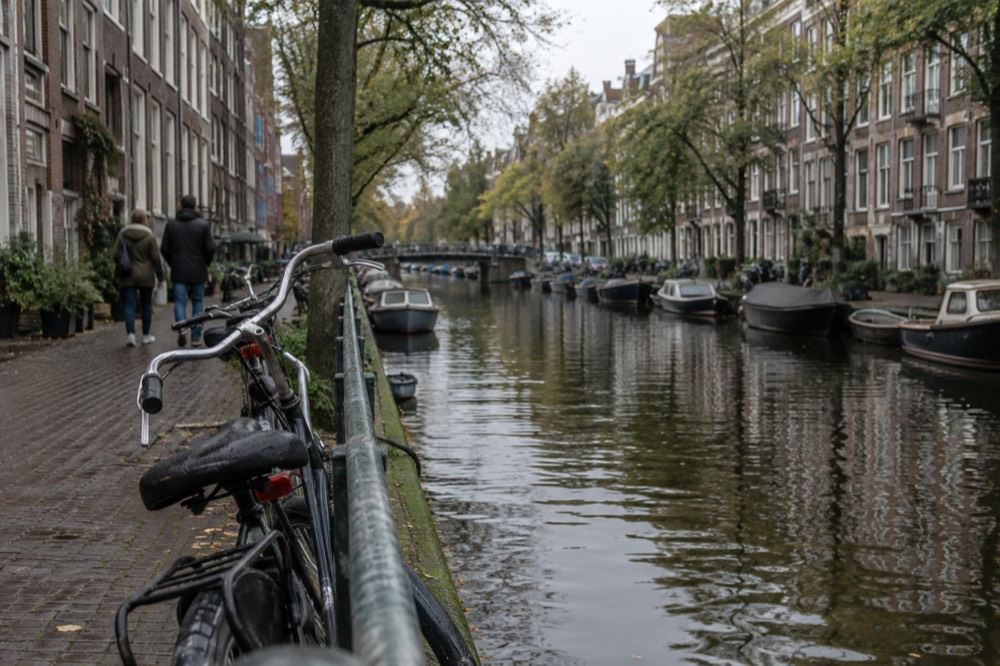
The honest comparison is about time. A one-night visitor who wants the Rijksmuseum, a cruise and the Jordaan loses nothing by staying central and saves the commuting. A visitor with three or four days gains from Oud-West: the mornings start in a bakery queue with residents, the evenings end in a brown café rather than a tourist bar, and the money saved on the room funds the food hall. The site's is Amsterdam expensive breakdown shows where the savings actually land.
The neighbourhood also photographs well without trying. The photography spots guide covers the famous angles in the centre, but Oud-West's own material is the Kinkerstraat at dusk, the Hallen's steel interior and Vondelpark's bridges, all of which appear in fewer camera rolls than the centre's equivalents. Fewer elbows, same light.
For a fuller picture of how the district compares with its neighbours, the site's neighbourhood guide walks through every candidate area, and the Jordaan is the closest rival if you want the same scale but a more central postcode.
If you are building the trip now, the picks below cover the three experiences that pair best with an Oud-West base: the museum that needs booking furthest ahead, the brewery that anchors the beer scene, and the cruise that turns an evening into something memorable.
Common Questions About Amsterdam Oud West
Is Oud-West a good area to stay in Amsterdam?
Yes, for trips of two nights or more. It is residential, well connected by tram to the centre, within walking distance of Museumplein, and its eating and drinking is aimed at locals rather than visitors. One-night, museum-heavy trips are better served by the canal ring.
How far is Oud-West from Amsterdam city centre?
The eastern edge of Oud-West is a ten-minute walk from the Jordaan, and the Kinkerstraat is about 15 minutes from Centraal Station by tram 7 or 17. Museumplein is a 15 to 20 minute walk from the neighbourhood's east side.
What is the Kinkerbuurt known for?
The Kinkerbuurt is the pocket around Kinkerstraat, known for its everyday shopping street, the Ten Katemarkt, the Hallen complex with Foodhallen, and a dense strip of small independent restaurants and brown cafés.
Do you need a transport pass in Oud-West?
Not for the neighbourhood itself, which walks easily. For day trips to the centre and Museumplein, a GVB 24-hour pass at €10.00 pays off after roughly three tram rides; below that, OVpay contactless tapping at €1.16 base plus €0.217 per kilometre is cheaper.
Is Oud-West cheaper than staying in the canal ring?
Generally yes, for equivalent space and quality, and the food on Kinkerstraat is priced for residents rather than visitors. The gap narrows in peak season, and the tourist tax of 12.5 percent of the overnight price applies city-wide, so compare total room rates rather than headline prices.
Can you walk from Oud-West to the Van Gogh Museum?
Yes, in about 15 to 20 minutes from the eastern edge of the neighbourhood. Remember that the museum requires a pre-booked timed entry ticket for every visitor, including children, so book the slot before you set off.