Foodhallen Amsterdam: A Practical Guide to the City's Indoor Food Hall
Foodhallen is Amsterdam's best-known indoor food hall, a converted tram depot in Oud-West where dozens of independent food stands, bars and shops share one roof. This guide covers how to reach it, what to eat, and what to do nearby.
Short answer
Foodhallen is an indoor food hall in a restored former tram depot on the Kinkerstraat in Amsterdam's Oud-West district, a short tram ride from the centre. Entry is free; you pay per stand. Expect around two dozen food vendors, several bars, a cinema and shops, busiest on weekend evenings.
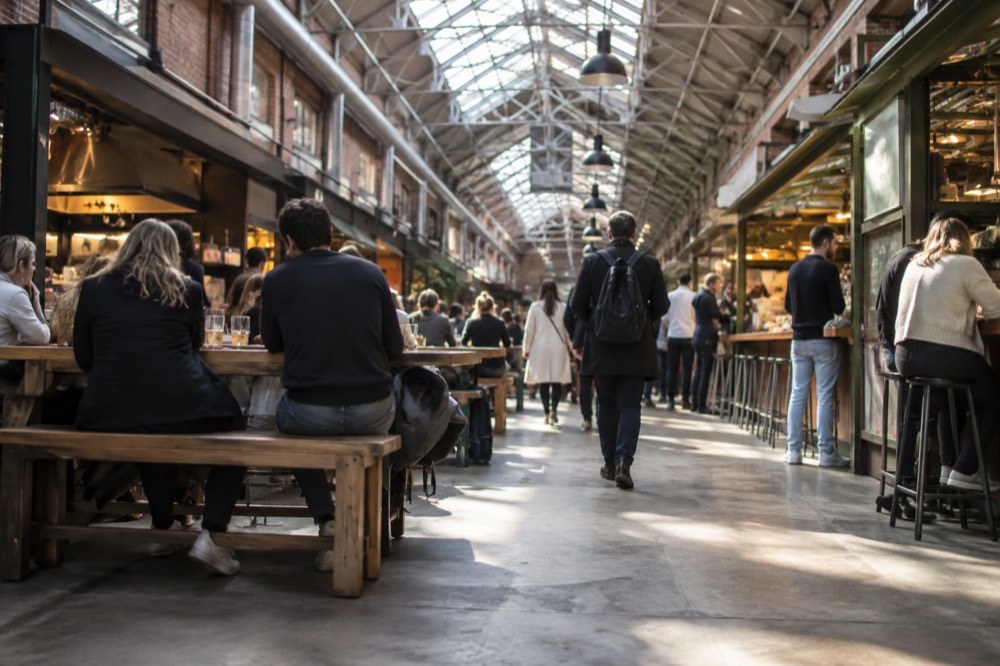
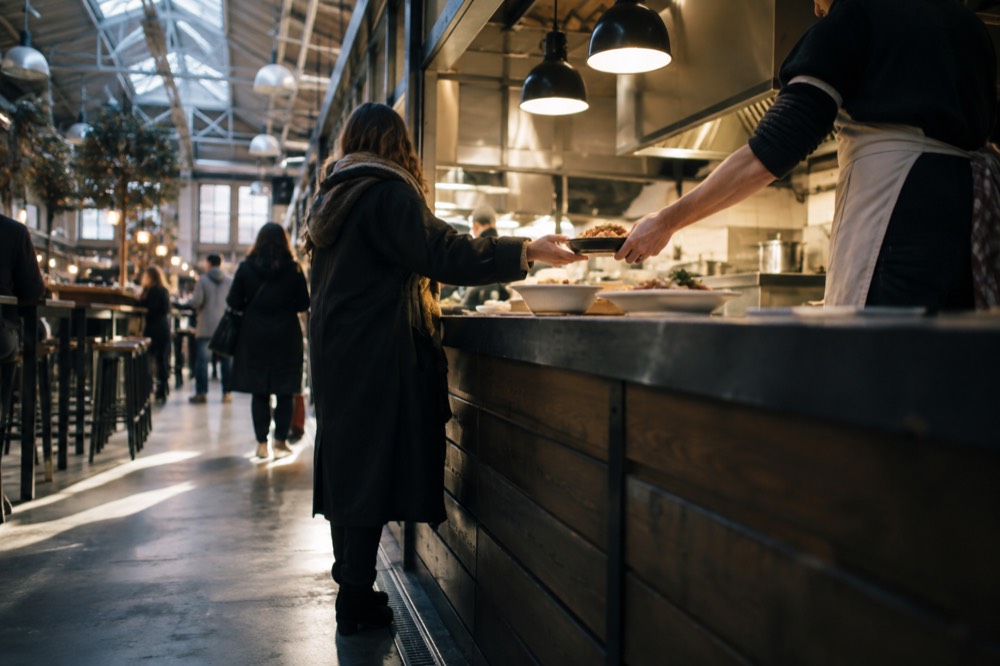
Amsterdam's restaurant scene spreads well beyond the canal ring, and nowhere proves that better than Foodhallen. The hall occupies a restored tram depot on the Kinkerstraat in Oud-West, a district of late-19th-century streets that most visitors otherwise walk straight past. Inside, independent food stands, bars and small shops share one industrial-style space: you order at whichever counter tempts you, then eat at communal tables under the old depot roof.
The concept matters for the way Amsterdam eats now. Dutch dining rooms fill up fast and close relatively early, and a food hall sidesteps both problems: nobody takes a single booking for a group of six with three different diets, and the kitchen counters keep serving into the evening. This guide walks through what Foodhallen is, how to reach it by tram, what is actually worth ordering, and how to fold it into a day in the west of the city. Where a price or schedule depends on the operator, it says so plainly rather than guessing.
What Is Foodhallen Amsterdam?
Foodhallen is an indoor food hall in a converted tram depot on the Kinkerstraat in Oud-West, west of the canal ring. Entry costs nothing; you pay only for what you order at the individual stands. The hall gathers roughly two dozen independent food vendors plus bars, shops and a small cinema under one roof, and it stays busy late into the evening, especially from Thursday to Saturday.
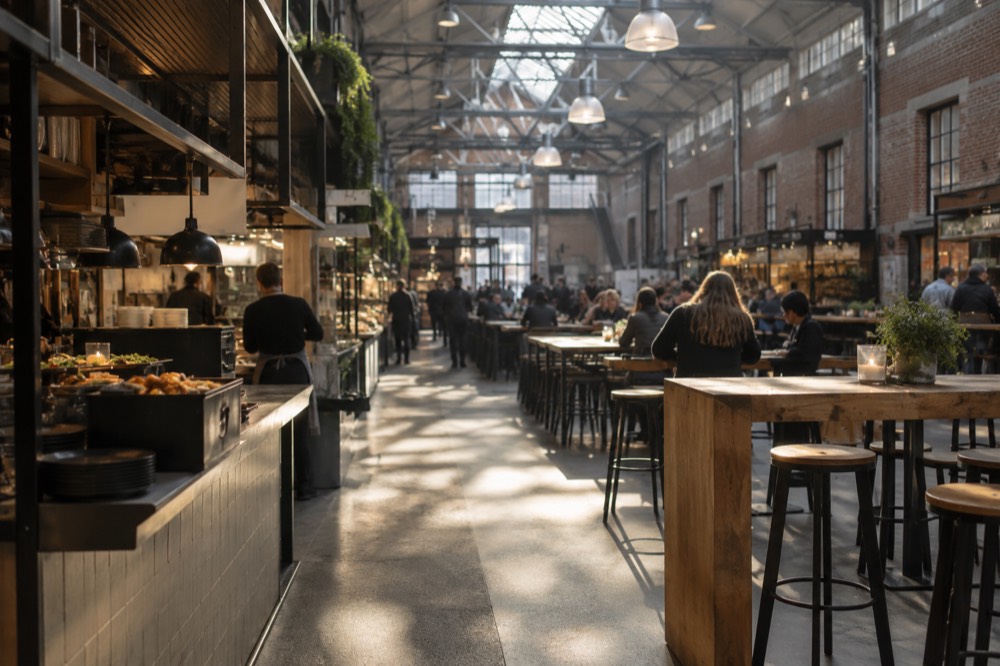
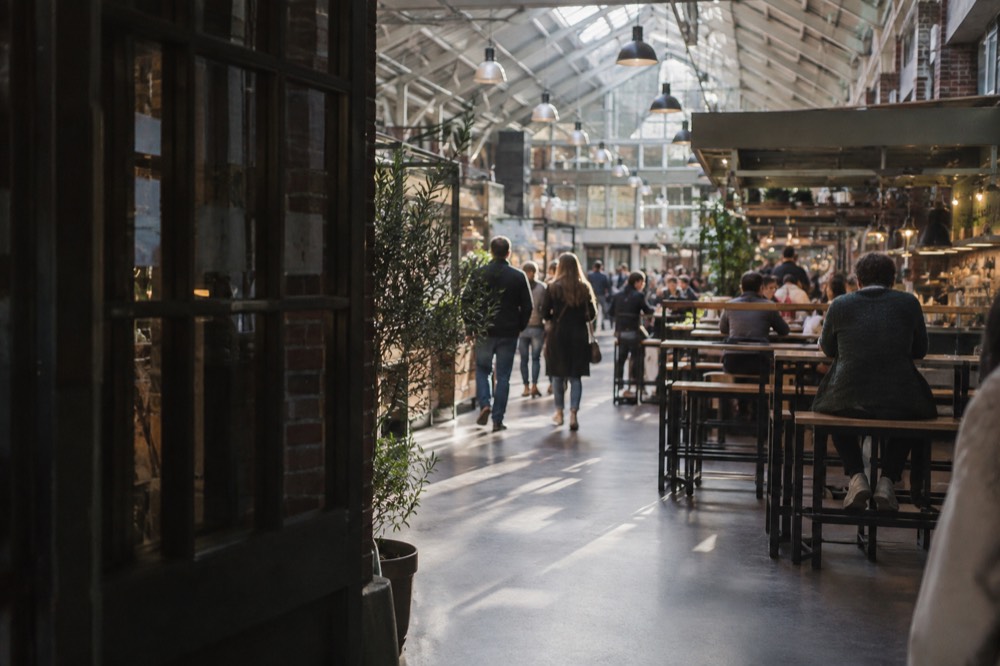
The building itself is half the appeal. It was once a working tram depot, and the renovation kept the industrial bones: steel frames, high ceilings and large glass ends that keep the space bright even on a grey Dutch afternoon. The developers behind the project also restored the surrounding block into a small complex of shops and a cinema, so the hall anchors a whole destination rather than standing alone on a commercial street.
The food stands rotate over time, which is why any printed list of vendors goes stale within months. The stable pattern is what matters: a spread of cuisines that runs from Dutch classics to Asian noodles, Mexican, Italian, burgers, seafood and vegetarian counters, plus dedicated bars for beer, wine and cocktails. A hall that once leaned heavily on street-food imports now carries serious Amsterdam operators, including vendors with their own followings elsewhere in the city.
For travellers, the practical point is this: Foodhallen is not a restaurant with one menu, and it is not a tourist attraction with a ticket. It is a place where a group with incompatible appetites, a family with tired children, or a couple killing time before a night out can each find something without negotiation. That flexibility is exactly why locals use it as much as visitors do, and why the weekend queues run out the door.
Where Is Foodhallen and How Do You Get There?
Foodhallen sits on the Hannie Dankbaarpassage, just off the Kinkerstraat in Oud-West, roughly 15 to 20 minutes by tram from Dam Square. Trams 7 and 17 stop at Kinkerstraat or Kinkerplein a short walk away, and a single GVB ticket costs €3.40 for one hour of travel. Cyclists and walkers reach it in about 25 minutes on foot from the centre.
The location is the one thing first-time visitors underestimate. Foodhallen is not in the centre, and it is not on the way to anything else on a standard first-day itinerary. It sits in a neighbourhood of tenement streets, indie boutiques and cafés that begins west of the Jordaan, and you reach it by riding out along the Kinkerstraat, one of the city's proper shopping streets rather than a tourist strip.
| Route | How | Approximate Time | Cost |
|---|---|---|---|
| Tram from the centre | Lines 7 and 17 towards the west | 15 to 20 minutes from Dam Square | €3.40 single (1-hour GVB ticket) |
| Contactless (OVpay) | Tap a bank card on boarding and again on leaving | Same tram ride | €1.16 base plus €0.217 per km |
| On foot | West along the Kinkerstraat from the Jordaan | About 25 minutes from the Nine Streets | Free |
| By bike | Follow the Kinkerstraat cycle lanes | About 15 minutes from the centre | Rental varies by shop |
| Day ticket holder | Any GVB tram, bus or metro | Unlimited rides within the city | €10.00 for 24 hours |
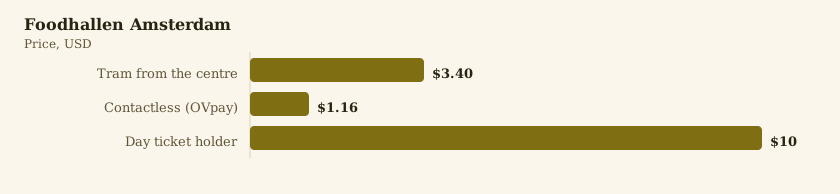
The fare details come straight from GVB's own price list, which publishes the 24-hour ticket at €10.00 and the one-hour ticket at €3.40, with contactless OVpay charged as a €1.16 base fare plus €0.217 per kilometre. If you plan to ride trams three or more times in a day, the day ticket already pays for itself; GVB's official prices page carries the full multi-day table, including 48-hour and 72-hour versions, if you are staying longer.
One planning note: the walk from the Jordaan is genuinely pleasant and passes some of the city's better unmarked scenery, the canal edges of the western grachtengordel and the shopfronts of the Kinkerbuurt. If the weather holds, walk out and tram back. Our guide to Oud-West and the Kinkerbuurt covers the rest of the neighbourhood block by block.
What Should You Actually Eat at Foodhallen?
Eat what the stands do best rather than hunting for one signature dish: Dutch bitterballen and cheese-based snacks, a proper burger, fresh Asian noodles, and whatever the vegetarian counter is running that day. Prices are set per stand, so a full evening for two usually lands somewhere between a casual dinner and a mid-range restaurant. Check the current vendor line-up on the hall's own channels before you go, because stands change.
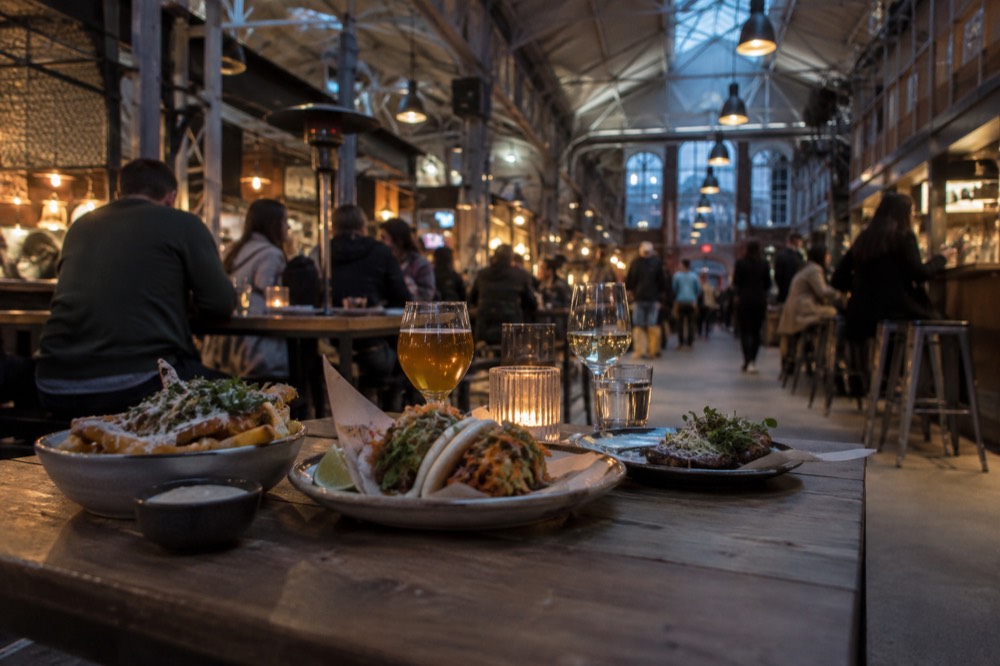
The honest way to eat here is grazing. Order one thing at each of three or four stands, share everything, and treat the hall as a tasting menu assembled by you. Bitterballen, the deep-fried beef-and-gravy croquettes that define Dutch café food, appear in some form most of the time, and they pair with the beer bar better than anything else on offer. Our piece on Dutch foods to try explains the classics if the names are new to you.
The bars deserve their own mention. The hall's beer bar carries Dutch craft breweries alongside the big names, and the cocktail bar does a steady trade in the early evening. Because you order and pay at each counter, drinks and food arrive on their own schedules; that is normal here, not a service failure.
| What You Want | Where to Look | Notes |
|---|---|---|
| Dutch classics | Snack and cheese-oriented stands | Bitterballen, kaassoufflés and similar bar snacks |
| A full meal | Burger, noodle and Italian counters | Portions are proper mains, not tapas |
| Vegetarian and vegan | Dedicated plant-based stands | Rotates; usually at least one fully vegan counter |
| Sweets | Dessert and pastry stands | Stroopwafel-based desserts appear often |
| Drinks | Beer, wine and cocktail bars | Order separately from food; tabs work per bar |
If your real interest is tasting the city rather than one hall, a guided option exists. The Food and Culture Walking Tour with Ten Tastings runs 3 hours 30 minutes, holds a 5.0 rating across 1,157 reviews, and costs from $92 per person. It walks you through the centre's food shops and snack counters with a local guide, which suits travellers who want the stories behind the food, not just the food itself.
A guided tasting walk and an evening at Foodhallen are not rivals, and many travellers do both on the same trip: the tour maps the city's food traditions in daylight, and the hall lets you act on every appetite the tour created. If you would rather build the rest of your Oud-West day around a single bookable anchor, the brewery experience below is the one most visitors pair with this neighbourhood.
How Does Foodhallen Compare to Other Ways of Eating in Amsterdam?
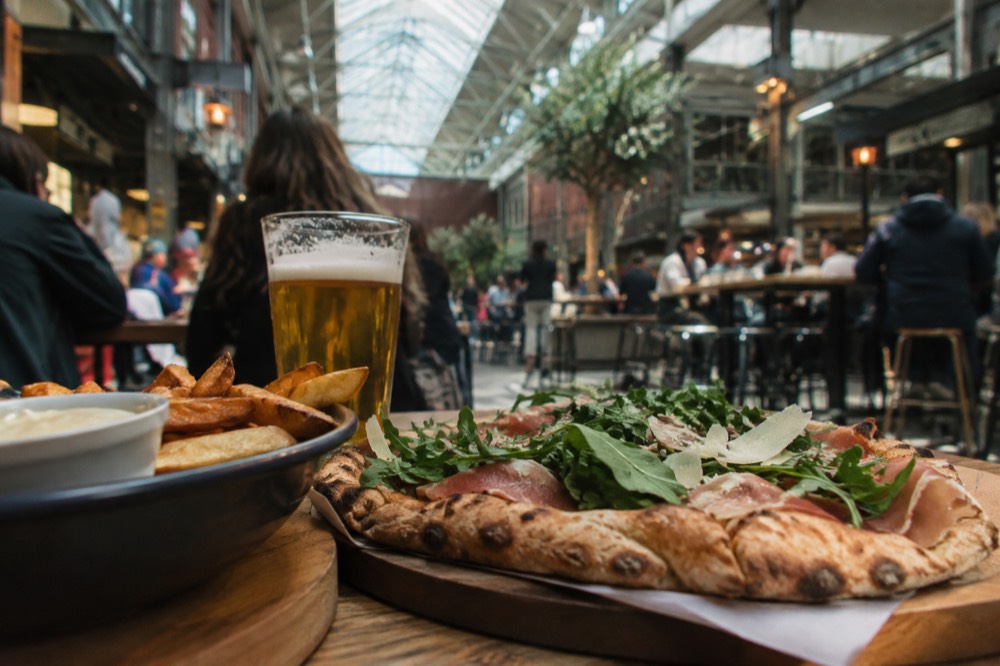
Foodhallen sits between a restaurant and a street market: more comfort and seating than a market, less ceremony and slower service than a restaurant, with prices per dish that usually land below a mid-range dinner. It beats both on group flexibility and late hours, and loses to both on table service and quiet. Choose it when the group or the clock matters more than the linen.
| Option | Best For | Watch Out For |
|---|---|---|
| Foodhallen | Groups, late arrivals, mixed diets | Noisy at peak; seat hunting on weekends |
| Canal-ring restaurant | Sit-down dinners, celebrations | Booking pressure; earlier kitchens |
| Street market | Cheap daytime grazing | Weather-dependent; few seats |
| Brown café | Drinks with simple snacks | Limited menu |
The market comparison deserves one line of honesty: Amsterdam's daytime markets, covered in our Amsterdam markets guide, beat Foodhallen on price and on the feeling of shopping where locals shop, but they close by late afternoon and offer nowhere warm to sit in February. The hall is the evening and bad-weather answer to the same appetite.
The restaurant comparison is simpler. If you want one kitchen's full attention, a waiter and a quiet table, book a restaurant; our best restaurants in Amsterdam guide is the place to start. Foodhallen trades that polish for freedom, and the trade is worth making exactly as often as your group is awkward or your schedule is late.
When Is the Best Time to Visit Foodhallen?
Visit on a weekday afternoon or early evening for space and quick counter service, or embrace the crowd from Thursday to Saturday night if you want the hall at its liveliest. Arrive before 7pm on weekends if you want a communal table without hunting. The hall opens into the afternoon and runs late, but exact hours are the operator's to publish, so check them before a special trip.
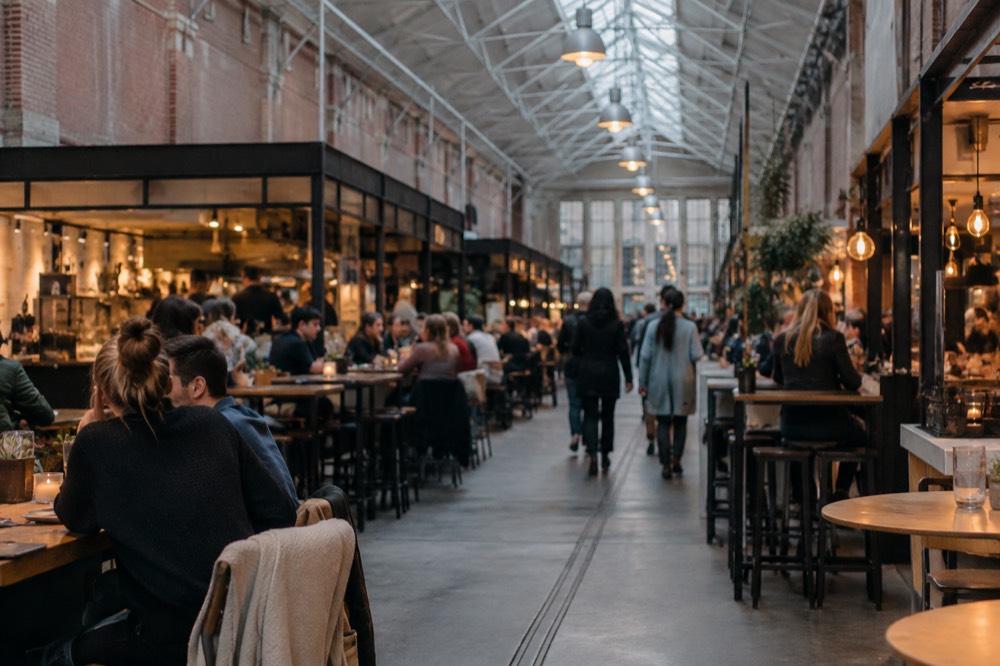
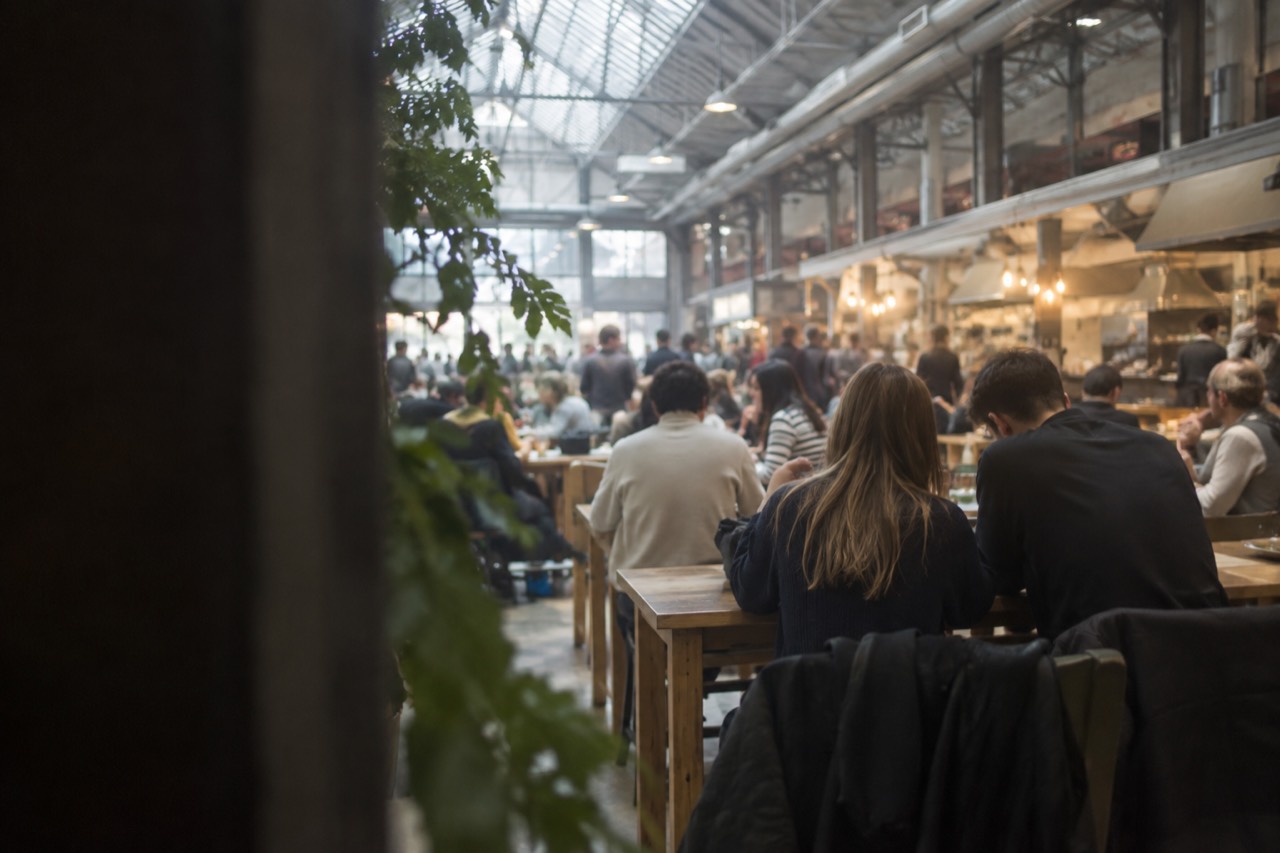
Weekday afternoons are the local secret. The hall is calm enough that you can read the menu boards, ask the counter staff questions and settle at a table by the glass wall. By contrast, Friday and Saturday nights turn the volume up: every stand has a queue, the bars are three deep, and the atmosphere is closer to a festival than a dinner. Both versions are legitimate Foodhallen experiences, but they are different products, and you should pick deliberately.
Season matters less here than anywhere else in the city, which is part of the point. Rain, wind and short winter days that ruin a market visit or a canal cruise leave a covered food hall untouched. Our rainy day in Amsterdam planning guide exists for exactly this kind of afternoon.
One timing trap: do not schedule Foodhallen as the stop immediately after a big lunch. The format rewards appetite, and grazing three stands on a full stomach wastes the place. Come hungry, or come for one dish and a drink and call it a snack.
What Can You Pair With Foodhallen for a Full Day in Oud-West?
The strongest pairing is the Heineken Experience, which sits a short walk east across towards the centre and fills a rainy afternoon with an interactive brewery tour from $23 per person. Combine it with morning browsing in the Kinkerbuurt, Foodhallen for dinner, and an evening canal cruise, and you have a complete west-side day without ever crossing back into the crowded centre.
The Heineken Experience occupies the firm's original brewery building and runs as an interactive attraction rather than a factory tour: exhibits, tastings and a rooftop option, lasting about 1 hour 30 minutes. It holds a 4.6 rating across 39,581 reviews, from $23 per person, and it closes out an afternoon well because it is indoors, bookable and self-paced. Check availability alongside the full details on the Heineken Experience ticket page.
After dinner, the classic Amsterdam move is to get on the water. A one-hour saloon boat cruise with an optional cheese and wine upgrade runs from $16, holds a 4.6 rating across 31,369 reviews, and turns a food-heavy day into something slower; the evening departures show the canal ring lit up from the water.
Beyond the obvious, the neighbourhood itself fills a morning. The Kinkerstraat's independent shops, the cafés of the surrounding streets and the small boutiques of the passage attached to the hall make a slow loop that ends naturally at the first food stand of the afternoon. If you would rather move than shop, the walk east into the Jordaan takes twenty minutes and lands you among the brown cafés covered in our brown cafés guide.
Common Questions About Foodhallen
Is Foodhallen worth visiting?
For most travellers, yes. It combines reliable food, late hours and group-friendly seating in a characterful converted tram depot, and it costs nothing to enter. It is worth most to people with mixed diets in their group, bad weather to escape, or a late schedule; visitors wanting a quiet sit-down dinner should book a restaurant instead.
How do I get to Foodhallen from central Amsterdam?
Take tram 7 or 17 west along the Kinkerstraat, roughly 15 to 20 minutes from Dam Square, and walk the last couple of minutes from the Kinkerstraat or Kinkerplein stop. A one-hour GVB ticket costs €3.40, a 24-hour day ticket €10.00, or tap a contactless bank card with OVpay.
Do you need a reservation for Foodhallen?
No. Entry is free and seating is communal and unreserved, so you simply turn up. On Thursday to Saturday evenings the hall fills and table hunting becomes competitive, so arrive before 7pm if your group wants to sit together.
What kind of food does Foodhallen have?
A rotating line-up of independent stands covering Dutch snacks like bitterballen, burgers, Asian noodles, Italian dishes, seafood, vegetarian and vegan counters, plus dessert stands and separate beer, wine and cocktail bars. The vendor list changes over time, so check the hall's own current line-up before setting your heart on one stand.
Is Foodhallen good for families with kids?
Yes. Children can each pick their own food, the informal setting absorbs noise and mess, and high chairs are available. The trade-off is that it gets loud and busy at peak weekend hours, so families usually prefer weekday afternoons or early evenings.
What else is near Foodhallen?
The Kinkerbuurt's shops and cafés surround the hall, the Heineken Experience sits a short ride east, and the Jordaan begins about twenty minutes' walk away. An evening canal cruise pairs well after dinner, and the Vondelpark rounds out a west-side day in good weather.
Foodhallen rewards a plan as simple as this: arrive hungry, ride tram 7 out from the centre, graze four stands instead of committing to one, and finish with a drink at the bar under the old depot roof. For more ideas on filling the rest of the day, see Things to Do in Amsterdam for the full picture of the city.