Vondelpark Amsterdam: A Complete Guide to the City's Favourite Park
Vondelpark is the largest park in central Amsterdam and the one locals actually use. Here is how to visit it well.
Short answer
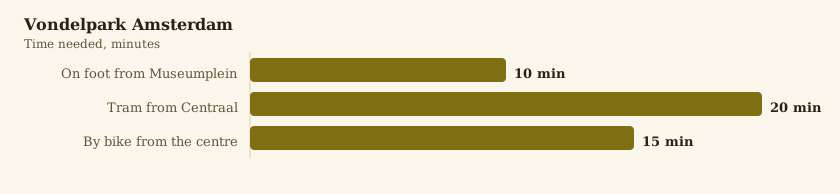
Vondelpark is a free public park in Oud-Zuid, about ten minutes on foot from Museumplein. It is open around the clock, covers roughly 47 hectares of lawns, ponds and tree-lined paths, and holds an open-air theatre in summer. Combine it with the Van Gogh Museum or Rijksmuseum, both within walking distance, and reach it by tram using a GVB day ticket at €10.00.
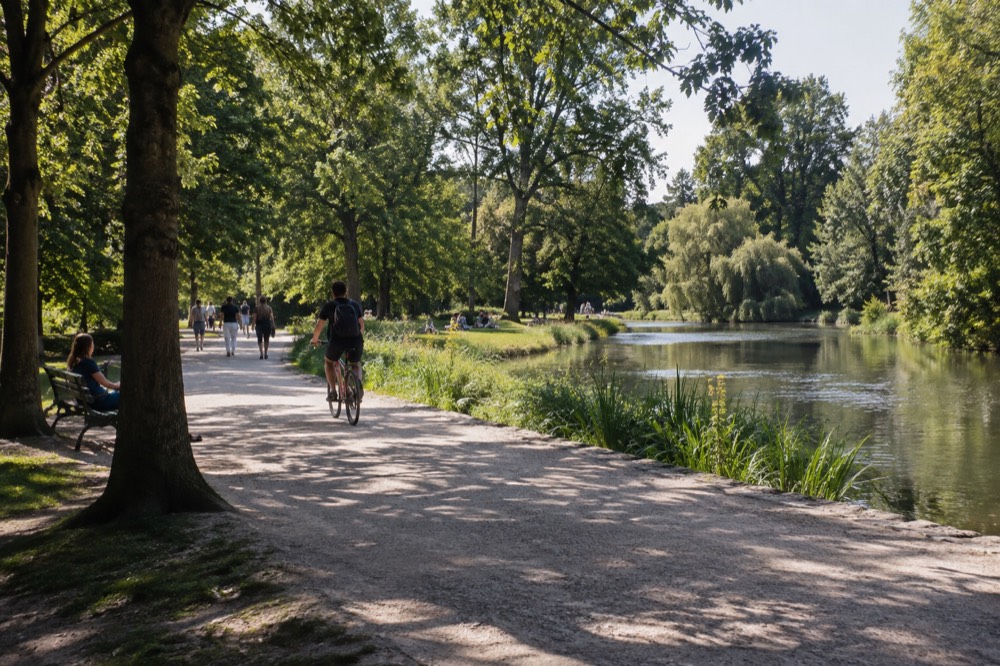
Amsterdam's busiest attraction is not a museum and it does not sell a single ticket. Vondelpark absorbed the crowds that the city's museums cannot hold, and it does so for free, every day of the year. Roughly 47 hectares of lawn, water and mature trees sit in Oud-Zuid, ten minutes on foot from Museumplein, and the park functions as the city's back garden: a running track, a picnic ground, a cycling corridor and an open-air stage, all at once. This guide covers how to reach it, what to do once inside, when to go, and what to pair it with.
What Is Vondelpark and Why Does It Matter?
Vondelpark is Amsterdam's largest and most visited city park, laid out in the 1860s and later renamed after the poet Joost van den Vondel, whose statue stands near the central rose garden. It lies entirely in the Oud-Zuid district, stretches from near the Rijksmuseum in the east to the Amstelveenseweg edge in the west, and charges no entry fee at any time of day or year.
The park began life as Nieuwe Park, laid out on marshy pasture by a private association of wealthy Amsterdammers who wanted an English-style landscape park like the ones they had admired in London. The redesign a few years later added the ponds, the winding paths and the rolling lawns that define it today, and in the middle of the 20th century the whole site passed to the city, which has run it as free public space ever since.
What makes it unusual among European city parks is how completely it has been absorbed into daily life. On a fine Saturday the lawns hold hundreds of separate groups, the paths carry a steady two-way stream of cyclists, and the Vondelpark Open Air Theatre runs a summer programme in the middle of it all. The park is not a monument you look at. It is infrastructure the city runs on.
The name causes occasional confusion. Dutch speakers say "het Vondelpark" with the article, and signage around the city uses the full name. The park's own friends' association, which funds maintenance and planting, is one of the oldest park-support organisations in the country, and its work is why the park's tree stock has been progressively renewed rather than left to age out.
How Do You Get to Vondelpark?
The park is served by several tram routes along its eastern and southern edges, with the nearest stops a two to four minute walk from the gates. A GVB single ticket costs €3.40 for one hour of travel, a 24-hour day ticket costs €10.00, and contactless bank-card payment works on every tram, bus and metro in the city. From Museumplein it is a ten minute walk.
The classic approach is from the east. Trams along the Museumplein side of the park drop you within sight of the Rijksmuseum, and the walk in passes some of the grandest streets of Oud-Zuid. If you are coming from Amsterdam Centraal, expect roughly 20 minutes by tram plus the short walk, or about 25 minutes at a relaxed cycling pace.
Cycling is the other natural way in, and the park is one of the few large green spaces in the centre where riding through is normal and expected. The main east-west path carries commuter cyclists at speed, so keep right, keep predictable, and walk your bike if you want to stop and look. For a fuller treatment of riding in the city, see our guide to cycling in Amsterdam and renting a bike.
| Approach | Route | Rough Time | Notes |
|---|---|---|---|
| On foot from Museumplein | East gate via Van Baerlestraat | 10 minutes | Pleasant, passes shops and cafés |
| Tram from Centraal | Routes along the eastern and southern edges | About 20 minutes | Single €3.40, day ticket €10.00 |
| By bike from the centre | Canal ring to the east gate | 15 to 25 minutes | Dedicated paths most of the way |
| Contactless payment | Tap in and out with a bank card | Per journey | Works on all GVB trams, buses and metro |
The GVB fare structure is published on the operator's own site at gvb.nl, and it is worth checking there before you travel, because fare products change more often than park opening hours ever will. The park itself never closes and has no gates to lock.
If you are planning a wider itinerary, the park slots naturally into a Museumplein day, and our three days in Amsterdam itinerary places it on the afternoon of day two, after the morning museum crowds have thinned.
What Can You Actually Do in Vondelpark?
The park's core activities are free: walking the full length of the main path, picnicking on the lawns, cycling the east-west route, and visiting the rose garden and the Vondel statue. In summer the Vondelpark Open Air Theatre stages free performances, and several cafés and terraces sell food and drinks inside the park boundaries.
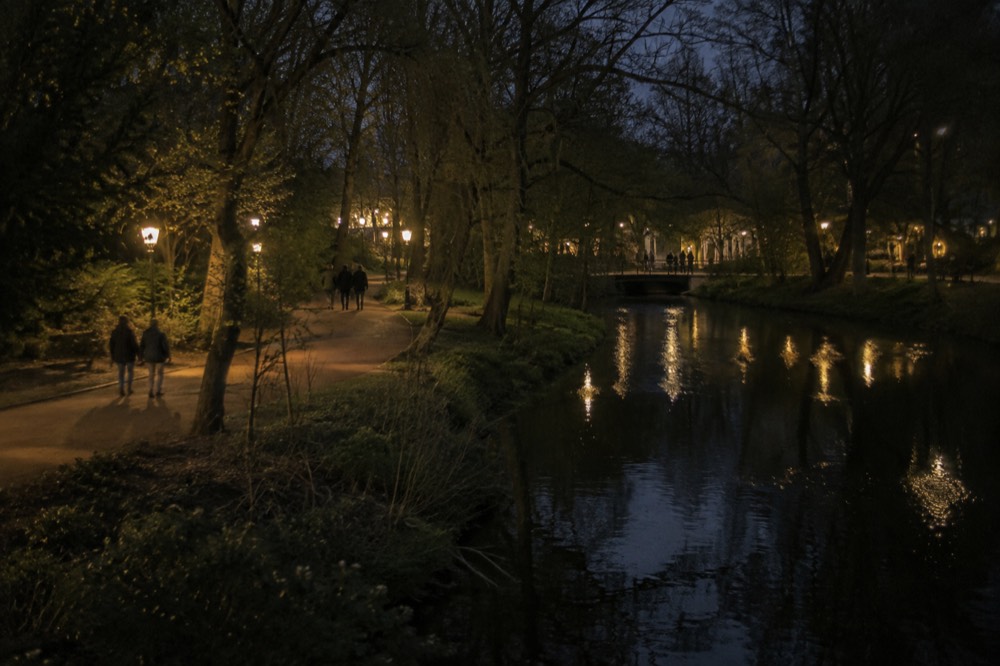
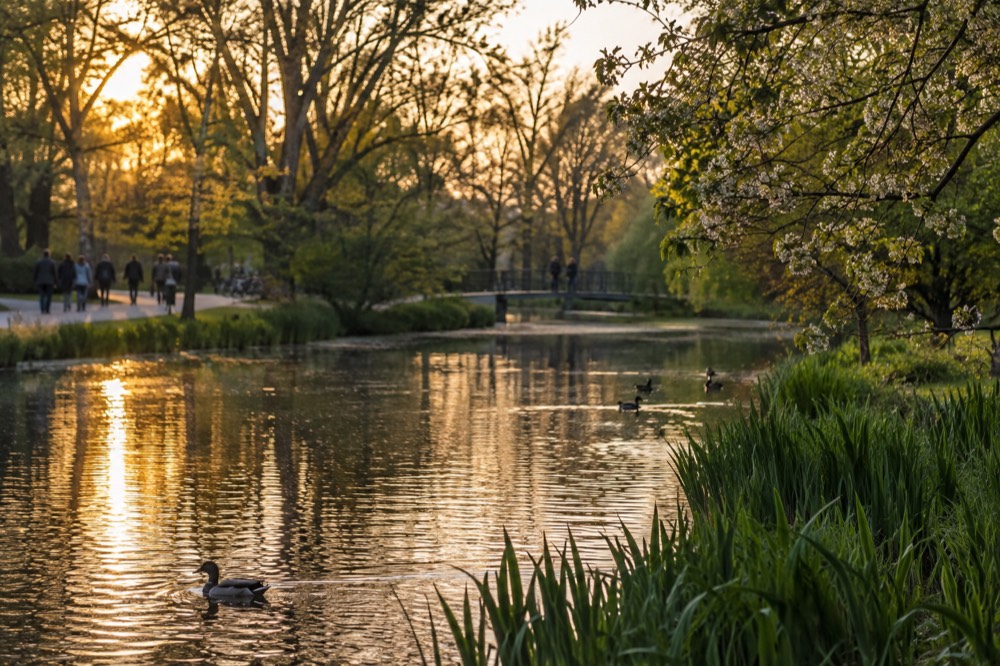
The full walk, east gate to west end and back, takes about an hour at a strolling pace. Most visitors do a fraction of it, because the park rewards drifting rather than completing. The ponds in the middle stretch draw waterfowl and photographers, and the large lawn south of the Vondel statue is where the picnic density peaks on sunny afternoons.
The rose garden, near the statue, holds a formal planting that flowers through the warmer months and gives the park its most manicured corner. The statue itself, of the 17th-century poet whose name the park carries, is the standard meeting point, and you will hear half a dozen languages around it on any given day.
Food inside the park is spread across a handful of pavilions and terraces rather than one central food court. The largest café sits near the middle of the park with a big terrace facing the water, and there are smaller kiosks near the eastern gates. Menus run to sandwiches, coffee, beer and ice cream rather than full restaurant service, and prices sit above supermarket level but below restaurant level. For a proper meal, the streets just outside the eastern edge, along the route back toward Museumplein, are dense with options, and our Amsterdam restaurants guide covers the neighbourhoods in detail.
| Activity | Where in the Park | Cost | Best Time |
|---|---|---|---|
| Full-length walk | Main east-west path | Free | Morning, before the crowds |
| Picnicking | Large central and southern lawns | Free, bring your own | Afternoon, sunny days |
| Rose garden | Near the Vondel statue | Free | Warmer months, flowering season |
| Open-air theatre | Centre of the park | Free performances in summer | Summer evenings |
| Café terrace | Mid-park pavilion and kiosks | Drinks and snacks priced per item | Any fine afternoon |
| Cycling through | Main path, keep right | Free, or rental for the day | Weekday mornings |
One thing the park is not: a quiet refuge on peak days. Sunday afternoons in summer bring the densest crowds, and anyone wanting the park at its calmest should aim for early weekday mornings, when the runners and dog walkers have it mostly to themselves.
When Is the Best Time to Visit Vondelpark?
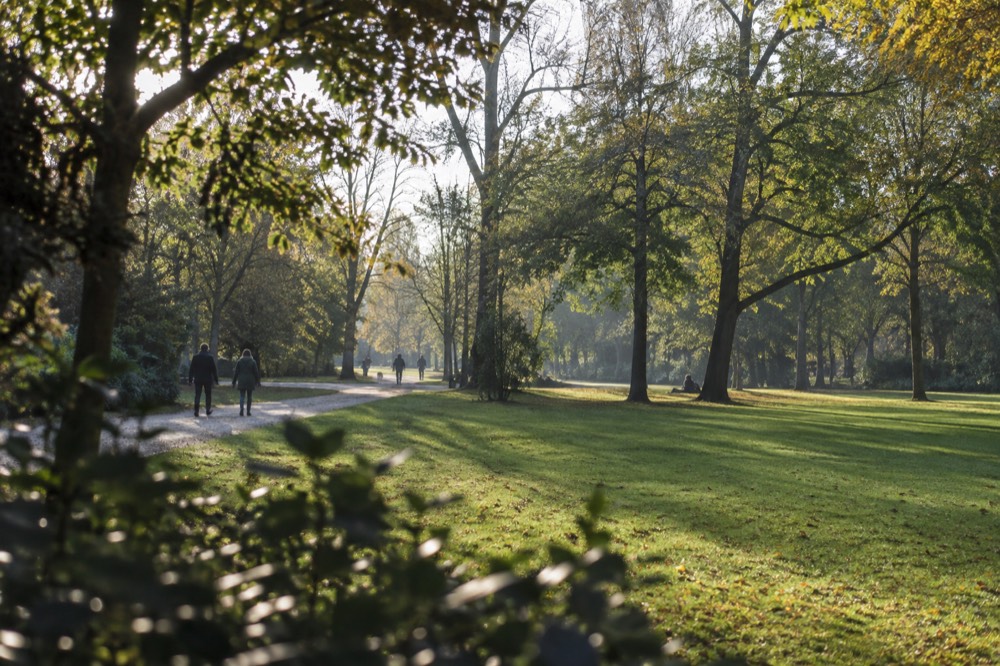
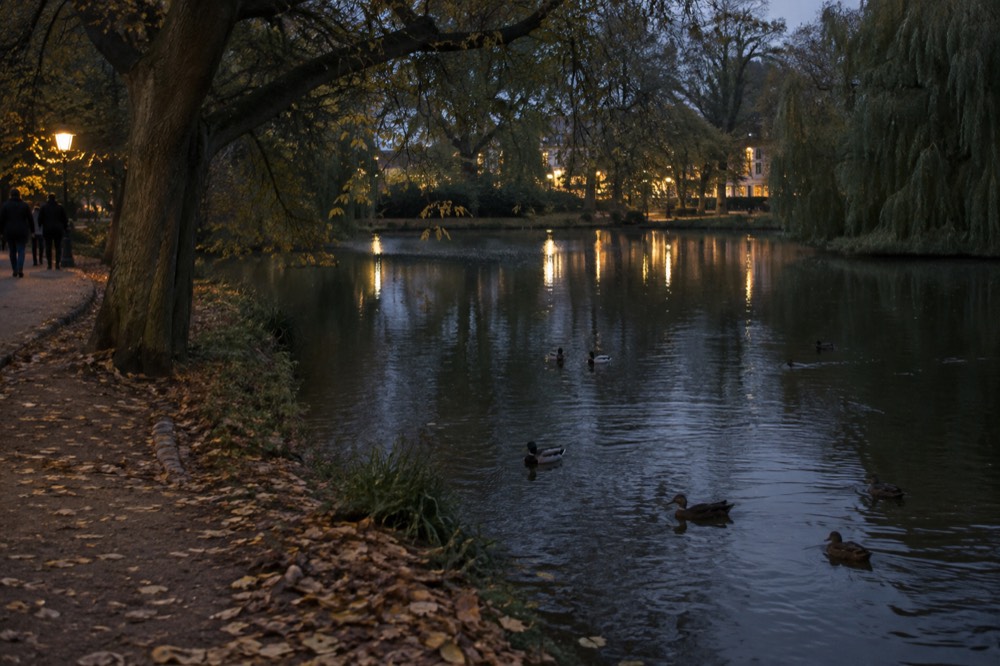
Early weekday mornings are the quietest, sunny Sunday afternoons are the busiest, and summer is the season that adds the open-air theatre programme and the fullest flower displays. Spring brings blossom and the tulip season elsewhere in the region, autumn turns the mature tree canopy gold, and the park stays open and free through winter, when frost and occasional snow make it a different place entirely.
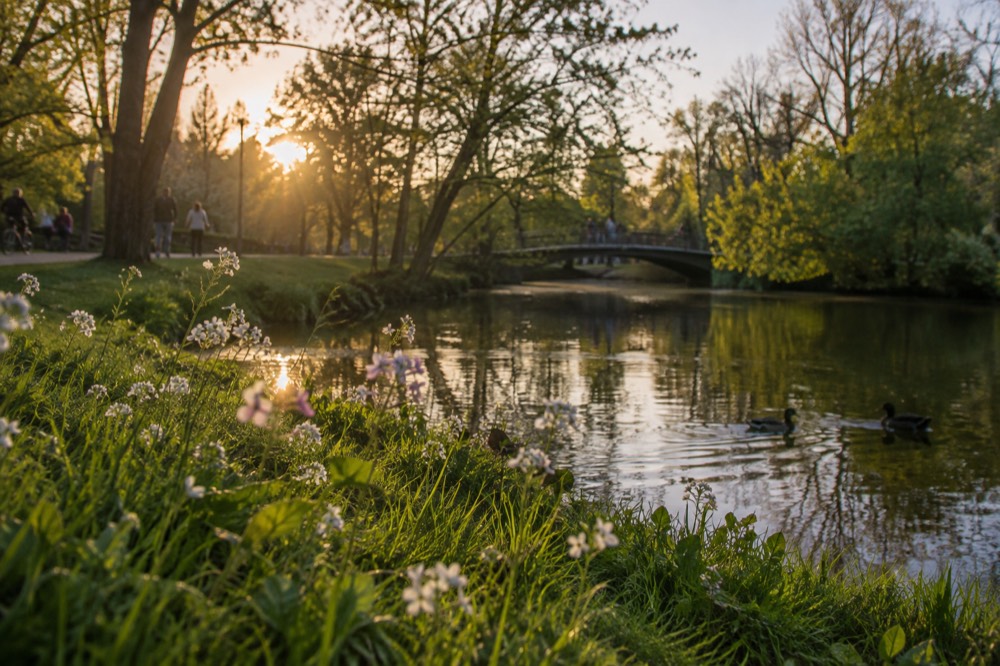
Locals will tell you the park has two personalities. The weekday morning park belongs to runners, parents with prams and commuters cutting through on bikes. The weekend afternoon park belongs to everyone, and the lawns reach festival density without the festival. Neither is wrong, but they are different experiences, and choosing between them is the single biggest planning decision you will make about the visit. The rest of the planning pages sit on Things to Do in Amsterdam.
Seasonally, the tree stock is what carries the park. The mature elms, planes and chestnuts give dense shade in July and August, colour in October, and bare dramatic structure through the winter months. Our best time to visit Amsterdam guide puts the park in its seasonal context, and the spring and tulip season guide covers the weeks when the whole region is in bloom.
| Season | What the Park Looks Like | Crowd Level | Plan Around |
|---|---|---|---|
| Spring | Blossom on the early trees, lawns greening | Moderate, rising | Tulip season trips elsewhere in the region |
| Summer | Full canopy shade, roses in flower, theatre programme running | Heaviest, especially Sundays | Free open-air performances on summer evenings |
| Autumn | Gold and copper colour across the mature trees | Moderate | Photography, quieter lawns |
| Winter | Bare structure, frost and occasional snow on the lawns | Lightest | Café terraces shrink or close in cold weather |
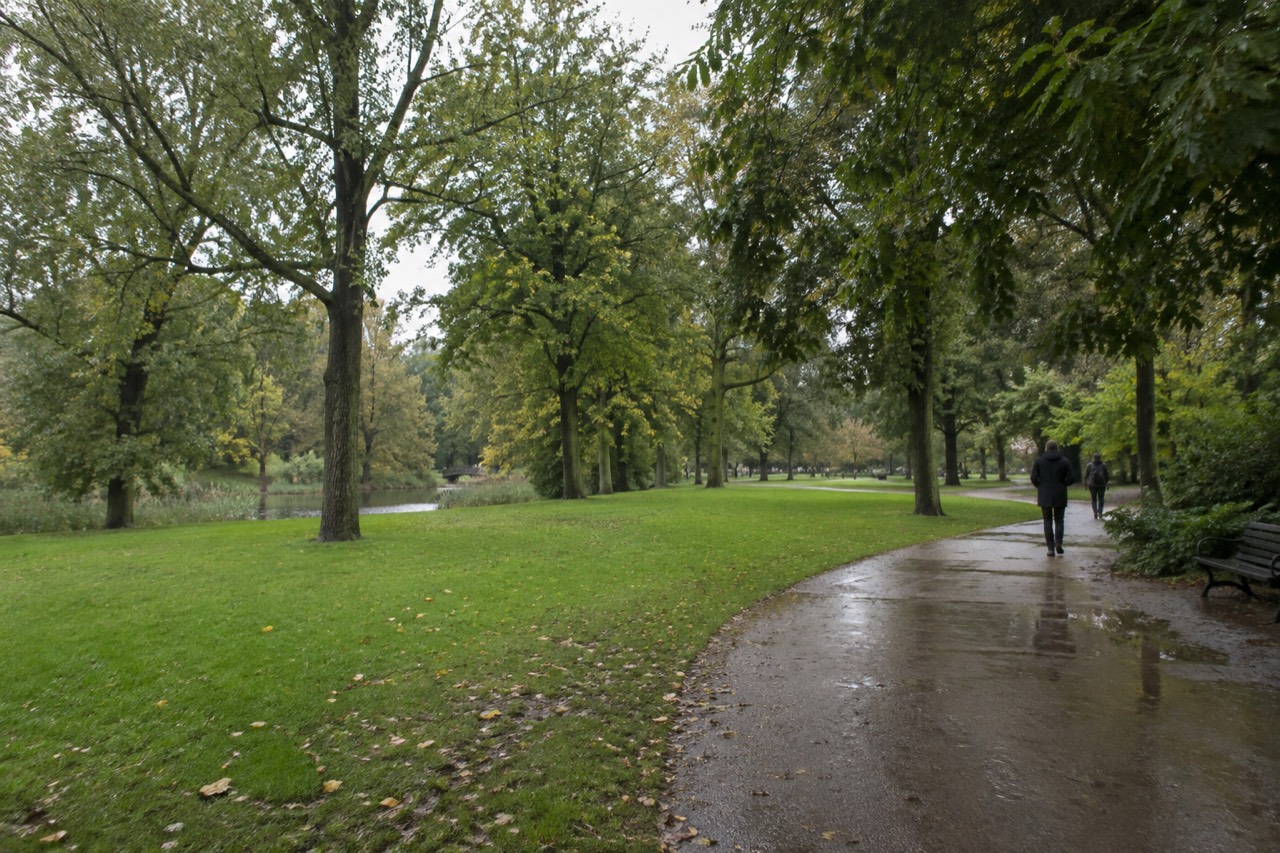
Rain changes the park more than it changes the museums. The lawns drain poorly in sustained wet weather, paths get busy puddles, and the terraces empty. If the forecast turns, our rainy day in Amsterdam plan keeps the day moving with indoor alternatives, and the park will still be there when the sky clears.
What Is Near Vondelpark?
The park's eastern edge is about ten minutes on foot from Museumplein, which holds the Rijksmuseum, the Van Gogh Museum and the Stedelijk Museum. The Rijksmuseum charges €25 for adults, the Van Gogh Museum charges €25, and both require a pre-booked time slot, so a park-plus-museum day needs tickets arranged in advance. The Heineken Experience and the De Pijp neighbourhood lie a short walk to the east and south.
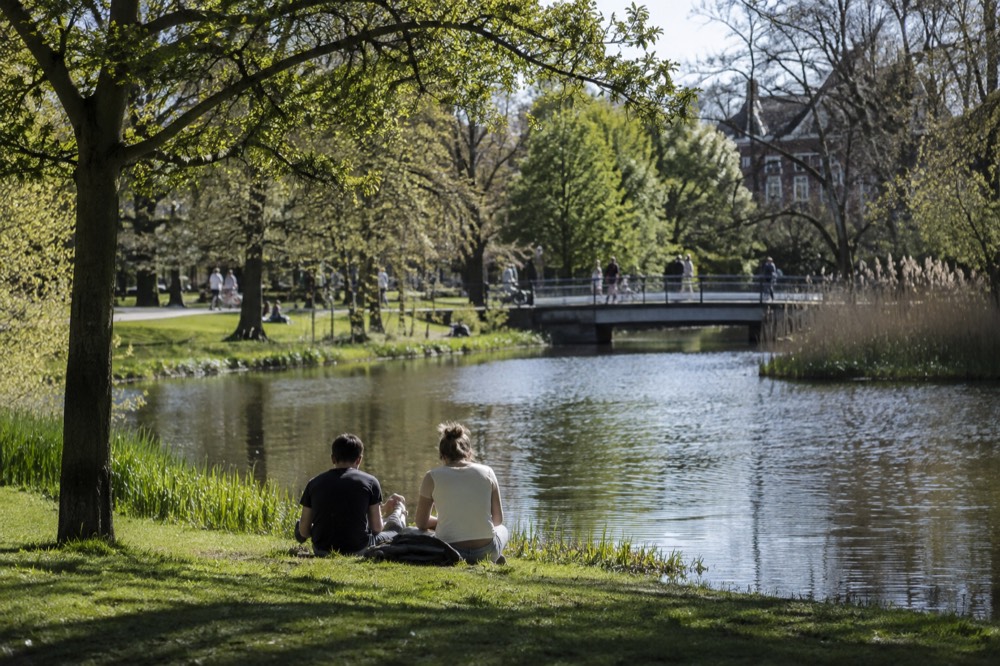
This proximity is the park's greatest practical asset. You can spend a morning in a museum, walk off the gallery fatigue across the lawns, and finish with a drink on a terrace without ever needing transport. The Rijksmuseum's own visitor page confirms both its €25 adult price and its daily 9am to 5pm opening, at rijksmuseum.nl, and the Van Gogh Museum states the same adult price and the timed-entry requirement at its own ticket page.
The Van Gogh Museum pairing is the classic. The museum's ticket, sold from $31 on the live listing with a 4.7 rating across more than 57,096 reviews, is the single most time-sensitive booking in the neighbourhood, because timed slots disappear on busy days. Book the slot first, then let the park fill whatever gap the museum leaves in your afternoon.
South of the park, De Pijp waits with the Albert Cuyp Market and a dense strip of cafés, and our De Pijp guide covers it street by street. To the east, the Heineken Experience occupies the brewer's original 19th-century building, and its ticket, from $23 on the live listing with a 4.6 rating across nearly 39,581 reviews, runs about 90 minutes, which slots neatly between a museum morning and a park afternoon.
For the evening, the canal ring is a short tram ride or a 20 minute walk back toward the centre, and a one-hour cruise makes a natural end to the day. The classic saloon boat cruise, from $19.56 on the live listing with a 4.8 rating across more than 33,435 reviews, runs through the UNESCO-listed canals with a live guide, and there is an optional upgrade with Dutch cheese and drinks.
Is Vondelpark Good for Families and Cyclists?
Yes to both, with caveats. The park has playgrounds, wide traffic-free lawns and shallow pond edges that suit children of every age, and it is one of the safest places in the city for a child to burn off energy. Cyclists are welcome on the main path, but it is shared with pedestrians, so it suits steady riders rather than nervous first-timers.
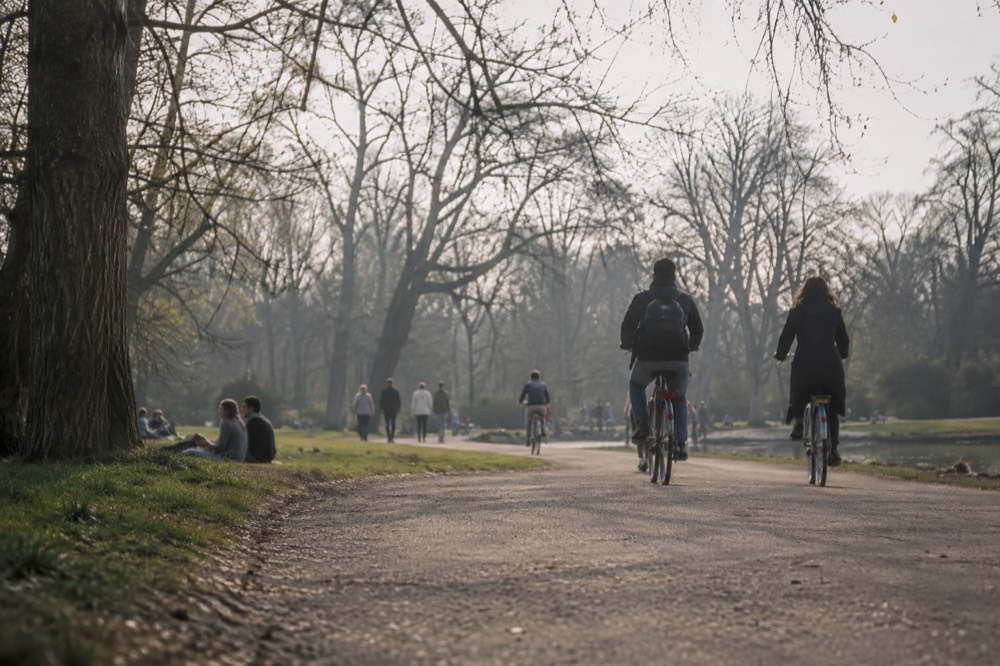
For families, the park is close to a guaranteed win. Entry is free, there is no schedule to keep, and the playgrounds are distributed so that one is never far from wherever you happen to be sitting. Our Amsterdam with kids guide builds a full family itinerary around exactly this kind of stop, and the park appears in it as the release valve after the more structured museum mornings.
For cyclists, honesty matters more than enthusiasm. Amsterdam's bike culture is fast and assertive, and the park's main path carries that culture through a green tunnel. A confident adult rider will love it. A hesitant one, or a child on a first city ride, is better off on the quieter perimeter paths or in the early morning, before the commuter stream thickens. The first-timer mistakes guide collects the cycling errors that cause the most trouble, and riding the wrong path against the flow is high on the list.
Accessibility is mixed, as it is across much of Amsterdam. The main paths are paved and flat, which suits wheelchairs and prams well, but the lawns themselves are soft ground that gets boggy in wet weather. Our accessibility guide covers the park among the city's more navigable outdoor spaces, with the usual warning that the surrounding streets have the cobbles and kerbs the city is famous for.
What Should You Know Before You Go?
The park is free and never closes, so the only real planning variables are weather, crowd timing and what you carry in. Bring your own picnic supplies from a supermarket or the Albert Cuyp Market, take your rubbish to a bin, keep right on the main path, and do not barbecue outside the designated spots. Toilets sit at the mid-park café pavilions, and the nearest full supermarket is a short walk from the eastern gates.
The rubbish rule is not decorative. The park's friends' association and the city run a long-standing campaign about park users taking litter home, because bins overflow on peak days and the maintenance load is enormous. Locals notice, and the norm is enforced socially rather than by fine.
Barbecues are permitted only in designated areas and only under the conditions the city sets out, and open fires are not permitted anywhere in the park. If a picnic barbecue is part of your plan, check the current designated spots on the city's own pages before you buy the coal, because the rules have tightened in recent years and enforcement is real.
Dogs are welcome on a lead, with off-lead areas at specific fields and times. Alcohol is tolerated in the park in moderation, though street-drinking rules in the wider city centre do not apply here in the same way. What the city does prohibit, everywhere in the centre, is public urination, and the park's bin density does not extend to toilet density, so plan around the café pavilions.
For the wider day, the arithmetic is simple. A GVB day ticket at €10.00 covers the transport, the park is free, and the museum pair at €25 each is where the budget concentrates. Our how much does a trip to Amsterdam cost guide breaks a full budget down line by line, and the park is the line item that reads zero.
Common Questions About Vondelpark
Is Vondelpark free to enter?
Yes. The park is public space with no gates, no ticket office and no entry charge at any hour of any day. Everything you spend at Vondelpark is optional: food and drink at the cafés, or nothing at all if you bring your own.
How do I get to Vondelpark from the city centre?
Take a tram from Amsterdam Centraal toward the park's eastern or southern edge, roughly 20 minutes, or cycle about 20 to 25 minutes through the canal ring. A single GVB ticket costs €3.40 and a 24-hour day ticket costs €10.00, and contactless bank cards work on every tram.
What is close to Vondelpark?
Museumplein is about ten minutes on foot from the eastern gates, holding the Rijksmuseum, the Van Gogh Museum and the Stedelijk Museum. De Pijp and the Albert Cuyp Market lie to the south and east, and the Heineken Experience sits between the park and the centre.
When is the best time of day to visit Vondelpark?
Early weekday mornings are calmest, when runners and dog walkers have the paths largely to themselves. Sunny Sunday afternoons are the busiest and most festive, with the lawns at their fullest, so pick your moment based on whether you want quiet or atmosphere.
Can you cycle through Vondelpark?
Yes, and the main east-west path is a recognised through-route. It is shared with pedestrians, so keep right, ride predictively and expect commuter traffic at speed. Nervous riders and young children should choose a quiet weekday morning or the perimeter paths.
Is Vondelpark worth visiting in winter?
Yes, in a different register. The park stays open and free year round, and frost or snow on the lawns and ponds makes it one of the most photogenic free spaces in the city. Expect bare trees, quiet paths and café terraces that close or shrink in cold weather.
The park rewards a slow plan and punishes an over-scheduled one. Pick a morning or an afternoon, pair it with one timed museum slot rather than two, and leave enough slack to end up sitting on a lawn longer than you intended. That is what the park is for, and it is the one thing in Amsterdam that the crowds have never managed to put a price on.