Renting a Houseboat in Amsterdam: What to Know Before You Book
Sleeping on the water is the most Amsterdam stay there is, but the rules around it changed recently and most guides have not caught up.
Short answer
Renting a houseboat in Amsterdam means booking a licensed holiday rental that floats: the city caps stays at 4 guests, requires a registration number on every listing, and since 1 April 2026 limits hosts in eight central neighbourhoods to 15 rental nights a year. Expect a 12.5% tourist tax on top of the nightly rate, and steep stairs, not space.
Amsterdam has more moored homes per canal kilometre than almost any city in Europe, and a good number of their owners rent them out. A houseboat stay sounds like the obvious romantic move: you wake up on the water, swans at the window, the whole canal ring outside your porthole. That part is true. What most booking pages leave out is that a houseboat in Amsterdam is a licensed holiday rental like any apartment, subject to a permit, a registration number and a night cap the city tightened in April 2026. Get those details right and the stay is one of the best sleep decisions you can make in this city. Get them wrong and you may arrive at a listing that is not legal, or that is nothing like the photographs.
This guide walks through the rules, the real costs, the neighbourhoods worth mooring in, and the practical realities of life afloat, then compares the houseboat idea with the simpler option: an hour on a classic canal boat with a drink in hand. If you are weighing a whole week on the water against a short visit, the wider planning picture in how many days you need in Amsterdam is worth a read first.
What Does Renting a Houseboat in Amsterdam Actually Involve?
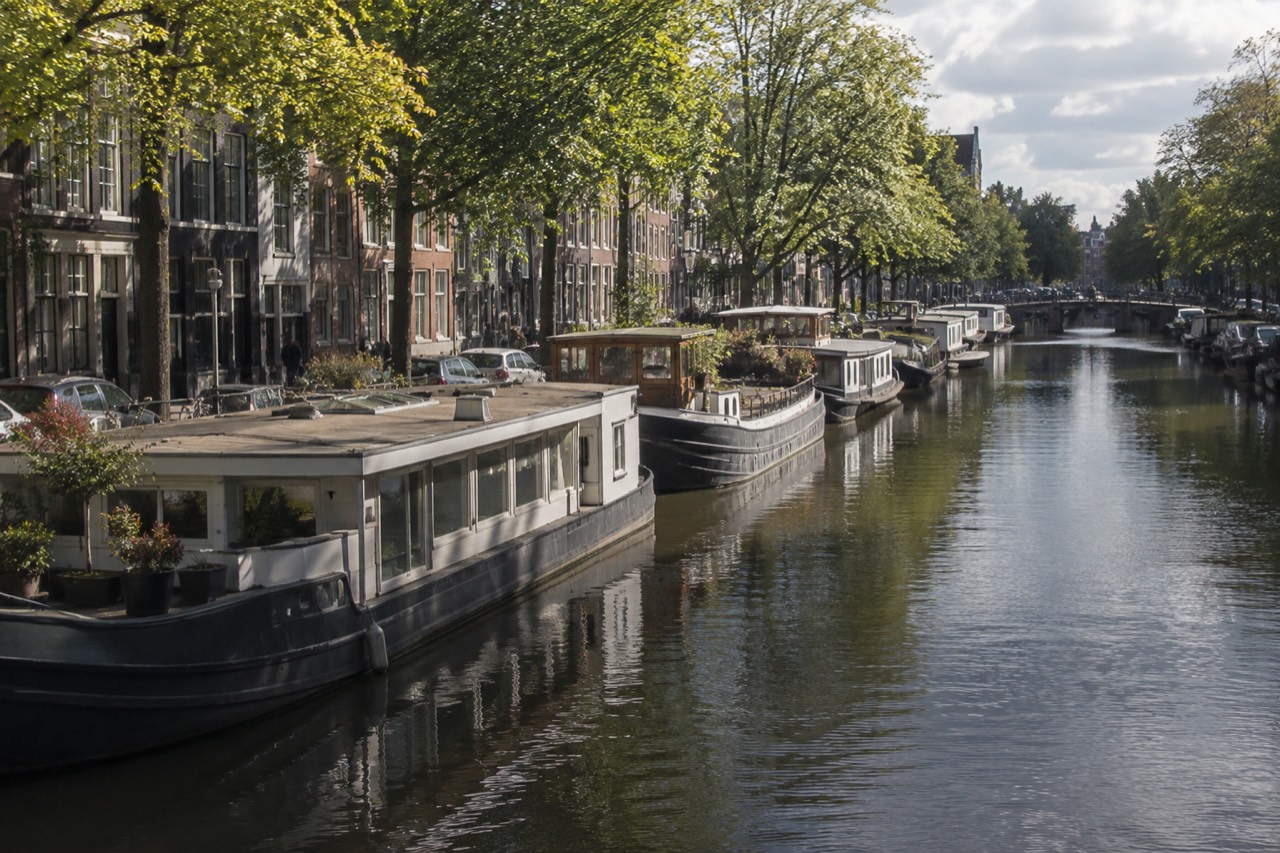
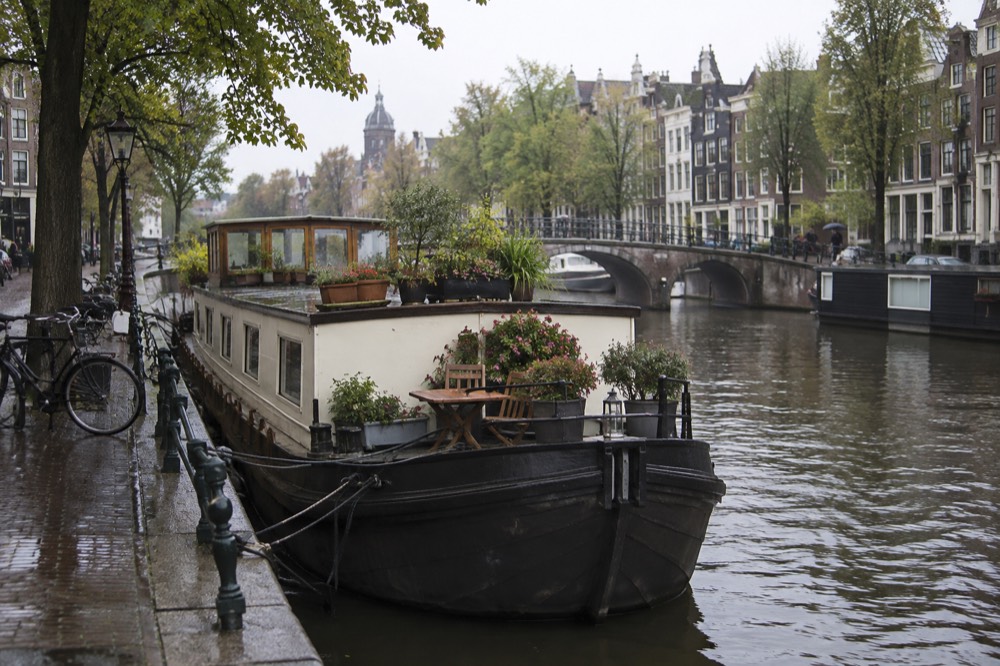
Renting a houseboat in Amsterdam means staying on a licensed floating home, usually a converted barge or a purpose-built ark, moored permanently at a residential berth in the canal ring or on the IJ waterfront. You book it like an apartment and sleep on it like a small hotel, with narrow gangways, compact rooms and steep ship stairs. It is a stay with a view, not a cruise, and the boat does not move.
Two kinds of "boat stay" get confused in listings. The first is the true houseboat: a registered residential vessel with a fixed berth, a postal address and often a family living aboard between rentals. The second is a floating holiday cabin or a boat that occasionally relocates, which is rarer and more tightly controlled. Almost everything a visitor books in Amsterdam is the first kind, in the canal belt, in the Eastern Docklands or along the IJ.
The experience divides opinion cleanly. People who love it describe waking to the sound of ducks, watching the canal traffic pass at eye level and having morning coffee on a deck that no hotel can offer. People who dislike it mention condensation on windows in winter, the climb up and down the gangplank with luggage, and the fact that a 60-year-old barge is a 60-year-old barge: charming, but not soundproofed like a new hotel. Both descriptions are accurate. Which one you get depends mainly on the specific boat, so the listing photographs matter less than the reviews that mention heating, damp and stairs.
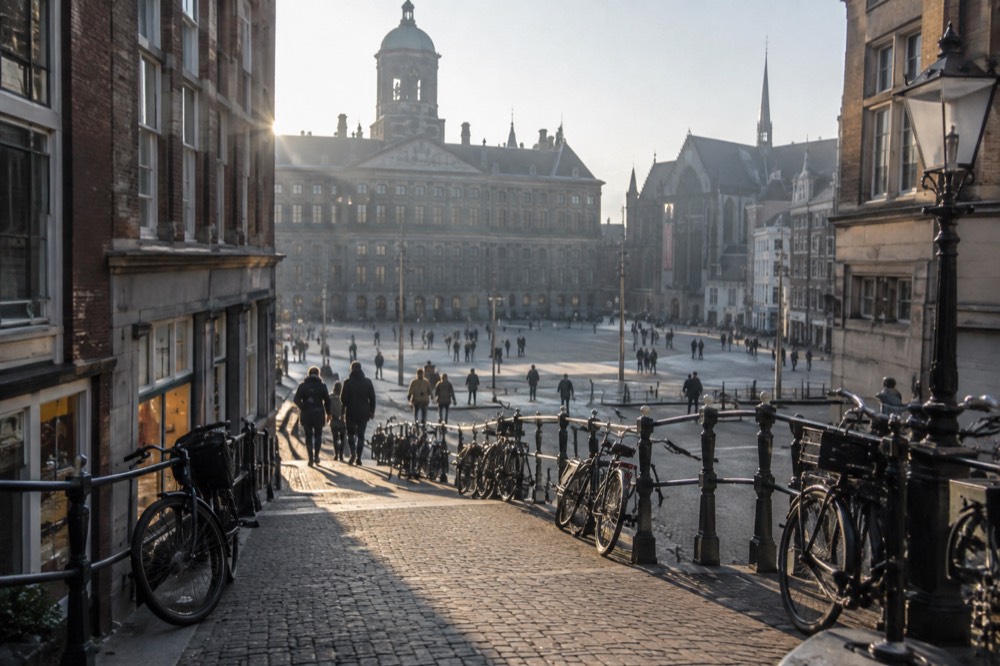
For a sense of what the inside of one of these vessels looks like before they became rentals, the Houseboat Museum on the Prinsengracht shows a genuine converted barge, and it is a better preview than any listing gallery. The canal belt itself is the second thing to study before booking, because your berth determines your whole stay: a boat on a quiet stretch of the Prinsengracht and one near the nightlife of the Rembrandtplein are different holidays entirely.
Is Every Amsterdam Houseboat Listing a Legal Rental?
No, and the rules tightened recently. Amsterdam treats a houseboat rental as a holiday rental: the host needs a permit, a registration number that must appear on the listing, and a cap on rental nights. Since 1 April 2026 that cap is 15 nights per calendar year in eight central neighbourhoods, including the canal belt districts, and 30 nights elsewhere. No more than 4 guests may stay at one time.
The 15-night rule is the fact most other guides have missed. It applies to the Burgwallen-Nieuwe Zijde, De Weteringschans, Grachtengordel-West, Grachtengordel-Zuid, Haarlemmerbuurt, Jordaan, Nieuwmarkt/Lastage and Oude Pijp neighbourhoods, the heart of the area where visitors actually want to sleep. The practical consequence is simple: legal houseboats in those neighbourhoods have very few available nights, so genuine canal-belt listings are scarce, book out far ahead, and are rarely the cheap option. A suspiciously cheap houseboat in the Jordaan with wide-open availability deserves a second look at its registration number.
The city's own holiday rental permit page sets out the full framework: the permit, the €76 fee, the guest cap, the reporting duty and the registration number rule. You can read the requirements yourself on the gemeente Amsterdam holiday rental permit page, and it is worth doing so before you pay a deposit, because the rules bind the host, but the guest who arrives at a shut-down listing is the one who loses the trip.
| Rule | What It Means for a Houseboat Booking |
|---|---|
| Registration number | Free, one-off, must appear on every listing; no number means no compliant rental |
| Permit | Hosts pay €76 for the holiday rental permit |
| Guest cap | Maximum 4 guests at one time, whatever the listing says |
| Night cap, central neighbourhoods | 15 rental nights per calendar year from 1 April 2026 |
| Night cap, rest of the city | 30 rental nights per calendar year |
| Reporting | Each rental period must be reported to the city in advance |
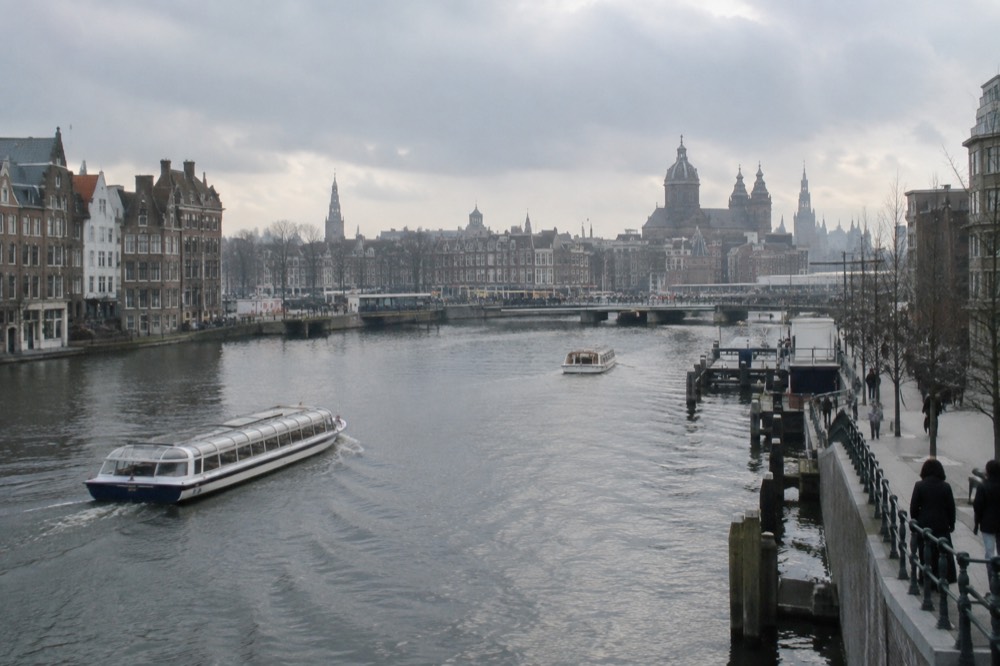
One honest note: a houseboat stay is a night on the water, not a trip on it. If what you actually want is the motion, the commentary and the wine, a canal cruise does that in an hour for the price of a dinner. The classic options are worth comparing while you decide, and the three below are the saloon-boat style most people picture when they imagine Amsterdam on the water.
What Does a Houseboat Stay in Amsterdam Really Cost?
Budget the nightly rate plus 12.5% tourist tax, which Amsterdam charges on the overnight price of every hotel and holiday rental, houseboats included. Add the reality that legal central listings are scarce and priced accordingly. For context on the water itself: a one-hour canal cruise runs from about €15.50, and the city card bundles a cruise with transport from €67 for 24 hours.
The tourist tax is the figure that surprises people. Amsterdam charges 12.5% of the overnight price, excluding VAT, on hotels and holiday rentals alike, under the city's 2026 regulation. Some listings include it in the displayed price, others add it at checkout, and a few leave it for you to settle with the host. Ask before booking which applies. The city explains the current rates on its official tourist tax page.
Houseboat nightly rates themselves vary too widely between boats and seasons for any honest single figure, and the per-night question is covered in more detail in our piece on what a houseboat night costs. What can be said plainly is where the money goes: you are paying for scarcity (legal central berths are rare), for a unique setting, and often for a host who lives aboard part of the year and maintains the vessel themselves.
| Cost Item | Figure | Notes |
|---|---|---|
| Tourist tax | 12.5% of the overnight price | Charged on hotels and holiday rentals, houseboats included |
| Holiday rental permit (host's side) | €76 | One-off permit fee the host must hold |
| Canal cruise, for comparison | from about €15.50 | One-hour cruise with a major operator |
| GVB day ticket | €10.00 | 24 hours of tram, bus, metro and ferry |
| I amsterdam City Card, 24 hours | €67 | Museums, transport and one canal cruise |
Getting around from a houseboat is easy in one specific way: nearly every berth in the canal belt is within a short walk of a tram stop, and a GVB day ticket at €10.00 covers 24 hours of trams, buses, metro and ferries. The full fare table, including the multi-day tickets that suit a week-long stay, is on the GVB prices page. If your houseboat week is really a museum week, the card comparison in is the I amsterdam City Card worth it does the arithmetic for you.
Which Canal Area Should Your Houseboat Be In?
Choose the berth over the boat. The Grachtengordel, the 17th-century canal belt, puts you on the postcard water within walking distance of everything, at the highest price and with the scarcest legal listings. The Jordaan offers narrow, quiet canals and café life. The Eastern Docklands and the IJ waterfront give modern houseboats, more space and better value, at the cost of a tram ride into the centre. De Pijp sits between the two, lively and slightly cheaper.
The Grachtengordel is where the dream photographs come from: the Amsterdam canal ring is a UNESCO World Heritage site, and a berth on the Prinsengracht or the Keizersgracht means swans, houseboats and bicycle bridges passing your window all day. The trade-off is noise in the high season, and remember that this is one of the neighbourhoods under the 15-night cap, so legal listings here are genuinely rare. Book months ahead or lower your expectations.
The Jordaan, immediately west of the Prinsengracht, is the connoisseur's pick: smaller canals, fewer through-routes, brown cafés and the Saturday market at Noordermarkt within a five-minute walk. The Jordaan guide covers the neighbourhood in detail. De Pijp, south of the centre around the Albert Cuyp Market, is louder, younger and usually a little cheaper, and the De Pijp guide explains the character block by block.
| Area | Character | Best For | Watch Out For |
|---|---|---|---|
| Grachtengordel | Postcard canals, 17th-century ring | First-timers who want the classic view | Scarcest legal listings, highest prices, summer crowds |
| Jordaan | Narrow canals, brown cafés, markets | Quiet mornings, walking everywhere | 15-night cap applies here too |
| De Pijp | Lively, young, market street | Nightlife and food on the doorstep | Noisiest of the central picks |
| Eastern Docklands | Modern water architecture, wide water | Space, modern boats, better rates | Tram ride to the centre |
| IJ waterfront | Big-water views, ferries to Noord | Sunsets and a design-forward stay | Exposed to weather, windier than the canals |
The IJ waterfront deserves a special mention for one reason: the free GVB ferries. A houseboat moored on the IJ or in the docklands puts you a two-minute ferry crossing from Amsterdam Noord and the NDSM wharf, the city's most creative corner, and the ferries run late and cost nothing. For a stay built around the water itself, a berth on the IJ gives you more of it than any canal can.
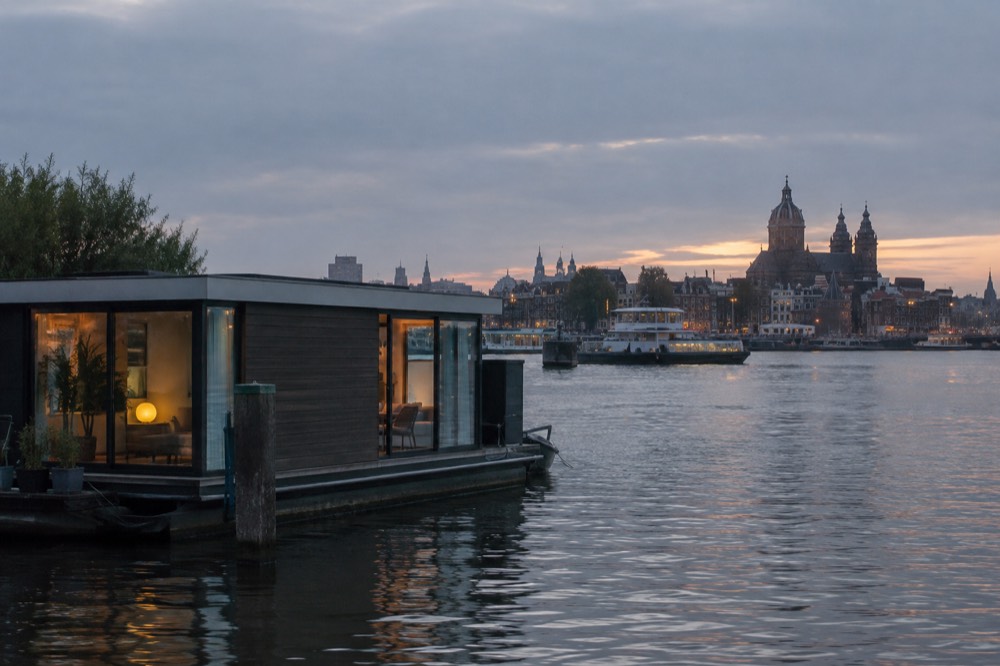
What Is Life Aboard Actually Like?
Expect compact rooms, steep stairs, condensation in cold months and a gangplank between you and the street. Houseboats are homes built inside a hull: ceilings are lower, storage is clever, showers are small, and the heating cycles differently from a building. In summer the deck is the best room in Amsterdam; in winter the same boat is cosy if heated well and damp if not, so read the reviews for the word "damp" before you read anything else.
The stairs deserve their own paragraph. Dutch staircases are famously steep, and houseboat stairs are frequently steeper, often a near-vertical ship ladder to a sleeping loft. If anyone in your party has mobility concerns, or heavy luggage, or both, this is the single detail that can end the dream. The gangplank is the second: it is a plank, it moves slightly with the water, and it gets slippery in rain. None of this is a problem for most visitors, and all of it is a problem for some, so it belongs in the decision before the deposit. Everything else covered here is indexed on Things to Do in Amsterdam.
The water itself is quieter than the street. A berth on the canal means you hear bicycles, conversations and the occasional delivery boat rather than traffic, and in the small hours the canal ring is genuinely still. The counterpoint is that you are in a residential neighbourhood: Amsterdam's "How to Amsterdam" guidance asks visitors to keep noise down late, and on a houseboat your neighbours are close enough to hear a raised voice. The quiet you came for is the quiet you owe.
Practicalities are manageable. Waste and water arrangements vary by boat and are always explained at check-in, most vessels now have proper Wi-Fi, and nearly every host provides bicycles or can point you to a rental, which pairs well with the advice in cycling in Amsterdam and renting a bike. Bring soft luggage if you can: a rucksack up a gangplank is a different experience from a wheeled suitcase.
Houseboat or Hotel: Which Is the Better Amsterdam Stay?
Choose the houseboat for the view, the novelty and the feeling of living in the city rather than visiting it; choose the hotel for space, luggage ease, a desk and a lift. The houseboat wins on atmosphere and loses on practicality, and the price gap has narrowed because legal central houseboats are scarce and priced accordingly. A common compromise is a hotel or apartment on land plus an evening on the water, which costs less than a single houseboat night.
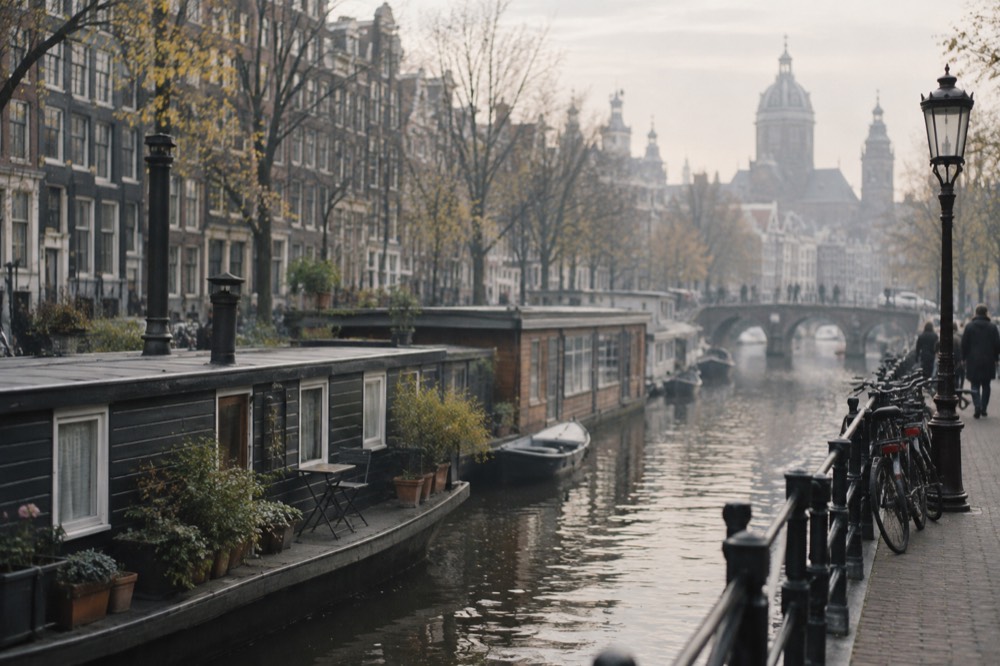
The hotel side of the ledger is stronger than it looks on a booking site. Amsterdam's hotel stock is large, competitive and mostly central, and a mid-range hotel room gives you floor area a barge simply cannot match. The houseboat side wins on something no hotel has: you are on the canal, at water level, with a private stretch of deck, in a neighbourhood rather than a lobby. Couples and slow travellers rate the houseboat highly; families with small children and business travellers mostly do not.
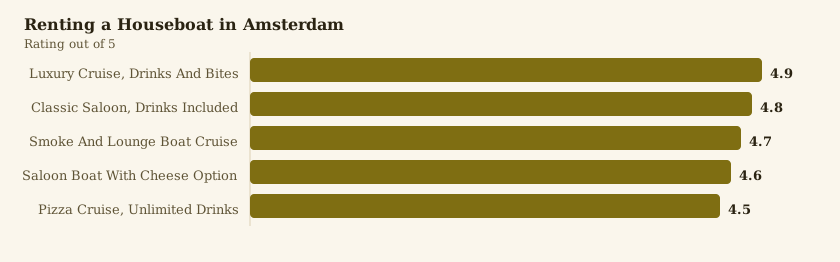
The compromise is worth taking seriously. An evening canal cruise gives you the water, the bridges and the lit canal houses for an hour, and the best of them cost less than a main course. The classic saloon boat cruise, a one-hour trip on a restored wooden boat with a live guide, runs at $19.56 from the operator's live listing and holds a 4.8 rating across 33,435 reviews, which is about as strong a consensus as Amsterdam tourism produces. It is the water experience without the water commitment.
If dinner on the water appeals more than a daylight circuit, the pizza dinner cruise runs 90 minutes with unlimited drinks from $40, rated 4.5 across 3,046 reviews, and turns the cruise into the evening itself rather than an interlude before it.
And for a group that wants the boat to feel like a private lounge, the smoke and lounge boat cruise, a one-hour smoke-friendly trip with drinks from $25 and a 4.7 rating across 9,862 reviews, sits somewhere between the two: relaxed, social and short enough to leave the evening open.
How Do You Book a Houseboat Without Getting Burned?
Check four things before paying anything: the registration number on the listing, the tourist tax arrangement, the stairs and gangplank in the photographs, and the cancellation terms. Book direct-berth listings well ahead for the canal belt, read reviews for mentions of damp and heating, and treat any unusually cheap central houseboat with wide availability as a red flag rather than a bargain. A legal, well-run houseboat is worth planning months for.
Start with the registration number. It should appear on the listing exactly as the city issues it, and its absence is the clearest signal that the rental is not compliant. Then ask about the tourist tax in writing: 12.5% of the overnight price is the city's rate, and knowing whether it is inside or on top of the displayed rate prevents an ugly surprise at checkout. Third, look at the photographs for the stairs and the gangplank with an honest eye at your own luggage and knees. Fourth, read the cancellation policy before the reviews, because canal-belt berths book far ahead and plans change.
The reviews tell you what the photographs hide. Search them for "damp", "cold", "steps" and "noise" rather than reading the top three. A well-maintained boat with a resident owner draws reviews that mention the heating working, the host meeting you at the gangplank and the coffee left in the cupboard; a neglected one draws reviews that mention condensation, a musty smell and a heater that never quite copes. The difference between the two is the difference between the best stay of your trip and its worst.
Timing matters more than for a hotel. With the 15-night cap in the central neighbourhoods, the legal supply of canal-belt houseboats is a fraction of what the listing sites suggest, and the best boats are rebooked by returning guests. For April through September, plan three to six months ahead. For a winter stay, you have more choice and lower rates, and the Amsterdam in winter guide makes the case that the cold months are when a heated, well-built boat is at its most magical.
Common Questions About Renting a Houseboat in Amsterdam
Is it legal to rent a houseboat in Amsterdam?
Yes, when the host holds a holiday rental permit and displays a registration number on the listing. The city caps rentals at 4 guests at a time and, since 1 April 2026, at 15 nights per calendar year in eight central neighbourhoods including the canal belt and the Jordaan, and 30 nights elsewhere. A listing without a registration number is not a compliant rental.
How many tourists can stay on one houseboat?
Amsterdam's holiday rental rules allow a maximum of 4 guests at one time, whatever the boat's size. That cap applies to houseboats exactly as it does to apartments, and a listing offering more is offering something the city does not permit.
Do I pay tourist tax on a houseboat rental?
Yes. Amsterdam charges 12.5% of the overnight price, excluding VAT, on all holiday rentals, houseboats included. Some listings include it in the displayed rate and others add it at checkout, so confirm which applies before you pay a deposit.
Which neighbourhood is best for a houseboat stay?
The Grachtengordel gives the classic canal view but the scarcest legal listings, the Jordaan gives quiet canals and café life, and the Eastern Docklands and IJ waterfront give more space and better value a short tram or free ferry ride from the centre. Choose the berth over the boat.
Are houseboat stairs really that steep?
Frequently, yes. Many vessels use near-vertical ship ladders to sleeping lofts, and the gangplank to the shore moves slightly and gets slippery in rain. If mobility or heavy luggage is a factor, study the photographs carefully or choose a hotel instead.
Is a houseboat better than a canal cruise?
They are different products. A houseboat is a night, or several, living on the water; a canal cruise is an hour or two on it. Many visitors take the cruise and sleep on land: a classic saloon boat cruise costs from $19.56 and delivers the water, the bridges and the commentary without a single night aboard.
If the houseboat idea survives everything above, it is one of the great Amsterdam stays. If it does not, the water is still there, an hour at a time, and the trio of saloon boats below will give you the canal at a fraction of the commitment.