What Is A Must Eat In Amsterdam?
The dishes Amsterdam is actually known for, where to eat them, and which food experiences are worth booking, from haring and bitterballen to stroopwafel and poffertjes.
What Is A Must Eat In Amsterdam?
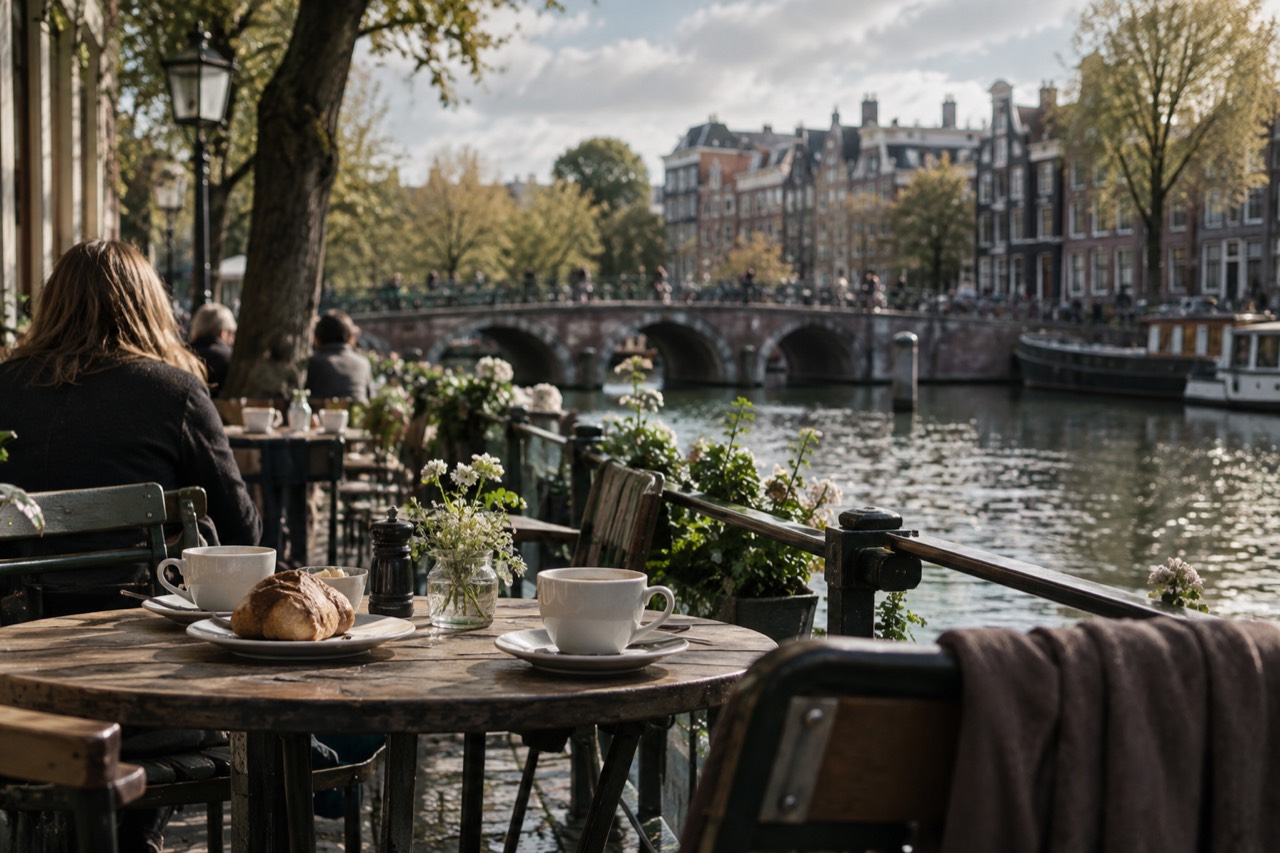
The five foods Amsterdam locals will tell you to try are raw herring (haring), thick split-pea soup (erwtensoep), bitterballen with mustard, aged Gouda or Edam cheese, and a fresh stroopwafel pressed warm on a market griddle, with poffertjes as the honorary sixth for anyone with a sweet tooth and twenty spare minutes.
That list surprises people who arrive expecting a single signature dish. Amsterdam does not really have one. What it has is a trading-city pantry: fish from the North Sea, cheese from the surrounding polders, spices that entered the port centuries ago, and an Indonesian kitchen left behind by colonial history, which is why a rijsttafel, a table of many small Indonesian dishes served in sequence, is on almost any local's list of the best food in the city. The dishes above are the ones you can find within a ten minute walk of the Dam, in places that sell them year-round.
Haring deserves its place at the top. The season for Hollandse Nieuwe, the young herring caught in early summer and cured in brine, traditionally opens around late spring, but cured herring is sold from stands and fish shops all year. The classic way to eat it is by the tail, held above your mouth, with chopped onion and gherkin on the side. The milder version is a broodje haring, the same fish in a soft roll. Visitors who cannot face the whole-fish ritual usually manage the sandwich without complaint.
The fish itself is worth a word on quality, because it decides whether the ritual is a pleasure or an ordeal. Good haring is buttery and barely saline, frozen to EU parasite-control standard before curing, and it should never taste aggressively salty. A busy fish stand with a short queue of locals is the reliable signal; an empty stand on a main tourist street with a laminated photo menu is the opposite. The onion and gherkin served alongside are not decoration, they cut the fat and make the second fish easier than the first.
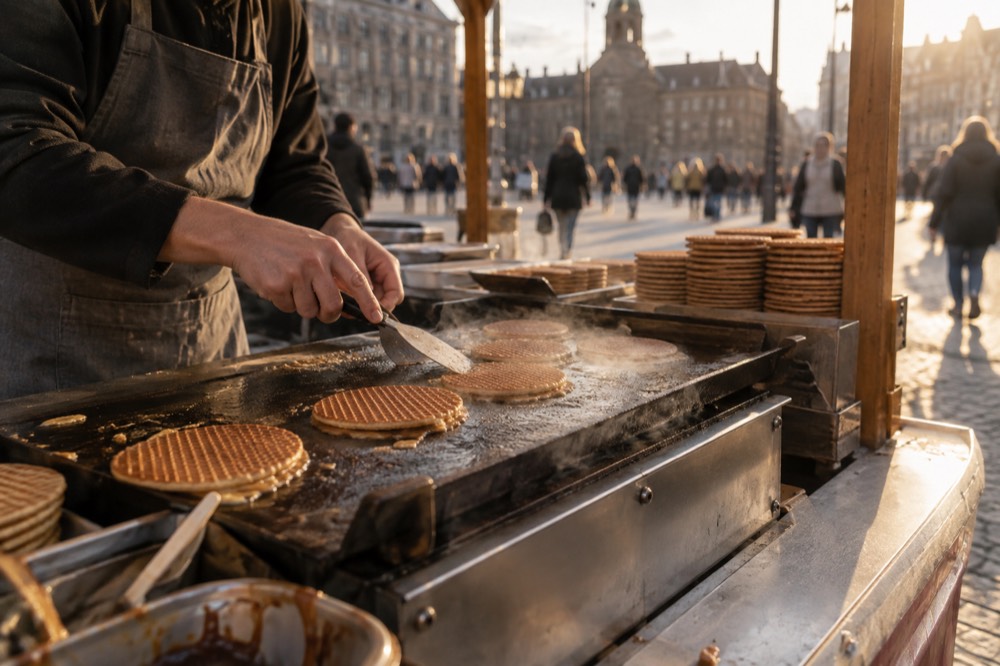
The sweet side of the list matters just as much. A stroopwafel is two thin waffles glued with warm caramel syrup, and the difference between a factory version in a supermarket and one pressed in front of you at a market stall is the difference between a biscuit and a dessert. The Dutch foods worth crossing the city for are covered in depth elsewhere on this site, but the short version is this: anything involving a hot plate, a market griddle or a fryer is at its best within a hundred metres of where it was made.
For travellers who would rather have the city's food explained than decode it alone, a guided tasting walk bundles the whole list into one afternoon. The ten-tastings food and culture walk is the strongest option on the roster: it runs 3 hours 30 minutes, costs $92, and holds a 5.0 rating across 1,157 reviews, which is an unusually clean score for a food tour anywhere. There is also a beer-and-bites angle to the city worth considering, and the classic pairing of Dutch snacks with the country's most famous brewery is covered further down.
What Kind Of Food Is Amsterdam Known For?
Amsterdam is known for simple, hearty Dutch food built on fish, dairy, potatoes and bread, layered with an Indonesian tradition that produced the rijsttafel, and served more often from markets, brown cafes and stand-up snack bars than from formal restaurants. The city's food fame is about ingredients and settings, not fine dining.
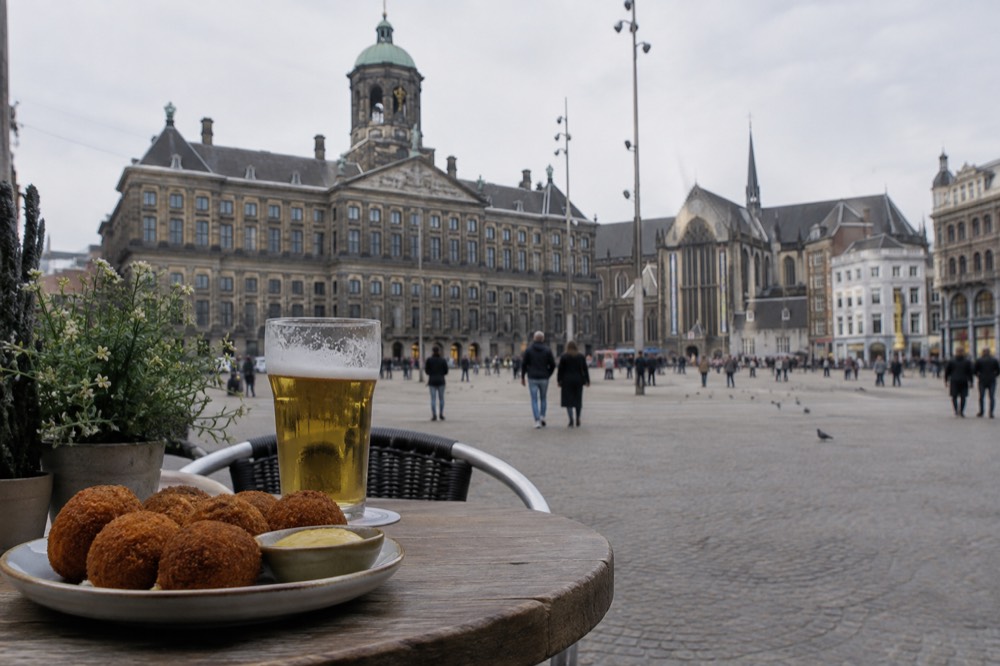
The brown cafe is the setting most visitors underestimate. These are small, dim pubs with wood stained by centuries of smoke, and they serve the deep-fried side of Dutch food: bitterballen, those crisp balls of ragout with a molten centre, served with sharp mustard; kaassoufflé, a fried cheese roll; and frikandel, a skinless sausage that locals eat with curry ketchup and chopped onion. The portions are small, the beer is local, and the bill stays modest. The brown cafe culture of Amsterdam is a food experience in itself, and it costs about the price of a round of drinks.
Cheese is the other pillar. The Netherlands exports enormous quantities of Gouda and Edam, and the cheese sold at Amsterdam markets is a different product from the vacuum-packed version abroad: aged wheels, boerenkaas from farms rather than factories, and herb-coated varieties. Cheese stalls offer samples freely, and the two historic market squares, with the floating flower market nearby, are where most visitors first taste the difference. The full guide to Amsterdam's markets maps the stalls worth planning a morning around.
Age is the word that matters most at a cheese stall, and it is the one visitors never ask about. Young Gouda is mild and rubbery; a wheel aged twelve months or more develops salt crystals, a butterscotch depth and a crumbly texture that bears no resemblance to the supermarket version. Stalls will cut a taste of the aged wheel if you ask, and the price per kilo rises with age in honest steps rather than tourist markups. Cumin-seeded Gouda, komijnenkaas, is the local's aged choice and appears on most serious stalls.
Then there is the Indonesian layer, which is genuinely part of Amsterdam's food identity rather than a tourist curiosity. Indonesian restaurants in the Netherlands developed the rijsttafel, a colonial-era format of many small dishes with rice, into something you will not find in the same form in Indonesia itself. A good rijsttafel in Amsterdam runs to a dozen or more plates and is one of the best-value long meals in the city.
The beer side of the equation has one obvious flagship. The Heineken Experience occupies the brewer's original 19th-century brewery building and runs as an interactive attraction rather than a factory tour, with exhibits, a tasting room and an optional rooftop. Tickets start at $23, the visit runs about 1 hour 30 minutes, and the listing holds a 4.6 rating across 39,581 reviews, making it one of the most-reviewed food-and-drink products in the city.
Pairing a brewery visit with a bitterballen crawl of two or three brown cafes is, in the desk's view, the most efficient food afternoon in Amsterdam: one booking, one neighbourhood, and the rest of the day on foot. The brewery sits close to the centre, so the crawl needs no transport beyond shoes, and the tasting-room pour at the end of the visit makes the first cafe stop feel earned rather than improvised.
What Are The Must Try Foods In Amsterdam?
Beyond the core five, the must-try list for Amsterdam includes poffertjes (small puffy pancakes with butter and sugar), kibbeling (battered fried fish chunks), ossenworst (raw beef sausage from the butcher tradition), thick pea soup in winter, and a proper rijsttafel, plus the sweet and savoury snack-counter classics that locals eat standing up at FEBO-style automats and fish stands.
Poffertjes are the item children remember. They are small, coin-sized pancakes cooked in a special cast-iron plate with dozens of shallow dimples, served in batches with a lump of butter and a snowfall of icing sugar. Stalls sell them at markets and fairs, and the batch is eaten within two minutes of leaving the griddle, which is the only way to eat them. Other pages covering the same trip are gathered on Things to Do in Amsterdam.
Kibbeling is the answer to the question of what locals eat for a quick hot lunch. It is chunks of white fish in a rough batter, deep fried and served with a garlic or tartar sauce, sold from fish stands and snack bars for a few euros in most neighbourhoods. It shares counter space with lekkerbekje, the same idea on the bone, and both are cheaper and fresher than most sit-down fish meals aimed at visitors.
The winter list is shorter but stronger. Erwtensoep, also called snert, is a split-pea soup so thick the spoon stands up in it, studded with pork and smoked sausage and served with rye bread and bacon. It appears on menus when the weather turns, and a bowl of it is the single most restorative thing you can eat in Amsterdam in January.
Ossenworst belongs on the adventurous end of the list. It is a soft, raw beef sausage seasoned with salt, pepper, mace and cloves, historically made from oxen slaughtered at the city's markets and eaten the same day. Modern food-safety rules mean it is now made from beef that has been frozen to the required standard, but the texture and spice are unchanged, and it appears sliced on traditional cafe menus and butcher counters in the centre. Locals eat it on rye bread with mustard. It is the one classic that visitors rarely photograph, which is part of its appeal.
For structure, here is how the main must-try items compare, including the bookable experiences that bundle several of them.
| Must-Try Item | What It Is | Where To Eat It Best |
|---|---|---|
| Haring | Cured raw herring with onion and gherkin | Fish stands and fishmongers, year-round; a broodje haring softens the ritual |
| Bitterballen | Crisp fried ragout balls with a molten centre | Brown cafes, with sharp mustard and a local beer |
| Stroopwafel | Two thin waffles with warm caramel syrup | Market stalls that press them fresh, never the supermarket packet |
| Poffertjes | Miniature pancakes with butter and icing sugar | Market griddles and winter fair stalls, eaten immediately |
| Kibbeling | Battered fried fish chunks with sauce | Fish stands and snack counters in any neighbourhood |
| Rijsttafel | Many small Indonesian dishes served with rice | Indonesian restaurants, booked ahead for the full table |
| Erwtensoep | Thick split-pea soup with smoked sausage | Winter menus and traditional Dutch eetcafes |
The guided option remains the efficient route for anyone with limited time. The ten-tastings food and culture walk covers the street-food classics with a local guide weaving in the city's history, and it is the one booking that turns the list above into an afternoon rather than a week of research. The full rundown of what to eat in Amsterdam covers the restaurant side, dish by dish, for travellers who prefer to plan their own route.
Where Should You Eat Them?
Eat street food at the markets and fish stands, eat bitterballen and cheese in the brown cafes of the centre and Jordaan, eat rijsttafel at a booked Indonesian restaurant, and treat the museum-quarter cafes as a lunch stop rather than a destination, because the food near the big sights is priced for footfall, not flavour.
The geography matters more than visitors expect. The Albert Cuyp Market is the city's largest street market and the natural home of the fresh stroopwafel stall, raw herring from a fish stand and a poffertjes griddle within a hundred metres of each other. The Dappermarkt in the east is the local's version, cheaper and less photographed. Both are morning-to-mid-afternoon places, and both close early, so a market breakfast needs to be the first item of the day rather than the fallback.
The Jordaan and the canal ring hold the brown-cafe layer: small rooms, wooden benches, and kitchens that turn out a short list of Dutch classics without ceremony. This is where erwtensoep in winter and ossenworst, a soft raw beef sausage from the city's butcher tradition, actually appear on menus. The centre around the Dam has the highest concentration of snack bars and automats, which sell frikandel and kaassoufflé from heated wall compartments and are perfectly respectable food in Amsterdam, whatever they look like.
The automats deserve a defence, because guidebooks treat them as a joke and locals treat them as infrastructure. The format is simple: hot fried snacks sit behind little glass doors, you drop in coins or tap a card, and the door opens. The better ones fry in batches through the day rather than holding stock for hours, and the way to tell is the queue: a steady stream of students and tram drivers means the croquettes are turning over. Eating one standing on the pavement is not a compromise in Amsterdam, it is the native way to eat a kroket.
One planning note that catches visitors out: eating and drinking on the street in the city centre is more restricted than in most capitals. Street drinking is prohibited in the centre, and the city's own visitor-rules page asks people to use the public toilets rather than the canalside. The rules are on the gemeente's How to Amsterdam page, and the short version is that a snack on a bench is fine while an open beer usually is not.
For a sit-down lunch between museums, the Rijksmuseum's own cafe is open to ticket holders and runs longer hours than the galleries, daily until 6pm against the museum's 5pm closing, per the museum's practical-info page. It is a convenient stop rather than a food destination, and the Museumplein guide maps the better lunch streets a few blocks south.
What Is Traditional Food In Amsterdam?
Traditional Amsterdam food is working-class port food: cured herring and other North Sea fish, peameal-style sausages, pea soup, bread-and-cheese lunches, and deep-fried snacks sold from counters, later joined by Indonesian and Surinamese cooking that arrived through the port and stayed. The through-line is cheap ingredients made filling.
The port explains almost everything. A city that grew rich on shipping ate what the ships brought and what the sea gave: salted, cured and smoked fish that kept without refrigeration, pulses that could feed a crew, and bread that could be carried. Stamppot, potatoes mashed with a green vegetable and served with a sausage, is the home-cooking version of the same logic, and it still appears on traditional cafe menus across the city. It is not elegant and it is not trying to be.
The seasonal rhythm of that home cooking still runs through the city's kitchens. Winter brings erwtensoep and stamppot with curly kale, spring brings the first herring and white asparagus, and late summer brings poffertjes at outdoor fairs. A visitor who eats with the calendar rather than against it will find the traditional dishes at their best, because the cafes that cook them cook for the season they are in, not for a fixed menu photographed in July.
The colonial layer arrived later and settled permanently. Indonesian and Surinamese restaurants became ordinary parts of Amsterdam's food landscape decades ago, to the point where the rijsttafel is now as traditional here as the herring stand. A Surinamese broodje pom, a sandwich of shredded chicken with a tamarind-style sauce on a soft roll, is one of the best cheap lunches in the city and appears on almost no tourist menu, which is exactly why it belongs on this list.
For travellers deciding between booking a structured experience and eating independently, the trade-off is simple and worth stating plainly.
| Experience | Format | Duration | From | Rating |
|---|---|---|---|---|
| Ten-tastings food walk | Guided walk, 10 tastings, city history included | 3 hours 30 minutes | $92 | 5.0 from 1,157 reviews |
| Heineken Experience | Self-paced interactive brewery visit with tasting | 1 hour 30 minutes | $23 | 4.6 from 39,581 reviews |
| Pizza dinner cruise | Canal cruise with pizza and unlimited drinks | 1 hour 30 minutes | $40 | 4.5 from 3,046 reviews |
None of those replaces a market breakfast or a brown-cafe afternoon; they compress the city's food story into a booked slot, which suits short trips and rainy days better than long ones. The Check availability link sits beside the tasting walk's own page for anyone weighing the timing.
Common Questions About Eating in Amsterdam
What Is A Must Eat In Amsterdam?
Raw herring, bitterballen with mustard, aged Gouda, thick pea soup in winter, and a stroopwafel pressed fresh at a market stall. Add poffertjes for dessert and a rijsttafel for the one long booked meal, and the list is complete.
What Kind Of Food Is Amsterdam Known For?
Simple Dutch food built on fish, cheese, potatoes and bread, served from markets, brown cafes and snack counters, plus a strong Indonesian tradition that makes the rijsttafel a local standard rather than a novelty.
What Are The Must Try Foods In Amsterdam?
Haring, bitterballen, stroopwafel, poffertjes, kibbeling, erwtensoep and a rijsttafel. A guided ten-tastings walk at $92 covers most of the list in one 3 hour 30 minute route if time is short.
What Is Traditional Food In Amsterdam?
Working-class port food: cured North Sea fish, pea soup, sausage-and-potato stamppot, bread-and-cheese lunches and fried snacks, later joined by Indonesian and Surinamese cooking that arrived through the port and stayed.
Where Is The Best Place To Eat In Amsterdam?
Street markets for fresh griddle food and fish, the brown cafes of the Jordaan and centre for fried snacks and beer, and booked Indonesian restaurants for a rijsttafel. The blocks immediately around the biggest sights are priced for footfall rather than flavour.