Where Did Anthony Bourdain Eat In Amsterdam?
From herring at a street stall to a rijsttafel feast, here is every spot Anthony Bourdain visited in Amsterdam and where you can still eat like him today.
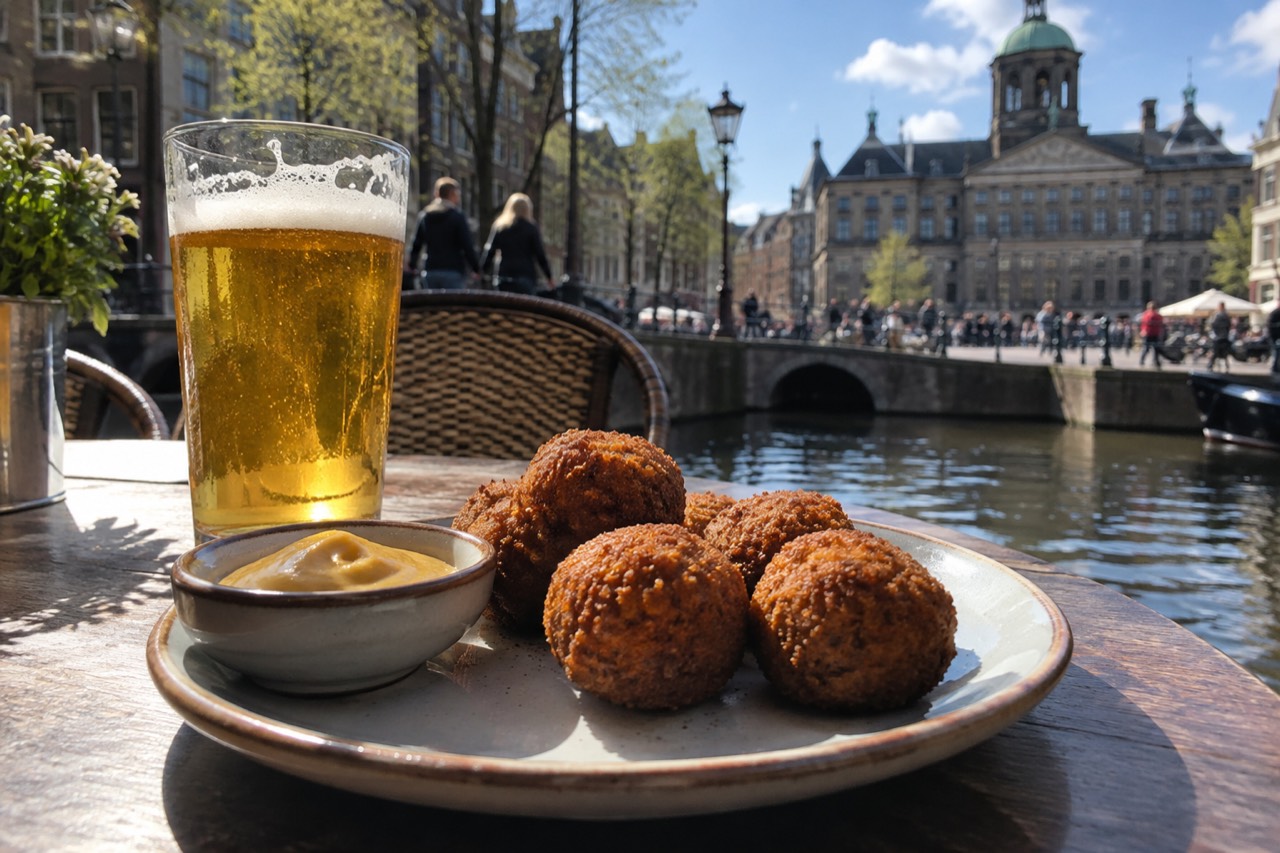
Anthony Bourdain never treated Amsterdam as a checklist city. He walked into the same brown cafes locals have been nursing beers in for a century, stood at a herring cart on a cold morning, and sat down for a rijsttafel that left him visibly moved. His Amsterdam was not about ticking off landmarks; it was about the food that told the story of a port city built on trade, tolerance, and a deep, stubborn love of simple things done well. This article traces every documented stop Bourdain made in the Dutch capital, and where you can still eat and drink like him today, more than a decade after his first visit aired.
Where Did Anthony Bourdain Eat In Amsterdam?
Anthony Bourdain ate herring from a street stall, drank beer and bitterballen at a brown cafe, sat through a multi-course rijsttafel at a family-run Indonesian restaurant, and toured the Heineken brewery. His Amsterdam stops were a mix of old-school Dutch institutions and dishes born from the country's colonial history, all chosen for their lack of pretension.
Bourdain's Amsterdam episodes span two series. The first, from The Layover, is the one most fans remember: a sprint through the city that started with a morning herring, moved to a brown cafe for beer and fried snacks, and ended with a rijsttafel he called one of the best meals of his life. A later Parts Unknown visit took a different angle, exploring the city's liberal drug policy and its coffee shop culture, but even then he found his way back to the food that grounded him.
The beauty of Bourdain's Amsterdam trail is that almost every place he visited is still open, and none of them have turned into tourist traps. They are, for the most part, exactly what they were when he walked in: unpolished, honest, and deeply Dutch. Here is every stop, in the order he made them, and exactly what he ordered.
The Herring Stand
Bourdain's first meal in Amsterdam was a raw herring, eaten the Dutch way: held by the tail, tipped back, and swallowed whole. He bought it from a street stall on the Singel canal near the Bloemenmarkt, a spot that has served herring for decades. The herring is served with chopped onion and, if you ask, a slice of pickle. Bourdain called it "breakfast of champions" and noted that the Dutch have been eating herring this way since the Middle Ages, when the discovery of gibbing, removing the gills to preserve the fish, turned the North Sea catch into a trade commodity that funded the Golden Age.
The stall he visited, Vishandel Molenaar, still operates on the Singel. It is a tiny, family-run counter with no seating. You order, you eat standing up, and you walk away. The herring is caught between May and July, when the fish is at its fattest, and the stall sells only Hollandse Nieuwe during those months, the first catch of the season, which is milder and creamier than the year-round salted version. If you go outside the window, you will still get a good herring, just not the one Bourdain ate, and the stall's owners are happy to explain the difference if you ask.
The Brown Cafe
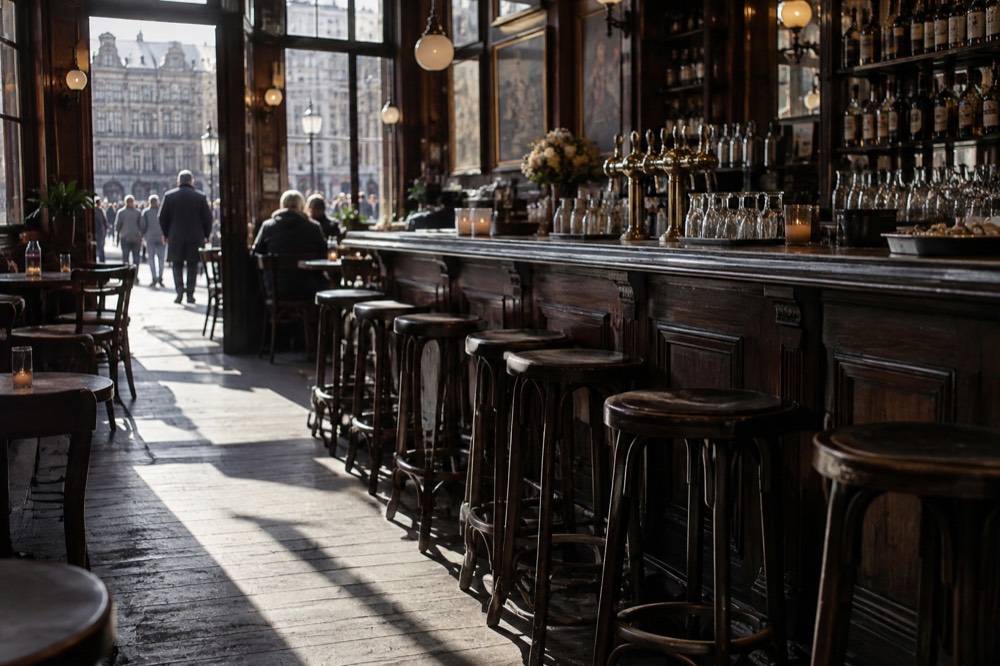
After the herring, Bourdain headed to a brown cafe, the Dutch equivalent of a pub, named for its nicotine-stained walls and dark wood interior. He ordered a beer and a plate of bitterballen, the deep-fried, breadcrumbed balls of beef ragout that are the country's unofficial national snack. The cafe he chose was Café 't Smalle, a centuries-old tasting house in the Jordaan that still pours its own jenever and keeps the original leaded-glass windows.
Bourdain sat at the bar, talked to the owner, and ate bitterballen with mustard while the afternoon light came through the canal-side windows. He described the experience as "exactly what you want a bar to be," and it is hard to argue. The cafe has not changed its menu or its decor since. The bitterballen are made in-house, the beer list is short and local, and the jenever, a Dutch gin ancestor, is served in a tulip glass filled to the brim, with the instruction to take the first sip without using your hands. For a deeper dive into Dutch drinking food, see our guide to what to eat in Amsterdam.
The Rijsttafel
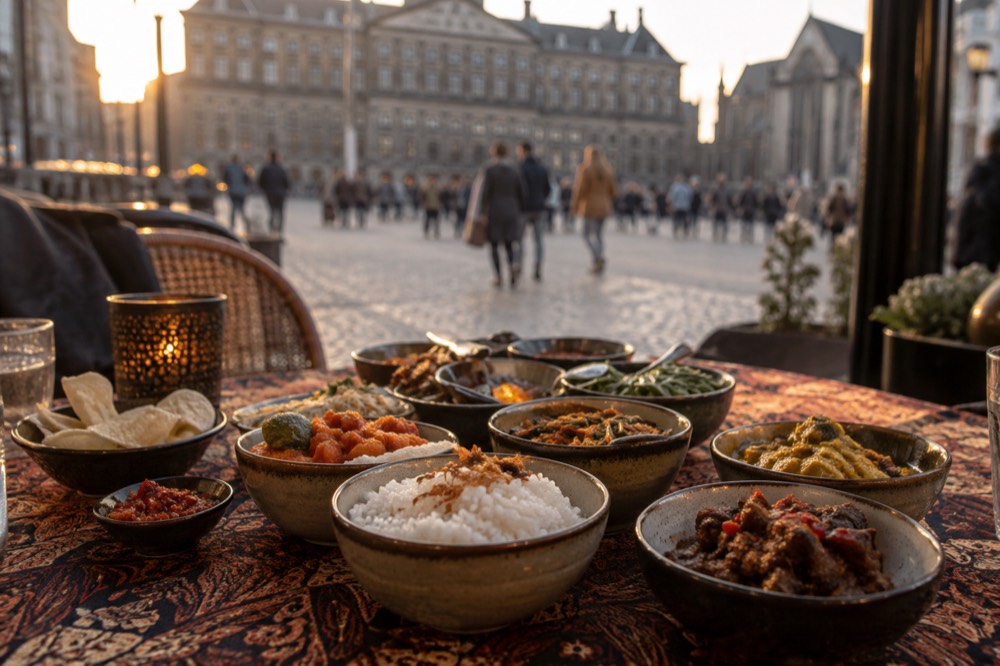
The meal that Bourdain called one of the best of his life was a rijsttafel at Tempo Doeloe, an Indonesian restaurant on Utrechtsestraat. Rijsttafel, literally "rice table," is a Dutch colonial invention: a spread of up to twenty small dishes, from mild coconut curries to fiercely hot sambals, served with rice and meant to be shared. Bourdain sat through the entire progression, visibly emotional by the end, and told the camera that the food told the story of a colonial history the Netherlands was still coming to terms with.
Tempo Doeloe is still open, still family-run, and still requires a reservation weeks in advance. The rijsttafel is the only thing most people order, and it arrives in waves: a mild chicken opor, a beef rendang that simmers for hours, a sambal goreng tempeh, and a sambal oelek that the menu warns you about. Bourdain ate it all, sweating through the heat, and called it a meal he would remember for the rest of his life. The restaurant has a Michelin Bib Gourmand, but it feels nothing like a fine-dining room; it is a narrow, two-storey space with batik tablecloths and a service that is efficient rather than warm.
The Brewery
Bourdain's Amsterdam visits also included a stop at the Heineken Experience, the former brewery turned visitor attraction. He walked through the old copper kettles, tasted the beer straight from the tank, and talked about how Heineken had become a global brand while staying rooted in its Amsterdam origins. The Heineken Experience today is a slick, interactive tour that ends with two drinks in the tasting room and an optional rooftop view over the city. It is not the gritty, behind-the-scenes look Bourdain would have preferred, but it is the same building, and the beer is the same recipe that has been brewed here since the 19th century. Read our full Heineken Experience guide for tips on booking and what to expect.
What Did Anthony Bourdain Eat in Amsterdam?
Bourdain ate raw herring with onion, bitterballen with mustard, a multi-course Indonesian rijsttafel, and drank Heineken straight from the brewery tank. His Amsterdam diet was a deliberate arc: a street snack, a bar classic, a colonial feast, and a beer at the source.
Each dish Bourdain chose tells a different part of the Amsterdam story. The herring is a maritime staple, the bitterballen are the country's favourite drinking food, the rijsttafel is a living record of colonial history, and the Heineken is the city's most famous export. He did not eat at a single restaurant that required a jacket, and he never ordered anything he could not pronounce. That was the point.
| Dish | Origin | Key Ingredients | Where Bourdain Ate It |
|---|---|---|---|
| Raw herring | Dutch maritime tradition, medieval | Fatty herring, raw onion, pickle | Vishandel Molenaar, Singel |
| Bitterballen | Dutch bar snack, 19th century | Beef ragout, breadcrumbs, mustard | Café 't Smalle, Jordaan |
| Rijsttafel | Dutch-Indonesian colonial | Rice, beef rendang, chicken opor, sambals | Tempo Doeloe, Utrechtsestraat |
| Heineken beer | Amsterdam brewery, 19th century | Malted barley, hops, yeast, water | Heineken Experience, Stadhouderskade |
Herring: the Dutch Breakfast
The raw herring Bourdain ate is not sushi. It is a fatty, oily fish that has been gutted, salted, and briefly cured, then served whole with chopped raw onion. The Dutch eat it by holding the tail above their mouth and lowering it in, a technique Bourdain attempted with mixed success. The flavour is clean and briny, with a texture that is firm but not chewy, and the onion cuts through the richness. It is an acquired taste, but one that millions of Amsterdammers acquire before they are ten years old.
The herring season runs from late May to early July, when the Hollandse Nieuwe is caught and sold within hours. Outside that window, the herring is frozen and thawed, which changes the texture slightly but not the flavour. The best stalls, including Vishandel Molenaar, will tell you which you are getting. A portion costs a few euros, and it is the cheapest, fastest meal in the city.
Bitterballen: the Bar Snack
Bitterballen are the food Bourdain ate with his beer, and they are the dish most visitors remember. A thick beef ragout is chilled, rolled into balls, breaded, and deep-fried until the outside is crisp and the inside is molten. They are served with a sharp mustard and eaten in two bites, with a beer to cool the mouth between. Every brown cafe in Amsterdam serves them, and the quality varies from factory-made to house-made. Café 't Smalle makes its own, and the difference is a deeper, more savoury ragout that tastes of slow-cooked beef and nutmeg.
Bourdain called bitterballen "the perfect drinking food," and he was right. They are salty, rich, and designed to make you order another round. The Dutch eat them at borrel, the after-work drink hour, and they are never a main course. A portion costs a few euros, depending on the cafe.
Rijsttafel: the Colonial Feast
The rijsttafel Bourdain ate at Tempo Doeloe is a Dutch invention, created during the colonial era to showcase the variety of Indonesian cuisine. It is a meal of contrasts: sweet and spicy, creamy and crunchy, mild and incendiary, all served at once on small plates that cover the table. Bourdain's version included a beef rendang that had been cooking for hours, a chicken satay with peanut sauce, a sambal goreng with shrimp paste, and a sambal oelek that made him break into a sweat.
A rijsttafel for two is a fixed-price affair, and it is the only way to eat at Tempo Doeloe. The restaurant has a no-photography policy in the dining room, a rule Bourdain respected, and the focus is entirely on the food. Reservations are essential, especially on weekends, and the restaurant closes for a month every summer.
Heineken: the Beer at the Source
Bourdain's Heineken Experience visit was a brief segment, but it highlighted the beer's role in Amsterdam's identity. Heineken was first brewed here in the 19th century, and the original brewery building on Stadhouderskade is now the visitor centre. The tour today is self-guided, with interactive exhibits and a tasting room at the end, and it attracts over a million visitors a year. Bourdain tasted the beer straight from the tank, something you can still do on the tour, and he noted that the recipe had not changed in over a century.
Where to Follow Bourdain's Food Trail Today
You can follow Bourdain's exact food trail in a single afternoon, walking from a herring stall on the Singel to a brown cafe in the Jordaan, then to the Heineken Experience, and ending with a rijsttafel at Tempo Doeloe, all within a few kilometres of each other.
The Bourdain trail is a walkable loop through the city centre and the Jordaan. It takes about four hours if you stop for a beer and a snack at each point, and it costs less than a typical fine-dining dinner. Here is the route, in order, with exactly what to order and when to go. The wider set of guides lives on Things to Do in Amsterdam.
| Stop | Location | What Bourdain Ordered | What You Should Order |
|---|---|---|---|
| 1. Herring stall | Vishandel Molenaar, Singel | Raw herring with onion | Hollandse Nieuwe (May-July) or regular herring, with onion and pickle |
| 2. Brown cafe | Café 't Smalle, Egelantiersgracht 12 | Beer and bitterballen | A local beer and a portion of house-made bitterballen with mustard |
| 3. Brewery tour | Heineken Experience, Stadhouderskade 78 | Beer straight from the tank | The self-guided tour with two drinks included; add the rooftop for the view |
| 4. Rijsttafel | Tempo Doeloe, Utrechtsestraat 75 | Full rijsttafel with beef rendang | The rijsttafel for two; book at least two weeks ahead |
The herring stall opens early, around 10:00, and closes when the fish sells out, usually by mid-afternoon. Café 't Smalle opens at noon and stays busy until late. The Heineken Experience runs timed entry slots from 10:30 to 19:30, and it is smart to book online a day ahead. Tempo Doeloe serves dinner only, with two seatings, and the rijsttafel takes two hours to eat. Plan your day backwards from your reservation.
If You Want a Guided Food Walk
Bourdain explored Amsterdam on his own, but if you prefer a local guide who knows the current food scene as well as the history, a food and culture walking tour covers the same ground he did, with tastings along the way. The N°1 Food & Culture Walking Tour includes ten tastings, from herring to cheese to stroopwafels, and the guides are Amsterdam locals who grew up eating at the same brown cafes Bourdain visited. The tour runs for three and a half hours and costs from $92 per person, with free cancellation up to 24 hours before.
If You Want the Beer Without the Tour
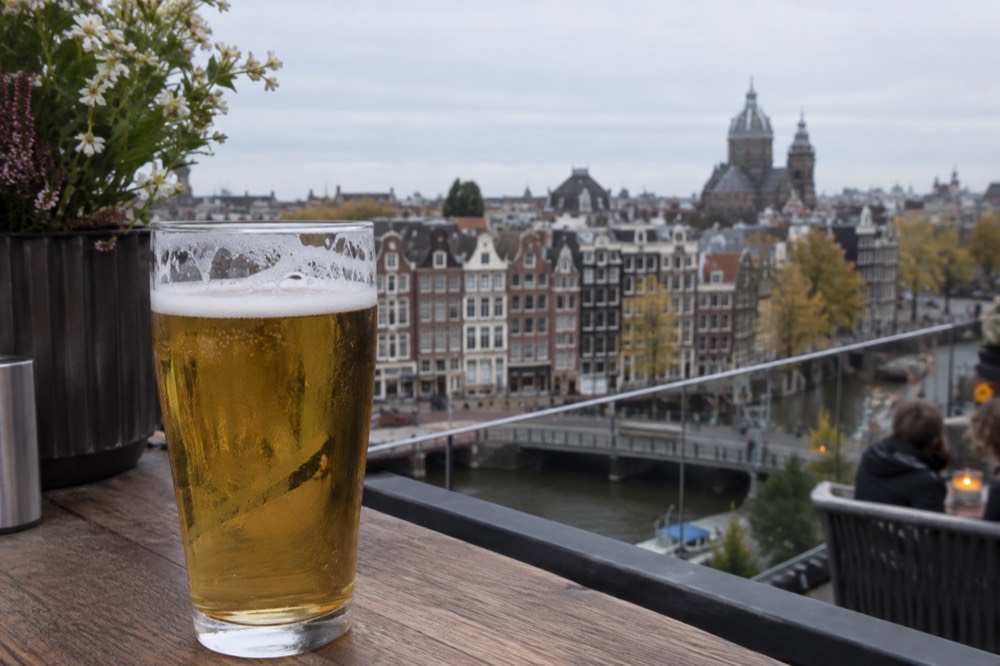
The Heineken Experience is the full Bourdain stop, but if you only want a cold Heineken in the building where it was first brewed, the rooftop bar is open to ticket holders and offers a view over De Pijp that Bourdain never saw. The Heineken Experience ticket starts from $23 and includes two drinks, and the optional rooftop add-on is worth the extra few euros for the panorama alone.
What Bourdain's Amsterdam Tells Us About the City
Bourdain's Amsterdam was a city of unvarnished, working-class food traditions that told the story of a maritime trading power and its colonial past, and every stop he made, from the herring cart to the rijsttafel table, remains open and unchanged today, offering a taste of the real Amsterdam beneath the tourist surface.
Bourdain's Amsterdam was not the Amsterdam of the tourist brochures. He did not visit the Rijksmuseum or take a canal cruise. He ate herring standing up, drank beer in a bar that has not changed its wallpaper in decades, and sat through a meal that made him think about empire and identity. That is the Amsterdam that locals know, and it is still there, just beneath the surface of the city's more polished visitor experience.
The food Bourdain chose was never about novelty. The herring is a staple that has been eaten on these streets since the 14th century. The bitterballen are the snack that every Dutch person grows up with. The rijsttafel is a complicated, contested dish that the Netherlands has claimed as its own, and the Heineken is a beer that started in a single Amsterdam building and now reaches every corner of the world. Together, they tell the story of a city that built its wealth on trade, absorbed the flavours of its former colonies, and never saw a reason to dress up its food.
If you want to understand Amsterdam the way Bourdain did, skip the fine-dining restaurants and the Instagram-famous cafes. Walk to the herring stall on the Singel. Order a beer and bitterballen at a brown cafe. Book a rijsttafel and let it take two hours. And raise a glass of Heineken in the building where it all started. That is the Amsterdam Bourdain loved, and it is waiting for you, exactly as he left it.
Common Questions About Anthony Bourdain's Amsterdam Eats
Where Did Anthony Bourdain Eat In Amsterdam?
Bourdain ate raw herring at a street stall on the Singel, bitterballen and beer at Café 't Smalle, a rijsttafel at Tempo Doeloe, and toured the Heineken Experience brewery. All four stops are still open and unchanged since his visits.
What is the best Dutch food to try in Amsterdam?
Start with a raw herring from a street stall, then bitterballen with mustard at a brown cafe, followed by a rijsttafel for dinner. These three dishes cover the maritime, bar, and colonial influences that define Amsterdam's food culture.
Can you visit the Heineken Experience like Bourdain did?
Yes. The Heineken Experience is open daily, and the self-guided tour includes two drinks in the tasting room. The ticket starts from $23 and can be booked online; an optional rooftop add-on gives you a city view with your beer.
Is Tempo Doeloe still open and how do you book?
Tempo Doeloe is still open on Utrechtsestraat and still serves the rijsttafel Bourdain ate. Reservations are required, often two to three weeks in advance, and can be made by phone or through the restaurant's own website.
What did Bourdain think of Amsterdam's coffee shop culture?
Bourdain explored Amsterdam's coffee shop scene in a later episode, but his focus remained on the food. He visited a coffee shop as part of a broader look at the city's drug policy, but the meals he remembered were the herring, the bitterballen, and the rijsttafel.
If you want to eat your way through Amsterdam the way Bourdain did, start with the herring stall on the Singel, work your way through the Jordaan's brown cafes, and end with a rijsttafel that will stay with you long after you leave. The city's food scene has grown since his visits, but the places he chose are still the best introduction to what Amsterdam really tastes like. For more on the city's food culture, read our guide to what is a must-eat in Amsterdam and our list of where locals eat in Amsterdam. And if you want to explore the city with a guide who knows the stories behind every dish, the food and culture walking tour covers the same ground Bourdain walked, with ten tastings along the way.