Why Do Americans Go To Amsterdam?
The real reasons Americans travel to Amsterdam, from cannabis policy and WWII history to art, canals and costs, with current prices and rules.
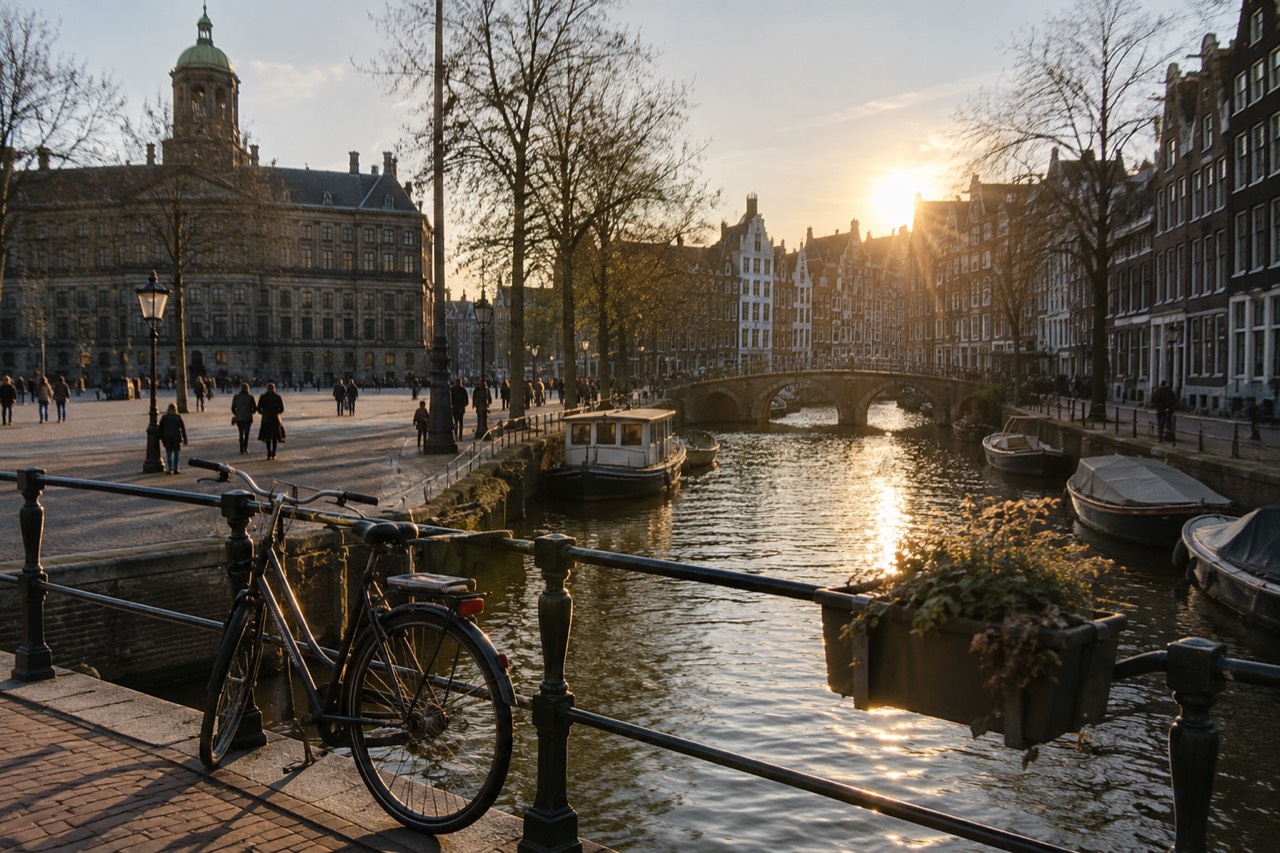
Americans made up one of the largest groups of overseas visitors to Amsterdam long before cheap transatlantic flights existed, and the city's own statistics office counted 23.7 million tourist overnight stays across all nationalities in 2025. The pull is a strange mixture: a reputation forged in the flower-power era, a shared Second World War history, a concentration of world class art inside one square kilometre, and a compact canal city that feels walkable in a way almost no American city does. The reasons Americans give for booking the flight have changed over the decades, but the destination has not lost its grip.
Why Do Americans Go To Amsterdam?
Americans go to Amsterdam for a cluster of reasons that rarely appear alone: the cannabis coffeeshops and the liberal reputation attached to them, the Second World War history that feels personal to many American families, the Van Gogh and Rembrandt collections, the UNESCO canal ring, and a compact, English-friendly city that is easier to plan than almost any other European capital. Flights are frequent, almost everyone speaks English, and the city delivers the "Europe" Americans picture.
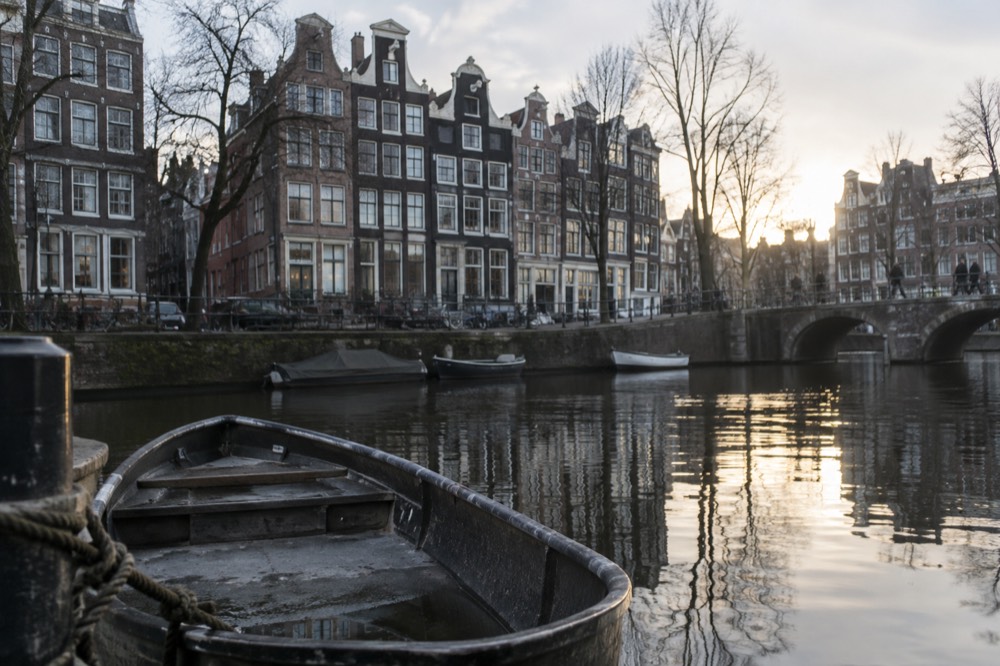
The honest answer starts with reputation. Amsterdam acquired its liberal image in the flower-power decades, when the city's tolerance policy made it a magnet for young American travellers in a way no other European city matched. That reputation outlived the era that created it. Ask a hundred Americans to free-associate about Amsterdam and you will hear coffeeshops, canals, bikes and the red light district in roughly that order, even from people who have never been.
But reputation only gets someone to open a browser tab. What actually closes the booking is a set of practical advantages. Amsterdam is small: the historic centre fits within a ring of 17th century canals that a reasonably fit visitor can cross on foot in half an hour. English is spoken universally and without resentment. The flight connections are excellent, with nonstop service from most major American hubs. And the city's headline attractions, the Van Gogh Museum, the Rijksmuseum, the Anne Frank House, sit within fifteen minutes' walk of one another.
There is also a history dimension that many European destinations simply cannot offer. American families arrive with a parent's or grandparent's story about the liberation of the Netherlands, or with a school copy of Anne Frank's diary in their luggage. The Jewish Quarter walk and the Anne Frank House are, for many American visitors, the emotional centre of the trip rather than a sidebar to it. That gravity is real and it repeats generation after generation.
Finally, there is the simple pleasure of the place. The canal ring is a UNESCO World Heritage site, the café culture is genuinely good, and the city photographs the way people hope Europe will photograph. For a first-time or once-a-decade European trip, Amsterdam promises a lot of payoff per mile of walking, and American travellers, who usually have limited vacation time, respond to that ratio.
Is Cannabis the Real Reason Americans Book the Trip?
For some Americans, yes, cannabis is the reason, but the numbers who admit it are smaller than the city's reputation suggests, and the rules are narrower than most expect. Coffeeshops may legally sell up to 5 grams per person per day, tourists are not turned away in Amsterdam, and smoking outdoors is banned in the city centre. The majority of American visitors combine one curiosity visit with museums, canals and history rather than building a trip around it.
The legal situation deserves precision, because American visitors arrive with wildly wrong assumptions in both directions. Under the national tolerance policy, coffeeshops may sell no more than 5 grams of soft drugs per person per day, and personal possession of up to 5 grams is tolerated. The national policy text includes a residents-only criterion, but Amsterdam has never applied it: the "wietpas" rule was never enforced here and no tourist ban has been implemented. So the accurate statement is that the residents-only rule exists on paper nationally and is not applied in Amsterdam, a municipal decision that has been debated repeatedly. Writing "cannabis is legal" is wrong; writing "tourists are banned" is equally wrong. The Dutch word for the arrangement is gedoogbeleid, tolerance, and the national government's own explanation of the policy is the source for every clause above.
| What Americans assume | What the rule actually is |
|---|---|
| Cannabis is fully legal in the Netherlands | It is tolerated, not legal; coffeeshops operate under municipal tolerance policy |
| Tourists are banned from coffeeshops | The residents-only criterion exists nationally but is not applied in Amsterdam |
| You can smoke anywhere in the centre | Smoking cannabis outdoors is prohibited in the city centre; it belongs inside the coffeeshop |
| Buy as much as you like | Coffeeshops may sell a maximum of 5 grams per person per day |
The city centre outdoor smoking ban is the detail that surprises people most, and it is enforced in exactly the neighbourhoods tourists concentrate in. The rules that govern the red light district matter too: guided groups are capped at 15 people, tours may only run between 08:00 and 22:00, and no tour route may pass the windows. Photography of the sex workers is the subject of the city's official respect campaign, and staff will intervene. Our Amsterdam coffeeshop rules for tourists guide covers the practical side in more depth for anyone planning around this.
The pattern this site's research keeps finding is that cannabis functions as a curiosity, not a purpose. American visitors do the walk past a coffeeshop, some go in, and then the itinerary reverts to type: museums, a canal cruise, a walk through the Jordaan. The city's tourism office does not market the coffeeshops at all, and the city government has spent years actively discouraging party tourism. The visitors who come only for that are a real segment but a shrinking one, and the Americans who return are the ones who discovered everything else.
How Much Does WWII History Draw American Visitors?
Second World War history is one of the strongest single draws for American travellers, and the Anne Frank House is its emotional anchor. Adult tickets cost €16.50 including the booking fee, and they are sold only through the museum's own website for a specific date and time slot, with no door sales and no legitimate reseller. Many American visitors describe the house as the one booked-ahead item that determined the dates of the entire trip.
The Anne Frank House is the exception to every ticketing rule in this city. Every other major Amsterdam attraction can be bought through an operator's live listing or at the door; the Anne Frank House cannot. Tickets are released online for visits six weeks ahead, they sell out quickly, and they are non-refundable and non-transferable. The museum's own ticket page is the only legitimate place to buy them, and any site or street seller claiming otherwise should be treated as a scam. Children aged 10 to 17 pay €7, and ages 0 to 9 pay €1.
For American visitors the connection is unusually direct. The diary is standard reading in US schools, the liberation of the Netherlands involved American units whose veterans' families still visit, and the Jewish Quarter's physical fabric survives to be walked. Guided walking tours of the Jewish Quarter and the occupation years are among the most reviewed products in the city's roster, and they make no claim of entry to the house itself, because no tour can include it. The history is in the streets, and the streets are free.
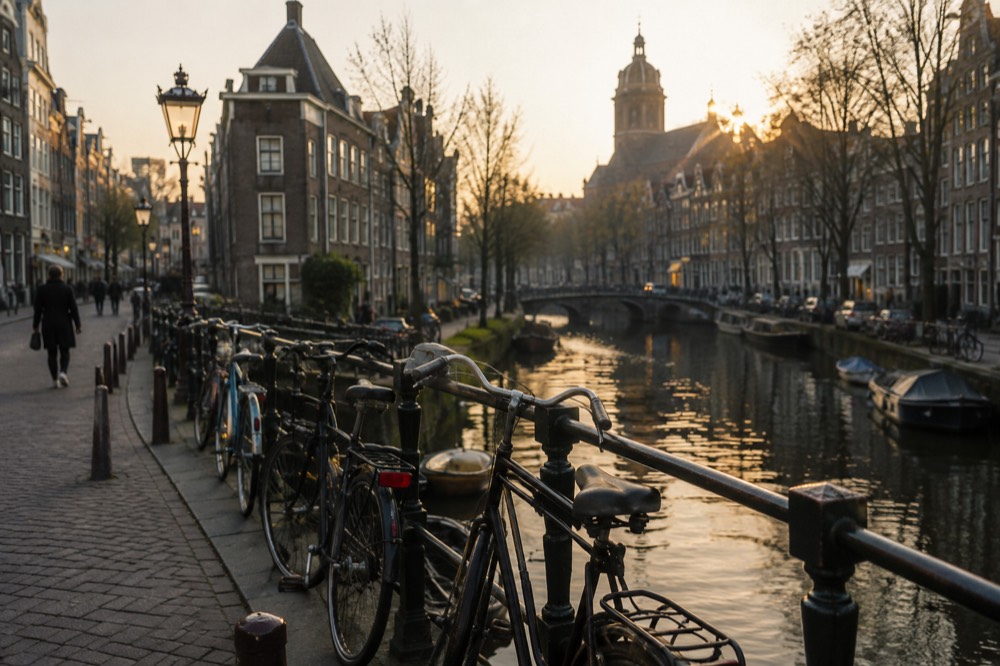
The wider pattern is worth naming: Americans consistently over-index on historical and memorial visits compared with, say, the average British or German visitor, who is more likely to come for a weekend of food and nightlife. Amsterdam happens to concentrate an outsized share of that history, the house, the Jewish Cultural Quarter, the Portuguese Synagogue, the resistance stories, inside a district that takes twenty minutes to cross. It is a history itinerary that fits inside a long weekend, which suits the American vacation length perfectly.
How Affordable Is Amsterdam for American Travellers?
Amsterdam is mid-priced by Western European standards and often cheaper than Americans expect once they arrive, though the tourist tax and hotel prices push accommodation costs up. The city charges 12.5 percent tourist tax on overnight stays, a 24-hour GVB transport pass costs €10, and the headline museums charge €25 at the door. Food and drink sit below the price level of London or Paris but above most of the rest of the Netherlands.
The accommodation line is the one that shocks people. Amsterdam levies a 12.5 percent tourist tax on the overnight price of hotels and holiday rentals, and the city's hotel stock is deliberately capped by policy, which keeps occupancy tight and rates firm. What that means in practice is that the hotel is usually the single largest line of an American trip budget, and the advice that follows from it is blunt: book early, consider staying just outside the centre, and treat anything in the canal ring as a premium you are choosing to pay. The full index of guides sits on Things to Do in Amsterdam.
| Typical cost item | Current figure |
|---|---|
| GVB 24-hour transport pass, adult | €10.00 |
| GVB single 1-hour ticket | €3.40 |
| Rijksmuseum adult ticket | €25, free for ages 18 and under |
| Van Gogh Museum adult ticket | €25, free for under-18s |
| 1-hour canal cruise (verified operator price) | from about €15.50 |
| I amsterdam City Card, 24 hours | €67 |
Everything except the hotel is cheaper than the reputation suggests. A day of unlimited tram, bus, metro and ferry travel within the city is €10, per the GVB's official fare page, and the ferries across the IJ are part of the network. The great museums charge the same as a mid-range dinner for two. Canal cruises start around the price of a cinema ticket at home. Americans arriving from New York, San Francisco or Chicago reliably report that the day-to-day spending feels familiar rather than punishing; it is the room that hurts.
The savings habits that work here are the same ones that work anywhere, with one local twist. The I amsterdam City Card bundles free entry to more than 70 museums and locations, unlimited GVB transport, one canal cruise and a 24-hour bike rental, but it excludes the two biggest draws, the Van Gogh Museum and the Anne Frank House, both of which require separate timed tickets. Anyone weighing the card should read our is the I amsterdam City Card worth it breakdown before buying, because the exclusion changes the arithmetic completely. And for the days that cost nothing at all, the free things to do in Amsterdam guide covers the Vondelpark, the Begijnhof and the canal-side wandering that most visitors end up rating above half the things they paid for.
What Do Americans Actually Do Once They Are There?
The American itinerary in Amsterdam is remarkably consistent: a canal cruise in the first 24 hours, the Van Gogh Museum and the Rijksmuseum on the Museumplein, the Anne Frank House if the ticket landed, a walk through the Jordaan or De Pijp, and a beer or brewery experience in the evening. The Van Gogh Museum ticket is listed from $31 and carries a 4.7 rating across 57,096 reviews, and every visitor needs a pre-booked timed entry slot.
The Van Gogh Museum is the clearest case of a shared cultural item. The collection holds more than 200 paintings, 500 drawings and 750 letters, and the museum's own rule is that all visitors must pre-book a timed entry ticket, with slots selling out in high season. American visitors, trained by experience to expect long lines at popular attractions, treat the timed-entry system as a relief rather than a chore, and the reviews reflect it: the ticket carries a 4.7 rating across 57,096 reviews on the live listing, from $31.
The Rijksmuseum sits ten minutes' walk away and charges the same €25, open every day of the year from 9am to 5pm, with free entry for ages 18 and under and for City Card holders. Between the two, the Museumplein gives American visitors the concentrated museum experience they associate with the Mall in Washington or the Museum Campus in Chicago, except the buildings are older than their country.
The Heineken Experience occupies the other end of the culture spectrum and pulls a striking share of American groups. The former brewery is an interactive attraction rather than a working plant, it runs about 90 minutes, and the ticket is listed from $23 with a 4.6 rating across 39,581 reviews. For travellers who have done the two great museums and want something louder, it is the usual answer, and the rooftop option gives a view over the canal ring.
And then there is the water. The canal cruise is the single most booked activity in the city, and Americans book it at a higher rate than almost any other nationality, partly because a boat is the easiest way to see a city whose main street is a canal. The classic one-hour cruise on a restored wooden saloon boat is listed from $19.56 with a 4.8 rating across 33,435 reviews, with a live guide and an optional cheese and drinks upgrade. It is the product this site most often recommends as a first-evening activity, because it orients the whole city in sixty minutes.
How Do Americans Get Around Once They Arrive?
Most Americans arrive at Schiphol and take the NS train to Centraal, which costs from €5.50 and takes just over 17 minutes, then use the GVB tram and metro network inside the city, where a 24-hour pass costs €10 or a contactless bank card taps on and off with a daily cap. Amsterdam is walkable in the centre, and the ferries across the IJ are part of the same network.
The Schiphol connection is a genuine selling point for the destination. Just over 17 minutes by train from the airport to the city centre is a statistic American travellers find hard to believe, coming from a country where the airport-to-city journey is routinely an hour. The e-ticket starts from €5.50, and the airport express bus 397 runs from about €6.50 as an alternative to the Elandsgracht area.
Inside the city, the practical advice is simple. Tap a contactless bank card on the GVB trams, buses and metro, the same way as on the London Underground, and the daily cap keeps the cost in the same range as the day pass. Or buy the 24-hour pass at €10 if you prefer a physical ticket. The one thing not to do is drive: the centre is hostile to cars by design, parking is scarce and expensive, and nothing on the American itinerary requires one.
Cycling deserves a caution rather than a prohibition. Amsterdam's bike traffic is dense, unsignalled and confident, and first-time visitors who have not ridden in a city since childhood regularly find it more stressful than expected. The calmer option is to start with a guided bike tour, where the route and the pace are managed, and graduate to independent riding on a second visit. Our cycling in Amsterdam and renting a bike guide covers the etiquette and the mistakes.
When Is the Best Time for Americans to Visit?
The best window for most American visitors is late April through early June, when the tulip season is ending, the terraces are out and the queues are shorter than July and August, with King's Day on 27 April as the biggest street party of the year. Keukenhof runs only from 18 March to 9 May, so anyone coming for the tulips has a hard seven-week window.
The tulip timing is the constraint Americans most often get wrong. Keukenhof, the famous garden in Lisse roughly 30 to 40 minutes from Amsterdam, is open only from 18 March to 9 May, daily from 08:00 to 19:00. It is not a year-round attraction and no spring weekend outside that window will work. The field bloom peaks around mid-April to early May, weather dependent, which puts the ideal tulip trip in the last three weeks of April, overlapping with King's Day, when the city turns into the largest street party in the country.
Summer is the busiest and most expensive period, and the city's own forecast expects overnight stays to keep rising through 2028, so the crowds are structural rather than seasonal bad luck. Autumn is the connoisseur's pick: the light is good, the museums are quieter after the summer rush, and the Amsterdam Dance Event in late October turns the whole city into a club programme. Winter trades warmth for the Light Festival and the cosiness of the brown cafés, and hotel rates dip accordingly, though the days are short.
Common Questions About Why Americans Go to Amsterdam
Why Do Americans Go To Amsterdam?
Americans go for the combination of a liberal reputation, the Second World War history centred on the Anne Frank House, the Van Gogh and Rembrandt collections, the UNESCO canal ring, and a compact English-speaking city that is easy to plan in a short vacation. Cannabis is one curiosity among many rather than the main purpose for most.
Can American tourists still buy cannabis in Amsterdam coffeeshops?
Yes. The residents-only criterion exists in national policy but Amsterdam does not apply it, and no tourist ban has been implemented. Coffeeshops may sell up to 5 grams per person per day, and smoking outdoors is prohibited in the city centre.
How do Americans buy Anne Frank House tickets?
Only through the museum's own website, for a specific date and time slot. Adult tickets cost €16.50 including the booking fee, there are no door sales, and no reseller or pass can legitimately sell entry.
Is Amsterdam expensive compared with American cities?
Day-to-day costs feel familiar to visitors from major US cities: a 24-hour transport pass is €10 and the great museums charge €25. Accommodation is the expensive line, pushed up by a 12.5 percent tourist tax and a deliberately capped hotel stock.
When should Americans visit for the tulips?
Keukenhof is open only from 18 March to 9 May, and the field bloom peaks around mid-April to early May. The last three weeks of April are the safest window, and they overlap with King's Day on 27 April.
Do Americans need a visa for the Netherlands?
US citizens can visit the Netherlands for short stays under the visa-free arrangements that currently apply, though travel requirements can change and should be checked before booking. Passport validity rules also apply.
Planning the rest of a trip around any of this is easier with the right order of bookings: the Anne Frank House slot first, because it is scarcest, then the Van Gogh timed entry, then everything else can wait until you arrive. That is the sequence that separates the relaxed American visit from the disappointed one, and it is the one piece of advice worth repeating to anyone asking why the flight is worth it.