What Is Traditional Food In Amsterdam?
A plain answer to what traditional food in Amsterdam actually means: the dishes, where to eat them, what they cost and how to plan a food-focused visit.
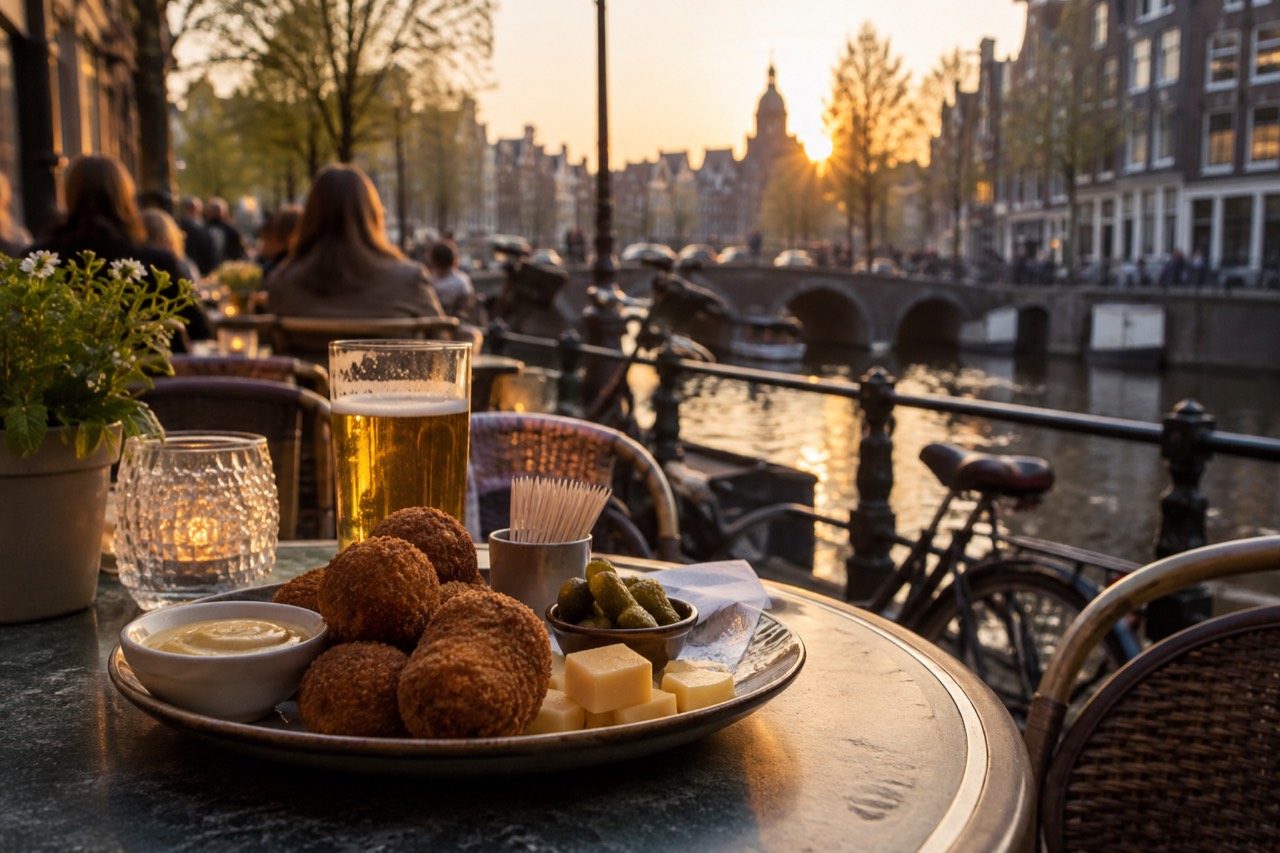
Traditional Dutch food was built for cold weather, hard work and small budgets. That is the honest one-line answer, and it explains almost everything on an Amsterdam menu: the pea soup, the mashed-potato plates, the deep-fried snacks that appear the moment a bar tab passes an hour, and the raw herring that locals eat standing up. Amsterdam adds its own layer on top of that national base, because a port city with centuries of trade absorbed spices, cheeses and habits from everywhere ships could reach.
This article walks through the dishes that genuinely count as traditional here, where to find them in the kind of places Amsterdammers actually use, and how the food scene fits into a wider guide such as our Dutch food guide for visitors. Where a booked experience helps, the operator listings on Things to Do in Amsterdam cover it.
What Is Traditional Food In Amsterdam?
Traditional food in Amsterdam is Dutch home cooking with a port-city twist: stamppot and pea soup in winter, raw herring and kibbeling from fish stalls, cheese in every form, stroopwafels and poffertjes as street sweets, and bitterballen served in brown cafés alongside beer. It is cheap, filling and rarely fancy, and the best versions sit far from the main tourist streets.
The word to hold onto is "eenvoudig", meaning simple. Dutch cuisine never developed a courtly tradition the way French or Italian cooking did, and the dishes people ate a century ago are largely the dishes they still eat. Stamppot, a plate of potatoes mashed together with a vegetable such as kale or endive and topped with a smoked sausage, is the national dinner. Erwtensoep, a thick split-pea soup so dense the spoon stands up in it, is the national winter lunch. Neither appears on many visitor itineraries, and both appear on every Dutch family table.
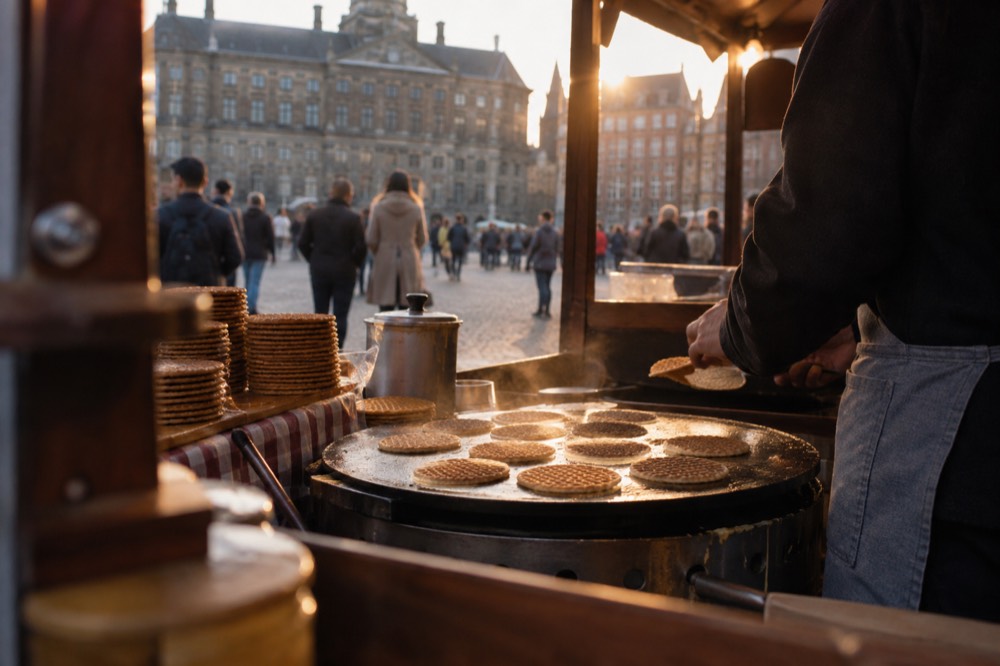
Amsterdam's own contribution comes from its history as a warehouse city. The canal ring was built by the grain trade, the herring fleet made the city rich in the seventeenth century, and the spice cargoes of the Dutch East India company ended up in kitchens here. Raw herring with onion and pickles, sold from stalls and eaten by lifting the fish by its tail, is the most Amsterdam thing you can put in your mouth. The city's sweet tooth has the same pedigree: stroopwafels, two thin waffles glued with caramel syrup, were first made in Gouda but are baked fresh across the city.
There is a second, less obvious layer that most first pages of search results skip entirely. Indonesian food is not "traditional Amsterdam food" by birth, but the rijsttafel, an elaborate multi-dish rice table, was invented here as a colonial-era restaurant format, and it has been part of the city's eating culture for generations. Ask an Amsterdammer where to eat well and a significant share will name an Indonesian address before they name a Dutch one. Any honest answer to this question has to include that.
If you want the whole spread explained while you walk, a guided tasting route does the work of a week of solo guesswork in a few hours, and the three options below cover the classic pairing of food, beer and a museum break.
Which Traditional Dutch Dishes Should You Try First?
Start with bitterballen, haring, stroopwafels and a plate of stamppot, in that order. Bitterballen are the bar snack that defines Dutch social life, raw herring is the historic street food, stroopwafels are the sweet everyone buys twice, and stamppot is the honest home-style dinner underneath it all. Poffertjes and pindakaas round out the set.
Bitterballen deserve the first paragraph. These are small, breaded, deep-fried balls of a thick meat-and-flour ragout, served with mustard, and they exist because Dutch brown cafés needed something to absorb the beer. The name comes from "bittergarnituur", the old snack platter served with jenever, the Dutch gin. Order them in any bar that looks older than your grandparents and you are eating the most traditional snack in the country.
Haring is the test most visitors set themselves. The fish is caught in spring, salted and frozen by the old method, then served raw with chopped onion and pickles. The classic way to eat it is to lift it by the tail and bite upward, but nobody will judge a fork. Kibbeling, battered fried fish chunks, and lekkerbekje, its whole-fish cousin, are the easy version for anyone not ready for raw.
| Dish | What it is | Where it belongs |
|---|---|---|
| Bitterballen | Deep-fried ragout balls with mustard | Any brown café, with beer |
| Haring | Raw salted herring with onion and pickles | Fish stalls and markets |
| Stamppot | Mashed potatoes with vegetables and sausage | Home-style restaurants in winter |
| Erwtensoep | Thick split-pea soup with pork | Winter lunch spots |
| Stroopwafel | Two thin waffles with caramel syrup | Market stalls, eaten warm |
| Poffertjes | Small puffed pancakes with butter and sugar | Winter fairs and cafés |
| Kibbeling | Battered fried fish chunks | Fish stalls and takeaway windows |
The sweet side of the tradition is just as strong. Poffertjes, dozens of tiny puffed pancakes drowned in butter and powdered sugar, start appearing at outdoor stands as soon as the cold does. Oliebollen, deep-fried dough balls dusted with sugar, belong to the days around New Year but have spread across the winter calendar. A fuller rundown of the sweet and savoury classics lives in our guide to Dutch foods to try, which covers the snacks this table only names.
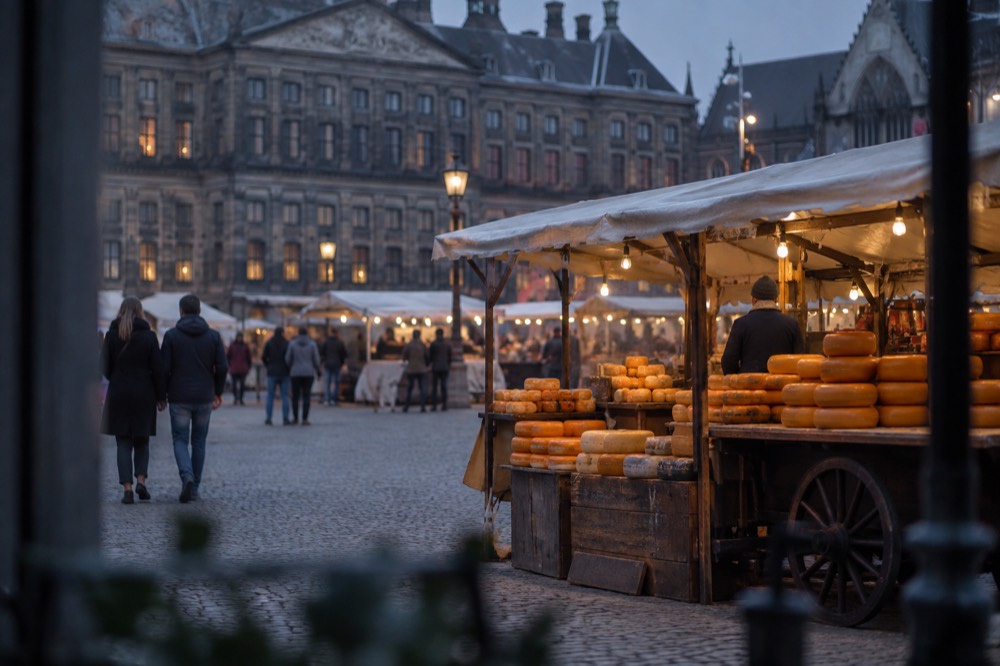
Cheese deserves its own sentence, because it is the one traditional food every visitor already knows without knowing it. Gouda and Edam are both named after Dutch trading towns, and the market stalls that cut you a taste before you buy are continuing a sales method older than the canals. Aged gouda, with its crunchy protein crystals and caramel sharpness, is the version that surprises people who only know the young wheels.
One practical note: street drinking is prohibited in the city centre, so a snack bought at a market stall is eaten at the stall or carried to a spot where eating is the point, not walked with a beer in hand. The city's own visitor rules page explains the current boundaries: How to Amsterdam.
Where Should You Eat Traditional Food in Amsterdam?
Eat traditional food in brown cafés, street markets and the city's older neighbourhoods, not on the main tourist drags. The Jordaan and De Pijp hold the classic brown cafés, the Albert Cuyp market sells herring and stroopwafels at working prices, and the Foodhallen collects modern Dutch cooking under one roof for a rainy day.
The brown café is the institution to understand. These are small, dim pubs with dark wood stained by centuries of pipe smoke, sand thrown on the floor in the oldest ones, and a menu that runs to beer, bitterballen and not much else. They are the living room of Dutch social life, and ordering a plate of something fried with your beer is not an indulgence there, it is the entire business model. Our guide to Amsterdam's brown cafés lists the ones worth crossing the centre for.
Markets are the other pillar. The Albert Cuyp market in De Pijp is the largest street market in the Netherlands and the place where Amsterdammers buy their herring, cheese and warm stroopwafels in the same trip. The stalls that look least designed for photographs are usually the ones with the longest local queue. The Albert Cuyp market guide maps the stalls worth stopping for.
Neighbourhood choice matters more than restaurant choice. The Jordaan, a former working-class district of tiny streets west of the centre, keeps the densest concentration of old cafés and traditional eetcafés, the Dutch answer to the gastropub. De Pijp carries the market energy and a younger crowd eating the same snacks. The centre itself has the famous names and the famous markups, which is why locals cross the centre rather than eat in it. Our neighbourhood guide breaks down which area suits which kind of trip.
A guided food walk compresses all of this into one evening. The food and culture walking tour on our roster runs three and a half hours, holds a 5.0 rating across 1,157 reviews, and costs from $92, with ten tastings along the route; the live listing has the current departure times. You can also Check availability on the operator's listing.
For visitors who would rather pair the food tradition with the drink tradition, the brewery option below covers the beer half of the equation inside the building where that beer was originally made.
What Do Amsterdammers Drink With Traditional Food?
Beer and jenever are the traditional pairings, and coffee is the traditional finish. Dutch lager, above all the Heineken brewed in the city for generations, is what a bitterbal was invented to accompany, while jenever, the Dutch predecessor of gin, is the historic café spirit. Tea and coffee culture is older and stronger than either.
The beer side of the tradition is genuinely local. Heineken began as a small Amsterdam brewery and its original brewhouse now operates as the Heineken Experience, an attraction inside the historic building where the beer was made for over a century. The tour on our roster runs about an hour and a half, costs from $23, and carries a 4.6 rating across 39,581 reviews, which makes it one of the most-reviewed food-and-drink products in the city. The listing includes an optional rooftop add-on.
Jenever is the deeper history. This Dutch grain spirit, aged in wood and drunk neat from a tulip-shaped glass, is what the bittergarnituur snack platter was originally assembled to accompany, and brown cafés that pour it tend to be the ones that also fry the best bitterballen. Order it "oud", old, for the mellow version, or "jonge", young, for the clearer one, and do not rush: the traditional serve comes with a beer on the side as a chaser. Our Amsterdam beer and breweries guide covers where the brewing tradition now lives.
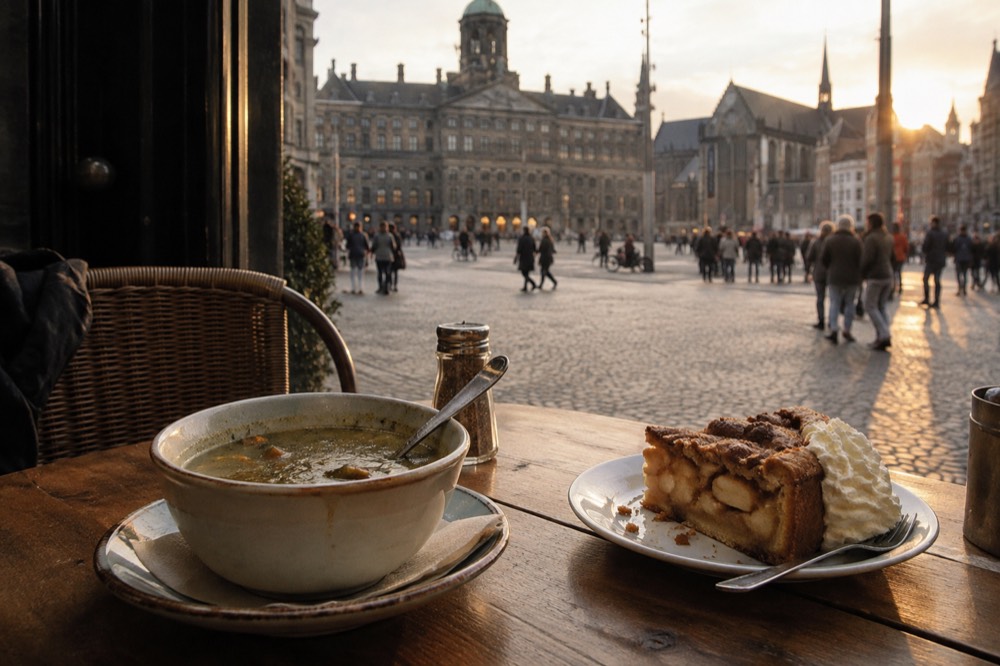
The coffee habit is the quiet constant. The Dutch were among Europe's first serious coffee drinkers, and the koffie verkeerd, a café au lait served in a glass, is still the standard mid-morning order. Pair either drink with an appeltaart, Dutch apple pie with a thick crust and a cloud of whipped cream, and you have the complete café ritual. The pie is the one traditional sweet that appears on every café menu in the city, and the arguments about which café makes the best one are a genuine local sport.
Is Traditional Amsterdam Food Good for Vegetarians?
Partly, and improving fast. The core snacks split cleanly: bitterballen are usually meat-based, but kibbeling alternatives, stroopwafels, poffertjes, most cheeses and pea soup made without pork all work for vegetarians, and Amsterdam's modern restaurant scene has made the city one of the easiest in Europe for plant-based eating.
The old tradition leans on pork and fish, so a vegetarian visitor has to pick rather than order blindly. Erwtensoep is traditionally made with pork, so it needs checking. Stamppot is often safe, since the mashed vegetable base is the point and the sausage can be left off. The cheese tradition is entirely vegetarian-friendly territory, from the young gouda sold at market stalls to the aged wheels that make up half of any Dutch picnic.
The modern city has moved well past the tradition, and our vegetarian and vegan Amsterdam guide tracks the best of it. But the traditional layer still rewards: a warm stroopwafel, a plate of poffertjes, a bag of fries with satay sauce and a glass of koffie verkeerd make a fully vegetarian day of classic Amsterdam eating without a single compromise.
Fries deserve a mention here, because patat is more traditional than it looks. Vlaamse frites, the thick-cut fries served in a paper cone with mayonnaise or the peanut-based satay sauce called pindasaus, arrived with Flemish workers generations ago and never left. They are the default street food of the Netherlands, vegetarian by default, and every Dutch person has a strong opinion about which sauce goes on top.
How Much Does Eating Traditional Food Cost?
The traditional snacks are the cheapest food in the city, and the booked experiences are the most expensive. A herring, a portion of bitterballen and a warm stroopwafel are street-market prices, a guided tasting walk runs from $92, and a brewery attraction runs from $23, so a food-focused day can be built at almost any budget.
The honest budget structure is that the older the food, the cheaper it tends to be. The dishes on the table earlier in this article came from working-class kitchens, and the places that still sell them that way, fish stalls, market stands, brown cafés, price them for locals. The costs that add up in Amsterdam are the ones around the food: the tourist tax on your hotel, the transport, the museum tickets between meals. Those are covered properly in our guide to what a trip to Amsterdam costs.
The booked experiences on this site's roster give a clean picture of the range at the top end, and the table below sets them against the do-it-yourself alternatives.
| Food experience | Price on this site's roster | What you get |
|---|---|---|
| Food and culture walking tour | From $92 | Ten tastings with a local guide over three and a half hours |
| Heineken Experience | From $23 | About an hour and a half in the historic brewery, optional rooftop |
| Self-guided market day | Street-market prices | Herring, cheese, stroopwafels and fries eaten stall by stall |
| Brown café evening | Café prices | Beer, bitterballen and jenever in an old pub |
For anyone assembling the day by hand, the pattern that works is a market breakfast, a brown café lunch with bitterballen, an afternoon snack from a fish stall, and one proper sit-down dinner of stamppot or a modern Dutch take on it. That is a full tour of the tradition without a single booked ticket, and it is how most Amsterdammers would eat their way through the city themselves.
The one cost trap worth naming is location rather than dish. The same stroopwafel, the same herring and the same beer cost noticeably more on Damrak than they do two bridges further into the Jordaan, because the stall on the main drag is paying for the footfall. Walking ten minutes in any direction off the main tourist streets is the single most reliable money-saving move in Amsterdam food, and it usually improves quality at the same time.
Before the final round of questions, here is the selection band once more for anyone deciding between the beer experience, the tasting walk and the museum ticket.
Common Questions About Traditional Food in Amsterdam
What Is Traditional Food In Amsterdam?
Traditional Amsterdam food is Dutch home cooking with a port-city twist: stamppot, split-pea soup, raw herring, kibbeling, bitterballen in brown cafés, cheese from market stalls, and stroopwafels and poffertjes as sweets, all washed down with beer, jenever or coffee.
What is the most traditional dish to try first?
Bitterballen. They are the snack that holds Dutch café culture together, they are served almost everywhere beer is poured, and they cost very little. Raw herring is the more historic choice, but bitterballen are the easier first step.
Is Dutch food spicy?
Not by nature. The tradition runs to salt, smoke, fat and sweetness rather than heat. Indonesian food, a long-standing part of Dutch eating culture because of colonial-era migration, is where the heat lives, and rijsttafel, an elaborate Indonesian rice table, is common across Amsterdam.
Where can I eat traditional food cheaply?
Street markets, above all the Albert Cuyp market, plus fish stalls and brown cafés. These are the channels the food originally came through, and they still price for the people who eat them weekly rather than once in a lifetime.
Can vegetarians eat traditionally in Amsterdam?
Yes, selectively. Cheese, stroopwafels, poffertjes, fries and apple pie are all traditional and vegetarian, while bitterballen and most pea soup contain meat and need checking first.
What food souvenirs are worth bringing home?
Cheese travels best and is sold vacuum-packed at every market, stroopwafels keep for weeks in their wrapper, and Dutch liquorice, drop, is the souvenir locals will recognise instantly. Our souvenirs guide covers what survives the journey home.