“Amsterdam or Paris: Which City Fits Your Trip Better?”
“Two of Europe's most visited capitals, an hour of flight apart or a short train ride, and completely different animals once you are on the ground. Here is how they actually compare.”
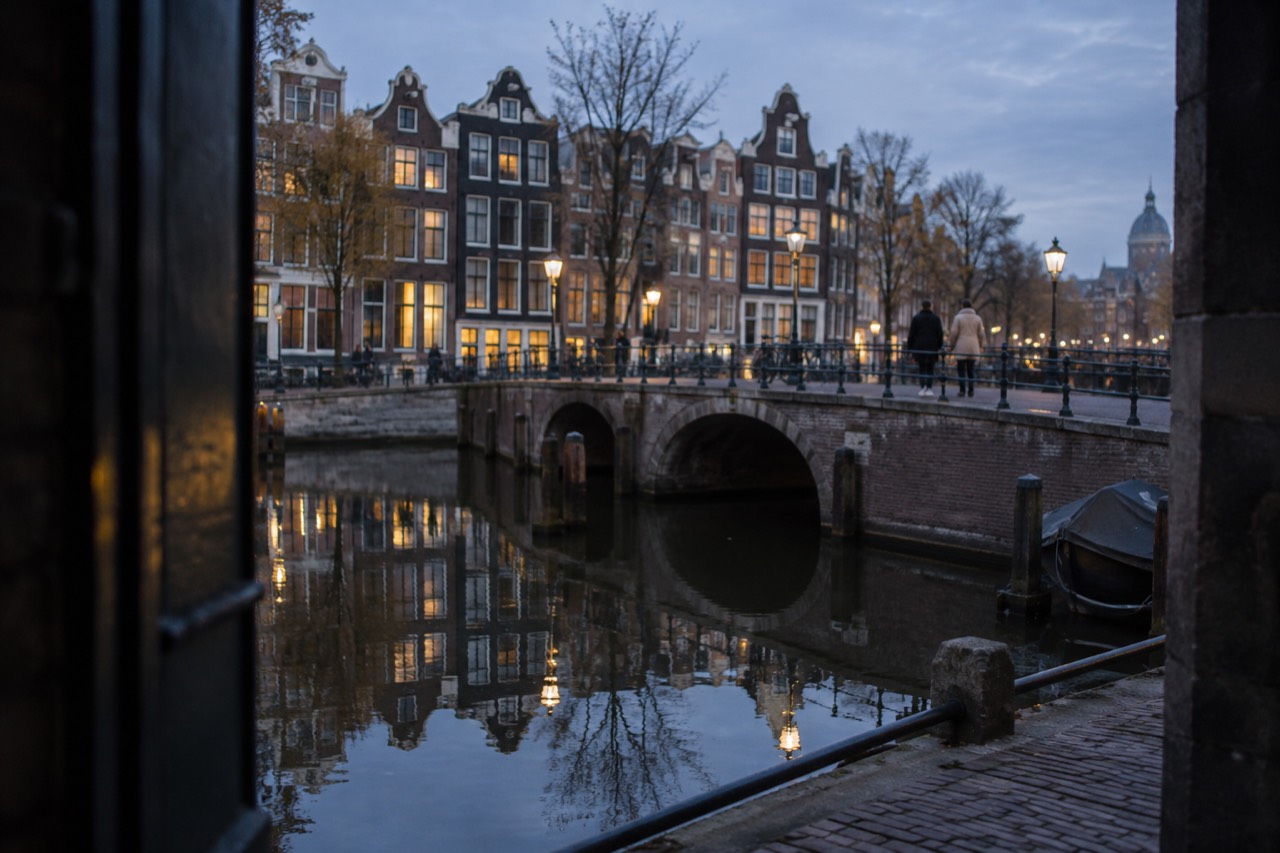
Short answer
“Amsterdam is smaller, calmer and easier to cover on foot or by tram, with a 24-hour GVB transport pass at €10.00 and a classic canal cruise from about €15.50. Paris is far larger, denser in world-famous sights and better for a longer, grander trip. For a short break, Amsterdam wins on simplicity; Paris rewards a week.”
Amsterdam recorded 23.7 million tourist overnight stays in 2025, the city's own statistics office reports, and Paris has long been one of the most visited cities on the planet. Plenty of travellers end up weighing the two against each other, especially for a first European trip or a short city break. They are both canal-sliced, museum-heavy, walkable capitals with a coffee culture and a famous red-light reputation of one kind or another, and yet they could hardly feel more different once you step outside the station.
This comparison comes from the editorial desk at Things to Do in Amsterdam, so the Amsterdam side is where the verified numbers live: prices read from official operator pages, transport fares from the transit authority and tour figures from live listings. Where a Paris figure is not verified against a primary source, we say so rather than printing a plausible number, because a confident guess is still a guess. What follows is an honest look at which city earns your days.
Amsterdam or Paris: Which City Suits Your Trip?
Amsterdam suits travellers who want a compact, manageable city where the main sights sit within an easy walk or a short tram ride of each other, and where a two- or three-day visit genuinely covers the essentials. Paris suits travellers with more time who want monumental scale, a deeper list of world-class museums and the sense of a capital that could fill a week and still leave things undone.
The honest starting point is size. Amsterdam's centre wraps around a seventeenth-century canal ring that you can cross on foot in under an hour; the whole inner city sits inside a ring of nineteenth-century neighbourhoods, each with its own character, and almost all of it is reachable by tram, metro or bike. Paris is many times larger, arrondissement after arrondissement, and the gap between, say, Montmartre and the Latin Quarter is a genuine metro journey, not a stroll.
That difference shapes everything else in this comparison. In Amsterdam you pick a neighbourhood, unpack once, and walk everywhere. In Paris you plan by district, accept some transit time, and accept that a single trip will skip more than it sees. Neither approach is wrong; they just answer different questions. If your holiday is three days and you want to feel you have seen a city rather than sampled it, Amsterdam is the easier promise to keep. If you have a week and want the biggest possible canvas, Paris delivers more raw material per day than almost anywhere in Europe.
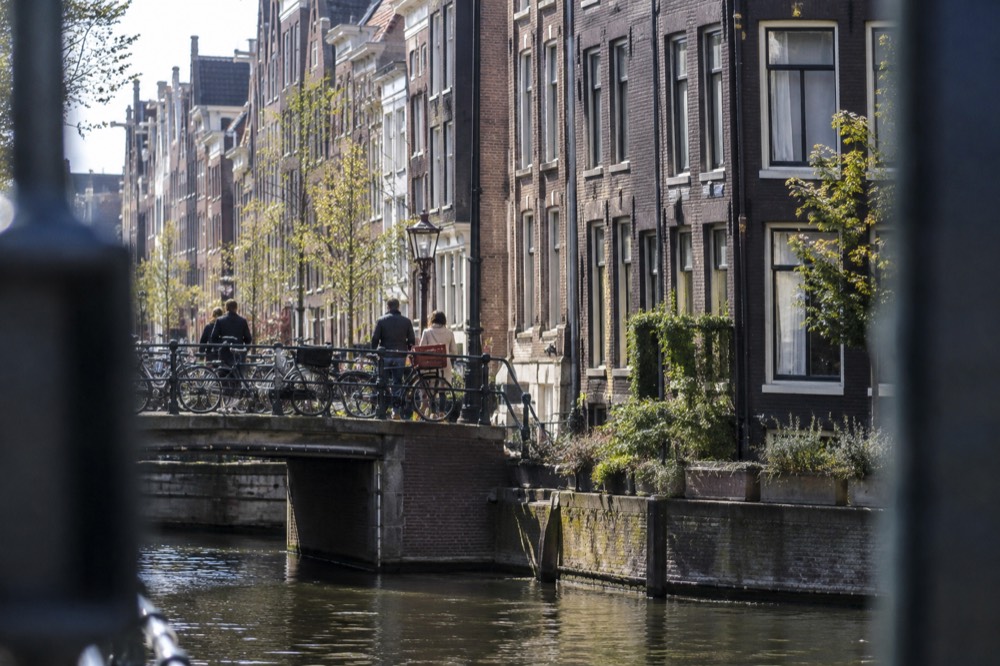
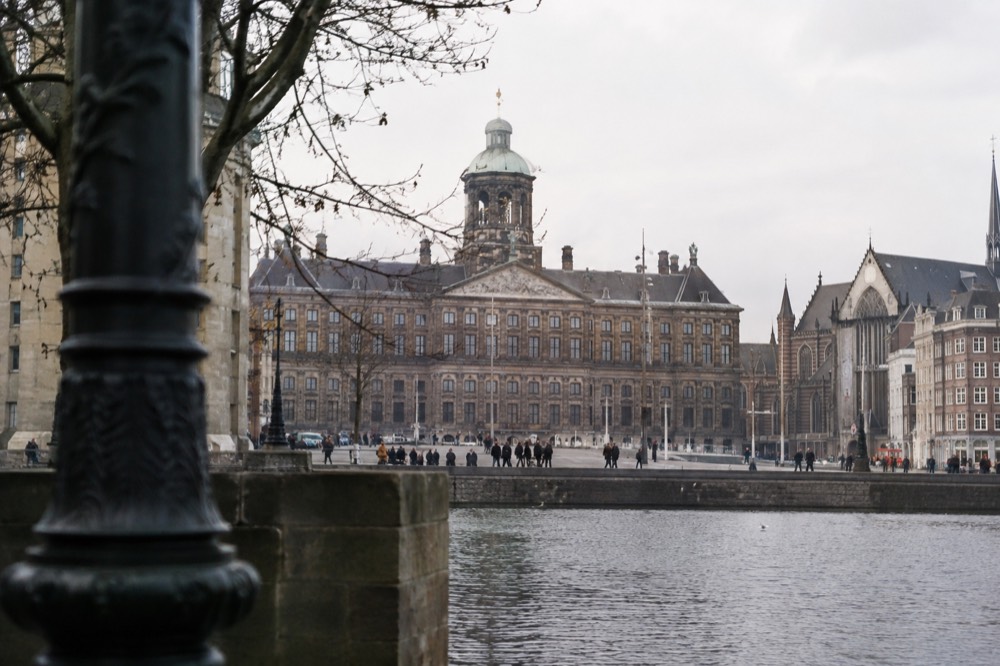
There is also a tonal difference worth naming early. Amsterdam is a low-rise city of brick, water and bicycles, where the loudest thing at night is often a bicycle bell. Paris is a stone city built on a grand imperial plan, where the architecture itself is the attraction. Some travellers find Amsterdam cosy and Paris overwhelming; others find Amsterdam slight and Paris magnificent. Both readings are fair.
How Do the Two Cities Compare on Price?
Amsterdam is generally the cheaper city for the basics, though not by the margin people assume. A 24-hour GVB transport pass costs €10.00, a classic one-hour canal cruise starts at about €15.50, and the Rijksmuseum charges €25 for adults with free entry for ages 18 and under. Paris runs higher on almost every line, but verified Paris figures belong on a Paris site, so this section sticks to what is confirmed.

Start with the Amsterdam side, where every number below is verified to an official source. Getting around is the first pleasant surprise: the GVB 24-hour day pass is €10.00 for adults and €5.00 for children, covering trams, buses, metro and ferries, per the transit authority's own fare page at gvb.nl. A single one-hour ticket is €3.40, and contactless bank-card tapping works across the network with a base fare of €1.16 plus €0.217 per kilometre.
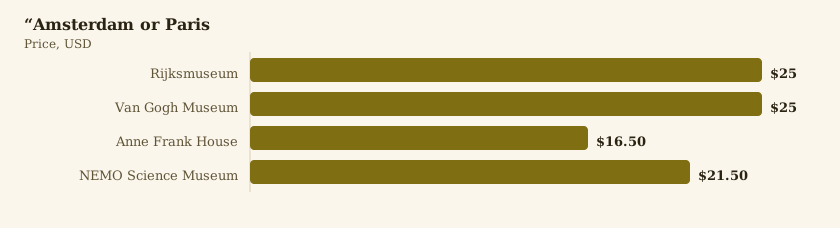
Museum entry is the other big line. The Rijksmuseum charges adults €25, with free entry for ages 18 and under, and requires a pre-booked start time; the details sit on the museum's official prices page. The Van Gogh Museum also charges €25 with free entry for under-18s, and every visitor must pre-book a timed ticket. The Anne Frank House is €16.50 including the booking fee, sold only through the museum's own site, never at the door and never through a reseller. NEMO Science Museum is a flat €21.50 for everyone aged four and over.
| Item | Amsterdam (verified) | Notes |
|---|---|---|
| GVB 24-hour transport pass | €10.00 adult, €5.00 child | Trams, buses, metro, ferries |
| Single one-hour transit ticket | €3.40 | Contactless also accepted |
| Classic one-hour canal cruise | from about €15.50 | Operator-verified departure price |
| Rijksmuseum adult entry | €25.00 | Free ages 18 and under; timed entry |
| Van Gogh Museum adult entry | €25.00 | Timed ticket required, sells out |
| Anne Frank House adult entry | €16.50 | Online only, no resellers |
| NEMO Science Museum | €21.50 flat, ages 4+ | Roof terrace free without a ticket |
On the Paris side we will not print museum prices or metro fares here, because the desk has not verified them against primary French sources, and a copied figure from a blog is not a fact. What can be said honestly is structural: Paris is the pricier city in every published cost-of-trip survey, its major museums charge for most age groups where Amsterdam's flagship museums are free for under-18s, and accommodation in the central arrondissements runs well above Amsterdam's centre on a like-for-like basis. One Amsterdam cost catches people out, though: the tourist tax, which is 12.5% of the overnight price excluding VAT, so the rate quoted at booking is not the rate you pay.
If you are weighing the two cities purely on budget, our Amsterdam-on-a-budget planning guide breaks the numbers down day by day, and the cost-of-trip guide covers what a full Amsterdam visit runs. Amsterdam wins the value contest, but not by a landslide; the gap is real at the museum ticket office and the hotel desk rather than at every till.
Which City Is Better for Museums and Art?
For sheer weight of world-famous painting, Paris holds more total masterpieces across a larger set of institutions, but Amsterdam holds its own with two genuinely essential museums: the Rijksmuseum, with Rembrandt's Night Watch in a purpose-lit hall, and the Van Gogh Museum, the largest Van Gogh collection on earth. For a short trip, Amsterdam's museum district is far easier to conquer.
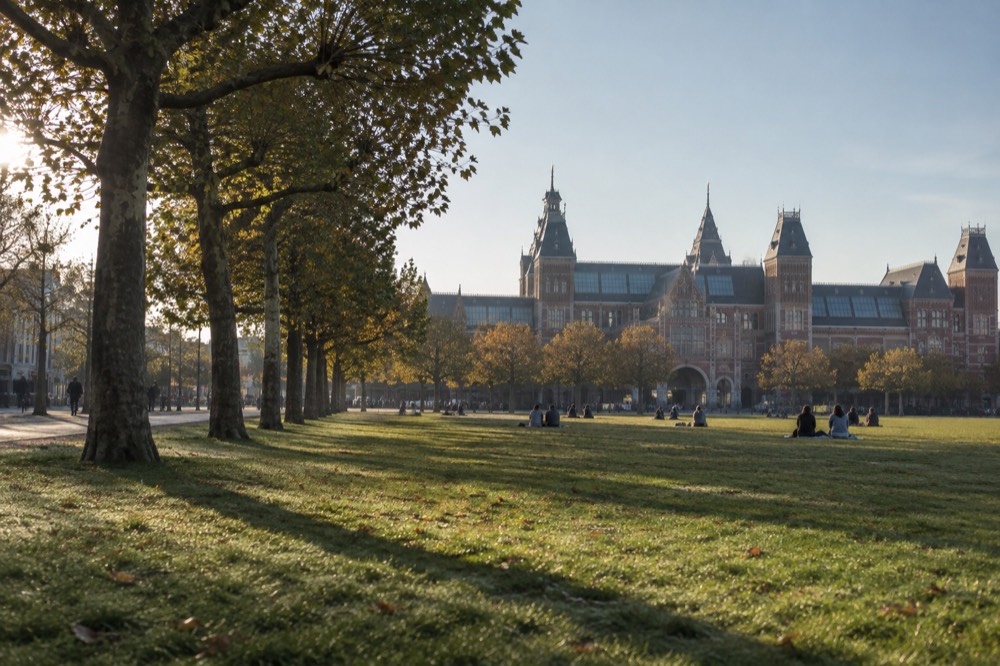
Amsterdam's strength is concentration. The Rijksmuseum, the Van Gogh Museum and the Stedelijk Museum of modern art all sit on or beside the same Museumplein, meaning a determined visitor can do two of them in one day with lunch between. The Rijksmuseum alone holds Rembrandt, Vermeer, Frans Hals and more in a single building you enter for €25, free if you are 18 or under, open every day of the year from 9am to 5pm. The Van Gogh Museum holds over 200 paintings, 500 drawings and 750 letters, and its 4.7 rating across 57,096 reviews on the live listing reflects how consistently it delivers.
Paris counters with the Louvre, the Musée d'Orsay, the Orangerie, the Pompidou and more, a list no honest comparison can wave away. The Louvre is the most visited art museum in the world for good reasons, and if Renaissance and Impressionist painting is the entire point of your trip, Paris is the deeper well. But there is a practical catch that first-time visitors underestimate: the Louvre is vast enough that a visit is a half-day project with planning, and the famous highlights involve queues and crowd management that Amsterdam's museums, busy as they are, simply do not match at the same scale.
The Van Gogh Museum is the one Amsterdam ticket that behaves like a Paris ticket: every visitor needs a pre-booked timed slot, and slots sell out, especially around weekends and school holidays. The entry ticket is $31.00 through the live listing, rated 4.7 across 57,096 reviews, and free cancellation means you can lock a time early and rebook if your itinerary shifts. You can also read our full Van Gogh Museum visitor guide for how timed entry works in practice.
Beyond the big two, Amsterdam's supporting cast is stronger than its reputation suggests: the Rembrandt House Museum recreates the painter's actual home and studio, the Stedelijk covers modern art and design, and the Anne Frank House is not an art museum at all but the single most affecting hour many visitors spend in the Netherlands. If your trip includes Amsterdam and the Anne Frank House matters to you, book it the moment tickets release, because it is sold only through the museum's own website and nothing else can sell you one.
| Museum | Adult price | Booking rule | Under-18s |
|---|---|---|---|
| Rijksmuseum | €25.00 | Timed start time required | Free |
| Van Gogh Museum | €25.00 | Timed ticket required, sells out | Free |
| Anne Frank House | €16.50 | Online only, released six weeks ahead | €7.00 ages 10 to 17 |
| NEMO Science Museum | €21.50 | Timed ticket | Same price ages 4 and over |
| Rembrandt House Museum | on the listing | Timed entry on the operator's page | check the listing |
How Different Is the Food Scene?
Paris is one of the great eating cities of the world and wins on ambition, technique and the ceiling of its best tables; Amsterdam wins on casual, everyday eating: brown cafés, cheese, herring, stroopwafels, bitterballen and a food-hall and street-food culture that is cheaper and more relaxed than anything comparable in Paris.
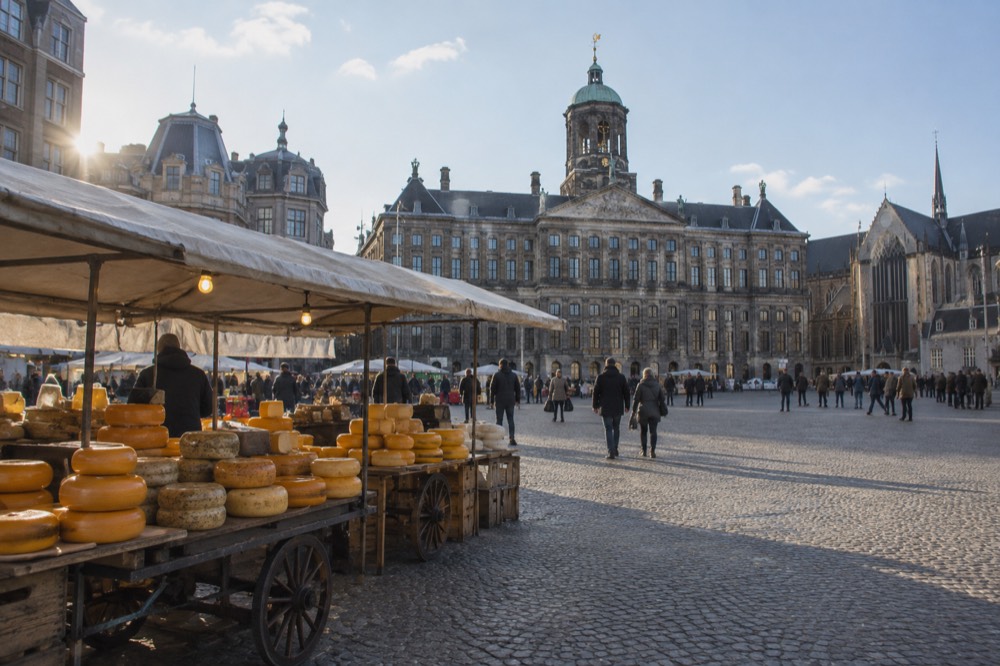
The fair way to frame it: Paris is a destination restaurant city, Amsterdam is a grazing city. A Paris trip is built around at least one serious meal, booked weeks ahead, and the city's bistros, boulangeries and markets justify the planning. Amsterdam's pleasures are smaller and more frequent: raw herring with onions from a market stall, warm stroopwafels, a plate of bitterballen in a centuries-old brown café, Indonesian rijsttafel as an inheritance of Dutch colonial history, and cheese in quantities that surprise first-time visitors.
Amsterdam's food-and-culture walking tours are a good measure of this: the ten-tastings tour carries a perfect 5.0 rating across 1,157 reviews on the live listing, at $92.00 for three and a half hours with a local guide, and it works because Amsterdam's everyday foods are genuinely walkable and cheap to sample. Our Dutch foods guide covers what to actually order, and the brown café guide explains the city's version of the neighbourhood pub, a thing Paris matches with its bistro culture but in a completely different register.
Beer is worth a paragraph of its own, because it is one of the few categories where Amsterdam can claim a household name. The Heineken Experience, inside the company's original historic brewery, is the city's biggest beer attraction: a 90-minute interactive visit at $23.00 through the live listing, rated 4.6 across 39,581 reviews. Paris has no equivalent single-name brewing landmark. If your trip is built partly around drinking culture, Amsterdam's small breweries and brown cafés are a denser, more walkable scene than most visitors expect.
Which City Is Easier to Explore Without a Car?
Amsterdam is dramatically easier: the centre is genuinely walkable, the tram and metro network is simple enough that a 24-hour pass at €10.00 covers a full sightseeing day, and the city's own bicycle culture gives you a transport option Paris cannot match for safety and convenience. Paris has an excellent metro, but it is a system you ride rather than a city you wander.

Neither city needs a car, and in both cases a car is an active liability, but the experience of being car-free differs sharply. In Amsterdam you walk. The canal ring was built at human scale, distances between the major sights are short, and the streets belong to bicycles and pedestrians to a degree that changes the whole rhythm of a visit. The GVB network, with its €10.00 day pass and contactless tapping, is a backstop for tired legs rather than a necessity.
In Paris you ride. The metro is fast, frequent and famous, and you will use it constantly, because the distances between the sights are real. That is not a criticism; the metro is part of Paris's character and it works. But it means your days are punctuated by stairs, turnstiles and line changes rather than by canals and shop windows. Families with small children and travellers with mobility constraints should weigh this seriously: Amsterdam's flat, compact centre is the gentler city to move through, and our accessibility guide covers the cobbles, canals and steep stairs honestly.
| Factor | Amsterdam | Paris |
|---|---|---|
| Overall scale | Compact centre, crossable on foot | Far larger, transit between districts |
| Public transport | Tram, metro, bus, ferry; €10.00 day pass | Dense metro network, frequent use required |
| Cycling | Core part of daily life, dedicated lanes | Possible but not the default for visitors |
| Walking between sights | Mostly realistic | Often a metro ride |
| Day-trip options | Windmills, tulip fields, beach by train | Versailles and more by rail |
The canal is Amsterdam's other transport mode and the one Paris cannot imitate. A classic one-hour canal cruise on a restored saloon boat starts at $19.56 through the live listing, rated 4.8 across 33,435 reviews, with drinks and Dutch cheese available on board. It is the single most efficient sightseeing hour in the city: you sit down, the city scrolls past, and you have seen the canal ring from the angle it was designed to be seen from. Our guide to cycling in Amsterdam and renting a bike covers the two-wheeled alternative.
What About Nightlife and the Evening Vibe?
Amsterdam offers a compact, early-evening nightlife built around brown cafés, a small set of world-famous clubs and the unique evening ritual of a canal cruise through lit streets; Paris offers a later, larger, more varied night that starts later and runs longer. Amsterdam's evening is quieter and more scenic; Paris's is bigger and more urban.
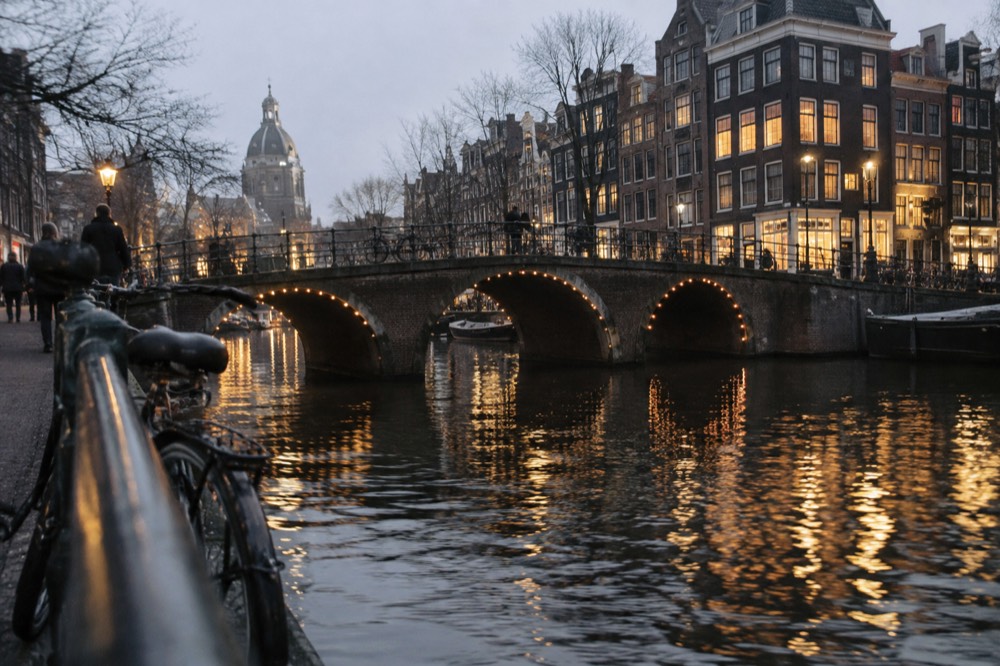
Amsterdam's evening personality is often mis-sold. The city's most-loved night out is not a club but a candle-lit saloon boat drifting past lit canal houses, or a beer in a brown café where the interior has barely changed in living memory. The club scene is real but concentrated, and the city's electronic music heritage peaks each October with Amsterdam Dance Event, held 21 to 25 October in 2026 for its 30th edition. Coffeeshop culture exists under the tolerance policy, with a city-centre outdoor smoking ban worth knowing about before you plan your evening; our coffeeshop rules guide covers exactly what applies to tourists.
Paris runs later. Dinner at nine, bars after, whole districts that only wake up at midnight: the rhythm suits night owls and punishes early risers. Amsterdam's centre, by contrast, calms down noticeably in the residential canal streets, and the Wallen's weekend closing rules, with outdoor terraces closing at 01:00 and indoor hospitality at 02:00 in the core area since April 2023, mean the red-light district is not an all-night party zone despite its reputation.
For couples, the evening comparison is lopsided in Amsterdam's favour: the sunset and evening canal cruises, the lit bridges and the walkable scale make it one of Europe's more romantic small-city nights. Our romantic two-day itinerary is built around exactly that. Paris counters with the Seine and the lit monuments, and it is a fair fight, but Amsterdam's version costs less and requires no metro ride home.
Which City Wins for a Short Break?
For two or three days, Amsterdam wins clearly: the sights cluster together, transport is trivial, and a first-timer can cover the canal ring, two major museums and an evening cruise without ever feeling rushed. For four days or more, Paris starts to pay back its size, and by a week the choice depends on whether you want depth of city or variety of day trips.
The arithmetic of a short break favours the smaller city. In Amsterdam, a two-day visit can honestly include the Rijksmuseum, the Van Gogh Museum, a canal cruise, the Jordaan, the Nine Streets and a market, with time left for an evening cruise and a long dinner. That is not a rushed checklist; it is a normal two days, because the city is small and the transit is simple. Our two days in Amsterdam itinerary is proof it fits.
Paris in two days is a triage exercise. You will choose between the Louvre and everything else, spend real time in transit, and leave with a long list of unfinished business. Some travellers love exactly that energy. But if the question is which city gives a complete-feeling trip in a weekend, the answer is Amsterdam, and it is not close.
The longer the trip, the more the balance shifts. A week in Paris fills effortlessly and rewards repeat visits to neighbourhoods. A week based in Amsterdam also works, but partly because of what sits around it: windmills at Zaanse Schans, tulip fields in spring, Edam, Volendam and Marken, Haarlem, Utrecht, the beach at Zandvoort, all reachable by train or a short guided day trip. Our best day trips from Amsterdam guide maps the options, and spring visitors should read the tulip season guide before booking anything, because Keukenhof opens only from mid-March to early May and nothing tulip-related happens outside that window.
One more practical note for anyone combining the two: the direct train between Amsterdam and Paris makes a two-city trip genuinely easy, and our Paris by train from Amsterdam guide covers the route, booking and station logistics in full.
How Do You Choose Between Amsterdam and Paris?
Choose Amsterdam if you want a walkable, water-bound city with free museum entry for under-18s, a €10.00 transport day pass, a strong casual food and beer culture and short-break efficiency. Choose Paris if you want monumental scale, the deepest art collections in the world, a serious restaurant scene and a trip of four days or more. The best answer for many travellers is both, by train.
A useful tiebreaker is what kind of traveller you are on this specific trip, not in general. Travelling with teenagers or young children? Amsterdam's flat centre, free under-18 museum entry at both the Rijksmuseum and the Van Gogh Museum, NEMO's hands-on science and ARTIS Zoo make it the easier family city, and our Amsterdam with kids guide is built on that advantage. Chasing a bucket-list restaurant or a once-in-a-decade painting pilgrimage? Paris. On a tight budget? Amsterdam, helped by the day pass, the free under-18 tickets and a hostel and food-hall scene that keeps daily costs down.
Season matters too. Amsterdam is at its best from late spring through early autumn, with the tulip window of mid-March to mid-May as the single most photogenic, most time-limited draw in the country; King's Day on 27 April 2027 turns the whole city into a street party. Winter Amsterdam is cosy but grey, and our Amsterdam in winter guide is honest about that. Paris handles winter better, with grand interiors that suit cold-weather visiting, and its parks peak in summer. Our best time to visit Amsterdam guide covers the month-by-month trade-offs if dates are flexible.
The honest desk verdict, after reading the listings and the official pages: these cities are not really competitors. Amsterdam is the better short break, the easier city to run, the gentler budget and the more distinctive everyday experience, water and bicycles being things Paris simply does not have. Paris is the bigger occasion, the deeper museum bench and the better long trip. If you can only take one and you have three days or fewer, book Amsterdam. If you have a week and a sense of occasion, book Paris. If you have eight days, take the train and stop pretending you have to choose.
Common Questions About Amsterdam vs Paris
Is Amsterdam or Paris cheaper to visit?
Amsterdam is generally cheaper on the basics: a 24-hour GVB transport pass is €10.00, a classic canal cruise starts at about €15.50, and both the Rijksmuseum and the Van Gogh Museum are free for visitors aged 18 and under. Paris runs higher on accommodation, museum entry and meals. Amsterdam's 12.5% tourist tax on the overnight price is the one cost that catches people out, so budget for it on top of the quoted room rate.
Is Amsterdam or Paris better for a first trip?
For a first European city break of three days or fewer, Amsterdam is the safer and more satisfying choice: the sights cluster together, the tram network is simple, and a first-timer can realistically cover the canal ring, two world-class museums and an evening cruise without feeling rushed. Paris rewards a longer first visit, four days or more, because its sights are spread across a much larger city and its biggest museum is a half-day project on its own.
Can you combine Amsterdam and Paris in one holiday?
Yes, and the direct train makes it straightforward. Amsterdam and Paris are linked by a fast rail route with city-centre stations at both ends, so a two-city trip of six to eight days works well without any domestic flights. Our Paris by train from Amsterdam guide covers the route, booking windows and station logistics in detail.
Which city is more walkable, Amsterdam or Paris?
Amsterdam. The canal ring was built at human scale and the main sights sit within a walkable radius of each other, so most visitors walk far more than they ride. Paris is walkable neighbourhood by neighbourhood, but the distances between Montmartre, the Louvre and the Latin Quarter make regular metro trips unavoidable. Travellers with mobility constraints or small children will find Amsterdam's flat, compact centre the easier city.
Is Amsterdam or Paris better in winter?
Paris handles winter better, with grand museum interiors and covered sights that suit cold, short days. Amsterdam in winter is grey but atmospheric: brown cafés, the Amsterdam Light Festival running 26 November 2026 to 17 January 2027, and far shorter queues at the major museums. If tulips are the goal, neither city works in winter; Keukenhof opens only from mid-March to early May.
Which city has better day trips?
Both excel, but they differ in kind. Amsterdam's day trips are distinctively Dutch: windmills at Zaanse Schans, the tulip fields around Lisse in spring, Edam, Volendam and Marken, Haarlem, Utrecht and the beach at Zandvoort, mostly under an hour by train. Paris counters with Versailles and a wider rail net across northern France. Amsterdam's day trips are cheaper and easier to organise on short notice.