Amsterdam West: What to See, Eat and Do Beyond the Canal Ring
Amsterdam West is where the city stops performing for tourists and starts living: the Vondelpark, the Hallenkwartier food hall, the Westergas gasworks park and streets where locals actually shop, eat and cycle.
Short answer
Amsterdam West is the residential belt west of the canal ring, anchored by the Vondelpark and the converted Hallen and Westergas complexes. A GVB 1-hour ticket costs €3.40 and a 24-hour pass €10.00, the Van Gogh Museum sits just across its eastern edge, and the district's food halls and markets cost noticeably less than the centre.
Amsterdam West is the part of the city most visitors walk past without meaning to. The canal ring ends, the streets widen, and suddenly you are in the Oud-West and Westerpark neighbourhoods where Amsterdammers buy their cheese, walk their dogs and argue about rent. The district earned its shape in the 19th century, when the city expanded westward beyond the Singelgracht and put up block after block of sturdy housing for the workers the port needed. That housing stock is now some of the most desirable in the city, and the old infrastructure that came with it, the gasworks, the tram depots and the freight rail yards, has been converted into the parks and food halls that make the area worth your time.
The economics work in a traveller's favour here. The city's hotel tax of 12.5 percent of the nightly rate applies everywhere, but base prices in West run below the centre, and the district connects to the main sights by tram in twenty minutes or less. This guide walks through what Amsterdam West actually offers, what things cost, and how to fit it into a trip that also includes the museums, because the Vondelpark's eastern edge stops almost exactly at the Museumplein.
What Is Amsterdam West and Where Does It Start?
Amsterdam West is the large district lying directly west of the canal ring, stretching from the Singelgracht out past the Westerpark, and it splits into recognisable pieces: Oud-West along the Kinkerstraat, the Hallenkwartier around the former tram depot, and the Westergas parklands at its northern edge. Most visitors cross into it without noticing, because the boundary is a line on the map rather than a wall. The Kinkerstraat and the De Clercqstraat are the two main spines, both busy shopping streets that carry tram lines straight into the centre. The district holds roughly a fifth of the city's residents, and its street life reflects that: markets, cafés and playgrounds rather than wax museums and ticket booths.
Oud-West is the piece travellers meet first. It runs from the Kinkerbuurt, the stretch of the Kinkerstraat nearest the centre, out to the edge of the Vondelpark, and it mixes late 19th-century apartment blocks with some of the city's best everyday food shopping. The Ten Katemarkt, an open-air market on the Ten Katestraat, runs most of the week and sells everything from Dutch cheese to Surinamese roti at prices the centre rarely matches.
Further north, the Westerpark and Westergas area occupies the grounds of the old municipal gasworks. The site stopped producing gas decades ago and the city turned it into a park with a difference: the industrial buildings were kept and repurposed as restaurants, a cinema, club venues and exhibition spaces. On a summer evening the lawns fill with picnics while the former gasometer hosts concerts. It is the clearest example in Amsterdam of the city's habit of reusing its industrial past instead of demolishing it.
What Are the Best Things to Do in Amsterdam West?
The best things to do in Amsterdam West are the Vondelpark, the Hallenkwartier with its Foodhallen, the Ten Katemarkt, the Westergas park and cultural venues like Fabrique des Lumières, and together they fill two full days without a single queue for a ticket office. The area rewards the slow approach. Walk it, cycle it, eat in it, and treat the big museums as a short tram ride east rather than the reason you are here.
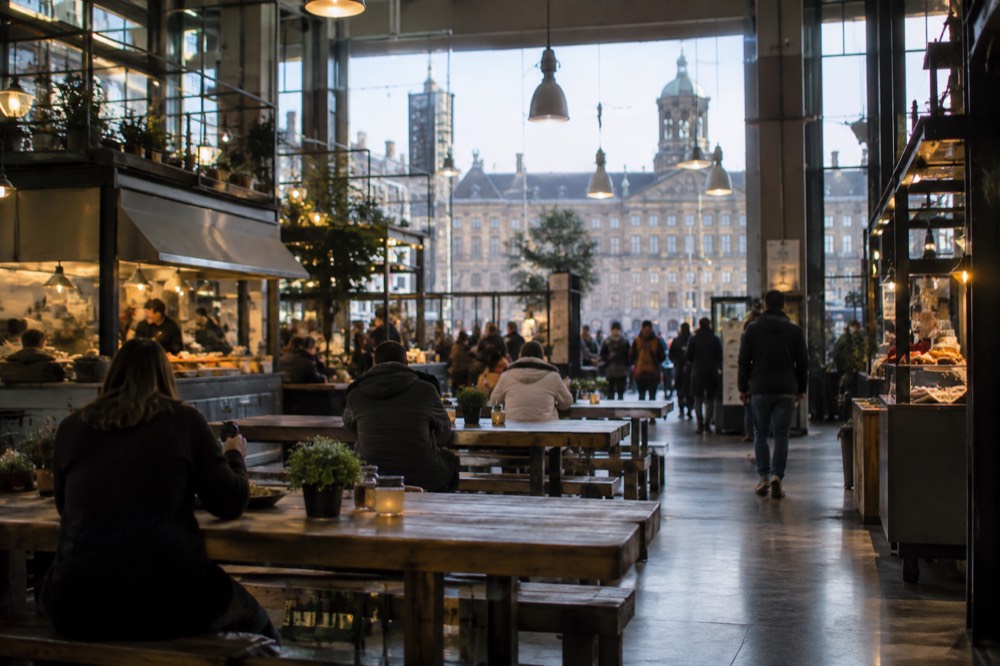
The Vondelpark deserves its own treatment, which it gets below. The Hallenkwartier is the district's second anchor. The complex is a former tram depot from 1901, and its main hall now holds the Foodhallen, an indoor food market where independent vendors sell Vietnamese buns, Dutch bitterballen, pizza and craft beer under one glass roof. Around it sit a cinema, a hotel, shops and a microbrewery. The Foodhallen guide covers the hall in detail, including which stalls are worth the queue at lunchtime.
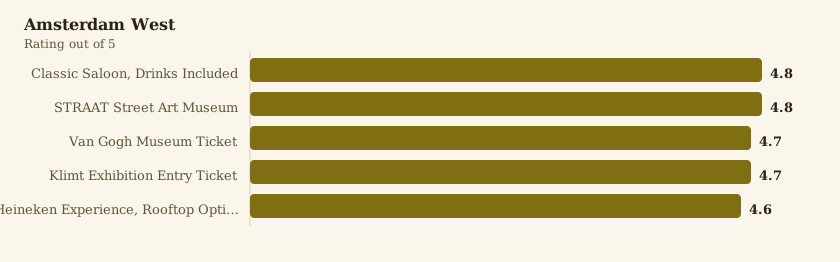
The Westergas grounds sit at the top of the district and are worth an evening even in poor weather, because the park's buildings stay open. Fabrique des Lumières, an immersive digital art centre in a former gas metering hall, projects large-scale exhibitions across the walls and floor of its industrial space; the current headline show is built around Gustav Klimt. A ticket starts at $20 on the live listing, it runs 4.7 across 9,566 reviews, and the venue sits inside the Westergas park itself, so you can pair a projection show with dinner at one of the surrounding restaurants.
For a quieter afternoon, the Kinkerbuurt and the streets off it reward aimless walking. The Oud West and Kinkerbuurt guide maps the record shops, vintage stores and brown cafés that make the area the local answer to the Nine Streets, with lower prices and fewer crowds.
Is the Vondelpark Worth a Whole Morning?
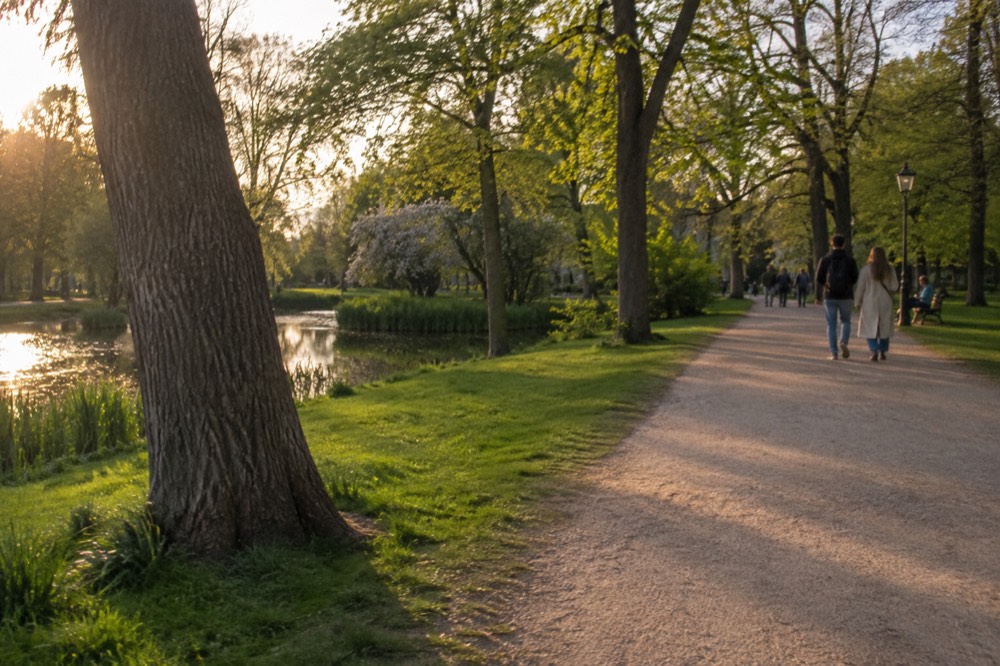
Yes. The Vondelpark is Amsterdam's largest and most used park, roughly a kilometre and a half long, and it functions as the district's living room: free entry, open lawns, ponds, play areas and a stretch of cafés, all within a ten minute walk of the Museumplein. Locals treat it as infrastructure rather than an attraction, which is exactly why it feels different from the manicured spaces tourists usually get. On a weekday morning the paths fill with commuters on bikes, runners and parents with prams, and the park asks nothing of you except that you keep out of the bike lane.
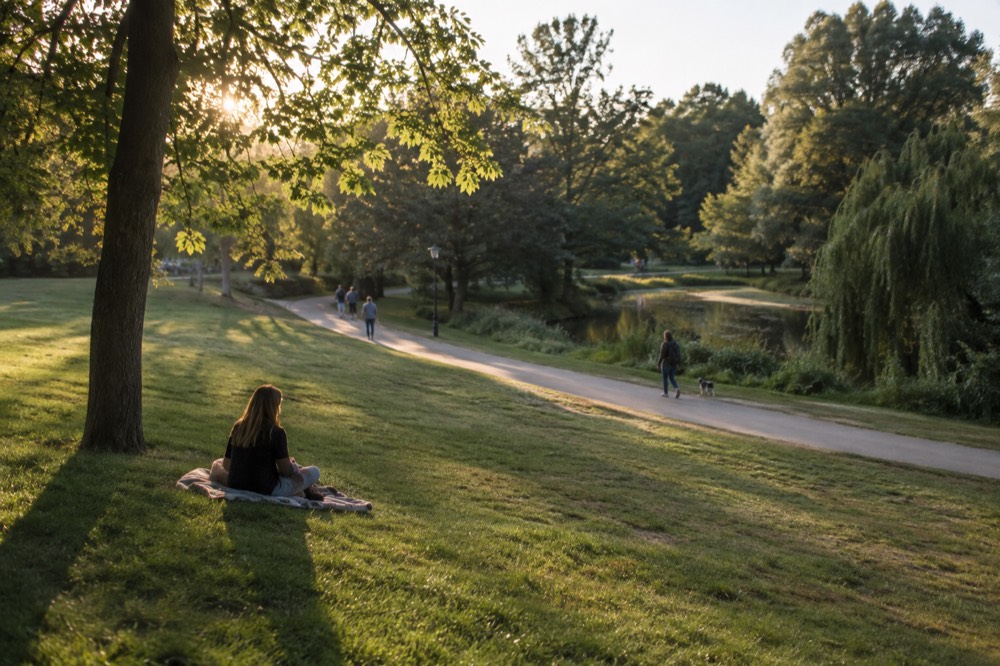
The park's eastern end matters for trip planning. The Museumplein, and with it the Rijksmuseum and the Van Gogh Museum, sits directly beyond the park's boundary, so a West-based visitor can walk through greenery to the two most visited museums in the city in under fifteen minutes. The Vondelpark guide covers the park's layout, the cafés inside it and the open-air theatre that runs free performances in summer.
The Van Gogh Museum is the one book-ahead item on that walk. The museum requires every visitor to pre-book a timed entry ticket, a rule stated on its own site, and adult admission is €25 with under-18s free. A pre-booked entry ticket through the operator's live listing starts at $31 and carries a 4.7 rating across 57,096 reviews. Check availability before you lock in the rest of the day, because time slots in the late morning and early afternoon go first.
Where Do Locals Eat and Drink in Amsterdam West?
Oud-West eats well and cheaply along the Kinkerstraat, the Ten Katestraat and the streets around the Hallenkwartier, with the Ten Katemarkt for groceries and street food, the Foodhallen for a sit-down mix of world cuisines, and a dense band of brown cafés and breweries between them. The district's food scene grew out of its immigrant history, and the result is that you can eat Indonesian, Surinamese, Turkish, Moroccan and classic Dutch in the space of four blocks.
The Ten Katemarkt is the everyday anchor. It is a working market, cheaper than the centre's tourist stalls, and the surrounding Ten Katestraat has become a small food street in its own right. Come hungry and graze. The Amsterdam markets guide compares it against the Albert Cuyp Market and the floating flower market so you can pick the ones worth your limited mornings.
For evenings, the Westergas park's restaurants and bars sit in restored industrial buildings, and the district's brown cafés, the candlelit traditional pubs Amsterdam is famous for, cluster around the Kinkerbuurt. The Amsterdam brown cafés guide explains the type and names the ones in and around West worth seeking out. Service is included in menu prices in the Netherlands, and rounding up the bill is normal practice, so budget without adding a percentage on top.
Is Amsterdam West a Good Place to Stay?
Amsterdam West is one of the better-value places to stay in the city: it is five to twenty minutes from the centre by tram, hotel and apartment rates run below the canal ring, and the neighbourhoods are residential and quiet at night, with the trade-off that you will commute to the main sights rather than step outside into them. The city's hotel policy has deliberately frozen new hotel construction, and short-stay rentals are capped at 30 nights per year city-wide with tighter rules in the most central neighbourhoods, so the licensed accommodation that does exist in West is worth considering on price alone.
The district's own tax situation is uniform with the rest of the city: the tourist tax is 12.5 percent of the overnight price excluding VAT, and it is added to your bill wherever you sleep. What differs is the base rate. A room in Oud-West typically costs less than the same room in the Grachtengordel, and you gain a real neighbourhood, real breakfast cafés and a supermarket, in exchange for a tram ride. The where to stay in Amsterdam guide compares every district on price, noise and commute so you can check whether West beats the alternatives for your dates.
For families and longer stays the case is stronger. The Vondelpark gives children somewhere to run, the tram lines are frequent, and the district's restaurants take bookings and serve early. For a two-night first visit focused on the centre's sights, a canal-ring location saves time, but for anything longer than a weekend, West's balance of price and daily life usually wins. The rest of the planning pages sit on Things to Do in Amsterdam.
How Do You Get to Amsterdam West?
Amsterdam West is reached by tram along the Kinkerstraat and the De Clercqstraat, by bus to the Westergas park, and on foot from the centre in twenty minutes, with a GVB single hour ticket at €3.40 and a 24-hour day pass at €10.00, or contactless tap-in with OVpay charged per kilometre. The district is genuinely well connected, because the trams that serve it are the same lines that run through the canal ring to the centre, so there is rarely a transfer involved.
Cycling is the other natural option, and the district is flat, calm and fully bike-laned. The cycling in Amsterdam guide covers rental, the hand signals locals actually use and where the bike lanes end. From West, the ride into the centre along the Kinkerstraat takes ten minutes, and the ride south through the Vondelpark to the Museumplein is shorter still.
If you are staying near the Westergas park, the GVB fare structure rewards the day pass: a family making four or five trips across a day pays less with the €10.00 pass than with four singles. The official fare table is published at GVB's own prices page, which lists every ticket type and the contactless rates.
What Does Amsterdam West Cost Compared to the Centre?
Amsterdam West costs less than the canal ring on almost every line of a daily budget: accommodation runs cheaper, market food and neighbourhood restaurants sit below centre prices, and the district's headline attractions are either free, like the Vondelpark and the Westergas park, or modestly priced, like the Fabrique des Lumières ticket from $20. The big-ticket museum spend happens a short walk away at the Museumplein, where the Van Gogh Museum charges €25 adult entry, so the honest comparison is about where you sleep and eat, not what you see.
| Item | Amsterdam West | City Centre |
|---|---|---|
| Open-air market lunch (Ten Katemarkt) | Street food prices, market stalls | Higher, tourist-facing stalls |
| Evening meal, neighbourhood restaurant | Mid-range, bookings taken | Same or higher, busier |
| Park time | Vondelpark and Westergas, free | Smaller squares, free |
| Night out | Brown cafés and Westergas venues | Rembrandtplein and centre bars, pricier |
| Transport to main sights | Tram, day pass €10.00 | Walkable, no fare needed |
Two budget notes worth carrying. First, the city's accommodation tax applies at 12.5 percent of the nightly rate everywhere, so it does not change the comparison, but it does mean the advertised room rate is not the final bill. Second, the district's paid attractions are few and fairly priced, which makes West a good base for a trip where the expensive items, the museums and a canal cruise, are deliberate choices rather than daily habits. The Amsterdam on a budget guide builds a full two-day plan on this logic.
One pairing worth planning from a West base: the STRAAT street art museum sits across the IJ at the NDSM Wharf, reachable by free GVB ferry from behind Centraal Station. It holds more than 180 works by over 170 artists in a converted warehouse, a ticket starts at $24 on the live listing and it rates 4.8 across 2,441 reviews. The ferry ride is part of the appeal, and the Amsterdam Noord and NDSM Wharf guide covers the crossing and what else to do on the north bank.
Should You Visit Amsterdam West on a Short Trip?
On a trip of three days or fewer, visit Amsterdam West selectively: walk the Vondelpark between museum slots, eat one meal at the Foodhallen or the Ten Katemarkt, and save the Westergas park for a longer stay or a summer evening, because the district rewards time and a bike more than a checklist. The area's best experiences are unhurried ones, and a rushed pass through them delivers less than an extra hour at the Rijksmuseum would.
The practical split for a short visit looks like this:
| Trip length | What to include in West | Skip if pressed |
|---|---|---|
| One or two days | Vondelpark walk, one market or Foodhallen meal | Westergas, Kinkerbuirt browsing |
| Three days | Add Fabrique des Lumières and a Westergas evening | NDSM day trip |
| Four days or more | Stay in West, use it as your base, add STRAAT by ferry | Nothing, the district pays for itself |
If West becomes your base, the museum logistics stay simple. The Van Gogh Museum's timed-entry rule means you book a slot in advance and walk to it through the park; the museum's own ticketing page at the museum's official ticket site states the requirement and the current prices. The rest of the day can stay local and cheap, which is the whole argument for the district.
For a fuller itinerary that slots West into a city-wide plan, the three days in Amsterdam guide positions the park, the Foodhallen and the Museumplein against each other in a workable order.
Common Questions About Amsterdam West
What is Amsterdam West known for?
Amsterdam West is known for the Vondelpark, the Foodhallen in the converted Hallen tram depot, the Ten Katemarkt, the Westergas park and a dense band of local restaurants and brown cafés along the Kinkerstraat. It is the city's most lived-in district within walking distance of the Museumplein.
Is Amsterdam West safe for tourists?
Yes. Amsterdam West is a predominantly residential district with normal big-city levels of petty crime. The same basic care applies as anywhere in Amsterdam: keep phones out of back pockets on bikes and watch bags in crowded markets. The district is busy with locals late into the evening, especially around the Vondelpark and the Hallenkwartier.
How far is Amsterdam West from the city centre?
The eastern edge of Amsterdam West touches the canal ring, so the distance depends on where in the district you start. The Kinkerbuurt is a fifteen minute walk from the centre, the Vondelpark's eastern gate is ten minutes from the Museumplein, and the Westergas park is about twenty minutes by tram from Dam Square.
Where should I eat in Amsterdam West?
Start at the Ten Katemarkt and the Ten Katestraat for street food and market produce, then the Foodhallen in the Hallenkwartier for a sit-down mix of world cuisines. For evenings, the restaurants inside the Westergas park buildings and the brown cafés around the Kinkerbuurt are the local picks.
Can you walk from Amsterdam West to the Van Gogh Museum?
Yes, easily. The museum sits beside the Museumplein at the eastern edge of the Vondelpark, and from most of Oud-West the walk takes ten to twenty minutes through or around the park. Remember that every visitor needs a pre-booked timed entry ticket, so reserve a slot before you set out.
Is Amsterdam West cheaper than staying in the centre?
Generally yes. Accommodation and food run below canal-ring prices, the parks and markets are free or cheap, and the district's paid attractions, like Fabrique des Lumières from $20, cost less than the major museums. The tourist tax of 12.5 percent applies city-wide, so the saving comes from the base prices, not the tax.
The short version: Amsterdam West is the district where the city's daily life and its biggest park meet, and it costs less to enjoy than the postcard streets twenty minutes east. Walk the Vondelpark, eat at the market, book the one museum that needs booking, and let the rest of the day stay local.